
Most safari destinations treat the bush like a drive-through zoo. You climb into a Land Cruiser at dawn, spot a lion from 50 meters, take the photo, and return to the lodge for gin and tonic by 10 AM. Zambia does not work this way. The country that pioneered the walking safari expects you to get out of the vehicle, read tracks in the dust, and accept that an elephant 30 meters away is close enough.
I came to Zambia as a conservation biologist because the data was unusual. While East African parks were losing lion populations to human-wildlife conflict and habitat fragmentation, South Luangwa's lion numbers remained stable. The reason was not better fences or more rangers. It was that the communities surrounding the park legally owned the wildlife through a system called Community Resource Boards, and they had decided that living lions were worth more than dead ones.
South Luangwa: The Walking Safari's Origin Story
Norman Carr started this in the 1950s. A British conservationist who understood that sitting in a vehicle disconnected visitors from the ecosystem, Carr began leading guests through the Luangwa Valley on foot. The idea was simple: if you walk, you notice everything. You see the dung beetle rolling its ball across the track. You smell the sharp ammonia of a leopard's urine marker on a tree. You hear the oxpecker's alarm call before you see the buffalo herd.
The walking safari is now standard across Zambia's major parks, and South Luangwa remains the best place to do it. The rules are strict. You walk in a single file behind an armed scout from the Department of National Parks and Wildlife and a licensed guide. Maximum six guests. No talking above a whisper. You do not run. Ever.
The dry season, May through October, is when the walking safaris operate. By September the Luangwa River is a thin ribbon, and the animals concentrate along the remaining water channels. This is when you walk past pods of hippos grunting in shrinking pools, past Thornicroft's giraffe (a subspecies found only here), past herds of Cookson's wildebeest. The guides at camps like the Bushcamp Company, which operates six seasonal bush camps deep in the park's remote south, can identify individual leopards by their spot patterns.
Park entry for South Luangwa costs $25 per person per day for international visitors. Self-drivers pay $30 plus $15 per vehicle. The walking safari itself is an additional activity fee, typically $60 to $85 per person depending on whether you book it through your camp or arrange it separately. Camps like Croc Valley, just outside the park's main gate, charge $30 for a four-hour walking safari if you are a full-board guest.
Lower Zambezi: Canoeing Past Hippos
If South Luangwa is about walking, Lower Zambezi is about floating. The park sits on the northern bank of the Zambezi River, directly across from Zimbabwe's Mana Pools. The primary activity is the canoe safari, paddling downstream through channels where elephants swim, crocodiles sun themselves on sandbanks, and buffalo herds come to drink at dusk.
The canoeing is not gentle. The Zambezi current runs at roughly 4 kilometers per hour, and you paddle with the flow, not against it. A typical multi-day canoe trail covers 25 to 40 kilometers, camping on islands or at riverside bush camps. The guides beach the canoes well above the high-water mark because the river level can rise overnight. You do not leave your tent after dark unless escorted.
Lower Zambezi also uses the Community Resource Board model. The Chiawa and Luangwa Chiefdoms surrounding the park receive a percentage of tourism revenue, and the result is visible. Poaching dropped by over 60 percent in the decade after the CRBs were formalized in the early 2000s. The anti-poaching unit Conservation Lower Zambezi, founded by local stakeholders, now operates drone surveillance and canine tracking teams.
Park entry here is also $25 per day. The canoe safaris are typically packaged by operators like Time + Tide or Sausage Tree Camp, and rates start around $600 per person per night in peak season, all-inclusive.
Kafue: The Park Nobody Talks About
Kafue National Park is roughly the size of Wales. It is one of Africa's largest protected areas, and it receives a fraction of the visitors that South Luangwa does. This is partly because the infrastructure is thinner. The roads are rougher. The camps are fewer.
But Kafue is where you see Zambia's conservation ambition at scale. The Busanga Plains in the north flood seasonally, creating a wetland ecosystem that supports massive herds of red lechwe, puku, and buffalo. The predator density is high. Cheetahs hunt the open grasslands, and wild dogs den in the mopane woodlands. The Busanga Bush Camp, operated by Wilderness Safaris, is the primary lodge in this area and opens only from June through October when the floodwaters recede.
The park fee for Kafue is $20 per day for international visitors, cheaper than South Luangwa or Lower Zambezi. The trade-off is the logistics. The closest town, Mumbwa, is 200 kilometers from Lusaka on a road that deteriorates rapidly in the wet season. Most visitors fly in via light aircraft from Lusaka, which adds cost but saves a full day of driving.
Liuwa Plain: The Migration Nobody Photographs
Everyone knows the Serengeti wildebeest migration. Almost nobody knows that Zambia's Liuwa Plain hosts the second-largest wildebeest migration in Africa. Each November, roughly 45,000 blue wildebeest move across the plain following the rains. The spectacle is raw and uncommercial. There are no lodges with infinity pools. There is one permanent camp, King Lewanika Lodge, and a handful of mobile tented operations that set up during the green season.
Liuwa is also the site of one of Africa's most remarkable wild dog recovery projects. The species was functionally extinct in the park by the 1990s due to poaching and disease. A reintroduction program begun in 2002, led by the Zambian Carnivore Programme and African Parks, has rebuilt the population to roughly 150 individuals across multiple packs. I spent three days here with the monitoring team, and the sight of a wild dog pack hunting puku across the floodplain at dawn is unlike anything I have seen in 15 years of fieldwork.
Access to Liuwa is difficult. You fly to Kalabo from Mongu, or drive from Mongu across the Zambezi floodplain, which is only passable in the dry season. The park entry fee is $10 per day. This is not a destination for first-time safari visitors. It is for people who have already done the Serengeti and the Okavango and want something that still feels like a secret.
Victoria Falls: The Practical Add-On
You will likely fly into Livingstone or Lusaka. If Livingstone, you are 10 kilometers from Victoria Falls. The Zambian side of the falls, in Mosi-oa-Tunya National Park, costs $10 per day to enter and offers a less crowded perspective than the Zimbabwean side. The spray is heaviest in April and May after the rainy season. By October the falls are reduced to a narrow channel, but this is when the exposed rock face becomes visible and the gorge below is at its most dramatic.
If you are combining Zambia with Zimbabwe or Botswana, buy the KAZA Univisa at port of entry for $50. It covers multiple entries across all three countries for 30 days and saves you from buying separate visas.
The Conservation Model That Actually Works
Zambia's Community Resource Board system is not perfect. Corruption exists in some CRBs. Revenue distribution can be unequal. But the fundamental principle is sound: the people living next to wildlife receive a legal stake in its survival. In South Luangwa, the Mfuwe area CRB receives a percentage of all park entry fees and bed-night levies collected by lodges in its zone. The money goes to schools, clinics, and road maintenance.
The result is that when a lion kills a cow in a village near South Luangwa, the community is more likely to call the Zambian Carnivore Programme's conflict mitigation team than to retaliate. They understand the economic value of the lion to the tourism economy. This is not sentiment. It is arithmetic.
What to Skip
The self-drive safari in South Luangwa is technically possible but not recommended unless you have serious 4x4 experience and a satellite phone. The park has no fuel, no mobile signal in most areas, and the river crossings during the green season are genuinely dangerous.
The microlight flights over Victoria Falls are overpriced at $175 for 15 minutes and do not offer significantly better views than the free viewpoints along the Knife-Edge Bridge.
Practical Logistics
Fly into Lusaka with Ethiopian Airlines, Emirates, or South African Airways. Proflight Zambia connects Lusaka to Mfuwe (South Luangwa), Royal Airstrip (Lower Zambezi), and Livingstone (Victoria Falls). Expect to pay $250 to $350 one-way for domestic legs.
The best time to visit for walking safaris and game viewing is June through October. November is the start of the green season, when many bush camps close and the roads turn to mud. Some camps, particularly in the south of South Luangwa, now stay open for the "emerald season" from January through March, offering boat safaris instead of walks when the floods arrive.
Budget travelers can self-cater at Croc Valley Camp or Wildlife Camp near Mfuwe, with rates from $80 per night for a chalet. Mid-range operators like Kafunta Safaris or Track and Trail River Camp run from $300 to $500 per person per night. Luxury camps in South Luangwa and Lower Zambezi start at $800 and climb past $1,500 per night at properties like Chinzombo or Chichele Presidential Lodge.
The honest truth about Zambia is that it requires more effort than a packaged safari in Kenya or South Africa. The roads are worse. The flights are smaller. The camps are simpler. But the wildlife encounters are more immediate, the conservation model is more genuine, and the experience of standing on a dry riverbed while an elephant bull walks past at 20 meters is something no vehicle can replicate.
I have worked in conservation across four continents, and I keep returning to Zambia because the communities here have not been written out of the wildlife economy. They are shareholders in it. That changes everything about what you see, and what it means.
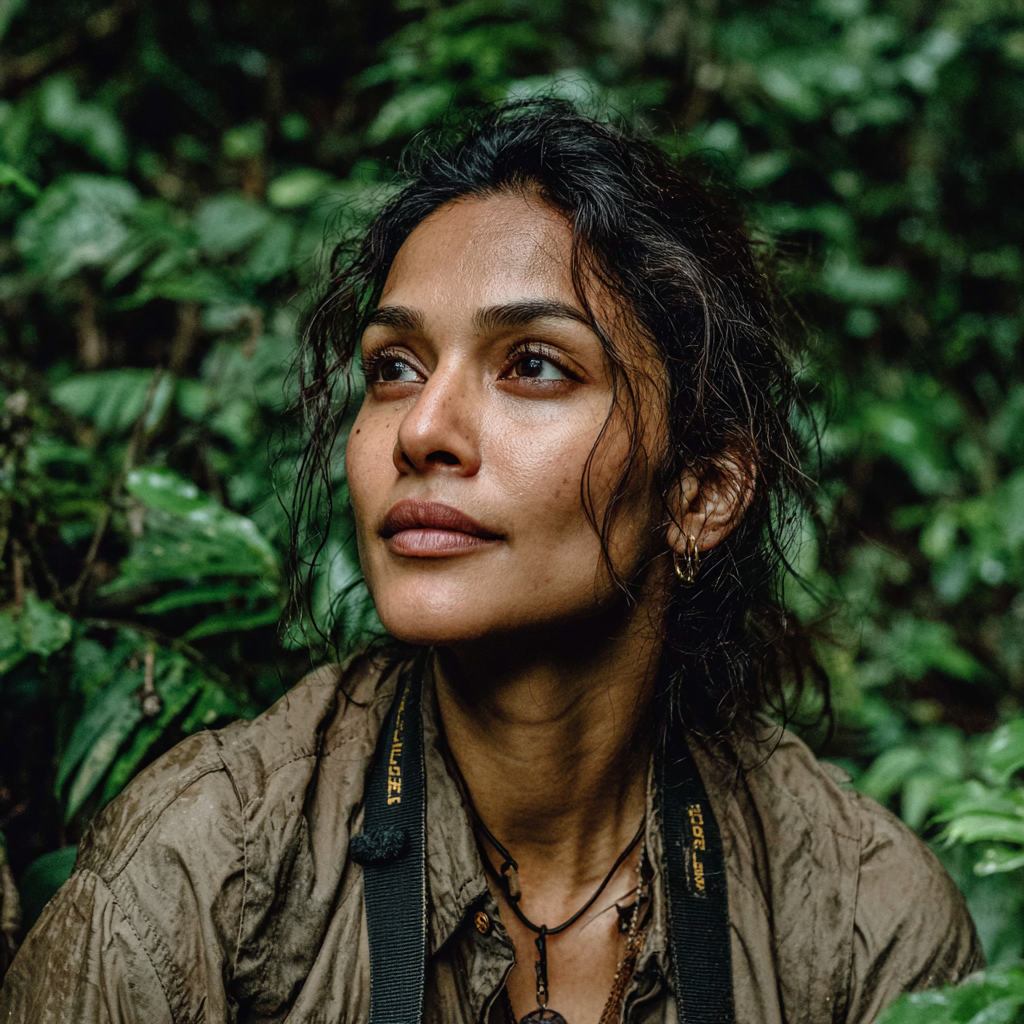
By Priya Sharma
Conservation biologist and sustainable tourism advocate. Priya works with eco-lodges and wildlife sanctuaries to promote ethical travel practices. She holds an MSc in Biodiversity Conservation and has spent years tracking endangered species across the Indian subcontinent.