
Savannah Unscripted: Where Live Oaks, Ghost Stories, and Gritty History Collide
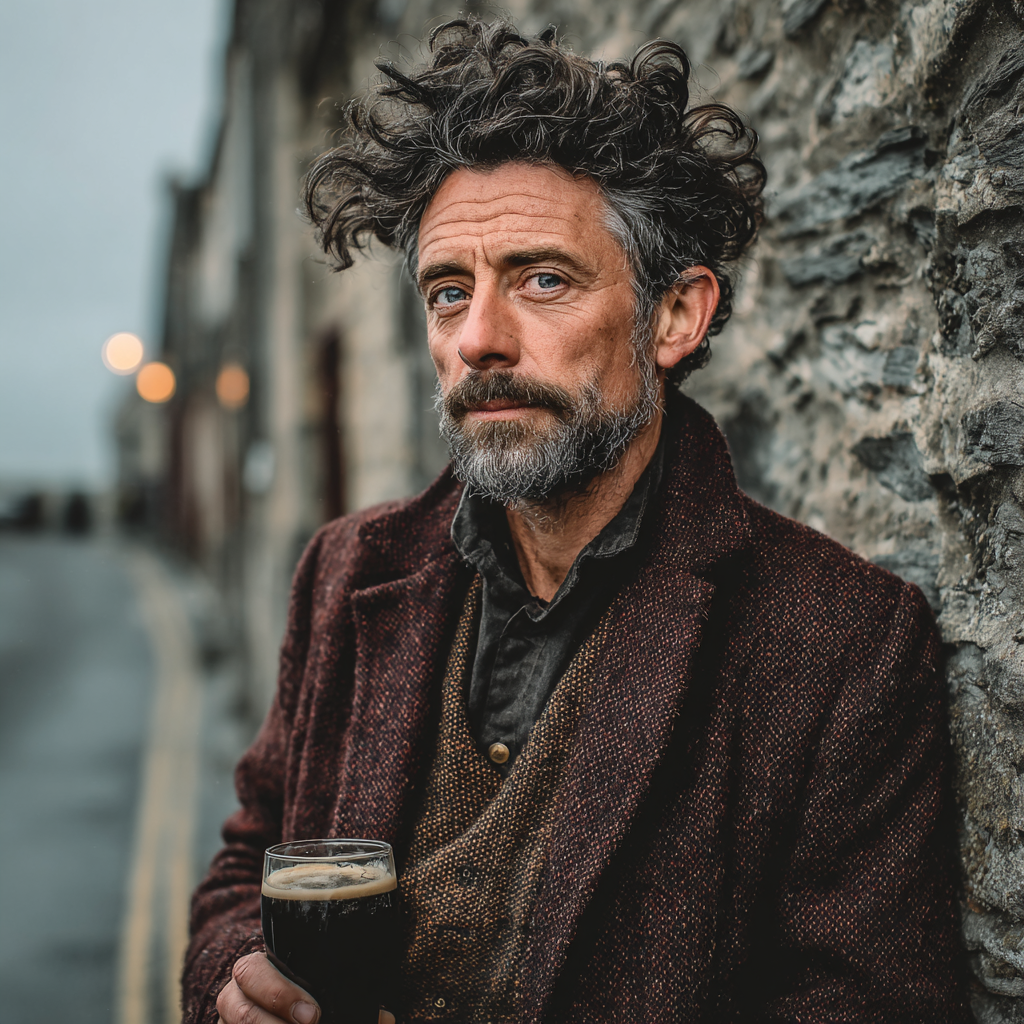
By Finn O'Sullivan, Irish storyteller and folklorist
Savannah does not ask for your attention. It assumes you will slow down anyway. The city moves at the pace of a porch swing, and after an hour of walking its oak-shaded squares, you will too. This is not Charleston's polished cousin, though the comparison is inevitable. Savannah is grittier, stranger, and less interested in whether you approve. I have walked its streets at dawn, when the fog rolls off the river and the moss drips from branches like green curtains, and I have listened to the stories that leak out of its brick walls. Savannah is a city that talks to itself, and if you stand still long enough, you will hear it.
I am Finn O'Sullivan, and I hunt for the narratives that do not make guidebooks — the pub legends, the family feuds, the neighborhood heroes. Every street corner has a story if you know who to ask. Savannah is one of those rare places where the stories are so thick in the air you could trip over them.
The Squares: Savannah's Living Rooms
The historic district is built around twenty-two squares, most laid out in the 1730s by James Oglethorpe, the city's founder. Each square is a small public park, framed on four sides by townhouses, churches, and moss-draped live oaks. The geometry is rigid, but the effect is organic. The oaks have grown for two centuries, bending over the streets and filtering the light into something green and underwater.
Franklin Square (at the intersection of Montgomery and Barnard Streets) is the westernmost of the original six, named for Benjamin Franklin. It has a simple bench and a few oaks, and it is where I go when I want quiet. Madison Square (at Bull and Macon Streets) holds a monument to Sergeant William Jasper, a Revolutionary War hero who recovered his regiment's flag under fire. The statue is bronze, cast in 1888, and the surrounding benches are where locals argue about football and politics with equal passion.
Chippewa Square (at Bull and McDonough Streets) is famous for the bench where Tom Hanks sat in Forrest Gump. The bench was a prop, but the square is real — and beautiful. The monument in the center honors the Georgia soldiers who died at the Battle of Chantilly in 1862. Monterey Square (at Bull and Taylor Streets) has the Mercer-Williams House, the Gothic Revival mansion at the center of John Berendt's Midnight in the Garden of Good and Evil. The house is open for tours from 10:30 AM to 4:00 PM, Monday through Saturday, and 12:00 PM to 4:00 PM on Sunday. Admission is $15. The story of Jim Williams and the murder trial that put Savannah on the literary map is told better in the house than anywhere else, but the docents know which parts of the story are true and which grew in the telling.
Crawford Square (at Houston and Perry Streets) is the only one that still has its original cistern, a brick-lined well from the 1840s that once supplied water to the neighborhood. Johnson Square (at Bull and St. Julian Streets), the oldest square, has a monument to Nathanael Greene that locals use as a meeting point. The monument is not at the center — it was moved to accommodate a parking garage in the 1950s, a decision that still angers preservationists.
The squares are not museums. People live in the houses around them, and the life is residential. You will see someone walking a dog, someone reading on a bench, someone carrying groceries home from the Kroger on Gwinnett Street (2815 Gwinnett Street, open 6:00 AM to 11:00 PM daily). This is the first thing to understand about Savannah: the historic district is not a preserved theme park. It is a neighborhood that happens to be two hundred and ninety years old.
Forsyth Park: The Southern Edge of the World
Forsyth Park sits at the southern end of the district, and its famous fountain is the most photographed object in the city. The fountain is a cast-iron reproduction of one in Paris, installed in 1858, and it runs every day from dawn until 10:00 PM. The park around it is thirty acres of open lawn, basketball courts, a Fragrant Garden for the blind, and the Forsyth Farmers' Market on Saturday mornings from 9:00 AM to 1:00 PM.
The market is a better introduction to the city's food than most restaurants. The vendors sell okra, collards, Georgia peaches when they are in season (May through August), and boiled peanuts by the bag ($3 for a small, $5 for a large). I buy my coffee here from PERC Coffee, a Savannah roaster that has been operating since 2010. A twelve-ounce pour-over costs $4. The market is held at the south end of the park, near the Bandshell, and the best time to arrive is 9:00 AM, before the crowds and the heat.
The park's north end, near the fountain, is where the azaleas bloom in March and April, turning the park into a corridor of pink and red. The flowers are at their peak in late March, and the city hosts the Savannah Tour of Homes and Gardens (March 27–29, 2026, tickets $50–$150) during this time. If you visit in spring, book accommodation months in advance.
River Street: The Real and the Fake
River Street runs along the Savannah River on the northern edge of the district. It is the city's concession to tourism, and it is the weakest part of the experience. The cobblestones are real — they are ballast stones from English sailing ships, dropped here in the eighteenth century — but the shops sell the same fudge and T-shirts you find in every waterfront district in America. The better move is to walk down Factors Walk, the stone-paved alley that runs one level below Bay Street.
This was where cotton factors — the men who graded and sold the crop — conducted business in the 1850s, when Savannah was one of the world's largest cotton ports. The iron bridges that connect the upper and lower levels were built for handcarts. The warehouses are now offices and apartments, but the scale of the operation is still visible. At the height of the cotton boom, sixty thousand bales a year passed through these warehouses. The Cotton Exchange, at 100 E. Bay Street, was built in 1887 and is one of the few surviving buildings from the era. It is now a private club, but the exterior is worth seeing for the red-brick facade and the clock tower.
For a real glimpse of the river's working life, walk to the western end of River Street to the Waving Girl statue, at the foot of Morrell Park. The statue honors Florence Martus, who waved a handkerchief at every ship entering Savannah for forty-four years, starting in 1887. The story is that she was waiting for a sailor who never returned, but historians disagree. The statue is bronze, cast in 1972, and the view from here at sunset is one of the best in the city.
History You Can Touch
The city's history is not abstract. The Owens-Thomas House, at 124 Abercorn Street, built in 1819, has one of the finest examples of Regency architecture in America and a preserved slave quarters behind the main house. The quarters are small, brick, and intact. The house is open from 10:00 AM to 5:00 PM daily, with the last tour at 4:15 PM. Admission is $20, and the guided tour takes about an hour. The Telfair Academy, at 121 Barnard Street, was the first public art museum in the South, opened in 1886. Its collection includes paintings by Childe Hassam and a bronze cast of the Bird Girl statue that appeared on the cover of Berendt's book. The statue is no longer in Bonaventure Cemetery — it was moved to the Telfair in 1997 after too many visitors climbed on it. The Telfair is open from 10:00 AM to 5:00 PM daily, admission $20, and a combined ticket with the Owens-Thomas House and the Jepson Center is $30.
The Davenport House Museum, at 324 E. State Street, was saved from demolition in 1955 by seven women who went on to form the Historic Savannah Foundation. The house is a Federal-style townhouse from 1820, and the interior is furnished with period pieces. Open 10:00 AM to 5:00 PM Monday through Saturday, and 1:00 PM to 5:00 PM on Sunday. Admission is $12. The story of the seven women is told in the introductory video, and it is worth watching — it is the origin story of modern preservation in Savannah.
Bonaventure Cemetery: The City of the Dead
Bonaventure Cemetery is four miles east of the historic district, at 330 Bonaventure Road, on a bluff above the Wilmington River. It is worth the trip. The cemetery was a plantation before it became a burial ground in 1846, and the live oaks are older than any monument. The most famous graves belong to Johnny Mercer, the songwriter who wrote "Moon River" and "Accentuate the Positive," and Conrad Aiken, the poet who grew up in Savannah and set his novel Blue Voyage in a fictional version of the city.
The statues are Victorian and theatrical: angels with broken wings, weeping women, a child's grave marked by a carved lamb. The cemetery is open from 8:00 AM to 5:00 PM daily, and there is no admission fee. A guided tour costs $25 and runs ninety minutes. The unguided walk is free and, for most visitors, sufficient. I recommend the northwest corner, where the older graves are, and where the oaks are so thick you cannot see the sky. Bring bug spray — the mosquitoes are biblical in summer.
If you are driving, the entrance is at 330 Bonaventure Road, and there is a small parking lot just inside the gate. If you are walking or cycling, the cemetery is accessible via the Truman Parkway bicycle path, but the route is four miles and not scenic. I usually take a rideshare from the historic district; the cost is $12–$18 each way.
Wormsloe Historic Site: The Tunnel of Oaks
Wormsloe Historic Site is ten miles southeast of the city, at 7601 Skidaway Road, and its entrance is a mile-long avenue of live oaks that meet overhead in a complete tunnel. The plantation was founded by Noble Jones, one of Oglethorpe's original settlers, in 1736. The tabby ruins of his house — tabby is a concrete made from oyster shells, lime, sand, and water — are still standing. The site is managed by the state of Georgia, and admission is $10. Hours are 9:00 AM to 5:00 PM, Tuesday through Sunday, closed Mondays. The oak avenue is the draw, but the museum and the walking trails through the maritime forest are worth the time. There are seven miles of trails, ranging from easy to moderate, and the marsh views from the bluff are spectacular.
The site is best visited early in the morning, before the tour buses arrive. The golden hour light on the oak avenue is worth the drive alone. I usually stop at the visitor center first, where the introductory film is well-made and short (fifteen minutes). The tabby ruins are a five-minute walk from the museum, and the trail is shaded but uneven — wear sturdy shoes.
The Table: Where Savannah Eats
Savannah's food scene has improved dramatically in the last decade, though it still struggles with the tension between tradition and innovation. Mrs. Wilkes' Dining Room, at 107 W. Jones Street, serves lunch only, Monday through Friday, starting at 11:00 AM. The menu is Southern boarding-house style: fried chicken, collard greens, black-eyed peas, cornbread, and butter beans, passed around the table on platters. The line forms at 10:30 AM, and the wait can be an hour. It costs $22 per person, cash only. The food is good, not transcendent, but the experience is specific to this city and this room. The tables are communal, and you will sit with strangers. The sweet tea is free and refilled without asking.
Leopold's Ice Cream, at 212 E. Broughton Street, has been operating since 1919, and the shop is decorated with movie memorabilia from the owner's career as a Hollywood producer. The scoops are generous. The tutti-frutti flavor, made from rum, candied fruit, and roasted pecans, is the signature. A single scoop is $4.50, a double is $6.50. The shop is open from 11:00 AM to 10:00 PM Sunday through Thursday, and until 11:00 PM on Friday and Saturday. The line is long on summer evenings; I go at 11:00 AM, when it opens, and the staff is chatty.
The Grey, at 109 Martin Luther King Jr. Boulevard, is the city's most serious restaurant. It occupies a restored 1938 Greyhound bus terminal, and the chef, Mashama Bailey, won the James Beard Award for Best Chef Southeast in 2022. The menu changes with the seasons but draws on Southern ingredients with precision: foie gras and grits, sapelo clams with country ham, rabbit with preserved lemon. Dinner reservations are essential and can be made thirty days in advance through Resy. A three-course meal without wine runs around $70 per person. The bar accepts walk-ins and serves an abbreviated menu; the smoked catfish dip ($16) and the Greyhound cocktail ($14) are the best seats in the house.
For something between Mrs. Wilkes and The Grey, there is The Collins Quarter, at 151 Bull Street, an Australian-influenced cafe that opened in 2014 and introduced flat whites and avocado toast to a city that was still drinking diner coffee. It is now a local institution. The breakfast burger, with a runny egg and bacon jam, is the right choice if you are hungry ($14). If you are not, the banana bread with espresso butter is enough ($8). The cafe is open from 7:00 AM to 4:00 PM daily, and the courtyard seating is the best spot for people-watching.
For a late-night meal, I go to The Pirates' House, at 20 E. Broad Street, one of the oldest taverns in Georgia (established 1753). The food is mediocre — fried seafood and burgers — but the building is a time capsule. The "Captain's Room" is a secret underground tunnel that once led to the river, used by pirates to smuggle goods and press-gang sailors. The tunnel is closed now, but the bar is open until 11:00 PM on weekdays and midnight on weekends. A beer costs $6, and the bartenders know every ghost story in the city.
The Haunted and the Real
Savannah's reputation for hauntings is not a modern invention. The city was built on a burial ground — the original settlers found Native American graves on Yamacraw Bluff — and it has burned down twice, endured yellow fever epidemics, and survived Sherman. Ghost tours run every night, and the quality varies. The best is the Sixth Sense Savannah Walking Tour, which meets at Reynolds Square (at Abercorn and St. Julian Streets) at 8:00 PM. The cost is $30, and the tour runs ninety minutes. The guide, Shannon Scott, has been leading walks for twenty years and knows which stories have sources and which were invented for the brochures. He does not do costumes or jump scares. He tells stories about the people who lived and died in these buildings, and he lets the history speak for itself.
The Sorrel-Weed House, at 6 W. Harris Street, is the most haunted building in the city by reputation, and it is open for tours and paranormal investigations. The house was built in 1840, and the story of Matilda Sorrel, a slave who allegedly threw herself from the second-floor balcony, is the centerpiece of the legend. The historical record says she died in the house, but the circumstances are disputed. Daytime tours run from 10:00 AM to 4:00 PM, admission $20. Nighttime paranormal investigations, with EMF meters and EVP recorders, run from 9:00 PM to midnight and cost $50. I have done both, and the nighttime tour is more theatrical than the daytime one. Take it for what it is: a good story told in a beautiful house.
SCAD and the New Savannah
The SCAD Museum of Art, at 601 Turner Boulevard, run by the Savannah College of Art and Design, is one of the most interesting contemporary art spaces in the South. The building is a converted 1853 railway freight depot, and the exhibitions rotate through student work, established artists, and historical shows. Admission is $10, free on the second Sunday of each month. Hours are Tuesday through Sunday, 10:00 AM to 5:00 PM. The college has taken over dozens of historic buildings in the district, and the presence of ten thousand art students has kept the city from becoming entirely antique. You will see them sketching in the squares, shooting films in the alleys, and drinking coffee at the Sentient Bean on Forsyth Park, a fair-trade cafe at 13 E. Park Avenue that doubles as a poetry venue on Tuesday nights from 7:00 PM.
The SCAD presence is not without controversy. Longtime residents grumble about rising rents and the college's aggressive property acquisition, but the energy the students bring is undeniable. The SCAD Film Festival, held every October, is one of the best regional film events in the country, and it is open to the public. Tickets range from $12 for single screenings to $150 for a festival pass.
What to Skip
River Street, after dark, becomes a funnel of neon and noise. The bars are overpriced, the cover charges are predatory, and the crowd is mostly bachelor parties and cruise-ship passengers. If you want a drink, walk one block south to Bay Street or Congress Street, where the locals drink.
The Savannah Riverboat Cruises, docked at 9 E. River Street, are a $40–$60 ticket to a two-hour loop of the river with buffet food and a DJ. The view is better from the free waterfront park at the west end of River Street, and the food is better anywhere else.
The Paula Deen restaurant empire, at 102 W. Congress Street, is a tourist factory. The food is aggressively mediocre, and the wait can be two hours. If you want Southern cooking, go to Mrs. Wilkes or The Grey.
The ghost tours that use costumed guides with fake blood and plastic chains are entertainment, not history. If you want the real stories, book the Sixth Sense tour or read Midnight in the Garden of Good and Evil before you arrive.
Practical Logistics
Getting There: Savannah/Hilton Head International Airport (SAV) is thirteen miles west of downtown, at 400 Airways Avenue. A taxi or rideshare costs $30–$40. There is no direct public transit from the airport to the historic district. The Chatham Area Transit (CAT) bus system serves the wider metro area but is not practical for visitors. If you are driving, the historic district is roughly one mile by one mile, and parking is expensive and scarce. Use the garage on Bryan Street near Ellis Square (at 240 E. Bryan Street, $2 per hour, $20 daily maximum) and walk from there.
Getting Around: The city is walkable. The squares make it easy to navigate without a map. The DOT (Downtown Transportation) shuttle is a free loop service that covers the historic district and River Street, running every 10–20 minutes from 7:00 AM to 7:00 PM daily. The best way to see the city is on foot, but if you want to explore beyond the historic district, a bicycle from Savannah on Wheels (at 6 E. Liberty Street, $25 per day, open 9:00 AM to 6:00 PM) is the right choice.
When to Visit: The best time to visit is March or April, when the azaleas are in bloom and the heat has not yet arrived. Summer is brutal — temperatures in the nineties with humidity that feels like breathing through a wet towel. July and August are particularly oppressive; if you must visit then, plan indoor activities for the afternoon and outdoor walks for early morning and late evening. October and November are also good, though hurricane season runs through November and can disrupt travel. December is charming — the city decorates the squares with lights, and the temperatures are mild — but accommodation prices spike.
Where to Stay: The historic district is divided into neighborhoods. The area around Forsyth Park is quieter and more residential, with bed-and-breakfasts like the Forsyth Park Inn (at 102 W. Hall Street, rooms from $180 per night) and the Ballastone Inn (at 14 E. Oglethorpe Avenue, rooms from $220 per night). The area near River Street is louder and more touristy, but the Bohemian Hotel (at 102 W. Bay Street, rooms from $250 per night) has river views and a rooftop bar. For budget travelers, the Thunderbird Inn (at 611 W. Oglethorpe Avenue, rooms from $90 per night) is a retro motel with a sense of humor and clean rooms.
What to Pack: Comfortable walking shoes are essential — the sidewalks are brick and uneven, and the cobblestones on River Street will punish anything with a heel. Insect repellent is mandatory from April through October. A light rain jacket is useful year-round; Savannah gets afternoon thunderstorms in summer that are brief but torrential. Sunscreen is not optional in any season.
Safety: Savannah is generally safe in the historic district, but the area west of Martin Luther King Jr. Boulevard becomes less predictable after dark. The squares are well-lit, but stick to the main streets if you are walking alone late at night. The downtown area has a visible police presence, and the locals are friendly. Use common sense: do not leave valuables in parked cars, and do not walk down unlit alleys at 2:00 AM.
The Last Word
Savannah does not reward rushing. The city is best experienced at walking speed, with time to notice the details: the cast-iron railings on the staircases, the pineapple motifs on the door knockers, the way the light falls through the oak canopy at five in the afternoon. It is not a place for ticking boxes. It is a place for staying still long enough to hear what the city is saying. Most of the time, it is talking about itself — and if you listen, you will hear stories that are older than the oaks, stranger than the ghosts, and truer than any guidebook could capture.
I have been coming to Savannah for years, and I still find corners I have never seen. The city is a labyrinth of stories, and every visit peels back another layer. That is the thing about Savannah: it does not reveal itself all at once. It gives you a little more each time, like a friend who trusts you a little more with every conversation. So walk slow. Look up. And listen. The city is talking.
Don't worry. Even if the world forgets, I'll remember for you.
By Finn O'Sullivan
Irish storyteller and folklorist. Finn hunts for the narratives that do not make guidebooks—the pub legends, the family feuds, the neighborhood heroes. He believes every street corner has a story if you know who to ask.