
Miami: Where America Learns Its Future in Spanish
Most people come to Miami for the beaches and leave with only sunburn and a bar tab. They never notice that the real city sits twenty minutes inland, in neighborhoods where Spanish is the default language and the skyline looks like a postcard someone painted while homesick. Miami is Cuban coffee at three in the afternoon, Art Deco buildings painted in colors that shouldn't work together but do, and a constant negotiation between what America thinks it is and what Miami knows itself to be.
This is not a beach guide. Miami's beaches are fine. They are also generic, expensive, and crowded with the same people you see in Cancun and Mykonos. The real city requires a car, patience, and the willingness to point at menus if you don't speak Spanish. The reward is a place that feels like a genuine borderland, neither fully American nor Latin American, but something that emerged from the collision of the two.
The Cuban Heart: Little Havana and Beyond
Start in Little Havana. Calle Ocho is the spine of the neighborhood, but the real activity happens on the side streets where domino players gather at Maximo Gomez Park every afternoon. The clack of tiles on concrete starts around one o'clock and continues until dark. These men have been playing together for decades. They argue about politics, baseball, and whose turn it is to buy the next round of cafecitos from the walk-up window at Versailles Restaurant on the corner.
Versailles Restaurant opened in 1971 at 3555 SW 8th Street and has been the unofficial town square for Cuban exiles ever since. The coffee is roughly a dollar and comes in thimble-sized cups that you drink while standing. The restaurant itself is open Monday through Thursday from 8:00 AM to midnight, Friday and Saturday until 1:00 AM, and Sunday from 9:00 AM to midnight. The dining room is vast and ornate, but the real action is at La Ventanita, the side window where locals order cortaditos and pastelitos without breaking stride. Order a pastelito de guayaba to go with your coffee. The pastry is warm, the guava filling is almost too sweet, and the combination explains why this place has outlasted three economic crashes and a pandemic. A full meal here costs between $12 and $20 per person.
Maximo Gomez Park (known locally as Domino Park) sits at SW 15th Avenue and Calle Ocho. It is open daily from 9:00 AM to 6:00 PM. There is no admission fee. The park has been a gathering spot for Cuban retirees since 1976. The tile domino motifs embedded in the sidewalk are your first clue that you have arrived. Checkers and chess tables sit alongside the domino tables, but the domino games are the main event. You do not need to play to participate. Sit on a bench, listen to the arguments, and watch the rhythm of a community that has made this small plot of concrete its living room.
The best Cuban food in Miami is no longer concentrated in Little Havana. The Cuban population has spread throughout Miami-Dade County, and the most interesting cooking now happens in places like Westchester and Hialeah, where restaurants serve food for Cuban customers rather than Cuban-themed food for tourists. Villa Havana on SW 8th Street looks like a converted garage and serves lechon asado that takes twelve hours to prepare. The vaca frita comes with a side of moros, black beans and rice cooked together until the grains separate and the edges crisp. Dinner for two costs around $30.
For a more chaotic, authentic experience, visit El Palacio de los Jugos, which has been operating since 1977. The original location is at 5721 W Flagler Street (open daily 6:00 AM to 9:00 PM), though there are now a dozen locations across the county. This is a cafeteria-style operation under a massive green tent. You order at separate stations: juices, sandwiches, and hot food by the pound. The chicharrones are chopped to order with a machete. The coconut water is hacked open while you wait. A full plate with juice costs $10 to $15. There are no white tablecloths and no table service. Half the charm is that it feels like stepping into another country.
Walk the length of Calle Ocho and you will pass the Calle Ocho Walk of Fame, pink marble stars embedded in the sidewalk honoring Latin musicians and actors. The walk stretches from 12th Avenue to 17th Avenue. Names include Celia Cruz, Gloria Estefan, and Julio Iglesias. It is a small detail, easy to miss, but it signals the neighborhood's insistence on being recognized on its own terms.
The Architecture of Ambition: Art Deco, Gilded Age Dreams, and Design District Excess
Walk north to the Freedom Tower on Biscayne Boulevard at 600 Biscayne Blvd. This 1925 building served as the processing center for Cuban refugees arriving in the 1960s and 1970s, earning it the nickname "the Ellis Island of the South." The lobby is open to visitors, and the architecture alone is worth the stop. The Mediterranean Revival style with its ornate detailing and red-tiled roof stands in deliberate contrast to the glass towers that now surround it. The building represents the first chapter of Miami's transformation from a Southern resort town to a Latin American capital in exile. Today it houses the Museum of Art and Design at Miami Dade College, with rotating exhibitions. Admission is generally free to the lobby and varies for specific exhibitions. Hours are typically noon to 5:00 PM Tuesday through Sunday.
The Wynwood Walls sit twenty blocks north, in a warehouse district that gallery owners colonized in the early 2000s when rent in South Beach became impossible. The outdoor museum is located at 2520 NW 2nd Avenue. It is open 11:00 AM to 7:00 PM on weekdays and 11:00 AM to 8:00 PM on weekends. General admission is $12 for adults; children under 12 are free but still require a ticket for entry. The Wynwood Walls cover several buildings with murals by international street artists, though the surrounding neighborhood has dozens more murals that are free to view. Some of the work is genuinely striking. Some of it looks like corporate art commissioned by a committee. The neighborhood around the walls has followed the familiar pattern: artists moved in, made the area interesting, galleries opened, restaurants followed, and now the original artists can no longer afford to live there. The murals get repainted every year during Art Basel, so what you see in December will be different from what exists in June. The best time to visit is early morning, before the tour buses arrive and while the coffee shops on NW 29th Street are just opening.
For a different kind of art, visit the Vizcaya Museum and Gardens in Coconut Grove at 3251 South Miami Avenue. James Deering, heir to an agricultural machinery fortune, built this estate between 1914 and 1922 as a winter retreat. He imported Italian stoneworkers, purchased entire Renaissance ceilings from European churches, and created a fantasy of an Italian villa that never actually existed. The result is a strange and beautiful anachronism, a Gilded Age fever dream set among native mangroves. The gardens alone require two hours. The estate is open Wednesday through Monday, 9:30 AM to 4:30 PM, and is closed on Tuesdays. Admission is $25 for adults, $10 for students and seniors 60+, and $10 for children 6 to 12. Children under 6 enter free. The paid parking lot fills quickly on weekends; taking the Metrorail to the Vizcaya Station and walking across the pedestrian bridge is often easier. Deering died in 1925, but his house remains, proof that Miami's relationship with excess is not a recent development.
The Design District, north of Wynwood, represents the newer version of that excess. Here, luxury brands have built architectural showrooms that function as much as museums as stores. The parking garages have been designed by famous architects. The sidewalks are heated. It is, depending on your perspective, either a remarkable investment in public space or a temple to consumption where the wealthy come to worship. The Moore Building, a 1921 furniture warehouse at 191 NE 40th Street converted into a design center, still hosts exhibitions and events that are open to the public. Check their calendar before visiting.
Miami Beach: The Art Deco District and the City Beneath the Neon
Miami Beach requires a different approach than most visitors take. Ocean Drive is best seen once, quickly, preferably in the morning before the crowds arrive. The Art Deco District comprises over eight hundred buildings constructed between 1923 and 1943, making it the largest concentration of Art Deco architecture in the world. The colors are original, restored in the 1980s after decades of neglect left most of the buildings painted in cheap white. The Art Deco Welcome Center at 1001 Ocean Drive offers walking tours that explain the architectural vocabulary: the eyebrow windows, the porthole windows, the nautical motifs that reference Miami's identity as a port city. The tours last ninety minutes and cost $25. They are worth it, particularly the morning tours before the heat becomes oppressive.
The real Miami Beach exists on the interior streets, where old apartment buildings house elderly Jewish retirees who arrived in the 1970s, when this was an affordable retirement destination. These residents sit on plastic chairs outside their buildings, talking in Yiddish and Russian, watching the neighborhood change around them. Their presence is a reminder that Miami's identity has shifted multiple times. Before the Cubans came, it was Jewish. Before that, Southern. The city keeps reinventing itself, each layer covering but not quite erasing the previous one.
Espanola Way, the 1925 pedestrian street between 14th and 15th Streets on Miami Beach, is a more interesting evening destination than the club strips. Restaurants stay open until 2:00 AM, and the people-watching requires no cover charge. The street was originally designed as a Spanish village replica and has survived multiple identity crises, from bohemian enclave to tourist strip to something approaching its original character.
Coconut Grove: The Original Bohemia
Coconut Grove, south of downtown, was Miami's original bohemian neighborhood. In the 1960s and 1970s, it attracted writers, musicians, and draft resisters. Today it is expensive and mostly residential, but The Barnacle Historic State Park at 3485 Main Highway preserves the home of Ralph Middleton Munroe, one of Coconut Grove's first settlers. Munroe built his house in 1891 from salvaged ship timber. The house sits on Biscayne Bay, surrounded by the last remaining natural hammock forest in Miami. The park is open Thursday through Monday, 9:00 AM to 5:00 PM, and is closed Tuesdays, Wednesdays, Christmas Day, and New Year's Day. Admission is $2 per person (ages 5 and under free). House tours are offered at 10:00 AM, 11:30 AM, 1:00 PM, and 2:30 PM and cost an additional $3 for adults and $1 for children 6 to 12. The guides know the history but also know when to let visitors stand on the porch in silence, watching the sailboats on the bay. Call 305-442-6866 to confirm tour availability.
The Kampong, a botanical garden at 4013 Douglas Road, contains trees from every tropical region in the world. It is open by appointment and for scheduled events. Check their website for visiting hours. This was once the home of David Fairchild, the plant explorer who brought mangoes, avocados, and other tropical crops to the United States. The garden is small, intimate, and unlike anything else in Miami.
The Wild Edges: Everglades and Ancient Ground
The Everglades sit forty-five minutes west of downtown, a vast slow-moving river of grass that most Miami residents have never visited. The national park covers 1.5 million acres, and the sections accessible from Miami offer airboat tours that are loud and environmentally questionable but undeniably thrilling. The better option is the Shark Valley loop, a fifteen-mile paved trail where you can rent bicycles and ride among alligators that sun themselves on the asphalt. These animals have no fear of humans. They will not move for you. You must ride around them, keeping a distance of at least fifteen feet as the signs advise. The observation tower at the trail's midpoint offers a view across the sawgrass prairie that extends to the horizon. Nothing in that view has changed in ten thousand years. Shark Valley is open 8:30 AM to 5:00 PM daily, and the tram tour costs roughly $27 for adults and $14 for children. Bicycle rentals are available for about $10 per hour. The entrance is at 36000 SW 8th Street in Miami.
For a different kind of wildness, visit the Deering Estate in Palmetto Bay at 16701 SW 72nd Avenue. This 444-acre preserve contains a preserved Tequesta burial mound that is at least 2,000 years old, sitting next to Charles Deering's 1920s mansion. The contrast is staggering: ancient indigenous ground colonized by a Gilded Age industrialist. The estate offers guided ecological and archaeological tours. Admission is $15 for adults and $8 for children 4 to 14. Hours are 10:00 AM to 4:00 PM daily. The Cutler Fossil Site on the property contains evidence of human habitation and extinct animals dating back 10,000 years. This is Miami's deep history, the layer beneath the Spanish, beneath the American, beneath everything.
The Food: Two Tracks, One City
The food in Miami operates on two tracks. There are the restaurants that attract international attention: Joe's Stone Crab at 11 Washington Avenue on Miami Beach (open seasonally October through May, dinner jackets preferred, stone crab claws priced by size), Palace on Ocean Drive for drag brunch, and Yardbird for Southern food. Then there are the places where Miami actually eats.
La Carreta on Calle Ocho serves Cuban sandwiches pressed until the bread is flat and the cheese oozes. Islas Canarias serves croquetas that contain more ham than bechamel. El Palacio de los Jugos serves fresh juice squeezed while you wait, in styrofoam cups that sweat immediately in the humidity. These places are not trendy. They are necessary. They are also where you will find the city's real conversations happening.
Ball & Chain at 1513 SW 8th Street is a Calle Ocho institution originally established in the 1930s. Today it is a lively restaurant with live performances every day. It is not the cheapest option in Little Havana, but the live music and outdoor patio make it a worthwhile stop for a mojito and tapas. The Sala'o Cuban Restaurant at 1642 SW 8th Street serves Cuban seafood dishes with live music and a Hemingway theme. El Pub Restaurant at 1548 SW 8th Street has been serving Cuban food since 1996 and is especially known for its empanadas and the iconic rooster outside.
For a Cuban breakfast, visit any La Carreta or Versailles location. The tostada, a buttered and pressed Cuban bread stick, is meant to be dipped into café con leche. A cortadito, a shot of Cuban espresso with a splash of steamed milk, costs about $2 and delivers a caffeine punch that will power you through the morning humidity.
The Weather and the Rhythm
Miami's weather defines the city's rhythm in ways that visitors underestimate. The heat begins in April and does not break until November. The afternoon thunderstorms arrive with the regularity of a train schedule, usually between three and five o'clock, lasting twenty minutes and leaving the streets steaming. The humidity never drops below seventy percent. This climate shapes everything: the architecture with its emphasis on shade and cross-ventilation, the late dinner hours, the preference for linen clothing, the existence of the Cuban iced coffee known as a colada, which comes in a small plastic cup meant to be shared among friends.
The best months to visit are November through April, when the humidity drops slightly and the afternoon storms are less frequent. December through February offer temperatures in the 70s and 80s Fahrenheit, ideal for walking. May through October is hot, humid, and hurricane season. If you visit during summer, plan indoor activities between noon and 3:00 PM, when the heat is most intense. The sun sets year-round between 6:00 PM (winter) and 8:30 PM (summer), and dinner rarely starts before 8:00 PM.
What to Skip
Ocean Drive after 10:00 AM. The Art Deco architecture is worth seeing, but the street itself becomes a gauntlet of tourists, touts, and overpriced restaurants after mid-morning. See it at dawn or not at all.
The clubs on Washington Avenue in South Beach. The door policies are real, the prices are high, and the experience is exactly what you expect it to be. Unless you are specifically seeking the nightlife that reality television made famous, your money is better spent elsewhere.
Bayside Marketplace. This downtown shopping complex is a mall with palm trees. It offers nothing you cannot find in any American city, and the restaurants are overpriced chains. Skip it in favor of Little Havana or Wynwood.
The Miami Seaquarium. This aging facility on Virginia Key has been the subject of controversy regarding animal welfare. The Everglades offer a more authentic and ethical wildlife experience.
Generic Cuban restaurants in South Beach. If the menu features photos of the food and a mojito special for tourists, keep walking. The real Cuban food is inland, in the neighborhoods where the Cuban population lives, works, and eats.
Practical Logistics
Getting Around: Miami is not a walking city. The distances between neighborhoods are significant, and the heat makes even short walks uncomfortable for much of the year. Rent a car if you plan to explore beyond South Beach and downtown. Parking in Wynwood and the Design District is generally available but can be expensive on weekends. Little Havana has street parking, though read the signs carefully. The Metrorail connects downtown, Brickell, Coconut Grove, and South Miami, but coverage is limited. The Metromover is a free elevated loop around downtown that is useful for short hops. Rideshare services (Uber and Lyft) are widely available and often the most practical option after dark.
Safety: Miami is generally safe for tourists, but use standard urban precautions. Do not leave valuables visible in parked cars. The areas around Wynwood and the Design District are well-patrolled but can be empty at night. Little Havana is safe during the day but quieter and less populated after dark. Miami Beach is heavily policed but has the usual tourist-area issues with pickpockets and scams.
Language: Spanish is the default language in many neighborhoods, particularly in Little Havana, Hialeah, and Westchester. Most restaurants and shops have English-speaking staff, but learning a few phrases will improve your experience. Many menus in authentic Cuban restaurants are posted in Spanish only.
Budget: Miami is expensive. A mid-range hotel in Miami Beach or downtown costs $200 to $400 per night. A meal at a good Cuban restaurant costs $15 to $30 per person. The Art Deco walking tour costs $25. Vizcaya costs $25. The Everglades tram tour costs $27. Budget travelers should consider staying in Coral Gables or Coconut Grove and using public transit or rideshare to reach the beaches.
When to Visit: The best time is November through April. Art Basel Miami Beach takes place in early December and transforms the entire city into an art world circus. Hotels book up months in advance and prices double. February and March offer good weather without the Basel crowds. Summer is cheaper but brutally hot and humid. Hurricane season runs June through November.
What to Pack: Light, breathable clothing. Linen is ideal. Comfortable walking shoes with good ventilation. A hat and strong sunscreen. An umbrella or light rain jacket for the afternoon thunderstorms. A reusable water bottle. If you visit December through February, bring a light sweater for air-conditioned interiors.
About the Author
Elena Vasquez is a food and culture writer who has spent the last fifteen years eating her way through Latin American neighborhoods in American cities. She grew up in a Cuban-American household in New Jersey and moved to Miami for six months in 2019, intending to stay for six months. She left after two years. She writes about the places where food, history, and identity overlap, and she believes the best way to understand a city is to sit in a neighborhood restaurant at 2:00 PM and watch who comes through the door. She is the author of guides to Mexico City, Havana, Buenos Aires, and Barcelona, and she still dreams about the lechon asado at Villa Havana.
Miami is not an easy city. It is expensive, unequal, and occasionally absurd. The traffic is relentless. The heat is oppressive. The city floods at high tide now, salt water bubbling up through the storm drains on sunny days. But it is also genuinely unlike anywhere else in the United States. The Spanish language is not a garnish here but the main course. The architecture refuses to apologize for its exuberance. The food carries the weight of exile and adaptation.
The best advice for visiting Miami is to abandon the beach for at least two days. Rent a car and drive to the Deering Estate to see where the Tequesta buried their dead. Visit the Kampong to see what a plant explorer's backyard looks like. Drive to the Miccosukee Indian Village on the Tamiami Trail to see how the indigenous people of the Everglades adapted to an environment that kills most who try to settle it. Sit in Maximo Gomez Park at 3:00 PM and listen to the dominoes clack. Order a cafecito at Versailles and drink it standing up, the way it is meant to be consumed.
Miami will not reveal itself to casual observation. It requires patience, Spanish language skills or the willingness to point at menus, and the ability to tolerate discomfort. The reward is a city that feels like a genuine borderland, where multiple Americas exist simultaneously, where the future of the country is being negotiated in real time, where the coffee is strong and the arguments last all afternoon. This is Miami's real product, more valuable than the beaches or the nightlife. It is a place where the coffee is strong, the domino games are serious, and the city is building its future in a language that much of America still pretends not to hear.
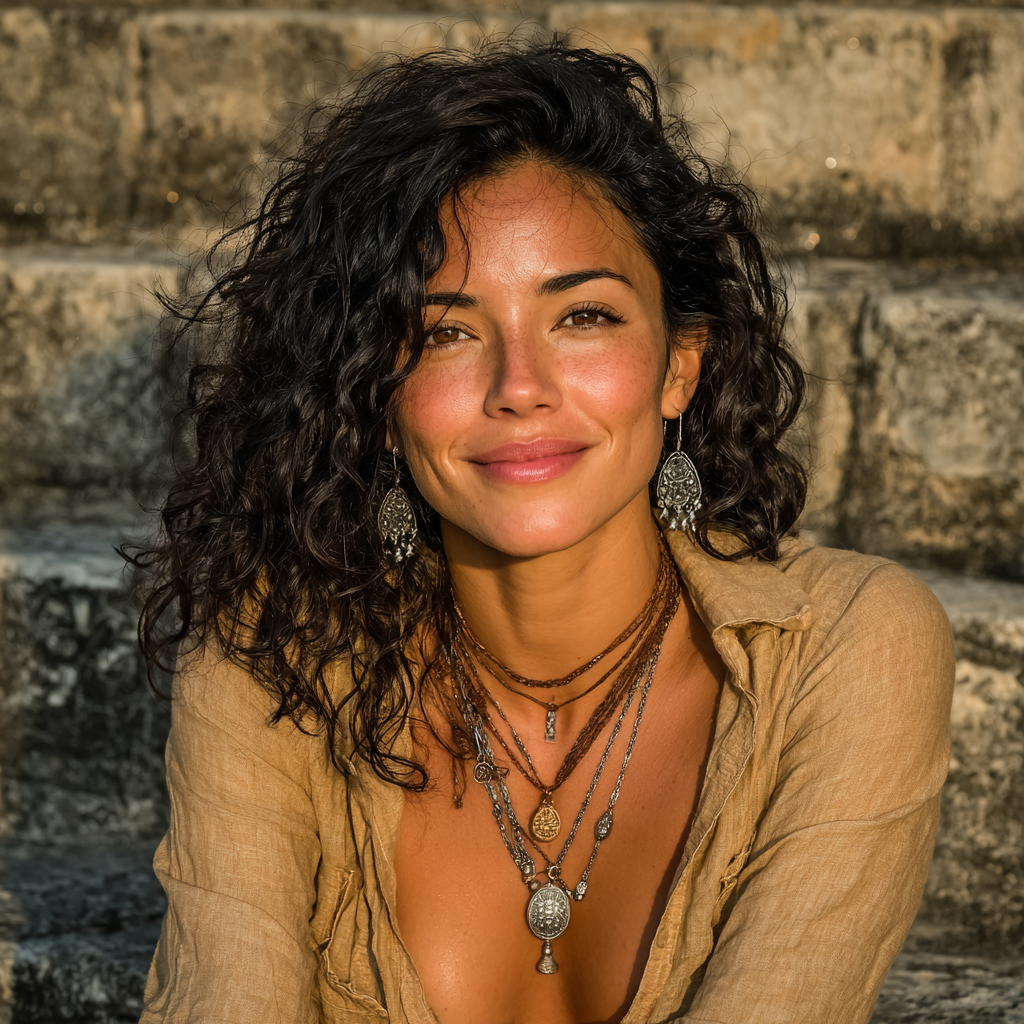
By Elena Vasquez
Cultural anthropologist and culinary storyteller. Elena spent a decade documenting traditional cooking methods across Latin America and the Mediterranean. She holds a PhD in Ethnography from Barcelona University and believes the best way to understand a place is through its kitchens and ancient streets.