
Liverpool: Where the Irish Sea Made a City, and the City Made Its Own Rules
By Finn O'Sullivan. First published April 2026.
I am standing on the waterfront at six in the morning, watching the Mersey turn silver where it meets the Irish Sea, and I am thinking about my grandmother. She left Cork in 1952 with a cardboard suitcase and a name she could not pronounce properly anymore. Liverpool was where the boat stopped, where the world began again. The city took her in, gave her a room above a pub on Scotland Road, and taught her to say "alright la" before she learned where the post office was.
That is the thing about Liverpool. It does not wait for you to understand it. It assumes you will catch up.
The city spent two centuries as one of the world's busiest ports, built a fortune on sugar and human cargo it still struggles to account for, lost nearly everything to bombs and bankruptcy, and rebuilt itself around four lads who played guitars in a damp cellar. The result is a place with no patience for pretence. The buildings are too honest, the accent too sharp, the history too bloody for polish.
This is not a guide that will tell you to "do Liverpool in a weekend." Liverpool does not do anything in a weekend. What follows is a walk through a city that built itself twice — once with warehouses and docks, once with songs and stubbornness — and never fully decided which version was real.
The Waterfront: Where the Money Came In and the People Never Left
Start at the Pier Head, where the ferry still crosses to Birkenhead every twenty minutes and the wind carries the smell of salt and diesel that has defined this city since 1715. The Three Graces line up like stone sentinels: the Royal Liver Building (Pier Head, L3 1HT), the Cunard Building, and the Port of Liverpool Building.
The Royal Liver Building opened in 1911 as headquarters for the Royal Liver Assurance Group. Its two copper Liver Birds — Bella and Bertie, if you are being familiar — watch the river from 98 metres up. For the first time in its history, you can go inside. The Royal Liver Building 360 tour costs £16 (open daily 9:30am–5:30pm, last entry 4:30pm). The clock tower contains clocks that are 1.8 metres wider than Big Ben's, a deliberate bit of one-upmanship that tells you everything about Liverpool's relationship with London. The guides will tell you the birds face away from each other because if they ever mated, the city would collapse. Nobody believes this, but everybody repeats it, and that is Liverpool in miniature.
Behind the Pier Head, the Royal Albert Dock spreads across five storeys of converted warehouses designed by Jesse Hartley and opened in 1846. Hartley built it from cast iron, brick, and stone with no structural wood, which meant it could handle brandy, sugar, and cotton without burning down. The dock closed in 1972 and sat derelict for a decade — local kids used it for motorbike races and bonfires — before reopening in 1988 as a cultural complex.
Today it houses Tate Liverpool (Albert Dock, L3 4BB; free entry, special exhibitions typically £10–£14; open daily 10am–6pm), the largest collection of modern art in England outside London. The building itself is worth the walk-through: the old warehouse columns stand exposed, and the light comes through windows that once illuminated bales of cotton.
The Beatles Story (Britannia Vaults, Albert Dock, L3 4AD; £18 adults, £10 children; open daily 9am–6pm, last entry 5pm) is the largest permanent exhibition about the band, with replicas of Abbey Road Studios and the Casbah Coffee Club. The audio guide is narrated by Julia Baird, John Lennon's half-sister, and her voice has the same edge Lennon's had — flat, funny, refusing to sentimentalise. The exhibition does not pretend the breakup was amicable. It does not pretend anything was amicable.
The Museum That Refuses to Let the City Forget
The Merseyside Maritime Museum (Albert Dock, L3 4AQ; free; open Tuesday–Sunday 10am–6pm) occupies a former warehouse and tells the story of a port that once controlled 40 percent of the world's trade. The Titanic section matters here because the ship was registered in Liverpool, and many of its crew came from the city. You will find their names on a wall — not the famous ones, the cabin stewards and firemen who nobody remembers.
The basement holds the Old Dock Tour, which runs selected days and costs £8.50 (book at the museum desk). You descend into the world's first commercial enclosed wet dock, built in 1715 and buried beneath the city for 250 years until archaeologists uncovered it in 2001. The brick walls are still black with tar. Your guide will point out the original drainage channels and explain how dock workers unloaded 10,000-ton ships by hand, twelve hours a day, for wages that would not cover a round of drinks today.
Next door, the International Slavery Museum occupies the same building's third floor. It is currently closed for refurbishment, with a planned reopening in 2026. When it returns, it will remain the only national museum in the world devoted to transatlantic slavery and its contemporary legacies. Liverpool's role in the trade is not abstract here. Between 1699 and 1807, Liverpool-based ships carried an estimated 1.5 million enslaved Africans across the Atlantic. The museum names the captains, shows the ledgers, and refuses to let the city look away. The street names you have been walking past — Bold Street, Tarleton Street — are named after men who made their fortunes in human flesh. The museum does not let you forget this either.
The Museum of Liverpool (Pier Head, L3 1DG; free; open Tuesday–Sunday 10am–6pm, closed 1 January and 24–26 December) sits a five-minute walk north. The building opened in 2011 and looks like a ship made of glass and limestone. Inside, three floors cover the city's formation, its football culture, its music, and its Irish and Chinese communities. The King's Regiment collection includes the uniform of a Liverpool soldier who fought at Waterloo. The overhead railway exhibit preserves the controls of an elevated system that ran along the dock road from 1893 to 1956 — the locals called it the "Dockers' Umbrella" because it shielded them from rain while they walked to work.
The Cellar That Changed Everything
The Beatles are unavoidable, and the city knows it. What is less understood is how the band emerged from a very specific Liverpool — damp, working-class, Irish-Catholic, suspicious of anyone who put on airs.
The Cavern Club (10 Mathew Street, L2 6RE) is not the original — that was demolished in 1973 by British Rail, who needed the land for a ventilation shaft. The rebuilt version opened in 1984 using 15,000 of the old bricks. Live music starts at noon every day, and there is no cover charge before 8pm. After that, it is typically £5–£10 depending on the act. The cellar still smells of damp stone and spilled beer. The walls are covered with photographs of everyone who played here — not just the Beatles, but the Who, the Rolling Stones, Elton John before he was Elton John.
The Magical Mystery Tour bus leaves from Albert Dock daily at 10:30am, noon, and 2pm. It lasts two hours, costs around £20, and stops at Penny Lane, Strawberry Field, and the childhood homes of Lennon and McCartney. I will be honest with you: if you do not care about the Beatles, this is two hours on a brightly painted bus listening to "Penny Lane" on repeat while a guide points at a barbershop. The real sites are more interesting on foot.
National Trust tours of Mendips (251 Menlove Avenue, L18 3DL; Lennon's home) and 20 Forthlin Road (L18 6JD; McCartney's) run March to October and must be booked in advance online. Each house costs £12, or £20 combined. These are worth the effort — not because of the memorabilia, but because of the ordinariness. The kitchen at Mendips still has the same lino. The bathroom at Forthlin Road still has the same green tiles. You understand something about where the songs came from when you see the narrow terraced houses with the thin walls and the gardens the size of a pub table.
The Irish Quarter That Is Still Irish
Liverpool's Irish connection runs deeper than tourism boards like to admit. In the mid-1800s, famine refugees transformed the city. By 1851, more than 20 percent of Liverpool's population had been born in Ireland. The accent — "scouse" — comes from lobscouse, a sailor's stew of salted meat and vegetables that Irish dock workers ate because it was cheap, filling, and could be left simmering while they unloaded ships.
St Anthony's Church (252 Scotland Road, L5 5BE) still holds Mass in both English and Irish. The building itself is Victorian Gothic, but the congregation is what matters — families who have been here six generations, who still send money home to Cork and Kerry, who still argue about whether Dublin or Liverpool has the better Craic. The Liverpool Irish Festival runs every October with music, literature, and historical walks through the old Irish neighbourhoods. If you are there in March, the St Patrick's Day parade draws crowds that rival anything in Dublin, and the pubs on Hardman Street run out of Guinness by four in the afternoon.
The Liverpool Irish Centre (86 Mount Pleasant, L3 5SL) hosts music sessions every Friday night. You do not need to be Irish. You do not even need to know the songs. Show up, buy a pint of Caffrey's (£4.20), and someone will teach you the chorus.
The Two Cathedrals and the Street Between Them
Hope Street runs from the Georgian Quarter to the Knowledge Quarter, and at either end stand two buildings that could not be more different.
Liverpool Cathedral (St James's Mount, L1 7AZ) is the largest cathedral in Britain and the fifth largest in the world. Construction began in 1904 and finished in 1978 — Giles Gilbert Scott died in 1960 and never saw it completed. The tower is 101 metres high, and the climb costs £6 (open daily 10am–5pm, tower closes 4:30pm). On clear days you can see Blackpool Tower, 35 miles north, and the Welsh hills beyond that. The interior is Gothic Revival at its most confident — vaulted ceilings, stained glass by James Powell and Sons, a organ with 10,268 pipes that the cathedral organist still plays with his shoes off because the pedals are too sensitive for anything else.
At the northern end of Hope Street, the Metropolitan Cathedral (Cathedral House, Mount Pleasant, L3 5TQ) opened in 1967 and looks, there is no other way to put this, like a concrete spaceship. Sir Frederick Gibberd designed the circular building after Lutyens's original plan — which would have been the second-largest church in the world — proved too expensive. The stained glass by Patrick Reyntiens covers 8,000 square feet and turns the interior amber and blue at sunset. Entry is free, and the crypt (which survived from Lutyens's design) is worth the £4 charge. It is cold down there, and damp, and the concrete walls weep. Gibberd wanted a cathedral for the people, not the powerful. You can argue about whether he succeeded, but you cannot argue that it is forgettable.
Between them, The Philharmonic Dining Rooms (36 Hope Street, L1 9BX) is a Victorian pub rebuilt in 1898 with marble, mahogany, and toilets the Beatles once claimed were so fancy they bought pints just to use them. A pint of cask ale costs around £4.20. The pub opens 11am–11pm Monday–Saturday, 11am–10:30pm Sunday. The ceiling is gilt, the barmaids are sharp, and the regulars have been sitting in the same seats since 1987. It is owned by Nicholson's, which means the beer is consistently good and the food is consistently mediocre. Come for the architecture, stay for the conversation.
The Bombed-Out Church and What It Means
St Luke's Church (Leece Street, L1 2TR), known locally as the Bombed Out Church, stands as Liverpool's most honest memorial. A German incendiary bomb destroyed the interior during the May Blitz of 1941, leaving only the stone shell and the tower. The city could have demolished it. Instead, they left it standing, open to the sky, and since 2007 it has functioned as an open-air arts venue.
Events range from theatre to cinema screenings to refugee charity fundraisers. There is no fixed schedule — check their website or walk past and read the chalkboard. Entry is usually free, though donations are collected for maintenance. I saw a production of Twelfth Night here one August evening, rain threatening, the actors performing under the open tower while pigeons roosted in the arches above. It was better than anything I have seen at the National Theatre.
The church is also the site of the annual Liverpool Irish Festival opening ceremony. In October, they fill the nave with candles and musicians, and the stone walls that survived the Blitz vibrate with fiddle music.
The Georgian Quarter: Where the Money Lived
South of the centre, around Falkner Square and Rodney Street, the Georgian Quarter preserves terraced townhouses from the early 1800s, when Liverpool merchants grew rich enough to want distance from the docks that made them. The area served as a filming location for Peaky Blinders and The War of the Worlds.
Rodney Street is known as the "Harley Street of the North" for its concentration of Victorian doctors' houses. Number 62 was the birthplace of Arthur Askey. Number 59 was where Nicholas Monsarrat wrote The Cruel Sea. The blue plaques appear every few doors, a reminder that Liverpool's cultural output has never been limited to music.
Falkner Square itself is a Georgian garden square, recently restored, with benches that fill at lunchtime with students from Liverpool John Moores University and nurses from the Royal Liverpool University Hospital. The Pen Factory (13 Hope Street, L1 9BQ), in a converted Victorian pen warehouse, serves brunch until 3pm and transitions to cocktails by evening. A full breakfast costs £9.50 and comes with sourdough from the Baltic bakery.
Tunnels Built for Reasons Nobody Understands
Williamson's Tunnels, in the Edge Hill neighbourhood east of the centre, remain one of the city's stranger stories. Joseph Williamson, a wealthy tobacco merchant, employed hundreds of men to build a labyrinth of brick tunnels beneath his property between 1810 and 1840. Nobody knows why. Theories range from quarrying to religious prophecy to pure philanthropy — Williamson wanted to give returning Napoleonic War veterans work when the city had none to offer.
The Friends of Williamson's Tunnels offer free guided tours on Wednesdays and Sundays (meet at the Paddington entrance on Mason Street, L7 3TE), though donations are encouraged. The Williamson Tunnels Heritage Centre (Smithdown Lane, L7 3EE; £4.50 adults, £3 children) runs paid tours of a different section on Fridays, Saturdays, and Sundays. Both are worth doing — the Heritage Centre has better lighting and more interpretive material, but the Friends' tour takes you into sections that feel genuinely unexplored, with water dripping from ceilings that have been dripping for 180 years.
Where to Eat: Beyond the Baltic Market
The Baltic Triangle south of the centre has converted warehouses hosting street-food markets and breweries. The Baltic Market (Cains Brewery Village, Stanhope Street, L8 5XJ; open Thursday 5pm–10pm, Friday 5pm–11pm, Saturday noon–11pm, Sunday noon–8pm) has vendors selling everything from Neapolitan pizza (£9–£12) to Korean fried chicken (£8–£10). It gets crowded by 7pm on Fridays — arrive early or be prepared to eat standing.
Camp and Furnace (67 Greenland Street, L1 0BY) operates as a bar, venue, and food hall in a former warehouse. On Sundays, they run a carvery roast with Yorkshire puddings the size of dinner plates (£14.95, served noon–5pm). The rest of the week, the menu shifts between street-food residencies. Check their Instagram before you go — the kitchen concept changes monthly.
For something more permanent, Mowgli (69 Bold Street, L1 4EZ) serves Indian street food in a bright, noisy room where the waiters shout orders and the lights are too bright. The yoghurt chat bombs (£5.95) and the tiffin boxes (£12.95) are the things to order. The Italian Club Fish (128 Bold Street, L1 4JA) does Sicilian seafood — the arancini (£7.50) and the grilled sardines (£9.95) are proper. Maray (91 Bold Street, L1 4HF) does Middle Eastern small plates that won a BBC Good Food award in 2023. The disco cauliflower (£8.50) and the lamb shoulder (£16) are worth the inevitable queue.
If you want breakfast, The Brunch Club (37-41 Duke Street, L1 5AP) opens at 9am daily and does pancakes that have no business being this good in a city that historically considered chips a vegetable. The blueberry and ricotta stack (£9.50) will keep you walking until dinner.
Where to Drink: A City of Pubs, Not Bars
Liverpool does not really do cocktail bars. It does pubs — warm, loud, slightly falling apart, with carpets that have absorbed decades of spilled beer and conversation.
The Baltic Fleet (33 Wapping, L1 8DQ) is a back-street pub near Albert Dock that brews its own beer in the basement. The Baltic Fleet Bitter (£3.80 a pint) is dark, malty, and tastes like Liverpool would taste if you could drink it. The pub has been here since 1853, and the current landlord has been behind the bar since 1987.
The Grapes (25 Ranelagh Street, L1 1JW) is a small, fiercely local pub that the Beatles used to drink in before Cavern Club sets. It has not changed. The carpet has not changed. The jukebox still has "She Loves You" on it. A pint of lager costs £3.90.
The Belvedere (5 Sugnall Street, L7 7EB) is a back-street gem in the Georgian Quarter, run by the same family since 1979. They do not serve food. They barely serve anything except conversation and proper cask ale. If you want to understand Liverpool, sit at the bar and listen.
Getting Around: The City Is Smaller Than It Thinks
Liverpool is compact. You can walk from the Pier Head to the Georgian Quarter in 15 minutes, and from there to either cathedral in 10. The Merseyrail underground connects the centre to Birkenhead and New Brighton across the river. A Day Saver costs £5.65 for unlimited travel after 9:30am. The Wirral Line takes you to Port Sunlight, the model village built by the Lever Brothers for their soap factory workers — worth a half-day if the weather holds.
The airport, John Lennon Airport (L24 1YD), sits 7 miles southeast and connects to most European cities. The Arriva 500 bus into town takes 45 minutes and costs £2.50. A taxi to the city centre costs around £20.
If you are arriving by train, Lime Street Station puts you in the heart of the city. The station itself is worth a look — the Victorian train shed is one of the oldest iron roofs in the world still in use.
When to Go: The Weather Is Not the Point
Liverpool is a year-round city, but it wears each season differently.
Spring (March–May): The parks — Sefton Park, Calderstones, Stanley Park — come alive, and the city feels like it is waking up. St Patrick's Day in March is genuinely chaotic. The Grand National at Aintree in early April draws crowds from across the north.
Summer (June–August): The best time for the waterfront. Open-air events at the Pier Head, the Liverpool International Music Festival in July, and enough daylight to walk the docks at 10pm. This is also when the city is busiest with tourists.
Autumn (September–November): My favourite time. The light over the Mersey turns golden in October, the Liverpool Irish Festival brings music to every pub, and the football season is in full voice. Hotel prices drop after August.
Winter (December–February): Cold, damp, and occasionally glorious. The Christmas markets on St George's Plateau are better than most English cities manage. The January sales on Church Street are serious. And there is something about a Liverpool pub in winter — the fire, the damp coats steaming on radiators, the stories getting longer as the nights do.
Where to Stay: From Georgian Townhouses to Dock Warehouses
The Resident Liverpool (29 Seel Street, L1 4AU) occupies a converted warehouse in the RopeWalks district. Rooms from £85/night. The location puts you within walking distance of everything that matters, and the breakfast — cooked to order, not a buffet — is included.
Hope Street Hotel (40 Hope Street, L1 9DA) sits between the two cathedrals in a converted Victorian warehouse. Rooms from £120/night. The restaurant does modern British cooking that is genuinely good, not just hotel-good. The building still has the original cast-iron columns.
Titanic Hotel Liverpool (Stanley Dock, Regent Road, L3 0AN) is in a converted tobacco warehouse — the largest brick building in the world when it was built in 1901. Rooms from £95/night. It is slightly out of the centre, but the Mersey views from the higher floors are worth the taxi ride. The Stanley's Bar and Grill in the lobby does a decent steak.
For budget travellers, Selina Liverpool (56 Mount Pleasant, L3 5SD) offers dorm beds from £20 and private rooms from £55. It is in a Georgian townhouse with a café that serves decent coffee and better WiFi.
What to Skip
The Magical Mystery Tour if you do not care about the Beatles. I have said this already, but it bears repeating. Two hours on a bus painted like a cartoon, listening to a guide make jokes you have heard before, looking at suburban houses where nothing is happening. If you are a serious fan, book the National Trust house tours instead. If you are not, skip it entirely.
The chain restaurants on Mathew Street after dark. The street becomes a stag-party corridor by 9pm, and the pubs charge £6 for a pint of lager because they know tourists will pay it. The Cavern Club itself is worth seeing, but the surrounding bars are interchangeable with any English city centre on a Saturday night. Walk five minutes to the Baltic Triangle or Hardman Street instead.
The Wheel of Liverpool at Keel Wharf. It is a Ferris wheel. It costs £10. The view is worse than the one from the cathedral tower, which costs £6 and has history attached. This is a port city, not a seaside resort. It does not need a Ferris wheel.
Any pub with a Beatles cover band playing nightly. Liverpool has live music everywhere — original music, good music, music that has nothing to do with four lads from the 1960s. The cover bands are for the tour buses. You are not on a tour bus.
The Last Word
Liverpool does not dress up for visitors. It is too busy being itself — arguing about football, mourning closed docks, singing in pubs, and refusing to apologise for any of it.
My grandmother lived here for sixty years. She never lost her Cork accent, but she learned to make scouse — the stew, not the dialect — and she learned to navigate the Mersey ferry in fog, and she learned that Liverpool would give you exactly what you gave it. Nothing more, nothing less.
That is the reason to go. The city is not trying to sell you anything. It already knows what it is. The only question is whether you are ready to catch up.
Finn O'Sullivan is an Irish storyteller and folklorist. He hunts for the narratives that do not make guidebooks — the pub legends, the family feuds, the neighbourhood heroes. He believes every street corner has a story if you know who to ask.
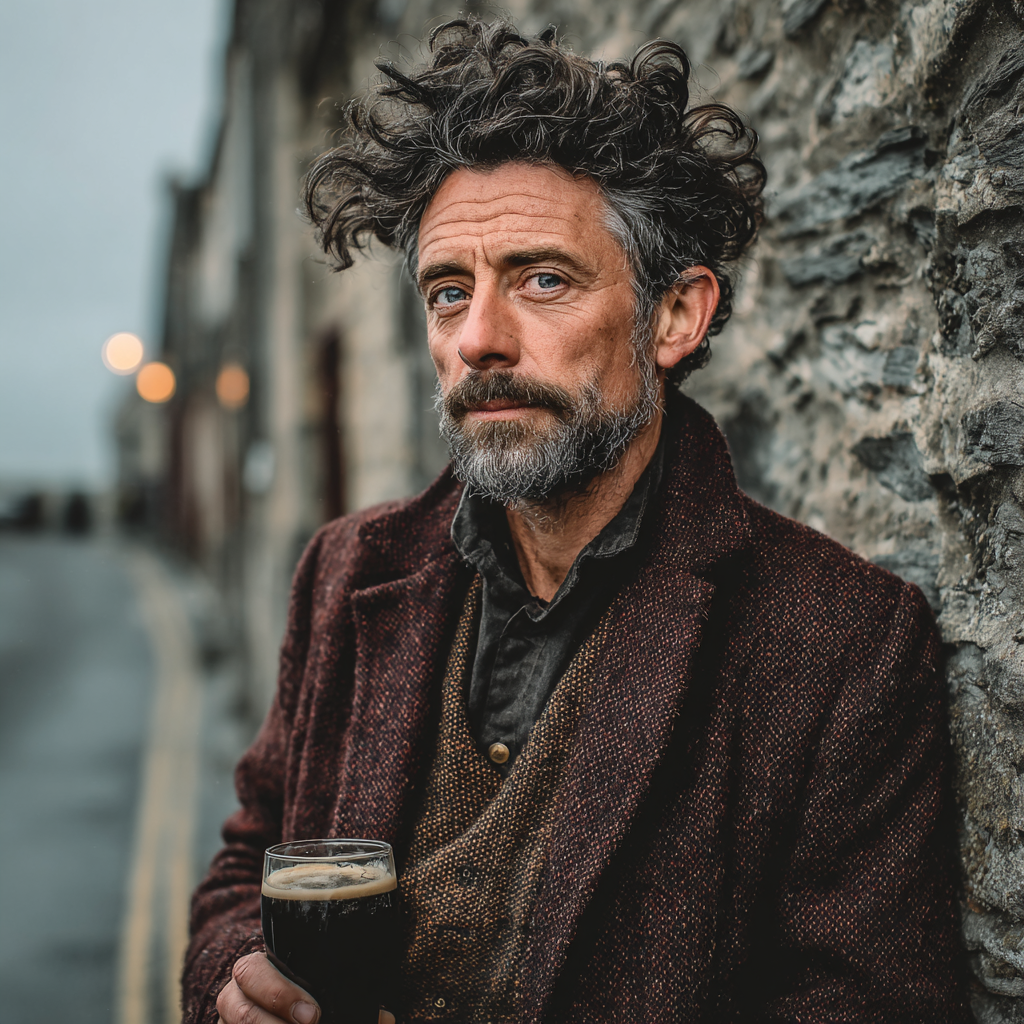
By Finn O'Sullivan
Irish storyteller and folklorist. Finn hunts for the narratives that do not make guidebooks—the pub legends, the family feuds, the neighborhood heroes. He believes every street corner has a story if you know who to ask.