
Most travel writing about Ashgabat focuses on the absurdity. Five hundred and forty-three buildings sheathed in white Italian marble. A 95-meter tripod arch crowned with a rotating gold statue of a dead president. The world's largest indoor Ferris wheel that rarely turns. The emptiness. The heat. The police who materialize when you raise a camera near the wrong facade.
All of this is true. But focusing only on the strangeness misses the point. Ashgabat is the most honest capital in Central Asia. It does not pretend to be a democracy, a free market, or a bustling metropolis. What you see is what the state wants you to see, built with gas money and maintained with theatrical precision. The city is a three-dimensional argument about power, identity, and what happens when a single vision reshapes a desert without opposition.
The first thing to understand is the scale. Ashgabat occupies 22 square kilometers of the Karakum Desert foothills, pressed against the Kopet Dag mountains that form the border with Iran. The city was flattened by an earthquake in 1948 that killed over 110,000 people, including the future president Saparmurat Niyazov's mother. The Soviet authorities rebuilt it as a modest provincial capital. Then the gas fields opened, independence arrived in 1991, and Niyazov began his transformation. What exists now is the result of three decades of uninterrupted construction, demolition, and reconstruction under two presidents who shared an obsession with marble, Guinness World Records, and monumentality.
Start at the Independence Monument, completed in 2001 to commemorate a decade of sovereignty. The structure rises 91 meters and is shaped like a traditional Turkmen yurt. A golden statue of Niyazov crowns the top, and a five-headed eagle represents the unity of the country's tribes. The monument is free to visit and open at all hours, though the small museum inside keeps irregular daytime hours. Walk up the white marble stairs and study the reliefs. They depict a version of history that begins with nomadic glory, passes through Soviet darkness, and ends with national rebirth. It is propaganda, but it is also the official narrative of a country, carved in stone and gilded in bronze. Understanding this narrative is essential to understanding everything else you will see.
From there, head south to the Monument of Neutrality. The original 75-meter arch stood in the city center from 1998 until 2010, topped with a 12-meter gold-plated statue of Niyazov that rotated to face the sun. After his death, the monument was dismantled, enlarged to 95 meters, and rebuilt on a hillside overlooking the city. The three supports represent a traditional tagan, the tripod used to hold a cooking pot over a fire. Five bronze cylinders encircle the structure, symbolizing the five Turkmen tribes. The interior houses a small museum of neutrality and two observation platforms connected by a panoramic elevator. The ticket costs 3 manat, roughly $0.85 at the official exchange rate. The view from the top is the best introduction to the city's geometry: broad boulevards, symmetrical parks, marble ministries, and almost no traffic.
The Alem Entertainment Center, recognized by Guinness in 2012 as the world's largest indoor Ferris wheel, cost over 315 million manat to build. The glass globe sits on a pedestal near the city center, illuminated at night in cycling colors. The wheel inside is technically operational, though operators admit it runs infrequently. Entry costs about $2. Whether this is a colossal waste of resources or an ambitious civic amenity depends on your politics. Either way, it exists, and you should see it.
For context on the culture that produced all this marble, visit the Turkmen Carpet Museum near the city center. The collection includes antique carpets dating back centuries, with explanations of tribal patterns and the symbolism woven into each design. On some days, you can watch weavers working on contemporary pieces. Entry runs $2 to $3. The National Museum of Turkmenistan, in a massive modern building near Independence Park, holds over 500,000 artifacts covering archaeology, ethnography, and natural history. Photography is prohibited unless you pay a separate camera fee, typically $5 to $10. Budget $3 to $5 for standard entry. Do not skip the ethnography halls, which explain the tribal divisions that still shape Turkmen identity and politics.
The most rewarding site outside the city is Nisa, the ancient Parthian fortress 18 kilometers west of Ashgabat. Founded by Arsaces I around 250 BC and later used as a royal necropolis, the UNESCO-listed ruins include defensive walls, administrative buildings, and wine storage rooms carved into the hillside. There is almost no signage, so hire a guide or read up beforehand. The site opens around 9 AM and closes by 5 PM. Entry is roughly $3. Marshrutka minibuses run toward Bagir village from the city center for less than $1, though a taxi is more reliable at about $10 round-trip with waiting time.
Closer to the city, the Gypjak Mosque and Mausoleum complex sits on the southern outskirts. The mosque, built of white marble with gold domes, is the burial site of Niyazov and several family members. The scale is enormous and the interior is austere. It opens for visitors during daylight hours and entry is free. Dress conservatively and remove your shoes. Women should cover their heads.
If you want to see Ashgabat's human side, go to the Tolkuchka Bazaar, also called the Russian Bazaar, on the city's eastern edge. This is where the marble ends. Vendors sell fresh produce, spices, household goods, and carpets in a chaotic, loud, and genuinely local environment. Prices are negotiable. The market is busiest on Sunday mornings. Bring small bills and expect to bargain. It is the best place in the capital to understand how ordinary Turkmens actually live, work, and eat.
The Russian Orthodox Church of the Holy Transfiguration, near the city center, offers a quiet counterpoint to the monumental architecture. The icons and frescoes inside date to the late 19th and early 20th centuries, before Soviet secularization and post-independence Turkmenization scrubbed much of the city's Russian heritage. Services are held on Sundays and entry is free.
Practicalities matter enormously in Ashgabat. You cannot arrive without preparation. Most visitors need a letter of invitation arranged through a registered tour operator, plus a visa obtained in advance. Transit visas grant five days and are slightly easier to secure. Tourist visas allow longer stays but require a fixed itinerary and official guide accompaniment in some regions. Ashgabat itself is generally permissive for independent walking, though police may question you if you photograph government buildings or uniformed officials. The city is extremely safe in terms of violent crime, but the authorities enforce rules with unpredictable intensity.
The official currency is the Turkmen manat, but US dollars and euros are widely accepted for tourist services. ATMs are unreliable and many do not accept foreign cards. Bring cash. There is a significant gap between the official exchange rate and the black market rate. Using official channels means you overpay by roughly 300 percent. Most travelers change money informally through their hotel or guide, though this carries obvious risk.
Summer temperatures exceed 45°C and occasionally reach 50°C. The heat reflects off the marble and becomes unbearable by mid-morning. Visit between April and May or September and October, when daytime highs stay in the 25°C to 30°C range. Winter is mild but grey, with dust blowing down from the mountains.
Accommodation is limited and expensive by Central Asian standards. Budget dorm beds run $15 to $25 per night. Mid-range hotels charge $60 to $100. Meals at local cafes cost $3 to $7. Western-style restaurants charge $10 to $20. Shared taxis and minibuses cost $0.20 to $0.50 per ride. The city has no metro and the bus system is confusing for non-Russian speakers. Walking is the best way to see the center, though distances are large and shade is scarce.
The standard three-day tour adds a trip to the Darvaza gas crater, five hours north in the Karakum Desert. The burning pit, created by a Soviet drilling accident in 1971, is genuinely spectacular at night. Tour operators run overnight trips for $150 to $250 including transport, guide, and yurt accommodation. If you have more time, Merv and Kunya-Urgench offer some of the most significant Silk Road ruins in Central Asia.
Ashgabat will not charm you in the conventional sense. It has no cozy cafes, no spontaneous street life, no hidden neighborhoods waiting to be discovered. What it offers is a concentrated lesson in how a state constructs its own mythology and enforces it through architecture, urban planning, and controlled access. The marble is real. The emptiness is real. The heat is real. And the determination to build a capital that looks like no other city on earth is, in its own authoritarian way, a form of cultural expression that deserves direct observation rather than simple mockery.
Wear comfortable shoes, bring more water than you think you need, and keep your camera low when uniformed men are nearby. The city is watching you watch it. That is the whole point.
By Elena Vasquez
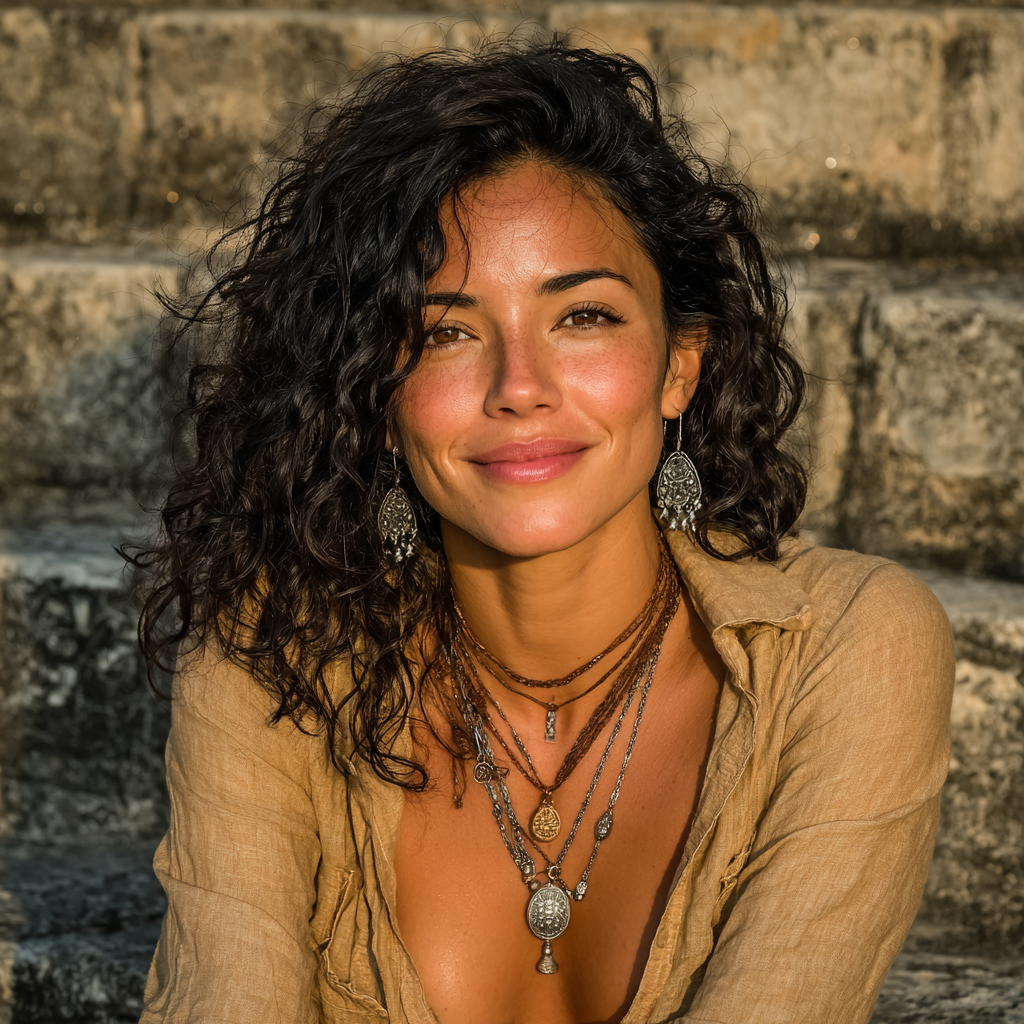
Cultural anthropologist and culinary storyteller. Elena spent a decade documenting traditional cooking methods across Latin America and the Mediterranean. She holds a PhD in Ethnography from Barcelona University and believes the best way to understand a place is through its kitchens and ancient streets.