
Most travel writing about Cappadocia starts with the balloons. Hundreds of them at sunrise, floating over fairy chimneys, cameras clicking from hotel terraces. This is the image that sells the place, and it is the least interesting thing about it. The balloons have only been a regular sight since the 1990s. The rocks have been here for ten million years, and people have been cutting doors into them for three thousand.
Cappadocia is a region, not a town. Its center is the triangle between Nevşehir, Ürgüp, and Avanos, with Göreme sitting in the middle as the main base for visitors. The landscape is the work of three volcanoes — Erciyes, Hasan, and Melendiz — that erupted repeatedly between ten and two million years ago, leaving a plateau of compressed volcanic ash called tuff. The tuff is soft enough to cut with hand tools but hardens on contact with air. That single geological accident explains everything you are about to see: churches, monasteries, entire cities, all carved rather than built. History here is not something that stands on the land. It is something cut into it.
Göreme Open-Air Museum: Byzantium's Greatest Gallery
The Göreme Open-Air Museum, about 1.5 kilometers uphill from Göreme town on Müze Caddesi, is the region's most visited site and the one that justifies the UNESCO listing. It is not a museum in the conventional sense. It is a monastic complex of roughly thirty rock-cut churches, chapels, and communal halls built between the tenth and twelfth centuries by Byzantine monks, entered through a single fortified gate as if the valley itself were a walled city.
Tickets for foreign visitors are now pegged to the euro and revised annually — budget roughly €20–25 for the main ticket and a separate supplement of €6–12 for the Dark Church (Karanlık Kilise), with payment accepted in lira or by card; check muze.gov.tr before you go. The site opens daily at 08:00, closing at 19:00 from April through October and 17:00 in winter, with last entry about an hour before closing. Audio guides rent for around 350 TL. Arrive at opening: tour buses roll in from 10:00, and the narrow church interiors clog fast.
Do not skip the Dark Church supplement. The chapel's single small window limited light damage for nine centuries, and the result is the best-preserved fresco cycle in Cappadocia — the Crucifixion, the Last Supper, the Nativity, and a Deesis with Christ enthroned between the Virgin and John the Baptist that still carries original pigment in its deep blues and golds. Photography inside is banned, which is precisely why it has survived.
Most visitors miss the Buckle Church (Tokalı Kilise) entirely, which is a small scandal: it sits fifty meters across the road from the main gate, the ticket now includes it, and it is the largest church in the complex. Its frescoes run over a deep blue background and narrate the life of Christ in panels from the narthex to the apse.
The smaller chapels reward slow looking. The Apple Church (Elmali Kilise) is named for the orb of light in Christ's hand. The Snake Church (Yılanlı Kilise) shows Saint Onuphrius — a hermit who lived naked in the Egyptian desert — and a Saint George dispatching a dragon that looks suspiciously like a local snake. The Chapel of Saint Barbara carries geometric red ochre designs from the iconoclastic period, when images of saints were forbidden and believers argued their theology in abstract patterns instead. These are not decorative choices. They are ninth-century arguments made with pigment on stone.
What makes Göreme remarkable is not the art alone but the density of monastic life around it: refectories with rock-cut tables and benches, wine presses, storage jars, graves. This was a functioning community, not a gallery. And it thrived partly because of who had been here before.
The Theologians of the Rocks
In the fourth century, three men from this region — Basil the Great, his brother Gregory of Nyssa, and their friend Gregory of Nazianzus, collectively the Cappadocian Fathers — did more than almost anyone else to define early Christian doctrine, from the Trinity to monastic rule. Basil essentially wrote the rulebook for communal monasticism, the template on which Benedict and every Western order after him drew. They argued, in essence, that the desert — and by extension this eroded, isolated plateau — was where a person went to think clearly.
It is worth sitting with that idea at Göreme: the rocks shaped the theology as much as the theology shaped the rocks. When you see a monk's cell carved into a chimney at Paşabağ (Monks Valley), with a chapel cut into its base and a conical cap of harder basalt protecting the whole column like an umbrella, you are looking at Basil's philosophy made physical. Paşabağ itself is free to enter on the Göreme–Avanos road and takes twenty minutes; a local tradition holds that a hermit named Simeon lived atop one of these spires in the sixth century, echoing the pillar-saints of Syria. Go before 10 AM or the tour buses swallow it.
The Cities Beneath the Earth
The other side of Cappadocian history is defensive. At least thirty-six underground cities have been identified in the region, and Derinkuyu — thirty kilometers south of Göreme, at Bayramlı Mah. Şemsili Yolu Sokak No. 15 — is the deepest. It descends more than sixty meters across at least eighteen levels, eight of them open to visitors. Entry is €13 (summer hours 08:00–19:00, winter 08:00–17:00). The city could shelter an estimated twenty thousand people along with their livestock, food stores, and wine cellars. It has ventilation shafts that double as wells, a church on the seventh level, schoolrooms, and circular stone doors — rolling millstones a meter high — that could seal entire sections against raiders. Historians debate the origin: Proto-Hittite beginnings three thousand years ago, Phrygian expansion, early Christian refuge. What is not debatable is the conclusion: for over two thousand years, people here considered living underground a rational response to danger.
Inside, the temperature holds a constant 13–15°C year-round. The duck-walk tunnels force you to hunch; the steps are steep and worn glassy by centuries of feet. If you have any claustrophobia, take the warning seriously. This is an inverted skyscraper, and it plays on the mind.
Kaymaklı Underground City, ten kilometers northwest of Derinkuyu, is the gentler alternative: four of its eight levels are open, but the passages are wider, the ceilings higher, and daily life easier to read — stables, kitchens, wineries, storage rooms. Same €13 ticket, same hours. A kilometer-long tunnel once connected the two (ancient sources describe a link of roughly eight to nine kilometers); you can visit both in one morning by car or taxi from Nevşehir, though most guided Green Tours pick one.
Ihlara Valley: The Hermits' River
Eighty kilometers southeast of Göreme, the Ihlara Valley is a fourteen-kilometer canyon cut by the Melendiz River — named for the same volcano whose eruptions created the tuff. Entry is €15, the site is open daily 08:00–18:00, and the near-four-hundred-step descent from Ihlara village to the canyon floor will sort the serious from the casual before they reach the water.
The reward is one of the great walks in Anatolia. The trail follows the river past roughly a hundred rock-cut churches from the seventh to eleventh centuries — most of them unlocked, unguarded, and open to anyone willing to scramble up a slope. They are simpler than Göreme's: many are single rooms with a cross carved into the vault. But the setting is the point. You pass them as the hermits did, water running beside the path, cliffs rising on both sides, bees working the riverside flowers. The full trail ends at Selime Monastery, a cliff-face complex with a cathedral-scale church, living quarters, and a stable, carved at a scale that makes you wonder what the valley looked like when it was populated. Entry to Selime is free. Most visitors hike only the four-kilometer stretch from Ihlara village to Belisırma, where riverside restaurants serve trout and flatbread — a perfectly respectable way to do it.
Closer to Göreme, the Red and Rose Valleys offer free hiking through the same formations without any museum infrastructure, with trails running between Göreme and Çavuşin past abandoned cave dwellings and pigeon houses. The rock shifts from pale rose in the morning to deep red at sunset. Allow two to three hours, download an offline map, and stay on marked paths — it is easy to wander into private farmland.
The Greek Cappadocia: Mustafapaşa
Every Cappadocia itinerary covers the Byzantines and the early Christians. Almost none of them cover the people who lived here until 1923. That is a failure of imagination, because six kilometers south of Ürgüp sits Mustafapaşa — known for centuries as Sinasos — one of the most quietly devastating heritage villages in Turkey.
Until the Lausanne Treaty of 1923 imposed a compulsory Greece–Turkey population exchange based on religion, Sinasos was a prosperous Greek Orthodox town of merchants — the "Athens of Asia Minor" in local lore, enriched by caviar and wine shipped to Constantinople and Russia. Its wealth is still legible in the lanes: ninety-three registered stone mansions with carved doorways, arched windows, and the distinctive "Sinasos blue" painted on doors and shutters. On the village square, the Church of Constantine and Helena, built in 1729 and renovated in the nineteenth century, still stands with its barrel-vaulted nave and frescoes painted in 1895 by a Greek artist trained in Venice. The Mehmet Şakir Paşa Madrasa (1899) shows the same stone-carving mastery in an Ottoman key. A combined ticket of around 100 TL covers the church and the restored Saint Nicholas Monastery out in Manastır Valley, where a plaque installed in 2012 records the story: the Greeks of Sinasos deported to found Nea Sinasos in northern Euboea, Macedonian Muslims arriving to take over their houses.
The layered result — Greek mansions, Ottoman mosques, a university campus in the old madrasa — is the most honest monument to the exchange anywhere in either country. Mustafapaşa was named UNWTO Best Tourism Village in 2021, yet it still feels overlooked. Half a day, morning light, few crowds. This is the section of your trip your bus tour will not give you.
Hacıbektaş: The Other Islam of Anatolia
Forty-five kilometers northwest of Göreme, past the industrial sprawl of Nevşehir, lies Hacıbektaş, the shrine town of Hacı Bektaş Veli, the thirteenth-century Sufi whose teachings seeded the Alevi-Bektashi tradition that still shapes the spiritual life of much of Anatolia. His dervish lodge — mosque, tomb, rose garden, courtyard kitchens — was converted into a museum in 1964 and entry is free.
Even if Sufism is new to you, the visit recalibrates Cappadocia. This region is not only Byzantine rock churches and underground Christian refuges. It is also a crossroads where Anatolian Islam developed its most heterodox, most tolerant current — one that emphasizes the inward journey over the outward law. The Bektaşi saying attributed to the saint — "Eline, diline, beline sahip ol" (master your hand, your tongue, and your loins) — reads like a founder's code of conduct carved into a culture. Combine it with Avanos on the same day; the town itself has basic restaurants and little else.
Avanos: Four Thousand Years of Clay
Avanos, ten kilometers north of Göreme on the Kızılırmak — Turkey's longest river — has been a pottery town since Hittite times, more than 3,500 years. The red clay comes from the riverbed, and the workshops on the main street still turn on foot-powered wheels. Demonstrations are free; throwing your own pot runs 400–800 TL, with firing and international shipping available if you allow a couple of days.
The most famous workshop, Chez Galip, doubles as the region's strangest museum: a "Hair Museum" of more than 16,000 locks donated by women visitors since 1979, pinned to the cave walls. It is either charming or unsettling; probably both. The real point is the craft itself — you are watching a technique older than most countries, performed by families who never stopped doing it. Avanos also has better restaurants and fewer souvenir touts than Göreme.
The Silk Road in Stone: Saruhan and the Sema
On the Kayseri road seven kilometers east of Avanos stands Saruhan Caravanserai, built in 1249 as a Seljuk waystation for Silk Road caravans — stables, winter hall, raised summer kiosk, and a courtyard fountain, all in dressed volcanic stone. On most evenings it hosts something far better than it has any right to: an authentic Mevlevi sema, the whirling dervish ceremony, performed as religious ritual rather than dinner show.
Tickets run €25–35 (book ahead in high season; hotel transfers are usually included in the price), and the ceremony lasts about an hour — ney flute, droning chant, and the slow unfurling rotation that the Mevlevi order has practiced for 750 years. UNESCO recognized the sema as Intangible Cultural Heritage in 2008. There is no food, no applause, no photography during the rite. Sit on the carpeted floor under the thirteenth-century vaults and let it be what it is: one of the last places on earth where a road motel still does its original job — giving travelers, briefly, a different way of seeing.
The Citadels
Uçhisar Castle, four kilometers east of Göreme, is the highest point in the region — a single massive tuff outcrop honeycombed with rooms and tunnels, inhabited until the 1950s. Entry is about €3 (open roughly 07:00–20:00 in season, earlier in winter); the climb takes fifteen minutes on uneven steps. The view is genuinely useful for orientation: Göreme below, the Pigeon Valley trail, Mount Erciyes to the east, Red Valley to the west. Come at sunset when the tuff turns orange and the buses have gone. Ortahisar, Göreme's quieter little sibling to the south, has its own castle rock with fewer visitors and better cafés at its base.
What to Skip
The hot air balloon rides, if you are here for history. They run €150–250, demand a 4 AM wake-up, and are photographically magnificent and historically empty. Watch them from a terrace with tea instead; that hour costs nothing and the rocks do not care what time you get up.
The hotel "Turkish night" dinner shows with belly dancing and buffet lines — a simulacra of culture priced for tour groups. If you want living tradition, the sema at Saruhan is the same region, same evening, incomparably deeper.
Zelve Open-Air Museum: a cave village abandoned in 1952 after fatal rockfalls, with much of the fragile fabric now fenced off. The €12 combined ticket with Paşabağ is fair value only if you treat Zelve as a scenic walk rather than a museum — it has Göreme's geology without Göreme's art or interpretation. With limited time, choose one.
Practical Logistics
Getting there. The nearest airport is Nevşehir Kapadokya (NAV), forty kilometers from Göreme, with flights from Istanbul and Izmir. Kayseri Erkilet (ASR), seventy-five kilometers east, has more connections and often cheaper fares. Shuttle transfers run from both; the overnight bus from Istanbul takes twelve hours and is not worth the savings unless your budget is severe.
Tickets and passes. State sites now price foreign visitors in euro-pegged tickets that revise annually. If you plan Göreme (€20–25), an underground city (€13), Ihlara (€15), and Zelve–Paşabağ (€12), the MuseumPass Cappadocia (€65, valid three days at ten-plus sites) pays for itself and lets you skip ticket queues; the nationwide MuseumPass Türkiye (~€165, fifteen days) makes sense on a longer Turkey itinerary. Buy at the first site you enter or via the official app.
Timing. Summer hits 35°C with almost no valley shade — do museums and underground cities in the morning, hike at golden hour. The underground cities hold 13–15°C year-round, so carry a light layer even in August. Winter brings snow that turns the chimneys storybook-beautiful but can ice the trails. April–June and September–October are the sweet spots.
Footwear and dress. This is non-negotiable: sturdy grippy shoes. The underground steps are steep and polished smooth; church interiors are dim and uneven. Shoulders and knees covered earns respect at functioning religious sites and at the sema, where modest dress is expected.
Getting around. Göreme is walkable; the Open-Air Museum is a 20-minute uphill stroll. Dolmuş minibuses link Göreme, Ürgüp, Avanos, and Nevşehir cheaply; taxis are metered and honest. For Ihlara, Hacıbektaş, and the underground cities, rent a car or hire a driver for the day — public transport exists but burns hours in Nevşehir connections.
About This Guide
Elena Vasquez is a travel writer and cultural anthropologist who has spent more than a decade tracing how history lives in food, ruins, and daily rituals across Latin America, the Mediterranean, and now Anatolia. She writes for travelers who want to understand a place, not just photograph it. Elena spent nine days in Cappadocia split between Göreme, Ürgüp, and a rented village house in Mustafapaşa, walking the valleys at dawn and questioning pottery masters at noon. This guide reflects what she found when she stopped watching the balloons and started reading the rocks.
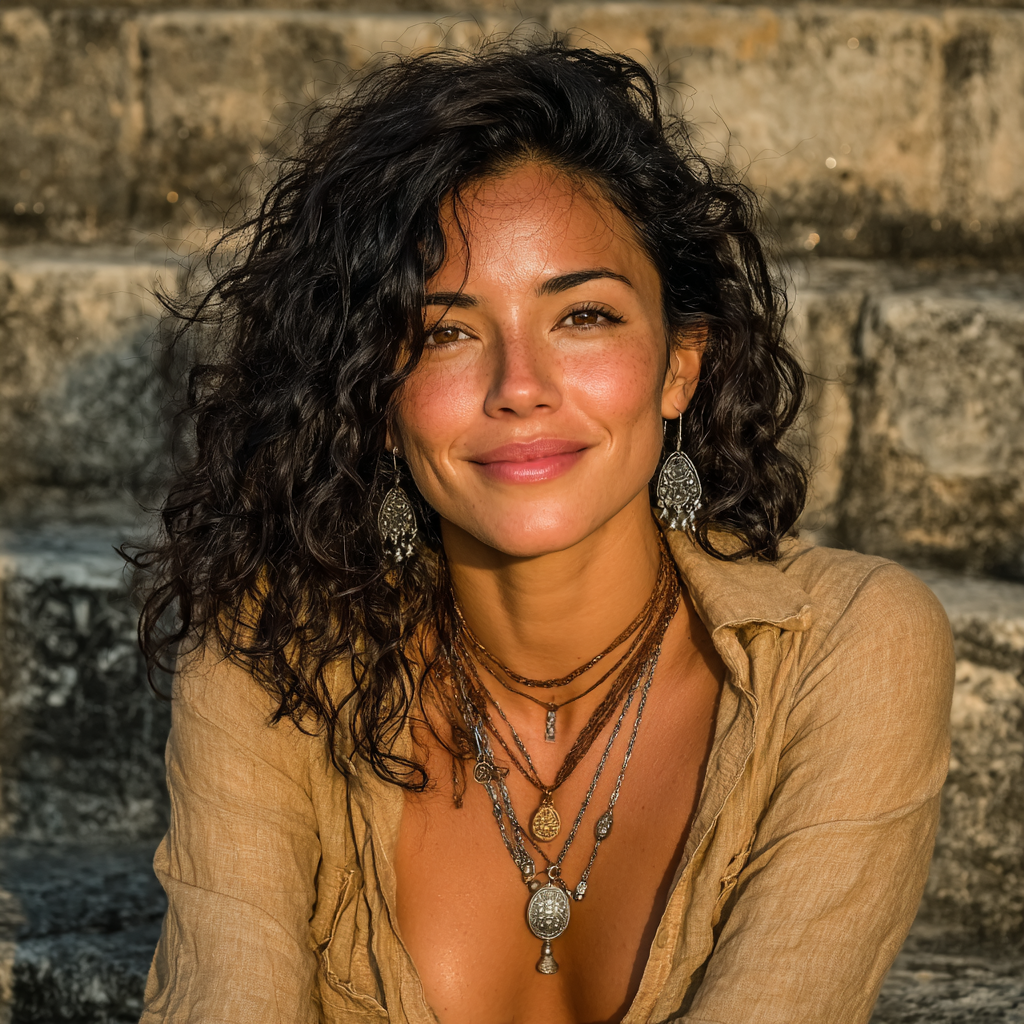
By Elena Vasquez
Cultural anthropologist and culinary storyteller. Elena spent a decade documenting traditional cooking methods across Latin America and the Mediterranean. She holds a PhD in Ethnography from Barcelona University and believes the best way to understand a place is through its kitchens and ancient streets.