
Istanbul does not have a skyline. It has a collision. Stand on the Galata Bridge at sunset and you will see what I mean: the dome of Hagia Sophia, six minarets, a construction crane, a cruise ship the size of a city block, and someone's laundry drying on a Karaköy balcony, all competing for the same frame. I have photographed architecture in Tokyo, Berlin, São Paulo, and Mumbai. None of them demand this much negotiation between centuries.
I came to Istanbul for the Hagia Sophia. I stayed for everything else.
The building is 1,500 years old and it still feels structurally impossible. Justinian built it in 537 AD as the world's largest cathedral, and the architects Anthemius of Tralles and Isidore of Miletus achieved something that should not work: a 31-meter diameter dome sitting on four pendentives, supported by four massive piers, with no internal columns blocking the central space. The result is a single volume of light that changes color every hour. Morning sun enters through the eastern windows and turns the mosaics gold. At noon the dome becomes a pale blue gray. In late afternoon the marble revetments glow rose and cream. Since its reconversion to a mosque in 2020, the interior has carpets, hanging chandeliers, and partitioned sections for prayer. Tourists can enter during visiting hours between prayers, but you should check the schedule. Friday midday prayer means the building closes to visitors from roughly 12:30 to 2:30 PM. The rest of the week, non-worshippers can enter from 9:00 AM to approximately 30 minutes before the next prayer call. Entry is free, though the line forms early. I arrived at 7:45 AM on a Tuesday in April and was inside by 8:15. By 9:30 the queue stretched past the gate.
If you want to photograph the dome without fifty selfie sticks in the frame, position yourself under the southwestern exedra, look straight up, and wait for the security guard to turn his back. The mosaics of the Virgin and Child in the apse are still visible, though partially obscured by curtains and calligraphy panels. The 9th-century mosaic of the Deesis in the south gallery is the one you want: Christ flanked by the Virgin and John the Baptist, faces rendered with an emotional directness that Byzantine artists usually avoided. It is 1,100 years old and it looks like it was made yesterday.
Skip the Blue Mosque for photography. Sultan Ahmed Mosque has six minarets and an imposing exterior, but the interior is a carpeted warehouse of tourists between prayer times. The chandeliers are low and the windows are stained glass of mediocre quality. It is free to enter and worth seeing once for the scale, but as a photographic subject it is a trap. The better Ottoman mosque is the Süleymaniye, designed by Mimar Sinan and completed in 1557. It sits on the Third Hill with a terrace that gives you the best panoramic view of the Golden Horn without climbing a tower. The interior is quieter, the proportions are mathematically perfect, and the light enters through 138 windows at angles that Sinan calculated precisely. The courtyard is paved with the same Marmara marble as the interior, creating a visual continuity between outside and inside that the Blue Mosque never achieved. Entry is free. The terrace behind the mosque opens at dawn and closes at dusk. I photographed there at 6:30 AM in November and had the view to myself for forty minutes.
The Galata Tower is the anchor point that makes the rest of the city readable. Built by the Genoese in 1348 as Christea Turris, the stone cylinder rises 67 meters above sea level on a steep hill in Beyoğlu. The climb to the observation deck is 100 meters of spiral staircase, and the view from the top is the reason you came: the Bosphorus dividing Europe and Asia, the minarets puncturing the haze, the ferries moving between continents like slow punctuation marks. The tower opens at 8:30 AM and closes at 11:00 PM. Entry costs 650 Turkish lira, roughly 18 to 20 dollars depending on the exchange rate. The line is worst at sunset. Go at 8:30 AM or after 9:00 PM. The neighborhood around the tower, Karaköy and Galata, is dense with 19th-century apartment buildings with iron balconies, Art Nouveau doorways, and fading frescoes on ceiling coffers. Walk down Serdar-ı Ekrem Street and look up. The buildings are being gut-renovated into boutique hotels, but the street-level facades still carry the weight of a century.
Underground, the Basilica Cistern is the most photographically rewarding space in the city. Built by Justinian in 532 AD, the chamber covers 9,800 square meters and is supported by 336 marble columns, each 9 meters tall, arranged in 12 rows of 28. The water is shallow now, raised walkways cross the space, and colored lights illuminate the columns from below. It should be terrible. It is not. The reflection doubles the visual density, and the repetition creates a rhythm that your eye cannot escape. Two columns have Medusa head capitals, one placed sideways and one upside down, probably recycled from earlier Roman structures. No one knows why. The cistern opens at 9:00 AM and closes at 7:00 PM. Entry is 600 lira, about 17 dollars. The best light is at opening, before the crowds fill the walkways and the humidity fogs your lens.
Topkapi Palace is less a building than a sequence of courtyards that teach you Ottoman hierarchy. The First Court is public. The Second Court is administrative. The Third Court is the sultan's private residence. The Fourth Court is pleasure gardens with pavilions overlooking the Golden Horn and the Sea of Marmara. Each transition is controlled by gates, guardhouses, and changes in paving material. The architecture is not spectacular individually. The power is in the spatial sequence. The Harem, a separate ticket, is the most visually dense section: 400 rooms, tiled walls, gilded ceilings, and the sense that you are walking through someone else's intensely private life. The palace opens at 9:00 AM. A combined ticket for the palace and Harem costs around 1,500 lira, approximately 43 dollars. The Harem has limited capacity and sells timed entry. Book the first slot at 9:30 AM before the tour buses arrive.
Dolmabahçe Palace, built in 1856, is where Ottoman architecture gave up and copied Europe. The facade is 600 meters of neoclassical marble along the Bosphorus, the interior has 4.5 tons of gold leaf, a 4.5-ton crystal chandelier, and carpets that required 40,000 square meters of silk. It is absurd and I love it. The palace is divided into the Selamlık, the public ceremonial quarters, and the Harem, the private family residence. You must take a guided tour, no independent wandering. Tours start every 20 minutes. Entry is 1,050 lira, about 30 dollars, plus 520 lira for the Harem. Photography is forbidden inside. This is the one place where you should leave your camera in the bag and use your eyes. The Crystal Staircase, with its double horseshoe design and Baccarat crystal banisters, is the single most opulent interior I have seen in any palace, including Versailles.
The modern layer of Istanbul is often ignored by architecture tourists, which is a mistake. The Atatürk Cultural Center in Taksim Square, reopened in 2021 after a nine-year renovation, is a massive brutalist slab of concrete and glass that houses opera, theater, and exhibition spaces. The Istanbul Museum of Modern Art, relocated to a new building by Renzo Piano on the Bosphorus in 2023, is a long rectangular volume with a terraced roof that functions as a public viewing platform. The Zorlu Center in Beşiktaş, designed by Emre Arolat and Tabanlıoğlu Architects, is a mixed-use development with a perforated metal screen facade that references Ottoman geometric patterns at building scale. These are not minor buildings. They are how contemporary Turkey negotiates its relationship with its own history.
For practical photography, Istanbul rewards patience and early mornings. The best light is between 6:30 and 8:30 AM in spring and autumn, when the haze is low and the Bosphorus reflects the sky. The best viewpoint for the Old City skyline is from the rooftop of the Seven Hills Hotel in Sultanahmet, free if you buy breakfast or tea. The best viewpoint for the Galata Tower and the New City is from the Karaköy ferry dock at sunrise, when the tower is silhouetted against the eastern light. The best architectural detail hunting is in the backstreets of Cihangir and Kuzguncuk, where wooden Ottoman houses, Art Deco apartments, and concrete apartment blocks from the 1970s sit on the same street.
What to skip: the Spice Bazaar for architecture, it is a covered shopping mall with no natural light. The Grand Bazaar has some interesting vaulted roofing but the experience is commercially overwhelming. The Çamlıca Mosque on the Asian side is enormous, holds 63,000 worshippers, and is six years old. It looks like a simulation of Ottoman architecture generated by algorithm. The Pierre Loti Café has a view but the view is better from the Eyüp cemetery next door, and the café itself is an unremarkable 1950s concrete box.
Istanbul is not a city that presents its architecture politely. It stacks it, crowds it, weathers it, and rebuilds around it. You will not get clean shots. You will get honest ones. Bring a wide lens for the domes, a fast prime for the cistern's darkness, and patience for everything else. The city has been under construction for 2,500 years. It is not going to stop for your schedule.
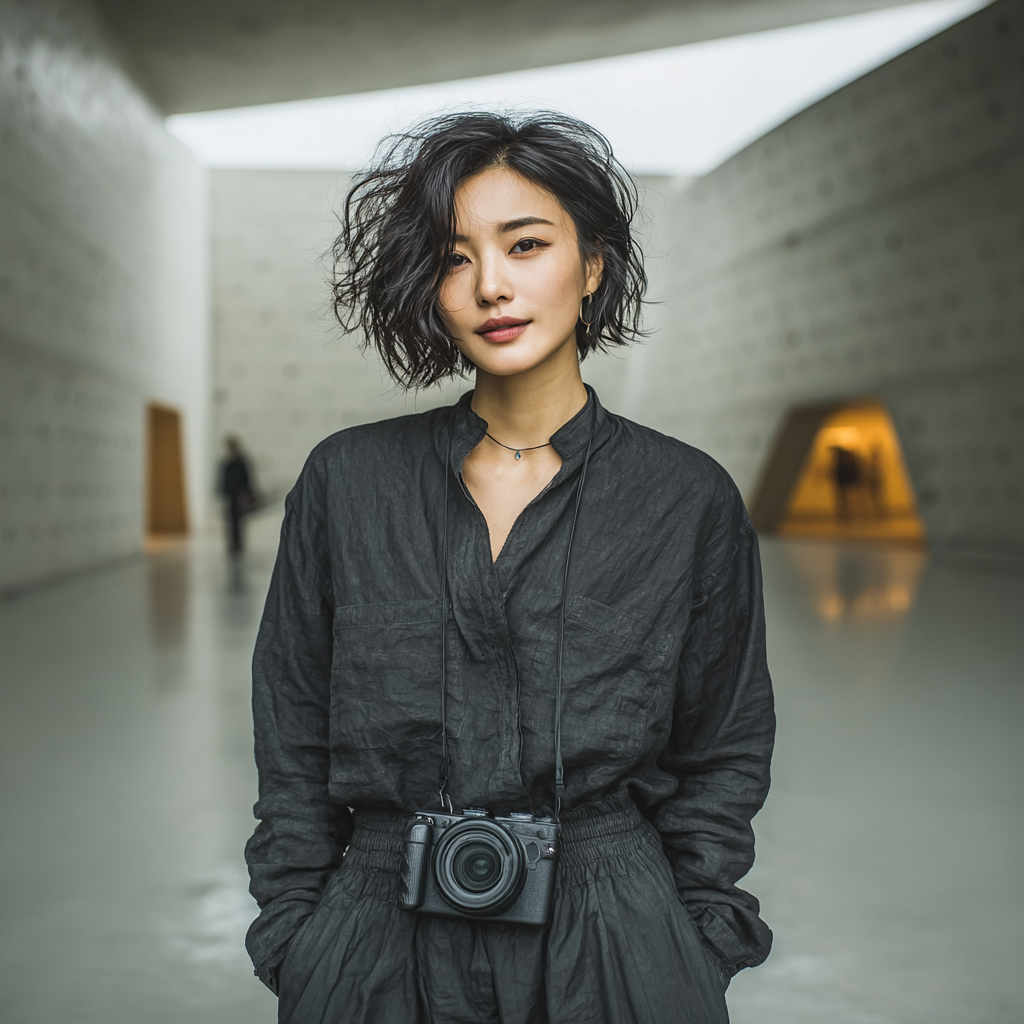
By Yuki Tanaka
Architectural photographer based in Tokyo. Yuki captures the dialogue between ancient structures and modern design across Asia and Europe. Her work has been featured in Monocle, Dezeen, and Wallpaper. She sees buildings as frozen stories waiting to be told.