
Istanbul: Where Byzantine Domes, Ottoman Minarets, and Brutalist Housing Blocks Share the Same Frame
I came to Istanbul for three days and stayed for three years. That's not a cute line — it's a warning. This city ruins other cities for you. Nowhere else on earth can you frame a 1,500-year-old basilica, a six-minaret mosque, a medieval stone tower, and a Le Corbusier house in a single weekend of walking, and still have time to argue about whose rooftop bar has the better sunset.
Istanbul is not one city but a stack of them — Roman Byzantium, Byzantine Constantinople, Ottoman Konstantiniyye, and the muscular republic that covered the hills in concrete and glass. Every empire here built on top of the last one, literally. A cistern hides under a boulevard, a metro station doubles as an archaeology dig, and the foundations of a Byzantine palace poke out of a Sultanahmet pavement.
This is a guide for people who look up. Bring comfortable shoes, a wide lens, and patience for the city's great sport: renovation. Half of what you came to see will be under scaffolding. The other half will be better than you imagined.
Entry Formalities
Most Western passport holders — the US, UK, EU, Canada, Japan, South Korea, Singapore — enter Türkiye visa-free for 90 days in any 180-day period. Your passport needs at least 60 days of validity beyond your intended stay, though airlines often enforce a six-month margin, so check before you fly. The 90/180 rule is a rolling count, not a calendar reset: a weekend hop to Greece does not buy you a fresh 90 days.
Nationalities that do need a visa — Australians, New Zealanders, South Africans, Mexicans, and others — apply for an e-Visa at the official portal only, evisa.gov.tr, for roughly $20–60 depending on passport. It usually clears in minutes; do it at least 48 hours before departure and ignore the dozens of copycat sites that charge a service fee for the same form. Tourist visas cannot be extended; overstays earn a per-day fine and potentially a re-entry ban.
Money
The lira is the story. After years of sliding, the exchange rate has settled (for now) around ₺45–48 to the US dollar — but it moves, sometimes weekly, so check a live rate before you budget and again when you land. The practical consequences: every price in this guide is in lira or euros, and every price is subject to change mid-season. Turkish citizens pay one price at state museums; foreigners pay another, often two to four times higher, sometimes charged in euros. That's the system, not a scam — but the touts outside selling "skip-the-line" upgrades on top of official e-tickets absolutely are.
Cards are accepted nearly everywhere except the smallest teahouses and the Basilica Cistern door (İstanbulkart or bank card only since August 2025 — no cash). Tell your bank you're coming; carry ₺2,000–3,000 in small notes as backup.
Getting Around
Buy an İstanbulkart the moment you land — ₺165 for the card, then load what you need. One card works for your whole group: tap once per person. A single tram/metro/bus ride costs ₺46.20 full fare (₺60 if you buy a disposable token instead — don't), with discounted transfers of ₺31.27 and ₺24.02 within 90 minutes. Ferries run about ₺59, Marmaray from ₺34, and children under six ride free.
From Istanbul Airport (IST), 40 km northwest, the M11 metro runs 06:00–00:00 to Gayrettepe (₺38–66 depending on distance — the turnstile holds the line maximum and refunds the difference when you tap out, so keep balance on the card), where you connect to the M2 and the T1 tram spine. Total to Sultanahmet: about 80 minutes, under ₺150. The HAVAİST coach HVL-13 runs direct to Sultanahmet for ₺470 (~110 minutes, 24/7); the HVL-1 to Beyazıt–Aksaray (₺355) plus the T1 tram is the reliable backup. A taxi to the old city runs ₺2,300–2,500 and can take anywhere from 50 minutes to two hours depending on the Bosphorus's mood. If you fly into Sabiha Gökçen (SAW) on the Asian side, the M4 metro to Kadıköy plus a ferry is the smooth move.
Within the city, the T1 tram is your spine: Kabataş to Bağcılar, linking Sultanahmet, Eminönü, Karaköy, Tophane, and the Grand Bazaar area. Füniküler connects Kabataş to Taksim; the Tünel, the world's second-oldest underground urban railway (1875), lifts you from Karaköy to the bottom of İstiklal. But the real Istanbul public transport is the ferry: Kadıköy–Eminönü, Karaköy–Kadıköy, Beşiktaş–Kadıköy. Commute like a local, shoot the skyline from the water, pay ₺59 for what the Bosphorus dinner cruise charges ₺2,000 for.
The Old City: Where the Empires Stack
Start where the city started, on the headland of Sarayburnu. The Hippodrome (Sultanahmet Meydanı, free, always open) is the Roman skeleton beneath everything: an Egyptian obelisk from Karnak (c. 1490 BC, erected here in the 4th century AD), the bronze-wreathed Serpent Column from Delphi, and the brick bulk of the old racetrack under your feet. Stand at the obelisk and turn slowly: the Blue Mosque, Hagia Sophia, the cistern, the palace — this one square holds two empires.
Hagia Sophia (Sultanahmet Meydanı) is the reason planes land here. Built in 537, it was the largest interior space on earth for nearly a thousand years, and the dome still does the thing no photograph prepares you for — floating on a ring of windows, glowing at its own rim. Since January 2024, foreign visitors pay €25 to enter the upper gallery (buy at the booth or by QR at the door; not included in any museum pass; children under 8 free with proof of age). The south gallery gives you the imperial mosaics — the Virgin with Justinian and Constantine, the Deësis, the Comnenus panel where you can still see the scratches bored tourists carved into the gold in the 1800s. Hours are roughly 08:00–19:30 in season, shorter in winter, and the mosque closes to visitors on Fridays from around noon to 14:00 for prayer — plan around it. The great mosaic program of the nave was unveiled in stages through 2024–2026; some sections still rotate behind conservation screens. That's fine. You're not here for completeness; you're here for the light through forty windows.
Across the square, the Blue Mosque (Sultanahmet Camii, free) earns its nickname inside: 20,000 İznik tiles in blues and greens under a cascade of domes. Tourists are admitted outside the five daily prayers — each closure runs 30–90 minutes, and Friday midday closes longest. Check the printed times at the gate, time your entry for mid-morning, and dress like you're visiting someone's devout grandmother, because you are.
Then go down. The Basilica Cistern (Yerebatan Sarnıcı, Alemdar Mahallesi, Yerebatan Caddesi 13) is a forest of 336 recycled Roman columns drowned in a cathedral of water, built by Justinian in 532. It is also the city's most politically charged monument in 2026: in April 2026 the municipality took back the title deed and slashed the Turkish-citizen entry price to a symbolic ₺1 — 20,000 people came the first day — while foreign visitors still pay roughly ₺2,000–2,250 for the day session (09:00–18:30) or ~₺3,000 for the night session (19:30–22:00), when the columns are lit and a DJ plays ambient sets between the Medusa heads. Card payment only at the door. Fifty-two steps down, 15–18°C year-round — bring a layer even in August.
The Archaeological Museums (Osman Hamdi Bey Yokuşu, Gülhane; included in MuseumPass Istanbul) sit above Gülhane Park and hold the Alexander Sarcophagus, the treaty-writing Kadesh tablets, and enough Thracian gold to justify the walk. The park itself, the old Topkapı rose garden, is free — a green corridor connecting the palace to the sea walls.
The Palaces, and the Ticket Math
Topkapı Palace (Sultanahmet, Cankurtaran; closed Tuesdays, 09:00–18:00) is a city within the city — four courtyards, the harem's labyrinth of tiled corridors, the treasury's 86-carat spoonmaker's diamond, and a terrace over the Bosphorus that explains everything about why anyone fought over this strait. In 2026 the smart ticket is the combined ticket: Topkapı + Harem + Hagia Irene for ₺2,750 (~$60). The Harem alone is worth the surcharge — the Privy Chamber of Murad III, with its İznik-tiled dome, is the finest interior in the palace.
Dolmabahçe Palace (Beşiktaş, Dolmabahçe Caddesi 1; closed Mondays) is the empire's going-out-of-business statement: 285 rooms, 4.5 tonnes of crystal, a 36-meter staircase of Bohemian glass, and Atatürk's death room, clock stopped at 9:05. The 2026 combined ticket (Selamlık + Harem + Painting Museum) runs ₺2,000–2,750 (~$45–60) depending on channel, the interior is visitable only with the guided circuit every ~15 minutes, and — photographers, heed this — photography is banned inside the Selamlık. Put the camera away and actually look; it is that kind of room. Children under 6 free.
Now the pass math. The MuseumPass Istanbul costs €105 and runs five consecutive days, one entry each to 13 museums — including Topkapı's main palace (the Harem and Hagia Irene are excluded), Galata Tower's day session, the Archaeological Museums, and the Turkish and Islamic Arts Museum. It does not include Hagia Sophia (€25, separate system), the Basilica Cistern (~₺2,000, municipal), Dolmabahçe (separate), or Istanbul Modern. Do the arithmetic: passes pay off only if you'll hit four or more covered sites in five days. The €165 MuseumPass Türkiye (15 days, 350+ sites nationwide) is for people continuing to Ephesus and Cappadocia. Buy either only from the official museum portal — the reseller markup ecosystem is a museum exhibit of its own.
The Hills of the Old City
Walk the ridge behind the Grand Bazaar and you get Sinan at his most confident. Süleymaniye Mosque (Prof. Sıddık Sami Onar Caddesi, Fatih; free, closed at prayer times) is the chief architect's masterpiece and his tomb: a single great dome over a courtyard that frames the Golden Horn perfectly, the whole complex — madrasa, hospital, hamam, soup kitchen — still functioning as a neighborhood. The terrace behind the mosque is where Istanbul's photographers go for the classic Golden Horn at dusk.
Zeyrek Mosque (the former Pantokrator monastery, Zeyrek Caddesi) is my favorite building in the city that tourists skip: twin domes, brick herringbone, Byzantine marble cornices, a 12th-century complex that smells of dust and time, and almost nobody there. Free. Nearby, the Grand Bazaar (Kapalıçarşı, Beyazıt gate; Monday–Saturday 08:30–19:00, closed Sundays and religious holidays) is 61 covered streets and some 4,000 shops — come for the architecture of the bedestens (the vaulted stone halls where the gold trade still lives) as much as for anything you buy. Aggression is the local dialect; a smile and a firm "yok, teşekkürler" works better than ignoring people.
Fatih Mosque anchors the conservative heart of the old city, and the Wednesday market sprawls around it — plastic stools, sheep's-cheese sellers, the Istanbul that doesn't make the brochures. If you're comfortable being the only tourist, this is where the city opens up.
Galata and Karaköy: The Water's Edge
Cross the Galata Bridge — fishermen above, restaurants below, the second-level walkway a photo essay in itself — into the Genoese quarter. Galata Tower (Bereketzade Mahallesi, Büyük Hendek Caddesi) has watched the city since 1348, and the 2026 drill is this: €30 for foreign adults (children under 6 free), split into a day session (08:30–18:15, last admission 17:45) and a night session (19:00–23:00, last tickets 22:00). MuseumPass Istanbul works for the day session only. Take the elevator to the seventh floor, climb two more, and step onto the balcony where (apocryphally) Hezarfen Ahmet Çelebi flew across the Bosphorus on wooden wings in 1630. Buy tickets online for a timed slot — the walk-up line snakes around the block by 10 AM. Best light: golden hour into the night session, when the old city across the water turns on its lamps.
Below the tower, Bankalar Caddesi is the old Levantine financial district — 19th-century bank palaces of marble and iron balconies, most now university buildings and design offices. On it, Salt Galata (Bankalar Caddesi 11; free; Tuesday–Saturday 11:00–19:00, Sunday to 18:00, closed Monday) occupies the former Ottoman Bank headquarters, bullet-scarred vaults and all, with free exhibitions and the bank's own museum in the basement. One of the best free hours in the city.
Down the hill, Karaköy is the port the guidebooks used to warn you about and now can't shut up about. Its anchor is the Karaköy Palas (Kemankeş Karamustafa Paşa, Mumhane Caddesi), a 1920s neoclassical bank palace reborn in 2023 as a design hotel — the lobby alone, all travertine and maritime deco, is worth a quiet coffee. Istanbul Modern (Tophane İskele Caddesi 1, Galataport) finally reopened in 2023 in a purpose-built Renzo Piano structure: translucent facades, a mirrored canopy over the water, and Turkish modern art from the permanent collection up. Admission runs ₺750–900 for foreign adults (under 12s free; Thursday mornings have been free at times — check current policy); closed Mondays, open Tuesday–Sunday 10:00–18:00, Friday to 20:00. The upper terrace café has the best museum coffee view in Europe. The Museum Card is not valid here.
Continue to Tophane for Sinan's Kılıç Ali Paşa Mosque (Kemankeş Mustafa Paşa, Tophane), a 1580 single-dome gem that deliberately echoes Hagia Sophia — and attached, the Kılıç Ali Paşa Hamamı (Kemankeş Karamustafa Paşa, Hamam Sokak), restored to its marble glory and taking bookings for separate male and female sessions; reserve days ahead and budget ₺2,000+ for the full ritual. Next door, the Nusretiye Mosque and the Tophane clock tower round out the waterfront's small-ensemble set.
The Galataport redevelopment along the promenade — underground cruise terminal, rooftop public walkway, restored Ottoman han facades — is corporate Istanbul done mostly right: come at dusk when the promenade fills with strollers and the ships' lights come on.
Beyoğlu: The European Quarter
Ride the Tünel (₺46.20 with your card; every few minutes) up from Karaköy, or climb the hill, and you're in the 19th-century city. İstiklal Caddesi runs 1.4 km from Tünel to Taksim — tram tracks down the middle, consulate buildings, the Pera Palace Hotel (Meşrutiyet Caddesi 98; 1892, built for the Orient Express, Agatha Christie's old haunt — step into the lobby even if you're not sleeping there), the flower passage Çiçek Pasajı (Hüseyinağa, İstiklal), and side streets of fish restaurants and rakı halls.
Detour to Aya Triada Greek Orthodox Church (Hüseyinağa, Hacıahmet Sokak) for one of Istanbul's grandest church interiors, and to the Vakko flagship on İstiklal — mid-century marble confidence stacked with Ottoman-revival neighbors, a compact lesson in republican commercial architecture. Pera Museum (Meşrutiyet Caddesi 65) holds the famous Osman Hamdi Bey tortoise trainer and runs free Friday evenings (18:00–22:00).
At the top, Taksim Square itself is a ten-minute look, not a destination: the Republic Monument, and flanking it the rebuilt Atatürk Cultural Center (2021) — a dark glass monolith that finally ended decades of demolition-rebuild farce — and the new Taksim Mosque (2021), the republic's late, striking answer to its own founding question of what a modern Turkish mosque looks like. Photograph the pairing; then take the funicular down and go somewhere with soul.
The Asian Side
The ferry to Kadıköy is not a commute; it's the city's best-value cruise. Twenty minutes from Eminönü or Karaköy, ₺59, tea on the top deck, and the full skyline unspooling behind you: Hagia Sophia, the Blue Mosque, Topkapı, Galata Tower, the minarets stacked against the hills.
Kadıköy is Istanbul's Brooklyn — market streets, late-opening bars, student energy — and it holds two of the city's best architectural surprises. The Müze Gazhane (Hasanpaşa Mahallesi, Kadıköy; free; Tuesday–Sunday 10:00–18:00, closed Monday) is a Victorian gasworks converted into a cultural campus: retort halls and industrial ironwork now housing a climate museum, a cartoon museum, galleries, and free municipal concerts. Restoration-as-urbanism, done with real taste.
Then take the bus or a 20-minute walk toward Üsküdar to find Şakirin Mosque (Zeynep Kamil, Nuhkuyusu Caddesi, Üsküdar side of the district border) — the city's most photographed modern mosque, all glass, steel calligraphy, and a lacework chandelier designed by Zeynep Fadıllıoğlu (with architect Hüsrev Tayla). Open outside prayer times; free; the interior is the photo.
And the pilgrimage for architecture nerds: Le Corbusier's UNESCO House (Kadıköy), one of only two built Corbusier projects in Istanbul (the other is in Bakırköy), a small modernist gem from his early 1950s Turkish collaboration. It houses a fashion academy; visits are by arrangement — email ahead, and ask about their occasional open weekends. I've stood on that quiet side street twice; both times it beat another hour in the Grand Bazaar.
Where to Stay
For this itinerary, base yourself in Karaköy/Galata: walkable to the old city by bridge, on top of the modern art and the nightlife, and stacked with good buildings. Karaköy Palas for design-hotel money, or the compact Stayso Houses in Cihangir for apartment-style rooms above the Bosphorus, where freelancers rent 70-square-meter flats for the price of a Manhattan parking spot — expat lore says $600 a month still happens if you know a guy who knows a guy. First-timers who want monuments at the doorstep should take Sultanahmet instead; you'll trade neighborhood life for the ability to beat the tour buses to Hagia Sophia at opening.
When to Come
April–June and September–November are the sweet spots: 20–26°C, clear light, manageable queues. July–August brings 35°C, cruise-ship crowds, and hotel prices at their peak; midday shooting light turns harsh anyway. December–February is grey, cold, and magical in a different way — empty museums, snow on the Süleymaniye dome, rakı by the stove. Two calendar notes: during Ramadan (mid-February to mid-March 2026, early February–early March 2027) the city slows by day and erupts into communal iftar dinners at sunset — wonderful, but some sites shorten hours. And the Istanbul Marathon in November closes the Bosphorus Bridge to cars, making it the one day you can walk between continents on the bridge itself. Check İKSV's calendar before you book: biennial and festival years layer a citywide exhibition program over everything.
What to Skip
Bosphorus dinner cruises. Floating discos with lukewarm meze and a markup on the view. The commuter ferry to Kadıköy at sunset gives you the same skyline for ₺59.
Buying a museum pass without doing the math. The MuseumPass Istanbul (€105) only wins if you're hitting four or more covered museums in five days — and its biggest exclusions (Hagia Sophia, the Cistern, Dolmabahçe) are exactly the places you came for. Do the arithmetic on a rainy evening, not at a ticket desk with a queue behind you.
Two palaces in one day. Topkapı is closed Tuesday; Dolmabahçe is closed Monday. Spread them across the week. Palace interiors blur together after four hours — dome fatigue is real, and the treasury-diamond-and-chandelier trifecta deserves fresh eyes.
Taxis from the airport in rush hour. The M11 metro and HAVAİST exist precisely because the motorway doesn't. If you must take a cab (₺2,300–2,500 to the old city), use an app or insist on the meter, and never accept a flat "special price."
Dinner-show dervishes. The whirling you'll see advertised around Sultanahmet is theater. The authentic Mevlemi sema is a prayer, not a performance — if it matters to you, find a real tekke ceremony and behave accordingly.
Touts and unpriced menus. Restaurants with greeters on the sidewalk in Sultanahmet, and waterfront places at Galataport with no prices on the menu: both exist to convert your confusion into their margin. Walk one street back; let the menu find you.
Taksim as an architectural destination. It's a square with a monument. Ten minutes, one photo of the AKM–mosque pairing, and move on to the neighborhoods that actually have texture.
The Frame
I still shoot Istanbul wrong sometimes. I go looking for the postcard — the perfect dome, the empty cistern, the tower at sunset — and the city, patient as a 1,500-year-old teacher, gives me something better: a laundry line across a Byzantine cornice, a fisherman silhouetted against a mosque built six centuries apart from the bridge under his feet. Come for the buildings. Stay for the way they refuse to sit still in your lens. See you on the Galata Bridge at dusk — I'll be the one arguing with a tripod. — Yuki Tanaka
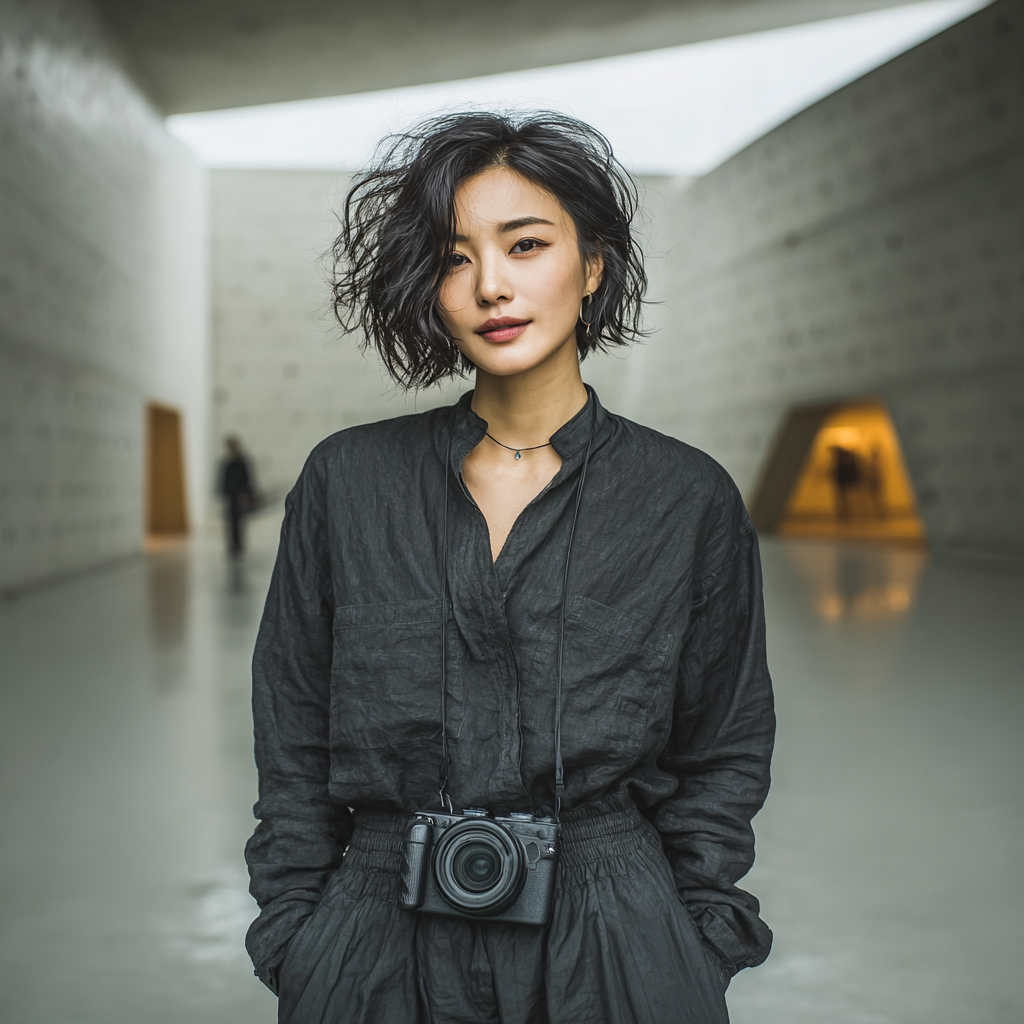
By Yuki Tanaka
Architectural photographer based in Tokyo. Yuki captures the dialogue between ancient structures and modern design across Asia and Europe. Her work has been featured in Monocle, Dezeen, and Wallpaper. She sees buildings as frozen stories waiting to be told.