
Bangkok's Old Soul: Temples, Canals, and the Stories That Built the City
The heat hits you before the sights do. Step out of Suvarnabhumi Airport and Bangkok wraps around you like a wet blanket—diesel, jasmine, fish sauce, incense, all of it rising from the pavement in a single breath. Most visitors treat the city like a transit lounge. Three days of temples, a floating market, then south to the beaches. They miss the point. Bangkok does not reward speed. It rewards the people who stay still long enough to notice how the old and new share the same cramped, sweating, magnificent space.
I am Finn O'Sullivan, and I have spent more time in Bangkok's back alleys and temple courtyards than I care to admit. This is not a checklist. It is a walk through the layers of a city that has been rebuilt, burned, flooded, and reborn more times than its chronicles can reliably record.
Entry Formalities: The 2026 Rulebook
Thailand changed its entry rules on 15 September 2026, and a lot of what you read online is already wrong. The visa-exempt stay for roughly 60 nationalities—including the US, UK, EU, Canada, Australia, and Japan—was cut from 60 days back to 30 days for tourism. Twenty-one nationalities lost visa-free entry entirely and now need an e-visa in advance. Check your passport's status on the official Thai e-Visa portal before you book, not after.
The Thailand Digital Arrival Card (TDAC) is mandatory for every foreign arrival, no exceptions. File it free at tdac.immigration.go.th within 72 hours before arrival, save the QR code, and show it at immigration. Any website charging a "processing fee" for the TDAC is a scam.
The long-threatened 300-baht tourist entry fee for air arrivals is still not live as of late 2026—announced, approved in principle, and repeatedly delayed. Do not budget for it, but check a month before you fly. One fee that did change: the international departure charge embedded in your ticket rose to 1,120 baht in June 2026.
At the border, immigration can ask for proof of onward travel and funds of 10,000 baht per person (20,000 per family). Land-border entries are now capped at two per calendar year for visa-exempt travelers. Overstaying costs 500 baht per day, paid on departure. If 30 days is not enough, one extension of up to 30 days is available at immigration offices for 1,900 baht—apply in the last week of your stamp, bring cash, a photo, and a morning you are willing to lose.
The Royal Core: Wat Phra Kaew and the Grand Palace
Start where Bangkok started. The Grand Palace complex, Na Phra Lan Road, Phra Borom Maha Ratchawang, Phra Nakhon, Bangkok, opens at 8:30 AM and the ticket office closes at 3:30 PM sharp—plan to be out by 4:30. The foreigner entrance fee is 500 baht, payable by card, and includes the Queen Sirikit Museum of Textiles and a traditional khon dance performance at the Sala Chalermkrung Royal Theatre. Children under 120 cm enter free. The dress code is non-negotiable: shoulders and knees must be covered, no leggings, no ripped jeans, no sandals. Sarongs rent for about 100 baht near the entrance if you arrive underdressed, but come prepared and you will move faster through the gates.
The compound is vast—218,000 square meters of gilded spires, ceremonial halls, and courtyards that served as the official residence of the Kings of Siam from 1782 until 1925. Wat Phra Kaew, the Temple of the Emerald Buddha, sits at the heart of it. The Emerald Buddha itself is only 66 centimeters tall, carved from a single block of jade, and clothed in seasonal gold robes that the King personally changes three times a year in a ceremony marking the shift between summer, rainy season, and winter. The ordination hall that houses it is ringed by the longest continuous mural in the world—scenes from the Ramakien, Thailand's national epic, painted in mineral pigments that have kept their color for two centuries.
Here is the trick: arrive at 8:30 AM exactly. The tour buses unload their passengers around 10:00 AM. Between 8:30 and 9:45, you have the courtyards to yourself. Walk the cloisters clockwise. Read the murals not as decoration but as narrative—Rama rescuing Sita, the monkey armies, the demon king Thotsakan. The stories are older than the temple, older than the city, and they are painted here because this ground was meant to be protected by them.
A note on scams: strangers outside the palace gates will tell you it is "closed for a royal ceremony" or "closed for cleaning." It is not. The Grand Palace is open every single day of the year. Ignore them and walk to the official entrance on the north side near Na Phra Lan Road.
Wat Pho: The Temple of Learning
Ten minutes south on foot, at 2 Sanam Chai Road, Phra Borom Maha Ratchawang, Phra Nakhon, Bangkok, Wat Pho opens daily from 8:00 AM to 6:30 PM. Admission is 300 baht and includes a bottle of water. This is the oldest and largest temple complex in Bangkok, founded in the 16th century during the Ayutthaya period and rebuilt by King Rama I in 1782. The Reclining Buddha—46 meters of gold leaf, 15 meters high, with feet inlaid in mother-of-pearl showing the 108 auspicious symbols of the Buddha—draws the crowds, but the real treasure is elsewhere.
Wat Pho was Thailand's first public university. The marble inscriptions around the temple grounds contain texts on medicine, massage, astrology, and literature. In 1955, the temple opened its Traditional Thai Medical School, which is now widely considered the birthplace of authentic Thai massage. The massage pavilion operates from 8:00 AM to 7:00 PM. A 30-minute Thai massage runs about 340 baht. A full hour is around 520 baht. Book in advance if you can—the school is genuinely popular, and the practitioners are trained here, on this site, in techniques that trace back to the inscriptions on the walls.
The 91 chedis scattered across the grounds are painted in green, yellow, and blue tiles. The four largest contain the ashes of Kings Rama I through IV. The ordination hall, Phra Ubosot, contains a Buddha image seated in the Subduing Mara posture, considered one of the most important in the country. Plan two hours here. Three if you want the massage.
Wat Arun: The Temple of Dawn
Cross the river from Tha Tien Pier to Wat Arun Pier. The ferry—still a wooden-hulled commuter boat—now costs about 5 baht (fares were revised upward in 2025 after decades at 3 and 4) and runs every few minutes from 6:00 AM to 9:00 PM. The crossing takes two minutes. The approach from the water is the best view in Bangkok: the central prang rises 79 meters, encrusted with an estimated 10 million pieces of Chinese porcelain and seashells that shift from white to gold as the sun hits them.
Wat Arun, 158 Thanon Wang Doem, Wat Arun, Bangkok Yai, Bangkok 10600, is open daily from 8:00 AM to 6:00 PM with last entry at 5:30 PM. The entrance fee is 200 baht, cash preferred at the booth, and includes a bottle of water. The temple was envisioned by King Taksin in 1768 after he fought his way out of Ayutthaya and arrived here at dawn. It housed the Emerald Buddha before the statue was moved to Wat Phra Kaew in 1785. For nearly three centuries, it has marked the western edge of the city's spiritual geography.
Climbing the central prang is restricted to the first terrace level as of 2026—the steep stairs that once led to the upper platforms are closed for conservation—but the view from even the lower terrace is extraordinary. You see the full curve of the Chao Phraya, the Grand Palace spires across the water, and the dense clutter of Thonburi's rooftops spreading westward. The best time is 6:00 PM, when the light turns the porcelain gold and the day-trippers have already left. The temple is floodlit until late—walk back across the river at dusk and photograph it from Tha Tien instead.
Wat Saket: The Golden Mount
Ten minutes north of Wat Pho, at 344 Thanon Chakkraphatdi Phong, Pom Prap Sattru Phai, Bangkok, Wat Saket hides the cheapest great view in the city. A 344-step spiral stair climbs an artificial hill—the only high ground in the old flat-as-a-pancake city—to a golden chedi that holds a relic of the Buddha. The climb passes bells, gongs, and dripping-water shrines; the top gives you the Grand Palace, Wat Arun, and the modern skyline in one 360-degree sweep. Admission is 100 baht, open daily roughly 7:00 AM to 7:00 PM. Come an hour before sunset. Entry used to be free, which is why the crowds never came; now that they charge, the crowds still do not come. Their loss.
The River: Bangkok's First Highway
The Chao Phraya Express Boat is still the most honest way to move through the city. The orange flag boats stop at every pier from 6:00 AM to 7:00 PM. Fares now run about 16 to 30 baht depending on distance—fares were revised in 2025, so ignore any blog quoting 10 to 15. The blue-flag tourist boats cost more (an all-day hop-on pass runs about 150 baht) and skip the smaller stops. Take the orange flag. Sit on the open deck and watch the city unfold: concrete apartment blocks, wooden shophouses, golden chedis, luxury hotels, rusted barges, all of it pressed against the same riverbank.
Ride south to Wat Kalayanamit, a temple almost no foreign tourists visit. The main hall houses a 15-meter seated Buddha, and the adjacent museum holds Chinese ceramics and Benjarong porcelain collected by the temple's founder, a Chinese merchant named Chao Phraya Nikhom Bhandh who bought his way into Thai nobility in the 19th century. Cross the river on the small ferry to Talat Noi. This neighborhood was Bangkok's first port. The streets still hold machine shops, grinding metal and rebuilding engines. The Chao Phraya Express Boat company started here in 1971. Warehouses have become cafes and galleries, but slowly. The area keeps its working character. Soi 22 and Soi 32 are the best streets to wander—grinding sparks, temple incense, and the occasional espresso machine in a converted garage.
Chinatown: Yaowarat After Dark
Yaowarat Road transforms at sunset. The gold shops close. The street food stalls open. This is Bangkok's best eating neighborhood, and it has nothing to do with the restaurants with English menus. The easiest approach is now the MRT—Wat Mangkon station deposits you directly on Yaowarat Road, which saves you the old taxi crawl through Charoen Krung.
Thip Samai, at 313 Maha Chai Road, is famous for crab omelets and pad thai. They open at 5:00 PM and close by midnight. Expect to queue for 30 to 45 minutes. The signature crab omelet now runs about 300 baht—prices have crept up with the Michelin attention. A plate of pad thai is 90 to 150 baht depending on toppings. If the line is too long, walk deeper into the sois. Look for kuay jab—peppery rice noodle rolls in pork broth—at stalls where the customers speak only Thai. Hoy kraeng pa, blood cockles flash-fried with basil and chili, are available on Soi Texas for around 80 baht a plate.
The Chinatown Heritage Center on Yaowarat Road is open daily from 9:00 AM to 5:00 PM. Admission is 100 baht. The exhibits document the neighborhood's history: Chinese laborers arriving in the 18th century, the tin trade, the fires that repeatedly leveled the district. The building itself is a renovated bank from 1937, and the architecture is worth the admission alone.
Thonburi: The Other Bangkok
Before 1767, Thonburi was the capital. After the Burmese sacked Ayutthaya, General Taksin established his base on the west bank. The kingdom lasted 15 years before Taksin was executed and the capital moved to Rattanakosin on the east bank. Thonburi never became central again. It remains a jumble of canals, fruit orchards, and military bases.
The best way to see it is by longtail boat. Negotiate at Tha Chang pier. Expect to pay 1,500 to 2,500 baht for two hours depending on your negotiating skills and the boat. The boat passes Wat Arun, then cuts into the khlongs. The canals were Bangkok's streets until the mid-20th century. Floating markets served every neighborhood. Now most khlongs are paved over or stagnant. But in Thonburi, some still function. The Artist's House at Klong Bang Luang is a 200-year-old wooden building that hosts puppet shows and art exhibitions. Shows run at 2:00 PM on weekends. Admission is free, donations expected.
The Museums Nobody Visits
The Bangkok National Museum, at 4 Soi Na Phra That, Phra Borom Maha Ratchawang, Phra Nakhon, Bangkok 10200, is open Wednesday through Sunday from 8:30 AM to 4:00 PM. Closed Monday and Tuesday. Admission is 240 baht for foreigners. This is the best collection of Thai art outside the palace. The Buddhaisawan Chapel contains 13th-century murals. The red house, Khum Chao Phraya, is a preserved 19th-century noble residence. The Royal Chariot Pavilion houses the Great Victory Royal Chariot, used in royal funerals, carved from teak and gilded. The museum is genuinely empty on weekdays. Free volunteer-guided tours in English run on Wednesdays and Thursdays at 9:30 AM.
For something stranger, the Siriraj Medical Museum at 2 Wang Lang Road, Siriraj, Bangkok Noi, Bangkok 10700, is open Tuesday through Sunday from 10:00 AM to 4:00 PM. Admission is 200 baht. The exhibits include preserved bodies, forensic evidence from famous crimes, and parasitology specimens. It is not for everyone. Photography is prohibited.
The Jim Thompson House, at 6 Soi Kasemsan 2, Rama I Road, Wang Mai, Pathum Wan, Bangkok 10330, is open daily from 10:00 AM to 5:00 PM. Admission is now 250 baht, and the guided tours are mandatory and surprisingly good. Thompson was the American who revived the Thai silk industry, then disappeared in Malaysia's Cameron Highlands in 1967. The house is a compound of six traditional Thai structures, filled with Asian art. His disappearance remains unsolved.
Bangkok's Multiple Centers
The city has no single downtown. It has competing centers that developed at different times.
Rattanakosin, the Old City, holds the palace and the temples. It is walkable but has almost no accommodation for independent travelers. The few hotels are either backpacker hostels or expensive heritage properties.
Silom and Sathorn, south of the Old City, grew up in the 1970s and 80s as the financial district. The BTS Skytrain runs through here. Soi Convent and Soi Sala Daeng have restaurants and bars that cater to office workers. The area empties on weekends.
Sukhumvit, stretching east from the city center, is the expat zone. Japanese, Korean, and Western restaurants line the sois between Nana and Thong Lor. The nightlife is here too, from the red-light districts of Nana and Soi Cowboy to the cocktail bars of Thong Lor.
Riverside, west of the Old City, holds the luxury hotels: The Oriental, The Peninsula, The Siam. The river views are genuine. The isolation from the rest of the city is real too. You will spend 200 baht on taxis to get anywhere.
When to Come
November to February is the sweet spot: warm but survivable, dry, and packed with festivals. Loy Krathong usually falls in November, when the city releases thousands of floating offerings onto the river and khlongs—the most photogenic night of the Thai calendar. The Chinese Vegetarian Festival transforms Yaowarat each October with yellow-flag stalls and firewalking. Songkran, the Thai New Year water festival in mid-April, shuts half the old city down for three days of water fights—exhilarating or unbearable depending on your tolerance for being drenched by strangers. March to May is brutally hot. June to October brings monsoon rain, usually in afternoon bursts that flood the streets for an hour and then disappear, leaving everything rinsed and slightly cooler.
What to Skip
Skip the floating markets marketed to tourists—Damnoen Saduak and Amphawa are 90-minute drives from the city and exist primarily for Instagram. If you want a real floating market, go to Khlong Lat Mayom on the weekends, but even that is now half market, half spectacle.
Skip the tuk-tuk "tours" that include mandatory stops at gem shops and tailors. The driver earns commission. The gems are glass. The suits are synthetic. The "tour" is a vehicle for shopping stops. The same applies to the friendly stranger who tells you the Grand Palace is closed and offers a detour—he is working.
Skip Khao San Road after 8:00 PM unless you are 22 and want to drink buckets of SangSom rum with strangers. It is not dangerous. It is not interesting. It is a backpacker theme park with the same stalls, the same music, and the same conversations in six languages.
Skip the Grand Palace after 10:30 AM. The tour groups arrive in waves. The courtyards become shoulder-to-shoulder. If you miss the early window, go to Wat Pho instead and try the palace the next morning.
Skip any restaurant on the main tourist drags that has a host standing outside beckoning you in. The best Thai food in Bangkok is served in places with no English menu, plastic stools, and a grandmother watching a television in the corner.
Skip the snake farm shows and crocodile wrestling pits marketed as "Thai culture." They are animal abuse with a soundtrack. If you want wildlife, go to Khao Yai National Park, two hours north, where elephants cross the road at dusk and gibbons call from the canopy at dawn.
Skip paying full price for the Mahanakhon SkyWalk observation deck—upward of a thousand baht for a glass-floor selfie. Wat Saket's Golden Mount gives you the same skyline for 100 baht, with bells and incense thrown in.
Practical Logistics
The BTS Skytrain runs roughly 16 to 62 baht a ride depending on distance. The MRT subway is 17 to 45 baht. Both are air-conditioned, both use stored-value cards (Rabbit for BTS), and neither covers the Old City—for that you need the river boats, taxis, or motorcycle taxis. From Suvarnabhumi, the Airport Rail Link runs 05:30 to midnight, costs 15 to 45 baht, and reaches Phaya Thai BTS in about 30 minutes. It beats the airport taxi queue at any hour.
Taxis are cheap when the meter is on. The flag fall is 35 baht. Most drivers will try to negotiate a flat fare instead. Refuse. Get out and find another taxi. There are thousands. Grab and Bolt work well here and save the negotiation entirely; a cross-town ride rarely tops 200 baht outside rush hour.
Street food is safe if you follow basic rules: eat where the locals eat, choose stalls with high turnover, avoid raw vegetables unless you can peel them yourself. The best stalls often have the worst-looking hygiene. Trust your eyes more than your assumptions. Budget roughly 60 to 120 baht a meal at stalls, 300 to 500 per person at mid-range restaurants, and 150 to 250 baht for the good massage places. At about 34 baht to the US dollar, Bangkok still delivers first-world experiences at developing-world prices—as long as you do not convert the luxury-hotel lobby into your entire trip.
Bangkok is hot year-round. The cool season, November to February, is bearable. March to May is brutal. June to October brings rain, usually in afternoon bursts that flood the streets for an hour then disappear.
The city does not reveal itself quickly. Give it four full days minimum. Longer is better. The first two days you will fight it. By day three you will understand the rhythm: the morning cool, the midday retreat to air conditioning, the evening reemergence when the temperature drops below 30 degrees and the street stalls fire up their woks.
I am Finn O'Sullivan. I came to Bangkok for three days and stayed for three weeks. That was three years ago. I still come back. The city is not kind, but it is honest. It will show you what you are willing to look at.
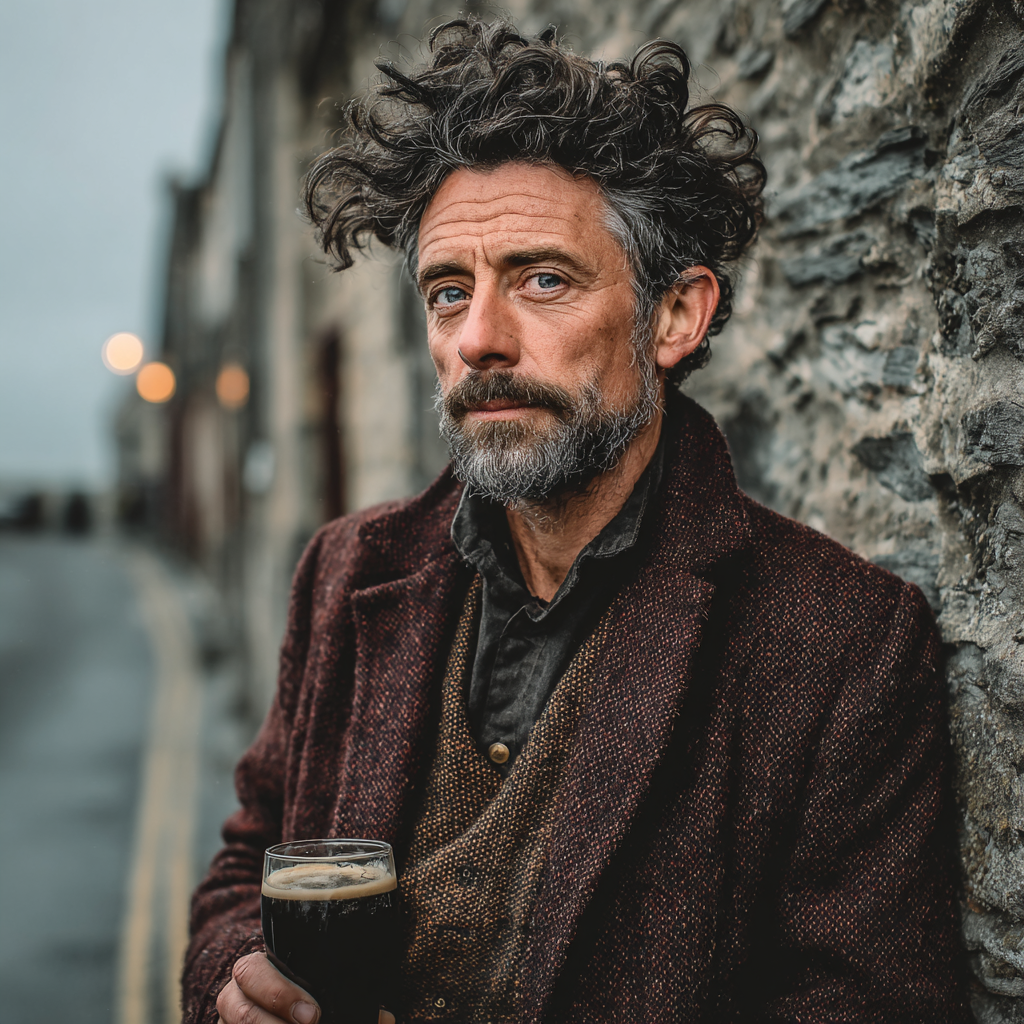
By Finn O'Sullivan
Irish storyteller and folklorist. Finn hunts for the narratives that do not make guidebooks—the pub legends, the family feuds, the neighborhood heroes. He believes every street corner has a story if you know who to ask.