
Dushanbe does not announce itself. You land at an airport named after a poet most people have never read, ride past Soviet apartment blocks the color of weathered concrete, and suddenly find yourself standing before a flagpole so tall it looks designed for a different planet. The city is the capital of Tajikistan, a country that shares borders with Afghanistan, China, Kyrgyzstan, and Uzbekistan, and it carries the visual scars and ambitions of every era that has touched it.
The first thing an architectural photographer notices is the scale of contradiction. Dushanbe was a village known mainly for its Monday bazaar until the Soviets renamed it Stalinabad in 1929 and declared it a capital. They laid out wide boulevards lined with plane trees, built neoclassical theatres, and stamped the center with the heavy concrete blocks of late-Soviet planning. After independence in 1991, the city shed the Stalinabad name and began replacing Soviet modesty with marble, gold, and height. The result is a city where a brutalist Ministry of Agriculture can sit two blocks from a palace built by the same Italian firm that constructs Dubai hotels.
Start at the National Flag Square. The flagpole rises 165 meters and was the tallest free-standing flagpole on earth when erected in 2011. The flag itself weighs 700 kilograms. The square is bordered by the Palace of Nations on one side and the Parliament building on the other. The Palace of Nations, known locally as Qasri Millat, was completed in 2008 by the Italian construction company Rizzani de Eccher. It covers 29,500 square meters across four floors, with a white stone façade and a golden dome supported by twenty-meter columns. The building is guarded and closed to the public, but you can photograph it from the park across the avenue. It appears on the back of the 500 somoni banknote, which tells you how central this image is to modern Tajik national identity. The Parliament building, opened in 2024, has a dome that reaches 70 meters and is larger than the presidential palace, a quiet architectural statement about where formal power now sits.
Walk east along Ismoil Somoni Avenue to the Navruz Palace, also called Kohi Navruz. It was built between 2011 and 2014 and reportedly cost over 200 million dollars. The structure is part conference center, part pleasure palace, and part civic hallucination. It contains a man-made lake, a bowling alley, a cinema, a go-kart track, and four reception halls. The Zarandud Hall uses 24-carat gold leaf and a chandelier the size of a small apartment. The Didor Hall is decorated in Central Asian patterns with gypsum and crystals. The Gulistan Hall contains ninety-four different types of wood. The palace is open weekdays from 8:30 AM to 5 PM and closed on weekends. Entry is through guided tours arranged at the entrance.
The National Museum of Tajikistan opened in its current building in 2013. It is a white marble structure with a large arched entrance and geometric detailing that nods to both Persian and Soviet decorative traditions. The museum operates from 8:00 AM to 6:00 PM daily. Entry for foreign visitors is 35 somoni, roughly three dollars. The most photographed exhibit is a thirteen-meter reclining Buddha excavated from the Ajina Teppa Buddhist monastery in the south of the country. The statue dates to the seventh century and is one of the largest surviving clay Buddhas in Central Asia. The archaeology floor also contains Sogdian frescoes and Bactrian gold pieces that connect Tajikistan to the pre-Islamic Silk Road. For a photographer, the building's exterior is more compelling at dusk, when the marble reflects the pink light from the Hissar Range.
Rudaki Park sits at the center of the city and functions as the main public space. At the southern end stands the Monument to Ismoil Somoni, a twenty-five-meter statue of the tenth-century national hero mounted on a twenty-five-meter pedestal. The total height is fifty meters, and the figure is wrapped in a crown of gold-plated steel. The monument replaced a statue of Lenin that stood in the same spot during the Soviet period. The Lenin statue was moved to a less prominent location near the railway station, where it still stands. Rudaki Park is free and open at all hours. The fountains are typically active from late afternoon until 10 PM in summer.
The Ayni Opera and Ballet Theatre, located on Rudaki Street near the park, was built between 1939 and 1946. It is one of the finest examples of Soviet neoclassical architecture in Central Asia, with a columned portico and a pediment decorated with Socialist Realist reliefs. The interior contains a chandelier weighing two tons and a hall seating 1,200 people. Tickets cost between 30 and 100 somoni depending on the performance, and the box office opens at 10 AM on performance days. The building photographs best in the early morning, when the stone facade catches the low sun from the east.
The Hissar Fortress is located eighteen kilometers west of the city center and requires a thirty-minute drive by taxi or marshrutka. The fortress has been settled since approximately the sixth century BC and served as the palace of the Hissar Bek, a local ruler under the Bukhara Emirate. The walls are one meter thick and contain loopholes for cannons. Inside the complex are two sixteenth-century madrassas and the mausoleum of Makhdumi Azam, a Sufi saint. Near the fortress stands the Kharbuza teahouse, built in the shape of a melon. It is forty-three meters tall, one hundred meters long, and fifty-five meters wide, with capacity for 2,300 visitors. The fortress and teahouse are open daily from 8 AM to 6 PM, and combined entry is approximately 20 somoni.
The Dushanbe Central Mosque, also called the National Mosque of Tajikistan, opened in 2019 on the southern edge of the city. It was financed with Qatari assistance and can accommodate 25,000 worshippers. The main dome is plated in gold, and the minarets reach 75 meters. The mosque is open to non-Muslim visitors outside prayer times. Entry is free, but visitors should dress modestly and remove shoes before entering the prayer hall. Photography is permitted in the courtyard but should be discreet inside.
Mehrgon Bazaar, also called the Green Bazaar, is the city's main market. It is located near the center, off Rudaki Avenue, and operates daily from 6 AM to 4 PM. The building is a modern concrete hall with a metal roof, functional rather than beautiful, but the interior is where the city's real character lives. Vendors sell dried apricots from the Pamirs, fresh nan bread baked in clay ovens, Kyrgyz honey, and Uzbek ceramics. Prices are not fixed, and bargaining is expected. A loaf of nan costs 3 somoni. A kilogram of dried fruit costs between 20 and 40 somoni depending on the season.
The Ismaili Centre, located on Ismoil Somoni Avenue near the National Museum, opened in 2009. It was designed by the Canadian architect Fumihiko Maki and funded by the Aga Khan Trust for Culture. The building uses a geometric pattern based on Islamic tessellation and is clad in white marble with copper screening. Entry is free, but visitors should check opening hours in advance as the center closes for private events. It is typically open from 9 AM to 5 PM Tuesday through Sunday.
What is most striking about Dushanbe is not any single building but the unresolved argument between them. The Soviet blocks are crumbling. The new marble palaces are immaculate but feel uninhabited. The flagpole is taller than any structure around it, which makes it visible from nearly every rooftop in the city. The Persian poetry of Rudaki is inscribed on monuments while the actual books sit unread in the national library, a building shaped like a pyramid that opened in 2012 and holds 1.5 million volumes.
For photographers, the light in Dushanbe is exceptional in September and October, when the summer haze clears and the mountains are visible in sharp detail. The best time to shoot the Palace of Nations is at sunrise, when the white stone turns amber. The best time for Rudaki Park is at dusk, when the fountains are lit and the Somoni monument is floodlit in gold. The Kharbuza teahouse is most surreal at golden hour, when its melon shape is silhouetted against the Hissar Range.
Dushanbe is not a comfortable city. Summer temperatures reach 40 degrees Celsius. The tap water is not safe to drink. Power cuts are common in older neighborhoods. Taxis do not use meters; negotiate the fare before entering. A ride within the city center should cost 10 to 20 somoni. A ride to Hissar Fortress should cost 50 to 80 somoni round trip. The airport is ten kilometers from the center and a taxi should cost 30 to 50 somoni. Hotels in the center range from 200 somoni for basic guesthouses to 800 somoni for international-standard rooms. The city is safe for foreigners, but police checkpoints are common near government buildings, and you should carry your passport.
Most travelers treat Dushanbe as a stopover before the Pamir Highway, the M41 road that runs through the Pamir Mountains to Osh in Kyrgyzstan. That is a mistake. The city is not a backdrop. It is a living archive of Central Asia's twentieth and twenty-first centuries, written in concrete, marble, gold leaf, and steel. The flagpole is absurd. The palaces are excessive. The Soviet blocks are decaying. But together they form a city that has never stopped trying to decide what it wants to be.
Bring a wide-angle lens for the monuments and a portrait lens for the faces in Mehrgon Bazaar. The best photograph I took in Dushanbe was not of a building. It was of an old man selling melons in the shadow of the Kharbuza teahouse, both of them round, both of them sun-worn, both of them exactly where they were supposed to be.
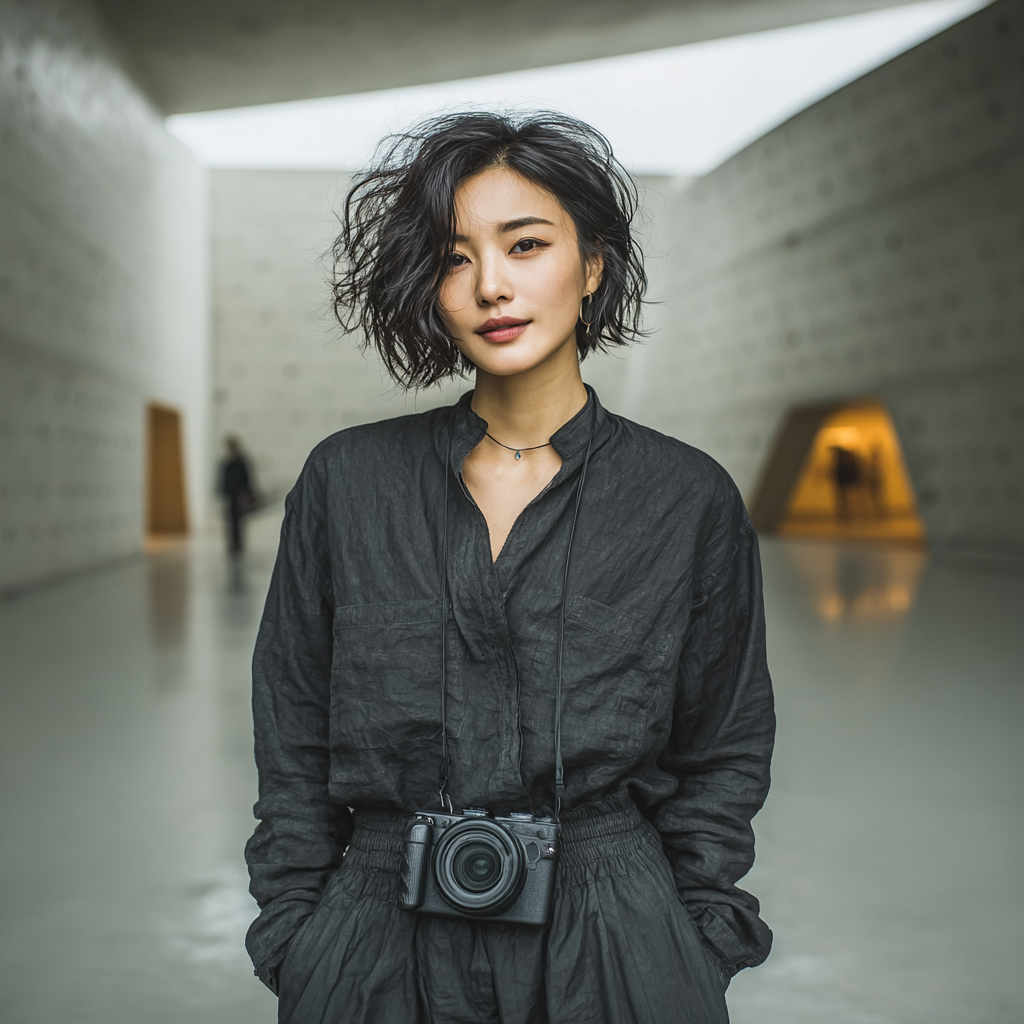
By Yuki Tanaka
Architectural photographer based in Tokyo. Yuki captures the dialogue between ancient structures and modern design across Asia and Europe. Her work has been featured in Monocle, Dezeen, and Wallpaper. She sees buildings as frozen stories waiting to be told.