
Dushanbe, Tajikistan: Where Soviet Concrete, Persian Poets, and Central Asia's Tallest Flagpole Share One Unlikely Capital
I photograph buildings for a living, and Dushanbe is one of the few capitals where I have stopped mid-crossing to check whether what I'm seeing is real. A 165-meter flagpole on a boulevard built for a children's railway. A palace that started life as a teahouse and mutated into forty thousand square meters of marble. A sleeping Buddha, thirteen meters long, excavated from a monastery the Soviets decided to flood. And under all of it, a Monday bazaar — dushanbe literally means "Monday" in Tajik — that swallowed a village and became a capital of 1.5 million almost by accident. The city was renamed Stalinabad in 1929, then given its market-day name back in 1961, which tells you most of what you need to know about its identity crisis. Come with a wide lens and low expectations of spectacle: the drama here is in the juxtapositions, not the monuments.
Entry Formalities: Easier Than Its Reputation
This is the part nobody updates. Tajikistan scrapped visa requirements unilaterally in 2022 and kept expanding the list — as of 2026, citizens of the US, Canada, the entire EU, UK-adjacent states like Iceland and Norway, Australia, New Zealand, Japan, South Korea, Singapore, and roughly sixty other countries enter visa-free for 30 days. Two important exceptions: UK and Turkish passport holders still need an e-visa ($50, single entry, up to 60 days, apply at the official evisa.tj portal — ignore the lookalike "expedited service" sites). If you plan to run the Pamir Highway, you need a GBAO permit ($20–50 depending on channel): request it as an add-on with your e-visa, or get it in Dushanbe at the MFA consular office or OVIR, which takes one to three working days and requires patience, copies of your passport, and small somoni notes for the fee window. Extensions beyond 30 days for visa-free nationals are handled at OVIR but are genuinely painful — most overlanders exit to Uzbekistan and re-enter instead. Hotels register you automatically; keep the little registration slips (kvitantsiya) they hand you, especially if you're heading to the Pamirs where checkpoints ask for them. Passport should be valid six months past entry.
The Spine: Rudaki Avenue and the Poet the City Is Built Around
Start where every Dushanbe walk starts: Rudaki Avenue, the green axis that runs from the airport side of town up to the government quarter. Abuabdullo Rudaki — the tenth-century poet sometimes called the father of Persian poetry — gets the best real estate in the country, and the city's self-image is basically his: Persian, literary, older than the Soviet layer by a millennium.
Rudaki Park (free, open around the clock) is the city's living room. In its center stands the Rudaki monument, the poet holding an open book, ringed by flower beds and fountains that do their light-and-water show after dark in summer. Morning is the photographer's window: old men play chess under the plane trees, wedding parties cycle through for portraits at the fountains, and the light comes in low and gold down the boulevard. On the park's east side rises the Palace of Nations (Kohi Millat), the working presidential palace — a white wedding cake of a building with a turquoise dome. You can't go in; you photograph it from the park axis, ideally from the south side of the lake where the flagpole lines up behind it.
That flagpole is the one every guide gets wrong, so let's settle it: at 165 meters, Dushanbe's flagpole was the tallest in the world when it went up in 2011 — and lost the record to Jeddah's 171-meter pole in 2014. Any tour material still calling it the world's tallest is a decade stale. What remains true is the flag itself, roughly 30 by 60 meters and around 700 kilograms, snapping over a boulevard where Lenin's statue stood until 2007. There is no flag-raising ceremony. It just flies. That, somehow, is very Dushanbe.
One block north, the Statue of Ismoil Somoni anchors the square named for the Samanid dynasty's golden age — the ninth- and tenth-century Persian Renaissance the modern state claims as its inheritance. It's free, it's floodlit at night, and it's where the national holidays concentrate. On Independence Day, September 9, the whole axis becomes a parade ground; on Navruz, March 21, the crowds come for sumalak, the ritual wheat pudding cooked overnight in huge cauldrons by neighborhood committees. If your dates are flexible, Navruz week is the single best time to be in the city.
Navruz Palace: The Teahouse That Ate a Budget
Of all the buildings I've shot in Central Asia, Navruz Palace (Kohi Navruz) is the one I describe most carefully, because nobody believes the summary. It was commissioned by Tajik businessmen as a grand teahouse, and somewhere mid-construction the ambition metastasized: it opened as a 40,000-square-meter palace with multiple banquet halls, an art gallery, conference rooms, a cinema, and a winter garden, finished by artisans summoned from across the country.
The practicalities: it's at Ismoil Somoni Avenue 14/2, a 20-minute walk east of Rudaki Park or a cheap Maxim taxi. Hours are Monday to Friday 8:00–17:00, Saturday 8:30–13:00, closed Sunday, and entry to the grounds and the courtyard of arches — each arch framing a portrait of a Tajik literary or political figure — is free. To see the halls, you pay 70 somoni (~$6.50) at the internal tour desk for a guided circuit; groups of two or more usually join a Russian- or Tajik-language departure, and English-speaking guides appear on request if you call ahead (+992 938 800 142). Carry your passport for the security desk, and know that a VIP event can close the interior without warning — the exterior and lake gardens stay open regardless. My advice: go near closing on a weekday afternoon, when the marble halls empty out and the geometry stops competing with tour groups.
Istiqlol Tower: The Vertical Selfie Tajikistan Built
North of the center, between Rudaki Street and the Varzob River, the Istiqlol Complex went up for the 30th anniversary of independence in 2021. Its centerpiece is a 121-meter tower topped with a crown, surrounded by parade-square paving and baroque-Tajik archways. Elevator access to the 14th-floor 360° observation deck costs 70 somoni (~$6.50), and lower floors hold a small museum on Tajik statehood. The deck is the only place in the city where the urban plan makes sense — the Soviet grid, the Varzob River, the mountains to the north — and at golden hour it's genuinely worth the fare. The complex is open roughly 9:00–20:00 daily; if the tower elevator is idle, ask at the base rather than assume it's closed.
The National Museum: Where the Buddha Sleeps
Across the street from the Palace of Nations, on the west bank, the National Museum of Tajikistan is the country's one unmissable indoor stop. Budget reality first: the foreigner ticket is 70 somoni (~$6.50) — double what older blogs list — plus a small camera surcharge if you shoot inside; foreign-language guided tours run about 60 somoni. It's open Tuesday to Sunday, 9:00–17:00, closed Mondays, and the ticket windows sometimes close for lunch, so arrive before 15:00.
Then go stand in front of the sleeping Buddha of Ajina-Tepa. Excavated in the 1960s from a seventh- to eighth-century Buddhist monastery 130 kilometers south of Dushanbe — a site the Nurek Reservoir was about to swallow — the 13-meter reclining figure in parinirvana pose is one of the great artifacts of the Silk Road, and it anchors a museum that otherwise walks you through Zoroastrian fire-temple era, the Samanids, the Russian conquest, and Soviet Tajikistan in 22 halls. The top floors' ethnographic galleries — embroidered wall hangings, musical instruments, Pamiri house models — are the sections that explain the country you're about to drive through. Give it two hours minimum.
The Ismaili Centre: Marble, Minarets, and Manners
The Ismaili Centre on Ismoil Somoni Avenue is the only building in the city where contemporary Islamic architecture has been executed at the highest international level — the fifth Ismaili center in the world, opened in 2009 in the presence of the Aga Khan and President Rahmon. Canadian architect Farouk Nurmohammed designed it around courtyards and light; three million bricks came from Samarkand, and five minarets rise over sixteen hectares of gardens.
The etiquette matters more here than anywhere else in town. Since 2022 the center functions primarily as a jamatkhana — a place of prayer for the local Ismaili community — and general tourist access has narrowed. The reliable window is weekend mornings, 9:00–12:00, when free guided tours run for visitors, often led by student volunteers; arrive modestly dressed (shoulders and knees covered, women may be offered a headscarf), bring your passport for the security desk, and assume photography is restricted inside the prayer hall and library even where the courtyards are fine. If the weekend tour isn't running the day you're there, the exterior brickwork and the garden axis are still worth a slow walk. This is the calmest square meter in Dushanbe.
Soviet Concrete, Honestly Framed
The Soviet layer is not hidden here; it's simply the wallpaper. The Ayni Opera and Ballet Theatre on Rudaki Avenue — neoclassical, colonnaded, built 1939–1946 and named for writer Sadriddin Ayni — still stages ballet, opera, and concerts most weeks; tickets start around 50 somoni and performances typically begin at 18:00. Buy at the box office a day ahead and you'll sit in a hall where the chandeliers alone justify the price. The Mayakovsky Theatre keeps a Russian repertoire. Streets flip between Rudaki, Ismoil Somoni, and Pushkin without warning, and a full "Soviet Dushanbe" walking loop takes about ninety minutes on foot: Mayakovsky to the Victory Park hilltop memorial — eternal flame, 1960s-modernist war memorial, and the best free panorama over the city — then back down through the plane trees. I shoot Victory Park at dusk, when the flag reads red against a sodium-lit skyline.
What's easy to miss is what the concrete replaced. Between 1992 and 1997 this city survived a civil war that killed tens of thousands and burned whole districts; a peace and national agreement was signed on June 27, 1997, and the date is now a public holiday. There's no slick museum of it — the Casa de la Memoria-style memorial culture that Medellín built doesn't exist here — but the Museum of the History of the Great Patriotic War near Victory Park and the rebuilt mahallas tell the story if you look. Treat the Soviet layer as stratum, not souvenir.
Chaikhana Culture: Green Tea, Qurutob, and the Friday Pot
Dushanbe runs on tea. In a proper chaikhana the teapot — green tea, always, refilled without asking — costs almost nothing and the clock stops. Rokhat Teahouse on Rudaki Avenue, with its carved wooden portal and courtyard seating, is the classic: order osh (plov, 25–40 somoni depending on venue), watch the bread, and stay an hour longer than planned. Note the gender rhythm: chaikhanas are male-dominated at midday; women are completely welcome, but female travelers will usually be more comfortable and get better company at the newer family venues along Rudaki's western stretch.
The dish to travel for is qurutob, the closest thing Tajikistan has to a national plate: rounds of dense fatir bread torn into a wide wooden bowl, buried in fried onions and tomatoes, then drowned in qurut — the sour dried-yogurt balls you see white-stacked in every bazaar, dissolved in water and poured over everything. It's eaten communally, with the right hand, no cutlery, and a plate runs 20–35 somoni in local spots. Ask for it by name and watch the room warm to you. Friday lunch is the cultural peak: osh cooked in vast cauldrons, offices close early, and the whole city smells like lamb and carrot. Vegetarians survive on non bread, pumpkin samsa, and qurutob ordered without meat with advance negotiation.
Instruments, Bazaars, and the Smell of Kurut
The Gurminj Museum of Musical Instruments, tucked in a courtyard house a short walk behind the Panjshanbe bazaar, is the work of Gurminj Zavqibekov, an actor and musician who spent a lifetime collecting the region's sound. Around two hundred pieces — long-necked rubab and setor, giant Karnay horns, frame drums, accordion-row Soviet hybrids — fill two small rooms, and when the mood strikes, the staff plays them. Entry is a small fee (roughly 25–35 somoni); occasional evening concerts are announced on the door. It's the best 45 minutes in the city for anyone who liked the National Museum's ethnography floor.
For the markets: Mehrgon Bazaar (daily, southeast of the center) is the photogenic one — pyramids of spices, pyramids of kurut balls, pyramids of dried apricots, vendors who will pose for a portrait if you buy a bag of almonds. The vast Panjshanbe bazaar, with its arched portal, is one of Central Asia's great covered markets and far more local; Korvon and Sakhovat further southeast are where the city actually shops. Bargaining is gentle, fixed price for bread, and the dried-fruit-and-nut bundles make the best gifts in the country. Morning light, always, for the fruit pyramids.
Hissar Fortress: Twenty-Five Centuries, Thirty Kilometers
Every Dushanbe itinerary eventually points west, 30 kilometers to Hissar Fortress, on a settlement hill people have defended for some two and a half thousand years. What stands now is mostly sixteenth to seventeenth century: two flanking cylindrical towers, an arched gate, a restored sixteenth-century madrasa (the one Rudaki reportedly studied in, per local tradition), a caravanserai courtyard, and a small museum inside — the onyx-minaret fragments and ceramics justify the roughly 20-somoni entry. It's compact; ninety minutes covers it, and the views over the Hisor plain are the real payoff.
Logistics: shared minibuses to Hisor leave from the Ziloni Bazaar area stands in the morning and early afternoon, a few somoni per seat and 40–50 minutes; a private taxi from central Dushanbe should run 150–250 somoni round trip with waiting time — negotiate before departure, pay in somoni, and don't accept the airport-taxi style opening quotes. Combine it with lunch in Hisor town and you're back for a late chaikhana session.
The Mountains at the Doorstep
Dushanbe sits at 800 meters, and the Hissar Range rises within half an hour. Three escapes, in rising order of commitment:
Varzob Gorge, 30 kilometers north on the Khujand road, is the city's weekend lung — riverside picnic platforms, trout restaurants, and the Gusgarf Waterfall, a 30-meter cascade reached by an 8-kilometer, two-to-three-hour round-trip walk. Shared taxis run around 30–40 somoni per seat; organized day tours with lunch run $80–105 per person. Spring (March–May) is the season operators push, when the water is high and the valley green.
Iskanderkul, Alexander the Great's lake, 2,175 meters up in the Fann Mountains, needs most of a day or an overnight at the lakeside cottages; the short walk to the Fann "Niagara" waterfall is the standard add-on. Expect roughly $280–540 per person for organized two-day programs from Dushanbe agencies, cheaper if you charter a car and sleep at the Saritag guesthouses.
The Seven Lakes (Haft Kul) are — and every local will confirm this — properly done from Panjakent, not Dushanbe: marshrutka Dushanbe→Panjakent is about 90 somoni (shared taxi ~170), then 35–80 somoni more up the Shing Valley. Your passport gets checked at the Shing post, and if you entered on an e-visa, carry a paper printout — the checkpoint officers want paper, not phone screens. The lakes are seven turquoise stair-steps, each a different color, and Lake Seven hides 40 minutes above the road. Do it as an overnight in Panjakent with Sarazm's 5,000-year-old UNESCO settlement tacked on; the one-day crush from Dushanbe is how people learn to hate mountain driving.
If your GBAO permit is sorted and a 4WD is chartered ($200–400 for the Dushanbe–Khorog run, or an hour-long Somon Air / Tajik Air flight to Khorog), the city is also the staging ground for the Pamir Highway. Three days here is the standard rhythm: one for the museums, one for Hissar or Varzob, one for permits, cash, and gear.
When to Come
Dushanbe's climate is a negotiation. April–May and September–October are the windows: 15–28°C, blossom or golden light, the mountains open. June–August regularly hits 35–42°C — the city empties to the chaikhana shade, and afternoon walking is genuinely punishing; if you must, sightsee before 11:00 and after 17:00. Winter is mild but grey (2–10°C), with the Fann passes closed and the city at its most introspective — cheap hotels, empty museums, best for architecture nerds. Festival calendar: Navruz (March 21), Victory Day (May 9), the Mudflower/harvest fair season in autumn, and Independence Day (September 9), when Rudaki Avenue stages the year's biggest parade and the flag overhead earns its keep.
Honest Math
At an exchange rate hovering around 10.3–10.7 somoni to the dollar, Dushanbe is one of the world's great value capitals. The budget traveler sleeps in a guesthouse dorm or basic private room ($8–20), eats qurutob and samsa, rides marshrutkas, and lands at $25–40 a day. The comfortable traveler — a three- or four-star hotel like the Serena or a business hotel in the $50–90 band, taxis via Maxim, museum fees, one organized day trip — spends $60–90. True luxury barely exists below the Hilton tier ($120–160), which tells you something about the market. Carry crisp US dollars as backup — the somoni is a closed currency you cannot buy abroad, ATMs in the city are unreliable outside banks, and cards work only in top-end hotels and a handful of supermarkets. Get cash at the airport ATM before you exit the terminal; it is the one machine in the country guaranteed to have somoni.
Practical Logistics
Arrival: Dushanbe Airport (DYU) sits only 5–7 km from the center. Yandex Go does not operate in Tajikistan — download Maxim before you land. A Maxim ride to Rudaki Avenue runs 25–50 somoni; street taxis quote tourists $10–20 and should be negotiated down to the 30–60 somoni band. Marshrutkas 8, 16, and 33 pass the airport for 5–10 somoni if your bag is small. SIM cards (Tcell, Megafon, Zet-Mobile) cost around 50 somoni with passport registration at any official kiosk; data outside the city thins fast, and the Pamirs run on a different (expensive) network rhythm entirely.
Getting around: central Dushanbe is walkable end to end in 40 minutes; everything else is a 20–40 somoni Maxim ride. Russian outranks English everywhere — learn salom, rahmat (hello, thank you), and the numbers, and doors open. Tap water: no. Bottled, always. Safety: Dushanbe is genuinely low-crime by regional standards; the realistic risks are taxi overcharging, traffic (cross with locals, cars do not stop), and the summer heat. Photography of government and military buildings is prohibited — the flagpole area itself is fine, but don't aim long lenses at ministries. Dress is secular-urban but conservative by Western norms; shoulders covered at the Ismaili Centre is non-negotiable.
What to Skip
- Any "world's tallest flagpole" spiel. Jeddah's 171-meter pole took the record in 2014. Central Asia's tallest is still impressive; a guide selling you the old record is selling you 2011.
- Touts selling Navruz Palace "tickets" at the gate. The interior tour is bought at the internal desk for 70 somoni; exterior access is free. Nobody outside the fence sells anything real.
- The airport-taxi free-for-all. Unregistered drivers open at $10–20 for a 15-minute ride. Maxim exists. Use it, or fix a somoni price before the door closes.
- Hotel and airport exchange desks. Rates run several percent under bank counters; the terminal ATM and downtown banks are the play. Nobody outside the country sells somoni — plan your dollars before you fly.
- Seven Lakes as a one-day Dushanbe round trip. It's six to eight hours of mountain road each direction. Overnight in Panjakent or don't go; a rushed version ruins the best scenery in the country.
- Friday midday errands and bazaar runs. Offices close for Friday prayer, stalls shut, the city holds its breath 12:00–14:00. Sightsee mornings, eat lunch late, and you'll never notice.
- Waiting for a flag ceremony, a changing of the guard, or any state pageantry. Dushanbe does not perform for visitors; it just lives, at enormous scale, whether you're pointing a camera at it or not. That's the whole point.
Dushanbe will not charm you on the first morning. It charmed me on the third, standing in the National Museum's quiet top-floor gallery while the Buddha slept under museum light and the muezzin and the traffic argued outside. It's a capital that became a capital by accident, kept a bazaar's name through an empire, and expresses its identity in marble and verse because it has nothing else to prove. Come for the architecture, stay for the tea, and leave before the summer heat explains why everyone was sitting down.
— Yuki Tanaka, architectural photographer, still thinking in frames
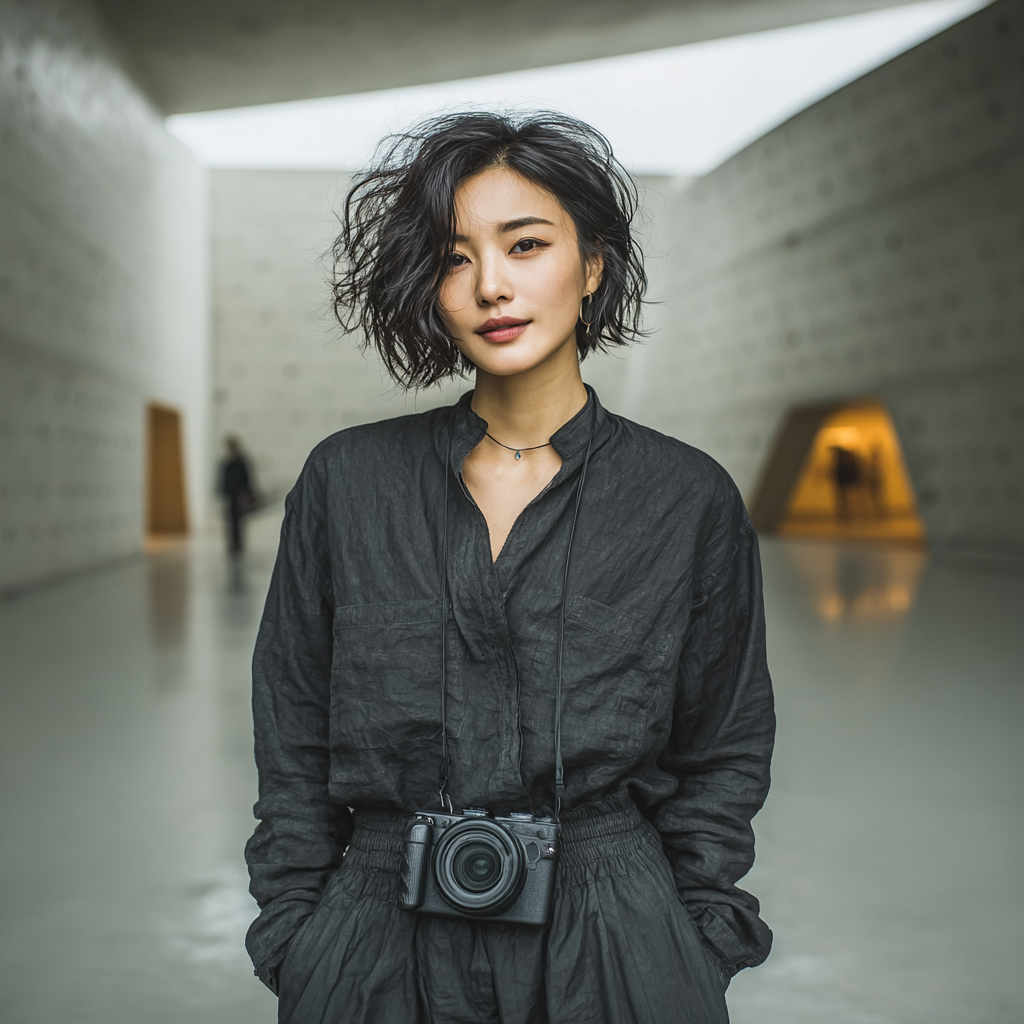
By Yuki Tanaka
Architectural photographer based in Tokyo. Yuki captures the dialogue between ancient structures and modern design across Asia and Europe. Her work has been featured in Monocle, Dezeen, and Wallpaper. She sees buildings as frozen stories waiting to be told.