
Pamplona Beyond the Bulls: Medieval Walls, Navarrese Pintxos, and the Frontier City That Hemingway Never Owned
Most people know Pamplona for one thing: the bulls. They picture Hemingway's drunk Americans sprinting through cobblestone streets in white shirts and red sashes, and they figure the city only matters for eight days in July. This is wrong. Pamplona is a city that has been holding its ground for 2,000 years, and the running is just one chapter in a much longer story — one that involves Roman legions, Basque warriors, Catholic kings, and a stubborn local culture that refuses to be fully Spanish or fully Basque but something more interesting than either.
The city sits in a natural bowl where the Pyrenees start their climb toward France. The Romans built a settlement here in 75 BC because the valley narrows and controls the passage between the mountains and the Ebro River plain. They called it Pompelo. The Visigoths came, then the Moors, then the Franks under Charlemagne — who, according to local legend, was so enraged by the city's resistance that he destroyed it twice. By 824, the Kingdom of Navarre was born here, and Pamplona became a frontier capital between Christian Europe and Muslim Spain. That borderland identity never really left. Walk the old town today and you will hear Spanish and Basque spoken in the same sentence. Street signs give both names: Calle Mayor and Kale Nagusia point to the same narrow lane. The city has three ancient boroughs — the Navarrería, San Saturnino, and San Nicolás — each with its own church, its own patron saint, and its own centuries-old grudges.
About the Author
Finn O'Sullivan is an Irish storyteller and folklorist who hunts for the narratives that do not make guidebooks — the pub legends, the family feuds, the neighborhood heroes. He has walked the Camino de Santiago three times, written about border towns from Belfast to Trieste, and believes that Pamplona is one of Europe's most misunderstood cities: not a bull-running theme park, but a living frontier town where two cultures have been negotiating coexistence for a millennium. He approaches the city with skepticism of anything labeled "authentic" and a deep respect for the locals who have kept their traditions alive through invasion, siege, and the annual tourist stampede.
The Walls: Where Pamplona's Story Begins
The first thing to do is walk the walls. Pamplona has the most complete medieval fortifications in Spain, and unlike the postcard versions in other cities, these walls are not just a decorative backdrop. You can walk almost five kilometers along the top, looking down at red-tile roofs, garden patios, and the green curve of the Arga River. The path is called the Ronda del Castillo, and it is entirely free. Start at the Portal de Francia, the gate that faces north toward the mountains, and work your way clockwise. The walk takes about 90 minutes at a normal pace, though you will want to stop at the bastions where the views open toward the Pyrenees.
The walls were built in stages: Roman foundations, medieval extensions, and Renaissance reinforcements after the city was besieged by the French in 1521. In 2009, the city opened the Interpretation Centre of the Fortifications at the Fortín de San Bartolomé, a former military stronghold now turned museum. The centre uses short films and 3D models to explain how the walls evolved — far more engaging than a traditional dusty museum. It is free to enter and open Tuesday through Saturday from 10:00 AM to 2:00 PM and 4:00 PM to 7:00 PM, Sundays 11:00 AM to 2:00 PM. Closed Mondays.
The best time to walk the walls is early morning, before 9:00 AM, when the joggers are out and the city below is still waking up. In spring, the bastions are covered in wildflowers. In autumn, the morning fog rolls up from the Arga River and turns the old town into a grey island. The walls are lit at night, and an evening stroll — especially around the Portal de Zumalacárregui on the western side — feels like walking through a medieval painting.
The Cathedral: A Gothic Masterpiece in a Neoclassical Wig
The cathedral sits at the highest point of the old town, and it is worth the climb up Calle Curia. Santa María la Real is a Gothic cathedral with a Neoclassical facade that the city added in the 18th century because they thought the original looked too plain. The French writer Victor Hugo called it "a beautiful lady with donkey ears." The result is slightly awkward, like a medieval knight wearing a powdered wig — but step inside, and the interior more than justifies the effort.
The cloister is the prize. It is 14th-century Gothic, with pointed arches and carved capitals that show biblical scenes mixed with daily life — a baker, a musician, a man fighting a pig. The refectory has a Moorish ceiling that survived from the building's earlier life as a mosque. The archaeological crypt contains Roman remnants and the tomb of King Charles III of Navarre, the 15th-century monarch who unified the city's three warring boroughs and is still celebrated as Pamplona's greatest peacemaker.
The cathedral museum, called Occidens, traces the history of Western Christianity through art and architecture. Even visitors who normally skip religious museums find the narrative compelling — it is less about doctrine and more about how a frontier city used faith to define itself.
Practical details: The cathedral is at Calle Dormitalería, 31001 Pamplona. General admission (including cloister and museum) is €5 for adults, with discounts for pilgrims, students, and seniors. Hours vary by season: spring and summer (from the last week of March), open Monday through Saturday from 10:30 AM to 6:00 PM, with last access at 5:00 PM. Sundays closed. Guided tours in English run at 11:00 AM and 4:00 PM, led by volunteers from a local history society who know details no audio guide will tell you — like which pillar still bears the mark of a cannonball from the Napoleonic siege of 1813.
The Citadel: Philip II's Star-Shaped Warning
The Citadel is another essential stop, and it is entirely free. This star-shaped fortress was built by Philip II in the 16th century after he conquered Navarre and wanted to make sure the locals stayed conquered. The architect was an Italian, Giacomo Palearo, and the design is textbook Renaissance military engineering — angled bastions, dry moats, and walls thick enough to absorb cannon fire.
Today the moats are gardens, and locals jog the perimeter at dawn. The southern bastion houses a small museum about the fort's history, including the 1830 explosion that killed 600 people when a powder magazine caught fire. The crater is still visible in the northeast wall, patched with lighter-colored stone. The Citadel also hosts rotating art exhibitions, summer concerts, and cultural events. It is open 24 hours as a public park, though the museum and exhibition spaces have variable hours depending on events.
The Citadel is at the southern edge of the old town, a 10-minute walk from Plaza del Castillo. Bring a picnic in summer — the grass between the bastions is Pamplona's best-kept secret for a lazy afternoon.
Plaza del Castillo and the Hemingway Question
Plaza del Castillo is the city's living room — a wide, open square ringed by elegant 19th-century buildings and filled with café terraces where locals meet for coffee, argue about football, and watch the world go by. The name comes from a castle that once stood here but was demolished in the 1700s. At the southern end, look closely at the walls of the Navarre Government building: the bullet holes from Spanish Civil War skirmishes in the 1930s are still visible.
Café Iruña dominates the plaza's northern side. Founded in 1888, it is the most famous bar in Pamplona, largely because Hemingway drank here. The menu still lists his name, but the waiters do not make a fuss about it. The interior is grand — high ceilings, marble columns, brass fixtures — and the terrace is the best people-watching spot in the city. Order a café solo and a churro if it is morning. If it is afternoon, get a kalimotxo — red wine and Coca-Cola over ice, the Basque-country drink that horrifies wine purists and satisfies everyone else. A coffee costs €1.80, a kalimotxo €2.50.
The Hemingway trail is unavoidable but not unpleasant. He first came in 1923 and returned nine times. Hotel La Perla on the plaza still rents the room he used, number 217, for €180 per night in July and €95 the rest of the year. The lobby has his typewriter under glass. Bar Hemingway on Calle Estafeta is a tourist trap with overpriced cocktails — skip it. The real Hemingway bars are the ones he actually drank at: Café Iruña, Café Roch on Calle Comedias, and the now-closed Bar Toro where he supposedly wrote part of The Sun Also Rises in 1925. The building is a clothing store now, but a small plaque marks the spot.
The Hemingway statue on the plaza, installed in 2018, makes locals roll their eyes. "He was a drunk who came here for two weeks a year," one bartender told me. "We have been here for 2,000 years." Fair point.
The Museum of Navarre: What Pamplona Actually Is
Downhill from the cathedral, the Navarre Museum occupies a 16th-century hospital building at Calle Cuesta de Santo Domingo 47. This is where you learn what Pamplona actually is, beyond the bull-running cliché. The collection includes Roman mosaics from a villa outside the city, medieval altarpieces, Goya portraits of the Navarrese nobility who bankrolled Spain's wars, and early works by pioneers of photography in Navarre.
The museum is organized around the idea that "all art is contemporary" — meaning that every piece, from a Romanesque capital to a modern print, is a form of communication in its own time. The result is a collection that feels alive rather than dusty. The building itself is worth examining: a Renaissance hospital with a Gothic church of Santo Domingo attached, and a courtyard that catches the afternoon light perfectly.
Practical details: Admission is €2 per adult. Free on Saturday afternoons and all day Sunday. Open Tuesday through Saturday from 9:30 AM to 2:00 PM and 5:00 PM to 7:00 PM. Sundays and public holidays 11:00 AM to 2:00 PM. Closed Mondays. Information: +34 848 426 492. Guided visits are free but require advance booking; they last about one hour and are limited to 25 people. Look out for temporary exhibitions, which often feature contemporary themes and local artists.
The Bullring: Blood, Stone, and 19,720 Seats
The bullring, Plaza de Toros, holds 19,720 people and was built in 1922. Even if you do not care about bullfighting, the architecture matters. It is the second-largest bullring in Spain, after Madrid's Las Ventas, and the stone facade was designed by a Navarrese architect who studied in Paris. The building dominates the southern edge of the old town, and its presence is impossible to ignore — especially in July, when the entire city orbits around what happens inside.
Tours run daily at 10:30 AM and cost €6.50. You see the pens where the bulls wait before the run, the chapel where fighters pray, and the infirmary where the gored are patched up. The museum inside has the blood-stained outfit of a fighter who was killed here in 1985, and a video monitor showing every encierro — the bull run — since 1980. Watch five minutes of that footage and you will understand why the city requires participants to be over 18, sober, and mentally competent.
The running of the bulls itself is the centerpiece of San Fermín, held every July 6 through 14. The encierro starts at 8:00 AM and lasts two to four minutes. The route is 825 meters, from the corrals at Santo Domingo up Calle Estafeta to the bullring. The most feared bulls are the Miura breed, which run on July 13. Even if you do not run, arrive by 6:45 AM to secure a spot behind the barriers. The adrenaline in the air is unmistakable — part religious procession, part riot, part suicide attempt.
Food in Pamplona: Navarrese, Not Basque
Food in Pamplona is Navarrese, not Basque, though the two cuisines share ingredients. The city is surrounded by vegetable gardens that produce some of Spain's best tomatoes, peppers, and asparagus. The local specialty is txistorra, a thin chorizo that is fried and served in a bread roll. A good one costs €2.50 at any bar on Calle San Nicolás.
Pintxos — the Basque-style small plates — dominate the old town. Bar Gaucho on Calle Espoz y Mina is a local institution. Their tortilla de patatas is made fresh every hour, and the piece with pimiento costs €3.20. Bar Txirrita on Calle San Agustín does a stuffed pepper with bacalao that locals argue about — some say it is the best in the city, others say it has gone downhill since the original owner retired in 2019. Go and decide for yourself. It costs €4.00.
The wine is Navarra D.O., and it is underrated. The region makes excellent Garnacha rosado and robust Tempranillo. A glass in any old-town bar costs €2.00 to €2.50. Bodegas de la Real on Calle San Antón has been in business since 1862 and sells bottles starting at €8.00. Ask for the crianza from the 2019 vintage — it won a gold medal in Barcelona in 2022 and still costs under €15.00 retail.
For a sit-down meal, Casa Otano at Calle San Nicolás 5 (+34 948 222 750) is a Navarrese institution that has been serving traditional cuisine since 1955. The menú del día costs €18.00 and includes three courses and wine. Rodero at Calle Emilio Arrieta 3 (+34 948 248 128) is Pamplona's only Michelin-starred restaurant, with tasting menus starting at €85.00. Reserve at least a week ahead.
The Camino de Santiago: Pamplona as Pilgrim City
The Camino de Santiago passes through Pamplona on its way west to Santiago de Compostela. Pilgrims enter the old town through the Portal de Francia and walk down Calle Mercaderes, stopping at the parish church of Santa María la Mayor for a stamp in their credential. The city has been a pilgrim hub for a thousand years, and that energy is still palpable — especially in spring and autumn, when the hostels fill with walking boots and sunburned faces.
If you want to walk a section yourself, the stretch from Pamplona to Puente la Reina is 22 kilometers and takes five to six hours. It crosses the Alto del Perdón, a wind-scoured ridge with steel sculptures of pilgrims that make for a dramatic photograph. The path is well marked with yellow arrows, and there is a bar at the summit that serves cold beer and bocadillos for €5.00. The pilgrim office at Calle Mayor 43 provides maps and advice. Open daily 10:00 AM to 2:00 PM and 4:00 PM to 7:00 PM.
Taconera Park: The Oldest Garden in the City
Between the Citadel and the old town lies Taconera Park, the oldest and most romantic garden in Pamplona. Created in the 19th century on the site of the old city moat, it is a long, narrow strip of green filled with statues, fountains, and a small zoo of deer and peacocks that wander freely among the visitors. The park's design is classic French garden style — formal paths, symmetrical flower beds, and a central promenade lined with plane trees.
The park is at its best in May, when the roses are in bloom, or in October, when the plane trees turn gold. There is a small café near the deer enclosure that serves coffee and pastries. The park is free, open from dawn to dusk, and connects directly to the Citadel gardens — making it easy to walk from one to the other in a single afternoon.
What to Skip
The separate Museo del Encierro on Calle Santo Domingo is a tourist trap — €7.00 for mannequins in white shirts and a video loop. The bullring tour covers the same ground more authentically.
The Hemingway statue on Plaza del Castillo, installed in 2018, is widely mocked by locals. Take a photo if you must, but know that the man himself would have found it embarrassing.
The souvenir shops on Calle Estafeta sell overpriced white outfits year-round. A red sash costs €2.00 at any supermarket if you must have one. The full San Fermín outfit — white shirt, white trousers, red sash, red scarf — should not cost more than €15.00 total.
Bar Hemingway on Calle Estafeta trades on a name that Hemingway never actually drank at. The cocktails are €12.00 and watered down. Walk two minutes to Café Iruña instead.
The hotel breakfast buffet is a tragedy of cold tortillas and industrial jam that has no relation to what the city actually eats. Walk five minutes to any bakery on Calle San Nicolás and get a fresh txistorra roll instead.
Restaurants with English menus and photos of the bulls on the walls are overpriced and underseasoned. If the menu has pictures, walk away.
Getting There and Getting Around
Pamplona Airport is 6 kilometers from the city center, about 10 minutes by car. It has limited international connections — mostly domestic flights to Madrid and Barcelona, plus some seasonal routes. Most international visitors fly to Bilbao and take the bus, which is two hours and costs €18.00. Alternatively, fly to Madrid and take the high-speed train to Zaragoza, then a regional train north — about three hours total and €25.00 to €35.00.
The city center is compact and entirely walkable. The old town is pedestrian-only. Taxis are cheap but unnecessary for most visitors — a ride across town costs €5.00 to €7.00. The bus system covers the suburbs and the university district; a single ticket costs €1.35. The main bus station is at Calle Conde Oliveto, with connections to all major Spanish cities.
When to Go and What to Expect
July 6 through 14 is San Fermín, and the city triples in population. Hotel prices quadruple. A room that costs €60 in March goes for €250 in July. Book a year ahead if you want to run, or come in late September for the San Fermín de Aldapa, a smaller festival that locals prefer because the tourists have gone home.
May is asparagus season, when restaurants serve white asparagus from the Navarre gardens in dozens of preparations. June is warm and green, before the summer crowds arrive. October is mushroom season — perretxikos, níscalos, and boletus fill the markets and the menus. November is rainy and quiet, which is when the university students dominate the bars and the city feels most like itself.
Lunch runs from 1:00 PM to 3:30 PM. Dinner starts at 8:30 PM but does not get busy until 9:30 or 10:00 PM. On weekends, the pintxos bars fill by 8:00 PM and stay loud until midnight. The bakeries open at 7:30 AM. Most of Pamplona starts moving at 9:00 AM, which means you can have the walls almost to yourself at 8:00 AM if you are willing to be that person.
Language is not a barrier in central Pamplona. Most restaurant staff under 40 speak English. Menus in tourist areas are bilingual. In neighborhood bars, pointing works.
A realistic daily budget is €50 to €70 if you mix pintxos, a menú del día lunch, and one sit-down dinner with Navarre wine. You can do it for under €35 if you eat txistorra rolls and supermarket sandwiches. If you eat only at Michelin-recommended restaurants and drink Gran Reserva, you might spend €120.
Pamplona is safe. The usual precautions apply: watch your bag in crowded bars during San Fermín, avoid unlit parks after midnight, and do not get into unmarked taxis. The biggest risk is eating too many pintxos and discovering you have no self-control around Navarre rosado.
The Verdict
Pamplona does not need the bulls to justify its existence. It has walls that held back armies, a cathedral that saw kingdoms rise and fall, and a culture that is neither fully Spanish nor fully Basque but something harder to name and more interesting to explore. The city is at its best in the early morning, when the joggers are on the walls, the bakeries are opening, and the only sound is the church bells arguing with each other across the old town. That is the Pamplona worth knowing. The bulls are just the loudest part of the story.
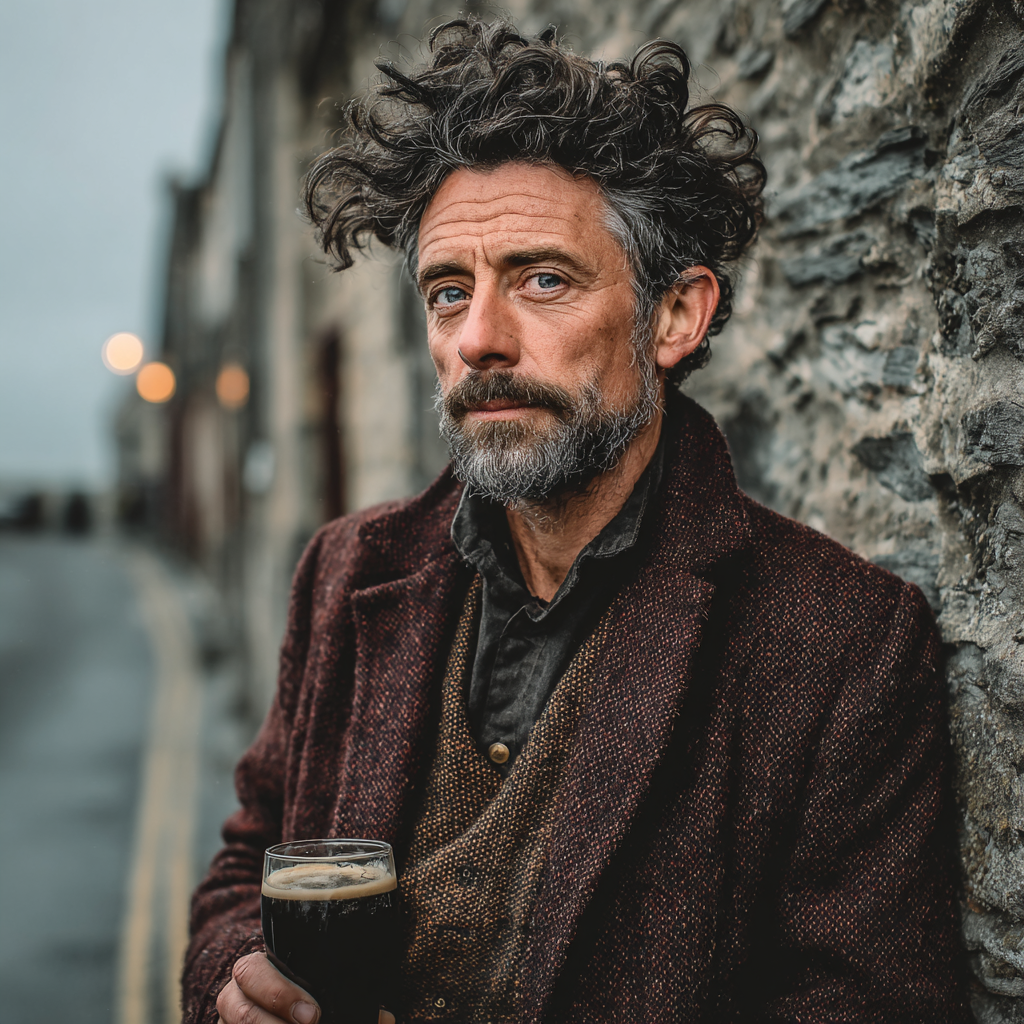
By Finn O'Sullivan
Irish storyteller and folklorist. Finn hunts for the narratives that do not make guidebooks—the pub legends, the family feuds, the neighborhood heroes. He believes every street corner has a story if you know who to ask.