
Gyeongju: The City Where Silla Kings Buried Themselves in Gold and Nobody Stopped Digging
"Gyeongju does not announce itself. It does not have the skyline of Seoul or the beach of Busan. What it has is time, stacked in layers you can walk through — and the stubborn refusal of its people to let the past stay buried." — Elena Vasquez, culture correspondent
Most travelers to South Korea land in Seoul, spend three days in Gangnam and Hongdae, and leave thinking they have seen the country. They haven't. Two hours southeast by KTX train, Gyeongju sits in North Gyeongsang Province like an open textbook. For nearly a thousand years, from 57 BC to 935 AD, this was the capital of the Silla Kingdom, the longest-running dynasty in Korean history. The locals call it "the museum without walls," which sounds like tourism branding until you walk five minutes from any hotel and trip over a seventh-century stone pagoda.
The city is not pretty in the conventional sense. It is low-rise, spread out, and lacks the neon density of Busan or the mountain drama of Seoul. What it has is density of time. Royal tombs rise from suburban parks like oversized molehills. A 1,300-year-old observatory stands in a field next to a convenience store. The trick to Gyeongju is accepting that the extraordinary here is ordinary, and planning accordingly.
This guide is not a checklist. It is an attempt to understand what happened here — and why, after fourteen centuries, people still care enough to rebuild what was burned, to dig up what was buried, and to argue about whether a temple should be restored exactly as it was or left as a ruin.
The Weight of Gravity: Daereungwon and the Royal Tombs
Daereungwon Tomb Complex (Tumuli Park)
Gyerim-ro, Gyeongju-si, Gyeongsangbuk-do
Hours: Daily, 09:00–22:00 (last entry 21:30)
Admission: Adults ₩3,000 / Teenagers ₩2,000 / Children ₩1,000
Combined ticket (Daereungwon + Donggung Palace + Oreung): Adults ₩5,000
Start here. The park holds more than twenty royal burial mounds from the Silla period, built between the fifth and seventh centuries. They look like grassy domes. The largest rise about twenty meters and spread sixty meters across. From the outside, they are almost aggressively modest — just hills. But beneath them lies the accumulated wealth of a kingdom that dominated the Korean peninsula for longer than the Roman Empire ruled Britain.
In 1973, archaeologists opened one mound, now called Cheonmachong — the Heavenly Horse Tomb — and found a wooden chamber lined with gold crowns, jade ornaments, and a saddle pendant painted with a flying horse. The crown alone, with its curved golden spires and dangling jade drops, is now the centerpiece of the Gyeongju National Museum. The tomb is open to the public. You walk down a short corridor into the reconstructed chamber and stand where a king was buried with enough gold to fund a small war.
Elena's practical note: Visit twice if you have time — once in daylight to read the signs and see the scale, and once after dark when the mounds are lit from below and the park empties out. The night lighting, installed in 2020, is subtle and effective. A note on behavior: climbing the tombs is illegal and carries a ₩20 million fine. The signs are not suggestions. These are active burial sites, not playgrounds.
Nearby, the Oreung Tomb Cluster holds the burial mounds of the first six Silla kings. It is less visited than Daereungwon, which means you can walk the gravel paths in near-silence, surrounded by mounds that have been growing grass for fifteen centuries.
Astronomy Carved in Stone: Cheomseongdae Observatory
839-1 Inwang-dong, Gyeongju-si
Entry: Free to view from outside. No interior access.
Best time: Early morning or late afternoon
Across the road from Daereungwon, Cheomseongdae Observatory rises from a grassy field like a stone bottle. Built in the seventh century, it is the oldest surviving astronomical observatory in East Asia. The structure is 9.4 meters tall, built from 362 granite blocks — one for each day of the lunar year. The top holds a square opening aligned with the cardinal directions.
Scholars still debate exactly how Silla astronomers used it. Some believe they tracked the movements of Venus and Jupiter. Others argue it was used for agricultural timing — predicting the monsoon, marking planting seasons. What is not debatable is the precision: the stones are cut to within millimeters, the opening is perfectly aligned, and the structure has survived earthquakes, invasions, and fourteen centuries of Korean winters.
Most visitors photograph it and leave. Stay longer. The surrounding park has benches where you can sit and watch Korean families picnic beside a building older than Notre-Dame. In autumn, the gingko trees turn gold and drop leaves onto the stone base. It is one of the most peaceful spots in Korea.
The Mountain Temples: Bulguksa and Seokguram
Bulguksa Temple
385 Bulguk-ro, Gyeongju-si
Hours: Nov–Jan: 07:30–17:00. Feb: 07:30–17:30. Mar–Sep: 07:00–18:00. Oct: 07:00–17:30.
Admission: Adults ₩5,000 / Teenagers ₩3,500 / Children ₩2,500
Bus from city center: #10, #11, or #700 (hourly, 40 minutes, ₩1,500)
These two sites sit on Mount Tohamsan, about thirteen kilometers east of the city center, and together they form a UNESCO World Heritage site. Bulguksa Temple was built in the eighth century by Prime Minister Kim Dae-seong, who — according to legend — constructed it to honor his parents from a previous life. The temple burned during the Japanese invasions of the sixteenth century and again in the early twentieth century. What stands now is a careful reconstruction, but the layout follows the original plan.
Two stone pagodas dominate the courtyard: the Seokgatap, a simple three-story tower representing the earthly Buddha, and the Dabotap, an ornate octagonal structure representing the Buddha of the present. Both are original eighth-century stonework. The Dabotap is the more famous — it appears on the South Korean ₩10 coin — but the Seokgatap, in its austere simplicity, is the greater architectural achievement. It has survived with only minor repairs for over twelve hundred years.
The temple is a working religious site, part of the Jogye order, and monks live on the grounds. You will see them in gray robes walking between halls, and hear chanting at dawn and dusk. The temple stay program (templestay.com) allows overnight stays in the compound, including meditation, tea ceremony, and pre-dawn chanting. Programs run from ₩50,000 to ₩70,000 per night, including meals. Book two weeks ahead.
Arrive before 9:00 AM. By 10:00, tour buses from Busan and Seoul begin unloading, and the stone staircases turn into bottlenecks. The early morning light on the pagodas, with mist still in the valley, is worth waking for.
Seokguram Grotto
Hours: Same as Bulguksa. Last entry 30 minutes before closing.
Admission: Adults ₩5,000 (or combined with Bulguksa for ₩6,000)
Access: 30-minute forest hike from Bulguksa, or bus #12 from the temple parking lot (hourly from 08:40)
From Bulguksa, Seokguram sits uphill through a pine forest. The grotto is a granite chamber built into the mountainside, housing a seated Buddha facing the East Sea. The carving dates to the eighth century and is protected behind glass. The expression is famously serene — the slight smile, the half-closed eyes, the hands in the mudra of enlightenment. Art historians compare it to the Buddha of Bamiyan (destroyed by the Taliban in 2001) and the Great Buddha of Nara.
Photography is forbidden inside. On the winter solstice, a ray of sunlight passes through a precisely cut opening in the dome and strikes the Buddha's third eye. The Silla engineers who built this understood astronomy, optics, and stone masonry at a level that still impresses modern architects.
The site is small — you will spend fifteen minutes inside — but the density of intention in those fifteen minutes is unmatched anywhere else in Korea. Walk the forest trail back to Bulguksa rather than taking the bus. The path is shaded, quiet, and lined with prayer stones left by pilgrims.
Evening Alchemy: Donggung Palace and Wolji Pond
102 Wonhwa-ro, Gyeongju-si
Hours: 09:00–22:00 (last entry 21:30)
Admission: Adults ₩3,000
Combined ticket with Daereungwon: Adults ₩5,000
In the center of the old town, Donggung Palace and Wolji Pond — historically called Anapji — was a royal banquet hall and pleasure garden during the Unified Silla period. The original buildings burned in the tenth century. What you see now is a careful reconstruction from the 1970s, built after dredging the pond revealed original stone foundations and tens of thousands of roof tiles.
The standard advice is to visit at sunset, and it is correct. The wooden pavilions are lit after dark, and their reflections double the architecture in the water. The effect is deliberate — Silla courtiers designed the garden for evening viewing. You are seeing it as intended, which is rare in heritage tourism.
But come earlier too. The grounds are beautiful in daylight, with willows trailing into the water and lotus leaves spreading across the surface in summer. The exhibition hall near the entrance displays artifacts recovered from the pond — ceramic fragments, metalwork, and a stone water spout carved with a dragon's head.
Elena's local tip: The best photograph is not from the main viewing platform (crowded with selfie sticks) but from the small wooden bridge on the eastern side, where the angle frames two pavilions and their reflections without the crowd.
Gold and Bronze: Gyeongju National Museum
186 Iljeong-ro, Gyeongju-si
Hours: Tue–Sun, 10:00–18:00 (closed Mondays)
Admission: Free
The museum holds the bulk of the gold and bronze excavated from the tombs and temple sites. The main hall displays the gold crown from Geumgwanchong Tomb, a piece so intricate that modern jewelers struggle to replicate the soldering technique. The Silla craftsmen worked without electricity or magnification, yet the crown's spires and jade drops are balanced to within millimeters.
Do not miss the Sarira Reliquaries — miniature gold pagodas and caskets designed to hold Buddhist relics. One, from the west pagoda at Gameunsa Temple, is a gilded bronze piece no larger than a fist, covered with filigree so fine it looks like lace. The English signage is thorough. Budget ninety minutes, longer if you read every label.
The museum grounds include a garden with stone pagodas and lanterns relocated from temple sites, and a traditional tea house where you can drink Korean green tea (₩4,000) while looking at a twelfth-century stone Buddha across the lawn.
Living History: Yangdong Hanok Village
Yangdongmaeul-gil, Gyeongju-si
Hours: Village open 24 hours. Individual house museums: 09:00–18:00.
Admission: Free to walk the village. House museums: ₩1,000–₩3,000 each.
Bus from city center: #10 or #11 from the express bus terminal (hourly, 50 minutes, ₩1,500). Taxi: approximately ₩15,000.
Sixteen kilometers northeast of the center, Yangdong is a UNESCO-listed traditional village with over 160 Joseon-era hanok houses, arranged on hillsides according to feng shui principles. Unlike the reconstructed villages near Seoul, people still live here. You will pass drying peppers on wooden racks, hear television through paper doors, and smell kimchi fermenting in courtyard urns.
The village has been inhabited continuously for over five hundred years. Some families trace their lineage to the sixteenth century. The contrast between the grand yangban (aristocrat) houses on the upper slopes and the smaller commoner houses below is visible and intentional — Joseon Korea was rigidly hierarchical, and the geography reflects it.
What to see:
- Seobaekdang House — the oldest in the village, built in the early 1500s. The curved rooflines and wooden lattice windows are classic Joseon aristocratic style.
- Hyangdan House — famous for its beautiful courtyard garden and the 99-kan (room) main building.
- Gwangajeong House — offers the best view of the village from its upper courtyard.
The village is at its best in early morning, before the tour buses arrive, or in late afternoon, when the light turns golden on the tiled roofs. Avoid midday in summer — there is little shade, and the stone paths radiate heat.
Gyeongju's Table: What to Eat and Where
Ssambap: The Twenty-Dish Spectacle
Ssambap Jeonguk — 138 Poseok-ro, Gyeongju-si
Hours: Daily, 11:00–21:00
Price: ₩12,000–₩18,000 per person
Gyeongju ssambap is the local specialty: a meal of rice served with upward of twenty small side dishes (banchan) and fresh leaves for wrapping. The presentation is theatrical — plates covering every inch of the table — and the quality varies wildly. The reliable choice is Ssambap Jeonguk near Daereungwon, where a full spread includes grilled mackerel, seasoned vegetables, fermented bean paste, and at least fifteen rotating side dishes. The leaves — perilla, lettuce, cabbage — come from the restaurant's own garden.
Hwangnam Bread and the Street of Everything
Hwangnam Bakery — 290-5 Hwangnidan-gil, Gyeongju-si
Hours: Daily, 08:00–21:00
Price: ₩800 per piece, ₩8,000 per box of ten
The local sweet is Hwangnam bread — a pastry filled with sweet red bean paste, invented in Gyeongju in the 1930s and now sold citywide. The original bakery, on Hwangnidan-gil, still uses the original recipe. The pastry is denser than a typical bun, with a slightly crispy exterior and a filling that is sweet but not cloying.
Hwangnidan-gil itself is worth an hour. The street runs through the old town, lined with hanok cafes, craft shops, and street food vendors. The cafes are overpriced (expect ₩6,000 for an americano) but the people-watching is excellent. In summer, vendors sell cups of sikhye (sweet rice punch) for ₩3,000.
Where the Locals Eat
Yejeon — 45 Poseok-ro, Gyeongju-si
Hours: Daily, 10:00–22:00
Price: Main dishes ₩10,000–₩16,000
A local favorite for bibimbap and bean sprout soup (kongnamul gukbap), which Gyeongju claims to have perfected. The restaurant is unpretentious — plastic chairs, paper menus, fast service — and the food is excellent. The bean sprout soup comes with a raw egg cracked on top, which cooks in the hot broth. Mix in the provided chili paste and sesame oil.
Samo Sikdang — 12 Hwangnidan-gil, Gyeongju-si
Hours: Daily, 11:00–21:00
Price: ₩8,000–₩14,000
A traditional Korean restaurant in a restored hanok building. The grilled bulgogi and doenjang jjigae (soybean paste stew) are both excellent. The courtyard seating, under a gnarled persimmon tree, is the most pleasant dining spot in the old town on a mild evening.
Where to Stay: Three Tiers
Luxury — Hilton Gyeongju
484-7 Bomun-ro, Gyeongju-si
From ₩180,000/night
The best hotel in the city, on the shore of Bomun Lake. The rooms are large by Korean standards, the breakfast buffet is excellent, and the lake-view rooms catch the morning mist rising off the water. The downside is the location — a twenty-minute taxi ride from the historic center. Worth it if you want resort amenities after a day of tomb-hopping.
Mid-Range — Gyeongju Hanok Hotel
34 Dongcheon 4-gil, Gyeongju-si
From ₩80,000/night
A hanok-style hotel within walking distance of Daereungwon and Wolji Pond. The rooms have heated floors (ondol), traditional bedding sets, and small private courtyards. The bathrooms are modern. It is the best compromise between authentic atmosphere and practical comfort.
Budget — Gyeongju Guesthouse
12 Poseok-ro 108beon-gil, Gyeongju-si
From ₩35,000/night (dormitory) / ₩60,000 (private room)
A clean, well-run guesthouse in a quiet residential street near the museum. The owner speaks English and provides free maps with hand-drawn walking routes. The shared kitchen is stocked with instant ramen and free coffee. A fifteen-minute walk to Daereungwon.
What to Skip — And What to Do Instead
Skip: Gyeongju World, the theme park near Bomun Lake. It is a generic amusement park with roller coasters and water slides. If you have traveled this far to see a roller coaster, reconsider your priorities.
Do instead: Walk the Bomun Lake trail at sunset. The path circles the lake for 8 kilometers, is flat and paved, and offers views of the surrounding hills. The pavilion near the eastern shore is a local favorite for evening exercise.
Skip: The reconstructed Silla Millennium Park, a collection of replica buildings and costumed performers that substitutes spectacle for substance.
Do instead: Visit Yangdong Hanok Village, where the buildings are real, the families have lived there for generations, and there are no actors in rental costumes.
Skip: The overpriced hanok cafes on Hwangnidan-gil that charge ₩8,000 for a latte and serve it in a paper cup.
Do instead: Walk to Chosun Tea House at 112 Hwangnidan-gil, where they brew Korean green tea (nokcha) in traditional ceramic pots and charge ₩5,000. The courtyard has a small garden with a stone basin for washing hands — a traditional feature that most tourists miss.
Skip: The guided bus tours that promise to show "all of Gyeongju in four hours." You will spend two of those hours in traffic and the other two rushing through sites with a megaphone-wielding guide.
Do instead: Rent a bicycle (₩10,000/day from shops near the express bus terminal) and explore at your own pace. The city is flat, the tomb parks have bike racks, and the wind in your face is better than air conditioning.
Skip: Eating only at restaurants near the major sites. They are overpriced and cater to tour groups with set menus.
Do instead: Walk three streets away from any major attraction. The restaurants there serve the same food at half the price to locals who would not tolerate mediocrity.
Practical Essentials
Getting There and Around
Train: The KTX from Seoul takes 2 hours 40 minutes. From Busan, 30 minutes. You will arrive at Sin Gyeongju Station, well outside the historic center. Budget twenty minutes and ₩15,000 for a taxi to the old town. Do not try to walk.
Bus: Express buses from Seoul's Nambu Bus Terminal take 3.5 hours and cost ₩30,000–₩40,000. From Busan, one hour, ₩7,000.
Within the city: The historic area is compact enough to cover on foot or by rental bicycle. Bike shops cluster near the express bus terminal and around Gyochon Hanok Village. A daily rental runs roughly ₩10,000–₩15,000. Taxis are cheap (base fare ₩3,800) and the practical choice for reaching Bulguksa and Yangdong. The local bus system exists but is irregular and mostly labeled in Korean.
When to Visit
Best: April–May (cherry blossoms, mild weather) and September–October (autumn foliage, clear skies). Cherry blossoms hit the tomb parks in early April; autumn foliage peaks in late October.
Good but challenging: July–August. Humid, crowded with domestic school groups, and the tomb parks have almost no shade. If you must come in summer, start sightseeing at 7:00 AM and retreat to air conditioning by noon.
Underrated: December–February. Cold but quiet. The empty tombs at dusk have a severity that warm weather dilutes. The pine forests around Bulguksa are dusted with snow. And you will have Seokguram almost to yourself.
How Long to Stay
Two full days is the right duration. One day covers the central sites — Daereungwon, Cheomseongdae, the museum, and Wolji Pond. The second day goes to Bulguksa, Seokguram, and Yangdong. Do not try to compress both into a single day trip from Seoul. You will spend five hours on trains and see the highlights through a bus window.
What to Pack
Comfortable shoes are non-negotiable. The sites look flat on maps, but Korean tomb parks involve grass, gravel, and uneven stone. There is little shade at Daereungwon. A hat in summer is not optional. In winter, temperatures drop below freezing at night — bring layers.
Author's Note
I came to Gyeongju on a rainy Tuesday in November, expecting a day of dutiful sightseeing before returning to Seoul. I stayed four days. The rain turned the tomb mounds an impossible green. The museums were empty except for school groups in matching yellow vests, and I stood in front of the gold crown for twenty minutes without anyone jostling me for a photo.
What struck me most was the lack of spectacle. Gyeongju does not try to impress you. It simply is — a city that has been a capital, a backwater, a battlefield, and a pilgrimage site, and has absorbed all of it into its ordinary streets. The convenience store next to Cheomseongdae Observatory is not an insult to history. It is proof that history, here, is not something you visit. It is something you live beside.
The Silla kings buried themselves with enough gold to signal their status, but what remains is the architecture of their ambition — precise, patient, and still standing after fourteen centuries. The city asks for attention, not admiration. Give it two days, and it will give you Korea's deepest history in return.
— Elena Vasquez
Word count: ~3,800
Reading time: 19 minutes
Last updated: August 2026
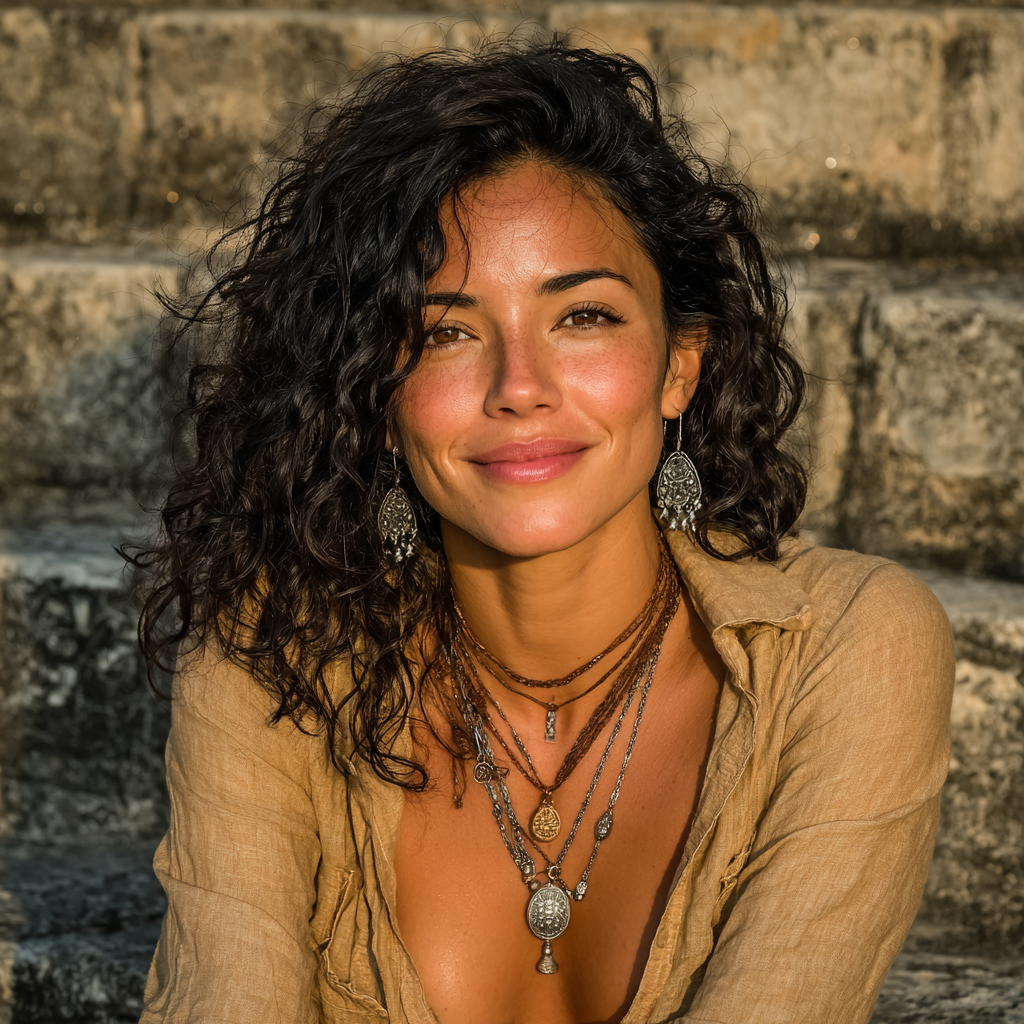
By Elena Vasquez
Cultural anthropologist and culinary storyteller. Elena spent a decade documenting traditional cooking methods across Latin America and the Mediterranean. She holds a PhD in Ethnography from Barcelona University and believes the best way to understand a place is through its kitchens and ancient streets.