
Seoul Concrete and Curves: An Architectural Field Guide to the City That Built Too Fast to Look Back
Author: Yuki Tanaka
Published: 2026-05-29 | Updated: 2026-10-08
Category: Architecture & Urban Culture
Country: South Korea
Slug: seoul-architecture-urban-guide
I've photographed cities for fifteen years, and Seoul presents a specific challenge. It's not pretty in the European sense. The Han River cuts through concrete on concrete. Utility wires still tangle above older neighborhoods despite decades of undergrounding efforts. But the city rewards patience. The architecture tells the story of a nation that developed faster than its aesthetics could process, and that tension produces remarkable moments.
The first thing you notice about Seoul is that it refuses a single skyline. Stand at the edge of Gwanghwamun Square and look north: Gyeongbokgung Palace's curved tile roofs in the foreground, then a wall of residential towers from the 1970s and 80s, then the glass shards of Gangnam's high-rises catching light in the distance. Three eras, one view. This is how Seoul works—by accretion, not replacement.
This guide is for travelers who look up. Who notice that the same neighborhood can contain a 600-year-old gate, a brutalist concrete church, and a parametric cultural center, and who understand that these contradictions are not accidents—they are the city's autobiography.
Entry Formalities: The Paperwork Is Easy Now (But Not Optional)
South Korea runs one of the smoothest entry systems in Asia, and 2026 is unusually relaxed—temporarily. Citizens of 22 countries, including the US, Canada, UK, Australia, New Zealand, Japan, Singapore, Taiwan, Hong Kong, Macau, and most of the EU (Germany, France, Italy, Spain, the Netherlands, Poland, the Nordics, and others), are exempt from the K-ETA requirement through December 31, 2026. The exemption has been extended before and could be again—or not—so check k-eta.go.kr before you fly.
Two things everyone must do:
- e-Arrival Card: All foreign visitors must complete the digital arrival declaration within 3 days before arrival at e-arrivalcard.go.kr. It replaced the old paper card on the plane. Takes ten minutes, generates a QR code.
- Passport validity: Six months beyond entry. Immigration may ask for an onward ticket and proof of funds—rarely enforced for Western passports, but have a booking screenshot ready.
If your nationality is not on the exemption list, you need a K-ETA (Korea Electronic Travel Authorization, ₩10,000 / ~$7.50) approved at least 72 hours before departure via k-eta.go.kr. Visa-free stays are typically 90 days for Western passports; 30–60 days for many others.
The Joseon Core: Heritage as Political Statement
Gwanghwamun and the Weight of Reconstruction
Start at Gwanghwamun (광화문), the main gate of Gyeongbokgung Palace. The gate you see was reconstructed in 1968—the original was destroyed during the Japanese occupation, then rebuilt with concrete. It was dismantled and restored with wood in 2010 after sustained public pressure. That cycle of destruction and reconstruction defines Korean heritage architecture.
Practicalities:
Address: 161 Sajik-ro, Jongno-gu, Seoul (Gyeongbokgung Station, Line 3, Exit 5)
Hours: 09:00–18:00 daily, last entry 17:00; closed Tuesdays (Nov–Jan until 17:00, last entry 16:00; Jun–Aug until 18:30)
Admission: ₩3,000 ($2.25) adults; children under 7 and seniors over 65 free. The integrated palace ticket (₩6,000 / $4.50) covers Gyeongbokgung, Changdeokgung, Changgyeonggung, Deoksugung, Gyeonghuigung, and Jongmyo Shrine—valid three months, and the obvious buy if you'll visit more than one palace
Free entry in hanbok: Strictly enforced—the outfit must be a proper jeogori (jacket) plus chima or baji (skirt/trousers); one-piece "hanbok-style" dresses do not qualify
Night opening: The annual night-viewing runs roughly September 2–October 2, 2026, 19:00–21:30 (last entry 20:30), limited to 3,300 visitors per day—reserve online the moment slots open; a small number of foreigner walk-up slots release at the Gwanghwamun ticket booth each evening
The palace itself requires half a day minimum. Built in 1395, destroyed by fire in 1592, rebuilt, then systematically demolished by the Japanese after 1911 to make way for their colonial Government-General Building—which itself was demolished in 1995–96 in a nationally televised act of reclamation. The current palace buildings date from the ongoing reconstruction that began in 1990.
One correction most guides get wrong: the National Folk Museum on the eastern grounds does not occupy the Japanese governor-general's residence. Its main building was constructed in 1966 as the National Museum of Korea—the country's first purpose-built modern museum. The colonial residence stood on what is now the Cheong Wa Dae (Blue House) grounds north of the palace and was torn down in the mid-1990s. Knowing which layer is which is the whole game here.
Photography note: Early morning light, before 09:00, hits Geunjeongjeon Hall (근정전) from the east and gives the green roof tiles real depth. The crowd barriers lift at 08:45, giving you a clean frame for about 45 minutes. The line of the palace wall against Bugaksan mountain beyond—curved rooflines against granite ridge—is the shot.
Ikseon-dong: Preservation by Occupation
Walk fifteen minutes east to Ikseon-dong (익선동), a neighborhood of hanok converted into cafes and shops. This is Seoul's best-preserved traditional residential area, though preservation came late. In the 1980s, developers wanted to demolish it all. Artists and activists moved in instead. Now it's curated heritage: tea houses, craft workshops, narrow alleys that feel transported from the 1920s until you spot the satellite dishes.
The story of Ikseon-dong is the story of Seoul's relationship with its own past. The city government initially supported demolition for "modernization." It was only when young artists began renting the deteriorating hanok, opening tiny galleries and coffee shops, that the cultural value became economically visible. The city reversed course, declared the neighborhood a preservation zone, and now regulates exterior changes while allowing interior adaptation. The result is a living museum where people actually live—and where a 100-year-old house can serve you a flat white.
Cafe Onhwa (온화) occupies a hanok estimated at 80–100 years old, with an interior courtyard that survived multiple ownership changes. Coffee costs ₩6,500–8,500 ($4.90–$6.35), high for Seoul, but you're paying for the architecture. The sliding doors (changhoji, 창호지) are original mulberry paper on wooden frames. In winter, the ondol (온돌) underfloor heating—an engineering tradition dating to the Three Kingdoms period—keeps the space warm through radiant heat.
Address: 31-8 Supyo-ro 28-gil, Jongno-gu
Hours: 10:00–22:00 daily
Nearby, Cheong Wa Dae (청와대, the former Blue House compound) has been open to the public since 2022 and is worth the (free, reservation-recommended) entry for the opposite reason: mid-century Korean institutional architecture caught between colonial formality and modernist austerity, set against the mountain backdrop the architects clearly intended as the main facade.
Hannam-dong: Three Architects, One Hillside
Across town, above Itaewon, the Leeum, Samsung Museum of Art (리움미술관) is the single best building visit in Seoul for architecture people—and criminally absent from most itineraries. The campus is a collision of three world architects: Mario Botta designed the M1 wing (2004) in his trademark terracotta-and-stone geometry, Jean Nouvel designed the black-glass M2, and Rem Koolhaas designed the child education center in corrugated metal. Three egos, one hillside, and it works because each building frames the others.
The collection—Korean celadon and white porcelain in M1, contemporary international work in M2—is superb, but come for the building first. The Botta courtyard alone, with its concentric circles of stone and water, is worth the trip.
Practicalities:
Address: 60-16 Itaewon-ro 55-gil, Yongsan-gu (Hangangjin Station, Line 6, Exit 1, then 5 minutes uphill)
Hours: Tuesday–Sunday 10:00–18:00; closed Mondays
Admission: M1 permanent collection free; special exhibitions ₩10,000–25,000 ($7.50–$18.50). Audio guide in English included
Photography: No photos inside the galleries; the exterior courtyard and Koolhaas facade are fair game
Pair it with a walk down to Hannam-dong's cafe strip, where 1960s–70s low-rise housing is being surgically replaced by design-flagship stores and micro-galleries—the current front line of Seoul's gentrification wars.
Dongdaemun: The City Tests Its Own Limits
Zaha Hadid's Spaceship and the Gate That Refused to Die
Take the subway to Dongdaemun History & Culture Park Station (Lines 2, 4, or 5). The station exits directly into Zaha Hadid's Dongdaemun Design Plaza (DDP, 동대문디자인플라자), completed in 2014 at a reported cost of ₩484 billion (~$450 million at the time). The building looks like a spaceship crash-landed in a textile district. Aluminum, concrete, and 45,000 square meters of fluid curves. Some Seoulites love it. Others call it an alien intrusion. Both reactions are valid.
The DDP sits on the site of Seoul's old baseball stadium. Just south, the stream—Cheonggyecheon (청계천)—was paved over with an elevated highway in the 1960s, then uncovered and restored in 2005 in one of Seoul's most expensive urban renewal projects. Now it's an 11-kilometer linear park running through the city center. Walk it east to west in the evening: water reflecting office tower lights, nineteenth-century stone bridges beside glass pedestrian overpasses.
Photography here is about contradiction. Frame the DDP against Dongdaemun Gate (Heunginjimun, 흥인지문), a 14th-century city gate that survived Japanese demolition because it served a military purpose. The neofuturist blob meets the stone fortress wall. Seoul stages these confrontations constantly.
DDP Practicalities:
Address: 281 Eulji-ro, Jung-gu
Hours: Exhibition halls generally 10:00–19:00 (some to 21:00); outdoor plaza open 24 hours
Admission: Free for plaza and design shop; special exhibitions typically ₩5,000–15,000 ($3.75–$11.25)
Night photography: The LED rose garden on the plaza lights from sunset to midnight
Gangnam: The Vertical City and What It Hides Underground
The Towers That Replaced Rice Fields
Cross the river to Gangnam (강남), the district that became synonymous with wealth after the 1988 Olympics and never gave the label back. The architecture here is what Seoul wants to project: sleek, tall, expensive.
COEX and the Trade Tower (1998) started the transformation; the Teheran-ro corridor of glass offices perfected it. The Lotte World Tower (롯데월드타워, 2017), at 555 meters, dominates the eastern skyline—the sixth-tallest building in the world. Go at sunset.
Lotte World Tower / Seoul Sky Practicalities:
Address: 300 Olympic-ro, Songpa-gu (Jamsil Station, Lines 2/8, Exits 1–2)
Hours: Sunday–Thursday 11:00–22:00, Friday–Saturday 11:00–23:00 (last entry one hour before close)
Admission: ₩33,000 ($25) adults, ₩29,000 ($22) youth 13–18 at the door; book online a day ahead for a small discount. The Sky Bridge tour—a harnessed walk across the glass-bottomed bridge linking the two upper towers, 541 meters up—runs ₩130,000 ($97) including deck admission and photos; book days ahead, limited slots, closed in high wind
Tip: The 117–123F "premium lounge" tier adds little; the standard deck is the experience
But Gangnam's real architectural interest is underground. Starfield COEX Mall contains the Byeolmadang Library (별마당도서관), a 13-meter public atrium lined with floor-to-ceiling bookshelves. Instagram-famous, yes—but also a genuinely successful public space in a district that otherwise privatizes everything. Free, open until 22:00, seating for hundreds in a city where public space is scarce.
Address: Starfield COEX Mall B1, 513 Yeongdong-daero, Gangnam-gu
Hours: 10:30–22:00 daily
Sinsa-dong: Luxury from the Bones of the Ordinary
For a different Gangnam, walk the backstreets of Sinsa-dong and Garosu-gil. The main avenue is boutique retail in converted residential buildings; the side streets hide 1970s apartment blocks with ground-floor restaurants that haven't renovated since the IMF crisis. Jungsik (정식당), two Michelin stars, occupies a building that used to be a wedding hall—this layering, luxury emerging from mundane structures, characterizes Seoul development.
Jungsik Practicalities:
Address: 11 Seolleung-ro 158-gil, Gangnam-gu
Hours: Lunch 12:00–15:00, dinner 18:00–22:00; closed Sundays
Tasting menu: Lunch roughly ₩150,000–290,000, dinner ₩280,000–390,000 ($110–$290) per person before drinks; wine pairing roughly doubles it
Reservation: CatchTable app or email, 3–4 weeks out for weekends
For context: Seoul's only three-star in the 2026 Michelin guide is Mingles (Gangnam-daero), where chef Mingoo Kang does Korean fine dining built on jang (fermented pastes) and temple-cuisine technique. If Jungsik is booked, Mingles is the backup—and to many locals, the point.
Seongsu-dong: Industrial Ruin as Aesthetic Strategy
The Factory District That Became Seoul's Brooklyn
Take the subway to Seongsu Station (성수역), Exit 3. This was Seoul's shoe manufacturing district in the 1980s and 90s. Factories employed thousands until labor costs rose and production moved to Vietnam and China. The buildings sat empty for years, corrugated metal rusting, loading docks crumbling.
Now Seongsu-dong is Seoul's most interesting neighborhood for industrial conversion. Daelim Changgo Gallery (대림창고갤러리) occupies a former rice warehouse from the 1970s. Cafe Onion (어니언) operates out of a 1970s metalworks factory with the machinery still in place. LCDC SEOUL converted a printing plant into a cultural complex with exhibition spaces, retail, and restaurants.
The aesthetic is deliberate decay. Exposed concrete, rusted steel, original factory windows. Unlike Ikseon-dong's polished hanok restoration, Seongsu preserves industrial ruin as atmosphere—texture against the smoothness of new Seoul.
Cafe Onion exemplifies the approach. The coffee is excellent—Korean roasting has become genuinely world-class (Busan hosted the World Barista Championship in 2024, and Seoul cafés supply the talent)—but you're there for the space. Nine-meter ceilings, original crane hooks hanging from steel beams, natural light through north-facing factory windows. Pastries ₩5,500–7,500 ($4.10–$5.60). The contrast between refined food and rough space is intentional.
Address: 8 Achasan-ro 9-gil, Seongdong-gu
Hours: 08:00–22:00 daily; bakery counter closes 21:00
Note: Waits of 20–40 minutes on weekends are standard; weekday mornings you walk straight in
Walk the surrounding streets. Many buildings are still genuinely industrial—parts manufacturers, textile workshops. Others have become design studios and brand flagships (Seongsu is now Seoul's "pop-up store" capital; the flagship wars between cosmetic and fashion brands are part of the spectacle). Capture the signage: hand-painted Korean characters on corrugated metal next to laser-cut English logos on glass.
The Han River: Seoul's Horizontal Release
Yeouido and the Democracy of Picnic Space
Seoul is vertical by necessity—mountains constrain expansion—so the city grows up. The Han River provides the horizontal release. Yeouido (여의도), the island in the river developed as the financial district from the 1970s, stacks the National Assembly, KBS, and the 63 Building (1985, once the tallest in Asia) along its northern edge.
But the park along the water is the public space. On summer evenings, thousands picnic on mats ordered through delivery apps; tents cluster like mushrooms. The city permits this temporary occupation of public space in a way that would be unthinkable in Tokyo or Singapore. This is Seoul's architectural democracy: the towers may be exclusive, but the riverbank belongs to everyone.
The Banpo Bridge Moonlight Rainbow Fountain (반포대교 달빛무지개분수)—1,140 meters of water jets arcing off both bridge decks into the river—has fully returned after years of pandemic-era suspension, and the 2026 season runs mid-March through October 31. It is kitsch, yes—colored lights, synchronized music—but it happens in public space, which is why it fills.
Fountain Schedule (2026 season):
Evening shows: roughly every 30 minutes from 19:30—typically 19:30, 20:00, 20:30, 21:00 (an extra 21:30 show runs in July–August); each show about 20 minutes
Daytime: a single noon show at 12:00
Cancellations: high wind or heavy rain cancels—check the Hangang Project social accounts same-day
Best viewing: Banpo Hangang Park, 40 Sinbanpo-ro 11-gil, Seocho-gu (Express Bus Terminal Station, Line 3/7/9, Exit 8-1, then walk toward the river). The Dokkaebi Night Market sets up nearby on weekend evenings spring through autumn—street food with the fountain as backdrop
For quieter river interaction, walk or cycle the Jamsil–Ttukseom section of the Hangang Park path on the southern bank. Bike rental at Ttukseom runs about ₩3,000 ($2.25) per hour plus a refundable deposit via the automated docks. The views north show Gangnam's towers doubled in the water.
What to Skip
Myeongdong for architecture. Myeongdong is Seoul's shopping and street-food mecca, but architecturally it's a war of competing LED screens and cosmetic-store facades. Visit for the energy, not the buildings.
Bukchon Hanok Village at midday. The preserved hanok cluster between Gyeongbokgung and Changdeokgung is architecturally significant, but between 11:00 and 16:00 the narrow lanes are impassable with tour groups—you cannot see the buildings for the selfie sticks. Locals in the lanes have posted "quiet please" signs; respect them. Go at 07:00 for golden light and silence, or skip it for Ikseon-dong, which feels lived-in rather than staged.
N Seoul Tower. The 1969 broadcast tower on Namsan is Seoul's most-ticketed tourist trap: a dated observation deck at roughly ₩21,000 ($16) for views that Lotte World Tower renders obsolete in every direction. Take the Namsan cable car only if you want the ride itself; don't queue for the deck.
Lotte World Mall for design. The mall attached to Lotte World Tower is a generic luxury retail box that could be in Dubai, London, or Singapore. The tower is worth the visit; the mall is not.
Seoullo 7017 as a destination. This elevated park, converted from a highway overpass near Seoul Station, received international attention in 2017. In practice it's hot in summer, wind-scoured in winter, and functions better as a pedestrian shortcut than a destination. Walk through if you're passing; don't make a special trip.
Practical Logistics
Getting Around
Seoul's subway is comprehensive, and signage is in English, Korean, Chinese, and Japanese. Buy a T-money card (₩3,000–5,000 / ~$2.50 for the card itself, at any convenience store), load it, and tap. Fares run ₩1,550 base ($1.15) with the card—cash single-ride tickets cost ₩100 more per journey. The base fare rose from ₩1,400 in June 2025, the first hike in years; further increases are under review, so don't trust older guides.
Short-term visitors should look at the Climate Card tourist passes: 1-day unlimited transit from around ₩5,000 ($3.75) and multi-day versions, loaded at station machines—worth it if you'll ride four or more times daily.
Taxis are reasonable—flag fall ₩4,800 ($3.60) for standard sedans, ₩100 more in the bluish "Deluxe" models—but traffic stalls 08:00–09:30 and 18:00–20:00. Between 22:00 and 04:00 a 20–40% night surcharge applies. Use the Kakao T app to hail; street-hailing is increasingly hit-or-miss.
Naver Map and KakaoMap are more accurate than Google Maps for Seoul transit and walking routes; both have English interfaces.
When to Come
Spring (April–May): Cherry blossoms, clear skies, 15–22°C. Best for palace photography—book accommodation early for blossom weeks.
Autumn (September–October): Crisp air, foliage in the mountain parks behind the palaces, 18–25°C. Ideal all-around; also palace night-viewing season.
Summer (June–August): Hot and humid, 28–35°C, with a monsoon front usually parked over the city in July. Plan indoor-heavy itineraries (museums, COEX, DDP exhibitions); the river parks come alive after dark.
Winter (December–February): -5 to 5°C, dry, excellent visibility. Palace courtyards in snow are worth the cold; hotel prices dip except around Christmas/New Year.
Where to Stay
Jongno (종로): Beside the palace district and the hanok neighborhoods. Best for first-timers who want to wake up near history. Rakkojae Seoul (락고재), a heritage hanok hotel at 98 Gyedong-gil, puts you in an ondol-heated traditional room with a Korean sauna and breakfast in brassware—rooms run roughly ₩280,000–600,000 ($210–$450) depending on room type and season; book direct for the best rate, and note the 15:00 check-in. Cheaper hanok guesthouses nearby start around ₩80,000–120,000 ($60–$90).
Hongdae (홍대): Near Hongik University. Cheaper, younger, live music and street art. Best for nightlife-first travelers.
Gangnam: Expensive, business-oriented. Only if contemporary architecture and luxury retail are your primary targets. Business hotels from ₩150,000 ($110).
Seongsu-dong: The emerging pick, with boutique hotels in converted industrial buildings and immediate access to Seoul's best cafe scene. Design-forward rooms from ₩120,000 ($90).
Food Budget
Street food (tteokbokki, hotteok, kimbap) costs ₩3,000–5,000 ($2.25–$3.75). A proper Korean meal—bbq, stew, bibimbap—runs ₩10,000–18,000 ($7.50–$13.50) per person; bbq for two with drinks ₩40,000–60,000. Specialty coffee ₩4,500–7,000 ($3.40–$5.25). Fine dining starts around ₩150,000 ($110) for lunch tasting menus and climbs past ₩400,000 at the top tables before wine.
Photography Notes
Tripods are technically restricted in some public spaces but rarely enforced for still photography. Drones require permits and are heavily restricted near government buildings, palaces, and the DMZ—leave it at home. Best palace light: 07:00–09:00. Best Gangnam towers: blue hour, 18:30–19:30 in spring and autumn.
Language
English signage is common in tourist areas and every subway station. Restaurant staff in non-tourist neighborhoods may not speak English—point at photos or use Papago (Naver's translation app; markedly better than Google Translate for Korean).
Honest Math: What a Day Costs in Seoul
At roughly ₩1,340 to the US dollar (October 2026), Seoul sits between Tokyo and Bangkok on the Asian cost curve—neither bargain-basement nor bank-breaking.
Shoestring (₩60,000–90,000 / $45–65 per day): Guesthouse dorm or cheap room (₩25,000–45,000), market or street food for two meals (₩12,000–18,000), subway hops on T-money (₩3,500–5,000), one paid sight (palaces are ₩3,000–6,000), coffee from a chain. The splurge-tier experiences—Sky Bridge, Jungsik, hanbok photo shoots—don't fit this budget, and that's fine; Seoul's best architecture is free to look at.
Comfortable (₩150,000–250,000 / $110–185 per day): Boutique hotel or hanok guesthouse (₩100,000–160,000), sit-down meals twice (₩35,000–50,000), transit plus one taxi, one ticketed experience (Seoul Sky ₩33,000, a special exhibition ₩10,000–25,000), cafe stop.
High-end (₩500,000+ / $375+ per day): Five-star or luxury hanok (₩300,000–600,000+), tasting menu at Jungsik or Mingles (₩280,000–390,000 before drinks), Sky Bridge, private car. Seoul's top tier is priced like Paris or New York—but the entry tier is the best value in developed Asia.
The hidden costs: hanbok rental (₩15,000–30,000 / 4 hours for free palace entry—do the math; two palaces and it's paid for itself), luggage storage at stations, and the 10% service charge creeping into Gangnam restaurants. The honest truth: architecture tourism in Seoul is nearly free. The money goes on height, starch, and sleep.
The Seoul That Emerges
Seoul doesn't present itself easily. The city requires you to move through it, to notice how the rooflines change from neighborhood to neighborhood, to understand that the concrete apartment block and the curved tile roof are equally authentic expressions of Korean urbanism. The 1970s tower, the 1990s commercial facade, the 2010s parametric curve—they are all Seoul, and they are all honest.
Give it three full days minimum. Walk until your legs hurt. Look up at the wires, the towers, the tile roofs against the mountain ridges. The architecture rewards the patient observer because the city itself was built by patience—decades of reconstruction, adaptation, and stubborn refusal to erase its own complexity.
Seoul did not become this city by planning. It became this city by building, destroying, rebuilding, and building again. Every layer is visible if you know where to look.
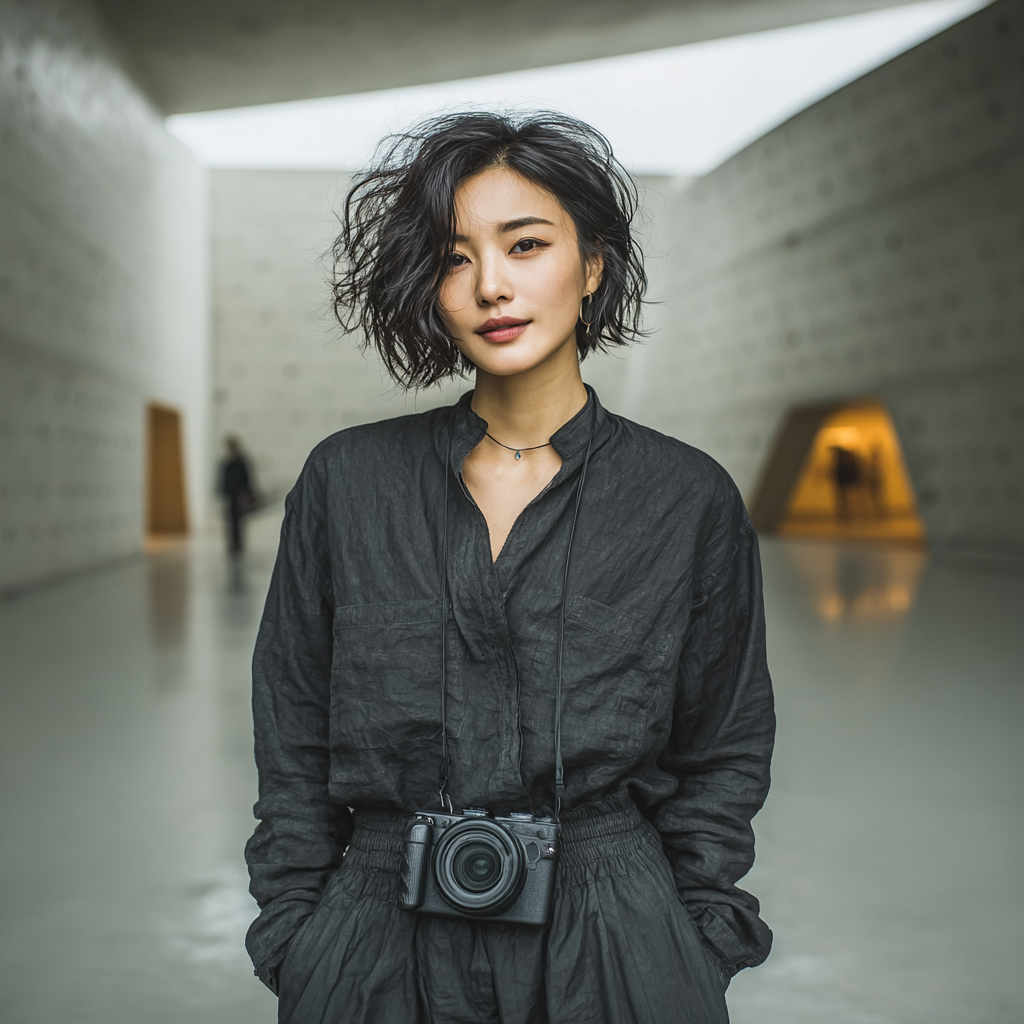
By Yuki Tanaka
Architectural photographer based in Tokyo. Yuki captures the dialogue between ancient structures and modern design across Asia and Europe. Her work has been featured in Monocle, Dezeen, and Wallpaper. She sees buildings as frozen stories waiting to be told.