
Seoul Concrete and Curves: An Architectural Field Guide to the City That Built Too Fast to Look Back
Author: Yuki Tanaka
Published: 2026-05-29
Category: Architecture & Urban Culture
Country: South Korea
Word Count: ~3,200
Slug: seoul-architecture-urban-guide
I've photographed cities for fifteen years, and Seoul presents a specific challenge. It's not pretty in the European sense. The Han River cuts through concrete on concrete. Utility wires still tangle above older neighborhoods despite decades of undergrounding efforts. But the city rewards patience. The architecture tells the story of a nation that developed faster than its aesthetics could process, and that tension produces remarkable moments.
The first thing you notice about Seoul is that it refuses a single skyline. Stand on the roof of the National Museum of Korea and look north: you'll see Gyeongbokgung Palace's curved tile roofs in the foreground, then a wall of residential towers from the 1970s and 80s, then the glass shards of Gangnam's 2010s high-rises catching light in the distance. Three eras, one view. This is how Seoul works—by accretion, not replacement.
This guide is for travelers who look up. Who notice that the same neighborhood can contain a 600-year-old gate, a brutalist concrete church, and a parametric cultural center, and who understand that these contradictions are not accidents—they are the city's autobiography.
The Joseon Core: Heritage as Political Statement
Gwanghwamun and the Weight of Reconstruction
Start at Gwanghwamun (광화문), the main gate of Gyeongbokgung Palace. The gate you see was reconstructed in 1968—the original was destroyed during the Japanese occupation, then rebuilt with concrete. It was dismantled and restored with wood in 2010 after sustained public pressure. That cycle of destruction and reconstruction defines Korean heritage architecture.
Practicalities:
Address: 161 Sajik-ro, Jongno-gu, Seoul
Hours: Open daily 09:00–18:00 (last entry 17:00); closed Tuesdays
Admission: 3,000 KRW ($2.25) for palace grounds; free in hanbok (traditional Korean dress)
Guard-changing ceremony: 10:00 and 14:00 daily at the main gate—arrive 15 minutes early for positioning
The palace itself requires half a day minimum. Built in 1395, destroyed by fire in 1592, rebuilt, then demolished by the Japanese in 1911 to build their colonial headquarters, then reconstructed again starting in 1990. The current buildings date from that ongoing restoration. The National Folk Museum on the eastern grounds occupies a building that served as the Japanese governor-general's residence—another layer of repurposing that few visitors notice.
Photography note: The line of the palace wall against the Blue House (former presidential residence, now public park) mountains beyond, the contrast between the curved rooflines and the straight edges of the surrounding government buildings. Early morning light, before 9 AM, hits the Geunjeongjeon Hall (근정전) from the east and gives the green roof tiles real depth. The guards remove the plastic crowd-control barriers at 08:45, giving you a clean frame for approximately 45 minutes.
Ikseon-dong: Preservation by Occupation
Walk fifteen minutes east to Ikseon-dong (익선동), a neighborhood of hanok—traditional Korean houses—converted into cafes and shops. This is Seoul's best-preserved traditional residential area, though preservation came late. In the 1980s, developers wanted to demolish it all. Artists and activists moved in instead. Now it's curated heritage: tea houses, craft workshops, narrow alleys that feel transported from the 1920s until you spot the satellite dishes.
The story of Ikseon-dong is the story of Seoul's relationship with its own past. The city government initially supported demolition for "modernization." It was only when young artists began renting the deteriorating hanok, opening tiny galleries and coffee shops, that the cultural value became economically visible. The city reversed course, declared the neighborhood a preservation zone in 2000, and now regulates exterior changes while allowing interior adaptation. The result is a living museum where people actually live—and where a 100-year-old house can serve you a flat white.
Cafe Onhwa (온화) occupies a hanok estimated at 80–100 years old, with an interior courtyard that survived multiple ownership changes. Coffee costs 6,500–8,500 KRW ($4.90–$6.40), high for Seoul, but you're paying for the architecture. The sliding doors (changhoji, 창호지) are original mulberry paper on wooden frames. In summer, they open onto the courtyard. In winter, the ondol (온돌) underfloor heating—an engineering tradition dating to the Three Kingdoms period—keeps the space warm through radiant heat from a kitchen firebox routed beneath the floor.
Address: 31-8 Supyo-ro 28-gil, Jongno-gu
Hours: 10:00–22:00 daily
Nearby, Cheongwadae Sarangchae (청와대 사랑채), the former presidential compound's public exhibition space, opened in 2022 after Yoon Suk-yeol moved the presidential office to Yongsan. The compound reveals mid-century Korean institutional architecture—neither colonial Japanese nor aggressively modern, but a transitional style that feels like a government building trying to look Korean. Free admission; hours 09:00–18:00, closed Mondays.
Dongdaemun: The City Tests Its Own Limits
Zaha Hadid's Spaceship and the Gate That Refused to Die
Take the subway to Dongdaemun History & Culture Park Station (Line 2, 4, or 5). The station exits directly into Zaha Hadid's Dongdaemun Design Plaza (DDP, 동대문디자인플라자), completed in 2014 at a reported cost of 484 billion KRW ($450 million). The building looks like a spaceship crash-landed in a textile district. It's aluminum, concrete, and 45,000 square meters of fluid curves. Some Seoulites love it. Others call it an alien intrusion. Both reactions are valid.
The DDP sits on the site of Seoul's old baseball stadium and a former stream. The stream—Cheonggyecheon (청계천)—was paved over with an elevated highway in the 1960s, then uncovered and restored in 2005 in one of Seoul's most expensive urban renewal projects. Now it's an 11-kilometer linear park running through the city center. Walk it east to west in the evening. The water reflects office tower lights, and the path passes under nineteenth-century stone bridges next to glass pedestrian overpasses.
Photography here is about contradiction. Frame the DDP against the Dongdaemun Gate (Heunginjimun, 흥인지문), a 14th-century city gate that survived Japanese demolition because it served a military purpose. The neofuturist blob meets the stone fortress wall. Seoul stages these confrontations constantly.
DDP Practicalities:
Address: 281 Eulji-ro, Jung-gu
Hours: 10:00–19:00 (exhibition halls); outdoor plaza open 24 hours
Admission: Free for plaza and some exhibitions; special exhibitions 5,000–15,000 KRW ($3.75–$11.25)
Night photography: The LED rose garden (25,550 LED roses on the plaza) lights from sunset to midnight
Nearby, the Seoul Design Center and Doota Mall represent different architectural eras. Doota (두산타워, 1990s Korean commercial: aggressive LED facade, kinetic signage, vertical circulation designed to keep you shopping) versus the newer buildings around it, which are quieter, more internationally generic. The tension between them shows how quickly Seoul's commercial architecture evolved from aggressive local identity to global neutral.
Gangnam: The Vertical City and What It Hides Underground
The Towers That Replaced Rice Fields
Cross the river to Gangnam (강남), the district that became synonymous with wealth after the 1988 Olympics and the Psy song. The architecture here is what Seoul wants to project: sleek, tall, expensive.
COEX Mall and the Trade Tower (1998) started the transformation. The newer additions—the Parnas Tower, the aT Center, the Teheran-ro office corridor—compete for height and glass transparency. The Lotte World Tower (롯데월드타워, 2017), at 555 meters, dominates the eastern skyline. It's the sixth-tallest building in the world, and the observation deck on the 123rd floor costs 29,000 KRW ($22). Go at sunset. The view south shows how Seoul fills the valley between mountains entirely.
Lotte World Tower Practicalities:
Address: 300 Olympic-ro, Songpa-gu
Hours: 10:30–22:00 (last entry 21:30)
Admission: 29,000 KRW ($22) for Seoul Sky observation deck; 55,000 KRW ($41) for premium fast-track
Tip: Book online 48 hours ahead for 10% discount
But Gangnam's real architectural interest is underground. The Starfield COEX Mall contains the Byeolmadang Library (별마당도서관), a 13-meter-tall public atrium lined with floor-to-ceiling bookshelves. It's Instagram-famous, yes, but it's also a genuinely successful public space in a district that otherwise privatizes everything. The library is free, open until 22:00, and provides seating for 200 people in a city where public space is scarce. The design—by Samsung C&T and interior firm Hyunjoon Yoo Architects—uses verticality to create intimacy within a megastructure.
Address: Starfield COEX Mall B1, 513 Yeongdong-daero, Gangnam-gu
Hours: 10:30–22:00 daily
Sinsa-dong: Luxury from the Bones of the Ordinary
For a different Gangnam, walk the backstreets of Sinsa-dong (신사동) and Garosu-gil (가로수길). The main avenue is boutique retail in converted residential buildings. The side streets hide 1970s apartment blocks with ground-floor restaurants that haven't renovated since the IMF crisis. Jungsik (정식당), a two-Michelin-star restaurant, occupies a building that used to be a wedding hall. This layering—luxury emerging from mundane structures—characterizes Seoul development.
Jungsik Practicalities:
Address: 11 Seolleung-ro 158-gil, Gangnam-gu
Hours: 12:00–15:00, 18:00–22:00; closed Sundays
Tasting menu: 190,000–290,000 KRW ($143–$218) per person
Reservation: Required 2–4 weeks ahead via Catch Table app or phone
Seongsu-dong: Industrial Ruin as Aesthetic Strategy
The Factory District That Became Seoul's Brooklyn
Take the subway to Seongsu Station (성수역), exit 3. This was Seoul's shoe manufacturing district in the 1980s and 90s. Factories employed thousands until labor costs rose and production moved to Vietnam and China. The buildings sat empty for years, their corrugated metal facades rusting, their loading docks crumbling.
Now Seongsu-dong is Seoul's most interesting neighborhood for industrial conversion. Daelim Changgo Gallery (대림창고갤러리) occupies a former rice warehouse from the 1970s. Cafe Onion (어니언) operates out of a 1970s metalworks factory with the machinery still in place. LCDC Seoul converted a printing plant into a cultural complex with exhibition spaces, retail, and restaurants.
The aesthetic is deliberate decay. Exposed concrete, rusted steel, original factory windows with their metal frames. Unlike Ikseon-dong's polished hanok restoration, Seongsu preserves industrial ruin as atmosphere. It appeals to young Koreans who have no memory of the manufacturing era but want authentic texture against the smoothness of new Seoul.
Cafe Onion exemplifies the approach. The coffee is excellent—Korean roasting has become serious in the past decade, with Seoul hosting the World Barista Championship in 2024—but you're there for the space. Thirty-foot ceilings, original crane hooks hanging from steel beams, natural light through north-facing factory windows. A pastry costs 5,500–7,500 KRW ($4.10–$5.60). The contrast between refined food and rough space is intentional.
Address: 8 Achasan-ro 9(gu)-gil, Seongdong-gu
Hours: 08:00–22:00 daily; bakery counter closes at 21:00
Wifi: Excellent; laptop-friendly with abundant power outlets
Walk the surrounding streets. Many buildings are still genuinely industrial—small parts manufacturers, textile workshops. Others have converted to design studios and showrooms. The neighborhood is in transition, which means it's photographically alive. Capture the signage: hand-painted Korean characters on corrugated metal next to laser-cut English logos on glass.
The Han River: Seoul's Horizontal Release
Yeouido and the Democracy of Picnic Space
Seoul is vertical by necessity—mountains constrain expansion, so the city grows up. But the Han River provides horizontal release. Yeouido (여의도) is a long island in the river, developed in the 1970s as Seoul's financial district. The National Assembly, KBS headquarters, and 63 Building (1985, once the tallest in Asia) dominate the skyline.
But the park along the river's edge is the public space. On summer evenings, thousands of people picnic on mats ordered through delivery apps. Tents cluster like mushrooms. The city permits this temporary occupation of public space in a way that would be unthinkable in Tokyo or Singapore. This is Seoul's architectural democracy: the towers may be exclusive, but the riverbank belongs to everyone.
The Banpo Bridge Moonlight Rainbow Fountain (반포대교 달빛무지개분수) runs from April to October, shooting water from both sides of the bridge deck into the river below. It's kitsch, yes—colored lights, synchronized music—but it draws crowds because it happens in public space. The viewing area fills by 20:00 on weekends.
Fountain Schedule:
April–October: 12:00, 20:00, 21:00 (weekdays); additional 19:00 show on weekends
Duration: 20 minutes per show
Best viewing: Banpo Hangang Park, near Express Bus Terminal Station
For quieter river interaction, walk the Jamsil to Ttukseom section of the Hangang Park bike path. The path runs 20 kilometers along the southern bank, separated from car traffic. You can rent bikes at Ttukseom Hangang Park for 3,000 KRW ($2.25) per hour (3,000 KRW deposit required, returned when you return the bike). The views north show how Gangnam's towers reflect in the water while older apartment blocks cluster on the northern hills.
What to Skip
Myeongdong for architecture. Myeongdong is Seoul's shopping and street-food mecca, but architecturally it's a war of competing LED screens and cosmetic store facades. Visit for the energy, not the buildings.
Bukchon Hanok Village at midday. This cluster of preserved hanok between Gyeongbokgung and Changdeokgung palaces is architecturally significant, but the narrow streets are so packed with tour groups between 11:00 and 16:00 that you cannot see the buildings for the selfie sticks. Go at 07:00 for golden light and silence, or skip it for Ikseon-dong, which offers a more authentic lived-in atmosphere.
Lotte World Mall for design. The mall attached to Lotte World Tower is architecturally unremarkable—it's a generic luxury retail box that could be in Dubai, London, or Singapore. The tower itself is worth the visit; the mall is not.
Seoullo 7017 as a destination. This elevated park, converted from a highway overpass near Seoul Station, received international attention when it opened in 2017. In practice, it's hot in summer, cold in winter, and the plantings have struggled. It's a noble experiment in adaptive reuse that functions better as a pedestrian shortcut than as a destination. Walk through if you're passing; don't make a special trip.
Practical Logistics
Getting Around
Seoul's subway system is comprehensive and signs are in English, Korean, Chinese, and Japanese. A T-money card (available at all convenience stores) costs 3,000 KRW ($2.25) for the card plus credit. Rides are 1,250–1,500 KRW ($0.95–$1.15) depending on distance. Taxis are reasonable—flag fall is 4,800 KRW ($3.60)—but traffic can be severe during rush hours (08:00–09:30, 18:00–20:00).
Naver Map and KakaoMap are more accurate than Google Maps for Seoul transit times and walking routes. Both have English interfaces.
When to Visit
Spring (April–May): Cherry blossoms, clear skies, comfortable 15–22°C. Best for palace photography and walking.
Autumn (September–October): Crisp air, fall foliage in the mountain parks, 18–25°C. Ideal for all outdoor exploration.
Summer (June–August): Hot and humid (28–35°C), occasional monsoon rain in July. Indoor spaces are heavily air-conditioned; bring a light jacket for museums.
Winter (December–February): Cold (-5 to 5°C) but dry, with excellent visibility for photography. Palace courtyards are eerily beautiful in snow.
Where to Stay
Jongno (종로): Near the palace district and traditional areas. Best for first-time visitors who want to wake up near history. Rakkojae Seoul (락고재), a boutique hanok hotel at 98 Gyedong-gil, offers traditional rooms with ondol heating from 180,000 KRW ($135) per night.
Hongdae (홍대): Near Hongik University. Cheaper, younger, more independent shops and live music venues. Best for travelers who want nightlife and street art.
Gangnam: Expensive and business-oriented. Only recommended if your primary interest is contemporary architecture and luxury retail. Business hotels run 150,000+ KRW ($115+) per night.
Seongsu-dong: Emerging option with boutique hotels in converted industrial buildings. Hotel Cappuccino (호텔카푸치노) at 155 Seongsuil-ro offers design-forward rooms from 120,000 KRW ($90) per night.
Food Budget
Street food (tteokbokki, hotteok, kimbap) costs 3,000–5,000 KRW ($2.25–$3.75). A proper Korean meal (bbq, stew, bibimbap) runs 10,000–18,000 KRW ($7.50–$13.50) per person. Specialty coffee is 4,500–7,000 KRW ($3.40–$5.25). Fine dining (Jungsik, Mingles, or similar) starts at 150,000 KRW ($113) for tasting menus.
Photography Notes
Tripods are technically restricted in some public spaces but rarely enforced for still photography. Drone use requires permits from the Ministry of Land, Infrastructure and Transport and is heavily restricted near government buildings, palaces, and the DMZ. The best light for palace photography is early morning (07:00–09:00); for Gangnam towers, sunset and blue hour (18:30–19:30 in spring/autumn).
Language
English signage is common in tourist areas and subways. Restaurant staff in non-tourist neighborhoods may not speak English—pointing at photos or using Papago (Naver's translation app, superior to Google Translate for Korean) works reliably.
The Seoul That Emerges
Seoul doesn't present itself easily. The city requires you to move through it, to notice how the rooflines change from neighborhood to neighborhood, to understand that the concrete apartment block and the curved tile roof are equally authentic expressions of Korean urbanism. The 1970s tower, the 1990s commercial facade, the 2010s parametric curve—they are all Seoul, and they are all honest.
Give it three full days minimum. Walk until your legs hurt. Look up at the wires and the towers and the tile roofs against the mountain ridges. The architecture rewards the patient observer because the city itself was built by patience—decades of reconstruction, adaptation, and stubborn refusal to erase its own complexity.
Seoul did not become this city by planning. It became this city by building, destroying, rebuilding, and building again. Every layer is visible if you know where to look.
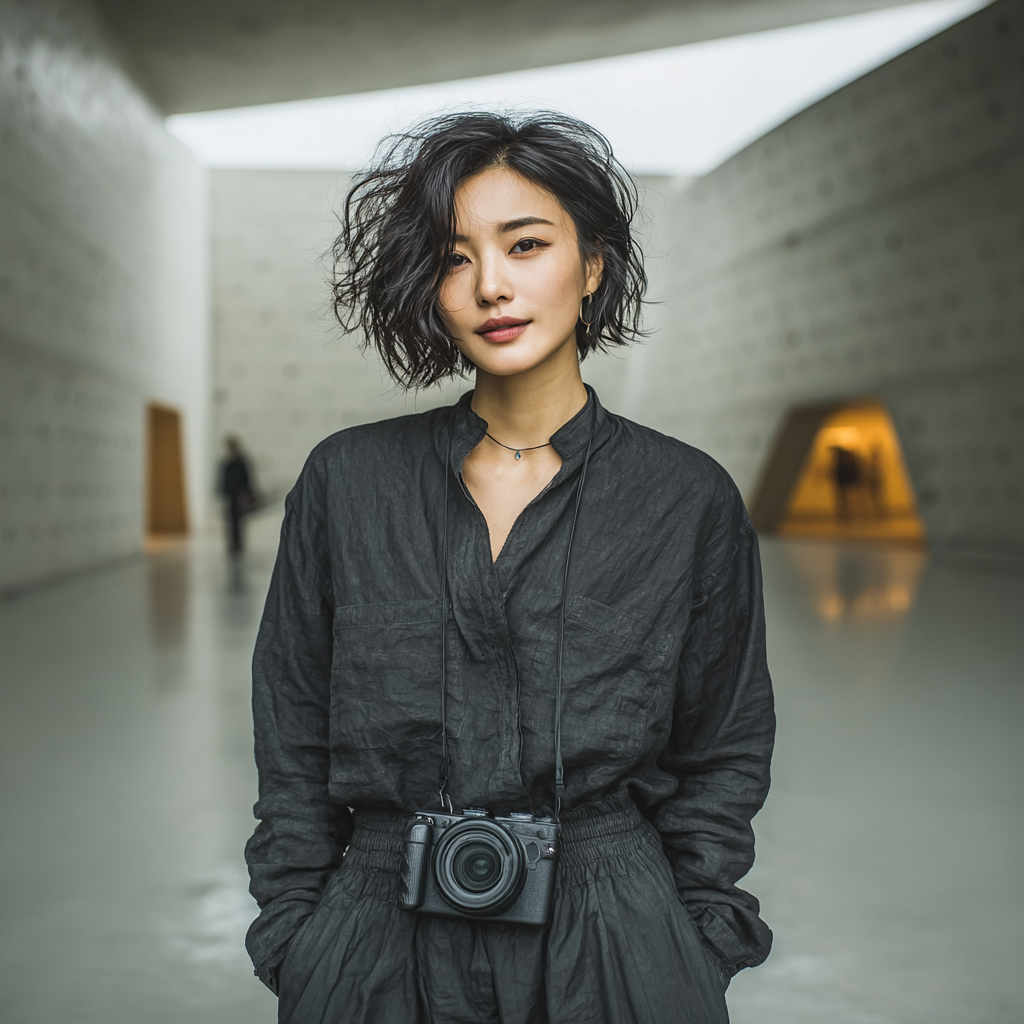
By Yuki Tanaka
Architectural photographer based in Tokyo. Yuki captures the dialogue between ancient structures and modern design across Asia and Europe. Her work has been featured in Monocle, Dezeen, and Wallpaper. She sees buildings as frozen stories waiting to be told.