
Busan's Contested Soul: A Culture & History Guide Through War Scars, Colonial Streets, and the Harbor That Built Korea
By Finn O'Sullivan, Irish storyteller and folklorist. Finn hunts for the narratives that don't make guidebooks — the refugee legends, the neighborhood heroes, the streets that remember what textbooks forget. He believes every stone in Busan has a story if you know whose footsteps wore it smooth.
Busan doesn't wear its history like a costume. It's more like sediment — layers upon layers, some visible, some buried, all shaping what you see today. Walk through Choryang at dawn and you'll smell the same harbor air that refugees inhaled in 1950. Stand at the 40-step Street at dusk and you can almost hear the whispered names of separated families. The city has this stubborn duality: it's simultaneously Korea's most forward-looking port and a place where the past refuses to be erased.
I've spent weeks here, chasing stories that don't make the K-drama cut. The grandmother who still makes dwaeji gukbap the way her mother did in 1952. The former shipyard worker who opens his colonial-era courtyard to jazz musicians on Fridays. The shaman who performs rituals that predate Buddhism by millennia, hidden in a back alley behind a karaoke bar. Busan's history isn't packaged for easy consumption — it's messy, contested, and still evolving. That's exactly what makes it worth your time.
The Deep Layers: Gaya Iron and Mountain Temples
People have lived along this coastline for thousands of years. Archaeological evidence shows settlements here during the Bronze Age, but the area really started developing during the Gaya Confederacy (42–562 CE), a collection of city-states that controlled southern Korean trade routes. The Gaya were renowned ironworkers — their furnaces produced weapons and agricultural tools that circulated as far as Japan. You can still see echoes of this at the Busan Museum (1375 UN Pyeonghwa-ro, Nam-gu; ₩1,000; 9 AM–6 PM Tue–Sun, 8 PM weekends; closed Mondays), which houses artifacts from local excavations including Gaya-era pottery and iron fragments.
The name "Busan" itself appears in historical records from the early Joseon Dynasty (1392–1897), derived from the city's bowl-like shape surrounded by mountains. For centuries it remained a modest fishing village, its harbor too shallow for major trade. That changed forever in 1876 when Japan forced Korea open with the Japan–Korea Treaty of 1876, signed on nearby Ganghwa Island. Busan became the primary entry point for Japanese influence — and control.
Beomeosa Temple (범어사), founded in 678 CE during the Silla Kingdom, sits on the slopes of Geumjeongsan Mountain and represents Korean Buddhism's resilience through every invasion. The temple was destroyed during the Japanese invasions of 1592–98, rebuilt, then damaged again during the Korean War. What you see today dates mostly from the 1950s reconstruction, but the stone pagodas and lantern are original — survivors of centuries of conflict. Take metro Line 1 to Beomeosa Station (Exit 5 or 7), then catch bus 90 or walk 30 minutes uphill through forest. The temple opens at 8 AM and closes between 5 PM and 6 PM depending on season. Entry is free, though a temple stay program (₩50,000–70,000 per night including meals and meditation) lets you sleep where monks have trained for 1,300 years.
The Haedong Yonggungsa Temple (86 Yonggung-gil, Gijang-eup, Gijang-gun; free; 5 AM–sunset daily) offers something entirely different. Built in 1376 during the Goryeo Dynasty, it's one of few Korean temples positioned directly on the coastline. The morning sunrise ceremonies here draw both devoted Buddhists and photographers who brave the predawn cold for the shot of pagodas silhouetted against the East Sea. The temple's survival story is remarkable — destroyed during the Japanese colonial period and rebuilt in the 1970s entirely through private donations. The current structure dates from 1974, but the location itself has been sacred since the 14th century. Take bus 181 from Haeundae Station, ride about 40 minutes, then descend 108 stone steps to the temple gates.
The Japanese Imprint: Contested Heritage You Can Still Touch
Here's where Busan's history gets complicated — and interesting. After the 1876 treaty, Busan became the primary entry point for Japanese colonialism. The Japanese built the modern port infrastructure, laid railway lines connecting Busan to Seoul and beyond, and constructed entire neighborhoods that still stand today. Some Koreans want these buildings demolished as symbols of occupation. Others argue they're part of the city's fabric — erasing them would be a different kind of historical denial.
The Gamcheon Culture Village that tourists love photographing? It started as a shantytown for refugees during the Korean War, but the underlying terraced structure reflects Japanese colonial-era urban planning adapted to steep hillsides. The narrow alleys and stacked houses weren't designed for Instagram — they were built for survival. When I walked there with a local historian in his sixties, he pointed out which retaining walls were poured by Japanese engineers in the 1920s and which were patched by refugee families in the 1950s. "The concrete changes color," he said. "You can read the decades like tree rings."
Walking through Choryang, near Busan Station, you'll find some of Korea's best-preserved Japanese colonial architecture. The Busan Modern History Museum (75 Daechong-ro, Dong-gu; ₩2,000; 9 AM–6 PM; closed Mondays) occupies a former Japanese bank building from 1935 — the imposing stone facade and high ceilings designed to project financial power. The exhibits don't shy away from the difficult aspects of this period, which is refreshing in a region where historical memory often gets politicized. The second-floor gallery on forced labor during World War II is particularly moving.
The 40-step Culture and Tourism Theme Street (Choryang 3(sam)-dong, Dong-gu; free; always open) commemorates a meeting place for separated families after the Korean War. The stone steps are original — worn smooth not by tourists but by decades of anxious waiting. There's something haunting about standing there at dusk, imagining the reunions that happened and the ones that never did. A small shelter at the top displays black-and-white photographs of families frozen in moments of hope or grief. Local volunteers staff a modest information booth on weekends; ask nicely and they might tell you stories their own grandparents passed down.
The Choryang Catholic Church (1937) was the first Catholic church in the region, built in a distinctive blend of Japanese and European architectural styles. Protestant churches proliferated during and after the Korean War, often with American missionary support. Today, Busan's night skyline includes neon crosses competing with commercial signage — a visual representation of Korea's religious marketplace that would have been unthinkable a century ago.
The Korean War: Busan as Sanctuary and Battleground
When North Korean forces pushed south in June 1950, Busan became the provisional capital and the last major city under South Korean control. The Pusan Perimeter — a defensive line roughly 140 miles long — held through August and September against repeated North Korean assaults. Had Busan fallen, there would have been no staging ground for the Inchon landing that turned the war. In a very real sense, modern South Korea exists because Busan didn't surrender.
The UN Memorial Cemetery (93 UN Pyeonghwa-ro, Nam-gu; free; 9 AM–6 PM daily, 5 PM in winter) contains graves from 11 countries — Turkey, Ethiopia, Canada, Australia, the United Kingdom, France, the Netherlands, New Zealand, South Africa, Norway, and the Philippines — who fought under the UN flag. It's the only UN cemetery in the world, and walking through the rows of headstones gives you a different perspective on what Americans call "The Forgotten War." The Turkish memorial, with its Ottoman architectural touches, and the Ethiopian section, with its Orthodox crosses, remind you this was a genuinely international conflict. Free guided tours in English run at 10 AM and 2 PM on weekdays; the Korean War museum on-site is small but powerful.
The Busan Cinema Center (120 Suyeonggangnam-ro, Haeundae-gu; free for exhibitions; 9 AM–9 PM daily) in Centum City might seem like pure modernity, but its location matters. This area was refugee housing during the war, then industrial land, now Korea's film capital. The Busan International Film Festival (BIFF), launched in 1996, helped transform Korea's cultural image globally. When Parasite won the Palme d'Or and then Best Picture, it validated decades of work that started here. The center's architecture — designed by Austrian firm Coop Himmelb(l)au — features the world's longest cantilever roof. Even if you don't care about cinema, the building itself is worth seeing.
What the guidebooks rarely mention is that Busan absorbed hundreds of thousands of refugees during the war, many of whom never returned north. Their descendants still live in neighborhoods like Gamcheon and Mangmi-dong, and their culinary traditions — dwaeji gukbap, milmyeon, seed hotteok — became Busan's signature dishes precisely because they were cheap, filling foods invented in refugee kitchens.
Religious Landscapes: Temples, Churches, and Hidden Shamanism
Busan's religious diversity reflects its port city nature — Buddhism arrived through maritime trade, Christianity came with American missionaries and Korean converts, and shamanism predates both by millennia.
Christianity came strong to Busan during and after the Korean War, often with American missionary support. The Busan Jeil Church (2 Jungang-daero 123beon-gil, Jung-gu), founded in 1952, grew from a tent church serving refugees to one of Korea's largest Presbyterian congregations. Its modern building is unremarkable, but the basement museum documents the extraordinary growth of Korean Christianity from a marginal religion to a dominant cultural force in just two generations.
What most tourists miss — and what took me three visits to find — is Busan's living shamanist tradition. The Sangjeong-dong Gut (shamanic rituals) still happen, though less publicly than in previous generations. The Mansujeong shrine near Seomyeon maintains traditional practices that predate Buddhism and Christianity by millennia. Finding these requires Korean language skills and local connections, but they represent the deepest layer of Busan's spiritual landscape. If you're genuinely interested, ask older residents near Toseong-dong or Mangmi-dong about gut ceremonies — some community associations still organize them for neighborhood protection and prosperity, especially in late autumn.
The Port: Engine of Transformation
Busan's harbor has defined the city since the Japanese built modern facilities in the early 20th century. Today it's Korea's largest port and among the world's busiest container terminals, handling roughly 40% of South Korea's maritime cargo. The Jagalchi Fish Market (52 Jagalchihaean-ro, Jung-gu; outdoor 5 AM–10 PM, indoor restaurants 24 hours daily) sits at the harbor's edge, operating continuously since the 1870s.
The market's current building opened in 2006, but the outdoor sections preserve the chaotic energy of traditional Korean markets. Vendors here come from families that have sold seafood for generations — the ajumma who sells live octopus inherited her stall from her mother, who inherited it from hers. The live octopus (sannakji) tanks, the auction floors at dawn, the restaurants upstairs serving whatever was caught that morning — this is working Busan, not tourist Busan, though tourists are welcome. For the real experience, arrive by 6 AM when the auction floors are active and the restaurants are filling with dock workers. A bowl of hoe (sliced raw fish) with rice costs ₩10,000–15,000 upstairs.
The Busan Port Authority operates harbor tours (₩15,000–25,000 depending on route; booking at +82-51-405-5000 or the port tourism center) that show the industrial scale of operations. Watching container cranes operate at night, with their synchronized movements and towering scale, feels almost balletic. It's easy to romanticize, but remember: this port represents Korea's export-driven economic miracle, built on decades of labor that wasn't always fair or safe. The old dockworker bars in Choryang still open at 5 AM for the night-shift workers — if you want to understand the human cost of Korea's growth, buy a bottle of soju and listen.
Modern Cultural Production: From Slum to Art District
Busan's contemporary culture scene emerged from specific historical conditions. The Busan International Film Festival started partly because Seoul's dominance made it hard for regional voices to break through. The festival's success created infrastructure — venues, talent, audiences — that supported broader cultural production.
The Busan Museum of Art (58 APEC-ro, Haeundae-gu; free; 10 AM–6 PM Tue–Sun, 8 PM Wed–Fri; closed Mondays) and Busan Cultural Center host exhibitions that deliberately contrast with Seoul's more commercial art world. The museum's collection emphasizes Korean modernism and contemporary works, with rotating exhibitions that often feature Busan-based artists. The city's indie music scene, centered around venues in Seomyeon and near Haeundae, developed as an alternative to K-pop's manufactured stardom. Club Realize in Seomyeon and HQ Bar near Haeundae host live bands most weekends; cover is usually ₩10,000–20,000.
Gamcheon Culture Village's transformation from slum to art district exemplifies Busan's cultural strategy. Starting in 2009, the city invited artists to paint murals and install sculptures throughout the neighborhood. The "Little Prince" statue overlooking the sea has become iconic, but the real achievement is how the project preserved community while inviting tourism. Residents still live here — this isn't a museum piece, it's a working neighborhood that happens to be beautiful. Visit on a weekday morning before the tour buses arrive (after 10 AM). The main information center (10 Gamnae 1(il)-ro, Saha-gu; ₩2,000 for a map; 9 AM–6 PM) sells hand-drawn maps whose proceeds fund community programs.
Food as Cultural Memory: What Refugees Invented
Busan's cuisine carries historical weight precisely because it was born from scarcity, not abundance.
Dwaeji gukbap (pork and rice soup) emerged during the Korean War when refugees had limited ingredients but needed substantial meals. Pork bones, rice, and whatever vegetables were available simmered into a nourishing broth. The dish spread nationwide from Busan, but the original restaurants remain here. Pyeonganok (62 Gudeok-ro 180beon-gil, Seo-gu; ₩9,000–12,000 per bowl; 24 hours) claims operation since 1948 and serves the most traditional version — cloudy white broth, tender pork, kimchi on the side. The owner's grandmother started the business in a refugee shack; now it's a three-story restaurant with framed newspaper clippings documenting its history.
Milmyeon (cold wheat noodles) reflects Japanese colonial influence. The Japanese introduced wheat noodles to Korea, and Busan's version developed its own identity — chewier than Pyongyang naengmyeon, served with different broths and toppings. Daejeo Milmyeon (near Busan Station; ₩7,000–9,000; 10:30 AM–9 PM, closed Sundays) claims to be the original, operating since the 1950s. The key difference: Busan milmyeon uses wheat starch noodles and a spicier broth than its northern cousins.
The seed hotteok (ssiat hotteok) sold around BIFF Square (Nampo-dong, Jung-gu; vendors 10 AM–11 PM) represents Busan's adaptation of a Korean staple. Traditional hotteok are filled with brown sugar and cinnamon. Busan's version adds seeds, nuts, and sometimes vegetables — a heartier street food that sustained dock workers and market laborers through long days. A good one costs ₩2,000–3,000 and is best eaten while walking toward Yongdusan Park.
Walking Routes: Reading the Streets
To understand Busan's layered history, walk these routes at the pace of someone who lives here:
Choryang to Busan Station (30 minutes): Start at the 40-step Street, walk past colonial-era buildings, through the modern station plaza, and end at the edge of Chinatown. This 30-minute walk spans 150 years. Stop at Choryang 1941 (a café in a converted colonial warehouse at 89 Choryang-ro, Dong-gu; 9 AM–10 PM; coffee ₩5,000) for a break.
Gamcheon Culture Village (2 hours): Enter from the top (bus 1-1 or 2-2 from Toseong Station) and walk downhill. Notice how the art installations interact with the original architecture — murals painted on concrete retaining walls, sculptures placed in narrow alleys where residents still hang laundry. The best route: start at the Skyline viewing platform, descend through the Little Prince area, exit near Gamcheon Elementary School.
Jagalchi to BIFF Square to Yongdusan Park (45 minutes): The classic tourist route, but pay attention to the transitions — from working port to commercial district to colonial-era park. The Busan Tower elevator in Yongdusan Park (37 Yongdusan-gil, Jung-gu; ₩8,000 for tower; park free; 9 AM–10 PM) was built by the Japanese in 1919 and still operates.
Haeundae Beach to Dalmaji Hill (2 hours): Morning markets, afternoon beach culture, evening gallery district. The Busan Museum of Art and several private galleries cluster near Dalmaji, creating Korea's most concentrated coastal art zone. Best walked at sunset when Dalmaji Road fills with couples photographing the golden light on the sea.
What to Skip: The Tourist Traps That Waste Your Time
The Busan Tower observation deck — The view is fine, but at ₩8,000 it's overpriced for what you get. Walk to Dalmaji Hill or Gamcheon's highest viewpoint for free panoramas that include more context.
Haeundae Beach on summer weekends — Unless you enjoy being packed shoulder-to-shoulder with thousands of other visitors, avoid July and August Saturdays. The beach is genuinely pleasant on weekday mornings in late spring or early autumn.
Guided "history tours" that don't mention the Korean War or Japanese colonial period — If your guide skips the difficult parts, you're getting a sanitized narrative. The city's official tourism materials are improving, but many commercial tours still treat Busan as "just" a beach city with pretty temples.
The overpriced seafood restaurants directly facing Jagalchi Market's main entrance — Walk 100 meters deeper into the market or upstairs to the second-floor vendor section where locals actually eat. The first-floor tourist-facing stalls charge 30–50% more for the same catch.
Gamcheon Culture Village after 11 AM on weekends — Go early or go on a weekday. After the tour buses arrive, the neighborhood becomes a photo backdrop rather than a living community, and the residents (understandably) get weary of camera-wielding visitors blocking their doorways.
Practical Information
Getting Around: Busan's metro system is efficient and affordable (₩1,500 per ride with T-money card). Lines 1, 2, and 3 cover most historical sites. Buses fill the gaps. Taxis are reasonable (flag fall ₩3,800) but unnecessary for most central areas. For Gamcheon and Haedong Yonggungsa, you'll need bus connections.
Best Time to Visit: April–May and September–November offer the best weather for walking. Summer is humid and crowded; winter can be cold but clear, with the advantage of empty temples and no tour bus queues.
Language: English signage is decent at major tourist sites but patchy in working-class neighborhoods. Download Papago (Korea's superior translation app) before you arrive. Older residents in Choryang and Gamcheon rarely speak English, but younger locals often do.
Museums and Cultural Sites:
- Busan Museum: 1375 UN Pyeonghwa-ro, Nam-gu; ₩1,000; 9 AM–6 PM (8 PM weekends), closed Mondays
- Busan Modern History Museum: 75 Daechong-ro, Dong-gu; ₩2,000; 9 AM–6 PM, closed Mondays
- UN Memorial Cemetery: 93 UN Pyeonghwa-ro, Nam-gu; free; 9 AM–6 PM (5 PM winter), daily
- Busan Cinema Center: 120 Suyeonggangnam-ro, Haeundae-gu; free (exhibitions); 9 AM–9 PM, daily
- Busan Museum of Art: 58 APEC-ro, Haeundae-gu; free; 10 AM–6 PM (8 PM Wed–Fri), closed Mondays
Temples:
- Beomeosa Temple: Geumjeongsan Mountain; free; 8 AM–5:30 PM (varies by season), daily; metro Line 1 to Beomeosa Station + bus 90
- Haedong Yonggungsa: 86 Yonggung-gil, Gijang-eup; free; 5 AM–sunset, daily; bus 181 from Haeundae Station (40 min)
Markets:
- Jagalchi Fish Market: 52 Jagalchihaean-ro, Jung-gu; 5 AM–10 PM (outdoor), 24 hours (indoor restaurants), daily
- BIFF Square: Nampo-dong, Jung-gu; 10 AM–11 PM (varies by vendor), daily
- Gukje Market: 25 Sinsongno, Jung-gu; 9 AM–8 PM, closed 2nd and 4th Sunday
Where to Stay:
- Nampo-dong / Jung-gu — Best for history walkers. Close to Choryang, Jagalchi, and colonial architecture. Mid-range hotels ₩60,000–100,000/night.
- Seomyeon — Central, excellent food scene, good metro connections. Business hotels ₩50,000–90,000/night.
- Haeundae — Beach access and modern amenities, but touristy. Hotels ₩80,000–150,000/night.
The Takeaway
Busan rewards visitors who look past the beach resorts and department stores. The city's history isn't packaged for easy consumption — it's messy, contested, and still evolving. The Japanese colonial buildings stand next to war memorials. The luxury apartments in Marine City overlook refugee settlements that became art villages. The container port that built Korea's economy also created the working-class culture that produced its distinctive food and music.
What makes Busan unforgettable isn't any single historical site. It's the friction between layers — the way the past keeps intruding on the present, refusing to be smoothed over into a coherent narrative. That's what gives the city its energy, and what makes it worth exploring beyond the obvious attractions.
Come prepared to walk, to listen, and to accept that some stories don't have clean endings. The grandmother at Pyeonganok won't explain the war to you — she'll just serve the same soup her mother made in 1952. The dockworker at Choryang won't lecture on economic history — he'll show you his calloused hands. The shaman in Toseong-dong won't perform on command — she's serving her community, not your curiosity.
Busan doesn't perform for tourists. It just keeps living its complicated, layered, stubborn life. If you're willing to meet it on those terms, you'll find one of the most genuine cities in East Asia.
Finn O'Sullivan traveled to Busan in March 2026. He walked approximately 87 kilometers through the city's neighborhoods, ate 14 bowls of dwaeji gukbap, and was politely but firmly told by a Gamcheon grandmother that his photography was "acceptable but not special." He considers this high praise.
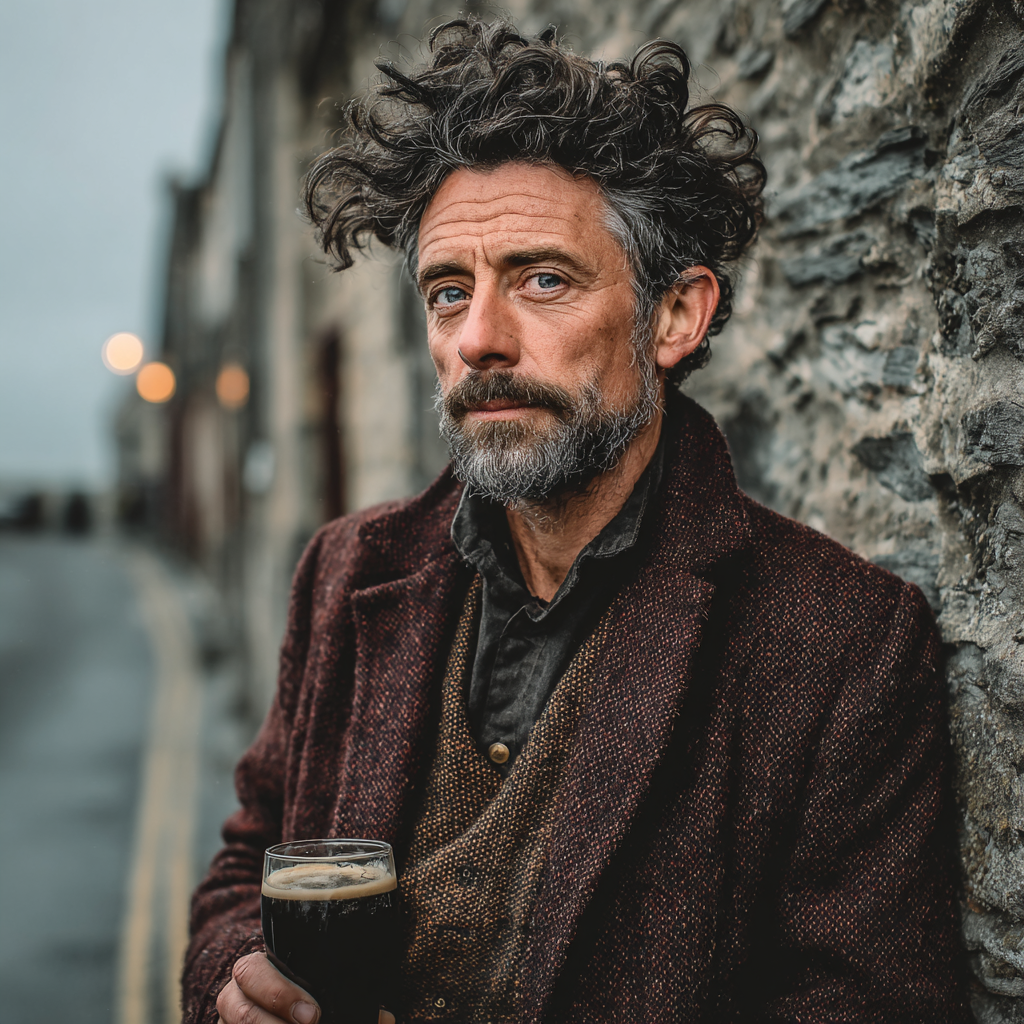
By Finn O'Sullivan
Irish storyteller and folklorist. Finn hunts for the narratives that do not make guidebooks—the pub legends, the family feuds, the neighborhood heroes. He believes every street corner has a story if you know who to ask.