
Cape Town: Where the Mountain Watches Three Centuries of Fire and Survival
By Amara Okafor | June 5, 2026
Cape Town does not ease you into its history. It confronts you with it. The city sits on the southwestern tip of Africa, where the Atlantic and Indian Oceans meet in cold, blue collision, and where three centuries of colonialism, slavery, apartheid, and liberation have left marks you cannot miss even if you tried. The mountain is always watching. The houses in Bo-Kaap are too bright to ignore. The empty fields where District Six once stood speak louder than any plaque.
This is not a city you consume. It is a city that asks questions of you. About complicity. About memory. About what it means to visit a place where suffering and resilience are so intertwined that you cannot separate them. Do not come here for a sanitized version of history. Come ready to sit with discomfort, to listen, and to understand that Cape Town's present is inseparable from its past.
I first came to Cape Town in the winter of 2019, during a week of storms that turned Table Mountain into a gray wall of cloud. A local woman at a Bo-Kaap spice shop told me, "The mountain hides when it does not trust strangers." She was right. Cape Town does not reveal itself quickly. You have to earn it.
Bo-Kaap: The Colors of Survival
The houses on Wale Street are painted in technicolor—sunflower yellow, cobalt blue, hot pink, tangerine orange, emerald green. Tourists come for the photographs. But the colors are not decorative. They are defiance.
Bo-Kaap, formerly called the Malay Quarter, was where enslaved people from Indonesia, Malaysia, Madagascar, Sri Lanka, and other parts of Africa were housed after the abolition of slavery in 1834. The Dutch East India Company had brought them to the Cape beginning in the 1650s to build the colony, to work the farms, to cook, to labor. When they finally owned their homes, they painted them bright. The colors said: We are still here. We are not invisible. We will not be erased.
The Iziko Bo-Kaap Museum sits at 71 Wale Street, one of the oldest houses in the area, built between 1763 and 1768. The museum is small—a furnished home showing how a 19th-century Muslim family lived—but the real education happens outside. Open Monday to Saturday, 10am to 5pm. Admission is R20 (about $1.10). Walk up the cobbled streets. Listen for the muezzin's call from the Auwal Mosque, the oldest mosque in South Africa, established in 1794 and still active today. Notice the kramats (holy burial sites) on the slopes of Signal Hill. The Tana Baru cemetery at the top of Longmarket Street was the first Muslim burial ground in Cape Town, closed in 1886 after the Public Health Act, but reopened for one defiant funeral on January 17, 1886, when three thousand people marched to bury a child in sacred ground despite the law.
Visit during Ramadan if you can. At sunset, the breaking of the fast brings the neighborhood into the streets. The Bo-Kaap is changing—property developers circle, gentrification creeps, foreign buyers purchase heritage homes—but the community holds on. Attend a Bo-Kaap cooking class if you want to understand the food that built this community: bobotie (spiced minced meat with egg custard), samosas, koesisters (spiced doughnuts soaked in syrup), and dhaltjies (chili bites). The Bo-Kaap Kombuis cooking school at 98 Wale Street runs classes on Thursdays and Saturdays from 10am to 1pm, costing R450 per person ($25). You cook in a local family's kitchen and eat together afterward.
The spice shops on Rose Street are run by aunties who have been there for decades. Atlas Spice Trading at 100 Rose Street sells turmeric, masala, and chili blends used in Cape Malay cooking. A small bag of Cape Malay curry powder costs R25. The women will talk to you if you buy something. They will tell you about the neighborhood's fight against developers. About the city government's attempts to rezone. About the children who grew up here and cannot afford to live here anymore.
Practical note: The Bo-Kaap is a residential neighborhood, not a theme park. Do not photograph residents without permission. Do not walk into people's gardens. The cobblestones are slippery in rain. Wear flat shoes.
District Six: What Was Taken
In 1966, the apartheid government declared District Six a "whites-only" area under the Group Areas Act. By 1982, they had forcibly removed sixty thousand people—Coloured, Black, Indian, anyone the regime classified as non-white—and bulldozed their homes. The land sat empty for years. The government said it was slum clearance. Everyone knew it was segregation designed to break a community that had become too powerful, too mixed, too free.
The District Six Museum stands at 25A Buitenkant Street in what was once the Buitenkant Methodist Mission Church. The church served the community until the removals. Now it houses memory. Open Monday to Saturday 9am to 4pm, Sunday 9am to 2pm. Admission is R30 ($1.65). Closed occasionally on Sundays—check ahead at districtsix.co.za.
The floor map is the first thing you see—a sprawling street plan of the old neighborhood laid out across the ground in bricks and tape, with handwritten notes from former residents marking where their houses stood. "Aunty Sarah's Corner Shop." "We lived here, 14 Caledon Street." "My grandmother's house." You can walk on it. You are walking on ghosts.
The museum's staff includes former residents. Ask questions. They will tell you about the jazz clubs that stayed open until 3am, the tailors who could fit a suit in a day, the corner shops that sold everything on credit, the mix of languages—Afrikaans, English, Xhosa, Malay—that made District Six feel like nowhere else in Cape Town. They will tell you about the day the trucks came. About the police dragging people out. About resettlement in the Cape Flats, miles from the city center, with no infrastructure, no jobs, no community, just sand and government-built boxes where families were dumped and forgotten.
After the museum, walk five minutes to the open fields where District Six once stood. The emptiness is shocking. The government never built on most of it. It just wanted the people gone. Today, a small number of families have returned through the land restitution process, but the process has been slow, bureaucratic, and painful. The District Six Beneficiary Trust continues to fight for full restitution.
A former resident named Noor Ebrahim wrote a book, Noor's Story: My Life in District Six, and sometimes leads walks. If you see him at the museum, talk to him. He will tell you about the marabaru (the mixed culture of District Six), about the carnival troupes, about the day his family was forced onto a truck and driven to the Cape Flats.
Robben Island: The University of Struggle
The ferry leaves from the Nelson Mandela Gateway at the V&A Waterfront, departing at 9am, 11am, and 1pm daily. The crossing takes thirty minutes. You are traveling the same water that political prisoners traveled for eighteen years, twenty years, twenty-seven years. Standard tour costs R600 ($33). Full tour including prison and island costs R750 ($41). Allow four hours total. Book at least two weeks in advance at robben-island.org.za—tours fill up, especially in summer (December to February).
Robben Island is a UNESCO World Heritage Site now. The tours are led by former prisoners. My guide was a man who spent seven years there in the 1980s for underground ANC activity. He showed us the limestone quarry where prisoners were forced to work, where the dust damaged their lungs and eyes. He showed us the small garden where Nelson Mandela grew vegetables and hid the first draft of Long Walk to Freedom. He showed us his own cell—number 42, section B—and explained how they communicated by tapping on pipes, how they organized education, how they kept hope alive in a place designed to crush it.
The prison is only part of the island's history. Before apartheid, it was a leper colony. Before that, a mental asylum. Before that, a place where Khoisan people were imprisoned for resisting Dutch colonization. The island has been a site of exile for five centuries. The Kramat (shrine) of Sayed Abdurahman Moturu, an Islamic leader exiled in the 1740s, sits on the island. The prisoners used to visit it in secret.
Bring a jacket—the wind is relentless. Listen more than you speak. This is not a place for selfies. The tour ends at the V&A Waterfront, where you can walk to the Nobel Square statues of South Africa's four Nobel Peace Prize winners: Mandela, Tutu, de Klerk, and Luthuli.
The Castle of Good Hope: Where It All Began
The Dutch East India Company built the Castle between 1666 and 1679. It is the oldest colonial building in South Africa. From here, the colony was administered. From here, slavery was regulated. From here, indigenous people were driven from their land. The Cape was a refreshment station for the Dutch trade route to Asia, but it became a fortress of exploitation.
The Castle is a star fort, designed for defense against European rivals and local Khoisan resistance. Today it houses military museums and ceremonial chambers, but the original purpose lingers. The walls are thick. The dungeon is dark. In the courtyard, the Kat Balcony was where the governor announced laws and where public punishments took place. The William Fehr Collection occupies the upper floors—paintings and furniture from the colonial era, beautiful objects built on exploitation. The contrast is intentional. The Castle does not hide what it was.
Located at Darling Street and Buitenkant Street. Open daily 9am to 4pm. Admission is R50 ($2.75). Guided tours are included with entry. The morning tour includes the firing of the signal cannon at 10am and 12pm. More valuable is the afternoon "Voices from the Past" tour at 2pm, which focuses on the enslaved people who built and maintained the fort. Ask at the entrance.
The Dolphin Pool in the courtyard was where the governor's entertainment took place. The torture chamber is still visible. The De Kat Balcony (Governor's Balcony) was built in 1695 and is the best-preserved example of Dutch colonial architecture in South Africa. The Military Museum covers South Africa's involvement in both World Wars and the Anglo-Boer War.
The Slave Lodge and the Company's Garden
The Slave Lodge on the corner of Adderley Street and Wale Street was built in 1679 to house enslaved people owned by the Dutch East India Company. Nine thousand people passed through its doors over 134 years. Conditions were brutal—overcrowding, disease, malnutrition. The mortality rate was high, especially among children. The names are recorded in the archives: Catharina van Bengale, January van Mozambique, Maria van Madagascar—individuals reduced to property, now reclaimed.
Today it is the Iziko Slave Lodge Museum, with a permanent exhibition called "Remembering Slavery" that traces the history of the slave trade at the Cape, the cultures that enslaved people brought with them, and the legacy of that system in modern South Africa. Open Monday to Saturday 10am to 5pm. Admission is R30.
Across the street, the Company's Garden offers a strange kind of peace. It was established in 1652 by Jan van Riebeeck to supply fresh produce to passing Dutch East India Company ships. It is the oldest garden in South Africa. Now it is public space, filled with squirrels so tame they will eat from your hand, and office workers on lunch breaks. The South African Museum and National Gallery sit at its edges. The Anglican cathedral, where Desmond Tutu once preached and led anti-apartheid marches, is nearby on Wale Street.
Sit on a bench. Watch the city move around you. The garden has seen everything—colonial ships, slavery, apartheid, liberation. It keeps growing. The Saff pear tree near the entrance is believed to be the oldest cultivated fruit tree in South Africa, planted around 1652.
The Khoisan: The First People
Most Cape Town history tours begin with the Dutch in 1652. They should begin 40,000 years earlier. The Khoisan—the collective term for the Khoi and San peoples—were the first inhabitants of the Cape. They were pastoralists and hunter-gatherers who lived in harmony with the landscape for millennia.
The !Khwa ttu San Culture and Education Centre at Yzerfontein, 70km north of Cape Town, offers an immersive experience into San culture, language, and history. The guided San tour costs R250 ($14) and includes a tracking demonstration, a presentation on San languages (which include click consonants that most visitors struggle to pronounce), and a discussion of land dispossession. Open daily 9am to 5pm.
Closer to the city, the District Six Museum and the Castle of Good Hope both acknowledge Khoisan resistance, but the story is often told from the colonial perspective. The Khoisan were driven from their land by the Dutch, decimated by smallpox epidemics (a major outbreak in 1713 killed an estimated 90% of the local Khoisan population), and eventually forced into indentured servitude. Their descendants still fight for recognition today. The Khoisan were declared "extinct" by colonial authorities, a lie that erased their continued existence.
At the Iziko South African Museum in the Company's Garden, there is a small but important collection of Khoisan artifacts. The National Library on Queen Victoria Street has colonial records that include Khoisan names, though many are misspelled or distorted by Dutch officials who could not pronounce them.
Table Mountain and the Colonial Gaze
Table Mountain is the city's dominant feature, but even the mountain carries colonial history. The Khoisan called it Huriǂoaxa ("sea mountain") or Hoerikwaggo ("mountain in the sea"). The Dutch renamed it Tafelberg because its flat top reminded them of a table.
The Table Mountain Aerial Cableway has been operating since 1929. The current cars rotate 360 degrees during the ascent, giving panoramic views. A return ticket costs R400 ($22) for adults, R200 for children. Open 8:30am to 6pm in summer, 8:30am to 5pm in winter. The cableway does not operate in high wind—check the website before you go. The India Venster hiking trail offers a more challenging route with views of the city and the harbor, but it requires a guide and some scrambling experience.
The mountain's slopes were used by the Dutch for logging and grazing, disrupting the indigenous fynbos ecosystem. Today, Table Mountain National Park protects the remaining fynbos, which is one of the most biodiverse plant communities on Earth. The Kirstenbosch National Botanical Garden at Rhodes Drive, Newlands showcases Cape flora. Open daily 8am to 6pm (7pm in summer). Admission is R220 ($12) for adults.
Cape Malay Cuisine: Food as Resistance
The enslaved people brought to the Cape from Southeast Asia and East Africa brought their food with them. Over three centuries, this became Cape Malay cuisine, one of the most distinctive food cultures in Africa. It is not Malaysian. It is not Indonesian. It is Cape Town's own creation, born from survival and adaptation.
Biesmiellah Restaurant at 2 Wale Street, Bo-Kaap serves traditional Cape Malay food in a family-run setting. The bobotie (spiced minced meat baked with egg custard, R85) and tomato bredie (mutton stew, R95) are standouts. Open Monday to Saturday 11:30am to 9pm.
Bo-Kaap Kombuis at 98 Wale Street serves home-style cooking with recipes passed down through generations. The Cape Malay curry (chicken or lamb, R90) and samosas (three for R35) are excellent. The owner, Zainab Davids, is a fourth-generation Bo-Kaap resident who cooks in the same kitchen her grandmother used. Open Tuesday to Sunday 11am to 3pm.
The Spice Route at Paarl, 45 minutes from Cape Town, is a day-trip destination where you can taste Cape Malay-influenced wines and food. The De Villiers Chocolate factory makes Cape Malay spice chocolate that tastes like cardamom and cinnamon. The Blaauwklippen Vineyards produces wines that pair with Cape Malay curries. The tasting room is open daily 10am to 5pm.
For a more modern take, The Test Kitchen in Woodstock ( ranked among the world's best restaurants, but requires booking months in advance) and The Pot Luck Club at The Old Biscuit Mill, 373 Albert Road, Woodstock offer Cape-influenced fine dining. The Pot Luck Club is open Tuesday to Saturday 12pm to 2:30pm and 6pm to 10pm. Reservations essential at thepotluckclub.co.za.
The Old Biscuit Mill is also the site of the Neighbourgoods Market on Saturdays 9am to 3pm, where you can eat Cape Malay street food, buy local produce, and watch the city's food culture in action. The bobotie spring rolls from The Spring Roll Company are worth the queue.
What to Skip
The V&A Waterfront mall shopping. The V&A Waterfront is beautifully designed and has good restaurants, but the mall itself is generic international shopping. You can buy the same Zara, H&M, and Nike anywhere in the world. Skip the retail and spend your time at the Nobel Square, the Zeitz Museum of Contemporary Art Africa (MOCAA) at Silo District, or the Two Oceans Aquarium.
The " township tour " that treats poverty as entertainment. Some tour companies offer bus tours through Cape Town's townships (Khayelitsha, Langa, Gugulethu) where tourists photograph residents from air-conditioned coaches. This is exploitative. If you want to understand township life, visit Langa's Guga S'thebe Arts and Culture Centre and talk to the artists. Or book a tour with a local guide who lives in the township and shares the proceeds with the community. Camissa Tours offers responsible township experiences with local guides. Avoid any tour that does not involve direct community benefit.
The penguin colony at Boulders Beach in peak summer (December to February). Yes, the African penguins are adorable. But the beach is packed, parking is impossible, and the penguins are stressed. Go at 7am when it opens, or visit in winter (June to August) when you might have the boardwalk to yourself. Entry is R85 ($4.70). The penguins have declined from 1 million in the early 1900s to fewer than 20,000 today due to overfishing and climate change. Respect their space.
Chain restaurants on Long Street. Long Street is Cape Town's nightlife strip, but most of the food is mediocre and overpriced. The backpacker hostels are loud, the bars are tourist traps, and the street vendors are often harassed by police. If you want nightlife, go to Kloof Street or Bree Street instead. The Waiting Room at 273 Long Street is an exception—good cocktails, live music, and a rooftop.
A rushed "Cape Town in two days" itinerary. Cape Town is not a city you tick off. The museums deserve half days. The mountain deserves a full morning. The townships deserve respectful engagement, not drive-by tourism. The food deserves slow meals. If you only have two days, you will leave with a postcard, not an understanding.
The "colourful houses" photo without context. Yes, the Bo-Kaap is beautiful. But if you visit only for Instagram photos and do not learn the history, you are treating a community's survival story as a backdrop. Buy something from a local shop. Take a cooking class. Talk to a resident. Make the beauty meaningful.
Practical Logistics
Getting There: Cape Town International Airport (CPT) is 20km from the city center. Uber costs R150-200 ($8-11) to the city center. The MyCiTi bus runs from the airport to the Civic Centre for R70 ($4). A taxi from the airport should cost R250-300 ($14-17). Do not accept rides from touts inside the terminal.
Getting Around: The city center is walkable, but the museums and neighborhoods are spread out. Uber and Bolt work reliably and are affordable. The MyCiTi bus has a downtown route that stops near most major sites. A myconnect card costs R35 and can be loaded with credit at station kiosks. Bus fares are R8-15 per trip. The Red City Sightseeing Bus is a hop-on-hop-off option for R250 ($14) for a day pass, but it is tourist-oriented and skips some important neighborhoods.
Safety: Cape Town has high crime rates, but most violent crime occurs in townships and areas tourists do not visit. In the city center, Bo-Kaap, and Waterfront, the risks are mostly pickpocketing and bag-snatching. Do not walk alone at night in the city center. Do not display phones or cameras on busy streets. Ask your accommodation for neighborhood-specific advice. Use Uber after dark.
When to Go: Cape Town's summer (December to February) is crowded, hot, and expensive. Hotel rates double. The wind blows hard. March to May offers good weather, fewer tourists, and lower prices. Winter (June to August) is rainy, cold, and stormy, but accommodation is cheapest and the museums are quiet. The wildflower season in the West Coast National Park (August to September) is spectacular. Spring (September to November) is ideal—mild weather, clear skies, and whale watching along the coast.
Where to Stay:
- Budget: The Backpack at 74 New Church Street is a social hostel with a good reputation, dorms from R250 ($14) per night, private rooms from R600 ($33). They run responsible township tours.
- Mid-range: The Cape Cadogan at 5 Upper Union Street is a boutique hotel in a historic Georgian house, R1,200-1,800 ($66-99) per night, includes breakfast.
- Luxury: The Silo Hotel at Silo Square, V&A Waterfront is built in a converted grain elevator with 360-degree views, R8,000-15,000 ($440-825) per night. The MOCAA (Museum of Contemporary Art Africa) is in the same building.
Daily Budget:
- Budget traveler: R800-1,200 ($44-66) per day—hostel, self-catering, MyCiTi bus, free museum days.
- Mid-range: R2,000-3,500 ($110-192) per day—boutique hotel, restaurant meals, Uber, paid attractions.
- Luxury: R6,000+ ($330+) per day—fine hotels, private guides, helicopter tours, wine estates.
Health: Cape Town is a malaria-free zone. Tap water is safe to drink. The sun is intense—use SPF 50+ even on cloudy days. The wind off the Atlantic can be deceptively cold even in summer. Carry a layer.
Language: English is widely spoken. Afrikaans is the second language. Xhosa is the most widely spoken African language. Learning a few phrases in Xhosa ("Molo" for hello, "Enkosi" for thank you) is appreciated.
Tipping: 10% is standard in restaurants. R5-10 for petrol attendants. R10-20 for parking attendants. Tipping is expected and these workers often rely on it.
Where to Reflect
Cape Town contains multitudes—the beauty of Table Mountain, the trauma of forced removals, the joy of survival in Bo-Kaap's cooking pots, the weight of history in the Slave Lodge's walls. It is a city that does not let you be a passive tourist. It demands engagement. It demands that you sit with the uncomfortable truth that the beautiful garden you are standing in was built by enslaved hands. That the colorful street you are photographing is a community fighting for its existence. That the empty field you are walking through was once a thriving neighborhood destroyed by racism.
Do not rush. Spend a full day in Bo-Kaap, talking to the aunties who run spice shops on Rose Street. Spend two hours in the District Six Museum, not twenty minutes. Take the long tour at Robben Island. Read the names in the Slave Lodge. Sit in the Company's Garden and watch the city move around you.
The Mother City is complex. Go with open eyes. Come back changed.
About the Author: Amara Okafor is a Nigerian-British wellness practitioner and cultural writer based in London. She holds certifications in yoga instruction and Ayurvedic consultancy, and writes about the intersection of place, memory, and healing. She has eaten her way through four continents and believes that the best way to understand a city's history is through its food and its survivors' stories. Cape Town is the city that taught her that history is not a subject you study—it is a force you feel.
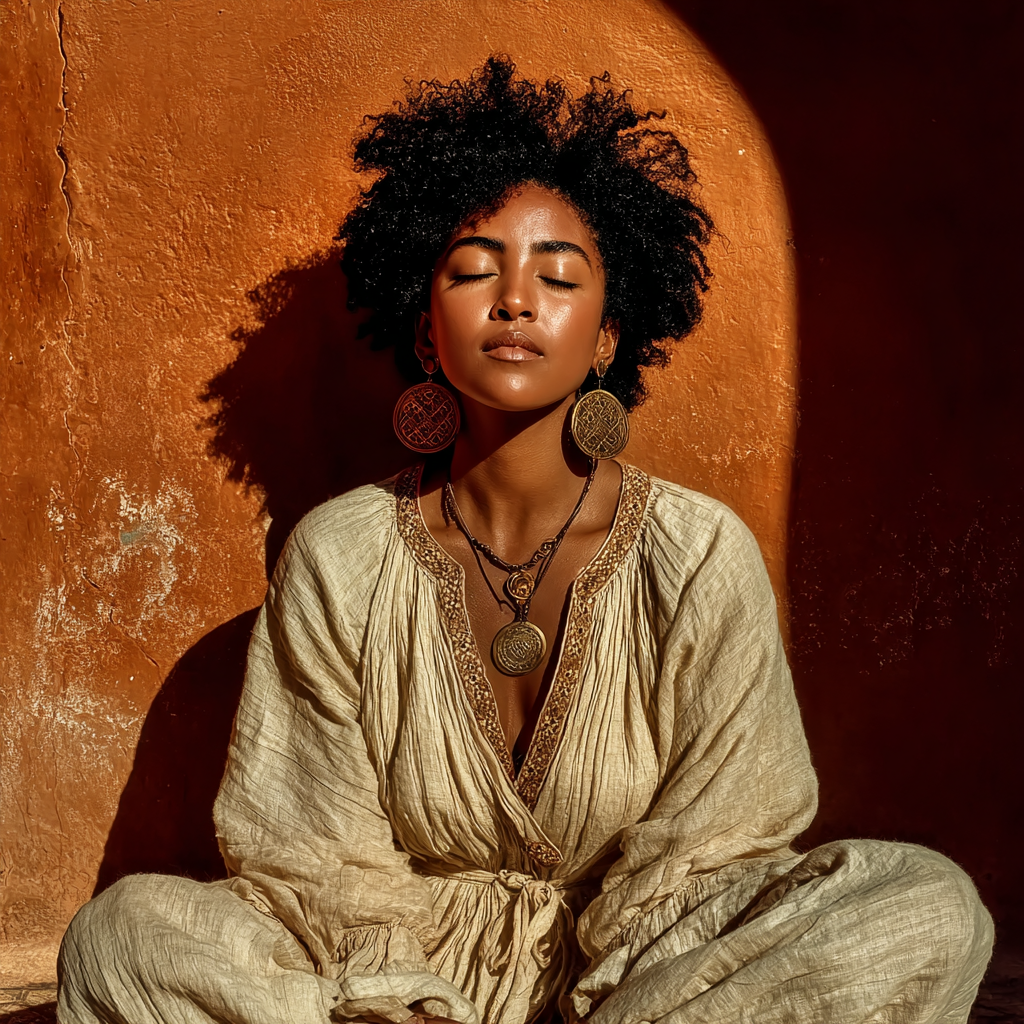
By Amara Okafor
Nigerian-British wellness practitioner and cultural historian. Amara specializes in traditional healing practices and spiritual tourism. Certified yoga instructor and Ayurvedic consultant who writes about finding inner peace through cultural immersion.