
Glasgow: The City That Built the Ships, Then Wrote the Songs
By Finn O'Sullivan | Culture & History
They'll tell you Edinburgh is Scotland's capital, and on paper, they're right. But spend a Friday night in Glasgow's West End, or a Saturday afternoon wandering the Barras market, and you'll understand why locals call this place the real Scotland. Where Edinburgh wears its history like a tweed jacket at a garden party, Glasgow's got its sleeves rolled up. This is a city that built the ships, forged the steel, and when the work dried up, turned to guitars and paintbrushes to keep its soul intact.
I came here chasing stories about the music scene. I stayed because the city wouldn't let me leave without understanding why it matters.
The Layout: Understanding Glasgow's Character
Glasgow's identity is split by the River Clyde, and each neighborhood carries a distinct personality forged by what happened there.
The City Centre is where the money was made. Grand Victorian buildings line Buchanan Street and George Square, reminders of when Glasgow's merchants controlled the tobacco trade and shipyards launched a quarter of the world's oceangoing vessels. The architecture is impressive, but it's the details that tell the real story. Look up at the building facades on Buchanan Street — the stone faces carved into the cornices aren't kings or generals. They're the shipwrights, the engineers, the men who actually built the wealth.
The West End is where Glasgow went to university and never quite grew out of it. Byres Road and Ashton Lane crawl with students, academics, and the artistic crowd who never left. The University of Glasgow dominates the skyline here with its Gothic spires — the building inspired Hogwarts, and walking through the quadrangle on a foggy morning, you understand why. Kelvingrove Park offers views back toward the city, and on summer evenings, half of Glasgow seems to picnic on its slopes. The subway stop here is Hillhead — get off and walk downhill toward the park.
The East End was the engine room. This is where the shipyards employed 50,000 men at their peak. Govan, across the river, still bears the marks — the closed yards, the tenement housing, the pubs where shipyard workers drank after shifts that could kill you. The Riverside Museum on the waterfront tells this story well, but the real history is in the pubs along Govan Road, where men in their seventies will tell you about their fathers who built the QE2. The Barras market still operates weekends on Gallowgate, selling everything from antique watches to counterfeit DVDs in a sprawling covered market that feels like stepping into the 1970s.
The South Side is Glasgow's best-kept secret. Pollokshields has Victorian villas and some of the city's most diverse communities. Queens Park offers the best view of the city from its flagpole — climb it on a clear day and you can see Ben Lomond in the distance. The area around Shawlands has become unexpectedly trendy, with young families priced out of the West End creating a new neighborhood character. The subway runs to Bridge Street and West Street on this side, but most of the South Side is best explored by bus.
Practical: The Glasgow Subway — locals call it "the Clockwork Orange" — is a simple circle route with 15 stations that covers most of what you'll want to see. A single disposable ticket costs £1.85, a day pass is £4.45 (£3.20 with a Smartcard). It runs every 4–8 minutes Monday–Saturday and every 10 minutes Sunday. The city centre is walkable, but the weather changes fast. Carry a layer even when the morning looks clear.
The Music: A City That Refuses to Be Quiet
Glasgow's contribution to popular music is ridiculous for a city of 600,000 people. Simple Minds, Primal Scream, Belle and Sebastian, Franz Ferdinand, Chvrches, Lewis Capaldi — the list keeps growing. But understanding why requires spending time in the venues where it started.
King Tut's Wah Wah Hut (272A St Vincent Street, G2 5RL; 0141 221 5279; kingtuts.co.uk) is where Oasis were discovered in 1993. The story goes that Creation Records boss Alan McGee saw them play here and offered them a contract on the spot. The venue holds about 300 people, and standing in that cramped room, you understand how bands explode from here. The stage is low, the sound is loud, and there's nowhere to hide. Every January, they run their "New Year's Revolution" festival — up-and-coming bands playing almost every night of the month. I've seen future headliners playing to 30 people on that stage. Gig tickets typically run £10–£25 depending on the act. The venue is open seven nights a week; doors usually open 7 PM for gigs, but check the website as times vary. There is a basement bar and kitchen serving burgers and mac and cheese if you need fuel before the show. Note: the venue is not wheelchair accessible — it's in an old tenement building with no lift.
The Barrowland Ballroom (244 Gallowgate, G4 0TT; 0141 552 4601; glasgow-barrowland.com) is the spiritual home. The original ballroom opened in 1934, built by "Barras Queen" Maggie McIver. It's a sprung dance floor in a former market hall, and when 2,000 Glaswegians bounce together during a gig, the building moves. The smell hits you first — decades of spilled beer and sweat soaked into the wooden floorboards. The Art Deco neon sign outside is believed to be the biggest of its kind in the UK. Every major Scottish band wants to say they sold out the Barrowlands. The Arctic Monkeys recorded a live album here because the crowd is legendary. Tickets vary wildly — £20 for an up-and-coming Scottish band, £50+ for an established international act. Doors usually open 7 PM, curfew is 10 PM on weeknights, 11 PM on weekends. The nearest subway is St George's Cross (10-minute walk). There is a dedicated car park at the venue.
The Royal Concert Hall (2 Sauchiehall Street, G2 3NY; 0141 353 8000) on Buchanan Street handles the classical side. The Royal Scottish National Orchestra performs here, and the pipe organ has 4,000 pipes. But Glasgow's classical tradition runs deeper than the official venues. Walk through the city on a summer evening and you'll find string quartets busking on Buchanan Street, their cases open for coins, playing at a level that would embarrass conservatory students elsewhere. Concert tickets start around £15 for balcony seats and climb to £60+ for premium orchestra stalls. The box office is open Monday–Saturday 10 AM–6 PM, and until 8 PM on performance nights.
The Sub Club (22 Jamaica Street, G1 4QD; subclub.co.uk) claims to be the world's longest-running underground club. Since 1987, it's been playing house and techno to crowds who take dancing seriously. The sound system is the star — a custom rig that makes the concrete walls vibrate. If you want to understand Glasgow's relationship with electronic music, stand on that dance floor at 2 AM when the DJ drops a track the crowd knows. The club runs its legendary weekly "Subculture" night every Saturday. Doors open 11 PM, close 4 AM. Entry is typically £10–£20. The nearest subway is St Enoch (2-minute walk). Note: this is a basement venue with no wheelchair access — 15 steps down from street level. The lighting is dim with strobes; contact the venue ahead of time if you have sensory requirements.
The Art: From Kelvingrove to the Streets
Charles Rennie Mackintosh is Glasgow's most famous artistic son, and you can't escape his influence. The Glasgow School of Art (167 Renfrew Street, G3 6RQ) on Renfrew Street was his masterpiece — though the building has suffered two devastating fires in 2014 and 2018 and remains closed for restoration. The exterior still rewards attention — Mackintosh designed every detail, from the iron gates to the lightning conductors shaped like stylized flowers. You cannot enter the building currently, but walking the perimeter gives you a sense of what was lost. The school runs tours of other Mackintosh sites in the city; check gsacollections.org.uk for updates.
The Lighthouse (11 Mitchell Lane, G1 3NU; 0141 276 5360; thelighthouse.co.uk) on Mitchell Lane is Mackintosh's first public commission. The tower offers views across the city centre, but the real discovery is inside. The building houses Scotland's Centre for Architecture and Design, with rotating exhibitions that draw connections between Glasgow's industrial past and its creative present. The helical staircase ascending the tower is a Mackintosh signature — all clean lines and unexpected geometry. Open Monday–Saturday 10:30 AM–5 PM, Sunday 11 AM–5 PM. Entry is free, though donations are welcome. The tower viewpoint closes 30 minutes before the building.
Kelvingrove Art Gallery and Museum (Argyle Street, G3 8AG; 0141 276 9599; glasgowlife.org.uk) is the city's most visited attraction, and it's free. The building itself is Spanish Baroque Revival, which sounds pretentious until you see it — red sandstone, grand towers, and a central hall that makes you whisper without meaning to. Open Monday–Thursday and Saturday 10 AM–5 PM, Friday and Sunday 11 AM–5 PM. The collection includes Salvador Dalí's Christ of Saint John of the Cross, which caused riots when first displayed in 1952. Glasgow crowds had never seen surrealism before and thought the museum was being disrespectful. The painting now hangs in its own room, and visitors still argue about it. The museum has 22 galleries and over 8,000 objects, so budget at least two hours. The on-site café serves seasonal Scottish produce if you need a break.
But Glasgow's best art might be outside the museums. The murals scattered across the city center transform blank gable ends into open-air galleries. The "Glasgow Tiger" on Ingram Street, the "Saint Mungo" on High Street, the floating astronauts on the Clyde Walkway — these appeared over the last decade as part of a council initiative to brighten the urban landscape. Some are beautiful. Some are provocative. All of them stop you walking past without looking. The best way to see them is to wander — start at the City Chambers on George Square and walk north toward the High Street, keeping your eyes on the building ends above the shopfronts.
The Pubs: Where the Real City Lives
Glasgow's pub culture is its own ecosystem, and understanding the unwritten rules takes time. Some basics: if someone offers to buy you a drink, accept it — refusing is insulting. If there's a folk music session in progress, don't talk over it. And never, under any circumstances, mistake a Glasgow accent for an Edinburgh one.
The Pot Still (154 Hope Street, G2 2TH; 0141 333 0980; thepotstill.co.uk) is the whisky destination. They stock over 1,000 varieties, and walking in feels like entering a library where the books are all bottles. The bartenders know their stock intimately. Tell them what you like — smoky, sweet, something that tastes like the sea — and they'll find you a pour you've never heard of. The pub itself hasn't changed much since the 1970s — wood-paneled walls, worn leather stools, regulars who've been drinking the same dram for thirty years. The building dates back to 1867; it became a whisky-focused bar in 1981. Open 11 AM–midnight, seven days a week. Whisky flights and tastings can be arranged in advance. A standard pour starts around £4–£6, rare drams climb to £15+.
The Laurieston (58 Bridge Street, G5 9HU) is the classic Glasgow boozer. No food menu, no craft beer, no pretension. Just pints, whisky, and conversation. The building dates to 1920, and the interior is protected as a historic space — the carved bar, the mosaic floor, the stained glass windows. It's where old men gather to argue about football and politics in equal measure. If you want to understand Glasgow's working-class soul, order a Tennent's lager and listen. It's quiet during the day, loud after 5 PM, and unpredictable on weekends. A pint of Tennent's will cost you around £3.50–£4.
The Ben Nevis (114 Argyle Street, G2 8BG) brings the Highlands to the city. The back bar specializes in Scottish folk music — not the tartan-and-shortbread tourist version, but the real tradition of Gaelic ballads and fiddle tunes. Sessions happen most nights, and the regular musicians treat the place like a second home. The whisky selection leans heavily toward the west coast distilleries — smoky, medicinal, divisive pours that separate the committed from the curious. It's a small, narrow pub that gets crowded quickly. Get there before 8 PM if you want a seat during a session. Folk sessions usually start around 9 PM.
The Belle (617 Great Western Road, G12 8HY) is where the West End crowd drinks. It's a former Victorian gin palace with an ornate ceiling and a long wooden bar. The beer selection rotates through Scottish craft breweries, and the back room hosts folk music on Sunday afternoons. On warm evenings, the crowd spills onto the pavement, creating an impromptu street party that captures the neighborhood's energy. Open daily from noon until midnight (1 AM on weekends). It's a five-minute walk from the St George's Cross subway station.
The Food: Beyond Deep-Fried Everything
The stereotype about Glasgow involves battered Mars bars and heart disease, and yes, you can find that if you look hard enough. But the city's food scene has evolved dramatically, drawing on immigrant communities and Scottish ingredients in equal measure.
The Gannet (1155 Argyle Street, G3 8TB; thegannet.co.uk) in Finnieston represents the new Glasgow. The building was a former warehouse, and the industrial space now houses a restaurant that won a Michelin Bib Gourmand for its Scottish tasting menu. The beef comes from Highland cattle. The seafood is landed that morning on the west coast. The chefs trained in Edinburgh and London but came back to Glasgow because the rent was cheaper and the produce was better. Tasting menus run £65–£85; a la carte mains £22–£32. Open Tuesday–Saturday for dinner, Friday–Sunday for lunch. Book at least two weeks ahead.
Ox and Finch (920 Sauchiehall Street, G3 7TF; 0141 339 8627; oxandfinch.com) on Sauchiehall Street does small plates with global influences. The menu changes seasonally, but standbys include the smoked haddock croquettes and the lamb shoulder with harissa. The space is loud and crowded — book ahead or expect to wait at the bar. It's the kind of place where the server remembers your order from three months ago and asks about your trip. Open daily from noon until late; last reservations at 10 PM. Small plates run £8–£16. Note: as of early 2025, the restaurant is temporarily closed for renovations. Check their website before planning a visit, or head to their sister venues Margo, Sebb's, or Ka Pao instead.
The Ubiquitous Chip (12 Ashton Lane, G12 8SJ; 0141 334 5007; ubiquitouschip.co.uk) on Ashton Lane has been serving Scottish food since 1971. The building was a former cinema, and the art deco interior survives. The menu ranges from haggis to seafood platters, and the upstairs dining room is where Glasgow takes visitors to prove the city can do fine dining. The haggis is properly prepared — peppery, textured, served with neeps and tatties — not the microwaved horror served to tourists elsewhere. The restaurant is open Wednesday–Thursday 5 PM–midnight, Friday–Sunday noon–midnight. The Brasserie is available for private hire. Mains run £18–£28. The "wee whisky bar" downstairs has one of the largest whisky selections in Scotland.
Paesano Pizza (94 Miller Street, G1 1DT; paesanopizza.co.uk) on Miller Street proves that Glasgow takes pizza seriously. The owners imported a wood-fired oven from Naples and learned the craft from Neapolitan masters. The result is pizza that would survive scrutiny in Italy — soft, blistered crusts, San Marzano tomatoes, buffalo mozzarella. At lunch, there's a queue out the door. At dinner, it moves slower because people linger over the dough. A pizza costs £8–£12. No reservations — just turn up and wait. Open daily from noon until 10 PM.
For breakfast, Singl-End (263 Renfrew Street, G3 6TT) on Renfrew Street does baked eggs and sourdough that justifies the queue. The building was a former bakery, and they kept the name. The coffee is roasted in Glasgow, the eggs come from farms in Ayrshire, and the atmosphere is pure West End — students working on laptops, mothers with prams, hungover musicians recovering from last night's gig. Open daily 9 AM–4 PM. A breakfast plate runs £9–£14.
What to Skip
The Science Centre on the south bank of the Clyde looks impressive from the outside — the titanium-clad building was designed to evoke a ship's hull. But the exhibits inside are dated, the interactive displays are often broken, and the planetarium shows feel like a school field trip. If you're traveling with young children, it might fill a rainy afternoon. For anyone over 12, it's a waste of £13.50 and a subway ride to Ibrox.
The pedestrian shopping precinct around Buchanan Galleries is the same H&M, Primark, and Starbucks you'll find in any British city. Glasgow's retail heartland has been hollowed out by the same chains that killed every other high street. The architecture around Buchanan Street is worth looking up at, but the shops themselves are interchangeable. Spend your time and money in the independent stores on Byres Road or the vintage shops in the South Side instead.
The "Official Glasgow Whisky Tour" bus that departs from George Square is a tourist trap. It deposits you at distilleries that pay commission, not the ones worth visiting. If you want to learn about whisky, go to The Pot Still and talk to the bartenders. If you want to visit a distillery, take the train to Campbeltown or Islay — Glasgow itself hasn't had an active distillery since 1902.
Hampden Park on a non-match day is just a stadium. The museum is thin, the tour is overpriced at £15, and the gift shop sells the same generic merchandise as every other football club. If you care about Scottish football, go to a match — the atmosphere is electric. If you don't care about football, there is no reason to be there.
The Reality: What Guidebooks Won't Tell You
Glasgow has problems. The life expectancy in some neighborhoods remains shockingly low — men in Calton, just east of the city centre, live an average of 54 years, the lowest in the UK. The gap between wealthy suburbs and post-industrial wastelands is visible from any tall building. The football rivalry between Celtic and Rangers carries sectarian baggage that outsiders struggle to understand. And yes, it rains — not the romantic Scottish mist of postcards, but horizontal rain that finds every gap in your clothing. The city averages 170 rainy days per year, and the skies can go from bright to biblical in ten minutes.
But the city's response to these challenges is what defines it. When the shipyards closed and unemployment hit 25%, Glasgow didn't become a museum of industrial decline. It became something else — a city where creativity wasn't a luxury but a necessity. The music, the art, the black humor that treats disaster as material for the next round of drinks — these aren't distractions from Glasgow's problems. They're the response to them.
The people will talk to you. This isn't a reserved city. In a Glasgow pub, the person on the next stool will tell you their life story within ten minutes — their divorce, their football team's failures, their opinion of the government. The accent takes time to tune your ear to, but the warmth underneath doesn't. If you look lost, someone will ask where you're trying to get to. If you look cold, someone will offer you a seat by the fire.
If you visit, bring waterproof shoes and an open mind. Leave your assumptions about Scotland at the airport. Glasgow will replace them with something more complicated and more real.
Practical Logistics
Getting In: Glasgow Airport (GLA) is 10 miles west of the city centre. The Glasgow Airport Express bus (500) runs every 10 minutes, takes 25 minutes, and costs £9.50 single, £14 return. A taxi to the city centre is £20–£25 and takes 20 minutes. Prestwick Airport (PIK) is 30 miles south — connected by train to Glasgow Central (50 minutes, £12–£15). Edinburgh Airport is 40 miles east — the Citylink Air bus runs every 20 minutes and takes just under an hour (£15 single).
Getting Around: Buy a Subway Smartcard if you're staying more than two days — the £3.20 daily cap saves money quickly. Buses are extensive but slower; the First Bus app lets you buy tickets on your phone. A single bus journey is £1.75, a day ticket is £4.80. Taxis are plentiful and relatively cheap — a ride across the city centre is £6–£10. Glasgow is walkable, but the rain is real. Always carry a compact umbrella.
When to Go: May through September is the best window. July and August have the warmest weather (average highs around 19°C / 66°F) and the longest days — it stays light until after 10 PM in June. December is dark, wet, and atmospheric in its own way, but many attractions have reduced hours. January is when King Tut's New Year's Revolution happens — the best month for catching new bands cheap.
Safety: Glasgow is generally safe, but like any city, keep your wits about you after midnight. The city centre is well-lit and busy until the pubs close. Avoid walking alone through the East End late at night if you don't know the area. The subway is safe at all hours. Pickpocketing is rare but not unheard of around Buchanan Street and Central Station — keep your phone in your pocket.
Money: Most places accept cards, but some pubs — especially the old-school ones — are cash-only or have a minimum spend. Carry £20 in cash for emergencies. Tipping is not mandatory in pubs; in restaurants, 10% is standard for good service.
Finn O'Sullivan grew up in Cork, Ireland, and has spent the last decade writing about cities that tourists overlook. He believes the best stories are found in working-class neighborhoods, second-rate pubs, and the gaps between what a place sells and what it actually is. His previous guides include Liverpool, Belfast, and Manchester. He plays guitar badly and listens to folk music obsessively.
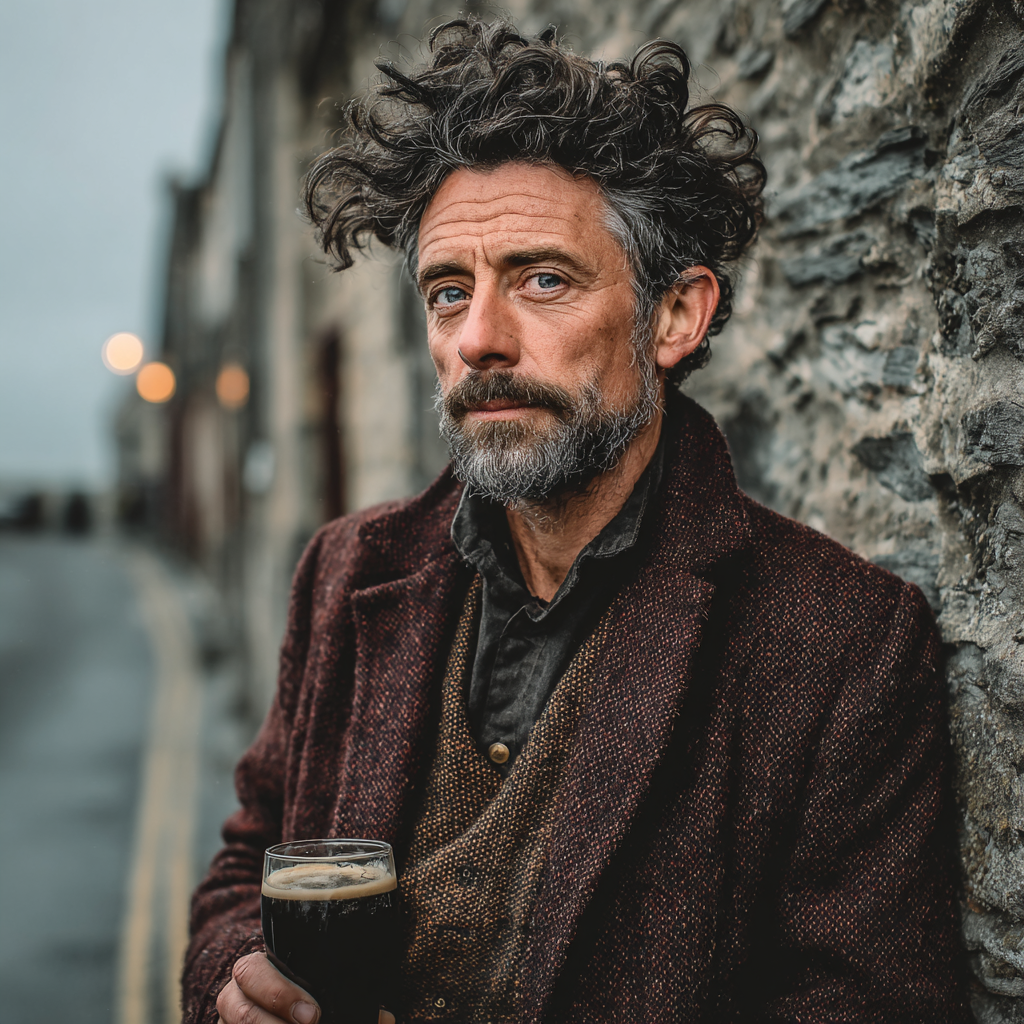
By Finn O'Sullivan
Irish storyteller and folklorist. Finn hunts for the narratives that do not make guidebooks—the pub legends, the family feuds, the neighborhood heroes. He believes every street corner has a story if you know who to ask.