
Moscow Unfiltered: How to Read a City Built by Tsars, Soviets, and Billionaires
By Elena Vasquez | Culture & History Specialist
Moscow doesn't charm you gently. It overwhelms. The city's scale, its severity, its abrupt shifts from imperial grandeur to Soviet brutalism to new-money glass towers—it demands something from visitors that Paris or Rome never will. You don't stroll through Moscow. You navigate it.
I've spent three weeks here across two visits, and I'm still untangling the contradictions. A city that built the world's most beautiful subway system while its citizens queued for bread. Where billionaires dine in converted Soviet cafeterias. Where the Kremlin walls have witnessed four centuries of autocrats, from Ivan the Terrible to the current resident.
This guide is for travelers who want to understand what they're looking at, not just check it off a list. We'll move thematically—through power, survival, food, and the neighborhoods where Muscovites actually live—because Moscow resists day-by-day itineraries. The city is too vast, too layered, too alive to be reduced to a checklist.
The Kremlin: More Than a Fortress
Most visitors enter through the main tourist entrance near Alexander Garden, pay their 700 rubles (roughly $8 USD), and follow the herd to the Armoury Chamber and the Diamond Fund. This approach works, but it flattens the place into a museum.
The Kremlin is a working government complex. The presidential administration operates from buildings you're not allowed to enter. Security is tight and humorless. I've seen tourists attempt to photograph guards and get shouted at in rapid Russian. Don't be that person.
Start early—doors open at 10:00 AM. The Armoury Chamber (separate ticket: 1,000 rubles) houses the actual imperial carriages, Fabergé eggs, and coronation robes. The collection is staggering, but the building itself tells its own story: constructed in 1851, it stored weapons for two centuries before becoming a museum. The Diamond Fund requires another ticket (500 rubles) and stricter security. The 190-carat Orlov Diamond and Catherine the Great's coronation crown are here. Photography is forbidden.
The five domes of the Assumption Cathedral dominate the interior square. Ivan the Great commissioned it in 1475, importing an Italian architect, Aristotele Fioravanti, who had studied the ruins of ancient Rome. The frescoes inside date to the 17th century. Stand near the central dome and look up—the iconostasis stretches 13 meters high, covered in gold-leaf frames. This is where Russian tsars were crowned until 1896.
The Ivan the Great Bell Tower, at 81 meters, was the tallest structure in Russia until the 18th century. You're not permitted to climb it, but the view wouldn't matter as much as understanding why it was built: to assert Moscow's dominance over the Orthodox world after the fall of Constantinople.
Pro tip: The Kremlin closes at 5:00 PM (6:00 PM in summer). Thursday is closed entirely. Buy tickets online in advance through the official Kremlin website—lines at the ticket office can stretch 45 minutes in peak season. The Alexander Garden entrance is at Moscow, Kremlin and Red Square, Moscow.
Red Square: The Geometry of Power
Red Square opens east from the Kremlin's Spasskaya Tower. The name derives from the Russian krasnaya, meaning both "red" and "beautiful"—the word's older sense. The square has served as marketplace, execution ground, military parade ground, and now tourist magnet.
St. Basil's Cathedral sits at the southern end, its nine onion domes commissioned by Ivan the Terrible to commemorate the 1552 conquest of Kazan. The story that Ivan blinded the architects afterward is probably apocryphal, but the building's hallucinatory quality is real. Each chapel corresponds to a specific battle or saint. Interior access costs 1,000 rubles. The maze-like passages connect the chapels at different levels—there's no main nave, no single perspective. It feels disorienting by design. Open daily 10:00 AM–6:00 PM, closed the first Wednesday of each month.
Lenin's Mausoleum, the red granite pyramid on the western side, opens from 10:00 AM to 1:00 PM, Tuesday through Thursday and Saturday. Security is airport-level. No bags, no cameras, no phones. The embalmed body lies under glass in a climate-controlled chamber, maintained by a team of specialists who've held the job since Soviet times. Whether this constitutes a respectful memorial or grotesque theater depends on your politics. Either way, the line moves fast and the viewing lasts about thirty seconds. Free entry.
GUM, the department store stretching along the eastern side, opened in 1893 as an elite shopping arcade. During Soviet times, it sold scarce goods to those with the right connections. Today it's luxury retail—Cartier, Dior, Louis Vuitton—housed in a three-story glass-roofed building that retains its 19th-century ironwork. The Soviet-era cafeteria on the third floor, Stolovaya No. 57, serves borscht and beef stroganoff at prices that haven't changed much since 1987. A full meal costs around 600–900 rubles ($7–10). The food is institutional but edible. The experience is time travel. Open 10:00 AM–10:00 PM daily.
The Metro: Underground Palaces
Moscow's subway system carries 2.4 billion passengers annually. It also happens to be the most beautiful metro in the world. Stalin commissioned the first stations in the 1930s as "palaces for the people," and the metaphor wasn't subtle: marble from the Urals, chandeliers, mosaics of heroic workers and farmers, bronze statues.
The circle line (Line 5, brown on maps) contains the masterpieces. Komsomolskaya, near three major rail terminals, features a vaulted ceiling with baroque gold stucco and eight mosaics depicting Russian military heroes from Alexander Nevsky to Stalin. The station was completed in 1952, the year before Stalin died, and it feels like a monument to an empire at its paranoid peak.
Mayakovskaya, deeper underground at 33 meters, was designed as a bomb shelter. The 34 ceiling domes contain mosaics by Alexander Deineka, showing Soviet aviation achievements against a sky-blue background. During World War II, Stalin addressed the populace from this platform while German troops were visible from the city's outskirts.
Kievskaya, at the western end of the circle, features mosaics celebrating Ukrainian-Russian friendship—a bitter irony given current events. The station's white marble and gold leaf frame scenes of agricultural abundance and industrial production. Completed in 1954, it opened one year after Stalin's death, when Khrushchev was already beginning his de-Stalinization campaign.
Arbatskaya, also on the circle line, is another deep shelter station with arched ceilings and red marble columns. The platform is unusually wide—designed to handle massive crowds during nuclear attack.
A metro ride costs 75 rubles (about $0.85) with a Troika card in the central zone. Buy a Troika card at any station ticket window for a 150-ruble deposit (refundable when you return the card). The card works on buses, trams, the Moscow Central Circle, and even the Aeroexpress airport train. Stations open at 5:30 AM and close at 1:00 AM. Avoid rush hours (8:00–10:00 AM, 6:00–8:00 PM) unless you want to experience Soviet-level crowding. If you're making multiple trips, load 500–1,000 rubles onto the card; for heavy use, a 1-day unlimited pass costs 415 rubles, or 800 rubles for 3 days.
Critical note: International credit cards (Visa, Mastercard) do not work in Russia. Bring cash—US dollars or euros—and exchange at banks. The Troika card is the only practical way to pay for transport.
The Arbat and Patriarch Ponds: Two Faces of Old Moscow
The Old Arbat, a pedestrian street running west from the city center, has been a merchant thoroughfare since the 15th century. Pushkin lived here. So did Tolstoy, briefly. Today it's souvenir shops, street performers, and overpriced cafes. But the architecture remains—pastel 19th-century buildings with elaborate moldings, the Vakhtangov Theater, and the Melnikov House visible from a side street (Arbat Lane 10), a Constructivist cylinder from 1929 that still looks futuristic.
The real treasure, however, lies in the labyrinth of side streets surrounding the main thoroughfare, particularly the aristocratic district of Patriarch Ponds. This neighborhood combines a mystical literary aura—Mikhail Bulgakov set the opening of The Master and Margarita here—with refined Moscow high society. The cozy pond, surrounded by picturesque historical buildings, is an ideal spot for a leisurely stroll. Here you'll find some of the city's best independent restaurants, trendy cafes, and boutiques featuring local designers. The quiet, tree-lined boulevards and the historic character make it one of the most charming corners of Moscow.
The New Arbat, parallel to the north, was built in the 1960s as a showcase Soviet avenue—wide, concrete, lined with bookstores and electronics shops. The street-level businesses have turned over completely since 1991, but the buildings retain their Soviet modernist bulk. Walk it to understand what the USSR thought the future would look like.
Kitay-Gorod and Zamoskvorechye: Where Merchants and Bohemians Lived
South of the Kremlin, on the right bank of the Moscow River, lies Zamoskvorechye—a district that for centuries was home to merchants and artisans, successfully retaining its unhurried street plan and unique character. The famous Tretyakov Gallery is located here on Lavrushinsky Lane, but by walking just a few blocks away from the museum's crowds, you can discover quiet courtyards with laundry lines and old, cozy cafes where time seems to have slowed down. The narrow, winding streets and lanes where wooden houses, merchant chambers, and churches from the 17th to 19th centuries still stand offer a glimpse into pre-Soviet Moscow.
Directly adjacent to the Kremlin, Kitay-Gorod is often perceived as part of the main tourist center, but its numerous side streets and inner courtyards hide a rich and complex history. This district has been a commercial and financial hub since the 16th century. The name "Kitay" used to mean "weaving" in medieval Russian, which explains the somewhat chaotic and sinuous layout of the area. Today, it is home to a multitude of hidden bars, small art galleries, and independent theaters, giving it a distinctively bohemian and youthful flair. Look for the Church of the Trinity in Nikitniki, tucked away in a courtyard at 3 Nikitnikov Lane—a stunning 17th-century church most tourists never find.
Gorky Park and the New Moscow
Gorky Park, stretching along the Moskva River south of the center, opened in 1928 as a model Soviet recreational space. For decades it was carnival rides and cotton candy. In 2011, the city government hired a team of young designers to remake it. Today it's Moscow's most democratic public space—free entry, free WiFi, outdoor ping-pong tables, food stalls, and in winter, a massive ice-skating rink. Krymskaya Embankment, Moscow. Open 24 hours; individual attractions and cafes vary.
The Garage Museum of Contemporary Art, housed in a converted 1960s restaurant building redesigned by Rem Koolhaas, occupies the park's northern edge. Admission is 600 rubles for adults. The programming focuses on Russian and Eastern European artists largely unknown in the West. Even if you skip the exhibitions, the building's Soviet modernist conversion is worth seeing—Koolhaas kept the original hexagonal floor tiles and exposed concrete while adding translucent polycarbonate walls. Open daily except Tuesday, 11:00 AM–10:00 PM (9:00 PM on Sundays). 9 Krymsky Val, Moscow.
Muzeon Park, adjacent to Gorky, holds hundreds of Soviet statues removed from public spaces after 1991. Lenins, Stalins, Dzerzhinskys, and nameless heroic workers stand in rows, toppled or beheaded, now framed as ironic art. It's free, open 24 hours, and tells the story of a country trying to decide what to remember and what to bury. 2 Krymsky Val, Moscow.
What to Eat (Beyond Borscht)
Moscow's restaurant scene has transformed since 2000. You can spend 7,000–9,000 rubles ($80–100) on a tasting menu at White Rabbit, perched on the 16th floor of the Smolensky Passage at Smolenskaya Square, 3, under a glass dome with panoramic city views. Chef Vladimir Mukhin cooks modern Russian—beetroot with black caviar, venison with pine cone sauce, fermented cabbage in unexpected forms. The restaurant spent years on the World's 50 Best list (peaking at #13 in 2019). Open Wednesday–Thursday 5:00 PM–11:00 PM, Friday–Saturday 12:00 PM–1:30 PM and 5:00 PM–11:00 PM, Sunday 12:00 PM–3:00 PM. Reservations essential; book at least one week ahead. Phone: +7 495 510-51-01.
For a more accessible splurge, try Café Pushkin at 26a Tverskoy Boulevard, open 24 hours in a 19th-century mansion decorated like a pharmacy and library. Classic Russian cuisine at a high level: blini with caviar, borscht with beef, pelmeni, duck with apples. The daily lunch menu is more affordable (around 2,500–3,500 rubles per person); at dinner à la carte you'll easily hit 4,500–6,000 rubles. Book a few days ahead.
For something closer to the street, try Varenichnaya No. 1, a chain serving Ukrainian/Russian comfort food in Soviet-style canteens. Vareniki (dumplings) with potato, cabbage, or sour cherry cost 300–400 rubles per plate. The decor is aggressively retro—red tablecloths, brass samovars, portraits of Brezhnev on the walls. Multiple locations; the Arbat branch at 8 Arbat Street is convenient.
But the real surprise of Moscow dining is Georgian cuisine. The food is full of flavor, hearty, social (dishes are shared), and prices are reasonable. Try khachapuri adjaruli—boat-shaped bread filled with melted cheese and a raw egg in the middle. Or khinkali, large dumplings filled with spiced meat and broth; you eat them with your hands, bite a small hole, sip the broth, then finish the rest. Never cut them with a knife and fork—that's sacrilege. A reliable chain is Khachapuri, with several central locations. Genatsvale, at 9/2 Arbat Street, has been serving Georgian food for decades in a "Georgian village" setting. Expect 1,500–2,500 rubles per person when sharing dishes.
Danilovsky Market, south of the center at Mytnaya Street 74, opened as a farmers' market in the 18th century. The building was rebuilt in 2017 with a soaring glass roof. Vendors sell Central Asian honey, Georgian cheese, Armenian dried fruit, Dagestani spices, and fresh produce from southern Russia. The food hall upstairs serves Uzbek plov, Armenian tolma, and Dagestani khinkal. A full meal runs 500–800 rubles. The market operates daily from 8:00 AM to 8:00 PM.
For the cheapest authentic meal, find a stolovaya (Soviet canteen). Mu Mu (look for the black-and-white cow sign) has locations across the center, including near Arbat. Grabli, at 27 Pyatnitskaya Street near Novokuznetskaya metro, is a step up in quality—full meals run 800–1,200 rubles. You grab a tray, point at what you want, and pay at the register. No Russian required.
What to Skip
The Tsar Bell and Tsar Cannon inside the Kremlin: Yes, they're enormous. Yes, the bell never rang and the cannon never fired. Every tour group stops here for photos. Spend that time in the Assumption Cathedral instead.
The Moscow State Circus: A tourist trap with trained animals and dated acts. If you want performing arts, book tickets to the Bolshoi Theatre (2 Theatre Square), even if you can't get an opera—backstage tours run 1,500 rubles and reveal the building's 19th-century mechanics.
The New Arbat after dark: Neon signs and chain restaurants. There's nothing here you can't find in any other global city. The side streets off the Old Arbat are more interesting by a factor of ten.
The Kremlin cathedrals during midday in summer: Shoulder-to-shoulder tour groups. Come at 10:00 AM opening or after 3:00 PM.
Taxi rides from the airport without a meter: The official Aeroexpress train to Sheremetyevo costs around 550 rubles and takes 35 minutes. A taxi should run 1,500–2,500 rubles depending on traffic; agree on the price in advance or use Yandex Go app.
Moscow's Contradictions: A Local Story
I once spent an evening in a bar in Kitay-Gorod, talking to a Muscovite in his sixties who had lived in the same Soviet apartment block his entire life. He showed me photos of his grandfather in a Red Army uniform, then pulled out his iPhone to show me his grandson's skateboarding videos. "We are not one country," he said, pouring vodka. "We are five countries, stacked on top of each other, all pretending to be the same."
That conversation clarified something I'd felt but couldn't name. Moscow is not a city with a history. It is a city with multiple histories, all occupying the same space simultaneously. The billionaire in the Bentley waits at the same traffic light as the pensioner who remembers bread queues. The Orthodox priest and the tech startup founder share the same metro line. The teenager wearing Supreme and the babushka selling dried mushrooms from a folding table exist in different centuries, but on the same sidewalk.
This is what makes Moscow exhausting and what makes it essential. You cannot visit this city and come away with a simple story. It will contradict whatever narrative you bring. That's the point.
Practicalities
Visas: Most foreign nationals need a visa to enter Russia. Tourist visas require an invitation letter (easily purchased from agencies online for $20–40) and proof of accommodation. Processing takes 4–20 business days depending on your country and the service level you pay for. Check current requirements before booking; geopolitical shifts have made this process volatile.
Money: International credit cards (Visa, Mastercard) do not work in Russia due to sanctions. Bring cash—US dollars or euros—and exchange at banks. ATMs connected to the Mir network accept Chinese UnionPay cards. Many restaurants and hotels catering to foreigners accept cryptocurrency or arrange payment through intermediaries. Cash is king. Budget roughly 3,000–5,000 rubles per day for food and transport if mixing stolovayas and mid-range restaurants; 8,000–15,000 rubles if dining at upscale places.
Getting Around: The metro covers the center comprehensively. Taxis use Yandex Go, the dominant ride-hailing app. A ride from Sheremetyevo Airport to the center costs 1,500–2,500 rubles depending on traffic. The Aeroexpress train (around 550 rubles, 35 minutes) is more reliable during rush hour. The Troika card is essential for metro and buses.
When to Go: May and September offer the best compromise of decent weather and manageable crowds. Winters are brutally cold (January averages -9°C) but the city looks extraordinary under snow. July can be uncomfortably hot and humid. Avoid the first week of May (Victory Day celebrations) unless you specifically want to see the military parade—hotel prices spike and central streets close.
Language: English is not widely spoken outside tourist venues. Download an offline translation app. Metro stations are labeled in both Cyrillic and Latin script, which helps. Learning to read Cyrillic takes about two hours and pays dividends. Most mid-range restaurants and chains have English menus; stolovayas and neighborhood spots often do not.
Safety: Moscow is generally safe for tourists, with low violent crime. Pickpocketing occurs on the metro and in crowded tourist areas. Keep bags zipped and phones secure. Be cautious photographing government buildings, police, and military personnel. The center is well-lit and patrolled at night.
Where to Stay: For first-time visitors, the Tverskaya Street/Arbat area puts you within walking distance of Red Square and the Kremlin. The Kitay-Gorod neighborhood offers more character and better value, with easy metro access. Budget travelers should look near the Taganskaya or Paveletskaya metro stations—slightly further out, but well-connected and significantly cheaper.
Final Word
Moscow exhausts because it matters. Every building, every metro station, every overpriced cafe in a converted Soviet space carries the weight of empire, collapse, and the uncertain present. You can visit St. Basil's, take the photo, and leave with a souvenir magnet. Or you can sit in Gorky Park at dusk, watch Muscovites living their lives among the ghosts of multiple eras, and try to understand what it means to inherit this particular history.
The city doesn't make this easy. It doesn't flatter visitors. But for travelers willing to engage with its complexity, Moscow offers something increasingly rare: the sense that you've genuinely been somewhere, not just passed through.
Last tip: Visit Sparrow Hills at sunset. The view from the observation platform takes in the Luzhniki Stadium, the Moskva River bending through the city, and the Stalinist skyscraper of Moscow State University looming overhead. The panorama doesn't resolve any of the contradictions. It just lays them out, immense and undeniable, under the vast Russian sky.
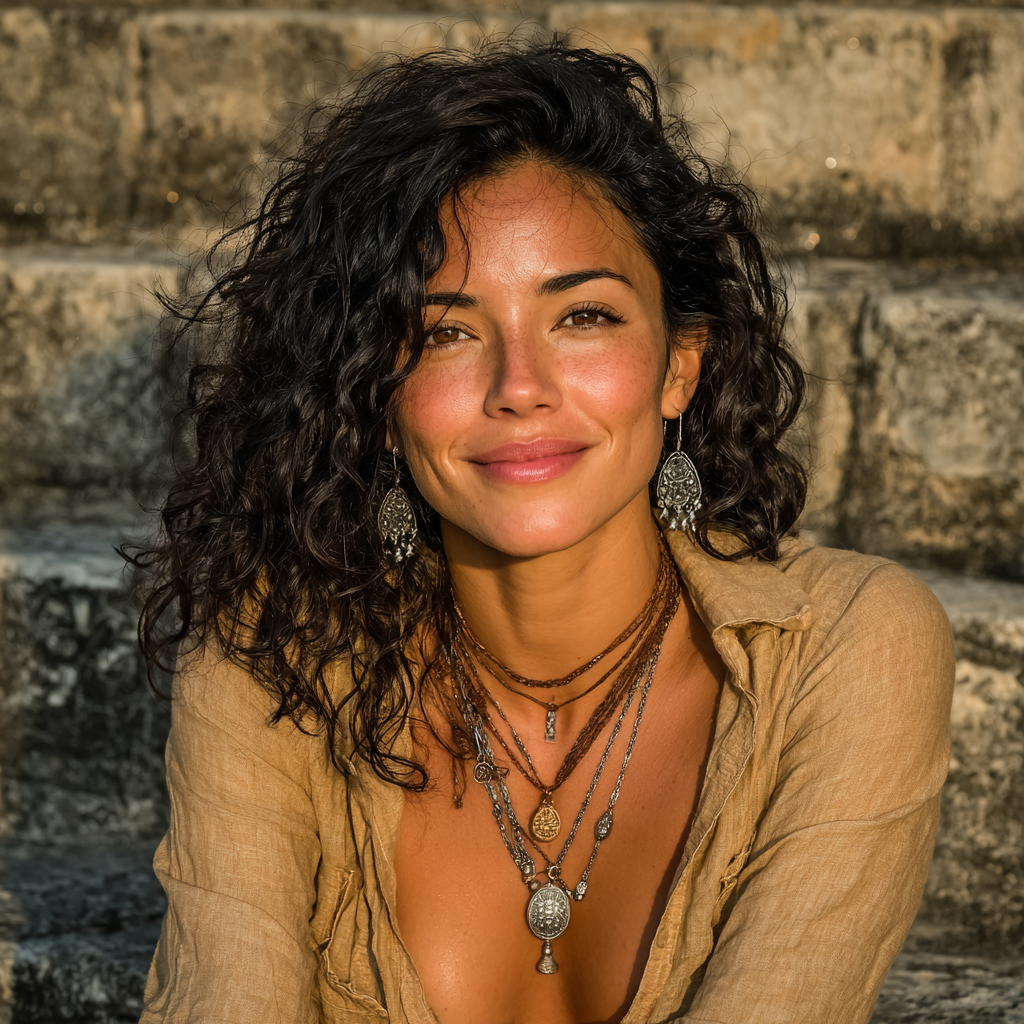
By Elena Vasquez
Cultural anthropologist and culinary storyteller. Elena spent a decade documenting traditional cooking methods across Latin America and the Mediterranean. She holds a PhD in Ethnography from Barcelona University and believes the best way to understand a place is through its kitchens and ancient streets.