
Bucharest Unpacked: From Ceaușescu's Monstrous Palace to Hidden Courtyard Bars in Europe's Most Layered Capital
By Finn O'Sullivan
The first thing that hits you about Bucharest is the weight of it. Not the heat, though summers here will melt the soles off your shoes. Not the traffic, which operates on its own internal logic that no foreigner will ever decode. The weight. The Palace of Parliament rises from the city center like a monument to collective madness, and you realize immediately that this is a place where history didn't just happen—it was carved into existence by force of will and bulldozers.
Romanians will tell you, often within minutes of meeting you, that their capital is "complicated." They're not being modest. Bucharest is a palimpsest of regimes, each one writing over the last with varying degrees of care. The Belle Époque villas on Calea Victoriei lean against brutalist apartment blocks. Orthodox churches hide in the shadows of glass office towers. A restaurant serves pork knuckle and polenta in a building where Securitate officers once interrogated dissidents. This is the city's genius: it doesn't hide its scars. It builds around them.
And yet, for all its heaviness, Bucharest is also one of Europe's most affordable capitals, a city where a craft cocktail costs less than a beer in London and where the best meals happen in courtyards you'd never find without local help. It's a place that rewards the curious and punishes the lazy—the tourists who stick to the Old Town pub crawl miss everything that matters.
This guide is for the ones who look past the surface. The ones who want to understand why a city that was once called "Little Paris" still carries that nickname with a mixture of pride and bitterness.
The Old Town: Layers Beneath the Party
Start your wandering in Lipscani, though locals will roll their eyes and tell you it's not "real" Bucharest anymore. They're half right. The cobblestone streets have been scrubbed and sanitized for tourists, lined with Irish pubs blasting electronic music at volumes that would wake the dead, and overpriced cocktail bars where a mojito costs triple what it should. But look past the surface. The street pattern dates to the 15th century. The old merchant houses, their facades crumbling in that particularly beautiful Balkan way, still stand on Strada Hanul cu Tei.
Stavropoleos Monastery hides down a narrow passage at Strada Stavropoleos 4, its Brâncovenesc architecture so intricate it looks carved from ivory rather than stone. Built in 1724, the monastery survived earthquakes, fires, and communist demolition crews who couldn't find a pretext to tear it down. Step into the courtyard. The silence operates on a different frequency than the chaos outside. Nuns still live here. They'll sell you hand-painted icons for thirty lei, and they don't haggle. The church is open daily from 8:30 AM to 6 PM, and there is no admission fee—though a small donation is appreciated.
Just around the corner, Hanul lui Manuc at Strada Franceză 62-64 is one of Bucharest's oldest surviving inns, built in 1808 by an Armenian merchant. The timber-framed courtyard restaurant serves as a time capsule of Ottoman-era caravanserais, though the food is hit-or-miss. Come for the atmosphere and a cold Ursus beer, not the sarmale. The restaurant is open daily from 10 AM to midnight.
For a genuinely good coffee in the Old Town, seek out Origo at Strada Lipscani 9. They roast their own beans, and the baristas take the work seriously without being insufferable about it. Their flat whites rival anything in Berlin or London at roughly 12–15 lei (€2.40–€3). Open Monday to Friday 8 AM to 8 PM, weekends 9 AM to 6 PM. For atmosphere, find Grand Café Van Gogh on Strada Smârdan 9, where the walls are covered in reproductions and the outdoor seating allows prime people-watching. Neither place opens before 8 AM, which tells you something about Romanian priorities.
Revolution Square: Where the Dictator's Spell Broke
The story everyone wants to tell you, the one that defines modern Romania, happened in December 1989. Revolution Square—formerly Palace Square, before they renamed everything—marks the spot where Nicolae Ceaușescu gave his final speech from the balcony of the Central Committee building. He promised the crowd a raise. They booed him. You can watch the footage on YouTube: his face collapses, this dictator who ruled through fear for twenty-four years, realizing in real-time that the spell has broken. He fled by helicopter from the roof. They captured him three days later. They shot him on Christmas Day.
Today, the square contains the Memorial of Rebirth, a monument to the revolution that locals call "the potato on a spike." Romanians are divided on whether it's profound or ridiculous. The building where Ceaușescu stood still stands at Bulevardul Magheru, now housing government offices. Nobody quite knows what to do with it. That ambiguity permeates everything here.
Nearby, the Romanian Athenaeum at Strada Benjamin Franklin 1-3 is Bucharest's most beautiful building. The circular concert hall, built in 1888, anchors Calea Victoriei with its neoclassical dome and columned portico. Inside, the frescoes depict Romanian history in the bombastic style of the late 19th century. The George Enescu Philharmonic performs here regularly; if you time your visit right, you can hear them rehearse for free through the open windows in the afternoon. Tickets for performances range from 40 to 150 lei (€8–€30), depending on the seat. The box office is open Tuesday to Friday, 12 PM to 7 PM, and Saturday, 4 PM to 7 PM.
The Palace of Parliament: You Cannot Look Away
You cannot avoid the Palace of Parliament. You shouldn't try. The statistics sound fake: 365,000 square meters, 1,100 rooms, the second-largest administrative building in the world after the Pentagon, the heaviest building on earth. It consumed thousands of workers who died during construction—officially, nobody knows the real number. Ceaușescu ordered entire neighborhoods demolished to make room for it, displacing forty thousand people. He never lived to see it finished. The revolution interrupted construction, but Romanian governments since have completed it, almost compulsively, as if finishing the thing might somehow justify its existence.
Tours run daily from 9 AM to 5 PM, but you must book in advance online or by phone (+40 21 311 3611) and bring your passport. Standard tours cost 60 lei (€12), while the full "underground" tour—including the nuclear bunker and hidden tunnels—costs 100 lei (€20) and must be booked at least 48 hours ahead. The guides will show you halls with marble from the same quarry that supplied the Palace of Versailles, crystal chandeliers weighing up to five tons, curtains that required fifteen workers to hang. The building is simultaneously grotesque and impressive, like a cathedral built by a mad king. You leave feeling vaguely ill, which is probably the appropriate reaction.
Just across the boulevard, the National Museum of Contemporary Art (MNAC) occupies a wing of the palace that was intended as Ceaușescu's private residence. Entry is through a separate entrance at Calea 13 Septembrie 1, and the irony of seeing cutting-edge Romanian art installed in the dictator's planned bathroom is not lost on anyone. Admission is 25 lei (€5). Open Wednesday to Sunday, 10 AM to 6 PM.
Calea Victoriei: Bucharest's Elegant Spine
Walk north along Calea Victoriei, Bucharest's oldest and most elegant street. The avenue predates the communist era by centuries, and it shows. The National Museum of Art occupies the former Royal Palace at Calea Victoriei 49-53, which explains the grandeur. King Carol II built it in the 1930s, then abdicated, then the communists moved in and used it for Party headquarters. The building wears these transitions lightly. Medieval Romanian icons hang in rooms where communist bureaucrats once plotted agricultural five-year plans. European masters—El Greco, Rembrandt, Rubens—share walls with socialist realist portraits of factory workers. Admission is 30 lei (€6). Open Wednesday to Sunday, 10 AM to 6 PM; Thursday until 8 PM.
Continue north and you'll reach the Village Museum (Muzeul Satului) at Șoseaua Kiseleff 28-30, which sounds touristy and absolutely is, but in the best possible way. Opened in 1936 on the shore of Lake Herăstrău, the museum is an open-air collection of traditional Romanian houses, churches, and mills moved here from villages across the country. You can walk into a 17th-century wooden church from Maramureș, its tall spire built without a single nail, and understand immediately why Romanians fought so hard to preserve these traditions against forced industrialization. Admission is 30 lei (€6). Open Monday 9 AM to 5 PM; Tuesday to Sunday 9 AM to 7 PM. In summer, the museum hosts folk craft demonstrations on weekends.
Parks as Pressure Valves
Bucharest's parks operate as the city's emotional release. Cismigiu Gardens, the oldest park in the city, opened in 1854 and occupies a valley that once held a swamp. German landscape architects drained it, planted thirty thousand trees imported from the Romanian mountains and Vienna's botanical gardens, and created something that feels almost English—rolling lawns, a boating lake, gravel paths lined with benches where old men play chess with the intensity of surgeons. In summer, outdoor cafes serve cold beer and mititei for 15–20 lei (€3–€4). In winter, they flood the lake for ice skating. The park is free and open daily from 6 AM to 11 PM.
Herăstrău Park (officially King Michael I Park), surrounding the lake of the same name, offers more space and fewer crowds. Rent a bike from one of the rental stations near the Village Museum for roughly 15 lei per hour. Walk the six-kilometer path around the water. You'll pass statues of Romanian cultural heroes—Eminescu the poet, Enescu the composer, and, inexplicably, Michael Jackson, whose 1992 concert in the park remains a generational touchstone. The park connects to the Arch of Triumph, a smaller cousin to Paris's monument, built in 1936 to commemorate Romanian independence. Traffic circles it in a chaotic dance that somehow never results in collision.
Where to Eat: Curiosity Rewarded
The food in Bucharest rewards curiosity and punishes laziness. The Old Town restaurants with touts outside yelling about "traditional Romanian experience" should be avoided. Their food is microwaved and their prices are designed for tourists who won't return.
Instead, seek out Caru' cu Bere at Strada Stavropoleos 5, a beer hall operating since 1879 in a neo-Gothic building. Yes, it's touristy. Yes, it's worth it. The house beer is brewed on-site. The pork knuckle falls off the bone. On weekends, a folk ensemble performs in traditional costume, and the whole thing feels like a commercial for Romanian tourism until you notice the local families celebrating birthdays at the corner tables, the children bored by dancers they've seen at every family function since birth. Open daily 10 AM to midnight. A full meal with beer costs around 120–150 lei (€24–€30) per person.
For something quieter and more contemporary, find Lacrimi și Sfinți at Strada Șepcari 16, a bistro that translates roughly to "Tears and Saints." The chef, Dorin Stan, cooks updated Romanian dishes without irony or fusion excess. Sarmale—cabbage rolls stuffed with pork and rice—come with polenta and sour cream, as they should, but the cabbage is fermented in-house and the pork is from Mangalita pigs, the woolly Hungarian breed known for marbled, flavorful meat. Mămăligă, the cornmeal porridge that functions as Romania's answer to mashed potatoes, arrives crispy-edged from a cast-iron pan. The restaurant occupies a 19th-century house with a courtyard garden. Dinner for two costs around 200 lei (€40) with wine. Open Monday to Saturday, 12 PM to 11 PM; Sunday 12 PM to 9 PM. Reservations recommended on weekends.
For a local breakfast that tourists rarely find, visit Casa Bunicii at various locations including Strada Icoanei 4, a homestyle restaurant serving exactly what Romanian grandmothers cook: zacusca (vegetable spread), eggs withTelemea cheese, and cozonac (sweet bread). Expect to pay 30–40 lei (€6–€8) for a generous breakfast. Open daily 8 AM to 10 PM.
If you want to experience the city's emerging fine-dining scene, The Artist at Strada Căpitan Ion Demetriade 1-3 offers a tasting menu that reimagines Romanian ingredients through modern techniques. Chef Paul Oppenkamp's eight-course menu runs around 350 lei (€70) with wine pairings, which is a fraction of what you'd pay in Paris or London for comparable quality. Open Tuesday to Saturday, 6:30 PM to 11 PM. Reservations essential.
Neighborhoods Beyond the Center
The neighborhoods beyond the tourist circuit reward exploration. Cotroceni, west of the palace, contains embassies and villas in various states of repair, its quiet streets lined with trees that predate the communist era. Dorobanți, to the north, functions as Bucharest's upper-middle-class enclave, full of boutiques and cafes where the coffee costs twice what it does elsewhere and the patrons dress like they might be photographed at any moment.
The Dacia and Icoanei districts, northeast of the center, hold crumbling Belle Époque mansions now occupied by a mix of artists, expats, and elderly pensioners who remember when these streets held the city's elite. Some buildings have been restored. Others are literally falling apart, their facades held together by scaffolding and optimism. This is Bucharest's visual signature: decay and renewal occupying the same frame.
For a genuinely local evening, head to Control Club at Strada Constantin Mille 4, a live music venue in a former factory that hosts Romanian indie bands, electronic DJs, and the occasional art exhibition. Entry is usually 20–40 lei (€4–€8). The crowd is young, local, and unpretentious. Open Wednesday to Sunday from 8 PM.
What to Skip
The Old Town Pub Crawl: The bars around Strada Lipscani after 10 PM are interchangeable—loud music, overpriced drinks, aggressive touts, and nothing recognizably Romanian. One beer for atmosphere is fine. A night of it is a waste.
The Hop-On Hop-Off Bus: Bucharest's best experiences happen on foot or by metro. The bus misses the narrow streets, the hidden courtyards, and the conversations that make the city memorable.
Therme București (unless you're desperate): This massive thermal spa complex north of the city is marketed heavily to tourists, and it is impressive in scale. But it costs 120 lei (€24) for a day pass, is often overcrowded on weekends, and feels like a shopping mall with hot water. If you need a spa day, the city has smaller, cheaper, and more authentic options.
The "Dracula" Tourist Shops: Anything with a vampire on it was manufactured for tourists. Romania's real history is far more interesting than the Bram Stoker myth, and the souvenir shops near the Old Town know it. Skip the plastic fangs and buy a hand-painted icon from Stavropoleos instead.
Unmarked Taxis: The ones that honk at you outside the airport or train station. They will overcharge by 300%. Use Bolt or Uber, or walk to the official taxi stand where rates are posted.
The Practical Bits
Stay: The Old Town is convenient but noisy. Consider Cismigiu Hotel (€60–€90/night) near the gardens for central but slightly quieter location, or move north to Piata Romana for modern apartments and metro access. For something with character, The Mansion Boutique Hotel at Strada Franceză 11 occupies a restored 19th-century townhouse in the Old Town.
Getting Around: The metro is cheap, clean, and efficient, with stations marked by red "M" signs. A single ride costs 3 lei (€0.60); a day pass is 8 lei (€1.60). Walking reveals the most, but distances sprawl. Use Bolt or Uber after dark—rides rarely cost more than 20 lei (€4) cross-town. Taxis are best avoided unless booked through an official app.
When to Go: Spring (April–May) and autumn (September–October) offer mild weather and fewer crowds. Summers are hot and humid; winters are gray but rarely severe, and the Christmas markets in Piata Universitatii are genuinely charming.
Money: The currency is the Romanian leu. As of early 2026, one euro buys approximately 5 lei. Credit cards are widely accepted in restaurants and hotels, but carry cash for small purchases, tips, and the monastery icon stalls. Romanians tip 10% at restaurants, rounding up for coffee and taxi rides.
Language: English works in tourist areas and among anyone under forty. Older Romanians often speak French or Russian instead. Learn "mulțumesc" (mul-TSOO-mesk)—thank you. Use it liberally. It opens doors that remain closed to tourists who don't bother.
Don't Miss: The Palace of Parliament tour requires advance booking and passport ID. The Village Museum closes earlier than you'd expect—check times before making the trip. Sunday mornings see Orthodox churches at their most active; even non-believers can appreciate the Byzantine chants and incense. If you're in town during the George Enescu International Festival (held every two years, next in September 2027), book concert tickets months ahead.
A Final Thought
Bucharest is not a beautiful city in the way Paris or Prague are beautiful. Its charm is harder won. You have to look past the stray dogs and the brutalist apartment blocks and the traffic that operates on pure anarchic instinct. You have to talk to people, because Romanians will tell you stories—about their grandparents who survived the war, about the revolution they watched on television, about the city that keeps reinventing itself because standing still is not an option.
This is what remains: a place that has been burned by the Ottomans, occupied by the Germans, flattened by earthquakes, and ruled by a madman, yet somehow keeps producing poets and composers and engineers who design some of Europe's most sophisticated software. The palace still stands. The monastery bells still ring. The old women still sell flowers outside the churches, arranging lilies and roses with the same care their grandmothers used, as if each bouquet might somehow balance the scales.
Stay long enough to see the layers. That's the only way this city makes sense.
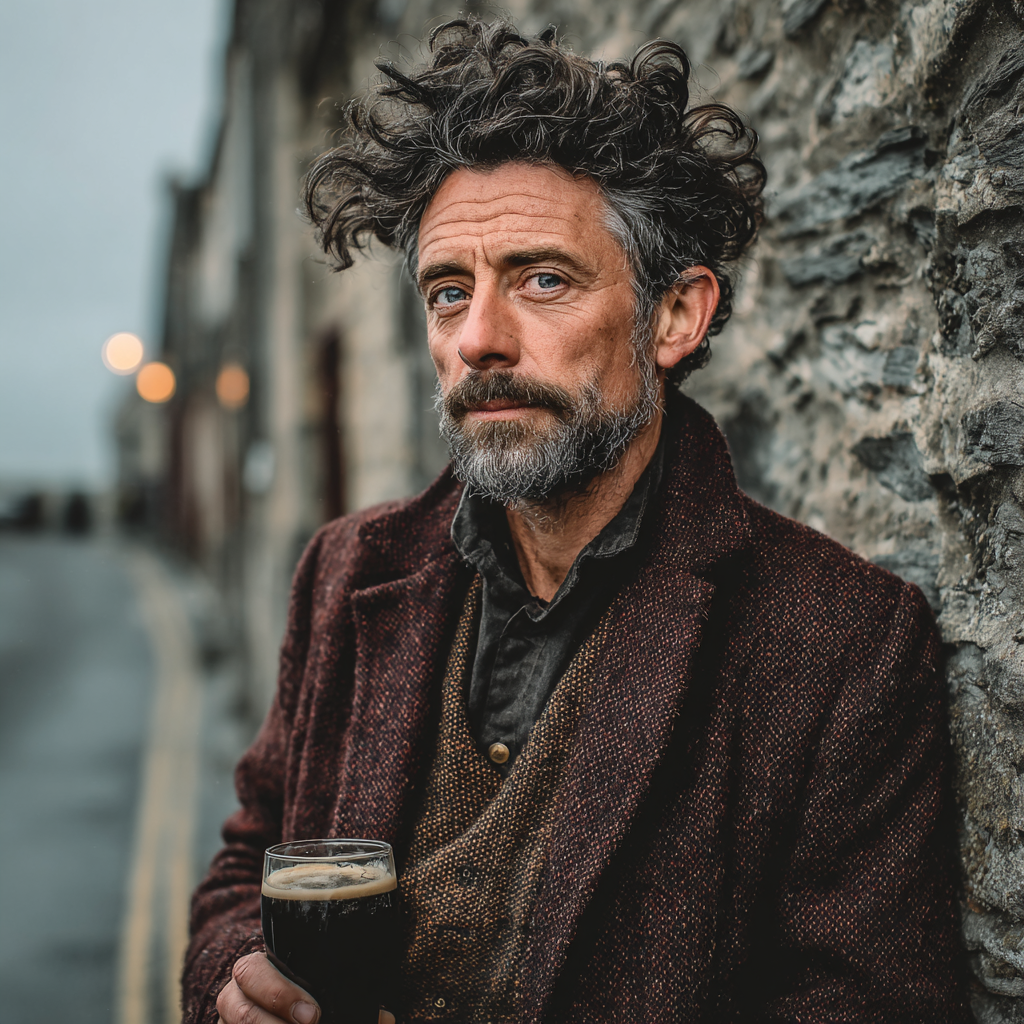
By Finn O'Sullivan
Irish storyteller and folklorist. Finn hunts for the narratives that do not make guidebooks—the pub legends, the family feuds, the neighborhood heroes. He believes every street corner has a story if you know who to ask.