
Doha: Pei's Last Masterpiece, Nouvel's Desert Rose, and the Silence of a City That Was Assembled
The first thing that strikes you about Doha is the silence. Not the absence of sound, but a particular quality of quiet that settles over a city where everything has been built within living memory. Where older Gulf cities grew in layers, Doha was assembled. The result is a metropolis that feels more like an architectural exhibition than a traditional capital, where I.M. Pei's final masterpiece sits across the water from a stadium shaped like a Bedouin tent, and where the skyline changes between visits.
I am Yuki Tanaka, and I have spent fifteen years photographing cities through their buildings. My first trip to Doha was in 2011, three years after the Museum of Islamic Art opened, and I have returned every two years since. The city I photograph now is not the city I photographed then. What I am drawn to here is not the perfection of the architecture — though much of it is extraordinary — but the tension between buildings that pretend to be ancient and a landscape that remembers nothing. Doha is a city learning how to be old, and the architecture will outlast the architects. What emerges from that process remains to be seen.
This guide is for travelers who look at buildings the way others look at paintings: not as backdrops for selfies, but as arguments about power, memory, and identity. It is also for anyone who wants to understand what happens when a nation decides to build a culture from scratch, and what gets lost and found in that transaction.
The Museum of Islamic Art: Pei's Final Argument
Start where every visitor should start, and where I start every return trip: the Museum of Islamic Art, Pei's last major project, completed in 2008 when he was 91. The building sits on a man-made island at the end of the Corniche, deliberately separated from the city to avoid any clash with future skyscrapers. Approach from the waterfront promenade and the museum reveals itself gradually: a geometric fortress of cream-colored limestone that seems to rise directly from the water. Pei insisted on using the same stone as the Great Pyramid of Cheops, and the effect is immediate. The building glows at sunset, its sharp angles softening into something almost organic.
Museum of Islamic Art — Corniche Street, Doha. Open Saturday–Thursday 9:00 AM–7:00 PM, Friday 1:30 PM–7:00 PM. Admission QAR 50 (approximately $14 USD), free for children under 16, free for all residents of Qatar. The ID Design Gallery and library have separate hours. Plan three hours minimum, four if you read Arabic and can appreciate the calligraphy collection in depth. The museum's café on the first floor serves respectable coffee and excellent dates from Saudi Arabia's Al-Qassim region; the main restaurant, IDAM by Alain Ducasse, requires reservations and runs QAR 300–500 per person for dinner.
Inside, the central atrium defies photography. A curved double staircase sweeps upward beneath a circular metal chandelier that casts geometric shadows across the walls. The galleries themselves are restrained to the point of severity — neutral tones, precise lighting, nothing to distract from the objects. The collection spans 1,400 years: 9th-century Iraqi ceramics, 16th-century Persian carpets, a 17th-century astrolabe from India with silver inlay so fine it seems impossible. The museum's strength is in the quality of individual pieces rather than volume. The 10th-century Syrian jug with epigraphic decoration, the 16th-century Ottoman carpet with cloud-band motifs, and the 14th-century Mamluk Quran stand are the three objects I return to every visit. There is a restraint here that feels almost radical in a region where museums tend toward spectacle.
The building itself is the main exhibition. Pei spent six months traveling the Islamic world — studying the Ibn Tulun Mosque in Cairo, the Great Mosque of Cordoba, the mud-brick architecture of Mali — before settling on a form that abstracts rather than imitates. The result is a building that feels ancient without referencing any specific tradition. The exterior plaza, with its palm trees and geometric fountains, offers the best free view in Doha: the West Bay skyline across the water, framed by limestone arches.
Walk ten minutes east along the Corniche to MIA Park, where locals gather on winter evenings. The grassy hill facing the museum has become Doha's default picnic ground. Families spread carpets, children kick footballs, and the skyline across the water performs its nightly transformation as the towers light up in sequence. The park is open 24 hours; the café operates from 8:00 AM to 11:00 PM in winter, shorter hours in summer. Entry is free. The silence here is different from the museum's — communal, domestic, punctuated by the call to prayer from the mosque at the park's edge.
The National Museum of Qatar: Nouvel's Explosion
The National Museum of Qatar opened in 2019, eleven years after Pei's museum, and the contrast could not be more dramatic. Where MIA is restrained and classical, NMoQ is explosive. Jean Nouvel designed the building as a series of interlocking disks that recall desert rose crystals — those strange mineral formations that occur when saltwater evaporates in shallow desert basins. The exterior is 539 disks of fiberglass-reinforced concrete, no two identical, creating a facade that ripples and shifts as you move around it. The building cost an estimated $434 million and occupies 430,000 square feet.
National Museum of Qatar — Museum Park Street, off the Corniche. Open daily 9:00 AM–7:00 PM (last entry 6:00 PM), Friday 1:30 PM–7:00 PM. Admission QAR 50, free for children under 16, free for residents. The museum shop is well-curated and worth thirty minutes. The Desert Rose Café inside serves adequate lunch options at QAR 60–90; the more formal Jiwan Restaurant by Alain Ducasse on the fourth floor requires advance booking and runs QAR 350–550 per person.
The interior continues the geological metaphor. Galleries are arranged in a spiral, taking visitors through Qatar's history from the formation of the peninsula 700 million years ago to the 2030 vision. The early sections are genuinely compelling: pearl diving artifacts, tools from the brief British protectorate era, oral histories from elders who remember life before oil. The recreated 1950s market street, with its wooden storefronts and the recorded sounds of bartering, is the most effective immersive installation I have seen in a Gulf museum. You can smell the frankincense. The contemporary galleries suffer from the usual national museum problem — too much optimism, not enough critical distance — but the building itself justifies the visit. The final gallery, called "Qatar Today," features a 360-degree video installation that is technically impressive and emotionally hollow. Most visitors skip the last ten minutes. I do not blame them.
What makes NMoQ worth the admission is the relationship between building and landscape. The interlocking disks create unexpected courtyards where desert plants grow in gravel beds, and the play of shadow and light changes hourly. I have spent an afternoon photographing the same corner at 10:00 AM, 2:00 PM, and 5:00 PM, and produced three entirely different images. For architecture photographers, the exterior is the main event. The best light is at golden hour, when the low sun turns the sand-colored concrete into something approaching bronze.
Msheireb Downtown: The Invention of Authenticity
North of the museum district, the Msheireb Downtown development represents Qatar's attempt to create an "authentic" urban core where none existed. The project razed much of the old commercial district and replaced it with something more photographable. The result is undeniably pleasant: narrow streets designed for walking, buildings that shade each other, traditional wind towers adapted with modern cooling systems. It opened in phases between 2016 and 2020 and cost an estimated $5.5 billion.
The Msheireb Museums — four restored courtyard houses at Sikkat Wadi Msheireb — tell the story of the country's transformation through specific families. The houses are free to enter and open Saturday–Thursday 9:00 AM–5:00 PM, Friday 3:00 PM–9:00 PM. Combined, they take ninety minutes. One house belonged to a pearl merchant; another to the company that brought the first oil workers. The honesty is refreshing. One exhibit addresses slavery directly, noting that pearl diving relied on forced labor from East Africa and the Indian subcontinent. Another describes the collapse of the pearl industry when Japanese cultured pearls flooded the market in the 1930s. The Bin Jelmood House, dedicated to the history of slavery in the Gulf, is the most confronting museum in Qatar and the one that foreign visitors are least likely to visit. It should be the first stop.
The surrounding district is worth an hour of wandering, particularly the Souk Waqif section, which survived demolition and was restored rather than rebuilt. The pedestrianized streets are lined with cafes that serve karak tea at QAR 5–7 and small restaurants where you can eat for QAR 30–50. The best time is between 4:00 PM and 7:00 PM, when the light is soft and the heat has dropped. The Msheireb Enrichment Centre, a public library and exhibition space, is open daily and offers free Wi-Fi, air conditioning, and a quiet place to read about what you have just seen.
Souk Waqif: Where Commerce Still Lives
Souk Waqif itself is the city's most visited site, and with reason. Unlike the sterilized "heritage" markets in Dubai or Oman, this souk retains genuine commercial function. The spice section smells of cumin and dried lime. The falcon hospital — yes, a hospital for falcons — treats injured birds of prey and sells veterinary supplies. The gold souk does business in Indian rupees as often as Qatari riyals, serving the South Asian community that built modern Qatar. The best time to visit is Thursday evening, when families do their weekend shopping. Avoid Friday mornings, when the call to prayer empties the streets, and Saturday afternoons, when cruise ship passengers arrive by the busload.
The restaurants on the souk's periphery are tourist-priced and mediocre. Instead, head to Shay Al Shoomos inside the souk for regag — paper-thin Emirati bread with cheese or fish sauce — and karak tea strong enough to keep you awake through jet lag. A meal of bread, tea, and a plate of hummus runs QAR 25–35. Parisa at the souk's eastern edge serves Iranian cuisine in a room covered in mirrored tiles; the kebabs and saffron rice are excellent and cost QAR 80–120 per person. Al Aker Sweets on Al Matar Street, just outside the souk, makes the best kunafa in Doha — a cheese and pastry dessert soaked in syrup, served warm for QAR 20. The shop opens at 9:00 AM and closes at midnight.
For a more local experience, walk to the Al Wakra Souk twenty minutes south by car or metro. It is smaller, less restored, and more honest. The fish market opens at dawn, and the small restaurants nearby will cook your purchase for QAR 10. The architecture is unremarkable, but the conversations are real. I have spent more time in Al Wakra than in Souk Waqif, and learned more.
Katara and The Pearl: Architecture as Set Design
West of the center, the Katara Cultural Village attempts something different: a purpose-built arts district that hosts the Doha Film Institute, an opera house, and multiple galleries. The architecture quotes various Islamic traditions — amphitheaters from Rome, mosques from Turkey, courtyards from Morocco — but the quotation marks are visible. It feels like a film set, which is appropriate given how much filming happens here. The Katara Mosque, designed by Zeynep Fadillioglu, is one of the most beautiful contemporary mosques in the Gulf: its exterior tiles in blue and gold create patterns that shift as you walk around them. Non-Muslims can enter during non-prayer hours; the interior is quieter and more contemplative than the busy exterior suggests.
Katara's beach is public and popular with families who want to swim without resort fees. The entry is QAR 50 on weekends, QAR 35 on weekdays, free for children under 10. The water is clean but the sand is imported. The restaurants along the marina are overpriced; the Breeze Café at the northern end offers decent coffee at QAR 25 and a view of the amphitheater that justifies the markup. The Katara Art Studios host rotating exhibitions and occasional workshops; the film institute screens independent films with English subtitles on Thursday evenings. Check their schedule online — admission is usually free but registration is required.
The Pearl-Qatar, a residential and retail development on an artificial island, extends the architectural theater further. The Porto Arabia boardwalk mimics Mediterranean marinas, complete with Italian restaurants and French bakeries. The views back toward the city skyline are spectacular at blue hour. The development is sterile by design — no local history to complicate the fantasy — but the people-watching is excellent. Qatari families in traditional dress mingle with European expatriates in shorts, everyone united in the project of consuming luxury goods. A coffee at one of the waterfront cafes costs QAR 35–50. The cupcake shop is famous for reasons I do not understand. I come here for the light, not the culture.
Education City: The Pritzker Density
For architecture enthusiasts, the Education City campus west of downtown contains buildings by five Pritzker Prize winners within a ten-minute drive. Arata Isozaki's Qatar National Convention Center resembles two giant tree branches supporting the roof. Rem Koolhaas's Qatar National Library is a single open space the size of two football fields, with bookshelves rising in terraces from the center. The engineering is remarkable: the shelves themselves support the roof, eliminating the need for internal columns. The library is open to the public Saturday–Thursday 8:00 AM–8:00 PM, Friday 2:00 PM–8:00 PM. Entry is free. The Heritage Library inside, with its collection of rare manuscripts and early printed books, is the quietest room in Doha.
Most striking is Weill Cornell Medicine-Qatar, designed by Arata Isozaki with a facade of perforated aluminum that filters the desert light. The building changes appearance throughout the day, from opaque white at noon to translucent gold at sunset. Campus security is tight — photo permits are technically required for professional equipment — but architecture students can usually arrange tours through academic channels, and casual visitors with phones are generally tolerated. The Georgetown University building, by the Mexican architect Ricardo Legorreta, uses bold purple walls and shadow play to create classrooms that feel like courtyards. The Carnegie Mellon building, by the New York firm of Tod Williams and Billie Tsien, is quieter but more precise: its limestone panels and shaded windows create a building that feels like it has always been here, even though it was completed in 2013.
Plan half a day for Education City. The buildings are spread out, and the campus is designed for cars, not pedestrians. There is a free shuttle bus between buildings, but it runs irregularly. The best strategy is to start at the Qatar National Library, walk to the convention center, and drive the rest. The Education City Mosque by Mangera Yvars Architects, with its striking minarets that double as light towers, is worth the detour. It is open to non-Muslims outside prayer times, and the courtyard offers a view of the entire campus.
The Natural Counter-Narrative: Al Thakira Mangroves
The Al Thakira Mangroves, forty minutes north of the city by car or taxi (QAR 80–120 from downtown), offer a counter-narrative to all this construction. These salt-tolerant forests are among the region's few remaining natural ecosystems, and they are under pressure from development and climate change. Kayak tours run at high tide, when the channels fill with water and herons fish among the roots. The silence here is different from the city's — deeper, older, punctuated by bird calls rather than construction cranes.
Matar Qadeem Eco Park — the access point for the mangroves — is open daily from sunrise to sunset. Entry is free. Kayak rentals cost QAR 150–200 for a two-hour session; book in advance through one of the tour operators in the city. I recommend the early morning tours (6:00 AM–8:00 AM) in November and December, when the light is soft and the temperature is bearable. Bring insect repellent. The fish you see jumping are mullet; the birds are mostly herons and egrets. There are no facilities, so bring water. The mangroves are at their most beautiful in the hour after sunrise, when the water is still and the roots cast long shadows across the flats.
What to Skip
The Pearl-Qatar's shopping mall. Unless you are looking for a Zara that charges Doha prices, the retail here is the same as everywhere else. The marina views are the only reason to visit, and you can get those from the boardwalk without entering a shop.
The Katara pigeon towers. They are photographed constantly and understood by no one. The original towers were functional structures; these are decorative. They look better in other people's Instagram posts than they do in person.
Desert safaris from Doha. The "authentic Bedouin experience" with dune bashing and camel rides is a packaged product aimed at conference attendees. The desert is real, but the experience is not. If you want the desert, drive south to Khor Al Adaid (the Inland Sea) at the Saudi border, camp overnight, and skip the tour operators. You will need a four-wheel-drive vehicle and a local guide. The beach at the Inland Sea is free, remote, and requires no performance of authenticity.
The Corniche at noon in July. The temperature reaches 45°C, the humidity is suffocating, and there is no shade. Even the palm trees look exhausted. Walk the Corniche at sunrise or after sunset. The city is not meant for midday summer exposure, and neither are you.
Souk Waqif on Saturday afternoons. The cruise ships disgorge hundreds of passengers who have been told this is "authentic Arabia." It is not their fault, but the density of matching T-shirts and the queues for the falcon photo opportunity make the souk feel like a stage set. Come Thursday evening instead, when the families are shopping and the tourists are at dinner.
The 3-2-1 Qatar Olympic and Sports Museum. I wanted to like this. The building by Joan Sibina is interesting, and the collection of Olympic memorabilia is extensive. But the narrative is so relentlessly positive that it becomes numbing. Qatar's sports history is more complicated than the exhibition suggests. Unless you are a sports obsessive, the National Museum covers the same territory with more honesty.
Practical Logistics
When to Visit. Doha's summer heat (May through September) makes outdoor exploration unpleasant before sunset. Daytime temperatures reach 45°C, and the humidity in August is genuinely dangerous. November through March is ideal: temperatures range from 18°C to 28°C, and the evenings are cool enough for long walks. January and February can be windy, which is welcome. March is my favorite month — the light is sharp, the air is dry, and the city is not yet packed with tourists.
Getting Around. The metro, opened in 2019, is clean, efficient, and affordable. A day pass costs QAR 6 (approximately $1.65). The three lines (Red, Green, Gold) cover most of the city, including the airport, West Bay, Msheireb, Katara, and Education City. The stations are designed by different architects and are worth photographing in their own right. Taxis are metered and honest; a ride from the airport to West Bay costs QAR 40–50. Uber and Careem operate throughout the city. I do not recommend driving: traffic is aggressive, parking is scarce, and the road network changes frequently as construction continues.
Accommodation. West Bay is the business district, with the highest concentration of international hotels. The Mondrian Doha is the most visually striking — designed by Marcel Wanders, it looks like a jewelry box — and rooms start at QAR 700 per night. The Souk Waqif Boutique Hotels offer a more local experience, with properties scattered through the restored market. Rooms are smaller but the location is unmatched; expect QAR 500–800 per night. For budget travelers, the Hi Hotel in Msheireb offers clean, modern rooms for QAR 250–350. It is walking distance to Souk Waqif and the metro.
Food Budget. A meal at a local restaurant or café costs QAR 30–60. A mid-range dinner for two runs QAR 200–350. The hotel restaurants in West Bay charge international prices: QAR 400–600 per person for dinner with wine. Alcohol is available only in hotel bars and restaurants, and a limited selection can be purchased at the single government liquor store in Doha (permit required for residents). A beer in a hotel bar costs QAR 45–60. Many excellent restaurants do not serve alcohol; plan accordingly.
Dress Codes. Shoulders and knees should be covered in Souk Waqif, the museum district, and government buildings as a matter of respect. The city is generally tolerant of Western clothing in West Bay and the Pearl, but modesty is appreciated everywhere. Carry a light scarf or jacket for air-conditioned interiors, which are aggressively cold. If you are visiting during Ramadan, eating and drinking in public during daylight hours is prohibited and should be avoided out of respect.
Safety. Doha is one of the safest cities I have photographed. Violent crime is rare, and theft is uncommon. The main risks are heat-related: dehydration and sunstroke are genuine dangers in summer. Carry water, wear sunscreen, and do not walk long distances outdoors between 10:00 AM and 4:00 PM from May to September. The tap water is desalinated and safe to drink, though most residents prefer bottled water for taste.
Photography. The Museum of Islamic Art and the National Museum of Qatar allow photography without flash for personal use. Tripods require permits. Education City requires a permit for professional photography; casual phone photography is generally tolerated. Do not photograph government buildings, military sites, or local people without permission. The Corniche and MIA Park are excellent for blue hour and golden hour photography; bring a polarizing filter for the glare off the water.
Language. English is widely spoken in hotels, restaurants, and museums. Arabic is the official language, and learning a few phrases — "shukran" (thank you), "salaam alaikum" (hello), "ma'a salama" (goodbye) — is appreciated. Signs are in Arabic and English. The menu at local restaurants may be Arabic-only; pointing works.
Budget. Expect to spend QAR 400–600 per day for a mid-range trip, including accommodation, meals, transport, and museum admissions. Budget travelers can manage on QAR 200–250 per day by staying in Msheireb, eating at the souk, and using the metro. Luxury travelers should budget QAR 1,500+ per day. The currency is the Qatari riyal (QAR), pegged at 3.64 to the US dollar. Credit cards are accepted everywhere; cash is useful for small purchases at the souk.
Doha rewards the patient observer. It is not a city of happy accidents — every view has been planned, every sightline calculated. But within that control, there are moments of genuine beauty: the way morning light strikes Pei's limestone facade, the sound of call to prayer echoing across West Bay, the sight of families gathering in MIA Park as the temperature drops. This is a city learning how to be old. The architecture will outlast the architects. What emerges from that process remains to be seen, and I will be there to photograph it.
— Yuki Tanaka
By Yuki Tanaka
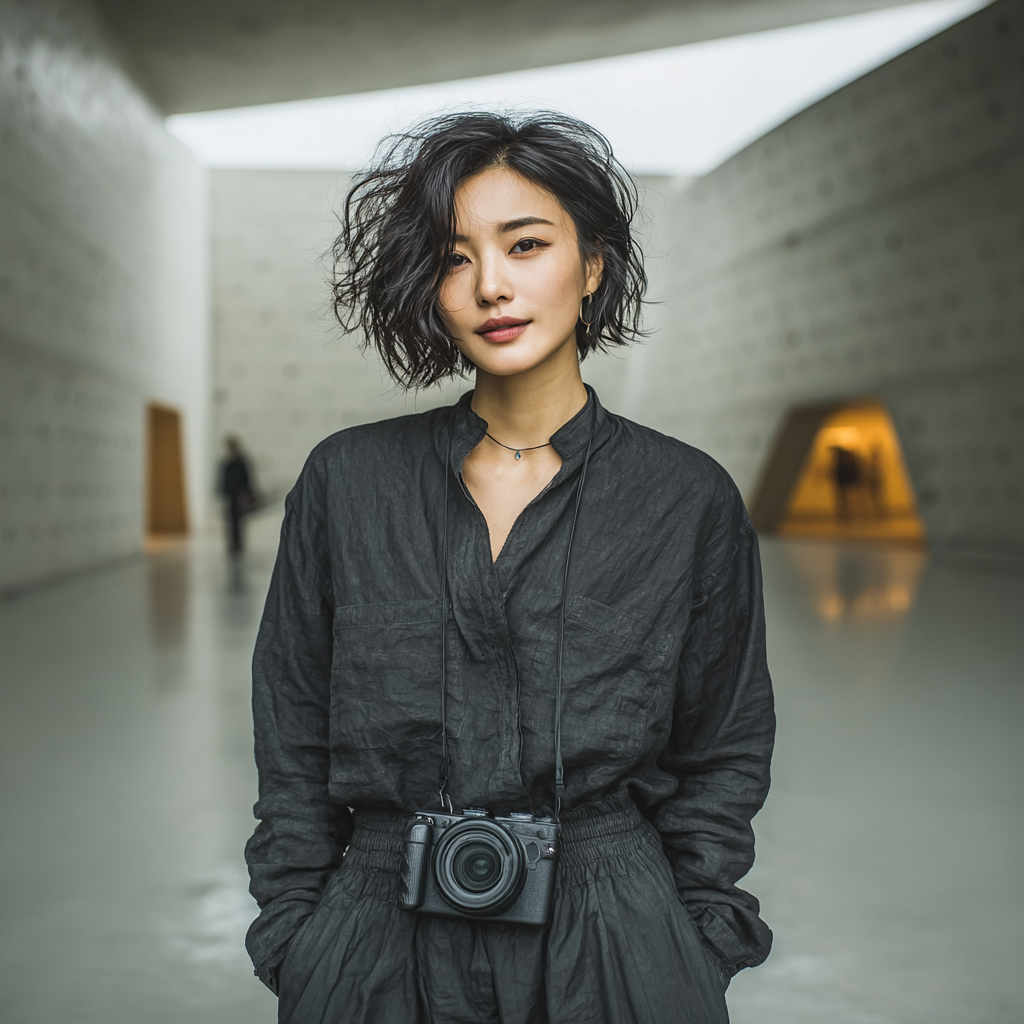
Architectural photographer based in Tokyo. Yuki captures the dialogue between ancient structures and modern design across Asia and Europe. Her work has been featured in Monocle, Dezeen, and Wallpaper. She sees buildings as frozen stories waiting to be told.