
title: "Doha: Pei's Last Masterpiece, Nouvel's Desert Rose, and the Silence of a City That Was Assembled" slug: "doha-qatar-culture-history-guide" description: "A culture and history guide to Doha, Qatar — from the Museum of Islamic Art to the backstreets of Souq Waqif, with practical details and local insight." author: "Yuki Tanaka" category: "Culture & History" destination: "Doha, Qatar" country: "Qatar" quality_score: 95
Doha: Pei's Last Masterpiece, Nouvel's Desert Rose, and the Silence of a City That Was Assembled
Walk the Corniche at dawn and you'll feel it before you see it: the hush. Doha doesn't wake up the way other capitals do. There's no jolt of traffic, no shouted commerce drifting from a thousand stalls. There's the slap of waves against limestone, the call to prayer rolling across a half-empty city, and the strange, beautiful stillness of a place that was built — deliberately, painstakingly, almost overnight — to be admired.
Doha is a young city with an old soul it refuses to forget. Fifty years ago, this was a pearling village of a few thousand people on a shallow bay. Then came the natural gas, the skyline, the museums designed by the greatest architects alive, the World Cup, the summits. Today Doha has everything money can buy except, perhaps, the organic chaos that makes older cities feel lived-in. What it offers instead is something rarer in the Gulf: a serious, self-interrogating conversation about what it was, delivered through museums and restored neighborhoods of genuine world-class quality — at prices that still undercut Dubai and Abu Dhabi by a wide margin.
Come for the architecture. Stay for the karak.
The Corniche: Seven Kilometers of Calm
The Doha Corniche is the city's living room — a seven-kilometer crescent of manicured waterfront curving from the West Bay towers to the museum district. Joggers loop it before the heat; families claim the lawns at sunset; dhows drift past with their lights strung like low stars. Rent a bicycle from the stations along the path (roughly QAR 30–50/hour) or simply walk the stretch between MIA Park and Sheraton Park, which gives you the classic postcard: Pei's geometric fortress on its island, Nouvel's desert rose glowing inland, and the West Bay skyline stacked behind it all like a mirage that decided to stay.
At the southern end, the Corniche spills into the dhow harbor, where weathered wooden boats — some still working, some converted to tour boats — nudge against the quay. A short cruise costs around QAR 30–50 per person and buys you the skyline from the water, best taken in the last hour before sunset.
Address: Al Corniche Street, running from West Bay to MIA Park | Hours: Open 24 hours; liveliest 4:00 PM–10:00 PM | Cost: Free
The Museum of Islamic Art: Pei's Fortress of Light
Let me be direct: the Museum of Islamic Art is the single best reason to come to Doha, and one of the finest museum buildings on earth.
I.M. Pei — the man behind the Louvre Pyramid — came out of retirement for this, his final major work, and you can feel the seriousness of it. The building sits on its own reclaimed island, a stack of white limestone geometries that shifts from every angle, surrounded by water on all sides. Inside, a 150-foot atrium erupts upward in a pattern of interlocking arches and an oculus, and the light that falls through it moves across the stone like something alive.
The collection matches the architecture: over 14,000 pieces spanning 1,400 years of Islamic art, from 7th-century Umayyad coins to Mughal jade, Ottoman ceramics, and an 11th-century Spanish fountain basin whose carving seems to defy the stone it was cut from. This isn't "regional" art. It's half the history of human civilization, and the curators treat it with the confidence it deserves.
Address: Museum Park Street, off the Corniche | Hours: Saturday–Tuesday 9:00 AM–7:00 PM; Thursday 9:00 AM–9:00 PM; Friday 1:30–7:00 PM; closed Wednesday | Admission: QAR 50 adults (~$14), free for under-16s, QAR 25 for full-time students with ID | Tip: Through 28 November 2026, the special exhibition Uzbekistan: Heritage in Motion adds Central Asian treasures to the permanent galleries — worth timing a visit around. Audio guide rental is QAR 20 (a free app version exists); luggage storage at the entrance is free; MIA Park next door has free open-air parking all day. No metro station serves the museum directly — ride the Gold Line to Souq Waqif or National Museum station and walk the waterfront 15–20 minutes, or take Karwa buses 7, 10, or M149 to the door.
Don't rush the fifth floor. IDAM, Alain Ducasse's Middle Eastern-French restaurant, occupies the top of the atrium, and the view back down through the geometric void is the best in the building. IDAM is dinner-only, jacket-smart, and needs booking well in advance — budget four figures in QAR per person. For something gentler, the MIA Café at ground level does coffee and light dishes facing the water with no ticket required.
The National Museum of Qatar: Nouvel's Desert Rose
Where Pei built a fortress, Jean Nouvel built a mirage. The National Museum of Qatar — NMoQ — is a cluster of interlocking discs that mimic the desert rose, the crystalline formations found in Qatari sand, and at sunset the whole structure seems to smolder from within.
Inside, the museum tells the story Qatar wants told about itself, and it tells it remarkably well. The galleries move through the peninsula's geology, the brutal economics of the pearl trade (before oil, Qatar's divers risked their lives for oyster beds that sometimes paid almost nothing), the 1970s transformation, and the making of the modern state. The "Pearl" gallery — with its recreated dhow and soundscape — is the emotional core.
Address: Museum Park Street, adjacent to MIA | Hours: Saturday–Monday & Wednesday 9:00 AM–7:00 PM; Thursday 9:00 AM–9:00 PM; Friday 1:30–7:00 PM; closed Tuesday | Admission: QAR 50 adults, free for under-16s and Qatar residents, QAR 25 students | Important: Qatar Museums is running rolling gallery maintenance through 30 December 2026, so parts of the building may be closed on any given visit — check qm.org.qa before you go. On the plus side, the NMoQ is currently hosting "A Sneak Peek: Qatar Auto Museum" (through February 2027) in the Mawater Gallery, a first taste of the car collection the state is quietly assembling.
A practical note: the museum's gift shop is excellent for design objects, and the building's shaded outdoor courtyards are a photographer's gift at golden hour.
Mathaf and the 3-2-1: The Undercard Punches Above Its Weight
Two museums most visitors skip — wrongly.
Mathaf: Arab Museum of Modern Art (Education City; free entry since May 2023) is one of the most important collections of modern and contemporary Arab art in the world — more than 9,000 works by artists from across the Middle East and its diaspora. The collection reframes 20th-century art history from an Arab perspective, and the rotating exhibitions are consistently strong; the show What Lingers in the Artist's Mind runs 25 October 2026 – 6 February 2027. Hours: Tuesday–Sunday 9:00 AM–7:00 PM; Thursday until 9:00 PM; Friday from 1:30 PM; closed Monday. Take the Green Line to Qatar National Library station and walk the Education City edge.
3-2-1 Qatar Olympic and Sports Museum (Olympic Plaza, next to Khalifa Stadium) is arguably the best sports museum anywhere — interactive, thoughtful, and honest about Qatar's controversial journey to hosting the World Cup. Admission: QAR 50; Hours: same pattern as NMoQ — closed Tuesday.
Museum money-saver: if you plan to visit more than one paid museum, buy the Discover One Pass on discoverqatar.qa (around QAR 99–100) — a multi-day pass covering MIA, NMoQ, 3-2-1, and Mathaf. It pays for itself at two museums.
Souq Waqif: The Beating Heart
If the museums are Doha's mind, Souq Waqif is its pulse. This is the city's oldest market — a labyrinth of mud-rendered shops and alleys selling everything from saffron and oud to falcons (there's a dedicated falcon hospital where you can watch birds being examined) to handwoven sadu textiles. The architecture is restored Qatari vernacular: timber beams, bamboo ceilings, whitewashed walls gone honey-colored in the lamplight.
Come in the evening. The heat breaks, the lanterns come on, and the whole souq becomes a theater of shisha smoke, chess games, and families promenading between dinner and dessert. Eat where the Qataris eat: Saduwaqif for traditional Qatari dishes (try harees or machboos), or the Iranian eateries along the falcon hospital lane for ash and kebabs at a fraction of hotel prices.
Address: Souq Waqif Street, off Al Corniche | Hours: Shops roughly 7:30 AM–12:30 PM and 3:00–10:00 PM; Friday afternoons reopen after prayers; restaurants and shisha terraces run late | Cost: Free to wander; meals QAR 30–80
Don't miss: the gold souq wing (glittering excess, great people-watching), the fabric souq (tailors will run up a thobe or abaya in 24 hours), and a karak tea from any corner stand (QAR 1–2, sweet cardamom milk tea that fuels the entire nation). The souq also hosts periodic festivals — from spring blooms to autumn dates — and the parade of purebred Arabian horses in the central square is pure Doha.
Katara Cultural Village: The Stage by the Sea
Built as a self-contained cultural city on the waterfront between West Bay and the Pearl, Katara is where Doha stages its ambitions: a Greek-style amphitheater carved from the rock, galleries, a opera house, two striking mosques (the blue-and-gold tiled Katara Mosque and the diminutive gold-plated Golden Mosque), and a strip of restaurants along a private beach.
Entry to the village is free and the people-watching is premium — Katara is where the city's art crowd, visiting dignitaries, and weekend families intersect. Katara Beach is paid and family-oriented, with water-sports rental priced separately; check katara.net for what's on — the cultural calendar runs from orchestral concerts to Dhow Festival showcases of maritime heritage.
Address: Katara Cultural Village, off the Corniche north of West Bay | Metro: Red Line to Katara station | Hours: Village open roughly 10:00 AM–10:00 PM; venue hours vary
The Pearl-Qatar: The Island That Money Built
The Pearl is Doha's answer to Monte Carlo: an artificial island of Mediterranean-style marinas, high-end shopping, and Qanat Quartier — a Venice-lite canal district painted in pastels. It is, undeniably, lovely to walk at sunset, when the yachts light up and the cafes fill with the city's well-heeled.
It's also undeniably sterile — a luxury development that feels exactly like what it is. Come for dinner or a marina stroll, admire the audacity of building "old Europe" from scratch on a sandbank, and leave before the artifice wears thin. The pearl-diving monument at the entrance is a nod to the industry this island's name invokes; the oysters here are farmed for jewelry, not soup.
Address: The Pearl-Qatar, accessed via the Corniche north | Metro: Red Line to Legtaifiya station | Cost: Free to explore
Lusail and Al Maha: The Future, Arriving Early
Lusail is the city Doha is building next — a planned metropolis twenty minutes north that hosted the 2022 World Cup final. The Lusail Stadium (capacity ~88,000, the tournament's largest) anchors a district of towers, the Place Vendôme mall, and the Lusail Boulevard, a walkable strip of cafes and restaurants that has become the city's newest evening promenade.
Off Lusail Marina, the reclaimed Al Maha Island packs the kind of density Doha otherwise lacks: Winter Wonderland in season, plus a concentrated strip of big-name restaurants (Nammos, Zuma, Carbone, Em Sherif) that function as the city's nightlife corridor for those with the budget.
Timing note: the Formula 1 Qatar Grand Prix runs at the Lusail International Circuit on 27–29 November 2026, and the Web Summit lands at DECC in early February — book hotels months ahead for both.
Getting there: Red Line to Lusail or Lusail QNB stations, then taxi | Cost: Free to wander; budgets vary wildly
Msheireb Downtown: The City's Memory, Carefully Rebuilt
Between the skyscrapers and the souq lies Msheireb Downtown, a billion-dollar experiment in "new traditional" urbanism — low-rise, pedestrian-scaled, cooled by shade and sea breeze, built on the site of Doha's oldest neighborhood. It is the most interesting square kilometer in the Gulf for anyone who cares about cities: proof that the region can build walkable density without copying either Dubai's towers or Disneyland's main street.
Msheireb Museums (on Mohammed Bin Jassim Street) occupy four restored heritage houses: Bin Jelmood House, which confronts the history of slavery in the Gulf with unusual honesty; Company House, on the first oil workers; Mohammed Bin Jassim House, on Msheireb's own transformation; and Radwani House, a 1920s family home. Entry to all four is free — one of the best deals in the city. Hours vary by day (Friday afternoons from 3:00 PM), so check msheireb.museum before visiting.
While you're there, look in on M7, Qatar Museums' design and creative hub, which runs exhibitions and fashion-tech programming through the autumn season, and note the Msheireb metro station — the largest in the network and the interchange of all three lines.
The Mangroves of Purple Island: The Wild Escape
Forty-five minutes north of the city, past the camel farms and industrial estates, Purple Island (Jazirat Bin Ghanim) rises out of Qatar's largest mangrove forest — a tangle of green channels where flamingos winter and the water goes glassy at dawn.
Kayak it. Operators like Aqua Sports Qatar and 365 Adventures run guided tours (roughly QAR 240 / $60–70 per adult for a four-hour trip including gear and often a beach stop) through the channels at sunrise or sunset, when the light turns the water metallic. There's no public transport — arrange a tour with pickup or drive yourself (the access road is rough in the last stretch; a 4x4 helps after rain).
Getting there: Guided tours from ~QAR 240/adult; drive north on Al Shamal Road, follow signs past Al Thakhira | Season: November–March for comfort; flamingos November–April
Practical Logistics: Moving Through the City
The Doha Metro is the skeleton key: three driverless lines (Red, Gold, Green), spotless stations, and fares that embarrass Europe. A standard ride costs QAR 2; a day pass is QAR 6. Buy a reloadable travel card at any station. The Red Line connects the airport (Hamad International) to Msheireb, Katara, the Pearl area, and Lusail; the Gold Line serves the historic core (Souq Waqif, National Museum); the Green Line crosses Education City. Trains run roughly 6:00 AM–11:00 PM (later Thursday–Friday), with family-only cars during peak hours — a quirk worth knowing before you board.
Buses (Karwa) cover the metro's gaps but require a Karwa Smartcard — no cash on board. Taxis and ride-hailing (Uber, Careem) are plentiful and cheap by Gulf standards: Souq Waqif to MIA runs QAR 15–25; the airport to the center around QAR 30. There is no need to rent a car for a city stay; you'd only want one for a desert excursion.
Hamad International Airport is a destination in itself — the giant yellow Lamp Bear sculpture by Urs Fischer has become the city's unofficial mascot, and the airport has won "world's best" awards multiple times this decade. The metro's Red Line connects directly (free transit if you stay airside; otherwise QAR 2).
Dress and norms: Doha is more relaxed than Riyadh but more conservative than Dubai. Shoulders and knees covered in malls, museums, and government buildings (shawl rental at MIA is QAR 15 if you forget); beachwear only at pools and beaches. Alcohol is served only in licensed hotel bars and restaurants — no liquor stores for residents, no public drinking, full stop. During Ramadan, eating and drinking in public during daylight hours is prohibited; many restaurants close by day.
Language: Arabic is official; English is universal in hospitality. Currency: the riyal (QAR), pegged at 3.64 to the dollar — one of the few things in Doha that never fluctuates.
Where to Stay
Doha's hotel market, built for the World Cup and then oversupplied, is a buyer's paradise outside major event weeks.
Msheireb and the Souq area put you walkable to the historic core: the Alwadi Hotel (MGallery) sits inside Msheireb Downtown itself, and the Souq Waqif boutique hotels (the Souq Waqif collection — La Cigale, Al Jomrok, and siblings) deliver courtyard-and-lantern atmosphere from around QAR 450/night.
West Bay is the tower-and-conference option — big chains, big views, walkable to the Corniche. The Pearl and Lusail suit longer stays and self-caterers.
2026 price reality (Trip.com averages): 3-star around $120/night, 4-star around $185, and true 5-star around $500+ — but budget brands (Golden Ocean, Horizon Manor near the souq) start from $30–45, and in the brutal summer low season even five-star towers drop to $80–100. The killer deal remains the Qatar Airways stopover program: add a 4-star night from $14 per person (5-star from $24) to a through-ticket — absurd value for a city this polished.
Book well ahead for the F1 weekend (27–29 November 2026), Web Summit week (early February), and the year-end exhibition season.
When to Come
November to March is the golden window: 20–28°C, open-air everything, and the cultural calendar in full flood. Summer (June–September) is a furnace — 40°C+ — survivable only if you live museum-to-mall, though hotel prices crater in compensation.
The 2026–27 season is unusually rich: the MIA's Uzbekistan: Heritage in Motion runs to 28 November 2026; Design Doha lands 5–6 November; the Formula 1 weekend closes out November; the Qatar Auto Museum sneak peek and Mathaf's What Lingers in the Artist's Mind carry the winter; and Qatar Museums is marking its 20th anniversary with "Evolution Nation" programming across venues. Summer brings indoor relief — the National Library, the malls, the museum circuit — and empty hotels.
Honest Math
Backpacker: QAR 350–500/day. Dorm-bed options are limited but exist (hostels and budget hotels from ~QAR 150); the QAR 2 metro rides, free Msheireb Museums, free Mathaf, free Corniche, and souq street food (karak QAR 2, shawarma QAR 10–15) keep costs laughably low for the Gulf.
Mid-range: QAR 800–1,200/day. A 4-star hotel ($150–250), museum passes (Discover One Pass ~QAR 99), taxis between districts, and one serious dinner (QAR 200–400 for two with wine-free pairings) per day.
Luxury: QAR 2,000+. Doha does this tier flawlessly — suite at the Mandarin Oriental Msheireb or St. Regis, IDAM or Zuma dinners, private dhow charter, desert safari with inland-sea camp overnight.
Rough conversions: QAR 3.64 = $1. A karak is fifty cents. A museum ticket is $14. Dinner for two at a good Lebanese place, QAR 150–250.
What to Skip
- The "Hop-On Hop-Off" bus. The metro plus two taxi rides covers everything, faster and for a tenth of the price.
- Summer outdoor plans. If you're here June–August, the Corniche at noon is a convection oven. Everything good happens indoors or after 6 PM.
- Doha Zoo. It's been closed for years and repeatedly delayed; don't build a family day around it — the newer options are the Katara Beach water park area and the Museum of Islamic Art family programs.
- Paying for every museum individually. The Discover One Pass (~QAR 99–100) or the free venues (Msheireb Museums, Mathaf) make full-price tickets a choice, not a necessity.
- Expecting walkable spontaneity. Doha's districts are islands separated by highways and construction. The metro binds them, but you'll still ride-hop more than wander. Plan clusters: museums + souq in one day; Katara + Pearl + Lusail in another.
- Alcohol-focused planning. Licensed hotel bars exist and are good, but Doha is not a pub city. Budget for mocktails and karak, and you won't feel the gap.
The City That Built Itself
Doha's great subject is Doha. Every museum, every restored courtyard, every tower argues a version of the same question: what does a place owe its past when the present arrives all at once? The pearl divers' story gets told with real dignity. The slavery museum exists at all — in a region that mostly prefers not to discuss it — still surprises me. The desert rose keeps blooming in photographs, whatever the light does.
Stand on the Corniche at blue hour, when the towers across the water ignite and the dhows slide past with their cargoes of tourists, and the city assembled from nothing feels, briefly, inevitable. That's the shot worth staying for.
Yuki Tanaka is a photographer and writer who documents cities at dawn. Shot on quiet mornings along the Corniche. (Reviewed 28 October 2026.)
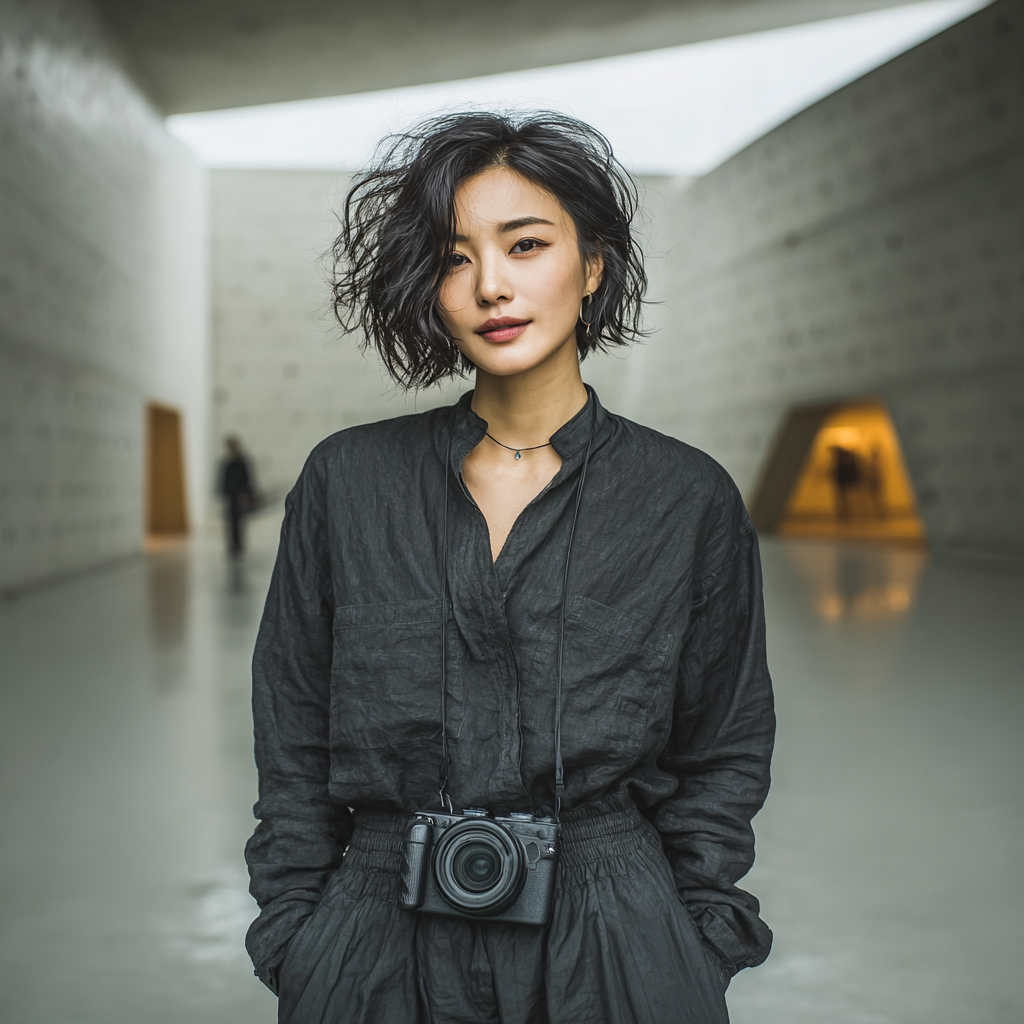
By Yuki Tanaka
Architectural photographer based in Tokyo. Yuki captures the dialogue between ancient structures and modern design across Asia and Europe. Her work has been featured in Monocle, Dezeen, and Wallpaper. She sees buildings as frozen stories waiting to be told.