
Groningen Food Guide: Eierbal at the Vismarkt, Rijsttafel at Toko Semarang, and Europe's Youngest Food City
By Sophie Brennan
The eierbal — a soft-boiled egg wrapped in spiced ragout, breaded, deep-fried, and served with mustard — is the single best reason to get off the train in Groningen. It is also, I should mention before we go any further, officially recognized as intangible cultural heritage in the Netherlands. Not "local specialty." Not "regional snack." Heritage. The Dutch government looked at this deep-fried egg, considered its cultural significance, and decided it belonged on the same protected list as windmills and cheese markets.
If that doesn't tell you everything about Groningen — this flat, stubborn, brilliant university city at the very top of the Netherlands — let me add the other essential fact: roughly one in four of its residents is a student. This gives Groningen the lowest average age of any city in Europe, which in turn produces the cheapest good food in the country, the most passionate beer scene north of Brussels, and a dining culture where the line between "student dive" and "serious restaurant" is pleasingly, permanently blurred.
I spent a week eating my way through the city. Here is what I found, organized by craving rather than by day, because in Groningen the days tend to blur together anyway.
The Eierbal Gospel: Groningen's Strange Gift to the World
You cannot understand this city until you have eaten its egg ball at the correct hour, which is — and I want to be precise here — either at 9 AM standing at a market stall, or at 2 AM standing on a bridge over a canal, watching students cycle home beneath the streetlights.
The benchmark: Cafetaria Koning (Bedumerweg 15), about fifteen minutes on foot northwest of the center, is the city's eierbal temple. The place has been frying for the better part of a century — it passed to new owners in 2023, who solemnly swore to change nothing about the secret family recipe — and the result is the eierbal by which all others in Groningen are judged: golden, fist-sized, the ragout warm and gently spiced, the egg inside still properly runny. Expect to pay €2.50–€3.50. There are no frills. There are also no regrets.
The late-night version: When the bars on the Grote Markt empty out, the crowd drifts fifty meters to Snack Corner, universally called De Hoek (Grote Markt 34). This is the after-hours eierbal institution — open deep into the night, serving the fried faithful until the last cyclists wobble home. An eierbal here, eaten standing up at 1 AM amid a crowd of philosophy students and junior doctors, tastes approximately three times better than the same object at noon. This is not science. It is Groningen.
The market version: On Vismarkt market days (Tuesday, Friday, Saturday), the stall at De Belg (Vismarkt, at the Grote Markt end) fries its eierballen fresh in the open air. Buy one, add a squirt of mustard, and eat it while browsing the cheese wheels and fishmongers' kibbeling around you. The stall has been a fixture for years, and its fries — thick-cut, doused in a sauce locals will debate about with genuine ferocity — are almost as famous as the egg balls.
The deconstructed version: At Restaurant Niemeijer (Akerkstraat 20), one of the city's most respected kitchens and a Gault Millau-listed address, the eierbal gets the fine-dining treatment: a soft-boiled egg encased in ragout perfumed with vadouvan and fermented curry, finished with honey from the restaurant's own rooftop hives. It arrives as part of a business lunch (Thursday–Saturday, around €32 for the full spread) that is arguably the best-value serious cooking in the northern Netherlands.
The heretical version: Lekkel Lekkel (Gedempte Zuiderdiep 23) does an Asian-fusion eierbal that purists greet with suspicion and then order a second time. The seasoning leans Indonesian — sambal in the ragout, atjar on the side — which, given the city's colonial history (more on that below), makes a strange kind of sense.
One more: at De Drie Gezusters (Grote Markt 36), the monumental brown café occupying an entire corner of the main square, the kitchen does a miniature eierbal made with a quail's egg, served with curry salt. It is the amuse-bouche version of the city's sacred snack, and it is dangerously easy to order six.
Market Mornings: The Vismarkt and Beyond
The Vismarkt has been Groningen's commercial heart since 1670, when the city formally designated it as a fish market. Today it functions as the city's open-air larder three days a week — Tuesday, Friday, and Saturday, roughly 8 AM to 1 PM — and even if you are not cooking, you should go. The Korenbeurs (the old grain exchange, a handsome neoclassical building from 1865) anchors one end, and the Gothic bulk of Der Aa-kerk anchors the other, so the setting alone justifies the visit.
What to eat while you walk: a paper cone of kibbeling (battered, fried white fish, about €4–€5) from any of the fish stalls — eat it with the remoulade, standing up, ideally before noon. A stroopwafel (€2–€3) pulled hot from the iron, the caramel still liquid. A slab of aged Gouda — the northern Dutch are serious about their cheese, and the market stalls will let you taste before you commit. If it is autumn or winter, look for the seasonal oliebollen stands — deep-fried dough balls dusted with powdered sugar, best eaten burn-your-fingers hot.
For edible souvenirs: Groninger koek, the dense, dark, gingerbread-like spiced cake that keeps for weeks and improves with age. The most famous producer is Knol's Koek (Hoendiep 93), whose version has been the local standard for decades — firm, dark, heavily spiced, and nothing like the soft cake the rest of the Netherlands calls koek.
Student Fuel: Eating Well for Almost Nothing
A city with this many students cannot help but be a city of cheap, honest food. The economics are simple: tens of thousands of 19-to-25-year-olds with limited budgets and discerning tastes force every kitchen in town to justify its prices.
FEBO is the Dutch institution that visitors find either charming or dystopian: a wall of glass-fronted heated boxes, each containing a croquette, a burger, or a kaassoufflé. You insert coins, a door opens, and dinner is served. The Groningen locations do brisk trade at 3 AM, and the experience — eating a €3 croquette while standing on a street corner at an hour when most European cities have gone to bed — is worth having at least once. The bitterballen (crispy beef-ragout croquettes, about €2.50 for a handful) are the move.
For something fresher: Plat (Astraat 10) fries proper Dutch fries — thick, twice-cooked, served in a paper cone with your choice of sauce — at student-friendly prices (€3–€5 depending on size and toppings). It is the kind of place where the person behind the counter knows the regulars' orders by heart.
And for the full Dutch student experience, find any cafeteria at the University of Groningen's Zernike Campus or the city-center faculties during lunch hours. University canteens in the Netherlands are open to the public, and a full hot lunch — soup, bread, a hot dish — rarely exceeds €6. The food is fine. The people-watching, among the future prime ministers and physicists of the Netherlands, is exceptional.
Coffee and Study Sanctuaries
Groningen's café culture runs on the same engine as everything else: students need somewhere to sit with a laptop for four hours and order exactly one coffee. This produces a city of excellent, comfortable, laptop-friendly cafés with better-than-average coffee.
The Coffee Company (multiple locations, including Oude Kijk in 't Jatstraat near the university buildings) is the Dutch chain standard — reliable espresso, decent pastries, plentiful outlets, no one will hurry you out. For something more local, the stretch of Oude Kijk in 't Jatstraat between the university library and the Grote Markt has a cluster of independent spots where the flat white situation is genuinely good and the people-watching is A-grade: professors, med students, and the occasional very lost tourist.
On the other side of the center, Dudok aan het Diep is the newest addition to the scene — a stylish all-day café and restaurant at the Reitdiep waterfront development north of the center, right by the Baxbier brewery. The waterfront terrace, opened in 2025, is the place to be on the first warm day of spring. Coffee and cake in the €5–€9 range.
The Indonesian Table: Colonial History on a Plate
Here is the thing about Indonesian food in Groningen: it is not a trend. It is a consequence. The Netherlands colonized the Indonesian archipelago for three and a half centuries, and when independence came in 1949, thousands of Indo-Dutch families repatriated — many of them settling in the northern provinces, including Groningen. The rijsttafel ("rice table") — a spread of a dozen or more small dishes served with rice — is the edible archive of that history.
Toko Semarang (Gedempte Zuiderdiep 150; tel. 050-3129933; Tuesday–Saturday 12:00–20:00, closed Sunday and Monday) is the essential address. It looks like a modest takeaway — plastic-laminated menu, a handful of tables — and the food is the real thing: slow-cooked rendang, sambal goreng, ayam rudjak. The monthly specials rotate through dishes you will not find at Amsterdam's tourist-oriented rijsttafel palaces — daging semoor, terong belado. Order a rijsttafel for two, add a cold pils, and expect to pay around €13 per person. The kitchen does not cater to timid palates; if you cannot handle sambal, say so when you order. If you can, ask for extra. A second location, Toko Semarang Dapur (Beckerweg 25), serves the same menu further south.
For a different angle: Jajanan (Jan Lutmastraat 31) does Indonesian street food in the style of Bandung — skewers, fried snacks, and sweets that are hard to find outside Indonesia itself. It is small, informal, and beloved by the local Indonesian community, which is the only endorsement that matters.
Beer, Brown Bars, and the Art of Borrelen
The Dutch word borrelen — roughly, "to have drinks and snacks with company, indefinitely" — finds its purest expression in Groningen, where the borrel can begin at 4 PM on a Thursday and end, depending on the company, sometime on Sunday.
Baxbier (Friesestraatweg 9, at the Reitdiep) is the city's flagship brewery, founded in 2014 by two friends who started homebrewing together and never really stopped. Their taproom is a proper pilgrimage site: industrial-chic, perpetually busy, pouring the full range from the approachable Kon Minder pale ale to the seasonal experiments. Hours: Thursday–Friday 4:00 PM–10:30 PM, Saturday 2:00 PM–10:30 PM, Sunday 2:00 PM–10:00 PM. Closed Monday through Wednesday — check before you go, because this is the single best place to drink beer in the northern Netherlands. A tasting flight of four beers runs about €8–€10.
Back in the center, De Pintelier (Rabenhauptstraat 7, just south of the main square) is the beer bar of your dreams — hundreds of bottles, dozens of taps, wooden beams, no pretension. The bartenders know their stock and will happily talk you through a flight of Dutch and Belgian brews.
De Drie Gezusters (Grote Markt 36) is the heavyweight: one of the largest cafés in the Netherlands, sprawling across multiple connected buildings on the main square. In summer, the terrace takes over half the Grote Markt. Inside, it is all dark wood and convivial noise, the kind of room where the whole city seems to end up eventually. Yes, it is partly owned by a large hospitality group. No, that does not make the beer worse or the terrace less glorious at golden hour.
For a taste of old Groningen, Café de Oude Wacht (Gedempte Zuiderdiep 3) has been pouring since February 1955 — it opened under Freddy Heineken himself, back when the Heineken family still personally inaugurated bars that would serve their beer. It remains a proper bruin café: brown wood, brown beer, regulars who have been sitting in the same chairs since the Carter administration.
Plant-Based Groningen
The student population's environmental conscience has made Groningen one of the Netherlands' most vegan-friendly cities, and the options go well beyond a sad portobello burger.
De Herbivoor (Nieuwe Ebbingestraat 78) is the city's dedicated vegan kitchen — organic produce, local sourcing, a menu that changes with the seasons. The reviews are effusive, the plates are generous, and the beer list runs to Gulpener organics. Mains around €15–€18.
Feel Good (Oude Kijk in 't Jatstraat 29) does vegetarian and mostly-vegan breakfasts, brunches, and lunches in a bright, relaxed space. On Wednesdays from 5:00–7:00 PM they serve Eten Wat De Pot Schaft — "eat what the pot serves" — a single set dish announced on their Facebook page at 4 PM that day, yours for €8.50. It is the best dinner deal in the city, if you are flexible and quick to reserve.
Most mid-range restaurants in Groningen now mark vegan and vegetarian options clearly, and the Indonesian toko culture means tempeh and tofu are deeply embedded in local eating habits — a legacy of the same colonial history that brought the rijsttafel.
When Groningen Splurges
The student-city economics that keep everyday food cheap also mean that when Groningen does fine dining, it does it with something to prove. The result is a cluster of genuinely excellent restaurants at prices that would be unthinkable in Amsterdam.
Restaurant Nassau (Martinikerkhof 23, inside the Prinsenhof complex) holds the city's highest Gault Millau rating — 15 out of 20 points in 2025, the top score in Groningen city. The setting is remarkable: the Prinsenhof is a medieval monastic complex turned hotel, its serene courtyard gardens hidden behind stone walls a two-minute walk from the Grote Markt. Nassau's cooking is modern Dutch with serious technique — expect tasting menus in the €75–€110 range with wine pairings to match. Book well ahead; this is where Groningen goes to celebrate.
The same complex houses the Brasserie Prinsenhof, a more accessible sibling — lunch and dinner in a soaring historic space, with the famous Groningen mustard soup (sharp, creamy, studded with mustard seeds) as the signature starter. Mains €20–€32.
Blumé (Oude Boteringestraat 45, ground floor of Hotel Halbert; tel. +31 50 205 3137) opened in early 2023 and immediately raised the city's fine-dining ceiling. Chef Henrice Dijks cooks from a kitchen garden and local suppliers, offering 3-, 5-, or 7-course tasting menus that earned a Michelin Plate and 13.5 Gault Millau points. The room is warm where fine dining rooms are usually cold, and the cooking has the confidence of a kitchen that knows it is the best new thing in the city. Three courses from about €55.
Vive la Vie (also in the city center) rounds out the top tier — 14.5 Gault Millau points and the 2023 JRE Chef of the Year award for chef Jeroen Sportel. The format is classic fine dining with Dutch ingredients and an unexpectedly global pantry. Tasting menus from around €65.
De Haan (Gault Millau 14.5) operates a deliberately unusual self-service concept — you order at the counter, the food arrives at restaurant quality, and the prices reflect the absence of front-of-house overhead. It is the most interesting value proposition in the city's upper tier. Book ahead either way.
Late Night: The 2 AM Problem, Solved
Groningen is a city that stays up. The Grote Markt on a Friday night looks like a festival that forgot to book a headliner — thousands of people outside, drinks in hand, the terraces packed until the small hours.
Your late-night hierarchy: if you want atmosphere with your nightcap, any terrace on the Grote Markt will do until they close. If you want one more craft beer, De Hoek at Grote Markt 34 stays open late. If you want the eierbal experience described at the top of this guide, De Hoek again — this is its true calling. And if it is very late indeed and you need something hot and fried with zero human interaction, FEBO never judges.
For the record: the Dutch nightlife scene in Groningen peaks on Thursday (student night) and Friday. Saturday is strong. Sunday is quiet — plan accordingly.
What to Skip
The tourist-oriented "Dutch experience" restaurants on the Grote Markt's eastern edge — the ones with laminated photo menus in six languages and a "traditional Dutch menu" of steak and croquettes. The beer is fine; the food is an afterthought. You are two minutes from Toko Semarang. Walk.
Hotel breakfast buffets, unless your rate includes one. The Vismarkt (Tue/Fri/Sat) offers a superior breakfast for a third of the price — cheese, bread, fish, pastries, coffee, all fresh.
Any restaurant that advertises "Indonesian rijsttafel" with a fixed tourist menu and no Indonesian customers. The real thing looks like a toko, not a theme. (Toko Semarang is the litmus test: modest room, rotating specials, local Indo-Dutch families at the tables.)
The pancake-boat dinner cruise concept — floating pancake service — is charming in theory and queasy in practice. Eat pancakes on land. De Pannenkoekenboot is the name you will see advertised; resist.
Chains you already know. Groningen's culinary identity is local and specific. If you can eat it in your home city, skip it here. The exception is FEBO, which you should experience precisely because you cannot get it at home.
Practical Matters
Getting there: Direct trains from Amsterdam Centraal take about 2 hours 10 minutes (€25–€35 one way, less booked early). From Schiphol, add 15 minutes. Groningen station is a ten-minute walk from the Grote Markt.
Getting around: Walk. Groningen's center is compact, and the city voted the Netherlands' best cycling city so often the award organizers got embarrassed — bikes have priority on most central streets, so look both ways twice. Bike rental from roughly €8–€12 per day at shops near the station.
When to come: May through September for terrace weather and the fullest market scene. December for the Christmas market on the Grote Markt and oliebollen stands on every corner. Avoid mid-August when the student population vanishes and half the city feels closed.
Money: Cards accepted everywhere, including market stalls. Tipping is modest — round up or add 5–10% for good service.
Language: English is universally spoken, often with an accent that suggests the speaker has a PhD in linguistics. Attempting a dank je wel is appreciated.
Market days: Vismarkt — Tuesday, Friday, Saturday, roughly 8 AM–1 PM. Plan your eierbal and cheese shopping accordingly.
Reservation culture: Casual places are walk-in. Nassau, Blumé, Vive la Vie, and De Haan require booking days — sometimes weeks — ahead.
The Last Word
Groningen will not announce itself. It has no Van Gogh Museum, no canal-boat tour industry, no reputation that precedes it south of the Afsluitdijk. What it has is a city full of people who take food seriously because they have student budgets and demanding palates, and the result is the most honest eating in the Netherlands. Come for the eierbal. Stay for the rijsttafel, the Baxbier taproom, and the strange pleasure of being the oldest person in every room. Leave with Groninger koek in your bag and mustard on your jacket. That is the correct way.
About This Guide
Sophie Brennan is an Irish food writer and historian based in Lisbon. She combines her background in medieval history with a passion for contemporary gastronomy, and has written for Condé Nast Traveller and authored two cookbooks exploring Celtic and Iberian culinary traditions. She believes the best way to understand a city is through its street food, and holds a deeply personal grudge against any kitchen that serves a bad croquette.
Last updated: September 2026. Prices in euros. Hours verified against official sources where possible — always check before visiting, as Dutch opening times can shift with the seasons.
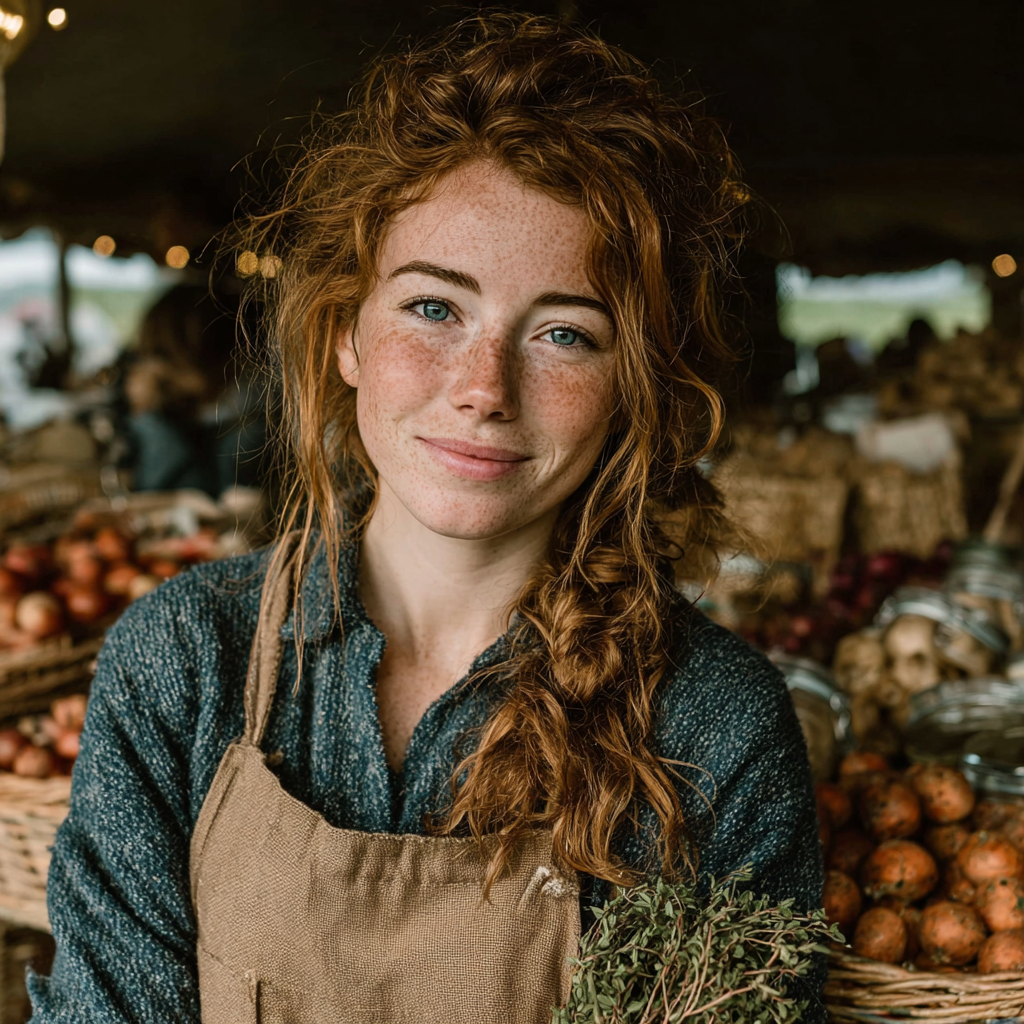
By Sophie Brennan
Irish food writer and historian based in Lisbon. Sophie combines her background in medieval history with a passion for contemporary gastronomy. She has written for Condé Nast Traveller and authored two cookbooks exploring Celtic and Iberian culinary traditions.