
Bonaire is the smallest of the ABC islands, and it made a choice early on that the others did not. While Aruba built high-rise resorts and Curaçao expanded its cruise port, Bonaire looked at its shoreline in 1979 and decided the reef was worth more than the real estate. The Bonaire National Marine Park became law that year, one of the first protected marine areas in the Caribbean. The result is a place where you drive to a yellow stone on the roadside, gear up, and walk into water clear enough to see coral at forty meters before you clear your ears.
The marine park covers the entire coastline from the high-tide mark to a depth of sixty meters. Every one of the eighty-six dive sites is marked with a yellow stone painted with the site name. No boats are required for most of them. You rent a pickup truck, load tanks in the bed, and drive. The orientation at your dive shop is mandatory — a twenty-minute briefing on buoyancy, coral contact rules, and the $25 annual park tag. Violate the rules and the shop loses its license. The enforcement is real, and the reef health shows it. Elkhorn coral, which has collapsed across much of the Caribbean, still grows in thickets at sites like Karpata and 1000 Steps. The latter is a misnomer — there are sixty-seven concrete steps down a cliff face to a narrow beach. The Hilma Hooker, a 240-foot freighter sunk in 1984, rests at a hundred feet near the capital, Kralendijk. The deck sits at sixty feet and is accessible to anyone comfortable with a deep descent. Visibility is routinely thirty to forty meters, and the water temperature hovers between twenty-seven and twenty-nine degrees Celsius year-round.
The island sits outside the hurricane belt. While the northern Caribbean closes dive shops and boards up windows from June through November, Bonaire operates without interruption. The trade winds blow a steady fifteen to twenty knots from the east, which keeps the heat tolerable and the mosquitoes away. It also makes Lac Bay, on the southeast coast, one of the best beginner windsurfing locations in the world. The bay is shallow and sheltered by a mangrove forest that acts as a natural breakwater. Jibe City, the windsurfing school on the beach, rents boards by the hour and runs lessons for first-timers. Kayak and stand-up paddleboard rentals are available from the same shack, and paddling through the mangrove channels is the best way to see the juvenile fish nursery without getting wet. The roots are thick with sergeant majors, parrotfish, and the occasional seahorse.
Washington Slagbaai National Park occupies the northern fifth of the island, 14,000 hectares of cactus forest, volcanic coastline, and scrubland. Entry is $25, and the park opens at 8:00 AM and closes at 5:00 PM. A standard sedan will not survive the northern loop. You need a four-wheel-drive vehicle with clearance, or you will turn back at the first steep descent. The park is not landscaped for tourists. There are no paved trails, no snack bars, and no water fountains. What there is: the largest concentration of native cacti in the Caribbean, including the towering kadushi and the yatu, which grows in twisted shapes that look like driftwood. Iguanas bask on the rocks, and the endemic Bonaire whiptail lizard darts across the road. Wild donkeys, descendants of animals brought by the Spanish in the sixteenth century, stand in the shade of acacia trees and watch the trucks pass. The park also holds the ruins of Malmok, a former plantation, and the lighthouse at Slagbaai Point, built in 1900. The view from the cliffs is across the Caribbean to the uninhabited island of Klein Bonaire, eight kilometers to the west.
Klein Bonaire is 800 hectares of scrub and beach, no roads, no buildings, no permanent water. It is a satellite of the marine park, and the snorkeling off No Name Beach is as good as the main island without the truck traffic. The water taxi from Kralendijk leaves from the pier near the cruise terminal and costs $20 to $25 round-trip. The last return is usually around 4:00 PM. Sea turtles nest on the southern beaches from May through October, and the hatchlings emerge at night in batches. If you are there in season, a red flashlight is mandatory — white light disorients the turtles. The island has no shade, no food, and no fresh water. Bring a hat, a gallon of water per person, and enough sunscreen for six hours of direct equatorial sun.
The Pekelmeer Flamingo Sanctuary sits on the southern end of the island, adjacent to the Cargill salt flats. The salt works have been operating since the 1960s, using solar evaporation to produce industrial salt. The flats are divided into ponds at different stages of concentration, and the algae turn the intermediate ponds a shade of pink that looks manufactured. The greater flamingos feed on brine shrimp in the shallows and nest in the protected zone. There are roughly ten thousand flamingos on the island at any given time, and the colony at Pekelmeer is one of four breeding grounds in the Americas. The sanctuary is not open to the public, but the birds are visible from the roadside along the southern coast. The Donkey Sanctuary, a few kilometers north, is open and charges $9. The facility houses over four hundred rescued animals. The donkeys were brought by the Spanish as pack animals and left to fend for themselves when the colonists moved on. The sanctuary, founded in 1993, is the most organized attempt to manage the population.
What to skip on Bonaire is straightforward. The cruise ship days — usually Tuesday and Wednesday — crowd Kralendijk's waterfront with day-trippers who have three hours and a coupon for a free rum punch. The shops on Kaya Grandi turn into a duty-free corridor. The dive sites closest to the cruise terminal, like the Town Pier, become congested with introductory divers kneeling on the bottom. If you are on the island during a cruise day, head north to Washington Slagbaai or south to the salt flats. The Town Pier dive is overrated anyway — the pilings are covered in sponge and fish, but the visibility is worse than the open coast, and the boat traffic is constant. Also skip the imported souvenir shops selling Aruba-made aloe vera products and Curaçao liqueur. Bonaire has its own small-batch salt, harvested from the flats and packaged in glass jars, and its own Papiamentu-language cookbooks. Buy those instead. The imported goods are the same as every other Caribbean port, and they cost more here because of the shipping premium.
Practical logistics are simple. Flamingo International Airport (BON) receives direct flights from Miami, Houston, Amsterdam, and several Caribbean hubs. The runway is short and the terminal is small — you walk across the tarmac to the arrivals hall. The currency is the US dollar. English is spoken at every dive shop and hotel, but the local language is Papiamentu, a creole of Dutch, Spanish, Portuguese, and African languages. A few phrases — "danki" for thank you, "bon bini" for welcome — go further than English in the non-tourist restaurants.
You need a vehicle. Public buses exist in theory but not in practice for tourists. The island is forty kilometers long and five to ten kilometers wide, and the dive sites are spread along the west coast from Kralendijk to the northern park boundary. A pickup truck with a tank rack rents for $50 to $70 per day. Standard cars are cheaper but useless for Washington Slagbaai and awkward for hauling scuba gear. Book in advance during high season — December through April — when the European dive clubs arrive in groups.
Accommodation divides into two categories. The full-service dive resorts — Buddy Dive, Captain Don's Habitat, Plaza Resort — run $150 to $250 per night and include a truck, unlimited tanks, and breakfast. The smaller apartments and guesthouses, many converted homes in the Rincon or Kralendijk neighborhoods, run $80 to $130 per night. The resorts have on-site compressor stations and rinse tanks. The apartments have kitchens, and buying groceries at Warehouse Bonaire or Chinese Market will cut your food costs by half. A dinner of fresh fish at a waterfront restaurant runs $20 to $30. A meal at a local snack is $8 to $12. The supermarket imports most produce from Miami and the Netherlands, so prices are high but selection is decent.
The best months are February through April, when the wind is consistent, the water is calmest, and the flamingo nesting is active. The September-to-November period is technically the rainy season, but Bonaire receives less than six hundred millimeters of rain annually, and a "storm" means thirty minutes of heavy drizzle. Every drop of drinking water is desalinated, and the brine waste is piped to the salt flats.
I have been to marine parks across the Pacific and the Indian Ocean, and most of them are managed as an afterthought, a line item in a ministry budget that gets cut when the economy slows. Bonaire is the exception. The marine park is funded by dive tags, not by government allocation, and the staff are trained biologists who patrol the reefs by boat and by drone. The island has no desalination plant large enough for a resort, no deep harbor for cruise megaships, and no political appetite to change either of those facts. The reef is not a selling point here. It is the foundation, and everything else is built around it. That is the rare part.
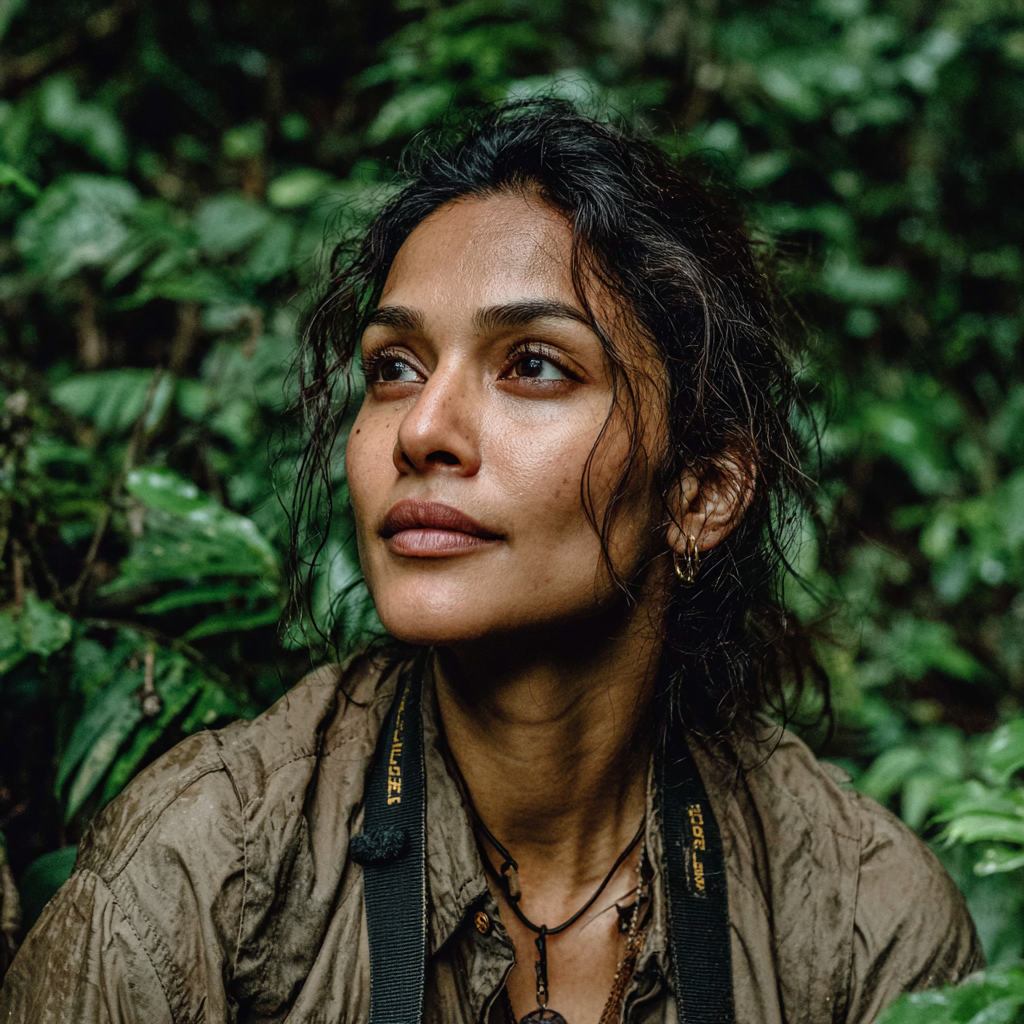
By Priya Sharma
Conservation biologist and sustainable tourism advocate. Priya works with eco-lodges and wildlife sanctuaries to promote ethical travel practices. She holds an MSc in Biodiversity Conservation and has spent years tracking endangered species across the Indian subcontinent.