
The Hague Culture & History Guide: Vermeer, Royal Palaces, and 800 Years of Dutch Power
I will confess something upfront: I used to skip The Hague. Amsterdam had the canals. Rotterdam had the architecture. Utrecht had the charm. Den Haag? It sounded like a place where civil servants ate sandwiches at their desks and talked about municipal budgets. I was wrong, and the city has not forgiven me for underestimating it.
The Hague is the Netherlands' administrative capital, the seat of government, the city where kings work and international judges sentence war criminals. It is also where Vermeer's "Girl with a Pearl Earring" lives in a 17th-century palace, where the North Sea crashes against a beach resort that predates Miami by a century, and where a hidden medieval prison gate once held the most powerful man in the Dutch Republic before his execution. This is a city of contradictions—of power and art, of stern suits and wild surf—and it rewards the curious traveler more than almost anywhere else in the Low Countries.
This guide is for the traveler who wants to understand why The Hague matters, not just check it off a list. I have walked these streets for weeks, eavesdropped on diplomats in hotel bars, gotten lost in the royal gardens, and argued with locals about whether Scheveningen is technically part of the city (it is, since 1928, but old-timers still argue). What follows is what I found.
The Soul of the City: Why The Hague Exists
Most Dutch cities were built for trade. The Hague was built for power.
In 1229, Count Floris IV bought land near a hunting lodge in the dunes. His son, Count Willem II, began building a castle in 1248 that became the Binnenhof—still the heart of Dutch government nearly 800 years later. The name itself comes from "des Graven hage," meaning the Count's enclosure. Unlike Amsterdam or Rotterdam, The Hague was never granted city rights. It remained a village that grew around the court, which shaped everything about its character.
This unusual birth meant The Hague became a center of administration and justice rather than commerce. During the Dutch Golden Age, it was the residence of the Stadtholders and the seat of the States-General. Wealthy families built mansions along the Lange Voorhout, creating the elegant streetscape you see today. After the Napoleonic era, King Willem I established The Hague as the official seat of government in 1815, and the city expanded into neighborhoods like Willemspark and Archipelbuurt to house diplomats, civil servants, and the wealthy.
The city's modern identity as the "City of Peace and Justice" began in 1899 when Tsar Nicholas II convened the first Hague Peace Conference. The Peace Palace opened in 1913, funded by Andrew Carnegie's $1.5 million donation. Today The Hague hosts over 200 international organizations, including the International Court of Justice, the International Criminal Court, Europol, and Eurojust.
What this means practically: you are walking through a place where history is not dead. The Binnenhof still functions. The Peace Palace still hears cases. The royal family still works from Noordeinde Palace. This is a living capital, not a museum piece.
Power and Architecture: The Binnenhof and Beyond
The Binnenhof: Where Dutch Democracy Breathes
The Binnenhof complex has been the center of Dutch political life for over 700 years. The Ridderzaal (Knights' Hall), built between 1280 and 1290, remains the ceremonial heart where the monarch opens parliament each September on Prinsjesdag. The complex grew organically over centuries, creating an architectural timeline from medieval Gothic to 19th-century neo-Renaissance.
What to see:
- Ridderzaal: Gothic ceremonial hall with stained glass windows depicting Dutch cities and a remarkable wooden roof structure. You cannot enter without a tour, but the exterior in the courtyard is freely accessible.
- Torentje (Little Tower): The Prime Minister's office, rebuilt in 1863. A symbol of Dutch government, but closed to the public.
- First and Second Chamber Buildings: Houses of Parliament, added in the 19th century. The First Chamber has 75 senators; the Second Chamber has 150 representatives.
Visiting practically:
- The courtyard is open daily, free of charge, from 6:00 to 20:00. You can walk through and view the architecture from outside at any time.
- Guided tours of the Ridderzaal and parliamentary chambers are available on select days in Dutch and English. They are free but must be booked well in advance through the official website. If you are visiting in September, Prinsjesdag (the third Tuesday) features the royal procession and the King's Speech from the Throne. It is spectacular but crowded—arrive before 08:00 for a decent viewing spot along the route.
Noordeinde Palace: The King's Working Life
Noordeinde Palace, at Noordeinde 68, is the official working palace of the monarch. Originally a medieval farmhouse, the royal family acquired it in 1533, and the current facade dates from the 17th century. The building is not open to the public—it is a functioning workplace—but the palace gardens open during summer months, and the changing of the guard happens on an irregular schedule that the Royal Household website publishes a few days ahead.
The palace sits at the end of Noordeinde street, a retail strip where you can buy a €3.50 broodje kroket from a hole-in-the-wall and then watch a Mercedes carrying an ambassador glide past. It is a strange, distinctly Haagse juxtaposition.
Huis ten Bosch: The Royal Residence
Huis ten Bosch, at Haagse Bos, is King Willem-Alexander's official residence. Built between 1645 and 1652 for Princess Amalia van Solms by architects Pieter Post and Jacob van Campen, it is Dutch Classicism at its most refined. The palace itself is closed to the public, but the formal gardens open on select days in summer. Check the Royal Household website for the current schedule—openings are unpredictable and announced only weeks in advance.
The Museums: Where the Real Treasures Live
Mauritshuis: The Pearl and the Golden Age
The Mauritshuis is why many people come to The Hague, and it is worth the trip alone. Housed in a Dutch Classicist palace built between 1636 and 1644 for Count Johan Maurits, it has been the Royal Picture Gallery since 1822. The collection is small—around 250 works—but the quality is extraordinary.
What you will see:
- Vermeer's "Girl with a Pearl Earring" (c. 1665), the so-called "Dutch Mona Lisa." It is smaller than you expect, roughly the size of a sheet of paper, and the background is not black but a very dark teal that shifts under different light. Stand in front of it for five minutes. The security guard will not mind.
- Rembrandt's "The Anatomy Lesson of Dr. Nicolaes Tulp" (1632), his first major commission in Amsterdam, depicting the Amsterdam surgeons' guild.
- Carel Fabritius's "The Goldfinch" (1654), painted the year before the artist died in the Delft gunpowder explosion.
- Paulus Potter's "The Bull" (1647), a life-size painting of a cow that was revolutionary for its time.
Practical details:
- Address: Plein 29, 2511 CS
- Hours: Tuesday to Sunday 10:00-18:00; Monday 13:00-18:00
- Admission: €21 (free for visitors under 19)
- Prince William V Gallery (a separate building five minutes away): €8.50, or combi ticket €24
- €4 admission for the last two hours (16:00-18:00) for Netherlands residents only; tourists pay full price
- The multimedia tour is included and available in English, Dutch, German, French, Spanish, Italian, Japanese, Mandarin, Russian, and Brazilian Portuguese. Bring your own earbuds.
- Book time slots in advance online. There is no end time to your slot—once inside, stay as long as you like.
Kunstmuseum: Mondrian's Universe
The Kunstmuseum, at Stadhouderslaan 41, is one of Europe's largest art museums and the international home of Piet Mondrian. The building itself, designed by Hendrik Petrus Berlage between 1919 and 1935, is a masterpiece of brick expressionism with geometric forms and extraordinary natural light integration.
Collection highlights:
- Over 300 Mondrian works, including his final unfinished masterpiece "Victory Boogie Woogie" (1942-1944), which the museum acquired in 1998 for $11.8 million after a public fundraising campaign. Seeing the progression from his early naturalistic work to pure abstraction is like watching a man learn to see.
- De Stijl movement: Gerrit Rietveld, Theo van Doesburg
- The Hague School: Mesdag, Israëls, Weissenbruch
- Delftware collection and applied arts
Practical details:
- Address: Stadhouderslaan 41
- Hours: Tuesday to Sunday 10:00-17:00; closed Monday
- Admission: €20 (free for under 19, €9 for 19-25 and students)
- Museumkaart accepted; Rembrandtkaart not accepted
- Combi ticket with Fotomuseum/KM21: €32
Escher in Het Paleis: Reality Turned Inside Out
This is my favorite museum in The Hague, and I will fight anyone who disagrees. The museum occupies Lange Voorhout 74, a palace built in 1764 that later became Queen Emma's residence and the birthplace of Queen Juliana in 1909. The copper staircase with Italian marble is entirely ornamental—the real stairs were hidden, which feels appropriately Escher.
The collection features over 150 prints, including "Day and Night" (1938), "Relativity" (1953), and "Ascending and Descending" (1960). The top floor is transformed into optical illusion rooms where you can photograph yourself climbing impossible staircases. There is also a virtual reality experience that lets you step inside his impossible architecture.
Practical details:
- Address: Lange Voorhout 74
- Hours: Tuesday to Sunday 11:00-17:00 (last entry 16:25)
- Admission: €14.50 (€8 for ages 7-12, €11 for 13-17, €13.50 students, free under 6)
- Museumkaart is NOT accepted here
- Combi ticket with Kunstmuseum: €30 (available only at the box office)
- Audio guide included in admission
- Photography allowed; no tripods or selfie sticks
Panorama Mesdag: The 19th-Century Virtual Reality
Here is an attraction many visitors miss, and it baffles me. Panorama Mesdag, at Zeestraat 65, is a cylindrical painting 14 meters high and 120 meters in circumference, depicting the Scheveningen coastline as it appeared in 1881. Painted by Hendrik Willem Mesdag and several assistants, it was completed in 1881 and is one of the oldest surviving panoramas in the world.
You view it from a central platform surrounded by sand dunes and real maritime objects. The skylight above means the lighting changes with the actual weather outside. On a cloudy day, the painted sea looks stormy. On a sunny afternoon, the sand dunes glow. It is 19th-century immersive art, and it works better than any VR headset I have tried.
Practical details:
- Address: Zeestraat 65
- Hours: Monday-Saturday 10:00-17:00; Sunday and public holidays 11:00-17:00
- Admission: €17.50 (free for ages 0-18, €12 for students with CJP)
- Museumkaart, Netherlands Museum Pass, and ICOM accepted
- Rembrandtkaart NOT accepted
- Allow 45 minutes. The audio guide is worth it.
Museum de Gevangenpoort: The Dark Side of Power
The medieval prison gate at Buitenhof 35 dates from the 13th century and was used until 1828. This is where Johan van Oldenbarnevelt, the most powerful man in the Dutch Republic, was imprisoned before his execution in 1619 on charges of treason—a politically motivated trial orchestrated by Prince Maurice. The museum displays torture devices, prison cells, and the stories of famous prisoners. It is grim, fascinating, and essential context for understanding Dutch political history.
Practical details:
- Address: Buitenhof 35
- Hours: Tuesday-Friday 10:00-17:00; Saturday-Sunday 12:00-17:00
- Admission: €10
The Peace Palace: Carnegie Built This
The Peace Palace, at Carnegieplein 2, is The Hague's most significant contribution to world peace—and one of its most beautiful buildings. Andrew Carnegie donated $1.5 million for its construction, completed in 1913. Designed by French architect Louis Cordonnier, it combines neo-Renaissance and neo-Baroque styles. The interior features gifts from participating nations: Italian marble, Belgian stained glass, Japanese silk, and a staircase that is a scaled-down replica of the one in the Paris Opera House.
The building houses the International Court of Justice (the UN's principal judicial organ), the Permanent Court of Arbitration, the Hague Academy of International Law, and the Peace Palace Library with over 200,000 volumes on international law.
Visiting:
- The Visitor Centre is free and open to the public. It has interactive exhibits on the history of international law, an audio tour, and a gift shop with genuinely interesting international items.
- Guided interior tours are available on weekends from May to October, subject to the courts' work schedule. They cost €17.50 per person (children under 8 free, max two per adult). Tours last 50-60 minutes in Dutch or English, maximum 20 people. You must book through the Peace Palace website well in advance—spots disappear fast.
- Important restrictions: You need a valid original passport or EU ID card. Copies and photos are rejected. All participants pass through metal detection. Bags, cameras, and phones must be stored in lockers. Mobility scooters are not admitted. Arrive 15 minutes early.
Neighborhoods with Character
Lange Voorhout: Diplomatic Elegance
One of Europe's most beautiful avenues, lined with 17th and 18th-century mansions that now house foreign embassies. Number 74 is the Escher Museum. Number 102 is the Indonesian Embassy in a former mansion. In summer, the outdoor sculpture exhibition brings contemporary art to the tree-lined median. Walk this street at dusk when the linden trees are in bloom and the embassy flags flutter in the North Sea breeze.
Willemspark: Old Money and Ambassadors
This 19th-century neighborhood was built for wealthy residents and is now the embassy quarter. Large villas in eclectic styles—neo-Renaissance, Art Nouveau, Dutch Revival—line quiet streets. The atmosphere is hushed and moneyed. You will see chauffeured cars and private security, but also some of the best residential architecture in the country.
Zeeheldenkwartier: Where Locals Actually Live
A 19th-century workers' housing district that has gentrified into the city's most lively neighborhood. The grid streets hold independent cafes, craft breweries, boutiques, and some of the best affordable restaurants. This is where you go when you want to see how actual Hagenaars live, not how diplomats do. Try a coffee at Koffiebar Ooff at Prins Hendrikstraat 83, or walk down Prins Hendrikstraat for the best concentration of independent shops.
Scheveningen: The Sea Behind the City
Technically part of The Hague since 1928, Scheveningen is a beach resort with a working harbor, a 19th-century pier, and a North Sea surf scene. The fishing harbor still operates—arrive early morning to see the catch come in and buy fresh haring from the boats. The Kurhaus hotel, opened in 1885, dominates the boulevard. Behind it, the port area has been reinvented with restaurants and a modern marina. In summer, the beach bars operate until midnight. In winter, the wind howls and a handful of surfers in wetsuits paddle out into the grey waves.
The name itself is a shibboleth. The "sch" sound at the beginning is guttural, almost impossible for non-Dutch speakers. Locals use it to identify foreigners. Try it. They will appreciate the effort, even when you fail.
Churches and Burial Grounds of the Powerful
Nieuwe Kerk: The Royal Tombs
At Spui, the Nieuwe Kerk (built 1649-1656) is the burial church of the House of Orange-Nassau since 1584. William the Silent, assassinated in Delft in 1584, rests here, along with most Dutch monarchs including Queen Juliana (2004) and Prince Bernhard (2004). The tombs are in the crypt, accessible during opening hours. The church itself is classical Dutch architecture, austere and dignified.
- Hours: Tuesday-Saturday 12:00-16:00
- Admission: Free (donations welcome)
Grote Kerk: The Tower That Watches
The Great Church at Rond de Grote Kerk was built between 1390 and 1540 in Gothic style. The tower, at 142 meters, is the tallest in the city and a landmark visible for miles. The church became Protestant in 1572 and contains historic graves, a monumental pipe organ, and a viewing platform open in summer months only. Check the website for tower climbing dates—it is worth the €5 and the 288 steps.
Where to Refuel: Quick Bites and Coffee Between the Sights
Culture is hungry work. Here are the places I actually ate and drank during my weeks in The Hague, all within walking distance of the major sights:
Koffie Academie (Wagenstraat 96): The best specialty coffee in the city center, roasted in-house. A flat white costs €3.80. Open Monday-Friday 08:00-17:00, Saturday 09:00-17:00, Sunday 10:00-17:00. Five minutes from the Binnenhof.
Het Bakkertje (Frederik Hendriklaan 81): A neighborhood bakery in the Zeeheldenkwartier making traditional Haagse gebakjes. Try the Haagse bluf, a meringue-topped pudding named after the city's supposed arrogance. €3.50. Open Tuesday-Saturday 08:00-17:00.
Pannenkoekenhuis Den Haag (Frederik Hendriklaan 28): Proper Dutch pancakes, savory and sweet, in a brown café atmosphere. A bacon-and-cheese pancake costs €12. Open daily 12:00-21:00. This is where locals go—not the tourist traps near the Binnenhof.
Broodje Bert (Korte Poten 20): A hole-in-the-wall sandwich shop near the Binnenhof where civil servants queue at lunch for €4.50 broodjes. The kroket sandwich is the classic. Open Monday-Friday 08:00-16:00. Cash only.
Van Kleef (Lange Beestenmarkt 109): A 19th-century distillery and tasting room selling jenever and liqueurs made on-site. The seasonal walnut and honey flavors are exceptional. Tastings from €8. Open Tuesday-Saturday 12:00-18:00, Sunday 13:00-17:00.
What to Skip
The Hague is compact and genuinely interesting, but a few traps exist:
Madurodam: A miniature park showing the Netherlands in 1:25 scale. It costs €19.50 and is designed for children under 10. If you are an adult without kids, skip it. The real Netherlands is more interesting than the plastic one.
Scheveningen Pier restaurants: The pier itself is a pleasant walk, but the restaurants at the end charge Amsterdam prices for food that would not satisfy in a train station. Eat in the harbor instead, where the fishing boats dock.
Hotel breakfasts unless included: Dutch hotel breakfasts are often €15-20 for bread, cheese, and mediocre coffee. Walk to a local bakery like Bakkerij De Broodzaak on Stationsweg or eat at Hema (yes, the department store) where a full breakfast costs €6-8.
The hop-on-hop-off bus: At €22, this is redundant in a city where every major attraction is within 20 minutes' walk or a €2.50 tram ride. The Hague is flat, compact, and designed for walking.
Tourist pancake houses near the Binnenhof: These exist solely to sell overpriced pannenkoeken to visitors who do not know better. A proper Dutch pancake should cost €8-12 and come from a neighborhood place like Pannenkoekenhuis Den Haag at Frederik Hendriklaan 28, not a tourist trap within sight of Parliament.
The "Free" walking tours: These are not free. They are tip-based tours where the guide expects €10-15 per person. The quality varies wildly. Buy a good guidebook or just walk. The city center is small enough that you will not get lost, and the plaques outside major buildings explain more than most tour guides remember.
The Statenkwartier antique shops on a Monday: Many of the best shops on Frederik Hendriklaan and nearby streets are closed on Mondays. If you are hunting for Delftware or vintage books, come Tuesday through Saturday.
When to Go and How to Move
Best months: April-May and September-October. Spring brings the linden blossoms on Lange Voorhout and the Japanese Garden at Clingendael Estate opening (free, but extremely popular—arrive before 09:00). September offers Prinsjesdag and often the last warm days for Scheveningen beach. Summer is fine but crowded; July and August see the city full of interns at international organizations and European tourists.
Winter: The Hague does not close down, but the light is flat and the North Sea wind cuts through every coat you own. Museums are quieter, and the Christmas market at Lange Voorhout is genuinely atmospheric. If you visit in January, the Scheveningen New Year's Dive (1 January, 12:00) sees thousands of Dutch people run into the freezing North Sea. It is free to watch, and the hot chocolate afterward is excellent.
Getting around: The Hague is built for walking. The Binnenhof to Mauritshuis is five minutes. Mauritshuis to Escher is ten. The Peace Palace is a 20-minute walk or a 10-minute tram ride. For longer distances, the HTM tram network is efficient. A single ticket costs €2.50-4 depending on zone. Buy an OV-chipkaart at any station or pay contactless on board.
From the airports: Rotterdam The Hague Airport (RTM) is 25 minutes by bus. Amsterdam Schiphol (AMS) is 30 minutes by direct train to Den Haag Centraal. If your hotel is near Hollands Spoor station, take the train there instead—it is closer to many neighborhoods than Centraal.
Day trips: Delft is 12 minutes by train (€6 return). Leiden is 20 minutes (€8 return). Rotterdam is 20 minutes (€8 return). Each is worth a full day, but Delft pairs especially well with The Hague—visit the Vermeer locations and the Delft Blue factory at Rotterdamseweg 196, where you can watch potters work for free.
The Museumkaart Question
The Netherlands Museum Pass (Museumkaart) costs €75 for adults and €39 for visitors under 18. It grants free entry to 400+ museums nationwide. In The Hague, it works at the Mauritshuis, Kunstmuseum, and Panorama Mesdag. It does NOT work at Escher in Het Paleis.
Do the math: Mauritshuis (€21) + Kunstmuseum (€20) + Panorama Mesdag (€17.50) = €58.50. Add any Amsterdam or Delft museums and you are well past break-even. If you are visiting the Netherlands for more than three days and plan to see multiple museums, buy the card online or at any participating museum.
The Stories They Don't Put in Guidebooks
The Haagse Bos legend: In 1574, during the Spanish siege of Leiden, Dutch resistance messengers used the Haagse Bos forest to smuggle information. The forest was never fully cut down because of a medieval charter that protected it—a decision that saved lives and now gives the city its largest park.
The Binnenhof courtyard execution: In 1672, the brothers Johan and Cornelis de Witt—Republican leaders who opposed the power of the House of Orange—were lynched by a mob in the Binnenhof courtyard. Cornelis was already imprisoned in the Gevangenpoort. Johan had come to help him escape. The mob killed them both, removed body parts, and ate their roasted livers. A plaque near the Gevangenpoort marks the spot. Dutch politics has always been intense.
The Mauritshuis name: Count Johan Maurits van Nassau-Siegen was not just an aristocrat. He was a colonial administrator in Dutch Brazil who owned slaves and presided over a brutal regime. The museum has acknowledged this history in recent years, adding context to the palace's origins. The art inside transcends its owner's sins, but the building itself carries a complicated legacy.
The Peace Palace's stolen staircase: The central staircase is a gift from The Hague itself, modeled on the Paris Opera. What the guides do not always mention is that the original staircase in the Opera was itself controversial—designed by Charles Garnier, it was criticized as wastefully grand. The Peace Palace version is smaller but equally dramatic.
The Scheveningen pier collapse: The original pier, built in 1901, was destroyed by German troops in 1943. The current structure dates from 1961 and has a complicated ownership history involving bankruptcies, a fire in 2011, and a €40 million renovation. The bungee jump and zip line that now operate from it are popular with teenagers and terrifying to watch.
Author's Note
I am Finn O'Sullivan, an Irish storyteller who hunts for the narratives that do not make the guidebooks—the pub legends, the neighborhood feuds, the moments when power and ordinary life collide. I spent three weeks in The Hague tracing the footsteps of assassinated politicians, eating broodjes in diplomatic neighborhoods, and arguing with a tram driver about whether Scheveningen counts as "real" Den Haag. (It does. He was wrong. I was also wrong about the pronunciation. We are even.)
The Hague surprised me. It is not charming in the way Bruges is charming. It is not cool in the way Berlin is cool. It is serious, layered, occasionally grim, and full of stories that matter to the world. The Girl with the Pearl Earring watches you from her dark background. The International Court of Justice hears cases that shape human rights law. The North Sea crashes against a beach where Dutch families have vacationed for 150 years. It is a strange, powerful, unforgettable place. Do not skip it.
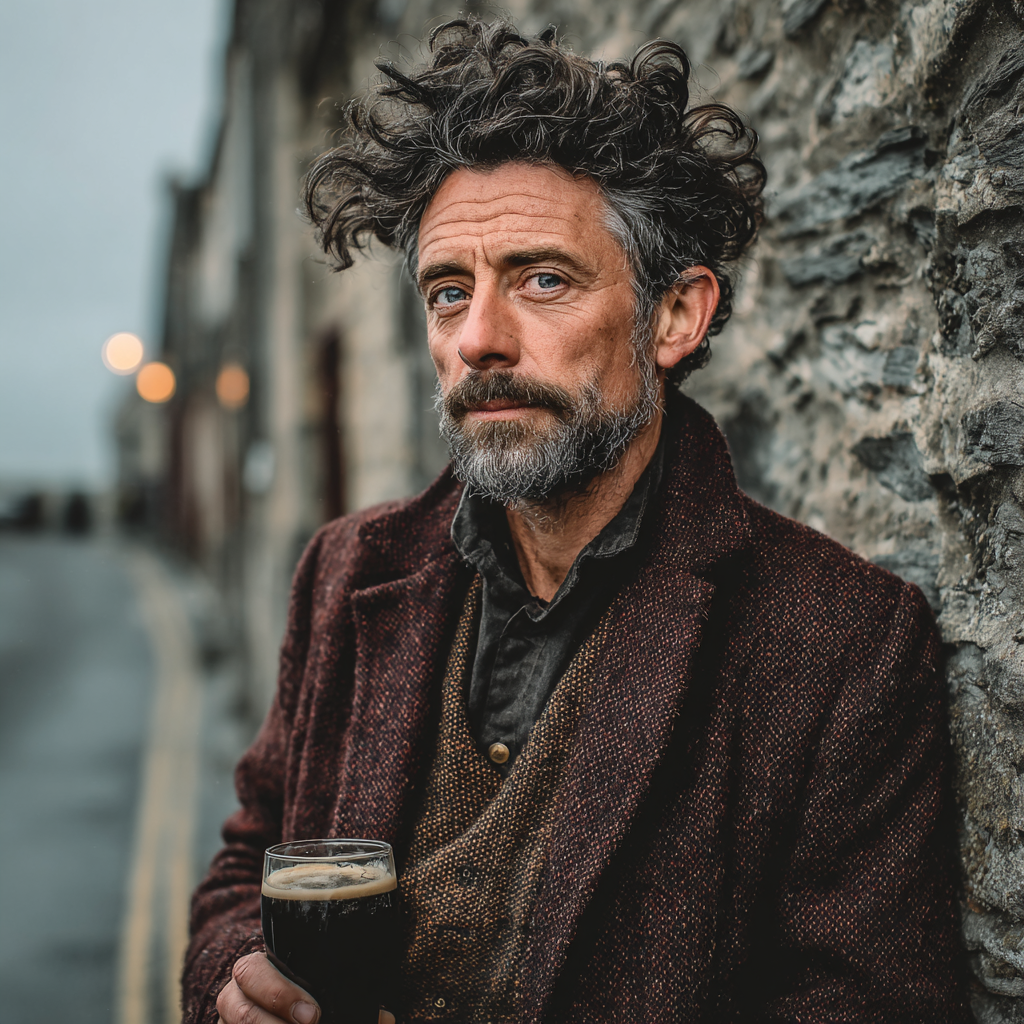
By Finn O'Sullivan
Irish storyteller and folklorist. Finn hunts for the narratives that do not make guidebooks—the pub legends, the family feuds, the neighborhood heroes. He believes every street corner has a story if you know who to ask.