
Chefchaouen Solo: Where Morocco's Blue Walls Meet Rif Mountain Silence
Author: Maya Johnson | Reading Time: 12 minutes | Word Count: 3,142
I arrived in Chefchaouen with a backpack, a broken phone charger, and the kind of exhaustion that only comes from thirty-six hours of solo travel. The bus from Fez had dropped me at a dusty lot on the edge of town at dusk, and I stood there for a moment, wondering if I'd made a terrible mistake. Then I walked through Bab el Ain gate, turned a corner, and the blue swallowed me whole. Not gradually — suddenly. Doorways, staircases, entire alleyways washed in every shade from sky to sapphire. A cat sat on a cobalt step and watched me like I was the one who didn't belong. I laughed out loud, alone in the street, and knew I'd found something worth the journey.
That was five days. By the end, Chefchaouen had become my answer to the question every solo traveler gets: "Where should I go first in Morocco?" Not Marrakech, with its sensory assault and persistent touts. Not Fez, with its maze-like medina that demands a guide. Chefchaouen. Small enough to navigate without anxiety, safe enough to wander at night, complex enough that you won't get bored. Here's what actually matters if you're coming alone — from someone who arrived exhausted and left planning her return.
Getting In: The Reality of Mountain Buses
From Fez: CTM buses depart from the station outside the medina (Gare Routière, Avenue des Almohades) twice daily — 8:00 AM and 3:30 PM. The journey takes 4.5 hours through the Rif Mountains, and the road is winding enough to test your stomach. Book online at ctm.ma two days ahead; seats sell out, especially in spring and fall. Cost: 85 MAD ($8.50). Allow 30 minutes to reach the station from Fez's old city by petit taxi (15-20 MAD).
From Tangier: More frequent departures from the CTM station on Route de Rabat, about 2.5 hours. This is the easier route if you're arriving from Spain via ferry. Buses run roughly every two hours from 7:00 AM to 6:00 PM. Cost: 65 MAD ($6.50).
From Tetouan: The closest major city, about 1.5 hours by grand taxi (shared). Departures when full from the grand taxi stand near the medina — 50 MAD per seat, 200 MAD to buy the whole taxi. Faster and more flexible than the bus.
The Arrival: All transport drops you at the station on Avenue Hassan II, a fifteen-minute walk uphill from the medina gates. The path is steep and uneven. If you're arriving with heavy luggage, pay a porter (20-30 MAD) at the station entrance to carry your bag to your riad. Don't be a hero. I tried it once and arrived at my accommodation drenched in sweat and regret.
Where to Stay: Three Tiers of Solo Comfort
Lina Ryad & Spa — Place El Haouta, near the kasbah | +212 5399-86762 | linaryad.com This is where I stayed, and it's where I'd send any solo traveler, especially women. A restored riad with a rooftop terrace that overlooks the blue-tiled rooftops and the mountains beyond. The staff is predominantly female, they understand the concerns of solo women travelers, and they organize group dinners that make meeting people effortless. Dorms from 120 MAD ($12), private rooms from 350 MAD ($35). The suites with fireplaces (500 MAD/$50) are worth the splurge in December through February, when mountain evenings drop below 10°C. Breakfast included: fresh bread, local honey, olive oil, and mint tea served on the terrace.
Dar Chourouk — Rue Sidi Abdelhamid, near Bab el Souk | +212 5399-87432 A family-run guesthouse operated by a mother-daughter team who treat guests like visiting cousins. Quieter location on the medina's edge, which means fewer stairs to climb with luggage. The terrace breakfast is legendary — homemade jams, goat cheese from the family's own herd, and bread baked that morning. Dorms 90 MAD ($9), private doubles 220 MAD ($22). No website; book via WhatsApp or walk in. They only have four rooms, so reserve ahead in peak season.
Casa Perleta — Rue El Kharrazin, medina center | +212 5399-86100 | casaperleta.com The upscale option for solo travelers who want privacy without isolation. Twelve rooms in a restored Andalusian house, each with different blue-tile details. The courtyard has a small fountain and orange trees; the rooftop has panoramic mountain views. Singles from 400 MAD ($40), including breakfast and afternoon tea. The owner, a Spanish-Moroccan couple, speaks English, French, Spanish, and Arabic, and they maintain a guest book with recommendations that goes back ten years.
Pro tip: Avoid booking places deep in the medina's upper reaches if you're arriving with heavy bags. The streets are steep, uneven, and often slick from fountain water. A porter costs 20-30 MAD and saves your sanity.
The Blue Medina: What You're Actually Looking At
The blue started in the 1471 when the city was founded by Moorish exiles from Spain, but the tradition intensified in the 1930s when Jewish refugees arrived, bringing the custom of painting buildings blue to mirror the sky and remember the divine. The practice became universal. Today, the city provides pigment to residents annually, and you'll see repainting happening every spring — usually March, when the rains stop and the temperature is right for outdoor work.
The Most Photographed Corners: The streets that fill Instagram cluster near the Ras El Ma river on the eastern edge of the medina. The iconic staircase with potted plants (now widely known as the "Instagram stairs") is on Rue Sidi Abdelhamid, near the bridge. Go before 8:00 AM if you want photos without a queue of tourists. The light is better then anyway — soft mountain light, not the harsh midday sun that turns the blue walls white and blows out your camera's highlights.
A Route That Actually Works: Start at Plaza Uta el-Hammam, the central square with the kasbah and the octagonal-minaret mosque. Walk east toward the river, following the sound of water. The path narrows, the blue intensifies from powder to indigo, and in about twenty minutes you'll hit the trailhead for the Spanish Mosque. This loop gives you the classic blue-street experience without the disorientation that sends first-timers in circles for hours. The mosque's minaret is visible from most of the medina — use it as your north star when lost. When truly disoriented, remember: downhill leads to gates, uphill leads deeper in.
The Unseen Corners: Walk west from the main square toward Bab el Souk. The blue here is older, more weathered, less maintained for tourists. Laundry hangs between buildings. Children play in doorways. Cats — dozens of them, the city's unofficial mascots — sleep in patches of sun. This is where the medina feels like a neighborhood rather than a stage set. I spent my best afternoon here, sitting on a step with a 5 MAD bag of roasted peanuts, watching an old man repaint his door frame with a brush the size of his thumb.
The Spanish Mosque: Sunset as a Social Event
The trail to the Spanish Mosque (Mosquée Bouzaâfar) begins at the eastern edge of the medina, past the Ras El Ma waterfall. It takes forty-five minutes uphill at a moderate pace. The path is obvious — a dirt track worn by centuries of feet, now used by locals and tourists daily. Go ninety minutes before sunset to secure a spot on the low wall where everyone congregates. Bring a jacket even in summer; the temperature drops fast when the sun goes behind the Rif Mountains, and the wind at that elevation cuts through thin layers.
The view is the reason you make the climb: the entire medina spread below like a blue mosaic, the valley green with spring crops or golden with summer wheat, the mountains darkening to purple as the light fades. It's crowded, yes. Half the town seems to gather there on clear evenings. But it's also the moment when you understand why people travel to this isolated town — the payoff for every winding bus hour and every uphill stair.
Solo traveler note: You'll meet other travelers here. It's natural to start conversations while waiting for sunset. I've made dinner companions, trail partners, and one genuine friend this way. The shared experience of watching that blue city fade into darkness breaks the ice without effort. Bring a headlamp for the walk down; the trail has no lighting, and phone flashlights drain batteries fast in the mountain cold.
Food: Where to Eat Alone Without Feeling It
Eating solo in Morocco is straightforward. No one stares. No one pities you. Sit where you want, order what you want. The culture is built around communal meals, but solo diners are common enough that no one notices.
Restaurant Beldi Bab Ssour — Rue Sidi Abdelhamid, near Bab el Ain | Open 12:00-10:00 PM daily | +212 5399-87543 Just outside the Bab el Ain gate, this is where locals bring their families, which is the only recommendation that matters. Tagines cooked over charcoal in clay pots, served on low couches around wooden tables. The lamb with prunes and almonds (75 MAD/$7.50) is the signature — sweet, savory, falling apart. The vegetable tagine with seasonal produce (45 MAD/$4.50) is what I ordered when my budget was tight, and it never disappointed. A full meal with bread and mint tea runs 60-80 MAD ($6-8). No alcohol served; this is a family place.
Cafe Clock — Rue Targhi, near the kasbah | Open 8:00 AM-10:00 PM daily | +212 5399-87622 Yes, it's in every guidebook. Also yes, the camel burger (70 MAD/$7) is genuinely good — lean meat, well-spiced, served on a proper bun with harissa mayo. The terrace has reliable WiFi, which matters more than it should when you're trying to message home or check bus schedules. The staff speaks English, the menu is translated, and they don't mind if you linger for two hours with a single pot of mint tea (15 MAD/$1.50). A useful midday break, even if it lacks the authenticity of the local spots.
Casa Aladdin — Plaza Uta el-Hammam | Open 11:00 AM-11:00 PM daily | +212 5399-86321 Touristy, expensive, and the rooftop terrace view is worth it exactly once. Go for mint tea (15 MAD) at sunset, not dinner. The food is competent but overpriced (tagines 100-120 MAD). The terrace does have the best square-level view of the kasbah walls turning gold in the evening light. Make it your one splurge afternoon, then eat elsewhere for dinner.
Local Bakery — Rue El Kharrazin (no sign, look for the wood-fired oven scent) | Open 6:00 AM-8:00 PM The unnamed bakery near the center bakes khobz bread in a communal oven daily. Three MAD buys a round loaf still warm from the fire. Pair it with olives and goat cheese from the market near Bab el Souk (20 MAD total) for a picnic that costs less than a coffee in Europe. This became my daily ritual — breakfast bread, a hunk of cheese, and a rooftop view before the tourists filled the streets.
Self-catering: The market near Bab el Souk (open mornings, roughly 7:00 AM-1:00 PM) sells fresh bread, olives, local goat cheese, and seasonal vegetables. All riads have kitchens guests can use. Breakfast is included everywhere — usually bread, jam, olive oil, and mint tea. If you want to cook dinner, buy a chicken tagine base from the spice vendor near the market entrance (10 MAD for a blend of cumin, ginger, saffron, and preserved lemon) and add your own protein.
Beyond the Blue: What Else Exists Here
The Kasbah — Plaza Uta el-Hammam | Open 9:00 AM-5:00 PM | Entry: 60 MAD ($6) A small museum of local history, an Andalusian garden with citrus trees and a central fountain, and a tower with 360-degree views. The tower climb is worth the entry fee alone — you see how the medina fits into the mountain bowl, how the blue walls follow the natural contours of the hillside. The museum has a modest collection of regional textiles and firearms; skip it if you're short on time. Allow one hour total, or two if you bring a book and read in the garden.
Akchour Waterfalls — Day trip, 45 minutes by grand taxi | Shared taxi: 150 MAD per person round-trip The two-hour hike to the main falls follows a river valley through cedar forest, ending at a natural pool deep enough for jumping (check depth first — it varies with rainfall). The trail passes through cannabis plantations; ignore them, keep walking, don't photograph. The trail can be unclear after rain; go with others if possible. Solo hiking is fine but joining a group at the trailhead is smarter. The water is cold even in summer — bone-cold, breath-stealing cold — but the jump is worth it. Bring a packed lunch; the only food at the trailhead is overpriced snacks. Arrange your return taxi before you start hiking; drivers will wait for 200 MAD total, or you can negotiate a pickup time.
Talassemtane National Park — Full day, guide required for remote trails | Guide: 400-500 MAD arranged through your accommodation Longer hikes available, including the God's Bridge (Pont de Dieu) rock formation — a natural stone arch spanning a river. The full trail takes six to eight hours and requires a guide for navigation. Your riad can arrange this; most have relationships with local guides who speak enough French or English to communicate. Bring more water than you think you need; mountain streams look clean but carry bacteria. The park entrance is 30 MAD ($3).
Hammam Experience — Public hammam near Bab el Ain | Women-only: 10:00 AM-4:00 PM, mixed: 5:00-9:00 PM | Entry: 20 MAD, scrub: 50 MAD, massage: 80 MAD The public bathhouse is intimidating the first time. You sit on tiled floors in a steam-filled room, buckets of hot and cold water, a woman in a corner scrubs you with a rough mitt until your skin is raw and new. Bring your own towel and soap, or buy a set there (30 MAD). The scrub is not gentle — it's exfoliation as punishment — but you'll emerge cleaner than you've ever been, and the ritual is authentically local. Women should go during women-only hours; men can use mixed hours. Don't go alone for your first time if you're nervous — ask at your riad if anyone else wants to join.
The Cannabis Question: What Solo Travelers Need to Know
Chefchaouen sits in the heart of the Rif Mountains, Morocco's primary cannabis-growing region. You'll smell it in the streets, see it drying on rooftops in surrounding villages, and be offered "kif" or hashish regularly. For solo travelers, especially women: a firm "la, shukran" (no, thanks) and continued walking is sufficient. The dealers are persistent but not threatening — they want to sell, not cause problems that attract police attention.
Buying is illegal, and tourists do get arrested, especially at bus station checkpoints leaving town. Don't carry it. Don't transport it for anyone. Don't accept packages from strangers. The penalties are real — fines, detention, and in serious cases, prison sentences. The casual atmosphere around cannabis in Chefchaouen is misleading; the law applies to tourists exactly as it applies to locals. I've seen solo travelers get into trouble because they assumed the relaxed vibe meant relaxed enforcement. It doesn't.
Practical Realities: Money, Safety, and Connectivity
Money: ATMs exist at the main square (BMCE Bank, near the mosque) and near Bab el Ain (Banque Populaire). Many riads and restaurants take cards, but cash dominates in the medina. Dirhams are a closed currency — you can't buy them outside Morocco. Bring euros or dollars to exchange at the bank near Plaza Uta el-Hammam (open 8:15 AM-3:45 PM, closed weekends). The exchange rate is fixed by the government, so there's no point shopping around. Current rate: roughly 10 MAD = $1 USD.
For women: Chefchaouen is more conservative than Marrakech but less intense than rural villages. Cover shoulders and knees in the medina — not because you'll be unsafe, but because you'll get less hassle. A loose scarf is useful for covering hair when you want to blend in more. The hassle here is mild compared to Fez or Marrakech. Men may call out greetings or compliments. Ignore and keep walking. Serious harassment is rare; I've felt safer here alone than in many European cities.
At night: The main square and principal streets are safe until late. Avoid the unlit alleys on the medina's edges after 10:00 PM — not dangerous, just poorly lit and confusing. The mountain silence can feel isolating after dark. If you're returning from a restaurant, stick to the main routes even if they're longer. Your phone flashlight is your friend.
WiFi and Phones: Available at all cafes and accommodations. Patchy in the medina's deeper alleys. Consider a local SIM from Maroc Telecom (the blue shop near the main square, open 9:00 AM-6:00 PM). SIM card: 20 MAD, 5GB data: 50 MAD, valid one month. You'll need your passport to register. This gives you maps, translation, and the ability to message your accommodation if you're lost — which you will be, at least once.
Language: Arabic and Berber are primary; French is widely spoken. English is less common but growing in tourist-facing businesses. A few phrases go a long way: "salaam alaikum" (hello), "shukran" (thank you), "la" (no), "besh hal?" (how much?). The effort is appreciated even when you butcher the pronunciation.
Shopping: Rugs, Blankets, and Babouches Without the Theater
The medina's shops sell the same goods you'll find in Marrakech — woven blankets, leather goods, painted ceramics — but with half the aggression. Prices start lower, bargaining is gentler, and shop owners are less likely to follow you down the street if you walk away.
What to buy: Handwoven rugs from the Rif Mountains (negotiate hard, start at 40% of asking price), wool blankets with geometric patterns in blue and cream (the local palette), locally made leather babouches (slippers) in every color. The wool blankets are the best value — warm, beautiful, and genuinely made in the region rather than imported from Turkey.
Where: Skip the main square shops. Walk toward the Ras El Ma river for better prices and less theatrical salesmanship. The artisan cooperative near Bab el Souk (A cooperative sign, no formal name, open 9:00 AM-6:00 PM) has fixed prices if you hate bargaining. The women's weaving cooperative on Rue Sidi Abdelhamid (open mornings) has the best blankets and the most interesting stories — the women who run it have been weaving since childhood.
Bargaining strategy: Offer 40% of the asking price. Walk away if they don't meet you at 60%. The walk-away almost always works. Don't feel guilty — bargaining is expected and enjoyed. The only mistake is not engaging at all.
What to Skip: The Overrated and the Overpriced
The "Instagram Tour" packages: Several agencies in the main square offer two-hour walking tours that promise "secret spots" and "hidden alleys." They don't have secret spots. The medina is small; every alley is discoverable in an afternoon. The guides are pleasant but unnecessary. Spend the 200 MAD on a tagine dinner instead.
Casa Aladdin for dinner: As mentioned above, the view is worth a mint tea. The food is not worth the 120 MAD price tag. The kitchen is inconsistent, the service is slow, and you're paying for the terrace, not the cuisine. One sunset tea, then move on.
The cannabis "experience" tours: Some hostels offer tours of nearby cannabis plantations. These are exploitative, legally gray, and often involve aggressive sales pressure. Skip them entirely. If you want to understand the region's agricultural history, read about it instead.
The "official" guides at the bus station: Men who approach you offering to guide you to your riad for 50 MAD. They'll take you the long way and then ask for more. Your riad can send someone to meet you, or you can walk. The medina is small. You will not get lost permanently.
Shopping on the main square after 5:00 PM: The shops closest to Plaza Uta el-Hammam raise prices for the evening tourist crowd. The same blanket costs 30% less on a side street at 10:00 AM. Timing matters.
The Real Experience: Five Days as a Solo Traveler
Chefchaouen works as a solo destination because it's small, safe, and social without trying. You'll meet other travelers naturally — at sunset, in cafes, on the Akchour trail. The locals are accustomed to tourists but haven't developed the hard edge of bigger cities. The shopkeeper who tries to sell you a rug will also give you directions to the best bakery when you say you're not buying today. The waiter who brings your tagine will ask where you're from and mean it.
My recommended rhythm: Spend at least three full days, four if you can. One day for the medina and kasbah — wander without a map, get lost, find your way back. One day for Akchour or a longer mountain hike — the nature breaks up the blue intensity. One day for slow wandering, cafe sitting, and hammam recovery. If you have a fourth day, take it to sit on your riad terrace and read, or hike to the Spanish Mosque twice because the first time you were too busy taking photos to actually watch the sunset.
The altitude (600 meters) keeps summers cooler than the coast — expect 25-30°C in July rather than the 35°C+ of Marrakech. Winters bring rain and occasional snow, and the blue walls look ghostly under gray skies. Spring (March-May) and fall (September-November) are ideal — warm days, cool nights, green mountains, and the spring repaint makes the blue especially vivid.
The best moment of my five days wasn't the Spanish Mosque sunset, though that was close. It was the morning I found a staircase I'd never seen, three steps down to a courtyard where an old woman was washing clothes in a stone basin. She looked up, said "salaam," and went back to her work. The blue surrounded us. The mountain air was cold and clean. I stood there for five minutes, invisible and present at the same time, and felt the particular peace that only solo travel in a beautiful place can give you — the knowledge that you are alone by choice, and that the choice was right.
Leaving Chefchaouen: The Departure Logistics
Leave the way you arrived — by bus to Fez or Tangier. CTM has online booking at ctm.ma; Supratours and other companies sell tickets at the station on Avenue Hassan II. The station is a fifteen-minute walk downhill from the medina; allow time to find it on your first try, or pay a porter to guide you (20 MAD well spent).
If continuing to Tangier for a ferry to Spain, the morning bus (8:00 AM departure) gets you there by noon — plenty of time for evening ferries to Tarifa or Algeciras. The afternoon bus (3:30 PM) risks missing connections if there are mountain delays. Ferries to Tarifa run roughly hourly in summer, less frequently in winter; check frs.es or balearia.com for schedules.
If heading south to Fez, the bus is direct and reliable. If going to Marrakech, connect through Fez — there's no direct bus, and the grand taxi route through the mountains is long and uncomfortable.
Final Word: Why This Place Matters for Solo Travelers
Chefchaouen won't surprise you with hidden secrets. The blue is the attraction, and it delivers exactly what the photos promise. What makes it special for solo travelers is the ease: you can navigate independently, eat well, meet people, and feel secure without the intensity of Morocco's larger cities. Sometimes the best solo travel experiences aren't the most challenging ones — they're the places that let you relax into being alone without being lonely.
The city rewards patience. The first day, you'll see blue walls and take photos. The second day, you'll notice the different shades — how some are turquoise, some are indigo, some have faded to the color of old jeans. The third day, you'll stop noticing the blue altogether and start seeing the people who live among it. The old man selling bread. The children running home from school in uniforms. The cats, always the cats, watching everything with their half-lidded mountain eyes.
That's when Chefchaouen becomes yours. Not the blue city in the photos. The quiet town in the mountains where, for a few days, you lived alone and were glad of it.
About the author: Maya Johnson writes about solo travel and budget exploration from the perspective of someone who's made every mistake and learned the hard way. She's slept in bus stations, missed ferries, and trusted Google Maps in places where Google Maps had never been. She still believes the best travel stories come from the wrong turns.
Need to know:
- Best months: March-May, September-November
- Budget: $25-40/day for accommodation, food, and local transport
- Safety: High for solo travelers; moderate vigilance standard for women
- Language: Arabic/Berber primary, French widely spoken, English growing
- Currency: Moroccan dirham (MAD), closed currency — bring euros/dollars to exchange
- Transport: CTM buses from Fez/Tangier; grand taxis for local connections
- Don't miss: Sunrise in the blue alleys, Spanish Mosque sunset, Akchour waterfall swim
- Skip: Instagram tours, cannabis plantation visits, main-square dinner restaurants
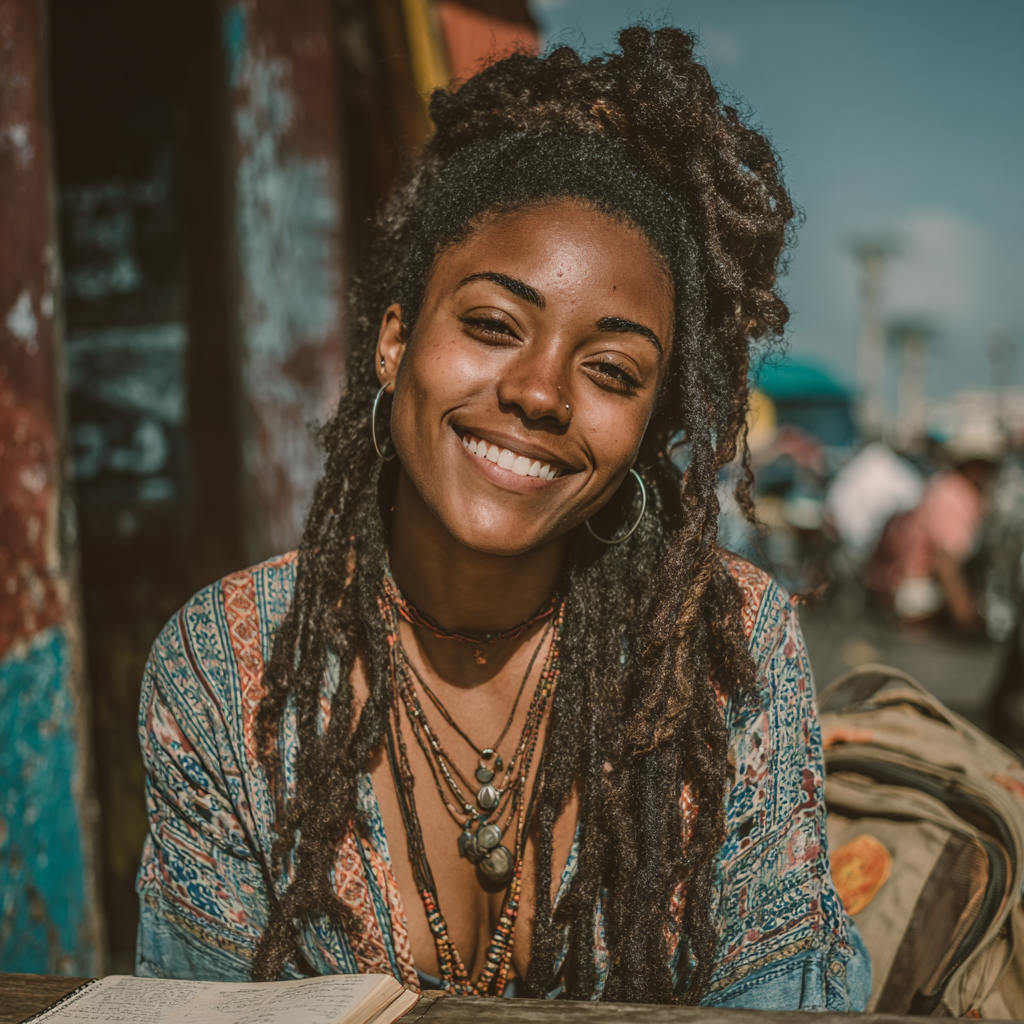
By Maya Johnson
Solo travel evangelist and digital nomad veteran. Maya has spent six years traveling alone across 50+ countries on a freelance writer budget. She writes honest, practical guides for women who want to explore the world independently and safely.