
Most travelers who visit Marrakech alone remember two things: the first time they got lost in the medina, and the moment they realized getting lost was the point. The city does not ease you in. The Jemaa el-Fnaa square hits your senses at full volume. Snake charmers, grilled meat smoke, motorbikes squeezing through alleyways too narrow for carts. The medina is a maze by design, built to confuse invaders. It still works.
I have done six years of solo travel across fifty countries, and Marrakech is one of the few places where preparation matters more than spontaneity. Not because it is dangerous. Because it is dense, fast, and operates on rules that take a day to learn. Once you learn them, the city opens up. Until then, you are prey for every fake guide and inflated taxi fare.
The First Rule: Where You Sleep Determines Everything
Stay inside the medina walls. Not near them. Inside. A riad with a courtyard and rooftop terrace becomes your headquarters. You need a place where the staff knows your name and someone is awake at midnight if you need help.
Riad Nirvana, near Bab Laksour, runs €60-80 per night with 24-hour reception. Hostel Laksour charges €12-18 for a female-only dorm bed and organizes daily group dinners. Both arrange airport pickups for €15-20. Do not get in an unbooked taxi at Marrakech-Menara Airport. The drivers know you are tired. They charge three times the rate.
For a first solo trip, stay inside the walls. You can always upgrade later.
How to Dress Without Giving Up
Morocco is liberal by regional standards, but Marrakech is still a Muslim city where modesty signals respect. Cover your shoulders and knees. Loose, lightweight fabrics work better than tight coverage. You do not need to cover your hair. In the ville nouvelle, the modern district west of the medina, the dress code relaxes. Inside the souks, it matters. A scarf serves triple duty: sun protection, dust filter, and a quick head covering if you step into a mosque. Pack two. They weigh nothing and save you from buying an overpriced one near the Jemaa el-Fnaa.
Navigating Without Looking Lost
The medina has no straight lines. GPS fails in the covered souks. Google Maps will tell you to walk through walls. The trick is not to look lost, even when you are. Walk with purpose. If you need to check your phone, duck into a shop. Do not stand in an intersection staring at a screen. That is when the fake guides appear. They will tell you the street is closed, that you are going the wrong way, that they will lead you for free. It is never free. They will demand 200-500 dirhams at the end, or lead you to a cousin's carpet shop where you are pressured to buy.
The response is simple. "La shukran." No thank you. Say it firmly, do not smile, keep walking. If they persist, say "hshouma" — shame. Loudly. Other locals will often intervene, because the fake guides make the city worse for everyone.
For actual navigation, download offline maps before you arrive. Mark your riad. Mark the Jemaa el-Fnaa. Mark the main souk gates. Everything else, you will find by accident.
Money, Scams, and the Art of Refusal
Moroccan dirhams are a closed currency. You cannot buy them outside the country. Bring euros or dollars and exchange at the airport or at official bureaus in the ville nouvelle. The rate is fixed by the government, so any bureau offering a wildly better rate is a scam.
Cash is essential. The souks do not take cards. A meal at a stall costs 30-50 dirhams. A tagine at a mid-range restaurant runs 80-120. A fresh juice in the square is 10-15. Carry small bills. Breaking a 200-dirham note at a small stall is an event.
The most common scams: the bracelet scam, where a man ties a string around your wrist and demands payment; the closed road scam; the "I work at your riad" scam. The solution to all of them is the same. Do not stop walking. Do not accept anything handed to you. Do not make eye contact in the souks if you are not buying.
Wear a crossbody bag with a zip, kept in front. Backpacks are easy to open in crowds. Keep one card and some cash in your suitcase at the riad as backup. If your day bag gets taken, you are not stranded.
What to Eat and Where
Street food in Marrakech is excellent and risky in equal measure. The rule is turnover. A stall with a queue of locals has fresh meat. An empty stall at 9 PM does not.
Start at the Mechoui Alley stalls near the Jemaa el-Fnaa, where whole roasted sheep hang in the open and portions cost 40-60 dirhams. For a safer introduction, try the numbered food stalls inside the square itself. Stall 14 does grilled merguez. Stall 1 does snail soup for 10 dirhams. Stick to cooked food, avoid raw salads, and skip the tap water. Carry hand sanitizer.
For a sit-down meal, L'mida in the medina does a lamb tagine with prunes for 120 dirhams that feeds two. Café Restaurant Dar L'hssira, near the spice market, serves a chicken tagine for 90 dirhams that locals actually eat at.
To learn the food properly, book a class at Amal Women's Training Center. It costs 250-400 dirhams for a half-day session with a market visit, and supports a non-profit training women for hospitality jobs.
The Sights, in Order of Sanity
Do not try to see everything on day one. Marrakech punishes over-ambition.
Start with the Bahia Palace, open 9 AM to 5 PM, entry 70 dirhams. Arrive at opening. The crowds arrive by 10:30 and the narrow passages become shoulder-to-shoulder. The tilework and cedar ceilings are worth the early alarm.
Next, walk to the Ben Youssef Madrasa, the former Islamic college. Entry is 50 dirhams. The courtyard is the most photographed spot in the city for a reason, but the real detail is in the student dormitory cells upstairs. Each one is barely wider than a mattress.
The Saadian Tombs, 70 dirhams, are small but spectacular. The Carrara marble and gilded cedarwork were hidden for centuries by a sultan who wanted them forgotten. They were rediscovered by aerial survey in 1917. Skip the Badi Palace unless you are obsessed with ruins. It is a construction site with a view.
Jardin Majorelle and the YSL Museum are in the ville nouvelle, outside the medina. Combined entry is 135 dirhams. The garden is beautiful and packed. Book online in advance for a morning slot. It is the one place in Marrakech where a sleeveless top will not draw attention, because everyone is a tourist.
Hammams: The Social Equalizer
A hammam is a public bath where Moroccans scrub, steam, and socialize. It is also the safest place for a solo woman to experience local culture without harassment. The women-only sessions are separate, relaxed, and inexpensive.
The local hammams cost 10-20 dirhams entry plus 50-100 for a scrub. Hammam Dar el-Bacha, near the medina, is a restored historic bath that charges 300 dirhams for the full treatment. It is worth it once. The local ones are worth it repeatedly. Bring your own towel, soap, and flip-flops. The first time is disorienting. By the third, you will understand why Moroccans treat it like therapy.
Getting Out of the City
The Ourika Valley, in the Atlas Mountains, is accessible by shared taxi for 50 dirhams each way. Hike to the Setti Fatma waterfalls, a 3-hour round trip. The trail is well-marked but rocky. Wear proper shoes.
For a longer escape, the three-day Sahara tour to Merzouga costs 800-1,500 dirhams. Book through your hostel or riad, not from a random man in the square. The shared minivans hold six to fifteen people and the route through the Dades and Todra Gorges is the best way to meet other solo travelers. Avoid the cheapest options. They cut corners on camp quality and the desert night is cold.
What to Skip
The Jemaa el-Fnaa after midnight becomes aggressive. Drunk tourists, persistent hustlers, and pickpockets concentrate in the square. Go for dinner at 8 PM, watch the sunset from a rooftop café, and retreat by 11. The souk shops near the square sell the same trinkets at inflated prices. Walk deeper into the medina, toward the metalworkers' district or the spice market, for better prices and less pressure.
The Honest Truth
Marrakech is exhausting. The heat in July and August hits 40 degrees. The harassment is real. The staring, the comments, the men who walk beside you for three streets — it wears you down. But it is not dangerous in the way that requires fear. It requires a specific kind of armor. Firm boundaries. Loud refusals. The willingness to be rude when politeness is exploited.
Most Moroccan men are hospitable and respectful. The problem is the minority who target solo women, and they concentrate where the tourists are. Walk ten minutes from the main square into a residential medina alley and the dynamic changes. Women sit on doorsteps. Children practice French with you. A shopkeeper offers mint tea without asking for money.
The city rewards travelers who stay long enough to get past the first layer. Three days is survival. Five days is when it starts to make sense.
Practical Summary
Best months: March to May, September to November. Summer is brutal. Airport to medina: pre-booked transfer €15-20, or Careem app taxi. Daily budget: €40-70 for accommodation, food, and local transport. Essential apps: offline maps, Careem or InDriver for taxis, XE for currency. Essential phrases: "la shukran" (no thank you), "hshouma" (shame), "besseha" (enjoy your meal). Safety: crossbody bag, zip closed, phone tucked away in crowds, spare card in the riad.
If you are nervous about going alone, book one group activity on day one. A food tour, a cooking class, a walking tour. It gives you bearings, introduces you to other travelers, and builds the confidence you need for the rest of the trip. After that, the medina is yours.
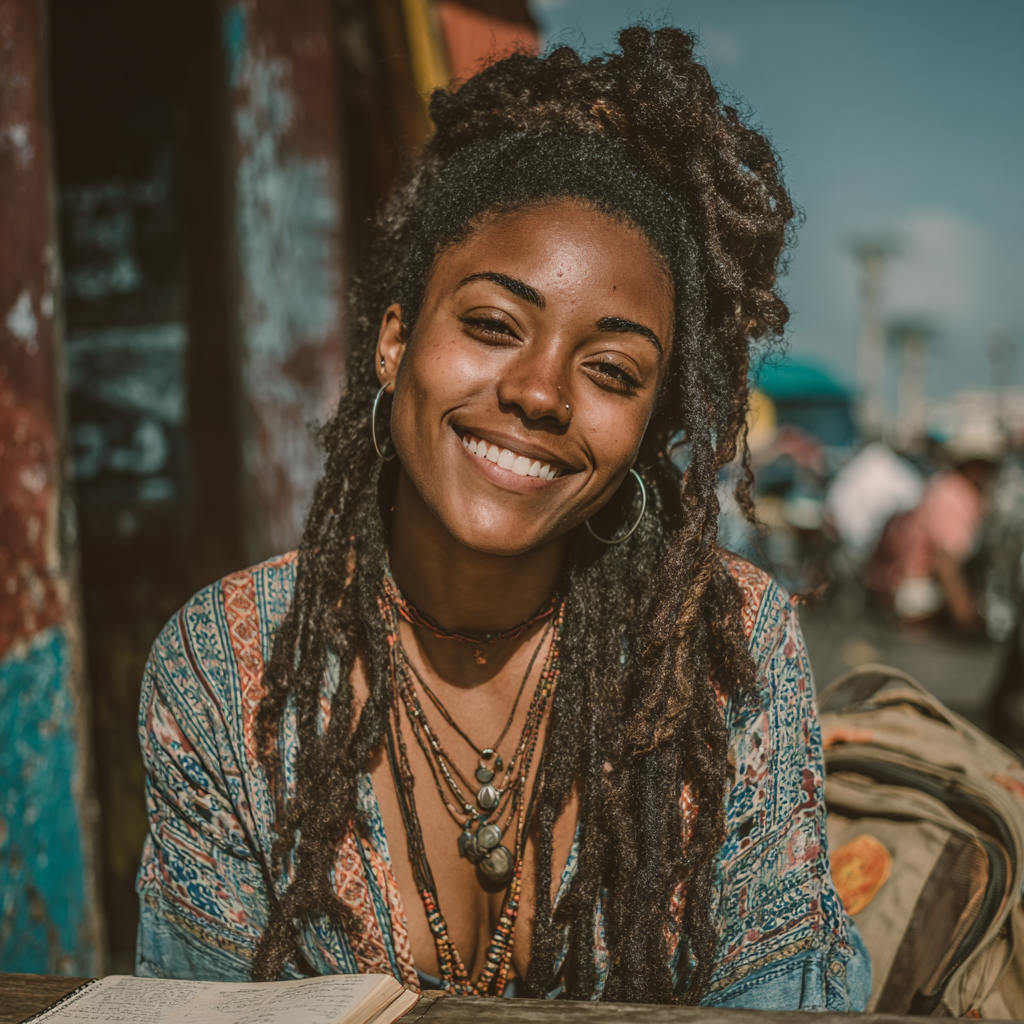
By Maya Johnson
Solo travel evangelist and digital nomad veteran. Maya has spent six years traveling alone across 50+ countries on a freelance writer budget. She writes honest, practical guides for women who want to explore the world independently and safely.