
The Square That Swallowed Me Whole: Jemaa el-Fnaa Nights, Riad Doors, and the Solo Traveler's Guide to Marrakech
Most travelers who visit Marrakech alone remember two things: the first time they got lost in the medina, and the moment they realized getting lost was the point. The city does not ease you in. Jemaa el-Fnaa hits your senses at full volume — snake charmers, grilled meat smoke, motorbikes squeezing through alleyways too narrow for carts. The medina is a maze by design, built to confuse invaders. It still works.
I have done six years of solo travel across fifty countries, and Marrakech is one of the few places where preparation matters more than spontaneity. Not because it is dangerous. Because it is dense, fast, and runs on rules that take a day to learn. Once you learn them, the city opens up. Until then, you are prey for every fake guide and inflated taxi fare. Here is everything I wish someone had told me before my first landing.
The First Rule: Sleep Inside the Walls
Stay inside the medina. Not near it. Inside. Your riad is not just a bed — it is your headquarters, your landmark, and your escape hatch. You need a place where the staff knows your name and someone is awake at midnight if you need help.
For budget travelers, Hostel Laksour, about 250 meters from Jemaa el-Fnaa, runs female-only dorms from roughly €12–20 a night with breakfast and organized group dinners — the fastest way to meet other solo travelers. Equity Point Marrakech, a converted palace at 80 Derb El Hammam Mouassine, has dorm beds from around €9 and a rooftop pool. For more comfort, Riad Nirvana near Bab Laksour runs €60–80 with 24-hour reception. All three will arrange an airport pickup if you ask.
Getting in from Marrakech-Menara Airport (RAK), 6 km from the medina: the ALSA airport bus 19 costs 30 MAD and drops you beside Jemaa el-Fnaa via Gueliz every 20–30 minutes from early morning until around 21:30 — perfect if you are light on luggage. A petit taxi on the meter runs 100–150 MAD by day and up to about 200 after 20:00 (the night surcharge is official, not a scam — insist on "compteur, s'il vous plaît"). A riad-arranged pickup is 200–280 MAD and ends with someone walking you to the door. No car enters the medina alleys, so whichever you choose, email your riad first and ask which gate to be dropped at. That one email is the difference between a five-minute arrival and a twenty-five-minute stress test with a suitcase on cobblestones.
At the airport arrivals hall, buy a SIM (Maroc Telecom, Orange, or Inwi, 100–200 MAD for 10–20 GB — bring your passport) and pull 500 MAD from the ATM. You will need cash for everything in the medina.
The Medina Is the Museum
Do not try to see everything on day one. Marrakech punishes over-ambition. Spread the big monuments across two mornings and leave afternoons for getting lost on purpose.
Start with the Ben Youssef Madrasa, the former Islamic college on Rue Assouel. Entry is 50 MAD, cash at the door, open daily 9:00–19:00 (shorter hours during Ramadan, roughly 9:00–16:30). The courtyard is the most photographed spot in the city for a reason, but the real detail is upstairs: student cells barely wider than a mattress. An audioguide costs about 30 MAD if you want the history.
Next, walk south to the Bahia Palace, entry about 100 MAD, open 9:00–17:00 daily. Arrive near opening — by 10:30 the narrow passages go shoulder-to-shoulder. The zellige tilework and painted cedar ceilings justify the early alarm. On the way back, the Saadian Tombs (Kasbah district) cost 100 MAD for foreign adults and 50 MAD for children 7–13, open 9:00–16:45 with last entry around 16:30. Buy online at the official e-services.minculture.gov.ma portal or pay cash. The gilded marble chambers were bricked up and forgotten for centuries until an aerial survey rediscovered them in 1917. El Badi Palace, across the way, is roughly 70 MAD and worth it only if you enjoy grand ruins and stork's-eye views.
The Koutoubia minaret is your compass — free to admire from the gardens, off-limits to non-Muslims inside, and visible from almost everywhere. When you are lost, walk toward it.
Give the southern quarters an afternoon. The Kasbah, the old royal district, is quieter and more residential than the tourist core — crumbling ramparts, kids playing football against 800-year-old walls, the mellah (the old Jewish quarter) with its distinct balconies and the Lazama synagogue tucked down a lane. It is where Marrakech stops performing and starts living.
The Souks: How to Haggle Without Hating Yourself
The souks are not a tourist attraction. They are a working market district that has run continuously for a thousand years. Act like a guest in one, not a customer at a mall.
Rule one: never ask the price of something you do not want to buy. Asking starts the negotiation. Rule two: the first price is theater. Counter at a third to a half of the opening number, slowly walk up, and be genuinely willing to walk away — the final price usually finds you at the shop's threshold. Rule three: for benchmarks, check the fixed-price government co-op shops first, so you know what a "fair" number actually is. The deepest, cheapest sections — metalworkers, spice sellers around Rahba Kedima — are a fifteen-minute walk from the main tourist arteries. The trinket shops nearest the square sell the same goods at triple the price.
Gueliz and the Blue Hour
Cross the walls into the ville nouvelle and the volume drops. Gueliz is Marrakech's 20th-century new town: wide boulevards, espresso bars, French-Moroccan bakeries, women cycling to work. The dress code relaxes here. Come for a slower afternoon.
The anchor is Jardin Majorelle, Rue Yves Saint Laurent. In 2026 the garden alone costs 170 MAD; adding the Berber Museum makes it 230; the full garden-plus-YSL-Museum combo is 330 MAD. Hours are 8:00–18:30 daily, last entry 18:00, and tickets are sold online only at jardinmajorelle.com — do not trust anyone selling "skip the line" access outside. Book the first morning slot. By 10:00 the cobalt alleys are a wall of selfie sticks. The YSL Museum is closed Wednesdays. Children under 10 enter free.
Do one good thing while you are over here: lunch at Amal, a nonprofit restaurant on Rue Allal Ben Ahmed that trains Moroccan women for hospitality careers. The set lunch, served Monday to Saturday 12:00–15:30, runs about 80 MAD for a full plate and is genuinely delicious. Their cooking classes — at the Targa center, Monday to Friday 9:30–13:00 — cost 400 MAD for a tagine session or 500 for couscous or pastilla, including the market visit. Book ahead through amalnonprofit.org or call +212 5 24 49 37 76. You cook, you eat, and the fee funds a real job pipeline. It is the single most worthwhile splurge in the city.
Eating Alone Like a Local
Street food in Marrakech is excellent and risky in equal measure. The rule is turnover: a stall with a queue of locals has fresh food, an empty stall at 9 PM does not. Eat where Moroccans eat.
In Jemaa el-Fnaa as it transforms into an open-air night restaurant, a glass of fresh orange juice costs 5–10 MAD, harira soup 5–10, msemen flatbread 5–10, and grilled skewers 10–20 each. Follow the smoke to busy grills, point at what looks good, and keep small notes ready. For the city's famous dish, try tanjia — beef slow-cooked for hours in a clay urn — at 30–60 MAD in the lanes behind the square. North of the square is mechoui alley, where whole roast lamb hangs in the open at places like Chez Lamine Hadj Mustapha; portions are sold by weight at roughly 160–200 MAD per kilo, and a 50-MAD plate with bread, cumin, and salt is a feast. Skip raw salads and tap water, carry hand sanitizer, and say yes to the bread — it is the utensil.
Breakfast solo is a ritual worth building: a msemen flatbread drizzled with honey and a café nouss (half coffee, half steamed milk) at a neighborhood stand runs about 15–20 MAD and buys you a front-row seat on the city waking up.
For a sit-down dinner with a view, the rooftop restaurants — Nomad, Kabana, and the terrace at El Fenn — book out three to five days ahead in high season. Reserve before you fly or have your riad call. Eating alone up there, above the square's roar, with a tagine and the Atlas turning purple at dusk, is one of the great solo-travel evenings.
The Hammam Lesson
A hammam is a public bath where Moroccans scrub, steam, and socialize — and for a solo woman, the women-only sessions are among the safest, warmest cultural experiences in the country. The neighborhood hammams charge 10–15 MAD entry, plus 30–50 for the black-soap-and-kessa-scrub treatment. Bring your own towel, soap, and flip-flops, ask your riad for the nearest good one and its women-only hours, and accept that the first visit is disorienting: you will be poured over, scrubbed, and rinsed like a small child. By the third visit you understand why Moroccans treat it as therapy. If you want the spa version with marble halls and massages, expect 300 MAD and up. Tip your attendant 10–20 MAD.
Escaping the City
The High Atlas is an hour away and the cheapest mountain day trip in North Africa. For Imlil, take a grand taxi from the Bab Er-Rob rank: about 35–50 MAD per seat to Asni, then 20–30 MAD onward to Imlil, or 50–70 MAD direct. Wait for it to fill or split a whole car for 250–350 MAD round trip. The ride takes 75–90 minutes. You will hike Berber village trails at 1,700 meters with Mount Toubkal overhead; guided treks from the Imlir gate cost extra but the valley walks are free and obvious. Pack a jacket — the mountains are twenty degrees cooler than the plain. Organized tours run €50–90 if you would rather not negotiate.
The Ourika Valley and the Setti Fatma waterfalls work the same way: shared grand taxi about 50–70 MAD per seat, ninety minutes up, a free rocky hike to the cascades, and riverside tagine joints at the trailhead. Only the desperate book this through a hotel for €40.
Short on days? Agafay, the rocky "desert" thirty minutes southwest, does sunset camel rides and dinner under lanterns from €35 — an evening, not an expedition.
And the Sahara: the classic three-day Merzouga run, nine to ten hours of driving each way through the Atlas and past Aït Benhaddou, costs €85–120 per person on a shared tour (standard camp and camel trek included) or €195–280 per person private for two. Standard luxury camps start around €300. The corners cut at the very bottom of the market are real — canvas walls, shared toilets, cold nights — and tips are on you (150–200 MAD per day for the driver, 50–100 for the camel handlers). Book with a named, reviewed operator, ideally through your riad, and know that October and April sell out four to six weeks ahead. Best months are March to May and September to November; summer in the dunes tops 45°C, winter nights flirt with freezing. It is a long way for three days. It is also the finest night sky most people will ever sleep under.
Money, Scams, and the Art of the Firm No
The dirham is a closed currency — you cannot buy it outside Morocco. Bring euros, exchange at the airport or a Gueliz bureau (government-fixed rate; anyone offering wildly better is laundering or lying), and live on cash. The souks do not take cards, the medina ATMs run dry on weekends, and breaking a 200-MAD note at a juice stall is an event. Carry small bills and stash a backup card at the riad.
The scams never change: the bracelet tied on your wrist, the "this street is closed," the student who walks beside you for three blocks, the henna grabbed mid-hand, the snake charmer whose cobra suddenly costs money to photograph. The answer to all of them is identical: do not stop walking, do not touch anything handed to you, and say "la, shukran" — no, thank you — firmly, without smiling. If someone persists, "hshouma" (shame), said loudly, works wonders; other locals despise the hustlers too. A crossbody bag with a zip worn in front beats any backpack. Phones stay pocketed in crowds.
What to Skip
Skip the snake charmers' and monkey handlers' photo ops — the fee ambush comes after the shutter. Skip the "free" mint tea extended as you browse; it is never free. Skip the sit-down restaurants that front the square at eye level for tourists — same view as a rooftop bar, double the price, worse the tagine. Skip any man who offers to guide you to the tanneries. Skip camel rides in the Palmeraie on animal-welfare grounds. Skip shopping on your first day; prices drop once you know what things cost. And skip Jemaa el-Fnaa after midnight — the drunks, the hustlers, and the pickpockets all clock in at once. Watch the sunset from a terrace, dine at 8, be home by 11.
Practical Summary
Best months: March to May and September to November. Summer hits 40°C; winter evenings are cold. Daily budget: €40–70 covers a dorm or riad split, street-and-market eating, one monument, and local transport. Airport: bus 19 for 30 MAD, metered petit taxi 100–150 by day, riad pickup 200–280. In-town petit taxis start at 7 MAD on the meter — short hops run 15–30; insist on the meter or agree the fare before the wheels turn. Careem works in Gueliz but rarely inside the medina. SIM at arrivals: 100–200 MAD for 10–20 GB. Download offline maps, pin your riad, and navigate by landmark — GPS dies in the covered souks, so treat your riad as a lighthouse and the Koutoubia as north. During Ramadan (mid-February to mid-March in 2026 — check current dates) opening hours shrink and the pre-dawn drum and dusk feast remake the city's rhythm. The dawn call to prayer is your free daily alarm. Tip 5–10% where service is not included, small change to hammam attendants and porters.
The Honest Truth
Marrakech is exhausting. The staring, the comments, the men who walk beside you for three streets — it wears you down. But it demands armor, not fear. Firm boundaries. Loud refusals. The willingness to be rude when politeness is being exploited. Most Moroccan men are hospitable to their bones; the ones who target solo women cluster exactly where the tourists do.
Walk ten minutes off the main arteries into a residential alley and the whole dynamic changes. Women sit on doorsteps, children practice their French on you, a shopkeeper pours tea without ever mentioning money. The city rewards travelers who stay long enough to get past the first layer. Three days is survival. Five days is when Marrakech stops being a trial and starts being a love affair.
About the Author
Maya Johnson is a solo travel evangelist and digital nomad veteran who has spent six years traveling alone across more than 50 countries on a freelance writer's budget. She writes honest, practical guides for women who want to explore the world independently and safely — with a soft spot for loud, chaotic, glorious cities that people wrongly call "too much."
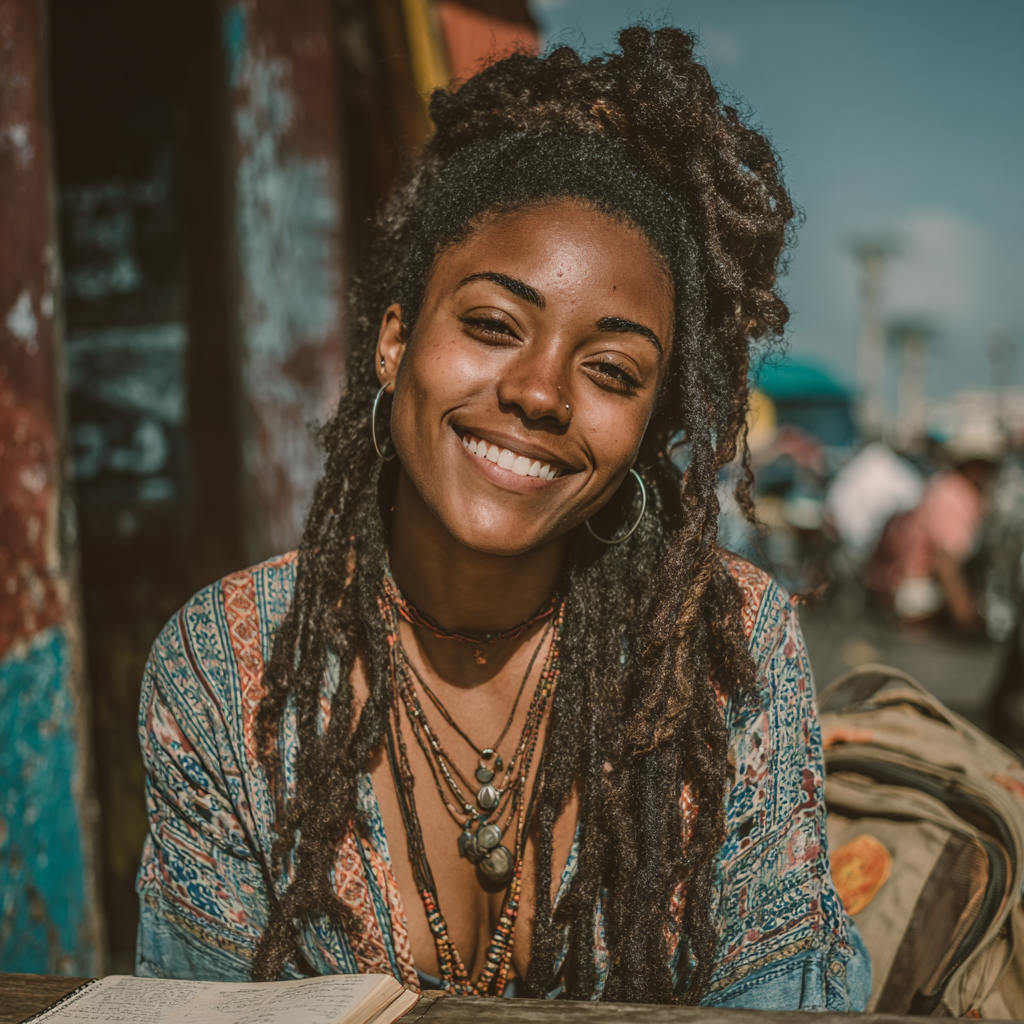
By Maya Johnson
Solo travel evangelist and digital nomad veteran. Maya has spent six years traveling alone across 50+ countries on a freelance writer budget. She writes honest, practical guides for women who want to explore the world independently and safely.