
Chefchaouen Solo: Where Morocco's Blue Walls Meet Rif Mountain Silence
The bus rounds the last mountain bend and there it is: a white-and-blue spill down the Rif hillside, so abrupt and improbable it looks like the sky leaked. Around you, Moroccans press their phones to the windows. Grandmothers in djellabas. Students with backpacks. Someone's sheep, unconcerned, in the luggage hold below.
Then you step off, shoulder your bag, and realize: nobody is watching you. Nobody is calling "hashish, my friend." Nobody cares that you're alone. You've just arrived in the most manageable, most genuinely relaxed city in Morocco — and it's about to reset every assumption you had about traveling this country solo.
Here's the context. Morocco just closed 2025 with a record 19.8 million visitors — up 14% on the previous year, with tourism receipts hitting 124 billion dirhams (over $13 billion). Marrakech surged roughly 40% year-over-year. The kingdom is co-hosting the 2030 World Cup with Spain and Portugal, and in March 2026 its tourism agency announced plans to add 25,000 hotel rooms in four years. The crowds are coming. But Chefchaouen — this small, blue, mountain-bound city of about 45,000 people — still operates on its own frequency. It receives visitors, of course it does. Yet it remains, in the words of almost everyone who comes, manageable. Walkable in full. Absorbable. The kind of place where you can be entirely alone without ever feeling lonely.
Come in spring (April–June) or fall (September–November) if you can. Come alone if you can. Come ready to slow down.
The Blue Philosophy: Why Solo Here Works
Chefchaouen is small. The entire medina — the famous blue-washed old town — is about one kilometer across. You can walk from one end to the other in twenty minutes, though you'll take two hours because every alley demands a photograph.
This size changes everything for solo travelers. You cannot get truly lost (you'll wander, delightfully, but always circle back to the central square). You can return to your riad midday without wasting half a day on transport. You can eat alone at a restaurant without becoming a spectacle. And the city's culture — a blend of Berber, Andalusian, and Jewish influences — rewards the kind of slow, repeat attention that solo travel allows.
The blue itself has multiple origin stories, and honestly, the ambiguity is part of the charm. Jewish refugees fleeing the Spanish Inquisition in the 15th century brought the tradition of painting buildings blue, the color of the divine sky. Some say blue repels mosquitoes. Others say it simply cools the city visually. What matters is that in the 1930s, the practice was revived and expanded — and today, entire families maintain their sections of alleyway with fresh coats of limewash mixed with natural pigments.
When you walk these streets alone, you notice things groups miss: the sound of water running through the medina's ancient channels, the smell of bread baking at 6 AM, the way the blue shifts from turquoise to indigo depending on the hour and the angle of the Rif sun. You start to understand that Chefchaouen isn't a backdrop for your Instagram feed. It's a living city that happens to be extraordinarily, stubbornly, beautifully blue.
When to Come
April–June and September–November are the sweet spots. Temperatures hover between 18–28°C (64–82°F), the light is soft and golden, and the Akchour waterfalls run strong from spring snowmelt. These are also the busiest months — book accommodation at least a few weeks ahead for weekend stays.
Summer (July–August) brings domestic Moroccan tourists fleeing the furnace of Fez and Marrakech. Day-trippers arrive in waves between roughly 10 AM and 4 PM, choking the main square. But here's the solo traveler's advantage: the city sits at 600 meters (1,970 feet), so evenings cool dramatically. Stay overnight, and from 5 PM onward the blue alleys empty and become entirely yours again. Some restaurants and shops close or reduce hours; riads often offer summer discounts.
Winter (December–February) is rainy and cold — temperatures drop to 8–15°C (46–59°F), and the Rif peaks above town occasionally wear snow. Many riads have fireplaces rather than central heating. But the medina is nearly empty, prices hit their annual floor, and the grey-blue moodiness of winter light on wet blue walls is something photographers cross continents for. If you don't mind damp socks and early nights, this is the connoisseur's season.
Ramadan (the fasting month — in 2026 it ran approximately mid-February to mid-March) shifts the rhythm: many cafes close during daylight, and the town goes quiet until the evening iftar break, when it erupts into communal celebration. It's culturally fascinating but logistically inconvenient for solo travelers who rely on daytime snacking. Check dates before booking.
One more timing note: the day-tripper wave is predictable. Tour buses from Fez and Tangier arrive around 11 AM and leave by 4 PM. If you're staying overnight (and you should be), do your medina wandering before 10 AM or after 4:30 PM. The difference is transformative.
Getting There (and Away)
Chefchaouen has no train station, no airport, and only one winding mountain road in. That's part of its protection.
From Tangier: CTM and Supratours buses run roughly 2.5–3 hours, about 90 MAD. Morning departures are most frequent. This is the easiest approach — Tangier's Ibn Battouta Airport (TNG) receives budget flights from across Europe.
From Fez: CTM bus, about 4–4.5 hours, roughly 120 MAD, with morning and afternoon departures (buy a day ahead on ctm.ma or at the station during spring and fall). An overnight bus also runs. Grand taxis from Fez cost 150–250 MAD per seat, negotiable, and leave when full from the Bab Ftouh area.
From Casablanca: Direct CTM bus, about 6 hours, around 160 MAD.
From Tetouan: Local buses, about 1.5 hours, roughly 35 MAD — a good add-on if you're exploring the northern medinas.
Onward to the coast: Buses continue to Asilah (about 4 hours, ~110 MAD) or back through Tetouan to Tangier, making Chefchaouen a natural midpoint on a northern Morocco loop rather than a dead end.
All buses arrive at the station downhill from the medina, on or near Avenue Hassan II — about a 10-minute walk or a 10–15 MAD petit taxi to Bab El Ain, the medina's main western gate. If you've booked a riad, many offer to meet you at the gate; take them up on it. The blue streets defeat GPS, and a porter carrying your bag through the alleys costs 20–30 MAD and saves you twenty minutes of confused wandering.
Where to Stay
The riads of Chefchaouen are part of the experience — courtyard houses turned guesthouses, often with rooftop terraces overlooking the blue maze.
Casa Hassan (Route de Ras el-Maa; +212 539 986 153) is the classic: a converted 18th-century home with tiled courtyards, a restaurant serving Riffian specialties, and doubles from roughly 900–1,300 MAD depending on season. Book ahead for spring and fall — this place has been discovered. Dar Meziana (Derb El Miter, near Place El Makhzen) sits in a renovated Andalusian-style house with a superb rooftop; doubles around 1,000–1,500 MAD. Lina Ryad and Spa (Akhouat El Kharraz, off Place Outa el-Hammam) has a hammam on-site and rooms from about 900–1,400 MAD.
For budget solo travelers, hostels like Riad Baraka or Dar Zerbtana offer dorm beds from 80–150 MAD with shared terraces and instant community. The social energy in these places is real — you'll find hiking partners for Akchour over breakfast mint tea.
One practical note: many riads have no signage and no street addresses in any meaningful sense. Your booking confirmation will include some variation of "call us when you reach the square and we'll walk you in." This is normal. Save the riad's phone number before you arrive.
Entry Formalities & Money
Morocco makes entry easy for most visitors: citizens of 60+ countries — including the EU, UK, US, Canada, Australia, Japan, and China — enter visa-free for up to 90 days. Your passport should be valid for at least three to six months beyond arrival (requirements vary by nationality; check before flying). If you need a visa, apply through the official e-Visa portal at acces-maroc.ma (roughly 770 MAD standard / 1,100 MAD express processing; beware third-party reseller sites that charge multiples of the real price).
Two money rules matter more than anything:
First, the dirham is a closed currency. You cannot buy or sell Moroccan dirhams outside the country — not at your home bank, not at the airport exchange in Paris, nowhere. Change money at official banks or bureaux de change in Morocco, and keep your exchange receipts: you'll need them to convert leftover dirhams back at departure. If you arrive with foreign cash, declare amounts equivalent to 100,000 MAD or more. ATMs (Attijariwafa and BMCE branches near Bab El Ain and along Avenue Hassan II) dispense dirhams freely and give fair rates; cards work at riads and established restaurants but cash rules the medina.
Second, know the rate. The dirham slid about 6% through 2025–26 and now sits at roughly 10 MAD to the US dollar (about 11.5 to the euro). That slide is your quiet discount — everything here effectively costs less than it did two years ago. Tipping 5–10% is customary at restaurants; round up taxi fares and leave 10–20 MAD for riad staff who carry bags.
The Medina: Wandering with Purpose
The medina is your main activity, and it rewards both aimlessness and strategy. Start at Place Outa el-Hammam, the main square — tiled, tree-shaded, and anchored by the red-walled kasbah. From here, the medina unfolds in concentric layers.
The famous blue streets cluster in the older sections northeast of the square, particularly around Callejon El Asri and the alleys toward the river. Go early — before 9 AM if you can manage it — when the light is horizontal, the streets are empty, and the blue is so saturated it looks digitally enhanced. This is when solo photographers get the shots that make people ask "where IS that?"
By late morning, shift to the souk area along Avenue Hassan I, where locals actually shop: pyramids of spices, pyramids of olives, pyramids of the region's famous goat cheese wrapped in palm leaves. The weaving workshops here produce the heavy wool blankets with red-and-white stripes that you'll see on every Rif mountain bed; watching a weaver work a wooden loom is free entertainment, and buying directly from the workshop (rather than a middleman shop) can cut prices by half.
A word on photography etiquette: most locals are patient with cameras, but ask before photographing people — especially women. Some of the most photogenic blue stairways and doorways are maintained by the families who live behind them; a small gesture of 5–10 MAD, offered with a smile and "shukran," is appreciated. And leave the drone at home: Morocco bans drone import and use without special authorization, and yours will be confiscated at the border.
The Kasbah
Rising from Place Outa el-Hammam like a rust-red exclamation mark, the Kasbah is Chefchaouen's original fortress — built in 1471 when Moulay Ali Ben Rachid founded the city as a base against Portuguese expansion. Its walls have held Amazigh tribes, Spanish occupiers, and exiled Moroccans over five centuries.
Today it's a museum complex. Entry costs 60 MAD for foreign visitors (students ~30 MAD with ID, children under 12 free, Moroccans 10 MAD), open daily 9:00 AM–6:00 PM, cash only at the gate. The 2025 renovation refreshed the displays, which trace the city's Andalusian roots through ceramics, manuscripts, and weaponry. The real prizes: the Andalusian Gardens — a quiet courtyard of orange trees and fountains that most tourists walk past — and the climbable Portuguese tower with panoramic views over the blue rooftops. Time your visit for late afternoon when the light turns the medina silver-blue, and avoid the 1–3 PM window when the guardian often steps away for prayer and the gate can be closed.
Even if you skip the museum, sit on the square's edge and watch the kasbah's shadow crawl across the tiles. This is where the city has gathered for 550 years.
The Spanish Mosque: Twenty Minutes Up, a Lifetime of View
At the top of the hill east of the medina sits an abandoned whitewashed mosque, built by the Spanish in the 1920s and never used. The walk from the square takes 15–20 minutes uphill — the trailhead is through Bab Onsar, past the ras el-maa spring — and the payoff is the definitive Chefchaouen postcard: the entire blue city cupped in green Rif slopes, with Jebel el-Kelaa towering behind.
Sunset is the obvious hour, and in high season the hillside fills with tripods and picnicking locals. My advice: go for sunrise instead, or linger after sunset when the crowds leave and the city lights blink on below. Bring a layer — the temperature drops the moment the sun disappears, and the walk down is dark (phone flashlight essential). Entry is free. The mosque itself is usually locked; the view from its terrace is the point.
Ras el-Maa & Jebel el-Kelaa: The Mountain Behind the Blue
Where the medina ends, the Rif begins. At Ras el-Maa — "the source of water" — a small waterfall tumbles past a cluster of cafes at the eastern edge of the medina, five minutes' walk from the main square. Local women still wash clothes in the stream; kids cannonball into the pools in summer. It's a 15-minute stop that shows you the city's plumbing is older than most countries.
For hikers, Jebel el-Kelaa (1,616 m) looms directly over town — one of the two "horns" (chaouen means horns in Berber) that give the city its name. The trail from Ras el-Maa takes about three hours up through cedar and cork oak forest, with the ruins of a ruined mosque ("the Spanish mosque is not the only one") and spring wildflower meadows en route. In April and May, the slopes explode with poppies and daisies. The 360° summit view stretches from the Mediterranean haze to the limestone fins of the Rif. Go with a partner if possible, carry water, and start early — afternoon clouds swallow the peak even in dry season. No guide is needed on the main trail, but a local guide (150–200 MAD) opens up the longer circuits into Talassemtane National Park.
Akchour Waterfalls & God's Bridge: The Day Trip That Resets You
Every solo traveler in Chefchaouen eventually hears about Akchour, and every one of them returns slightly changed. This is the Rif at full power: a limestone gorge where the Oued Farda has carved travertine terraces, turquoise pools, and a natural rock arch so perfect it looks built.
Getting there: Shared grand taxis to Akchour village (30 km, 45 minutes) leave from the taxi stand near the police station on Avenue Hassan I — 25–35 MAD per seat, leaving when all six seats fill. Go between 8–9 AM to catch an early taxi. A private taxi for the vehicle costs 150–200 MAD; ignore anyone in the medina quoting 300–400 MAD for a "special tour." The park itself is free to enter (Talassemtane National Park is a UNESCO Biosphere Reserve with no ticket booth; drivers pay ~10–20 MAD parking).
The two routes: From the trailhead village, the lower trail leads to God's Bridge (Qantara Rbi) — a massive natural arch spanning the canyon — about 45 minutes each way, easily done in a relaxed three-hour return. The upper trail continues to the Grand Cascade, a 100-meter waterfall about 2–2.5 hours each way; fit hikers can combine both in 5–6 hours with lunch by the river. The trails cross the stream on stepping stones (fine in summer, serious after winter rains) and involve some hands-and-feet scrambling. Decent shoes, not boots.
On the trail: Improvised river cafes — plastic tables set directly in the water — serve vegetable tagines (50–70 MAD), chicken or kefta tagines (70–100 MAD), and mint tea (10–15 MAD) with your feet in the current. The further up you go, the pricier (and colder) it gets. Swimming in the pools is possible May–September; the water is mountain-cold year-round.
Logistics that matter: Mobile coverage dies in the gorge — download offline maps before leaving. Trails are well-marked and busy on weekends, so a guide is optional (100–200 MAD if you want company and context); politely decline anyone at the parking lot introducing themselves as an "official guide" — it's a sales tactic. Return taxis thin out by late afternoon — be back at the parking area by 4 PM to guarantee a ride (last departures roughly 5 PM winter / 7 PM summer). Spring (March–May) brings the fullest waterfalls; by August the Grand Cascade can be a trickle, though God's Bridge always has water flowing beneath it. Total realistic budget for the day: 130–240 MAD including transport and lunch.
Eating: What the Rif Actually Tastes Like
Riffian cuisine is not Marrakech cuisine. The mountains dictate the menu: goat cheese, wild honey, fava beans, and herbs that don't grow anywhere else in Morocco.
Start mornings like the locals: bissara — a thick, cumin-dusted fava bean soup — at the morning stalls near the souk, 10–15 MAD, served 7–10 AM to workers starting their day. (A stall selling bissara at 2 PM is a tourist trap.) Add jben, the region's fresh soft goat cheese, sometimes drizzled with honey — 15–25 MAD at market stalls, or free on good riad breakfast spreads.
For lunch, the main square's terrace restaurants (Sofia, Aladdin) offer set menus of salad, tagine, fruit, and mint tea for roughly 120–180 MAD with kasbah views. Bab Ssour (down the hill from the square, local crowd, no view but the best fish tagine in town) serves anchovy and sardine tagines reflecting the coastal influence from nearby Tetouan — 60–90 MAD for a full meal. Casa Hassan's restaurant remains the most atmospheric dinner option, with Riffian specialties around 100–180 MAD a plate. Vegetarians do well here: the mountain herb tagines and vegetable couscous are staples, not afterthoughts.
Buy supplies for Akchour day trips at the souk: fresh bread (3–5 MAD), goat cheese wrapped in leaves (30–50 MAD), Rif honey (80–120 MAD per jar — the dark thyme honey is the one to get), oranges from the valley orchards. A solo picnic above a turquoise pool beats any restaurant.
Shopping: What to Buy (and How)
Chefchaouen's crafts are real, made here, and priced accordingly lower than in Fez or Marrakech. The wool blankets (400–800 MAD depending on size and workshop), leather goods (the tannery smell you catch near the river is local work), and woven rugs from the Rif mountains are the standouts. The rule: workshops over souk stalls, and never buy the first rug you love. Compare three places, mention you're "just looking today," and prices typically improve 20–30%. Solo travelers have a natural advantage here — no group impatience rushing the negotiation.
The goat cheese and honey make better souvenirs than anything textile (and customs-friendlier). Vendors will vacuum-seal cheese for travel if you ask.
Hammam: The Social Equalizer
For 50–100 MAD, you can experience Morocco's great equalizer — the public bathhouse. The main hammam near the square accepts foreigners without blinking. You'll be handed a bucket, shown to a hot room, and left to scrub (bring your own soap and scrubbing mitt, or buy them at the door for a few dirhams). It's single-gender, chatty, and utterly unglamorous. Nobody cares what you look like. Afterward, wrapped in the clean-sheet high of exfoliated skin and mint tea, you'll understand why Moroccans consider the hammam essential to civilization, not indulgence. Some riads offer private hammams at 150–250 MAD if public nudity (partial, and same-sex) is outside your comfort zone.
Safety, Connectivity & the Practical Core
Let's be direct: Chefchaouen is one of the safest cities in Morocco for solo travelers, including women. The mountain culture is conservative but famously relaxed about visitors. The scams that plague Marrakech (fake guides, aggressive touts, rigged taxis) barely exist here. You'll be offered hashish — the Rif is Morocco's cannabis heartland — but availability is not legality: Moroccan drug laws are strict, penalties for possession are severe, and a foreigner in a mountain police station is not where your trip should go. A polite "la, shukran" ends every offer.
Practical notes that keep a solo trip smooth:
- Language: Arabic and Berber are local; French is widely spoken; English is growing but not guaranteed outside riads. Learn "salam alaykum" (hello), "shukran" (thanks), "la" (no), and "beslama" (goodbye).
- Phone: Buy a tourist SIM (Inwi or Maroc Telecom) for ~50 MAD with data — coverage is fine in town and dies in gorges (download offline maps before Akchour).
- Cash: ATMs exist (Attijariwafa near Bab El Ain, BMCE on Avenue Hassan II) but carry small bills; nobody breaks 200s at stalls.
- Banks hours: Roughly 8:30 AM–3:30 PM weekdays; Friday is the holy day — many shops close noon–3 PM.
- Water: Tap water is technically chlorinated but most travelers stick to bottled (5–7 MAD for 1.5L).
- Ramadan rhythm: If visiting during the fasting month, book dinner ahead — iftar is a celebration and tables fill.
What to Skip
1. Day-tripping it. This is the single biggest mistake. The tour buses arrive at 11 AM and leave at 4 PM, and during those hours the medina is a conveyor belt of selfie sticks. Stay at least one night. The Chefchaouen you came for exists between 7–10 AM and after 5 PM. Everything this guide promises assumes you stay.
2. The guided tour nobody needs. Walking tours of the medina are sold everywhere. The medina is one kilometer across with a central square you can always see. Save the 200–300 MAD. The one place a guide adds value is a multi-day trek into Talassemtane National Park — and for that, hire through your riad, not a street tout.
3. Buying the first rug you love. The first shop you enter is the most expensive shop you'll enter. Rif rugs here start around 800–1,500 MAD for good work, and the "museum quality" label is applied liberally. Look at five places before buying anything.
4. Treating Chefchaouen as a photo prop. If you spend your entire visit photographing blue walls, you'll leave with a camera roll and no memory of the place. Put the phone down for an hour. Sit in the square. Drink tea. Watch the mountain light change. The photos will be there when you pick it back up.
5. The 300–400 MAD "private taxi" to Akchour. A shared grand taxi seat costs 25–35 MAD and private hire for the whole vehicle runs 150–200 MAD. Any quote above that from a medina tout is a tourist tax on your impatience. Walk to the taxi stand near the police station and ask for "Akchour, place, combien?"
6. "Official guides" at the Akchour trailhead and the drone in your luggage. The parking lot hosts who present themselves as certified park guides are freelancers looking for 100+ MAD for a marked trail. The park is free, the paths are obvious, and you'll have company on any weekend. Similarly: drones are banned in Morocco — confiscation at the border is standard, fines are possible, and your travel insurance will laugh.
7. Assuming it's "taboo country." Some solo travelers — especially women — skip Morocco entirely over safety fears. Chefchaouen is where those fears go to die quietly. Dress modestly (covered shoulders/knees is respectful, not required), walk confidently, and you'll be met with the same mountain hospitality that's defined this city for five centuries. The men who might hassle you in Marrakech are too relaxed here to bother.
The Verdict
Chefchaouen is not Morocco's most spectacular city — Fez has the medieval chaos, Marrakech the energy, the Sahara the scale. What Chefchaouen offers is something rarer for the solo traveler: proportion. A city sized to human attention. Beauty that doesn't demand equipment or endurance. Safety that lets your guard down. And a blue so persistent it rewires how you see color for weeks afterward.
I came for two nights and stayed for five. I've returned twice since. Every solo traveler I've met here says some version of the same thing: "I didn't expect it to feel like this."
Come. Stay overnight. Get up early. Walk uphill. Eat the goat cheese. Skip the day-tour crowds. And when you're sitting on a rooftop terrace at dusk, watching the blue city dissolve into mountain shadow, remember that you got there alone — and it was exactly enough.
Maya Johnson writes about solo travel and budget guides across twenty-plus countries. She's been traveling alone since 2019 and believes the best seat in any city is the one you find by accident. Follow her journeys through the world's most walkable — and most misunderstood — destinations.
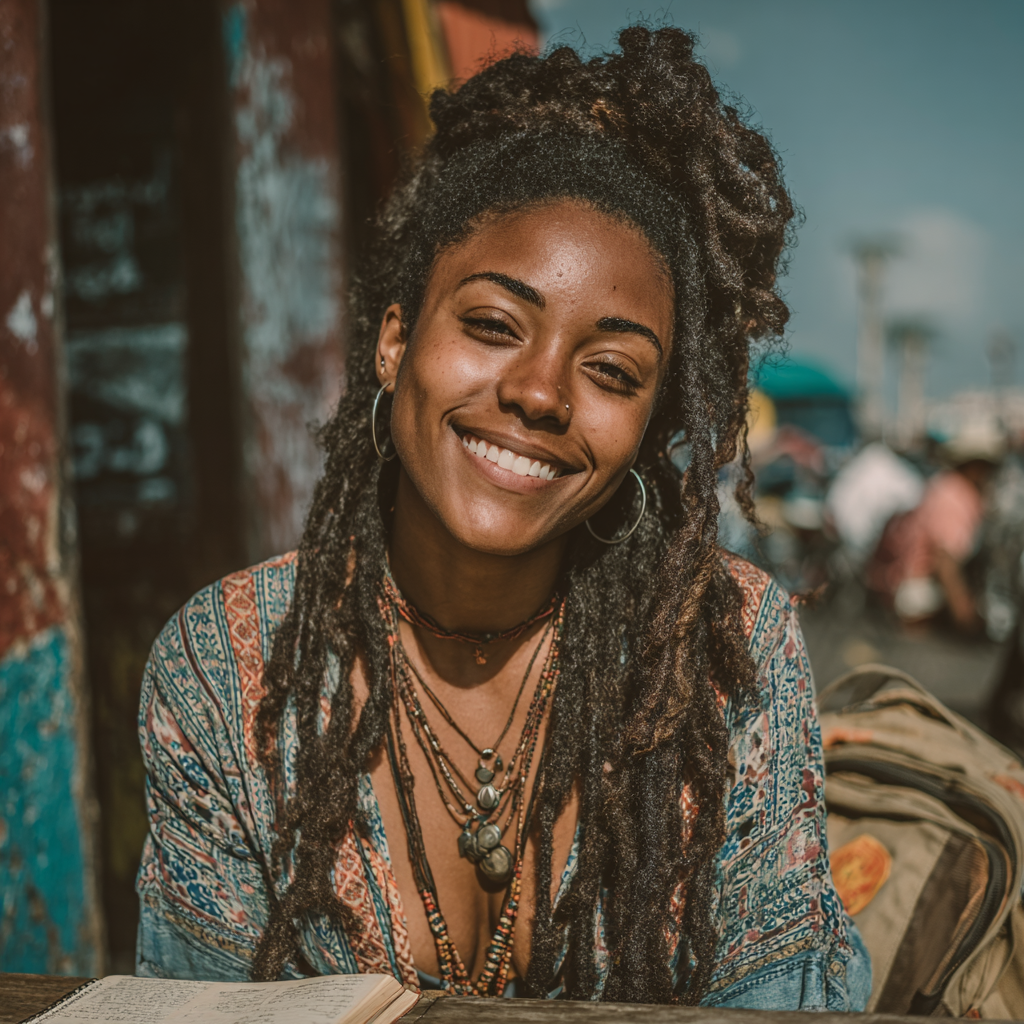
By Maya Johnson
Solo travel evangelist and digital nomad veteran. Maya has spent six years traveling alone across 50+ countries on a freelance writer budget. She writes honest, practical guides for women who want to explore the world independently and safely.