
Casino Square at 10 A.M., Ducasse at 8 P.M.: An Inspector's Monaco Money Map
A luxury-inspector's 2026 guide to Monaco: casino entry fees, dress codes and the smart morning visit; all 14 Michelin stars with real prices; hotel rates from €650 to €2,500; Grand Prix's new June dates; and how to spend one perfect night in the Principality.
On this page
Monaco is smaller than Central Park and has more Rolls-Royces per capita than anywhere else on earth. That is not a compliment. It is a warning. Most visitors arrive from Nice on the twenty-minute train, walk to the casino, photograph a Bentley, and leave convinced the place is a theme park for oligarchs. It is. But it is also something else: a laboratory for how luxury travel actually works when every detail is scrutinized daily by people who have inspected five hundred five-star properties and are not impressed by marble.
I inspected hotels here for twelve years. The ones that survive do so because they understand something the flashier places in Dubai and Miami do not: money buys space, but service requires institutional memory. Monaco has been at this since 1863. The good properties remember your name. The bad ones remember your credit limit. This guide is the difference, priced and dated for 2026 — because in Monaco the prices move faster than anywhere else I have audited.
Where to Stay
Hôtel de Paris Monte-Carlo (Place du Casino) is the headline act, and for once the reputation is earned. The building dates to 1863, the lobby is Belle Époque excess at its most disciplined, and the rooms facing Place du Casino have terraces where you can watch Ferraris idle at red lights. But the real value is the service architecture. The concierge desk has direct lines to restaurant managers who do not answer phones for the public. The Thermes Marins spa is reached through an underground corridor, so you never cross a street in a bathrobe. In 2026, doubles start around €850 in low season, run €1,800-plus in July and August, and Grand Prix week — now the first weekend of June, June 4–7 in 2026 — starts near €2,500 with multi-night minimums; suites climb to €8,000–15,000. You are paying for the network, not the thread count. The thread count is excellent, but the network is why you came.
Hôtel Hermitage Monte-Carlo (Square Beaumarchais, just off the casino gardens) is the quieter sibling. Same ownership, smaller lobby, lower profile. The winter garden under Gustave Eiffel's 1899 glass cupola is the loveliest interior in the principality. Rooms are lighter, with pastel tones and port views. Rates run from roughly €650 low season to €1,200 high, with Grand Prix week opening around €1,700. The old Vistamar is gone; the Hermitage's dining is now entirely Yannick Alléno's, split between the rooftop Pavyllon Monte-Carlo (one Michelin star, all-day Mediterranean) and L'Abysse Monte-Carlo, his Japanese omakase counter, promoted to two stars in the 2026 guide. The corridor connecting the two hotels means Hermitage guests use the same spa and pool complex as the de Paris — you get the infrastructure without the theater.
Monte-Carlo Beach (200 Avenue Princesse Grace) is the seasonal alternative, open April through October. It has a 1930s ocean-liner aesthetic, a private beach, and an Olympic-size saltwater pool carved into the rocks. Rooms are simpler than the de Paris; the location is the point. Budget from €550 a night in shoulder season and €900-plus in peak summer. Elsa, Marcel Ravin's all-organic one-star, sits on-site and is the best low-ceremony lunch in the principality.
The Maybourne Riviera (1551 Route de la Turbie, Roquebrune-Cap-Martin, France) is the insurgent option — technically outside Monaco, ten minutes up the corniche, but it looks down on the entire principality and runs a complimentary shuttle in. Opened in 2021 in a glass wedge above the sea, it has larger rooms than anything in Monaco proper and the best views. Doubles start around €880 in low season and pass €2,000 in high summer. Dining is Jean-Georges Vongerichten's abc kitchens on the top floor, the Riviera Restaurant, and the La Plage beach club. If your loyalty is to comfort rather than to the flag on the door, this is the best hotel within ten minutes of the casino.
Where to Eat
Monaco holds fourteen Michelin stars across nine restaurants as of the 2026 guide. You will not eat badly. The question is how much ceremony you can metabolize in one trip.
Le Louis XV – Alain Ducasse (Hôtel de Paris, Place du Casino) has held three stars since 1990 and is the principality's benchmark. The cooking is Provence-Mediterranean, the ingredients sourced within a tight radius, the dining room gilded without being suffocating. The Menu Jardin runs about €290 and the full Agape menu around €420, before wine. Lunch is the smarter reservation: the kitchen is less rushed, the light in the room is better, and you can walk afterward. Dinner here is a performance. Lunch is a meal.
Les Ambassadeurs by Christophe Cussac (Hôtel Métropole Monte-Carlo, 4 Avenue de la Madone) holds two stars in Jacques Garcia's opulent rooms. If you visited years ago, this is the old Robuchon space — the master is gone, and Cussac's modern French cooking has made the room its own. Menus around €220–290. This is where Monaco's own residents celebrate.
Robuchon Monaco (Rue du Portier, on the Larvotto slope) is the comeback story of the 2026 guide: one star, newly returned, with Jonathan Larrieu running a modern-French kitchen with Japanese discipline. Counter seating puts you against the pass. Tasting menus around €160–190 — the precision without the palace ceremony.
The Alléno duopoly at the Hermitage covers both moods: L'Abysse (two stars, omakase around €250–320) for the ritual, Pavyllon (one star, rooftop, around €150) for sunset cocktails that turn into dinner. Blue Bay (Monte-Carlo Bay Hotel & Resort, 40 Avenue Princesse Grace) keeps Marcel Ravin's two-star Caribbean-inflected French food; the duck with passion fruit is the dish people remember. Tastings €180–260. Le Grill (eighth floor of the Hôtel de Paris, one star) does wood-fired meat and fish under a retractable roof; the soufflé is the signature and requires twenty minutes' notice — order it when you sit down. La Table d'Antonio Salvatore au Rampoldi (3 Avenue des Spélugues), one star, is the Italian-Argentine counterweight a two-minute walk from the casino.
For eating without a star attached: the Marché de la Condamine (Place d'Armes) is the local stomach — socca and barbajuans for a few euros at the counters, espresso standing up. Lunch on the quays of La Condamine watching the harbor crews work is the best-value view in Monaco. Café de Paris on Place du Casino, freshly back from its renovation, remains the definitive place to overpay for coffee — €6–8 — in exchange for the square. It is a cover charge for theater, and worth it exactly once per trip.
What to Do
The Casino de Monte-Carlo (Place du Casino, built 1878 by Charles Garnier) is unavoidable and worth entering once. The atrium and gardens are free. The morning heritage visit (10:00–13:00) costs €20 and lets you see the gaming rooms empty — the best time, and the inspector's choice. Gaming rooms open at 14:00; entry is €20 and includes a €10 voucher, which the house is confident you will return with interest. Bring a physical passport or EU national ID — photocopies and photos of documents are refused — and you must be 18. Dress code is enforced: no shorts, flip-flops, or trainers in the gaming rooms, and after 19:00 no T-shirts or sportswear; the private salons expect a jacket. Attached to the casino, the Salle Garnier opera house hosts the Monte-Carlo Ballet and opera season from September to July; tickets €35–150, and the hall is small enough that cheap seats are still good seats. Amusing footnote: Monegasque citizens are legally barred from gambling here. The house always wins, but only from foreigners.
The Prince's Palace (Place du Palais, Monaco-Ville) opens its state apartments from roughly March 30 to October 15, 10:00–18:00, at €10 for adults and €5 for children 6–17 and students, with an audio guide in eleven languages. The changing of the guard at 11:55 daily is free and executed with a precision the French could learn from. Pair it with a wander through the old town lanes and the Cathedral (4 Rue Colonel Bellando de Castro) — free, working, and the burial place of Prince Rainier and Grace Kelly. No ticket counter, no audio guide. Walk in, look, leave quietly.
The Oceanographic Museum (Avenue Saint-Martin, Monaco-Ville) is the better cultural investment. Built into the cliff face in 1910 under Prince Albert I, it has a shark lagoon of nearly half a million liters, a rooftop terrace with views to Italy, and collections that predate most of its visitors. Entry is €22.50 for adults and €14 for children 4–17 and students; under-fours free. Hours run 10:00–18:00 in winter, 10:00–19:00 in spring and September, and 9:30–20:00 in July–August; it closes on December 25 and — fittingly — over Grand Prix weekend. The building itself, neoclassical grandeur stacked over the sea, outclasses the palace.
Walk the Formula 1 circuit. For eleven months of year it is public roads: 3.337 kilometers from the Fairmont hairpin, through the tunnel, along the pit straight, to Rascasse. You can cover it in under an hour, and the tire marks on the asphalt are visible in July. Note the 2026 calendar change: the race now runs in June, June 5–7 in 2026 (race Sunday at 15:00), a historic shift from its traditional late-May slot. Thursday's support-day tickets cost just €30 with under-16s free, while grandstand seats run from around €300 and the hotels from paragraph one triple. If you want the spectacle without the bill, come the week after, when the barriers are down and the grip is still fresh.
Port Hercules is the city's living room. Yachts over thirty meters line the quays from April to October; you cannot board them, but a harbor cruise on a tender runs about €25 and gives you the cliff-and-tower skyline you cannot see from land. The Yacht Club de Monaco (Quai Louis II), Norman Foster's 2014 building with its stainless-steel "Arcs" by Bernar Venet, signals everything about how the principality sees itself. The Monaco Yacht Show takes over the port in late September. For a slower hour, the Jardin Exotique (62 Boulevard du Jardin Exotique, around €8) stacks cacti and succulents on a cliff top with the best free-adjacent panorama in town, cave included.
Larvotto Beach has been rebuilt end-to-end — new promenade, planted terraces, restaurants on the water — and remains, frankly, pebbles. It is free, the water is clean, and the waterfront lunch options are genuinely good, so use it for the afternoon, not the architecture. Private clubs along it charge €50–80 for a lounger; Monte-Carlo Beach hotel guests get better water and the same sun for free.
Finally, the Thermes Marins Monte-Carlo (2 Avenue de Monte-Carlo, above the harbor): 12,000 square meters of seawater pools, treatment floors, and a rooftop running track, connected by corridor to the de Paris and Hermitage. Hotel guests drift over in bathrobes; outside day access starts around €100. If you arrive on an early flight, this is how you buy back your first day. July and August add the open-air Monte-Carlo Sporting Summer Festival concerts and, in November, the Monte-Carlo Jazz Festival — the principality's cultural calendar runs year-round, not just in race week.
What to Skip
Grand Prix week, unless you booked twelve months out and treat the race as a religious observance. With the new June dates settling in, 2026 hotel minimums start near €2,500 a night, the roads close from Tuesday, and the town belongs to broadcasters. Watch it on television from the Hôtel de Paris terrace some other year.
The nightclub math. Jimmy'z (26 Avenue Princesse Grâce) still pulls the marquee names, but tables start around €1,000 and a vodka soda costs more than the train from Nice. Fine — once — if someone else's yacht budget is paying. Twiga at Larvotto is livelier and younger. If neither appeals, skip the scene entirely; Monaco at night is better spent at the casino rail or a long dinner anyway.
Carré d'Or shopping — the same brands as Bond Street and Fifth Avenue with a worse exchange rate and slower VAT paperwork. The Metropole Shopping center (19 Avenue des Spélugues) at least gives you a marble atrium with your markup.
The hop-on-hop-off bus at €22 — the public CAM buses cover the same geography for €2, and Monaco is a walking city with elevators.
A rental car. Parking is punishing, the coastal roads funnel, and everything below the Moyenne Corniche is reachable faster on foot, by lift, or by bus. The only reason to drive here is to leave — toward Èze, Menton, or the Grande Corniche, which is a genuinely great road once Monaco is in your mirror.
Casino "systems." The €10 voucher in your €20 entry is a rebate on a product calibrated to win. Treat the gaming rooms as theater with a participation fee, decide your number before you sit down, and cash out when it is gone. The house has had since 1863 to perfect this. You had a mimosa at breakfast.
And do not day-trip it entirely. The twenty-minute train from Nice makes Monaco an easy checkbox, and the day-trippers leave at 17:00 having seen the most expensive square meter in the world and nothing else. Stay one night. The principality changes character at dusk — the crowds thin, the lights come on, and the place stops performing and starts being itself, which is much more interesting.
Practical Logistics
Getting there: Monaco has no commercial airport. The gateway is Nice Côte d'Azur (NCE), about 30 kilometers west. The fastest transfer is the helicopter — Monacair runs the seven-minute hop from the airport to the Fontvieille heliport, from roughly €195 one-way per person, with a chauffeured car waiting; book at least a day ahead. Taxis run €80–120 and take 30–45 minutes depending on the A8. An airport express bus costs around €20. But the connoisseur's arrival is the train: TER services from Nice-Ville to Monaco-Monte-Carlo run more than 50 times a day, take 22–25 minutes, and cost about €5 one-way — and Monaco's station is underground at the exact center of everything.
Getting around: Walking is the primary transport, but respect the vertical dimension — the climb from the harbor to Monaco-Ville is the one that ambushes people. Public elevators are built into the rock and free; the lift from the port area up toward the Rock saves the worst of it. CAM city buses cost €2 bought from the driver (€1.50 purchased digitally) and include 30 minutes of connections. Uber cannot pick up inside Monaco; if you insist on a rideshare, walk across the border into Beausoleil or Cap d'Ail and hail it there.
Money and manners: The euro is the currency and cards are accepted everywhere, but the casino requires a physical passport or national ID card. Prices include 20% VAT and service; a small 5–10% tip for exceptional service is customary but never demanded. French is official and English is universal. Dress smart-casual after dark; beachwear belongs on the beach, not in the casino atrium. Monaco is one of the safest jurisdictions on earth — the surveillance is comprehensive and unapologetic, so relax about the watch.
When to come: May–June and September are the sweet spots — warm water, open restaurants, tolerable crowds. Grand Prix now lands June 5–7, 2026; the Yacht Show follows in late September; August is peak heat and peak price; January is quiet, cheap by local standards, and honestly rather lovely.
Monaco does not need you to like it. It needs you to pay the cover charge. If you understand that going in, the place becomes functional: the hotels are genuinely good, the restaurants genuinely precise, and the absurdity of the setting becomes part of the package rather than a reason to dismiss it. Stay one night, eat one serious meal, walk the circuit, and leave before the gilt starts to feel normal. That is the correct dosage.
---
About the Author
Leo Novak spent twelve years as a luxury-hotel inspector, grading more than five hundred five-star properties across forty countries before trading the clipboard for a keyboard. He writes for travelers who read the bill before the wine list — people who want the thread count, the service architecture, and the honest math of what money actually buys. His reviews are based on personal inspections, and he pays his own way.
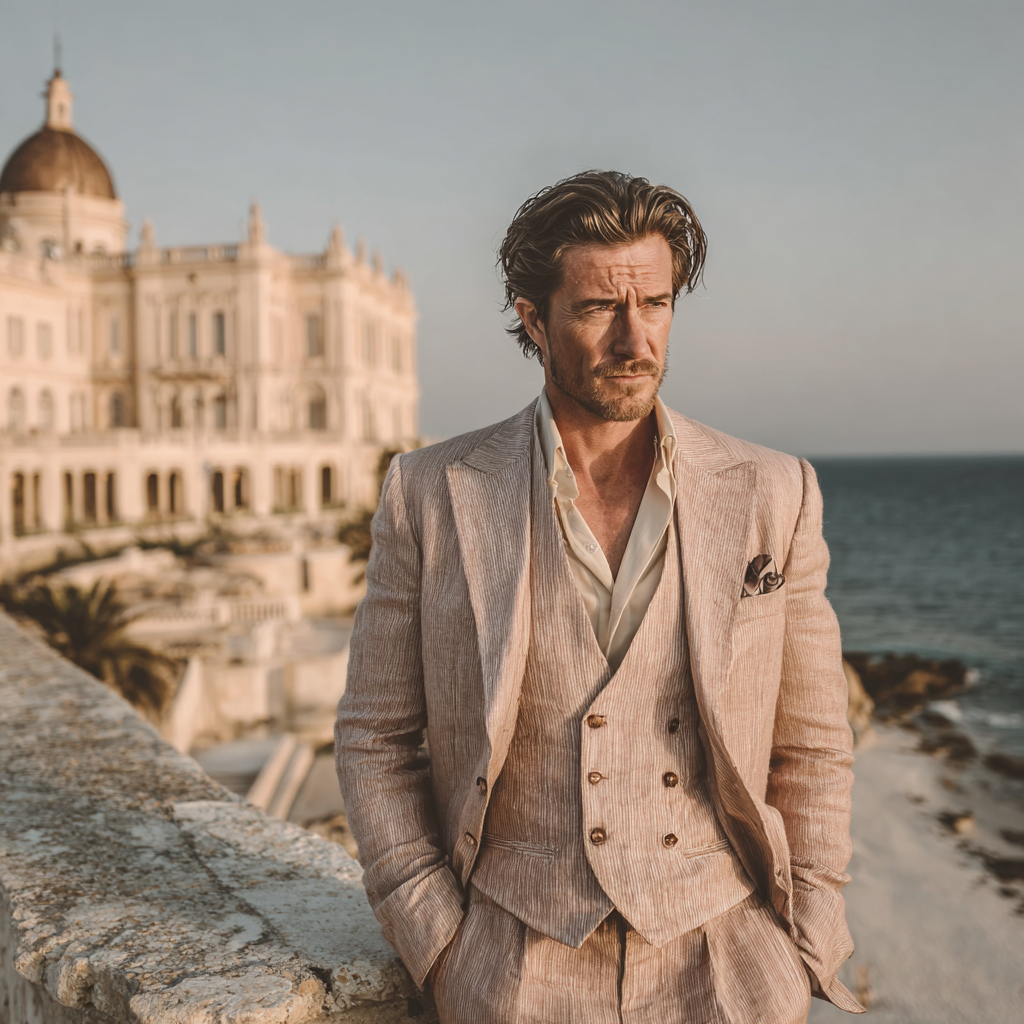
About Leo Novak
Luxury hospitality critic and former hotel inspector. Leo has slept in over 500 five-star properties across 40 countries. He notices the thread count, sure—but more importantly, he notices whether the staff remember your name and if the concierge actually knows the city.
More by Leo Novak