
The Maldives Is Not a Resort: A Conservation Biologist's Guide to the Local Islands That Will Disappear First
A conservation biologist guide to the Maldives local islands: whale sharks at Dhigurah, mantas at Hanifaru Bay, 2026 green tax rules, honest budgets, and how to visit before the atolls sink.
On this page
I have spent fifteen years studying reef ecosystems, and I will tell you what I tell every diver who asks: the Maldives is not a luxury destination. It is a country of 1,200 islands, roughly 200 of them inhabited, and most travelers never see it. They land at Velana International Airport, transfer to a seaplane, and disappear into a resort bubble where every worker is imported, every meal is flown in, and every coral reef is dying behind the overwater villas. This is a mistake. The real Maldives is on the local islands, in the atolls where communities have lived for a thousand years, and where a 2009 policy change finally allowed ordinary Maldivians to open guesthouses in their own homes.
Since that change, over 500 guesthouses have spread across 70 islands. You can now travel the Maldives on a mid-range budget, sleep in clean air-conditioned rooms with private bathrooms, eat fresh-caught tuna curry with local families, and swim with whale sharks on a morning boat that costs less than a resort spa treatment. The environmental cost is lower too. Local islands use existing infrastructure, employ Maldivians, and keep profits in the community. The choice between a resort and a local island is not a choice between luxury and roughing it. It is a choice between isolation and actually being here.
The Lay of the Land: 26 Atolls, One Decision
The Maldives is organized into 26 atolls, ring-shaped reef systems formed from the rims of submerged volcanoes. The capital, Malé, sits on its own island in Kaafu (North Malé) Atoll. Most travelers arrive here and leave immediately. That is the first error — and the first correct decision. Malé is one of the most densely populated cities on earth, with roughly 250,000 people crammed onto 2.2 square kilometers. Give it a morning, not a night: the 17th-century Friday Mosque (Hukuru Miskiy, built 1658 from coral stone, on UNESCO's tentative list), the tsunami memorial, and the fish market near the harbor, where yellowfin tuna the size of a person are laid out on the concrete at dawn. Then get on a boat. The Maldives begins when you leave.
The one decision that shapes everything else is which atoll to base in. Distances are deceptive — the country stretches 800 kilometers north to south, and every inter-atoll journey routes through Malé. You cannot hop casually from Baa to Ari. Pick one region, or two if you have ten days or more, and commit.
One practical note on arrival: if your international flight lands late or leaves early, sleep on Hulhumalé, the reclaimed island connected to the airport by road, rather than in Malé itself. It has a decent public beach, a growing cafe scene, and guesthouses from $50, and it removes the stress of an early-morning speedboat connection. But treat it as a transit stop, not a destination.
Getting Around Without a Seaplane
The public ferry network (MTCC) is the backbone of local-island travel. Fares run $2 to $10 per journey and connect most inhabited islands within an atoll. The schedules are limited, ferries do not run on Fridays (the Sabbath runs from Thursday afternoon prayer into Friday), and every trip between atolls requires returning to Malé. This is not a country for rushing. Plan three or four nights per island.
For the popular local islands, shared speedboats fill the gaps: $25 to $40 per person to Maafushi (30 to 45 minutes), around $60 to $100 per person to Dhigurah (about 2 hours). Guesthouses arrange these and will meet you at the airport jetty holding a name card. Book the speedboat through your accommodation, not a third party — and since 1 October 2026, foreign booking platforms and OTAs must register and charge the Maldives' 17% goods and services tax on top of quoted rates, so booking direct with the guesthouse is now also the cheaper option.
The public ferry is the sustainable choice. It burns a fraction of the fuel per passenger, carries islanders doing their weekly shop, and forces you to slow down to the country's actual rhythm. Take the speedboat once, when you are tired. Take the ferry the rest of the time.
Where to Base Yourself
Maafushi: The Working Hub
Maafushi in South Malé Atoll is the most developed local island, with over 50 guesthouses, dive centers, cafés, and the country's original designated bikini beach — a fenced northern tip where tourists swim in normal swimwear. Elsewhere on the island, and on every local island, modest dress applies: shoulders and knees covered when walking through villages.
It is convenient, friendly, safe, and crowded. Budget rooms start around $50 a night, comfortable doubles run $80 to $150, and most include breakfast. Dinner at a local café costs $5 to $12 (tuna fried rice $5 to $8, beach buffets $12 to $20). The Bank of Maldives branch has a 24-hour ATM that dispenses US dollars — the first USD ATM outside Malé — but carry small bills anyway. Excursions from Maafushi are the cheapest in the country: half-day snorkeling and sandbank trips $30 to $50, sunset dolphin cruises $25 to $40, discovery scuba $80 to $150 for a two-tank dive. Book the multi-trip packages guesthouses sell; bundling three excursions saves $20 to $30.
Dhigurah: The Whale Shark Island
For the Maldives' single greatest wildlife encounter, base on Dhigurah in South Ari Atoll. The atoll's outer reef is a year-round feeding ground for whale sharks — the largest fish on earth, filter-feeders growing to 12 meters, and unbothered by swimmers. From Dhigurah you are minutes from the aggregation zone; shared morning safaris run $70 to $110 per person (often $100 combined with a manta stop), in groups of four to fifteen depending on the season. From Maafushi the same trip costs more and burns two hours of open-water transit each way. Sightings are not guaranteed, and honest operators say so; some discount the trip if nothing appears.
Dhigurah is a three-kilometer sliver of an island with a superb house reef, a long sandbank you can walk at low tide, and a village that runs on bicycles ($5 a day to rent). Guesthouses run $60 to $150. Getting there: shared speedboat about 2 hours from Malé ($60 to $100), or the public ferry — roughly 7 hours, around $8 to $10, typically running Saturday, Monday, and Wednesday. Fly into Maamigili's domestic airport (30 minutes from Malé) if the ferry schedule does not fit, then a 30-minute speedboat.
Ukulhas: The Clean Island
Ukulhas in Alif Alif Atoll has won national awards for waste management and runs a community coral-propagation program. It is small enough to walk across in ten minutes, the house reef is accessible directly from the beach with free guesthouse gear, and rooms run $60 to $120. There is no nightlife, no shopping, no pretense. The island sorts its waste, runs substantially on solar, and enforces the rules itself. This is what sustainable tourism looks like when the community writes the rules instead of a resort marketing department.
Thulusdhoo and Rasdhoo: Surf and Scuba
Thulusdhoo in North Malé Atoll is the surf island — consistent breaks from March to October, board rental $15 to $25 a day, and a relaxed, creative village. It is also home to the country's only Coca-Cola bottling plant, with a world-class reef break directly in front of it, one of the more absurd juxtapositions in the archipelago. Rasdhoo, further west in Ari, has the better dive infrastructure: the channel between Rasdhoo and Madivaru is famous for dawn hammerhead encounters, PADI Open Water courses run $350 to $450, and fun dives $50 to $80 per tank — the same reefs the resorts dive, at local-island prices.
Fulidhoo and Omadhoo: The Quiet Corners
If even Maafushi feels too busy, Fulidhoo in Vaavu Atoll has one of the country's most beautiful lagoons, a famously musical Bodu Beru drumming tradition, and a beach where stingrays gather at dusk — free, every evening, no boat required. Omadhoo in the same atoll runs ethical nurse-shark snorkeling on its house reef. Both are served by the Vaavu ferry from Malé and guesthouses start around $50 a night.
The Great Marine Encounters
South Ari's whale sharks are the headline, but Baa Atoll — a UNESCO Biosphere Reserve since 2011 — holds the other wonder. Hanifaru Bay is a narrow lagoon where plankton blooms during the southwest monsoon (roughly June to November, peaking July to October) draw feeding aggregations of manta rays, sometimes dozens at once. Diving is banned. Snorkeling is permitted only with a licensed guide, under strict ranger-enforced rules: an 80-visitor cap on the water at once, no fins (only booties), a three-meter distance from the animals, and sessions limited to about 45 minutes. Permits run $30 to $60. The access island is Dharavandhoo, reached by 30-minute domestic flight from Malé or the atoll ferry. Drifting in the water while mantas circle and barrel-feed around you is the single most remarkable wildlife encounter in the country — worth planning a whole trip around the season.
Underwater, the difference between a recovering reef and a stressed one is visible within minutes — look for the crisp brown-gold of living acropora against the bone-white of bleached coral, and for fish biomass, which collapses when the structure dies. On good days in South Ari and Baa you will drift over reefs that look the way the whole archipelago did thirty years ago. Savor it, and let it sharpen why the green tax and the no-touch rules matter.
Choose operators carefully everywhere. The rules above exist because crowding, chasing, and touching stress the animals. Good signs: propeller guards on boats, capped group sizes, guides who brief you on distance before entry. Bad signs: boats that race other boats, touching for photos, fish-feeding to attract sharks. Ask before you book — it is a five-second question that sorts the responsible operators from the cowboys.
When to Come
The dry northeast monsoon, November to April, brings stable weather, calm seas, and the highest prices. The wet southwest monsoon, May to October, brings short afternoon downpours and livelier seas — and the mantas at Hanifaru, reliable whale-shark action in South Ari, and guesthouses at their lowest rates of the year. The Maldives does not close down in the wet season. Storms pass in an hour, and plankton-rich water is why the megafauna shows up. My honest advice: come in the shoulder months of May, October, or November, when weather odds are decent, crowds are thin, and the ocean is at its most alive.
Money, Entry, and the 2026 Rulebook
Entry is easy. Citizens of all countries receive a free 30-day visa on arrival; immigration may ask for proof of onward travel, a confirmed booking for your first nights, and funds of roughly $100 per person per day. Your passport needs six months' validity. The step people miss: the IMUGA Traveller Declaration — a mandatory online customs and health form submitted within 96 hours before both arrival and departure, free at imuga.immigration.gov.mv. Third-party sites charge for the same form. Use only the government portal.
Money is simple. The rufiyaa is pegged at 15.42 to the US dollar, and US dollars are accepted nearly everywhere on the tourist circuit; you will often get change in rufiyaa. Cards work at larger guesthouses and restaurants; small cafés and ferry counters are cash. Taxes are the surprise. The green tax — the environmental levy — doubled on 1 January 2025: it is now $12 per person per night at resorts and liveaboards, but $6 at qualifying guesthouses on inhabited islands (properties of 50 rooms or fewer), with children under two exempt. On top of that, the Tourism Goods and Services Tax rose to 17% in July 2025, and a 10% service charge is customary. Menu math: a $15 fish curry is really about $19.40. The green tax is usually collected at checkout, often in cash — budget for it.
Friday is the prayer day: shops close around midday, public ferries pause, and the rhythm of every island slows. Dress modestly away from bikini beaches. Alcohol is illegal on local islands; a few offshore floating bars anchor beyond the reef and guesthouses can boat you out, at resort prices and considerable awkwardness. If drinking matters to you, that is what resorts are for. The call to prayer sounds five times a day, and the early one is loud. Bring earplugs or embrace it.
Honest Math
On local islands, a comfortable independent day — guesthouse room with breakfast, local-café meals, one excursion amortized, all taxes — runs $80 to $130 per person. A more polished version, with a nicer guesthouse and daily trips, runs $150 to $250. Resorts start around $400 and run past $1,500 a night before seaplane transfers, which alone cost $200 to $500 round trip. A week on local islands with two excursions a day and a diving package can come in under $1,200 per person all-in; the same week in an overwater villa starts around $7,000 for two.
What to Skip
Skip the resort day-trip packages sold out of Maafushi — $100 to $200 for a resort pool, a buffet, and a speedboat transfer that cancels out the low-impact logic of staying local. Skip the seaplane transfers when a public ferry or shared speedboat reaches your island; seaplanes exist to serve resorts, and their per-passenger emissions are brutal. Skip the dolphin cruises that run multiple boats at the same pod — if the captain chases, the operator harasses. Skip any operator who feeds fish or lets guests touch turtles and sharks. Skip souvenirs of coral, shell, or dried marine life; the trade is illegal and the items get confiscated at departure. Skip booking through foreign OTAs now that the October 2026 tax rules make direct booking both cheaper and better for the host. And skip more than a morning in Malé.
The Honest Ledger
The Maldives will not exist forever in its current form. The highest natural point in the country is 2.4 meters above the sea. The 2016 El Niño bleached roughly 73% of the nation's corals, and the recovery was only partial before the global bleaching event declared in 2024 struck the archipelago again. Some reefs have recovered beautifully — the Maldives' recovery rates are among the best-documented in the world — but the trend line is the trend line, and the entire nation is simultaneously building sea walls and buying higher ground elsewhere.
Travel here is a choice to witness a place that is actively disappearing. The sustainable option is not the resort with a solar panel and a framed green certificate. It is the guesthouse on a local island where your $12 green tax and your room rate pay for schoolbooks and fishing nets, where the reef you snorkel is the same one the children swim in after class, and where the waste you sort is handled by a community that cannot ship it offshore. Ask your guesthouse whether they run or fund a coral nursery — a growing number do, in partnership with marine biologists, and the honest ones will show you the data. Then get in the water. That is the whole point.
The atolls are not a backdrop. They are a country, and they are running out of time. Come meet them properly, while meeting them is still possible.
— Priya Sharma covers sustainable travel and wildlife for RoamGuru. She is a conservation biologist who has logged hundreds of reef dives across the Indian Ocean and believes the best wildlife encounter is the one the animal chooses. All prices and opening hours verified October 2026.
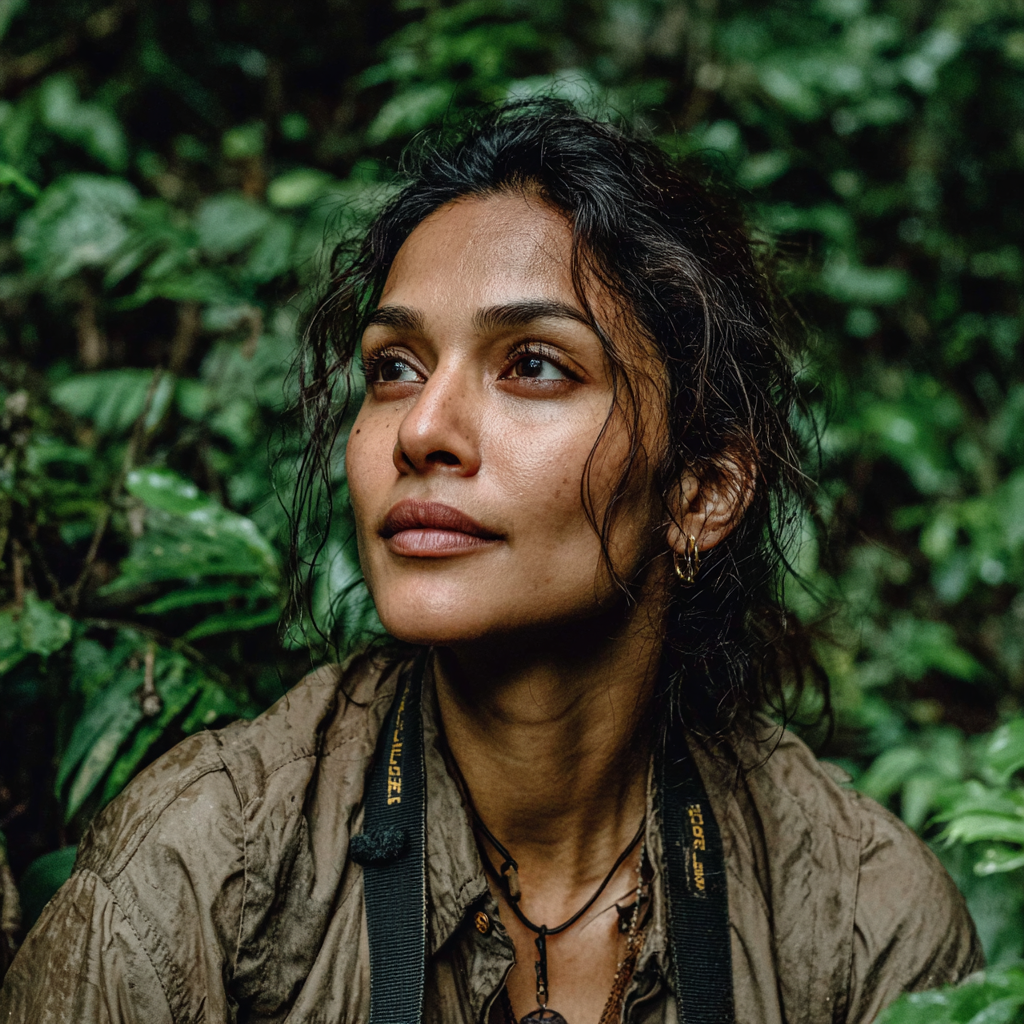
About Priya Sharma
Conservation biologist and sustainable tourism advocate. Priya works with eco-lodges and wildlife sanctuaries to promote ethical travel practices. She holds an MSc in Biodiversity Conservation and has spent years tracking endangered species across the Indian subcontinent.
More by Priya Sharma