
Malawi: Freshwater Beaches, Wildlife Parks That Came Back From Nothing, and the Most Honest Safari in Africa
A sustainable travel guide to Malawi's freshwater beaches, conservation comeback parks, and low-key safari experience.
On this page
Priya Sharma — Sustainable Travel & Wildlife Writer. I measure trips by what they leave behind: better-funded parks, paid local guides, and ecosystems that are still standing when you come back. Malawi is one of the few places where a mid-range budget genuinely moves the needle.
The visa rules changed in January 2026. The money math changed even more. And the parks — Liwonde, Majete, Nkhotakota — keep quietly rewriting what's possible in African conservation. This is the Malawi that exists right now, not the one from the old guidebooks.
Entry Formalities & Money (Read This First)
The visa waiver is dead. On 2 January 2026 Malawi revoked the visa-free entry that most Western, Commonwealth, and SADC-traveler itineraries relied on. As of late 2026, most nationalities need a visa, and the only legitimate route is the official e-Visa portal — evisa.gov.mw (applications processed in about 3 working days). Beware copycat third-party sites charging $80–120 for what the government sells for less. Fees: single-entry tourist visa US$50 (valid three months, 30-day stay), multiple-entry US$150 (6 months) or US$250 (12 months), transit US$50. Some nationalities in Malawi's "Category Two" can still get a visa on arrival at designated ports (the scheme took effect 24 February 2026), but Category One nationalities must arrange it in advance — check which list you're on before you fly, not at the border. You'll also want a passport valid 6+ months, proof of onward travel, and a yellow fever certificate if arriving from an endemic country.
The money situation needs a paragraph of its own. Malawi's kwacha is in genuinely strange shape. The official rate has slid to roughly 1,700–1,750 MWK/USD (a record low as of mid-2026), while the parallel street rate runs near 4,000–4,500 — a premium of well over 100%. This is not a normal double-exchange situation and it makes every price in this guide a moving target. What doesn't move: the safari economy runs on US dollars, and everything local runs on kwacha cash. Bring clean, newer USD or EUR notes (large denominations get better rates), exchange at banks or licensed bureaux, and never change money with street touts — it's where scams live. Cards work only at top-end lodges and a handful of city businesses; expect 4–5% surcharges where they do. ATMs in Lilongwe and Blantyre dispense kwacha but are unreliable (and often empty) outside the cities. Assume you are on a cash economy for 90% of the trip.
When to Come
The dry season May to October is prime time: vegetation thins, wildlife concentrates along the Shire River, and the lake is glassy. June through August brings the south's famous chiperoni — misty, drizzly cold fronts rolling off Mulanje and the highlands that can drop temperatures near freezing on Nyika's plateau. Pack layers, not just swimwear. October is brutally hot but arguably the best game-viewing month. The green season (November–March) is lush, cheap, bird-heavy, and muddy — some lodges close entirely (Mkulumadzi shuts in February, reopening around 16 March). Lake of Stars, the lake's beloved music festival, has moved around and run intermittently in recent years — treat any given year's edition as unconfirmed until the organizers announce it, and don't build the whole trip around it.
The Lake Is the Safari
Most people arrive expecting a consolation prize — "Africa without the wildlife." Lake Malawi is actually the opposite: a UNESCO World Heritage Site (inscribed 1984) holding more fish species than any other lake on Earth, most of them cichlids found nowhere else. Snorkeling off a beach that looks like the Indian Ocean, you're swimming through an evolutionary laboratory with more endemic species than the Galápagos.
The infrastructure is almost embarrassingly affordable. Budget beach chalets at Cape Maclear run $20–30/night, comfortable mid-range lodges $50–80, boutique waterfront options from about $140. Kayak rental is $10–15 for a half day, a sunset cruise with snacks $15–25, grilled chambo (the lake's famous tilapia) with rice or chips at a village restaurant $6–10. Lake Malawi National Park entry (the park gate sits at the northern edge of Chembe village) runs about $10/person/day for non-residents — a fee that funds the rangers and village projects in the park's buffer zone.
For proper luxury, Pumulani (Robin Pope Safaris) on the Nankumba Peninsula and Kaya Mawa on Likoma Island are the heavyweights — think several hundred dollars per person per night all-in, and worth it if the budget allows. Blue Zebra Island Lodge on Nankumba Island, a short boat ride from Cape Maclear, splits the difference — boutique, private-island feel, from roughly $140/night — and includes the boat transfer in the rate. Snorkel trips out to Thumbi Island West (15 minutes by boat from the beach near the park gate, ~$15–25 with gear) are best before 9 a.m., when the water is glass and the cichlids are active.
Don't ignore the northern shore. Nkhata Bay is the backpacker-era classic — cliff-hanging lodges like Mayoka Village, dhow sails at sunset, nsima and chambo for a few dollars — and it's the jumping-off point for the Likoma ferry. The lake's middle reaches around Salima and Senga Bay are where Malawians themselves weekend, with cheaper lodges and a local scene tourists mostly skip. Wherever you base, swim with the confidence of a lake with no hippos or crocs in the open water (they keep to river mouths and lagoons — locals will tell you exactly where not to go), but treat bilharzia as real: avoid long freshwater soaks near reed beds in high-risk spots, or take the post-trip praziquantel tablet many travelers do as routine.
The splurge with real conservation teeth is Mumbo Island, a ten-minute boat ride from Cape Maclear. It's run by Kayak Africa under a public-private partnership with the Malawi government — roughly 40% of every published rate goes to park fees, taxes, and concession payments, and the company is the largest employer in Cape Maclear. 2026 rates: Island Chalet $106/night high season ($96 low), Forest Chalet $70 ($64 low), Domwe Island's safari tents $40, camping $20 — self-catered, with full catering available at $70/day. A 25 km sea-kayak trail linking Domwe and Mumbo over three days costs a fraction of any ocean equivalent. Book through kayakafrica.co.za (reservations: [email protected], WhatsApp +27 82 785 4294).
For proper luxury, Pumulani (Robin Pope Safaris) on the Nankumba Peninsula and Kaya Mawa on Likoma Island are the heavyweights — think several hundred dollars per person per night all-in, and worth it if the budget allows. The Likoma flight from Lilongwe (Ulendo Airlink, via Salima) still runs on thin schedules — often two or three times a week — so build buffer days around it. The slow Ilala ferry still loops the lake weekly and remains the classic budget route, but treat it as an experience, not a timetable.
The Parks That Came Back
Malawi's conservation story deserves more attention than it gets. Three parks, three resurrections.
Liwonde National Park (~580 km²) on the Shire River is the flagship. In 2015 it was a poached-out shell; African Parks' takeover that year triggered "500 Elephants" (2016), the largest elephant translocation in history, plus reintroduced cheetah, lion, and — quietly, in 2022 — a founding population of black rhinos from South Africa. The elephant herd is now estimated around 800, and the Shire River boat safari (book through [email protected] or +265 999 965 034; roughly $25–30/adult) is among the best water-based wildlife experiences in Africa: hippos everywhere, elephants swimming, Goliath herons doing their unhurried thing. Entry runs roughly $20–30/day for non-residents, children about half. On the park's edge, Mvuu Camp is the anchor — full board around $305–345 pp/night in 2026 depending on season — and its community outreach program genuinely funds surrounding villages. A percentage of what you spend at Mvuu or the tented Kuthengo Camp (Robin Pope Safaris) flows directly into local employment and anti-poaching patrols.
Majete Wildlife Reserve, about 90 minutes from Blantyre, is the proof of concept: lions reintroduced in 2012 completed the Big Five, and the park now generates enough revenue to fund its own protection. Mkulumadzi Lodge, Robin Pope's eight-chalet lodge on the Shire, runs 2026 rates of $460 pp/night in the emerald season (January–21 May, November–December), $520 shoulder (late May–June, October), and $630 peak (July–September) — full board, activities, and bar included; park entry is extra. Closed in February; reopens ~16 March. Cheaper options inside the reserve (Thawale Lodge, basic camping) start around $50–100.
Nkhotakota Wildlife Reserve in the center received ~520 elephants in a 2016–17 translocation from Liwonde and Majete and is now in recovery; facilities are basic — Bua River Lodge and the upmarket Tongole Wilderness Lodge are the main beds, game drives and walks with resident scouts — but it's the park to watch, and to visit if you like your conservation raw and your crowds nonexistent.
Even the capital has a worthwhile stop: Lilongwe Wildlife Centre (www.lilongwewildlife.org), a rescue and rehabilitation sanctuary in the middle of the city, free to enter (donations fund it), with a canopy walkway over the forest — an hour well spent on arrival or departure day.
Nyika National Park up north is different country entirely: montane grassland at 2,200+ meters, zebras and roan antelope on rolling highlands that look like Wales, orchids by the dozen in the wet season. Entry ~$10–20/day; the Chelinda camp area is the base. It's a long, rough journey up — fly if you can — but the payoff is one of Africa's strangest landscapes.
Where your money goes (the real math): park fees fund African Parks' and the Department of National Parks & Wildlife budgets; community camps like Mvuu and Mumbo/Domwe channel 30–40% of revenue locally; and Malawian guides, boatmen, and camp staff are paid real wages. If your dollars have ever felt like they evaporate on a safari, Malawi is where you can watch them land.
The Mountains
Mount Mulanje (3,002 m, Sapitwa Peak) south of Blantyre is southern Africa's best big-mountain walk this side of Kilimanjaro — granite massif, tea estates at its feet, mountain huts on the plateau. Guided treks run $25–30/day for a licensed guide plus porter fees (via the Mulanje Mountain Conservation Trust at Likhubula Forest Office; mmct.org.mw), and a 3-day Sapitwa summit typically lands around $150–250 all-in. Mount Zomba is the easy warm-up: plateau walks, a famous view, cold air. Guided day walks from about $20. Both are community-managed — your fees keep the forests standing and the guides licensed.
The Honest Math (Daily Budgets, 2026)
- Budget ($45–65/day): guesthouse or beach chalet ($20–30), local meals ($10–15), shared minibuses ($1–5/hop), park day-trips where funds allow. Bring flexible expectations and small kwacha.
- Mid-range ($120–180/day): proper lodge ($70–120), meals out, guided activities, a rental car or driver some days, park fees. This is Malawi's sweet spot.
- Luxury ($350–600+/day): Mvuu, Mkulumadzi, Pumulani, Kaya Mawa — full board with activities runs $400–650 pp/night at peak, park fees on top.
- Safari stacking: a realistic 10-day park-and-lake trip (3 nights Mvuu + 3 nights Mkulumadzi + 3 nights lake + transfers) lands around $3,800–4,900 pp sharing in 2026 — roughly half the Kenya/Tanzania equivalent, with a fraction of the vehicles per sighting.
- The wild cards: international airfare (often routed via Addis Ababa, Nairobi, or Johannesburg), travel insurance with emergency evacuation (medevac to Blantyre or South Africa is not optional thinking here), and tips (~$10/day for staff).
Eating, Drinking & Buying Well
The food story is honest rather than fancy. Nsima (maize porridge, the national starch) arrives with chambo — the lake tilapia, grilled whole over charcoal, $6–10 at any lakeshore restaurant — plus kondowole (cassava porridge) in the north and mandasi (fried dough) for breakfast. Vegetarians do fine: beans, pumpkin leaves (chibwabwa), and groundnut stews are staples, not afterthoughts. Two things worth seeking out: Mzuzu coffee, some of the best arabica on the continent, grown an hour's drive north of the city of the same name; and Malawi gin, famously cheap and surprisingly decent, the sundowner of the lake. In Blantyre, the old Carlsberg brewery and the city's established restaurant strip (the 47 Galaxy Avenue/Standard Bank Centre area around Mibawa) cover the urban night out. Buy crafts where they're made: the Mua Mission workshop near the lake's central shore (Kungoni Centre of Culture & Art) sells genuine Gule Wamkulu carvings at fair-trade prices, and the workshop visit doubles as a museum of Chewa culture.
What to Skip
- Assuming the visa-free entry still works. It ended 2 January 2026. Sort your e-Visa at evisa.gov.mw before departure.
- Card-reliant travel. Cards fail outside top lodges; carry USD + kwacha cash and split it across bags.
- Street money changers. The parallel-rate premium is tempting; scams, fake notes, and police attention are the tax. Use banks or licensed bureaux.
- Building the trip around Lake of Stars. It's been intermittent and itinerant in recent years — confirm it exists this year before booking around it.
- The Ilala ferry as plan-A transport. Delays measured in days, not hours. Fly Ulendo or take the bus; ride the Ilala as an experience with slack on both ends.
- Day-tripping Likoma. The flight schedule is thin and weather-prone — you need at least two nights or you'll spend your "island time" in departure lounges.
- Rushing the whole country. Lilongwe–Cape Maclear alone is 4–5 hours; the lake-to-Nyika hop is a full day. Pick two or three anchors and go deep — the country's biggest charm is that it rewards slowness.
Practical Logistics
Getting in: Kamuzu International (Lilongwe, LLW) and Chileka (Blantyre, BLZ) are the gateways; most intercontinental routings come via Addis Ababa, Nairobi, or Johannesburg. Getting around: shared taxis/minibuses are the national bloodstream (Lilongwe→Cape Maclear $10–15, 4–5 hours; private transfers $80–120/car); self-drive is feasible on the main M-roads in a 4x4 ($60–100/day) but watch for livestock, police checkpoints, and fuel gaps — top up whenever you see a station. Domestic hops run on Ulendo Airlink (Likoma, Nyika/Chelinda, the lake). Power & fuel: rolling blackouts ("load shedding") are routine outside lodge generators and solar rigs — carry a headlamp and a power bank, and ask lodges whether they run on solar, generator, or the grid. Fuel supply has tightened episodically in 2024–26; fill up in the cities. Health: Queen Elizabeth Central in Blantyre is the public referral hospital; Mwaiwathu (Blantyre) is the private option travelers actually use. Malaria is real and year-round at lake level — prophylaxis, DEET, and a net you trust. Comms: TNM and Airtel 4G SIMs are cheap ($1–2 for the SIM, data from a few dollars); coverage is good on the lake's populated shore and patchy in the parks. Insurance: get medical evacuation cover — the nearest serious hospitals and the nearest real airport are often the same building.
Malawi works because it never tried to be Kenya. The beaches are real, the wildlife came back from actual nothing, and the people — famously warm, yes, but more importantly, professionally invested in making tourism work — run the tightest conservation story in southern Africa. The visa change and the currency squeeze added friction in 2026. The payoff is unchanged: this is still the continent's most honest safari, at a price where your money visibly stays in the country.
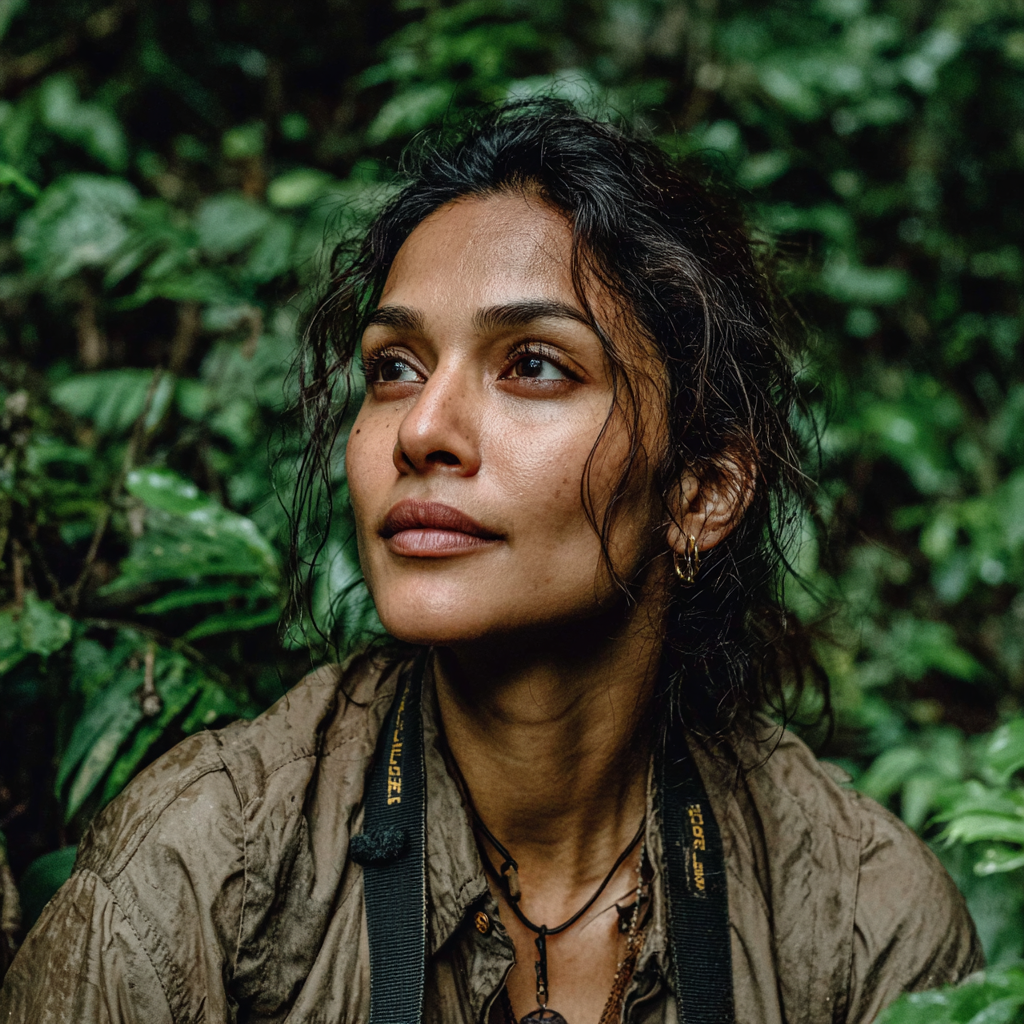
About Priya Sharma
Conservation biologist and sustainable tourism advocate. Priya works with eco-lodges and wildlife sanctuaries to promote ethical travel practices. She holds an MSc in Biodiversity Conservation and has spent years tracking endangered species across the Indian subcontinent.
More by Priya Sharma