
Beirut: Bullet Holes, Baroque Balconies, and the Best Breakfast in the Middle East
Beirut does not ease you in. You arrive to a city of contradictions: bullet-scarred buildings beside gleaming new towers, conservative neighborhoods blocks from beach clubs where alcohol flows freely, ancient Roman baths under streets where teenagers ride scooters past political murals older than they are. The Lebanese capital has been destroyed and rebuilt so many times that resilience is not a trait here—it is the baseline condition of existence. I have walked these streets at dawn and at 3 AM, and I can tell you this: Beirut is not a place you visit. It is a place you survive, then miss, then return to.
The first thing to understand is scale. Central Beirut, the area most visitors explore, is walkable in a morning. But the city reveals itself in layers, and each neighborhood operates like a separate municipality with its own customs, dialect, and dress code. The Mohammad Al-Amin Mosque and the Maronite Cathedral of Saint George face each other across Martyrs' Square like competitors in an architectural staring contest—one Ottoman revival with blue domes, the other neo-classical with a clock tower. Both opened in the last twenty years, replacing structures damaged during the civil war. This is Beirut's rhythm: build, destroy, rebuild again, each iteration carrying the memory of what came before.
The Neighborhoods That Matter
Gemmayzeh: The Beating Heart
Start your exploration in Gemmayzeh, the former Christian quarter that now holds the city's best concentration of bars, restaurants, and crumbling French Mandate-era architecture. The streets here slope down toward the Mediterranean, and buildings from the 1920s and 30s display the architectural ambition of that period: balconies with intricate ironwork, arched windows, facades of Lebanese limestone gone honey-colored with age and pollution. Many are abandoned, their owners abroad, waiting for political stability that may never come. Others have been restored as apartments for the wealthy or as boutique hotels like Arthaus (Gouraud Street, Gemmayzeh), a 15-room property built on the grounds of a Roman villa with archaeological fragments visible in the garden, or Hotel Lost (Building 341, Gouraud Street), a repurposed heritage building overlooking the Saint Nicholas stairs with 18 eclectic rooms and a ground-floor pizzeria.
The Saint Nicholas stairs themselves are worth the climb—125 stone steps connecting Gemmayzeh to Ashrafieh, lined with small art galleries and coffee shops. At the top, turn left onto Greek Orthodox Archbishopric Street and find the Sursock Museum, housed in a 1912 Italianate-Ottoman villa built by Nicolas Ibrahim Sursock, a wealthy collector who bequeathed his home and art collection to the city in 1952. The museum opened in 1961, closed for a major renovation from 2008 to 2015, was severely damaged in the August 2020 port explosion, and reopened in February 2023 after two years of repairs. It now holds 5,000 works spanning the late 19th century to the present. Admission is free. Hours: Wednesday to Sunday, 10:00 AM to 4:00 PM (closed Monday and Tuesday). The building itself—with its marble floors, painted ceilings, and spiral staircase—is the main attraction, but do not miss the Fouad Debbas Photography Collection, over 30,000 images documenting Lebanon's visual history.
For breakfast in Gemmayzeh, find Furn el Hayek on Gouraud Street. They have been baking manakish since 1937—flatbread topped with za'atar, cheese, or ground meat, baked in a wood-fired oven that predates the Lebanese Republic. A cheese manoushe costs about 5,000 Lebanese pounds (roughly $0.05 at current street exchange rates), though with the currency crisis, prices change weekly. Bring cash. US dollars work everywhere and are preferred. The bakery opens around 6:00 AM and stays busy until mid-morning.
Mar Mikhael: Where the Night Lives
Adjacent to Gemmayzeh, Mar Mikhael is the younger, louder sibling. By day it is quiet—residential streets, small auto repair shops, the occasional café. By night it transforms. Bars here open around 8:00 PM but do not fill until 11:00 PM, and the crowd spills onto sidewalks, drinks in hand, talking too loudly because everyone is talking too loudly.
Tawlet, at 12 Rue Naher in Mar Mikhael (+961 1 448 129), is a farm-to-table restaurant that serves regional specialties cooked by women from villages across Lebanon—each dish labeled with its origin, each cook paid directly for her work. The menu changes daily based on what is available from Souk El Tayeb's network of small-scale producers. Expect kibbeh nayyeh (raw lamb and bulgur), fattoush with sumac and pomegranate molasses, and dishes you will not find in standard Lebanese restaurants abroad. Dinner runs about $25-35 per person. Hours vary; call ahead to confirm.
For something more contemporary, Em Sherif in the same neighborhood offers a tasting menu of Lebanese cuisine reimagined through fine-dining technique: deconstructed tabbouleh, lamb cooked sous-vide then finished over charcoal, desserts that reference traditional sweets while tasting like something new entirely. The wine list focuses on Lebanese producers. The Bekaa Valley has been making wine for 5,000 years, and quality has improved dramatically in the past two decades. Try a bottle from Chateau Musar or Domaine des Tourelles. The tasting menu runs around $50-70 per person. Reservations recommended.
The best bars in Mar Mikhael include Anise, which specializes in Lebanese spirits—arak, of course, but also local gin and vodka made with regional botanicals. Torino Express, a converted train car, serves cocktails in a space the size of a large closet. The crowd spills onto the sidewalk. There is no address that matters; you will find it by following the noise.
Bourj Hammoud: The Armenian Quarter
For lunch, head to Bourj Hammoud, the Armenian quarter northeast of the city center. This neighborhood grew after the 1915 genocide, when survivors arrived and built a community that still speaks Western Armenian, still makes sujuk and basterma, still maintains a distinct identity a century later. Seza Restaurant on Armenia Street serves lahmajoun (Armenian flatbread with spiced meat) and manti (tiny lamb dumplings in yogurt sauce) in portions that require advance planning or a companion with a matching appetite. The owner, a third-generation Beiruti Armenian, will tell you about his grandfather's journey from Anatolia if you ask. Many people here will, if you ask. A full meal costs around $10-15 per person. Open daily from noon to 10:00 PM, though hours can shift with the electricity situation.
Bourj Hammoud is also the place to buy Armenian jewelry, repair a watch, or find a backroom tailor who will copy any garment from a photograph. The streets are narrow, the sidewalks cracked, and the shop signs hand-painted in Armenian, Arabic, and English. It is one of the most densely populated areas in the Middle East, and it feels like it.
Hamra: The Faded Intellectual Capital
Hamra, the historic center of intellectual life, has faded from its 1960s peak but remains essential. The American University of Beirut dominates the neighborhood, and students fill the cafes along Bliss Street. Cafe Younes, operating since 1935, roasts coffee on-site and serves it in a space unchanged for decades—wood-paneled walls, slow ceiling fans, elderly men reading newspapers and arguing about politics. A cup costs around 10,000 Lebanese pounds. Stay for two. The café is at 56 Bliss Street, Hamra, and opens daily from 7:00 AM to midnight.
Hamra is also where you will find Mezyan, one of the best traditional Lebanese restaurants in the city, and the last remaining independent bookstores in Beirut. It is scruffier than Gemmayzeh, more functional, less curated. That is precisely why you should spend time here.
The Sights That Stay With You
The National Museum of Beirut
The National Museum of Beirut sits on the former Green Line, the civil war division between east and west, at Damascus Street in the Mathaf neighborhood. It is worth half a day. The collection spans prehistory through the Ottoman period, but the story of the museum itself is the exhibit that stays with you. During the war, curators encased the most valuable pieces in concrete within the basement, protecting them from shelling and looting. They hung collection labels on the empty walls so fighters would know what lay beneath and, perhaps, think twice. It worked. The sarcophagi and Roman mosaics survived, and the museum reopened in the 1990s with bullet holes still visible in the exterior walls—left intentionally, the director told me, as "a reminder we cannot afford to forget."
The highlight is the sarcophagus of Ahiram, King of Byblos, with the earliest long inscription in the Phoenician alphabet. Go left from the entrance; you cannot miss it. The museum is crucial for understanding Byblos/Jbeil, since many finds from that ancient city are displayed here. Current hours: Tuesday to Sunday, 10:00 AM to 3:00 PM. Admission for foreigners is approximately $10 (1,000,000 Lebanese pounds at official rates, though travelers over 64 have reportedly been granted significant discounts on presentation of a passport). Phone: +961 1 426 703. Allow two hours minimum.
The Corniche and the Port
The Corniche, Beirut's seaside promenade, is the city's collective living room. Families walk here at sunset. Young men show off motorcycles. Fishermen cast lines into water too polluted to safely eat from, though they do anyway. The walkway extends from the Pigeons' Rocks in Raouché to the port, and walking it gives you the city's full demographic cross-section: women in hijabs and women in sundresses, men in business suits and men in gym shorts, all sharing the same concrete path, the same view of a sea that has witnessed Phoenician traders and Ottoman warships and Israeli bombardments.
The port itself is still a wound. The August 2020 explosion destroyed half the city, killed over 200 people, and left a crater where the silos stood. The damaged grain elevators remain, a gray concrete memorial that the government wants to demolish and activists want to preserve. You can see them from many points in the city—a constant visual reminder of corruption and incompetence and loss. Nearby streets still have shattered windows and collapsed facades, rebuilding stalled by economic collapse. This is not a tourist attraction, exactly, but it is the truest thing about contemporary Beirut. You should see it. Walk from the Corniche toward the port at dawn, when the light is flat and the scale of destruction is visible without the distraction of crowds.
Harissa and the Mountain View
For a different perspective, take the teleferique (cable car) up to Harissa, the mountain village overlooking the city. The shrine of Our Lady of Lebanon, a massive white statue of the Virgin Mary, stands on a hilltop visible from much of Beirut. The view from her base encompasses the entire coastline, the mountains behind, the urban sprawl that has consumed what were once separate villages. On clear days, you can see to Syria. The teleferique costs approximately 15,000 Lebanese pounds each way and operates when electricity permits—roughly 10:00 AM to 6:00 PM in season, though the schedule is unreliable. Bring patience. The Jounieh teleferique is a separate, older system; the Harissa one is more direct. A taxi from Beirut to the base station costs about $15-20.
What to Eat and Where
Beirut's food scene is not a scene. It is a necessity, an identity, an argument. Lebanese cuisine is the country's most successful export, and the versions you find in Beirut are different from what you have eaten abroad—fresher, more varied, less standardized.
Breakfast
Furn el Hayek (Gouraud Street, Gemmayzeh) for manakish from a wood-fired oven. Open from 6:00 AM. Cash only. Less than $1 per item.
Lunch
Seza Restaurant (Armenia Street, Bourj Hammoud) for Armenian-Lebanese crossover. Open noon to 10:00 PM. $10-15 per person.
Tawlet (12 Rue Naher, Mar Mikhael, +961 1 448 129) for regional Lebanese from village cooks. Call for hours. $25-35 per person.
Dinner
Em Sherif (Mar Mikhael) for fine-dining Lebanese. Tasting menu $50-70. Reservations essential.
Barbar (Hamra, multiple locations) for fast-food institution status since 1979. The chicken shawarma is sliced from a vertical rotisserie into Arabic bread with garlic sauce, pickles, and fries stuffed inside the wrap. It costs less than $2. Eat it standing on the sidewalk. Watch the city move past. This is how Beirut works—not in the restored museums or the beach clubs, but in the everyday commerce of people feeding themselves and each other, building lives in a place that keeps insisting on its own existence despite everything. The original Hamra location operates 24 hours.
For a traditional Lebanese dinner in a more casual setting, Dar el Gemmayzeh (Rue Gouraud, Gemmayzeh, +961 1 571 888) serves mezze and hosts oud performances in a restored Mandate-era house. Dinner with wine runs about $30-40 per person. Open from 7:00 PM.
The Practical Reality
Money
Lebanon operates on two exchange rates: the official rate, which is largely fictional, and the street rate, which is what matters. As of 2025, the Lebanese pound has stabilized at approximately 89,500 to the US dollar, but fluctuations are constant. Bring US dollars in cash—small bills, clean, unmarked. Credit cards are accepted at some hotels and upscale restaurants, but most of the city operates on cash. Prices in this guide are approximate and denominated in dollars for clarity, but you will pay in Lebanese pounds or dollars at the establishment's chosen rate. Do not exchange money at the airport; use a local exchange shop in Hamra or Gemmayzeh, where rates are posted on digital boards in the window.
Electricity
The government provides power only a few hours daily. Private generator companies fill the gap, and you will hear their engines throughout the city—a constant background hum, occasionally deafening when a large unit kicks in. Hotels and restaurants have their own systems. The lights will dim and brighten without warning. This is normal here. Adjust your expectations accordingly. Bring a power bank for your phone. Hotels with 24-hour generators advertise this fact prominently; it is a genuine luxury.
Transport
Beirut has no metro, no tram, and a bus system that exists in theory more than practice. Taxis are the primary mode of transport. There are two types: service taxis (shared, fixed routes, cheap—expect to pay around $2-3 for a cross-town ride) and private taxis (negotiate the fare before getting in, or use an app like Uber or Bolt, which operate in Beirut). A taxi from the airport to the city center should cost $20-25. Do not use the taxi touts inside the arrivals hall; walk outside to the official taxi stand and negotiate firmly.
Walking is the best way to see the central neighborhoods. Gemmayzeh, Mar Mikhael, Ashrafieh, and downtown are all connected by foot. For longer distances, a taxi is necessary. Traffic is severe from 8:00 AM to 10:00 AM and 5:00 PM to 8:00 PM. Plan accordingly.
Safety
Beirut is generally secure for visitors—violent crime against tourists is rare. Political instability is the variable you cannot predict. Check current conditions before visiting. Avoid the Palestinian camps (Ein el-Hilweh, Burj el-Barajneh) and certain southern suburbs unless you have specific reason to go and local guidance. The southern border with Israel is off-limits entirely. Otherwise, exercise the same awareness you would in any major city. Do not photograph military checkpoints or sensitive infrastructure. The August 2020 explosion left many buildings structurally compromised; do not enter abandoned structures.
Women travelers should be aware that harassment is rare but not nonexistent. Dress modestly in conservative neighborhoods (Ashrafieh, Bourj Hammoud, Hamra are all relatively liberal; the southern suburbs and Tripoli are not). The beach clubs in Raouché and Jounieh have different dress codes than the Corniche.
Best Time to Visit
Spring—March through May—is ideal. The mountains behind the city are green, wildflowers cover the hillsides, and the temperature sits in the comfortable 18-24°C range. Summer brings humidity and crowds to the beach clubs. Winter is mild but rainy, and many outdoor restaurants close. September and October are also excellent, with clear skies and warm seas.
Where to Stay
For first-time visitors, Gemmayzeh or Mar Mikhael puts you in the center of the restaurant and bar scene. Hotel Lost (Building 341, Gouraud Street) or Arthaus (Gouraud Street) are solid boutique choices. For a more traditional luxury experience, the Albergo Hotel (137 Abdel Wahab El Inglizi Street, Achrafieh) is part of the Relais & Châteaux collection, with 33 suites in a restored Ottoman mansion, a rooftop pool, and a permanently buzzing bar. For budget travelers, Hamra has more affordable options and better access to the university district and downtown.
What to Skip
Zaitunay Bay. The upscale marina development downtown looks impressive in photographs, but it is a manufactured environment of luxury yachts and overpriced chain restaurants that could exist in any city. The people-watching is limited to the same wealthy demographic, and the prices are Dubai-level without the Dubai justification. Walk through once for the architecture, then spend your time elsewhere.
The Beirut Souks. Rebuilt after the civil war by a private development company, this shopping district is a sanitized version of what a souk should be—high-end fashion brands, international cafés, and security guards who discourage lingering. It is clean, safe, and utterly without character. If you want a real market experience, go to Bourj Hammoud or the Sunday farmers' market at Souk El Tayeb.
Beach clubs in July and August. The famous beach clubs—Riviera, Sporting, Edde Sands—charge entry fees of $30-50 on weekends and transform into scenes of competitive posing and overpriced cocktails. The Mediterranean is beautiful, but the experience is more about being seen than being in the water. Go in late September or early October, when the crowds thin and the prices drop, or find a public beach like Ramlet al-Baida for free.
Any restaurant with a "view of the port explosion damage." Some establishments have marketed their proximity to the destruction as a selling point. This is ghoulish. The port is a site of mass death and ongoing trauma for the city's residents. Witness it respectfully, then leave.
About the Author
Elena Vasquez writes about culture, history, and the places where both are written into stone and erased by time. She has reported from Lebanon, Syria, Jordan, and Palestine, and believes the best way to understand a city is to walk it at dawn, eat what the locals eat, and listen to the stories they tell when asked. She last visited Beirut in spring 2025.
Final Notes
Before you leave, visit the Sursock Museum in Ashrafieh. The 1912 villa, built by a Lebanese aristocrat in Italianate-Ottoman style, holds a collection of modern and contemporary Lebanese art. The building itself is the main attraction: marble floors, painted ceilings, a spiral staircase that belonged in a different century. The museum survived the 2020 explosion with damage that required two years of repairs. It reopened in 2023. This is what Beirut does. It repairs. It continues. It refuses the neat narrative of destruction or recovery, instead occupying the complicated middle space where both exist simultaneously.
Your last meal should be at Barbar in Hamra. Eat it standing on the sidewalk. Watch the city move past. This is how Beirut works—not in the restored museums or the beach clubs, but in the everyday commerce of people feeding themselves and each other, building lives in a place that keeps insisting on its own existence despite everything. Then walk the Corniche at sunset one more time, buy a coffee from a street vendor, and let the city do what it does best: remind you that survival is not the same as surrender.
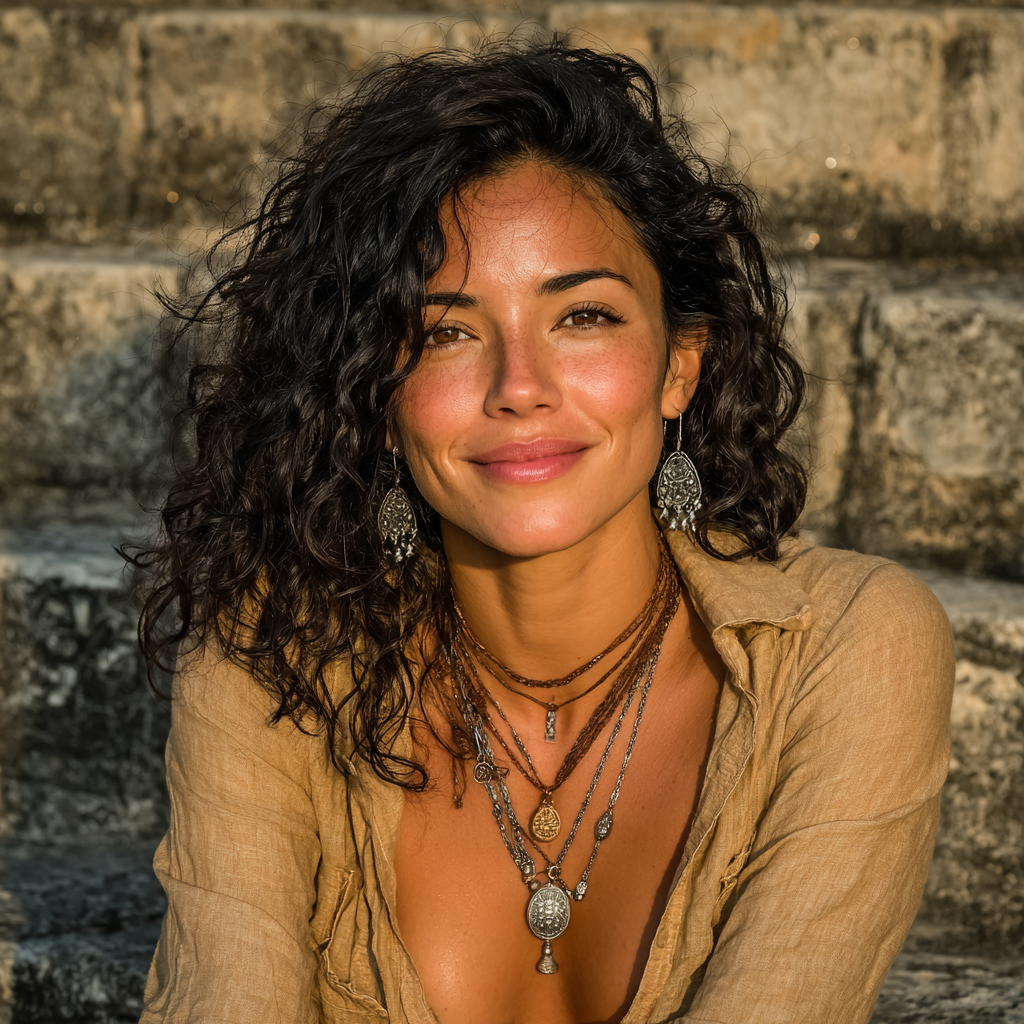
By Elena Vasquez
Cultural anthropologist and culinary storyteller. Elena spent a decade documenting traditional cooking methods across Latin America and the Mediterranean. She holds a PhD in Ethnography from Barcelona University and believes the best way to understand a place is through its kitchens and ancient streets.