
Vientiane: The Capital That Refuses to Hurry — Temples, French Ghosts, and the Mekong's Quiet Persistence
Author: Finn O'Sullivan
Published: June 8, 2026
Reading Time: 16 minutes
Word Count: 3,247
Vientiane does not announce itself. Where Bangkok assaults and Hanoi hustles, the Lao capital drifts. The Mekong rolls past in muddy silence. Motorbikes putter down wide French avenues. Monks in saffron robes pad through morning markets with empty alms bowls. This is a city of half a million people that somehow feels like a town, where everyone seems to know each other and nobody is in a hurry.
I spent ten days here, mostly doing very little. That is the correct approach. Vientiane reveals itself slowly, through repetition and patience. The same noodle vendor on Rue Setthathirath. The same sunset spot on the riverbank. The same French bakery where retired colonials and young NGO workers share croissants in wordless communion.
What Vientiane Actually Is
The city sits on a bend in the Mekong, facing Thailand across the chocolate-brown water. Until 1560, it was a minor settlement. Then King Setthathirath moved his capital from Luang Prabang, seeking a more defensible position against the Burmese. The move worked for a while. The city flourished as a trading post between Siam, Vietnam, and China. French colonizers arrived in the late 19th century and laid down the grid of wide boulevards and crumbling villas that still defines the center.
The Americans came later, in the 1960s and 70s, running a secret war from CIA bases north of the city. They left behind a different legacy: the jars of unexploded ordnance still being cleared from Lao soil today, and a small community of mixed Lao-American families who stayed after the communist Pathet Lao took power in 1975.
Modern Vientiane is the political and economic center of one of Southeast Asia's poorest nations. But poverty looks different here. There are no sprawling slums, no aggressive touts, no sense of desperate competition. Instead, a gentle entropy. Buildings peel and fade. Sidewalks crack and sprout weeds. Everything works, sort of, until it doesn't, and then someone fixes it eventually.
The Morning Ritual
Start at dawn. The temperature is still bearable, and the city moves through its morning routines with clockwork predictability.
Head to Talat Sao (the Morning Market) on Lane Xang Avenue. The main building is a multi-story structure filled with Chinese electronics, cheap clothing, and knockoff sunglasses. Skip it. Instead, go around the back to the warren of food stalls that have occupied the same concrete floor for decades. Here, vendors sell fresh Mekong fish still twitching on woven mats, sticky rice steaming in bamboo baskets, and jeow bong, the fiery chili paste that Lao people spread on everything. An old woman named Nang has sold the same three varieties of jeow from the same spot for forty years. She makes them herself in a village across the river. The mild version contains buffalo skin. The hot version will make you cry. A small jar costs 15,000 kip—about $0.70.
By 7 AM, monks begin their alms rounds. In Luang Prabang, this has become a tourist circus with camera-wielding visitors shoving rice into monks' bowls. In Vientiane, it remains private. Stand quietly on Rue Setthathirath near Wat Mixay and watch householders kneel to place sticky rice in the monks' bowls. The monks chant a brief blessing and move on. No cameras. No performance. If you want to participate, buy sticky rice from a market vendor beforehand and keep your distance.
For breakfast, find Kua Lao at 134 Rue Samsenthai, near the That Dam intersection. It looks like a dentist's office from the outside—fluorescent lights, plastic chairs, a calendar from 2019 on the wall. The proprietor, a grumpy man named Sombat, makes the best khao piak sen in the city. This is Lao chicken noodle soup, heartier than the Vietnamese pho it resembles. The broth simmers for twelve hours. The noodles are hand-pulled. Sombat opens at 6 AM and closes when he sells out, usually by 10. A bowl costs 25,000 kip—about $1.20. Order the sai oua (Lao herb sausage) on the side for another 15,000 kip.
Alternatively, Khop Chai Deu at the Nam Phou fountain circle serves a reliable Western breakfast from 7 AM, but you're better off at Joma Bakery on Rue Setthathirath near the fountain square. The coffee is decent, the croissants are fresh, and the wifi works. It's where the NGO crowd and young Lao professionals gather to answer emails before the heat sets in. A coffee and pastry will run you 45,000 kip.
The French Ghosts
The colonial architecture in Vientiane is not grand like Phnom Penh or Hanoi. It is modest, practical, slowly surrendering to tropical decay. But that is its charm.
The Presidential Palace on Avenue Lane Xang is the exception—an imposing Beaux-Arts structure built in 1973 for the royal family, never occupied because the communists took power first. It is used for government functions now. You cannot go inside, but the exterior, all white columns and manicured lawns, provides a surreal contrast to the dusty streets around it. The building is not open to the public, but the sidewalk along the front wall offers the best photo angle at golden hour.
More interesting is Café Vanille on Rue François Ngin, housed in a 1920s villa that was once the residence of a French rubber plantation owner. The current proprietor, a Parisian named Thierry who married a Lao woman and never left, restored the building himself. The ceiling fans turn slowly. The coffee is strong and bitter. Thierry will tell you about the war if you ask, or about his grandchildren if you prefer. He has been here since 1987. A café au lait costs 35,000 kip. Open 8 AM to 6 PM, closed Sundays.
The Lao National Museum at 25 Rue Samsenthai occupies another colonial building, this one a former governor's mansion. The exhibits are dusty and poorly lit, which somehow suits the subject matter: Lao history as a series of invasions and occupations—Khmer, Thai, Vietnamese, French, American—each leaving their mark and moving on. The most affecting room contains the possessions of ordinary Lao people: a farmer's tools, a weaver's loom, a soldier's letters home. Entry is 10,000 kip. Open 8 AM to 4 PM, closed Mondays and lunch hours from 12 PM to 1 PM.
Patuxai—the Lao version of the Arc de Triomphe—sits at the end of Avenue Lane Xang in Patuxai Park. Built with American funds intended for an airport in the 1960s, it is decorated with Lao Buddhist motifs rather than French neoclassical grandeur. The park is free and open all day. Climbing the seven-story central tower costs 30,000 kip and is worth it for the view over the city and the surrounding fountains. The evening fountain show draws families and young couples from across the city. Open 8 AM to 5 PM for the tower; the park never closes.
Temples Without Crowds
Vientiane's religious architecture does not dazzle like Bangkok's or intimidate like Angkor's. It rewards quiet attention.
Pha That Luang is the national symbol, a golden stupa said to contain a hair of the Buddha. The current structure dates from 1566, though it has been rebuilt multiple times after Siamese invasions and French renovations. It sits about 4 kilometers northeast of the city center at That Luang, Xaysettha 10009. The stupa rises 45 meters in a series of terraces, each representing a level of Buddhist enlightenment. Entry costs 30,000 kip. Open 8 AM to 5 PM daily. Go at sunset when the gold catches the low light and the tour buses have departed. The surrounding grounds include Wat That Luang Tai, which houses a massive reclining Buddha that most visitors miss entirely.
Wat Si Saket at the corner of Avenue Lane Xang and Rue Setthathirath is the oldest original temple in Vientiane, built between 1818 and 1824 by King Anouvong. It survived the Siamese sacking of 1827 because it was built in the Thai style rather than the Lao. Its cloister walls contain over 2,000 ceramic and silver Buddha images, collected from ruined temples across the region. The courtyard is filled with frangipani trees that drop white flowers on the stone paths. An elderly monk named Phra Ajan tends the garden and will explain the different mudras if you ask politely. Entry is 30,000 kip. Open 8 AM to 4 PM, with a lunch break from 12 PM to 1 PM. Dress conservatively—shoulders and knees must be covered.
Wat Ong Teu Mahawihan on Rue Samsenthai near the junction with Chao Anou Road, the Monastery of the Heavy Buddha, contains a 16th-century bronze Buddha that weighs six tons. The temple is also the national center for Buddhist studies, and young monks from across Laos come here to learn Pali and meditation. In the late afternoon, you can hear them chanting in the main hall, voices rising and falling in ancient rhythms. Entry is free. The best time to visit is 4 PM to 5 PM, when the chanting echoes through the courtyard.
Ho Phra Keo on Rue Samsenthai, just past the Presidential Palace, was once a royal shrine built in 1565 to house the Emerald Buddha. When the Siamese sacked Vientiane in 1827, they took the Buddha to Bangkok, where it remains in Wat Phra Kaew. The building has been a museum since 1970, filled with bronze Buddhas, 6th-century stone sculptures, and palm-leaf manuscripts. Entry is 30,000 kip. Open 8 AM to 4 PM, closed for lunch 12 PM to 1 PM.
What to Eat (And Where to Find It)
Vientiane's cuisine is Lao first, French second, and everything else a distant third. Lao food is defined by sticky rice, fermented fish paste (padaek), fresh herbs, and chili. The French left behind baguettes, pastries, and a reverence for long lunches.
For a proper Lao dinner, Kualao Restaurant at 134 Rue Samsenthai is the city's most prestigious Lao dining room, set in a colonial villa with traditional dance performances starting at 7 PM. A full dinner costs 150,000 to 300,000 kip per person depending on how much lao-lao (rice whiskey) you drink. The larb (minced meat salad with herbs and lime) is the best in the city. Reservations recommended: +856 20 55 999 456.
Makphet behind Wat Ong Teu on Rue Setthathirath serves modern Lao cuisine in a social-enterprise setting that trains disadvantaged youth as chefs. The tam mak houng (green papaya salad) is punched up with crab paste and fermented fish sauce. Main dishes run 45,000 to 85,000 kip. Open 11 AM to 2 PM for lunch and 6 PM to 10 PM for dinner. Closed Sundays.
For French food, Le Silapa on Rue Setthathirath (upstairs from the I Beam bar) serves the best French-Lao fusion in the capital. The chef sources ingredients from local markets and applies classical technique. A three-course dinner costs 250,000 to 400,000 kip. The wine list is the most extensive in the city. Open 6 PM to 10 PM, closed Mondays.
The Spirit House on Rue Quai Fa Ngum occupies a wooden house on stilts over the water. The cocktails are expensive by Lao standards—80,000 kip—but the view of the Mekong at sunset is worth it. The owner, a Lao-Australian woman named Joy, collects stories from the old regulars. Ask her about the American who came back in 1995 looking for the house where he lived during the war. It was still there, barely changed. He sat on the porch and cried. Open 5 PM to 11 PM daily. The grilled Mekong fish here is 95,000 kip and arrives whole, head and tail intact.
For street food, the night market on the Mekong riverbank sets up at 6 PM and runs until 10 PM. Hundreds of stalls sell clothing and electronics, but the food section at the eastern end is where the action is. Grilled Mekong fish (ping pa), som tam (green papaya salad) pounded to order in a wooden mortar, sticky rice steamed in bamboo (khao lam), and sai oua grilled over charcoal. A full meal from the stalls costs 25,000 to 50,000 kip. Find a plastic stool, order a Beerlao (15,000 kip from the corner shops), and watch the sun set over Thailand.
What to Drink
Laos runs on three beverages: Beerlao, strong coffee, and lao-lao rice whiskey.
Beerlao is the national drink—a light lager brewed with German hops and local jasmine rice. It costs 12,000 to 15,000 kip at corner shops and 25,000 to 40,000 kip in restaurants. The dark lager is better than the original. The wheat beer, available in larger shops, is surprisingly decent. Drink it ice-cold. The locals add ice cubes to their beer, which horrifies purists but makes sense in 35-degree heat.
Lao coffee is strong, bitter, and roasted with butter and sugar, giving it a smoky, almost caramelized flavor. The best cups are found at Common Grounds Café near Rue Setthathirath or at the street carts outside Talat Sao. Order cafe nom (coffee with condensed milk) for 15,000 kip. The Lao drink it slowly, often with a cigarette, watching the street.
Lao-lao is the local rice whiskey, distilled in village stills and sold in plastic bottles that look like they should contain cleaning products. It ranges from smooth and drinkable to paint-stripper aggressive. The premium brands like Lao-Lao Silver are sippable. The village stuff is best mixed with soda and lime. A bottle costs 20,000 to 60,000 kip depending on quality. Most restaurants serve it by the shot for 10,000 kip. Proceed with caution.
The Mekong Evening
As the sun drops, Vientiane migrates to the river. The Mekong is too shallow and polluted for swimming, but the riverbank promenade provides the city's main public space.
Chao Anouvong Park runs along the waterfront, named for the last king of Vientiane, who rebelled against Siamese rule in 1827 and saw his city destroyed in retaliation. A large bronze statue of the king faces Thailand, sword raised, eternally defiant. The statue was erected in 2010 to commemorate the 450th anniversary of the city's founding. Locals picnic on the grass, children chase each other between the flower beds, and old men play petanque—a French legacy that survived communism. The park is open all day and never closes. The best time to visit is 6 PM to 8 PM, when the temperature drops and the streetlights flicker on.
For a quieter evening, walk south along the riverbank past the night market. The concrete embankment becomes less crowded, and you'll find families fishing with bamboo poles and couples sharing motorbikes, watching the lights of Thailand flicker across the water. The river turns orange, then purple, then disappears into darkness. The Mekong carries water from Tibet to the South China Sea, indifferent to borders and governments and the brief lives of the people who drink its water and tell stories on its banks.
The Uncomfortable History
Vientiane bears scars from the secret war that most visitors never see. Between 1964 and 1973, the United States dropped more than two million tons of bombs on Laos, making it the most heavily bombed country per capita in history. The bombing was supposed to cut off North Vietnamese supply lines along the Ho Chi Minh Trail. It mostly killed civilians.
The COPE Visitor Centre on Boulevard Khouvieng, near the National Rehabilitation Centre and a short walk from Parkson Mall, tells this story with restrained dignity. COPE—Cooperative Orthotic and Prosthetic Enterprise—provides artificial limbs to the thousands of Lao people, mostly children, who still lose legs and arms to unexploded cluster bombs every year. The exhibits include a map showing the density of bombing in each province, a documentary screening room with films about UXO survivors, and a mockup of a cluster bomblet—the size of a tennis ball, designed to look like a toy, still killing kids who find them in fields and forests fifty years later.
The center is free. Open 8:30 AM to 4 PM daily. It will ruin your day in the best way. There is a small café and a gift shop where you can buy handicrafts made by survivors. The center is a 10-minute tuk-tuk ride from the city center. A donation is highly appreciated—drop 50,000 kip in the box if you can.
Neighborhoods to Know
Vientiane is small enough to walk across in an hour, but the character shifts block by block.
The French Quarter (roughly between Rue Setthathirath, Rue Samsenthai, and the river) contains the densest concentration of colonial buildings, embassies, and upscale restaurants. This is where you'll find Café Vanille, Le Silapa, and the Presidential Palace. The streets are widest here, the trees are oldest, and the sidewalks are most cracked.
The Riverside (Rue Quai Fa Ngum and the riverbank) is where Vientiane comes alive after dark. The night market, the Chao Anouvong statue, and the cheap guesthouses cluster here. The vibe is backpacker-meets-local-family-outing. It's noisy, friendly, and slightly chaotic.
The Market District (around Talat Sao and Lane Xang Avenue) is the commercial heart. Chinese electronics shops, gold stores, and noodle stalls dominate. The energy is more intense here than elsewhere in the city. Come in the morning, when the produce is fresh and the bargaining is sharpest.
The Temple Quarter (around Wat Si Saket, Wat Ong Teu, and Ho Phra Keo) is the most walkable part of the city. The streets are narrow, the traffic is lighter, and you can drift from temple to temple without a map. This is where the city feels most like itself.
What to Skip
The Buddha Park (Xieng Khuan) lies 25 kilometers outside the city at Deua, Thanon Tha, and every guidebook tells you to visit it. Don't bother. It is a collection of concrete Hindu and Buddhist statues built by a mystic named Luang Pu Bunleua Sulilat in 1958, interesting for fifteen minutes, not worth the hot and dusty journey in a tuk-tuk that costs 200,000 kip round-trip. The entry fee is 40,000 kip, and the park is open 8 AM to 5 PM. If you want strange religious statuary, visit the older park near the Friendship Bridge on the Thai side instead—it is older, stranger, and free.
The Lao Textile Museum is also disappointing—a small collection of indifferent weavings in a hard-to-reach location. Buy textiles directly from weavers at the Carol Cassidy Lao Textiles workshop on Rue Nokeo Koummane instead. Cassidy, an American who came to Laos in 1989 and never left, employs local women to create contemporary pieces using traditional techniques. The workshop is open for visits 9 AM to 5 PM, and the prices, while high, reflect genuine artistry. A woven wall hanging starts at 2,000,000 kip.
The Friendship Bridge to Thailand is a functional border crossing, not a tourist attraction. The view is of trucks and customs booths. If you need to extend your visa, use it. Otherwise, skip it.
Practical Notes
Getting There: Vientiane's Wattay International Airport (VTE) receives flights from Bangkok, Hanoi, Siem Reap, and Kuala Lumpur. The airport is 6 kilometers from the city center—a 15-minute tuk-tuk ride that should cost 50,000 kip, though drivers will ask for 80,000. Negotiate firmly. The Thai border at the Friendship Bridge is an hour away by bus (30,000 kip). The Vietnamese border at Lao Bao is a full day's journey over terrible roads.
Getting Around: The city center is walkable, though the midday heat defeats most pedestrians. Tuk-tuks are everywhere and cheap—20,000 to 30,000 kip for most journeys. Negotiate the price before getting in. There is no Uber or Grab, but the Loca app works similarly and is slightly cheaper. A SIM card with data costs 30,000 kip at the airport or any corner shop. Unitel is the most reliable provider.
Money: The Lao kip is the official currency, but Thai baht and US dollars are widely accepted in tourist areas. The exchange rate floats around 21,000 kip to the dollar. ATMs are plentiful but charge 20,000 kip per withdrawal. Most restaurants and shops prefer cash. Credit cards are accepted only at upscale hotels and a few restaurants.
Accommodation: The city ranges from backpacker hostels ($10) to the Settha Palace Hotel ($200 per night), a restored 1932 colonial building at 6 Rue Pangkham that hosted Charlie Chaplin and various colonial administrators. Most travelers find their sweet spot at places like Sailomyen Cafe and Hostel on Rue Hengboun—clean, friendly, French toast for breakfast, dorm beds from $12, private rooms from $35. Chanthasom Guesthouse near Wat Si Muang offers basic but comfortable rooms from $20 per night with breakfast included.
Safety: Vientiane is one of the safest capital cities in Southeast Asia. Violent crime against tourists is virtually unheard of. The main risks are bag-snatching from passing motorbikes (keep your bag on the side away from the street) and the occasional scam tuk-tuk driver who claims your hotel has closed. Don't believe him. Petty theft at the night market is rare but possible—keep your phone in your front pocket.
When to Visit: The best time is November to February, when temperatures hover around 25 degrees Celsius and the rice fields are green. March and April bring suffocating heat (36°C) and agricultural burning that turns the air gray. May through October is the rainy season—brief afternoon downpours that cool the air and turn the Mekong brown. The rain rarely lasts more than two hours, and the countryside is lush.
Language: Lao is the official language, but French is still spoken by older generations, and English is widely understood in tourist areas. A few Lao phrases go a long way: sabaidee (hello), kop chai (thank you), tao dai (how much?), and mao lao (drunk). The last one will get you laughed at in the night market.
Health: Tap water is not safe to drink. Bottled water is everywhere and costs 5,000 kip. Mosquito repellent is essential—dengue is present in the city. The Mahosot Hospital on Rue Samsenthai is the best option for emergencies. Travel insurance is strongly recommended.
The Final Evening
On my last night, I walked to the river at sunset. A group of old men played petanque under the streetlights. Children swarmed over the Chao Anouvong statue. A woman sold grilled squid from a cart, fanning the charcoal until it glowed.
I found a spot on the concrete embankment and opened a Beerlao. Across the water, Thailand flickered with electric light. On my side, Vientiane settled into darkness. The city does not demand attention or affection. It simply exists, patient and unhurried, waiting for the next visitor willing to slow down and notice.
The squid was rubbery. The beer was cold. The Mekong rolled past, carrying water from Tibet to the South China Sea, indifferent to borders and governments and the brief lives of the people who drink its water and tell stories on its banks.
That is Vientiane. Not a destination to conquer, but a place to inhabit for a while. Take your time. Nobody here is waiting for you to leave, but nobody is waiting for you to arrive, either.
Stay late at the river. The best moments happen after dark, when the tour buses have gone and the city breathes.
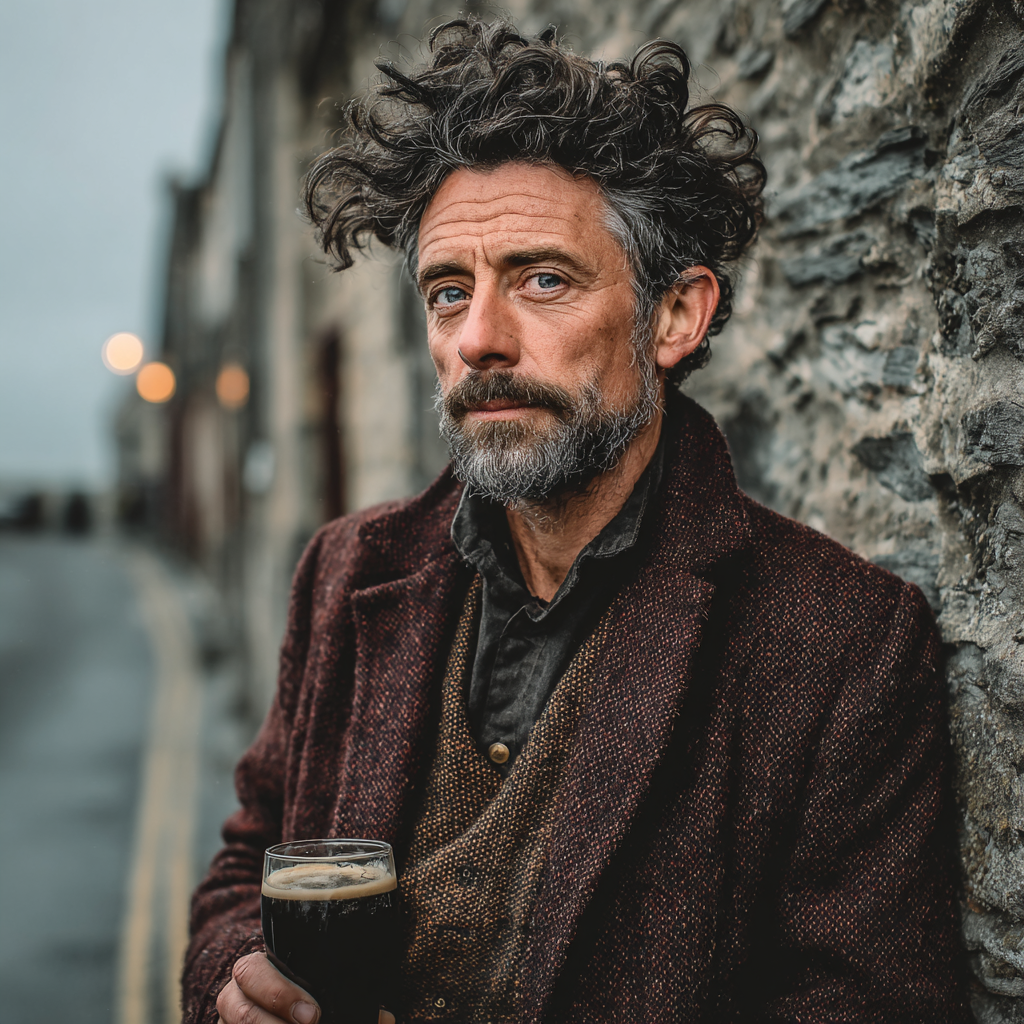
By Finn O'Sullivan
Irish storyteller and folklorist. Finn hunts for the narratives that do not make guidebooks—the pub legends, the family feuds, the neighborhood heroes. He believes every street corner has a story if you know who to ask.