
Bishkek on a Shoestring: How to Live on $20 a Day in Central Asia's Cheapest Capital
James Wright — Budget Guides & Itineraries Writer. Former backpacker hostel owner, seventy-plus countries, professional cheapskate. I keep receipts, and I still flinch at Swiss prices.
Bishkek does not care about your expectations. It is a city of straight Soviet avenues, snow-capped Tian Shan on the horizon, and prices that feel like a typo. In the first half of 2026 alone, 1.9 million visitors poured into Kyrgyzstan — a 40 percent jump — and most of them landed here first. The government wants 12 million a year soon. Yet the capital still runs on change from a five-dollar bill: a taxi across town costs less than a coffee in Paris, and the bazaar feeds you for the price of a gum packet. One thing did get more expensive in 2026, though, and it is the one every old guide gets wrong: your time. The visa-free allowance was halved on 1 January. Read the next section before you book anything.
Entry Formalities & Money (Read This First)
The visa rules changed, and half the internet is still wrong. Until 31 December 2025, most Western passports got 60 days visa-free in Kyrgyzstan. Cabinet Resolution No. 855, signed that day, cut it to 30 calendar days within any rolling 60-day period for the 55 visa-free nationalities — the US, UK, EU, Canada, Australia, New Zealand, Japan, Korea, and the Gulf states among them. Two details matter more than the headline. First, the days count cumulatively: leaving for Almaty and coming back does not reset the clock. Second, there is no visa on arrival at Manas for ordinary tourists. If you are not on the visa-free list, or you want to stay longer, apply for the official e-visa at evisa.e-gov.kg — roughly US$50–90 for a single-entry tourist visa, processed in about five working days, so apply two to three weeks out. Beware copycat "Kyrgyzstan visa" sites that charge double for the same application; the government portal is the only legitimate one. If you enter visa-free and leave within your 30 days, you need no registration at all — the old guesthouse-registration ritual is dead for short stays. Overstay and you are looking at a 10,000-som fine plus an exit-visa trip to the MFA. Not worth it.
The money is simple, which is rare in this region. The som trades around 87–88 to the US dollar as of late 2026, near record lows and drifting weaker, so every price in this guide creeps up a few percent a year — think in dollars, pay in som. Exchange offices cluster along Chuy Avenue and around the bazaars; rates are honest, the spread is tight, and your passport is not usually needed. Bring cash. Cards work in mid-range restaurants, supermarkets, and some hotels, but marshrutkas, markets, guesthouses, and most of the country run on paper. ATMs are everywhere; Optima Bank and Beem machines are the most reliable, dispensing up to about $200 equivalent per pull with a 1–2 percent foreign fee. Clean, newer-dollar bills exchange best. One quirk that trips people up: the airport's IATA code changed from FRU to BSZ in August 2025, and booking sites are still mid-transition — if your ticket says FRU, you are on the right plane.
Where to Sleep
The hostel scene is small, efficient, and built for people who actually need sleep. Apple Hostel, in the streets behind the Western Bus Station (current listings put it around Chymkentskaya; the neighborhood is the landmark — follow the backpackers), runs dorm beds around 800–1,200 som ($9–14) in 2026, up from the $7.50 of the old reviews but still absurd. You get WiFi, a kitchen, luggage storage for your trekking gear, and staff who know exactly which marshrutka leaves for Ala-Archa and when. Tien Shan Travel Guesthouse near the center charges 1,100–1,500 som for a private room with breakfast, and its courtyard is where trekkers trade trail intel before heading to Karakol. Both sit within walking distance of Chuy Avenue, the Osh Bazaar, and Ala-Too Square.
Go cheaper and the residential streets south of Chuy Avenue hold family homestays at 600–900 som a night. The trade-offs are a shared bathroom and a grandmother who will feed you whether you ask or not. I stayed in one for three nights; the total came to less than a single night in a Berlin hostel. One 2026 note: with tourist arrivals up 40 percent, book ahead for July and August. Summer is trekking season and the good dorms fill with the Altai-to-Pamir crowd. Shoulder season, you can still just walk in.
Where to Eat
Bishkek food is heavy, meat-forward, and staggeringly cheap if you eat where Bishkek eats. Your best friend is the stolovaya, the Soviet-style canteen — trays of plov, lagman, manty, and beshbarmak at 150–350 som ($1.70–4) a plate. The ones near Osh Bazaar and along Chuy Avenue are slammed with office workers and students from noon to two. Go then: the food is hot, turnover is fast, and nobody is upselling you.
The grazing options are even better. Samsa, the Central Asian meat pastry, runs 40–80 som at bakery counters and bazaar stalls. A tandyr-loaf of fresh nan is 20–40 som. A proper lagman bowl at a local café costs 200–350 som. Inside Osh Bazaar, sample your way through the dried-apricot and walnut aisles — nobody charges for tasting — and in season (roughly May to September) buy a bottle of kymyz, fermented mare's milk, for around 50–100 som. It is sour, fizzy, lightly alcoholic, and the most Kyrgyz thing you will drink. When you want a sit-down meal with a menu, Navat (Afghan/Kyrgyz cuisine, multiple central locations) does a full spread for 500–800 som per person — the one restaurant splurge that earns its money. I tracked a week of eating here on the new prices: three meals plus tea averaged $6–8 a day. The restaurant strip along Abdrakhmanov Street charges 400–600 som a main for foreigner comfort. Fine. Unnecessary.
What to Drink
Local beer is the move. A 1.5-liter bottle of Arpa or Nashe Pivo costs 150–250 som in a shop; a draft pint at a basic pub runs 200–300 som. Tea at a chaikhana — the traditional teahouse, still the city's informal travel-planning headquarters — is 20–50 som a pot. Kyrgyzstan makes its own vodka and beer, and they are both good; imported alcohol carries import prices, so drink like a local and your wallet will not notice the difference. If you want one craft-beer night, Save The Ales and Brewster pour local pints at 350–500 som — triple the chaikhana, still half of home. And if a Bishkek local invites you to kymyz, say yes. It is an acquired taste exactly once, and then it is the taste of the jailoo.
Getting Around
Bishkek is a grid. Chuy Avenue is the east-west artery, the north-south streets are numbered, and the center is flat with wide sidewalks. Walk. The mountain air makes distances feel shorter and costs nothing.
When you need wheels, the marshrutka — the fixed-route minibus — is 20–25 som a ride in 2026 (municipal buses are 17 som cashless, 20 som cash; you pay the driver or conductor when you get off). Routes are numbered on the windshield in Cyrillic; the 42 and 50 lines cover most of the center. For anything after dark or with bags, download Yandex Go (Namba and InDriver work too; there is no Uber). A ride across the center costs 150–300 som, and the app kills the negotiation entirely.
The airport — Manas, 25 km out — is where tourists get burned, so here is the honest 2026 menu. Official desk taxi: 400–550 som. Yandex Go: similar, if drivers are around. GoBus shuttle: 200 som, with central stops at Ala-Too, the Philharmonic, and Vefa — the best value if your flight lands during its hours. Marshrutka 380: about 70 som (plus 10 for luggage), but it only runs daytime, roughly 6:40 to early evening. Bus 153: 140 som, card-only, but it terminates in Asanbai on the far side of town. The catch: a huge share of international flights lands between 02:00 and 06:00, when only the taxi desk and thin Yandex coverage exist. Touts in Arrivals will quote 1,000–1,500 som for the same ride the desk sells for half. Walk past them to the desk or the app.
A MegaCom or Beeline SIM with data costs 200–500 som at airport kiosks or city shops; bring your passport for registration. Coverage runs city-wide and along the main highways.
Free and Cheap Things to Do
Bishkek is not a city of monuments. It is a city of preparation — most travelers use it to organize treks, buy gear, and recover from bus rides — but a handful of things are worth your time and almost none cost money.
Ala-Too Square is the center of gravity and it is free, always open, and best at dusk, when the fountains light up and families promenade. Come earlier in the day for the stiff, theatrical changing of the guard at the flagpole. The square has hosted revolutions; on a quiet evening it hosts children on scooters. Both are worth watching. Behind the square, the State Historical Museum (about 300 KGS, Tuesday–Sunday, roughly 9:00 or 10:00 to 18:00 depending on season, closed Monday) is the essential primer: Bronze-Age Saka gold, felt and shyrdak textiles you can almost smell, full-scale yurt dioramas, and a Soviet hall where the propaganda posters still hang. Examine the monumental facade mosaic before you go in — and find Lenin, relocated here in 2003, facing government offices with his back pointedly to Manas. The White House across the square you cannot enter; the brutalist grandeur photographs well from outside.
Osh Bazaar is the real heartbeat — not a tourist market but the working bazaar where Bishkek buys its vegetables, meat, and electronics. The dried-fruit aisles alone are worth the trip; the felt, traditional-kalpak-hat, and Soviet-memorabilia stalls at the eastern end are where you practice the ritual: ask, start at half the asking price, settle around sixty percent. Panfilov and Dubovy (Oak) Park, a few blocks east, is free — rusted ferris wheel, chess players, old men with newspapers. Victory Square, with its yurt-shaped arches and eternal flame, is a two-minute photo stop. And for the best $5 you will spend in the city, go to the Zhirgal Banya at Toktogul 53 — steam rooms, ice-cold plunge, birch-twig venik beating optional but recommended — around 300–500 som entry. If the Philharmonia or the Opera and Ballet Theatre has a performance on, tickets start near 300–500 som and the building is a marble palace.
Day Trips That Cost Almost Nothing
Ala-Archa National Park, 40 km south, is the reason you tolerate Bishkek's summer heat. Marshrutka 265 leaves from the bus station area near Osh Bazaar early in the morning at 30–100 som; a taxi one-way runs 800–1,500 som if you split it. Entrance for foreigners is now quoted between 200 and 500 KGS per person depending on the booth — carry cash in small bills, plus a small vehicle fee — and in 2026 a new cable car (~600 KGS round trip) cuts out the first climb if your legs are museum-tired. From the trailhead it is a two-to-three-hour walk to the waterfall and back, or a full, demanding day to the Ak-Sai glacier past the Ratsek hut. The altitude starts at 1,600 meters and climbs fast. Bring water and a layer; the weather flips by lunchtime.
Burana Tower is the other essential. The 11th-century minaret — all 25 surviving meters of a Silk Road city the 15th-century earthquake halved — charges 220 KGS (cash, small bills, includes the little museum and the field of balbal stone figures). It opens around 9:00 to 17:00 daily, and tour groups arrive from 10:30, so go early and climb the claustrophobic spiral first. The DIY route: bus or marshrutka across Bishkek (20–25 som) to the Eastern Bus Station, marshrutka 353 to Tokmok (~100 som, about an hour), then a shared local taxi the last 15 minutes (~300 som per person, drivers wait while you climb). Total damage: under 800 KGS, about $9, for the most evocative medieval ruin in the country.
Two onward notes so you do not lose a day to stale advice. Karakol-bound transport now leaves from the New Bus Station (Bishkek Avtovokzal), north of the center — not the Western Bus Station old guides cite. Marshrutkas run 500–700 som, six to seven hours; the GoBus night coach starts around 450–500 som. And if your trekking plans include Inylchek, Kel-Suu, Karkara, or the Chinese-border zones, sort your border-zone permit in Bishkek before you leave — roughly $20–50 depending on the area, arranged through CBT Bishkek or any trekking agency; you cannot fix it at the trailhead.
When to Come
April to June and September to October are the sweet spots: clear skies, 20–28°C, and prices before and after the rush. July and August hit 35°C at 800 meters of altitude — the sun is a weapon, carry water — and it is peak trekking season, so book beds and expect full marshrutkas. Winter drops to minus 15°C, heating in cheap accommodation gets inconsistent, and the city empties; the payoff is the lowest prices of the year and a banya in a snowstorm, which is genuinely one of the great Central Asian experiences. Time a visit for Nowruz (21 March), when Ala-Too Square fills with dancers and temporary yurts, or Independence Day (31 August), when the whole country celebrates and the mountains are still warm.
Honest Math
Shoestring — $18–25 a day. Dorm bed $9–14, three stolovaya or bazaar meals $6–8, marshrutkas and one Yandex ride $1–2, tea and a beer $2–3. Add the Ala-Archa day trip and you hit $25; add Burana instead and you stay near $22. Comfortable — $35–50 a day. Private double, restaurant lunches, the banya, a craft-beer night, both day trips. Splurge — $100+. Still barely registers here: a private driver for the day, the best table in Navat, opera tickets, and a nice hotel run about what a mid-range European city charges for the room alone.
What to Skip
The airport taxi touts quoting 1,000–1,500 som — the official desk is half that and Yandex is less. Copycat e-visa websites charging $80–120 for the $50–90 government form at evisa.e-gov.kg. Any advice pointing you to the Western Bus Station for Karakol — intercity transport moved to the New Bus Station; old blog posts will strand you. Unmetered taxis flagged on the street. Dordoi Bazaar as sightseeing — it is an astonishing wholesale city, but unless you need fifty identical sweaters or a crate of phone cases, it is a long marshrutka ride to look at warehouses. The Irish pub on Chuy Avenue charging European prices for beer that costs a third as much three blocks away. Overpriced "Soviet architecture walking tours" at $30 — you can see the same White House, Philharmonia, and mosaics solo in two hours. Street money changers — the licensed offices are honest and everywhere. And do not trust printed marshrutka "schedules": vehicles leave when full, so arrive early and pack patience.
Bishkek is not trying to impress you. It is trying to function — and after the visa tightened and the tourist numbers jumped in 2026, it is still the cheapest functional capital in Central Asia. Use it as a base camp, a rest stop, or a lesson in how little money a capital city actually requires. I have spent more on a single train ticket in Switzerland than I spent in a week here. The mountains are what you came for. Bishkek is what makes them affordable.
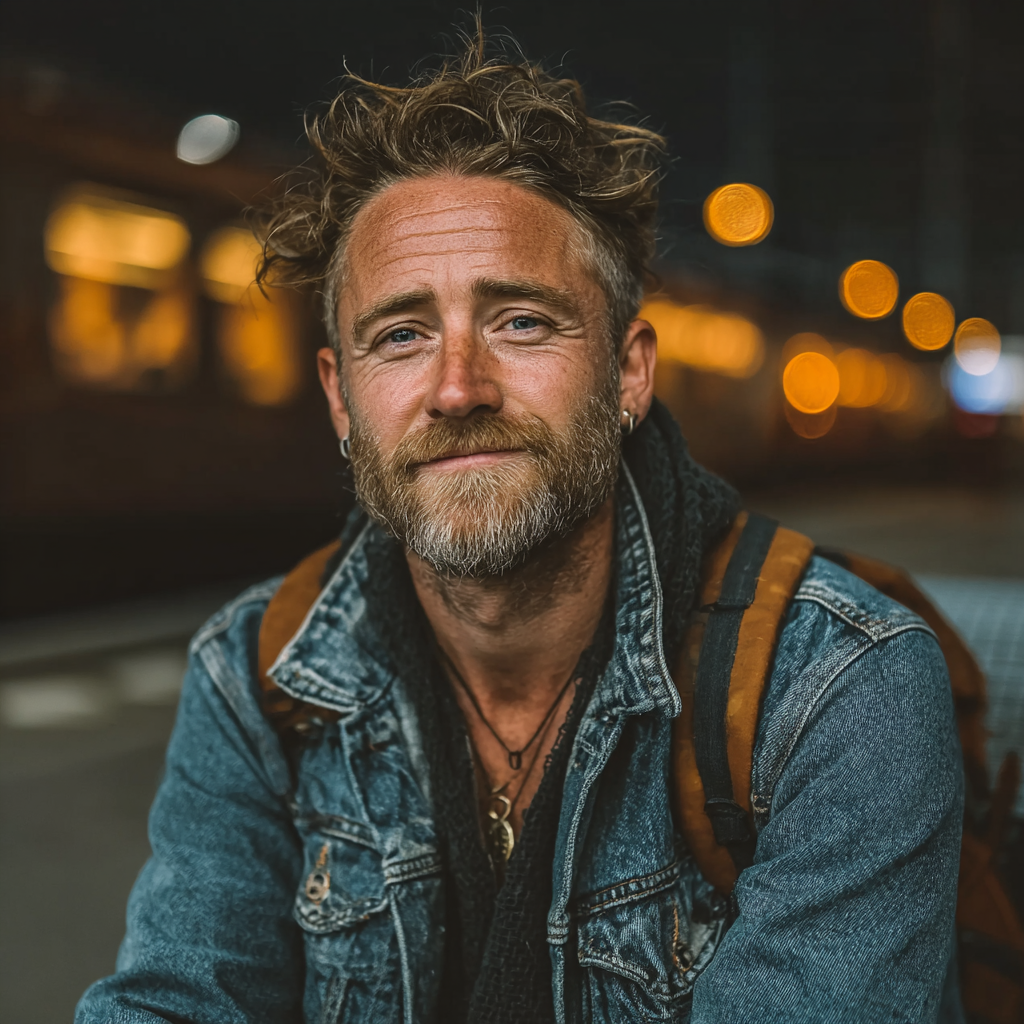
By James Wright
Budget travel expert and former backpacker hostel owner. James has visited 70+ countries on shoestring budgets, mastering the art of authentic travel without breaking the bank. His mantra: "Expensive does not mean better—it just means different."