
Kiribati is the only country in the world that occupies all four hemispheres. The equator splits it north and south. The international date line splits it east and west. This means you can stand on one side of the line on Monday and the other side on Tuesday, though in practice the line zigzags around the islands so the whole country keeps the same calendar day. The 33 coral atolls stretch across 3.5 million square kilometers of Pacific Ocean, yet the total landmass is smaller than New York City. The population is roughly 130,000. In 2019, the country received 7,917 international visitors by air. That is not a typo. Nearly eight thousand people, total, for an entire year.
Most travelers have never heard of Kiribati. Those who have usually know it for one of two reasons: the 1943 Battle of Tarawa, one of the bloodiest amphibious assaults in Marine Corps history, or the fact that the country is sinking. The sea level around Kiribati has risen faster than the global average for decades. Some islands have already disappeared. The government bought 6,000 acres of land in Fiji as a potential resettlement site. This is not a theoretical future. It is the present.
I am a conservation biologist. I have worked on islands that were struggling. Kiribati is not struggling. It is losing.
Why Go At All
That is the question you are probably asking. The answer depends on what you want from travel. Kiribati offers no luxury resorts, no infinity pools, no curated Instagram backdrops. The infrastructure is thin. The lagoon on South Tarawa is polluted from overcrowding and poor waste management. The hospitals are basic. The internet is slow and expensive. Fresh water is scarce. The power goes out.
What Kiribati offers is the raw edge of the Pacific, the kind of place that reveals what tourism looks like when there is no tourism industry to soften it. The snorkeling is exceptional. The fishing is world-class. The birdwatching is extraordinary. The people are genuinely welcoming, not because they are trained in hospitality but because they are curious. And if you care about climate change, there is nowhere more direct to witness its effects than a country that may not exist in a hundred years.
Tarawa: The Capital Atoll
Most visitors land at Bonriki International Airport on South Tarawa. The airport is functional. Immigration is straightforward for citizens of most Western countries, who receive 30 days visa-free. The currency is the Australian dollar. There are ATMs at the Bank of Kiribati and ANZ branches in Betio, Bairiki, and Bikenibeu, but cash is king. Very few places accept credit cards.
South Tarawa is a narrow coral strip running southwest to northeast. The main road is a single thread. On one side, the Pacific Ocean crashes against the reef. On the other, the lagoon is calm, shallow, and increasingly polluted. Do not swim in the lagoon. The water quality is poor. If you want to swim, go to the ocean side, but watch for rip currents.
Betio, at the southwestern tip, is the most densely populated island I have seen in the Pacific. Nearly 20,000 people live on a strip barely larger than a few city blocks. It is also where the Japanese built their fortifications during World War II. The Battle of Tarawa lasted 76 hours. Nearly 1,000 Americans died. More than 4,000 Japanese and Koreans died. The remains of coastal defense guns, bunkers, and ammunition depots are still scattered through the vegetation and between houses. Some are hidden. You need to know where to look.
Molly Brown runs the most recognized WWII tour. She speaks English, knows the exact locations, and charges AUD 110 per person for a 3.5-hour trip in a minibus. The price is negotiable. Contact her at +686 7300 1016 via WhatsApp or phone. She also offers half-day and full-day options. A full-day tour runs AUD 120. If you are a history enthusiast, this is worth it. If you are not, the self-guided walk around Betio will still reveal four or five bunkers and a rusted coastal gun within a five-mile loop.
The Te Umanibong Museum and Cultural Center is in Bikenibeu, open Monday to Friday, 9:00 AM to 4:00 PM. Entry is free or donation-based. The exhibits are small but genuine: traditional crafts, historical photographs, and some of the best-preserved wooden tools from the Gilbert Islands. Contact +686 7300 1016 or +686 752 28283 for confirmation. The museum is easy to miss. It is not signed well.
Public transport on Tarawa consists of 15-seater vans that run the main road. They are cheap but often dangerously overloaded. Tourists usually hire cars, motorbikes, or bicycles. There are no formal rental agencies on South Tarawa. Most hotels and guesthouses can arrange something through local contacts. Expect to pay AUD 50-80 per day for a car, less for a motorbike. Driving is on the left. Road conditions are poor. Potholes are common.
Accommodation on South Tarawa is limited. The George Hotel in Betio is one of the better-known options. It is bare-bones. Rooms are simple. Cockroaches are not unusual. The hotel has a shuttle to the airport. Expect to pay AUD 80-120 per night for a room that would cost a quarter of that in Southeast Asia. Freight and distance pump every cost sky-high. Other options include the Otintaai Hotel in Bairiki and several guesthouses. Do not expect luxury. Expect functional.
Kiritimati: Christmas Island, Not the Australian One
Kiritimati, pronounced "Ki-ris-mas," is the world's largest coral atoll. It is 3,600 kilometers east of Tarawa, roughly halfway to Hawaii. It is serviced by a weekly flight from Nadi, Fiji, and another from Honolulu. The flights often land on the same day. The minimum stay is effectively a week, because that is the frequency of the return flights.
Cassidy International Airport is small. There is no public transport on the island. Visitors rent cars (AUD 70-100 per day), motorbikes (AUD 30 per day), or bicycles. Driving is on the left. There is an ANZ bank with an ATM in Ronton (also called London). Visa, MasterCard, UnionPay, and JCB are accepted at some locations, but cash is recommended. A fishing visitor fee of AUD 50 per angler is payable at the airport upon arrival. If you are flying from Fanning or Washington Islands to Kiritimati, there is a departure tax of AUD 20 per person.
Kiritimati has dozens of inland lagoons. Most are not suitable for swimming. A few have decent beaches. The shore is sand and coral rubble. The best beach on the ocean side is near the village called Poland, but the currents are strong. Do not swim alone.
The main attraction is fishing. Bonefish are everywhere in the flats. Trophy-size trevally, tuna, and wahoo are common offshore. Most tourists come specifically to fish. The lodges are fishing lodges. Ikari House, run by Jacob and Lavinia Teem, is in Ronton at the edge of the lagoon entrance. It has its own private beach and expert guides. Sunset Horizon Fishing Lodge is also in Ronton, offering six air-conditioned rooms and three local bungalows. The Villages, at Tabakea Village on Discovery Beach, has ten air-conditioned bungalows for up to 16 guests. All three cater to fishing and diving clients. Rates vary but expect AUD 150-250 per night including meals and basic guiding.
Diving is excellent. The water is clear. The coral is healthy. The marine life includes sharks, rays, and large schools of reef fish. There are no dedicated dive shops, but the lodges can arrange boat trips and equipment. Snorkeling is possible from shore in some of the inner lagoons.
Birdwatching is outstanding. Kiritimati has 83 recorded bird species, including the endemic Christmas Island warbler and large populations of seabirds. The atoll is a critical nesting site for several species of terns and boobies. The best viewing is early morning, before the heat builds.
Phoenix Islands Protected Area
The Phoenix Islands Protected Area, or PIPA, is one of the largest marine protected areas on Earth. It covers 408,250 square kilometers, roughly the size of California. It is a UNESCO World Heritage site. The area includes the Phoenix Islands, several submerged reefs, and the deep ocean between them. Access is restricted. There are no regular tourist services. The only way to visit is by charter boat or the occasional research vessel. Kanton Atoll, the only inhabited island in the group, has a small airstrip and a population of about 40. Charter flights can be arranged through the Tourism Authority of Kiribati, but they are expensive and infrequent.
If you are a serious diver or marine biologist, PIPA is a grail destination. The reefs are among the most pristine in the Pacific. The shark populations are healthy. The water clarity is exceptional. For the casual traveler, it is inaccessible. That is the point. The restriction is what keeps it intact.
Culture and Reality
The I-Kiribati people are Micronesian. They have lived on these atolls for 3,000 years. Their culture is built around the ocean, the coconut palm, and the extended family. Traditional houses, called "buias," are open-sided structures with thatched roofs, raised on stilts or coral platforms. Many families still live in them, though concrete block houses are increasingly common on South Tarawa.
Dancing is important. The "te katake" and "te ribaki" are traditional forms performed at weddings, birthdays, and national celebrations. The movements are precise, rhythmic, and tell stories of fishing, navigation, and love. If you are invited to a local event, attend. It is not staged for tourists. It is real.
The diet is fish, rice, taro, breadfruit, and coconut. Pork is eaten on special occasions. Imported food is expensive. A can of Coca-Cola costs more than it does in Sydney. Fresh water is collected from rainwater tanks or produced by desalination. On South Tarawa, water shortages are common during droughts. Do not waste water. Do not ask for long showers.
Dress modestly. Women should wear a sarong or lavalava when visiting villages. Men should wear shirts, not just swim trunks. Public nudity and revealing swimwear are illegal. The laws are strict and the penalties are real. Same-sex sexual acts are illegal and carry sentences of up to 14 years. Kiribati is not a liberal destination. It is a conservative, Christian society. Respect that.
What to Skip
- The lagoon on South Tarawa. It is polluted. Do not swim in it. The government has warned about shellfish and lagoon fish from this area due to contamination.
- The expectation of nightlife. There is none. Betio has a few bars. They close early. This is not a party destination.
- Any plan that requires reliable internet. The connection is 2G/3G in most places, 4G in some parts of Tarawa. It is slow and expensive. Buy a SIM card from Oceanlink at the airport for AUD 1 plus AUD 10 for 8 GB. It will not last long if you stream.
- The outer islands unless you have time and flexibility. Inter-island transport is by boat or small plane. Schedules change. Weather cancels trips. The infrastructure on outer islands is minimal. There are no hotels. You will stay in a community guesthouse or a family home. This is wonderful if you are prepared. It is a nightmare if you are not.
- The idea that you are helping by visiting. Tourism employs about 3.7% of the working population. Your presence is not saving Kiribati. Your carbon footprint from the flights alone probably outweighs any benefit. If you go, go to learn, not to virtue-signal.
Practical Logistics
Getting There: Fiji Airways flies from Nadi to Tarawa (TRW) twice weekly. The flight is roughly 3 hours. Air Niugini and Nauru Airlines also serve Tarawa from Brisbane, Nauru, Honiara, and Majuro. Kiritimati (CXI) is served weekly from Nadi and Honolulu. A round-trip from Nadi to Tarawa typically costs AUD 1,000-1,400. From Honolulu to Kiritimati, expect USD 800-1,200 return.
Health: Bring all prescription medications. Local pharmacies have limited stock. Drink only boiled or bottled water. Dengue fever is present. Use mosquito repellent. Medical facilities are basic. The Tungaru Central Hospital in Bikenibeu is the main facility. For anything serious, you need evacuation to Fiji or Australia. Get insurance that covers medical evacuation.
Safety: Crime is low but not absent. Do not flash cash. The stray dog population is a problem. Do not run if a dog approaches. Reach down as if to pick up a stone. It usually works. If bitten, seek medical attention immediately. The roads are hazardous at night due to potholes and limited lighting.
Costs: Kiribati is not cheap. A basic hotel room is AUD 80-120. A meal at a local restaurant is AUD 15-25. A rental car is AUD 50-100 per day. A domestic flight from Tarawa to Kiritimati is roughly AUD 200-300 one way. Budget at least AUD 150 per day for basic comfort, more if you are fishing or diving.
Best Time: Any time except March and April, which are the wettest months. The wet season runs November to April. Temperatures are 24-34°C year-round. The trade winds moderate the heat.
Language: English and Gilbertese are official. Most people on Tarawa speak some English. On the outer islands, Gilbertese dominates. Learning a few phrases goes a long way. "Mauri" is hello. "Tangkiu" is thank you.
I have been to islands that were changing. Kiribati is not changing. It is vanishing. The seawalls are crumbling. The groundwater is turning saline. The breadfruit trees are dying. The young people are leaving for Fiji, New Zealand, and Australia. Those who stay are building higher seawalls and praying.
If you go, do not expect to be entertained. Expect to be confronted. The Pacific is not a screensaver here. It is a force that is slowly taking back what it gave. Kiribati will teach you what an atoll actually is: a thin skin of coral and sand on top of a submerged volcano, held together by luck and coconut roots, surrounded by water that is rising.
Go while you still can.
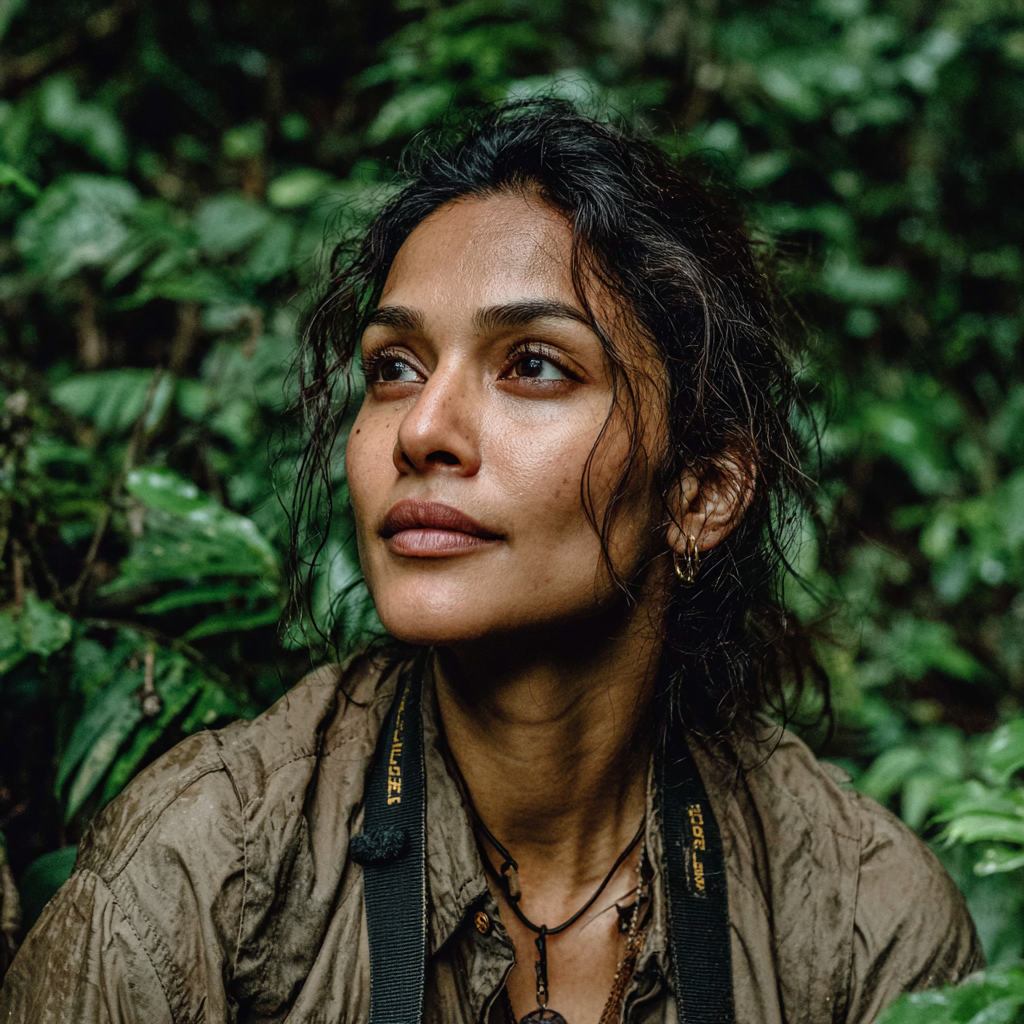
By Priya Sharma
Conservation biologist and sustainable tourism advocate. Priya works with eco-lodges and wildlife sanctuaries to promote ethical travel practices. She holds an MSc in Biodiversity Conservation and has spent years tracking endangered species across the Indian subcontinent.