
Astana: Norman Foster's Tent, a Golden Egg in the Sky, and the City Kazakhstan Built to Prove It Could
The first thing you notice about Astana is that the horizon has been redesigned. Standing on the left bank of the Ishim River, you look south across a boulevard wider than some European runways, and every building seems to be competing for your attention. A 97-meter silver tree. A transparent tent large enough to hold a village. A glass pyramid that glows at dusk. This is not a city that grew organically. It is a city that was sketched by architects, approved by presidents, and dropped onto the Kazakh steppe 600 kilometers from the nearest ocean.
I came to Astana because no other capital on earth looks like this. The architecture is the entire reason to visit. The food is adequate. The nightlife is thin. The weather is hostile. But the buildings are genuinely extraordinary, and they tell a story about what happens when a young country with oil money decides to announce itself to the world.
Why Here, Why Now
The capital moved from Almaty to Astana in 1997, and the reason was geography as much as politics. Almaty sits in the southeast corner of Kazakhstan, pressed against the mountains and close to the Kyrgyz border. Astana sits in the dead center of the country, on the steppe, within reach of the Russian border but far from anywhere else. President Nazarbayev wanted a capital that felt central, that looked toward the future rather than the Soviet past, and that could be built from scratch without the constraints of existing streets or protected buildings.
The result is a city with no old town, no medieval quarter, no cobblestones. What it has instead is ambition rendered in concrete, glass, and steel. The first master plan was drawn by Japanese architect Kisho Kurokawa. The later additions came from Norman Foster, Manfredi Nicoletti, and a consortium of Turkish and Kazakh firms. Every building is a statement. Every boulevard is a stage. And the steppe, flat and empty in every direction, serves as the backdrop that makes everything look larger than life.
The Left Bank: Where the Future Was Built
Nurzhol Boulevard runs for two kilometers along the river like a catwalk for buildings. Start at the northern end with Bayterek Tower, the city's defining landmark. It rises 97 meters in the form of a poplar tree cradling a golden egg, drawn from a Kazakh myth about the bird Samruk. The observation deck sits inside the egg at the top. Entry costs 2,500 tenge for adults (approximately $5.30), with discounted tickets at 2,000 tenge for seniors and visitors with disabilities, and 1,250 tenge for children aged 6 to 15. Children under 6 enter free. The elevator is fast. The view is flat. The steppe stretches in every direction with almost nothing to interrupt it.
The most photographed feature is the golden handprint of former president Nursultan Nazarbayev, set into a relief at the top. Visitors line up to place their own hand inside it. It is kitsch and oddly moving at the same time, a national creation myth rendered in metal and glass. Bayterek is open daily from 10:00 AM to 9:00 PM September through May, and extends to 10:00 PM during the summer months of June through August. Tickets are sold on the first floor. Arrive early on weekends or prepare to queue for the elevator.
Walk south and the boulevard opens into a sequence of structures that read like an architecture firm's portfolio. The Kazakhstan Central Concert Hall, designed by Italian architect Manfredi Nicoletti, curves in white concrete like a flower or a shell, depending on the angle. The Palace of Independence sits nearby, a blue-glass wedge that hosts state events. The Kazakhstan National Museum rises in blocky granite on Independence Square at Tauelsizdik Avenue 54, looking defensive compared to the transparency around it. Basic admission runs 1,000 tenge, with access to the Hall of Gold pushing the ticket to roughly 4,000 tenge (about $8.50). The museum is closed Mondays and the last Tuesday of each month for maintenance. Otherwise, hours run Tuesday through Sunday, 10:00 AM to 6:00 PM, with the ticket office closing around 5:00 PM. Budget two to three hours. The Golden Man exhibit alone — a reconstruction of the Saka warrior buried in gold armor near Almaty — justifies the visit.
The most structurally audacious building on the boulevard is the Palace of Peace and Reconciliation, a 62-meter glass pyramid designed by Norman Foster. It was built to host a congress of world religious leaders, and the concept is tolerance rendered in geometry. The pyramid contains an opera house, a museum, and a conference hall at the apex. From the outside, it looks impossibly delicate. From the inside, the glass panels frame the sky in triangles. Entry runs roughly 1,000 tenge, though hours shift with the political calendar — check before you make the trip. The building works better as a photograph than as a public space. The atrium feels hollow during the week, and the museum inside is thin. But at dusk, when the internal lighting turns the entire pyramid into a lantern, it is one of the most striking structures in Central Asia.
Nearby, the Kazakh Eli Monument rises 91 meters on Independence Square, the height marking 1991, the year of independence. A golden statue of Samruk, the mythological bird, tops the column. It is a five-minute walk from the National Museum and a natural pairing for photographs. Most visitors spend 20 to 30 minutes here, combining it with the museum and the pyramid into a single morning.
Further south stands Khan Shatyr, another Foster project, and this one is even stranger. It is a 150-meter-high tent made of transparent ETFE panels stretched over a cable network. Inside, it houses a shopping mall, an amusement park, and an indoor beach club with imported sand and a temperature-controlled pool. The beach costs 5,000 tenge to enter, roughly $10.60. In January, when outside temperatures hit minus thirty, you can swim inside the tent while snow falls on the roof. The structural engineering is remarkable. The concept is absurd. Whether that makes it brilliant or grotesque depends on your tolerance for spectacle.
The Right Bank: Soviet Gravity vs. New Ambition
Cross the Ishim River and the tone changes. The left bank was built after 1997, when the capital moved from Almaty. The right bank still carries the weight of Soviet planning. Wide avenues. Prefab apartment blocks painted in faded pastels. The Astana Railway Station, functional and unloved. But even here, new architecture is creeping in.
The Hazrat Sultan Mosque opened in 2012 on the south side of the city and was, for a decade, the largest in Central Asia. It holds 10,000 worshippers. The dome rises 51 meters, and the four minarets stand 77 meters tall. The scale is overwhelming. Entry is free, though women need to cover their heads and shoulders, and the mosque lends scarves for a 500 tenge deposit. The interior is calm and pale, with chandeliers the size of small cars. The architectural style is a blend of classical Islamic geometry and Kazakh ornament. It is more restrained than the left bank's theatricality, and honestly more successful.
Then the Grand Mosque of Astana opened in 2022 and surpassed it. It is now the largest mosque in Central Asia and among the largest in the world. The main dome is 83 meters in diameter and 62 meters high. The minarets reach 130 meters. The complex includes a library, a restaurant, and an observation deck in one of the minarets, accessible by elevator for 2,000 tenge. From the top, you see the full scope of the left bank's ambition laid out against the emptiness of the steppe. The contrast is the photograph every architecture journalist takes.
Astana Opera: The Building That Surprises Everyone
The Astana Opera House, on Dinmukhamed Kunayev Street, is the building that catches visitors off guard. After the futuristic excess of the left bank, you expect more glass and steel. What you get instead is limestone, marble, and a dome that echoes the Vienna State Opera. Opened in 2013, it seats 1,250 people and hosts ballet, opera, and classical concerts at a standard that genuinely rivals European houses. Tickets range from 2,000 to 15,000 tenge depending on the performance and seat. The building is worth seeing even if you do not attend a show — the lobby's double staircase and chandeliers are open to visitors during daytime hours. But if you have one evening in Astana, this is where to spend it. The acoustics are superb. The productions are ambitious. And the audience dresses formally in a way that feels almost retro, as if the city is trying on European manners to see if they fit.
Expo 2017 and the Nur Alem Sphere
The Nur Alem Future Energy Museum is the legacy of Astana's hosting of Expo 2017. It is an 80-meter glass sphere, the world's largest spherical building, sitting on a plinth like a dropped marble at 57 Mangilik El Avenue. Inside, eight floors trace the history of energy, from solar to nuclear to kinetic. Entry is 1,500 tenge. The exhibition is earnest and multilingual. The building itself is the real attraction. The sphere is clad in double-curved glass panels that reflect the sky differently every hour. At sunset, it turns gold. At midday, it disappears into the haze. The engineering is by a consortium of Turkish and Kazakh firms, and the precision is undeniable. This is what Astana does best. It commissions buildings that would be impossible almost anywhere else, because no other city has this much space, this much budget, and this much willingness to experiment.
What the Cameras Miss
Astana is not a comfortable city. The wind on Nurzhol Boulevard in winter is cruel. The summer dust storms, called the yellow wind, turn the sky brown and fill your mouth with grit. The gaps between buildings are too wide to walk comfortably. The city was designed for cars and cameras, not pedestrians. You will take extraordinary photographs. You will also walk miles to find a cafe that is actually open.
The Green Bazaar, near the right bank off Konayev Street, is the best antidote to the boulevard's sterility. It is a working market where locals buy lamb, horse sausage, and seasonal fruit. A bowl of lagman noodles costs 1,500 tenge. A skewer of shashlik from a busy stall costs 1,200 tenge. The vendors do not speak English. Pointing works. Cash is essential. Cards are useless here.
For a sit-down meal, the restaurant at the Grand Mosque complex serves decent Kazakh fare in clean, modern surroundings. Expect to pay 3,000 to 5,000 tenge for a full meal of beshbarmak — boiled meat with wide noodles, the national dish — or manty, steamed dumplings filled with lamb and pumpkin. The quality is consistent, the portions are large, and the setting is memorable. Alternatively, the food court at Khan Shatyr offers a range of options from Korean to Georgian to basic burgers, all at mall prices. Nothing is exceptional. Everything is edible. After a day of walking between buildings, that is enough.
The city's most honest architecture might be the Soviet-era apartment blocks on the right bank, weathered and unloved, painted in faded pastels. They are not in the guidebooks. They tell the story of what existed before the capital arrived, and what still exists for most of the population. If you want to understand Astana, photograph the pyramid, but look at the balconies.
Photographing Astana: A Field Guide
Astana is a photographer's city, but it demands specific techniques. The steppe light is harsh and flat at midday. Shoot early morning or late afternoon when shadows give the buildings depth. A polarizing filter helps cut through the summer haze. A wide-angle lens is essential — telephoto lenses compress the buildings and lose the scale that makes them impressive.
The classic shot is Bayterek at sunset, framed against a pink sky with the boulevard stretching south. The pyramid at dusk, lit from within, is another staple. But the more interesting photographs are the ones that show contrast: the Grand Mosque's white marble against the left bank's glass towers; an old woman in traditional dress waiting for a bus beneath a Norman Foster skyscraper; the Soviet apartment blocks at golden hour, their pastel paint glowing in the low light.
Winter photography has its own rewards. The snow reflects light upward, making midday exposures easier than you expect. The buildings stand sharper against white skies. And the emptiness of the streets — few tourists visit in January — means you can set up a tripod in the middle of Nurzhol Boulevard without interruption. Bring spare batteries. The cold drains them fast.
The In-Between Spaces
Between the monumental buildings, Astana has pockets of genuine urban life that most visitors miss. Lovers Park, tucked between the boulevard and the river, offers art installations and the Fountain of Lovers — a surprisingly contemplative spot for a city this aggressive. The park fills with families on summer evenings, children chasing each other between sculptures, couples walking slowly as the sky turns pink over the steppe.
The Atyrau Bridge, a pedestrian span over the Ishim, connects the two banks with a sinuous white curve. Walk it at twilight. The left bank's glass towers light up in sequence, and the right bank's apartment blocks fade into darkness. It is the moment when Astana's split personality becomes visible — the future on one side, the past on the other, and the river running between them.
What to Skip
The Baiterek Tower at midday. The observation deck faces every direction, but the steppe light is harshest at noon. Shadows disappear. Colors bleach. Go at sunset or after dark when the city lights give the view dimension.
The Palace of Peace and Reconciliation on weekdays. The atrium is genuinely beautiful, but the museum inside is thin and the space feels abandoned without events. Check the concert schedule. If nothing is on, admire the exterior and move on.
The indoor beach at Khan Shatyr. The engineering is impressive, but the concept of paying $10.60 to swim in a shopping mall while it snows outside appeals more to Instagram than to actual relaxation. The water is chlorinated heavily. The sand is trucked in. The whole thing feels like a simulation.
Taxis hailed at the airport. Drivers will quote double or triple the metered rate. Use Yandex Go instead. A ride to the city center runs 2,500 to 3,000 tenge. Booked through an app, the price is fixed before you get in.
The National Museum on Mondays. It is closed. Also closed on the last Tuesday of each month. Double-check before making the trip — this is the most common mistake visitors make.
Pronouncing it "Nursultan." The city was renamed in 2019, then renamed back to Astana in 2022. Locals use Astana. Some older signage still says Nur-Sultan. Follow the locals' lead.
Practical Notes
Astana is now officially called Nursultan on some maps and documents, though locals increasingly use Astana again after the 2022 renaming reversal. The Nursultan Nazarbayev International Airport (NQZ) is 20 kilometers south of the city center. The light rail connects them every 15 minutes for 600 tenge. A taxi booked through Yandex Go costs 2,500 to 3,000 tenge. Taxis hailed at the terminal will quote double.
Public buses cost 180 tenge in cash or 150 tenge with an Onay card, sold at metro stations. The metro itself is limited to one line but useful for crossing the river quickly. Rush hour is crowded. Watch your pockets. Buses run from roughly 6:00 AM to 10:00 or 11:00 PM, with express routes costing 150 tenge. The most useful sightseeing routes are the 21 (Astana-1 to Bayterek, Ak Orda, the pyramid, and National Museum) and the 40 (Astana-1 to the pyramid and Khan Shatyr via the old city).
Hotels range from budget guesthouses at around $25 per night to international chains at $80 to $150. The Hilton Garden Inn and similar mid-range options sit between 35,000 and 50,000 tenge in summer, dropping to 14,000 tenge in January. Winter visits are cheap but severe. January temperatures regularly hit minus 25 Celsius.
The best months for photography are late April through May, when the steppe blooms and the light is clear, and September, when the heat breaks and the dust settles. Summer brings 30-degree days and harsh shadows. Winter brings blue skies and snow that reflects light upward, making midday exposures easier than you expect.
Kazakhstan allows visa-free entry for 30 days for most Western passport holders, including citizens of the EU, UK, US, Canada, Australia, and Japan. Bring cash. Many small restaurants and all market vendors operate in paper tenge only. ATMs are widely available but notify your bank before travel.
About the Author
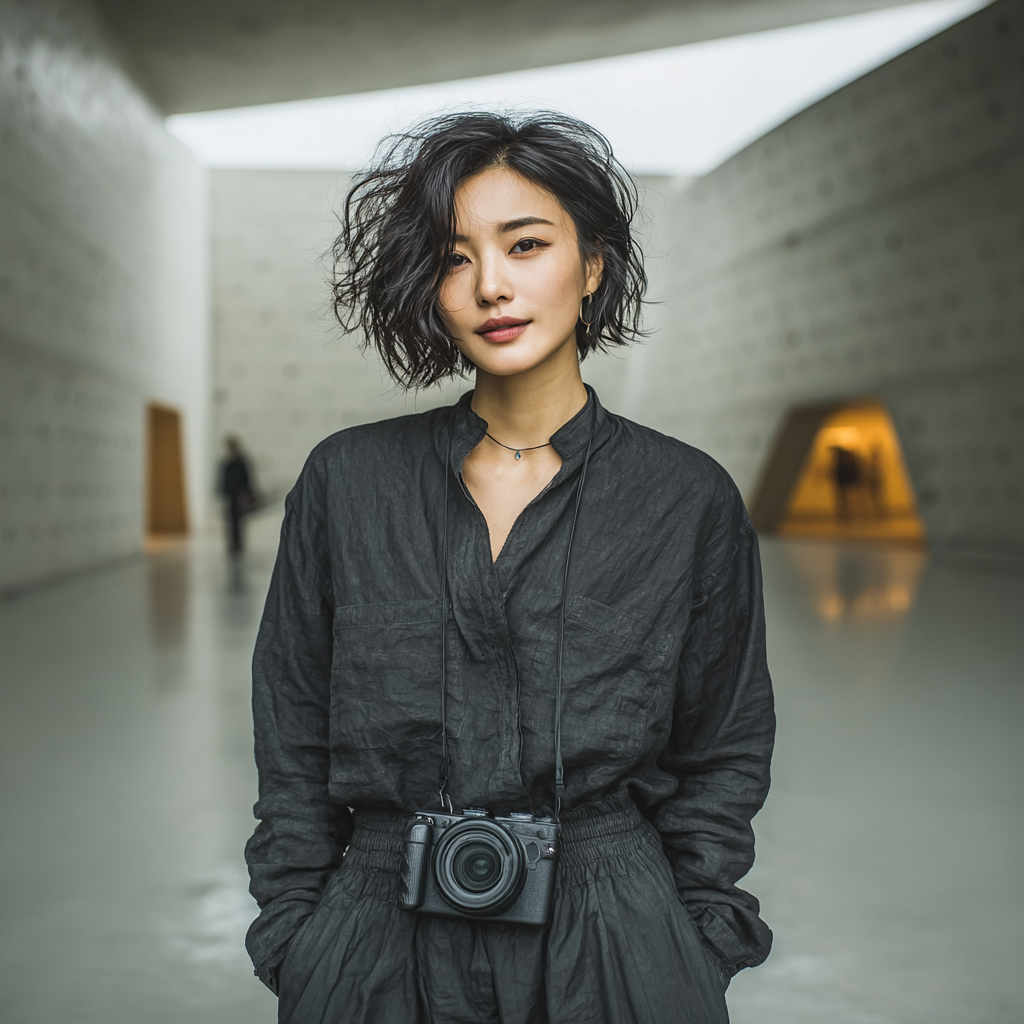
Yuki Tanaka is a Tokyo-born architectural photographer who has spent fifteen years documenting how cities announce themselves through steel and glass. Her work has appeared in Architectural Digest, Dezeen, and Monocle. She believes the best buildings are the ones that make you uncomfortable — and Astana makes her very uncomfortable, in the best possible way.
If you are an architecture photographer, Astana is essential. If you are a casual traveler looking for charm, start in Almaty and come here for two or three days to gawk at the skyline. Either way, bring a wide-angle lens, a scarf for the mosque, and a tolerance for wind. The buildings are waiting. They have nothing but time.
By Yuki Tanaka
Architectural photographer based in Tokyo. Yuki captures the dialogue between ancient structures and modern design across Asia and Europe. Her work has been featured in Monocle, Dezeen, and Wallpaper. She sees buildings as frozen stories waiting to be told.