
Petra: The Desert City That Hid 30,000 People in Plain Sight for a Millennium
The first view of Petra is a calculated humiliation. You walk for nearly two kilometers through a chasm barely three meters wide in places, the walls rising 180 meters above you, blocking out the sun. The Nabataeans carved water channels into these walls two millennia ago — channels that still function, that still carry flash flood water away from the city during winter storms. You notice the paving stones, worn smooth by centuries of camel hooves and modern hiking boots. Then the walls part. The Treasury rises from the shadows, its rose-colored facade catching the morning light, and you understand why this place remained hidden from the Western world until a Swiss explorer in Arab disguise talked his way through in 1812.
I am Elena Vasquez. I write about places where civilizations built something impossible and then vanished, leaving the rest of us to wonder what we are capable of when we stop building for vanity and start building for survival. Petra is the textbook case. The Nabataeans — a nomadic Arab tribe that settled here around the 4th century BC — did not carve a monument. They carved a city. At its peak, 30,000 people lived in a metropolis built directly into sandstone cliffs, controlling the incense and spice routes that connected Arabia, Egypt, and the Mediterranean. They made themselves indispensable. And then, when the trade routes shifted and the earthquakes hit, they simply... stopped. The city did not fall in battle. It was abandoned, piece by piece, until only the Bedouin remained, living in the caves their ancestors had built, keeping the secret for a thousand years.
This is not a day-by-day itinerary. Petra is not that kind of place. You do not tick it off. You submit to it.
The Siq: The Nabataeans' First Act of Theater
The entrance to Petra is a performance. The Siq — a narrow gorge that serves as the main approach — stretches for 1.2 kilometers, and every meter is deliberate. The Nabataeans paved the floor, carved water channels into the walls to capture winter floods, and positioned the exit so that the Treasury appears precisely when the canyon walls finally open. It is the oldest special effect in architecture, and it still works.
Walk slowly. The paving stones are uneven, and in sections the original Roman surface has been exposed by modern conservation. Look up at the water channels — rectangular grooves carved into the rock face, still carrying water to a cistern system that held 40,000 cubic meters. The Nabataeans were hydrologists before they were architects. They understood that in a desert where annual rainfall is under 100 millimeters, water is power. They built dams, dug wells, and created a garden metropolis in one of the driest regions on Earth. The Siq was not just a road. It was a pipeline, a flood defense, and a psychological preparation all at once.
The geology tells its own story. The sandstone walls show bands of red, orange, and cream, each layer representing millions of years of sediment. In places, the rock has eroded into natural sculptures that complement the artificial carvings. The Nabataeans chose their canvases carefully — they carved where the stone was most stable, where the color was most vivid, where the light would strike their facades at the perfect hour.
The Siq is accessible by foot or by horse-drawn carriage. The carriages depart from the Petra Visitor Center and cost 20 JOD for a return trip — though the price is officially set, some drivers will ask for more if you look unprepared. Stand your ground. The ride is bumpy and undignified, but it is the only option for visitors with mobility limitations, as the path is too narrow for wheelchairs. If you walk, allow 20–30 minutes at a relaxed pace, longer if you stop to examine the carvings and the water channels.
The Treasury: What the Postcards Don't Show
The Treasury (Al-Khazneh) dominates the postcards for good reason. The facade measures 40 meters high and 28.3 meters wide, carved directly from the cliff face in the 1st century AD. The Hellenistic design features six Corinthian columns, a broken pediment, and statues of mythological figures that have been weathered into abstractions. The urn at the top is pocked with bullet holes — Bedouin tribes once believed treasure was hidden inside and fired shots hoping to crack it open. The Jordanian government has since filled the holes with a darker sandstone, making the damage visible but stabilized.
The interior is a single, unadorned chamber. This disappoints some visitors who expect rooms, corridors, hidden passages. But the Treasury was never a treasury. Archaeologists believe it was a royal mausoleum, possibly for King Aretas IV or his successor. The interior was never the point. The facade was the message: we are wealthy, we are connected to the Mediterranean world, we can afford to carve this from solid rock.
The best light occurs during the first hour after sunrise. The Treasury faces roughly south, so morning light strikes it directly while the Siq remains in shadow. By midday, the stone becomes washed out and harsh. For photography, bring a polarizing filter to cut the desert haze that often obscures distant views. Tripods are technically allowed in the main site but forbidden during Petra by Night; security guards enforce this strictly, and they will confiscate memory cards if they catch you shooting with a tripod during the evening event.
The area in front of the Treasury is crowded by 9:00 AM. If you want solitude, arrive at the Visitor Center at 6:00 AM when the gates open. The Treasury in the first light, before the tour buses arrive, is a different monument entirely. The stone seems to glow from within, shifting from pale pink to deep ochre as the sun rises.
Hiring a licensed guide is worthwhile for first-time visitors. Official guides charge 50–70 JOD for a half-day tour and can be booked at the Visitor Center. They provide context the signage lacks, and they know which spots are currently open or closed due to conservation work. Unofficial guides — the Bedouin men who approach you near the entrance — are technically not allowed to operate inside the site, though enforcement is inconsistent. If you want a Bedouin perspective, hire one for a hike outside the main ticketed area, such as the route to the High Place of Sacrifice.
The Nabataean Engineering: How They Made a Desert Bloom
The most impressive thing about Petra is not the Treasury. It is the water system. The Nabataeans captured flash floods in a network of channels, dams, and cisterns that made agriculture possible in a valley where summer temperatures exceed 40°C and rainfall is minimal. They terraced the hillsides, planted vineyards and olive groves, and created a garden city that could feed 30,000 people.
The channels are visible throughout the site. In the Siq, they run along both walls at head height. Near the Colonnaded Street, you can see the remains of a nymphaeum — a public fountain that distributed water to the city center. The Great Temple complex, covering 7,000 square meters, had its own internal plumbing system. The Byzantines, who occupied Petra after the Roman collapse, continued to maintain these systems for centuries.
The Archaeological Museum near the main entrance, opened in 2019, houses artifacts that illustrate this engineering. There are terracotta pipes, water filters, and models of the cistern system. The museum is free with your Petra ticket and worth 45 minutes either before or after your main visit. It is open the same hours as the site: 6:00 AM to 6:00 PM in summer, 6:00 AM to 4:00 PM in winter.
For a deeper understanding, walk the Wadi Farasa trail, which starts near the High Place of Sacrifice and descends past the Garden Tomb and the Lion Fountain. This route follows the original Nabataean water channels and offers views of the valley's agricultural terraces. The trail is steep and uneven, requiring good shoes and two to three hours, but it provides a perspective that the main tourist path misses entirely: Petra as a functioning city, not a ruin.
The Street of Facades, the Theater, and the Royal Tombs
Beyond the Treasury, the valley widens into the Street of Facades, a row of tombs carved in the hundreds into the southern cliff face. These range from simple rectangular openings to elaborate multi-story designs with crow-step patterns and classical pediments. The Nabataeans buried their dead in these rock-cut chambers, with wealthier families commissioning more ornate facades. The soft erosion patterns in the sandstone — created by rain and wind over two millennia — give the facades natural textures that complement the artificial carvings.
The Theater sits at the end of this street, carved directly into the mountain. It could seat approximately 3,000–8,500 spectators (estimates vary, and the Romans expanded the original Nabataean structure in the 2nd century AD). The acoustics remain remarkable. Stand at the center of the orchestra and speak normally; your voice carries to the upper tiers without amplification. Behind the theater, the cliffs rise in bands of red, orange, and cream strata, each layer representing millions of years of geological history. The Byzantines later converted the theater into a church, carving crosses into the stone, and fragments of the original marble seating can still be seen in the upper rows.
The Royal Tombs provide Petra's most photogenic cluster. The Urn Tomb, the Silk Tomb, the Corinthian Tomb, and the Palace Tomb sit side by side on a ridge above the Colonnaded Street. The Silk Tomb earns its name from the swirling patterns in the sandstone, created by iron and manganese deposits that form fluid, fabric-like striations. Visit in late afternoon when the sun strikes these tombs directly; the stone seems to glow from within, shifting from pale pink to deep ochre. The Urn Tomb has a distinctive open courtyard and a colonnaded terrace, and it was converted into a Byzantine church in the 5th century. The Corinthian Tomb features the most elaborate capitals, though much of its facade has eroded. The Palace Tomb, the largest of the group, resembles a Roman palace facade and demonstrates the Nabataeans' ambition to present themselves as a civilized, cosmopolitan power.
The Colonnaded Street marks the Roman influence on Petra. This 800-meter paved thoroughfare once featured marble paving, columns, and statues. Only fragments remain — the earthquake of 363 AD destroyed much of the city, and subsequent centuries saw the ruins quarried for building materials. The Great Temple sits at one end, a complex covering 7,000 square meters that archaeologists believe served as a royal reception hall rather than a religious site. The reconstructed columns give a sense of scale, but the site is still partially unearthed, with excavations ongoing since 1993 by Brown University archaeologists. The Temple is open during site hours, and you can walk among the reconstructed columns and the lower temenos (sacred precinct).
The Monastery: 800 Steps to the Nabataeans' Greatest Secret
The Monastery (Ad-Deir) requires the most effort to reach. The trail climbs approximately 800 steps cut into the mountain, gaining 200 meters in elevation over roughly 2.5 kilometers from the end of the main trail. The path is steep but manageable, with rest stops where Bedouin vendors sell tea, water, and snacks. The vendors are persistent but generally harmless; a firm "la, shukran" (no, thank you) is usually sufficient. The steps are uneven and worn smooth in places — proper hiking shoes are essential, and the trail is not suitable for anyone with knee or hip problems.
The Monastery itself is larger than the Treasury — approximately 45–50 meters wide and 45–50 meters high — but less detailed, suggesting a different purpose. Archaeologists debate whether it was a temple dedicated to the deified King Obodas I, a royal tomb, or a ceremonial meeting hall. The interior is a single large chamber, and the rear wall bears crosses carved by Byzantine Christians who later used the structure as a church — hence the name "Monastery." The plateau behind the facade offers views across the Wadi Araba valley toward the Israeli border, with the Dead Sea visible as a silver shimmer on the horizon on clear days.
The climb takes 45 minutes to 1.5 hours depending on fitness and heat. In summer, start early — the trail is fully exposed after 9:00 AM and temperatures can exceed 35°C. Carry at least two liters of water per person. There are no water sources on the trail, and the Bedouin vendors charge premium prices for bottled water. The plateau behind the Monastery has a small cafe that sells tea and light snacks, and there are Bedouin tents where you can rest in the shade.
The best photography light for the Monastery is in the afternoon, when the sun strikes the facade directly. Morning light is flat and unflattering. The view from the plateau — the Wadi Araba stretching toward the Dead Sea, the mountains of Israel and Palestine on the horizon — is worth the climb regardless of your interest in the monument itself.
For the adventurous, a trail continues beyond the Monastery to the Ad-Deir Plateau, where archaeological surveys have uncovered barrel-vaulted cisterns, rock-cut tombs, and additional water channels. This area is not officially marked and requires a guide, but it offers a glimpse of Petra's vast unexplored territory — archaeologists estimate that only 15% of the city has been excavated.
The High Place of Sacrifice and the Hidden Corners
The High Place of Sacrifice requires another climb, this time up a trail that starts near the Theater. The Nabataeans performed religious ceremonies here, leaving behind altars, a rectangular pool for ritual washing, and channels for draining blood. The views encompass the entire valley, the Theater below looking like a child's toy from this height. The trail continues down the other side through Wadi Farasa, passing the Garden Tomb — named for its garden-like setting and the remains of a cultivated terrace — and the Lion Fountain, which features a carved lion head that once spouted water. The trail eventually reconnects with the main path near the museum, creating a loop that takes two to three hours.
Most visitors follow the main trail to the Treasury and Monastery, then leave. But Petra contains over 800 registered monuments, and the lesser-visited sites offer solitude even on crowded days. The Al-Habis area above the Theater contains tombs rarely visited by tour groups. The Byzantine Church, excavated in the 1990s, contains well-preserved mosaic floors depicting animals, geometric patterns, and human figures. The Lion Triclinium, carved high on a hillside, requires a steep climb but offers views of the entire valley without the crowds.
The Petra Archaeological Park also includes the site of Beidha, a Neolithic settlement predating Petra by 7,000 years, located a short drive north of Wadi Musa. The site is small but significant — it contains some of the oldest known domesticated buildings in the world. It is not included in the standard Petra ticket and requires separate transport, but it is worth a half-day for anyone interested in the deeper history of human settlement in this region.
Petra by Night: Candlelight and Commerce
Three evenings weekly (Monday, Wednesday, and Thursday), the Treasury is lit by approximately 1,500 candles arranged along the Siq and in front of the facade. The event is touristy but effective. You walk through the canyon in near-darkness, the only light coming from paper bags weighted with sand. Bedouin musicians play rababa string instruments, and a speaker tells the history of the site in multiple languages. The atmosphere is the point, not the information — the facade appears to float in darkness, its details lost to shadow, its presence magnified.
Tickets for Petra by Night cost 17 JOD and are sold separately from the main entrance ticket. They can be purchased at the Visitor Center or at the entrance to the Siq on the evening of the event. The event starts at 8:30 PM and lasts approximately two hours. Photography is challenging — tripods are forbidden and the light is minimal. If you want to capture the scene, bring a camera with strong low-light performance and a fast lens. Smartphone photos will be grainy and disappointing.
The event is undeniably commercial, and some visitors find the Bedouin vendors along the candlelit path intrusive. But when the music stops and the crowd falls silent, and the Treasury facade emerges from the darkness illuminated by nothing but candles, the inconvenience fades. The Nabataeans understood theater. Petra by Night is their final act.
What to Eat in Wadi Musa: Beyond the Buffet
The restaurants near the Petra entrance are overpriced and mediocre. The Basin Restaurant, located near the museum inside the archaeological site, offers a reasonable buffet for approximately 15 JOD, and it is the best option if you do not want to leave the park. But for better food, you need to venture into Wadi Musa, the town adjacent to Petra.
Al-Qantarah Restaurant, located on the main road through Wadi Musa, serves traditional Jordanian dishes — mansaf (lamb with fermented yogurt sauce), maqluba (upside-down rice and vegetable casserole), and grilled meats. Prices are reasonable: mains 8–15 JOD. It is a family-run restaurant, not a tourist trap, and the portions are generous. My Mom's Recipe, a smaller cafe near the bus station, offers excellent falafel, hummus, and fresh bread for 3–5 JOD. It is where the local guides eat between tours.
The Cave Bar, located in a 2,000-year-old Nabataean tomb near the Petra entrance, is worth visiting for the setting alone. They serve Petra beer, a local craft lager, and a range of mezze. It is touristy and the prices are inflated (8–12 JOD for a main), but drinking a beer inside a tomb carved two millennia ago is an experience that justifies the markup. The atmosphere in the evening, when the candles are lit and the Bedouin staff play music, is genuinely atmospheric.
For coffee, the Bedouin tea stalls along the trails serve sweet mint tea and cardamom coffee. Accept the offer when you are tired — it is a gesture of hospitality, and the tea is genuinely restorative. A tip of 1–2 JOD is appreciated but not mandatory.
What to Skip: The Anti-Guide
The Indiana Jones Fantasy. Petra was featured in Indiana Jones and the Last Crusade, and some visitors arrive expecting adventure. The reality is walking, heat, and persistent vendors. Adjust your expectations. The "treasure" is the engineering, not the glamour.
The Camel Rides at the Treasury. The camels are photogenic, and the handlers will insist on posing them for your camera. But the rides — quoted at 50 JOD, negotiable to 10–15 JOD for a short loop — are uncomfortable and environmentally damaging. The camels' hooves erode the soft sandstone paths. Walk. That is how the Nabataeans did it.
The "Treasure" Inside the Treasury Urn. The bullet holes in the urn at the top of the facade are from Bedouin tribes who believed gold was hidden inside. There is no treasure. The urn is solid stone. Do not waste time imagining secret chambers.
The Overpriced Restaurants at the Main Entrance. The cluster of restaurants near the Visitor Center charges 20–30 JOD for basic meals that cost half that in Wadi Musa. Walk ten minutes into town, or pack a lunch.
The Bedouin Souvenir Shops in the Siq. The stalls selling "authentic" Nabataean-style jewelry and sand bottles are no more authentic than airport gift shops. The best souvenirs are photographs and the memory of the silence at dawn before the buses arrive. If you must buy something, the Petra Archaeological Museum shop sells books and reproductions that actually support conservation work.
Practical Logistics: How to Do Petra Without the Theater
Tickets and Timing. The site opens at 6:00 AM and closes at 6:00 PM in summer (March–October), 4:00 PM in winter (November–February). Entry costs 50 JOD for one day, 55 JOD for two days, 60 JOD for three days. The Jordan Pass — available online at jordanpass.jo — costs 70 JOD (for one Petra visit) or 80 JOD (for three visits) and includes your visa fee plus entry to over 40 other sites. If you are staying more than two nights in Jordan, the Jordan Pass is almost always the better value. Jordanian residents pay 1 JOD, a pricing disparity that reflects the economic reality of a country where tourism generates approximately 14% of GDP.
Guides. Licensed guides can be booked at the Visitor Center for 50–70 JOD for a half-day tour. They are worth it for first-time visitors. Unofficial Bedouin guides are not permitted inside the ticketed site, though they may offer to lead you on hikes to viewpoints outside the main trails. Use your judgment — some are knowledgeable and friendly, others are opportunistic.
Transport. Wadi Musa is the town adjacent to Petra. From Amman, the JETT bus departs at 6:30 AM and arrives at 10:30 AM, costing approximately 10 JOD one-way. The return bus departs Wadi Musa at 5:00 PM. From Aqaba, taxis cost 25–35 JOD and take 90 minutes. The nearest airport is King Hussein International in Aqaba, with flights from Amman and some international destinations. Most visitors fly into Amman Queen Alia International Airport and drive or bus south.
Accommodation. Wadi Musa offers options across all budgets. The Petra Guest House, located at the entrance, offers comfortable rooms from 80–120 JOD per night. The Mövenpick Hotel, also at the entrance, is the most upscale option at 200+ JOD. For budget travelers, the Seven Wonders Bedouin Camp (10 minutes from the site) offers tents and basic cabins from 30–50 JOD, including dinner and breakfast. The Rocky Mountain Hotel, on the hillside above Wadi Musa, has a rooftop terrace with views of the Petra mountains and dorm beds from 15 JOD.
What to Bring. Water is essential. The Nabataean water channels no longer function for drinking, and the site has limited shade. Carry at least two liters per person, more in summer when temperatures exceed 35°C. Good hiking shoes with ankle support are non-negotiable — the trails are uneven, with loose gravel and smooth stone surfaces. A hat and sunscreen are mandatory; the sun is relentless and there is almost no natural shade beyond the Siq. In winter, temperatures drop sharply after sunset, and rain can cause flash floods in the Siq — check the forecast and avoid the site if heavy rain is predicted.
Accessibility. The site has significant limitations. Wheelchairs can manage the flat areas near the entrance and the Treasury viewpoint, but the trails to the Monastery and High Place require stairs and uneven surfaces. Horse-drawn carriages can transport visitors through the Siq to the Treasury for 20 JOD return, but beyond that point, mobility is limited. The Basin Restaurant and the museum near the main trail are accessible.
Conservation and Respect. The Petra National Trust works with international organizations to stabilize the facades, which suffer from water erosion, salt crystallization, and the impact of over one million annual visitors. Stay on marked trails — the sandstone is softer than it appears, and footprints in the wrong places can accelerate erosion. Do not touch the facades; the oils from human skin contribute to stone decay. The site is a UNESCO World Heritage site and a living cultural landscape for the Bedouin communities who were relocated from the caves to the village of Umm Sayhoun in 1985.
Photography. The best light is during golden hour — the first hour after sunrise and the last hour before sunset. The Treasury faces south, so morning light is ideal. The Royal Tombs are best in late afternoon. Tripods are allowed in the main site but forbidden during Petra by Night. A polarizing filter helps cut the desert haze. Drone photography is strictly prohibited and will result in confiscation of equipment.
The Deeper Experience. Petra rewards patience. Most visitors spend four to six hours and see the Treasury, the Theater, and the Monastery. But the city contains over 800 registered monuments, and the lesser-visited sites — the Byzantine Church mosaics, the Garden Tomb, the Lion Triclinium, the Wadi Farasa trail — offer solitude even on the busiest days. If you have two days, use the second for the less-visited trails. If you have three days, hire a local Bedouin guide for a hike to the less accessible viewpoints, such as the overlook above the Treasury from the Al-Khubtha trail, or the Bedouin back route to the Monastery from Little Petra.
Petra is not a place you conquer. It is a place you survive — the heat, the walking, the vendors, the scale. And when you stand before the Treasury at dawn, before the tour buses arrive, and watch the first light strike the rose-red stone, the inconvenience fades. You are standing in a city carved from mountain, built by a civilization that made the desert bloom, forgotten for a thousand years, and rediscovered by a man in disguise who understood that some secrets are worth the risk of discovery. The Nabataeans built something that outlasted their empire. That is the point. That is why you came.
About the Author: Elena Vasquez writes about the places where history refuses to stay buried. She has spent two decades exploring archaeological sites from the Mediterranean to the Caucasus, and she believes the best guides are the ones that tell you what the stones actually mean — not what the brochure wants you to believe. She does not do "hidden gems." She does honest places, honestly described. This guide was written for Petra, but it is really about the Nabataeans — and what they knew that we have forgotten.
My first day. Remembering everything about this place. — KC
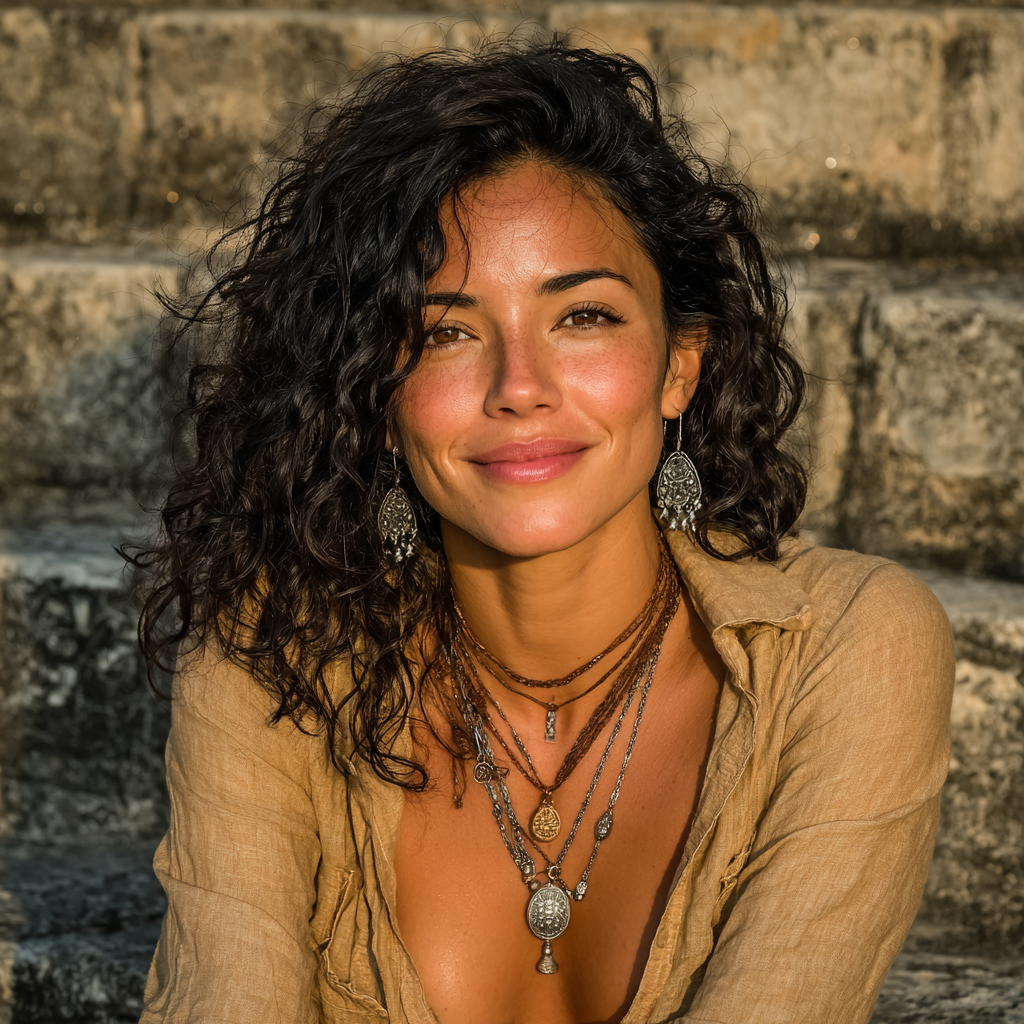
By Elena Vasquez
Cultural anthropologist and culinary storyteller. Elena spent a decade documenting traditional cooking methods across Latin America and the Mediterranean. She holds a PhD in Ethnography from Barcelona University and believes the best way to understand a place is through its kitchens and ancient streets.