
The Odakyu Line from Shinjuku deposits you in Hakone-Yumoto after 85 minutes. The change is immediate. Tokyo's flat density gives way to a steep river valley where the Hayakawa River runs brown after rain. Cedar and cypress crowd the slopes. The air smells of sulfur if the wind is right.
Hakone is not a town. It is a circuit, a 40-kilometer loop of mountain railway, cable car, ropeway, pirate ship replica, and bus that the Japanese call the Hakone Round Course. You can complete it in six hours or stretch it across three days. Most visitors try to do it in one, which is a mistake. The loop is the destination. Understanding this changes everything.
Start early at Hakone-Yumoto station. The Hakone Tozan Railway climbs from 96 meters to 541 meters via three switchbacks, a design from 1935 that lets the train reverse direction on zigzag track to gain elevation. The ride takes 40 minutes. At three points the train changes direction. The car tilts. You look out the same window and see the valley from a different angle. This is not commute infrastructure. It was built as a tourist railway from the start, and it behaves like one, crawling past hydrangea banks that bloom purple in July.
At Gora you transfer to the Hakone Tozan Cable Car, a funicular that continues the climb to Sounzan. The gradient is steep enough that the floor of the car is stepped. From Sounzan the Hakone Ropeway carries you across the Owakudani Valley in eight-person gondolas. On clear days Mount Fuji appears to the northwest, a white cone against the sky. On cloudy days you see only the valley floor, which is the more dramatic view.
Owakudani is an active volcanic zone. The ground steams. Sulfur vents carve yellow streaks into gray rock. The smell is overwhelming at first, then you stop noticing it. Local vendors sell kuro-tamago, eggs boiled in the sulfuric hot springs. The shells turn black from iron sulfide. Eating one is said to add seven years to your life. The eggs cost ¥500 for five. The science is doubtful. The experience is not. The eggs taste like ordinary hard-boiled eggs, which is the point. You are eating geology.
The ropeway continues from Owakudani to Togendai on the shore of Lake Ashi, a caldera lake formed 3,000 years ago after a volcanic eruption. The water is deep blue and cold. Cruise boats cross the lake on three routes. Two are decorated as pirate ships, a bizarre design choice from the 1960s that stuck. The ships take 25 to 40 minutes depending on the route. A one-way ticket from Togendai to Moto-Hakone costs ¥1,000. The ships are functional, not authentic, but the upper deck offers open-air views of the lake and, again, that framed view of Mount Fuji if the weather cooperates.
At Moto-Hakone, walk ten minutes along the lakeshore road to Hakone Shrine. The approach is through a cedar forest on a stone staircase. The main gate stands in the water, a red torii built in 1952 after the original was damaged. It is the most photographed structure in Hakone and it earns the attention. The gate stands in Lake Ashi at low tide, surrounded by water at high tide. The effect is deliberate. Priests rowed out for ceremonies before the paved approach was built. The shrine itself dates to 757 CE, though the current buildings are 20th-century reconstructions. The location mattered more than the architecture. This was a waypoint on the old Tokaido road between Kyoto and Edo.
The loop continues by bus back to Hakone-Yumoto, or you can reverse the order. Most guidebooks recommend clockwise. Counter-clockwise avoids the morning crowds at Owakudani. Choose based on your tolerance for queueing.
Hakone's museums are better than they need to be for a resort town. The Hakone Open-Air Museum, called Chokoku-no-Mori, opened in 1969 and was Japan's first outdoor sculpture garden. It holds 120 works across 70,000 square meters of hillside. The Picasso Pavilion contains 319 ceramic and bronze pieces, a substantial collection gathered in one place because Picasso was prolific and relatively affordable in the 1960s. Admission is ¥1,800. The footbath at the center of the grounds is free with admission. Soak your feet while looking at a Henry Moore. This is normal in Hakone.
The Pola Museum of Art, designed by architect Norihiko Dan and opened in 2002, is built into the hillside with 70% of its structure underground. The lobby faces a wall of glass looking into forest. The collection includes Impressionist paintings and Japanese ceramics. The building is worth the ¥1,800 admission even if you skip the galleries. The café overlooks a pond.
The Narukawa Art Museum, smaller and less visited, specializes in contemporary Japanese painting and has a viewing terrace that frames Mount Fuji between cedar branches. On clear winter days the view is precise. The museum is near the cable car line. Admission is ¥1,300.
The Fujiya Hotel in Miyanoshita opened in 1878 and is a Registered Tangible Cultural Property. It was built to accommodate foreign visitors during Japan's opening to the West, and the architecture reflects this confusion, mixing Japanese timber construction with Victorian balconies and Art Nouveau stained glass. Charlie Chaplin and John Lennon stayed here. The hotel closed for four years of renovation and reopened in 2024. You do not need to be a guest to walk the gardens or have afternoon tea in the Orchid Lounge. A cup of coffee costs ¥1,200. The lobby's coffered ceiling and the mosaic-tile lobby floor are the architectural highlights.
Hakone is also a center of yosegi-zaiku, a marquetry craft using local woods. The Hatajuku district has several workshops. The Hakone Yosegi-zaiku Densho Kaikan museum and shop explains the technique of fitting colored wood pieces without nails to create geometric patterns. Small boxes start at ¥3,000. The craft developed because travelers on the old Tokaido road needed souvenirs, and lightweight wooden boxes traveled well.
The onsen culture is why most Japanese visit. Hakone-Yumoto has public bathhouses. The higher villages, Gora and Sengokuhara, have ryokan with private hot spring baths. A day-use onsen costs ¥1,500 to ¥3,000. An overnight ryokan stay with two meals starts at ¥25,000 per person. The water varies by location. Hakone-Yumoto's water is simple alkaline. Gora's water contains sodium and calcium chloride. The sulfur at Owakudani does not flow into most bathing facilities. The distinction matters to enthusiasts.
What to skip: The Gotemba Premium Outlets. They are accessible from Hakone by bus and they are a shopping mall. The view of Mount Fuji from the parking lot does not justify the detour unless you need discounted sportswear. Also skip the idea that you will see Mount Fuji clearly. It is visible on roughly 60 days per year. Winter mornings offer the best odds. Summer afternoons are haze. Check the live camera feeds before you go.
Practical notes: The Hakone Freepass covers all loop transportation and offers discounts at museums. A two-day pass from Shinjuku costs ¥6,100. A three-day pass costs ¥6,600. If you are staying overnight, the three-day pass is worth the difference. The pass does not cover the Romancecar limited express, which requires a ¥1,200 seat reservation. Regular express trains on the Odakyu Line reach Hakone-Yumoto in the same time without the surcharge. The Tozan Railway and ropeway stop for maintenance on select weekdays, usually in January and February. Check the schedule in advance. Last departures from Hakone-Yumoto to Shinjuku run until 9:00 PM. If you miss the last train, a taxi to Odawara station costs ¥3,000, and the Shinkansen runs late.
Hakone works best as an overnight trip. A single day on the loop is rushed. Two days lets you visit a museum without calculating train schedules. Stay in a ryokan at least once. The tatami floor, the futon laid out while you eat dinner, the pre-breakfast soak in water that never cooled overnight, this is the architecture of Japanese hospitality that no hotel chain has replicated. The pirate ships are ridiculous. The sulfur eggs are a gimmick. The torii gate is crowded by 10:00 AM. But the railway switchbacks are real engineering, the volcanic valley is genuinely active, and at 6:00 AM on a clear winter morning, Mount Fuji appears over Lake Ashi in a way that makes you understand why they built a shrine here.
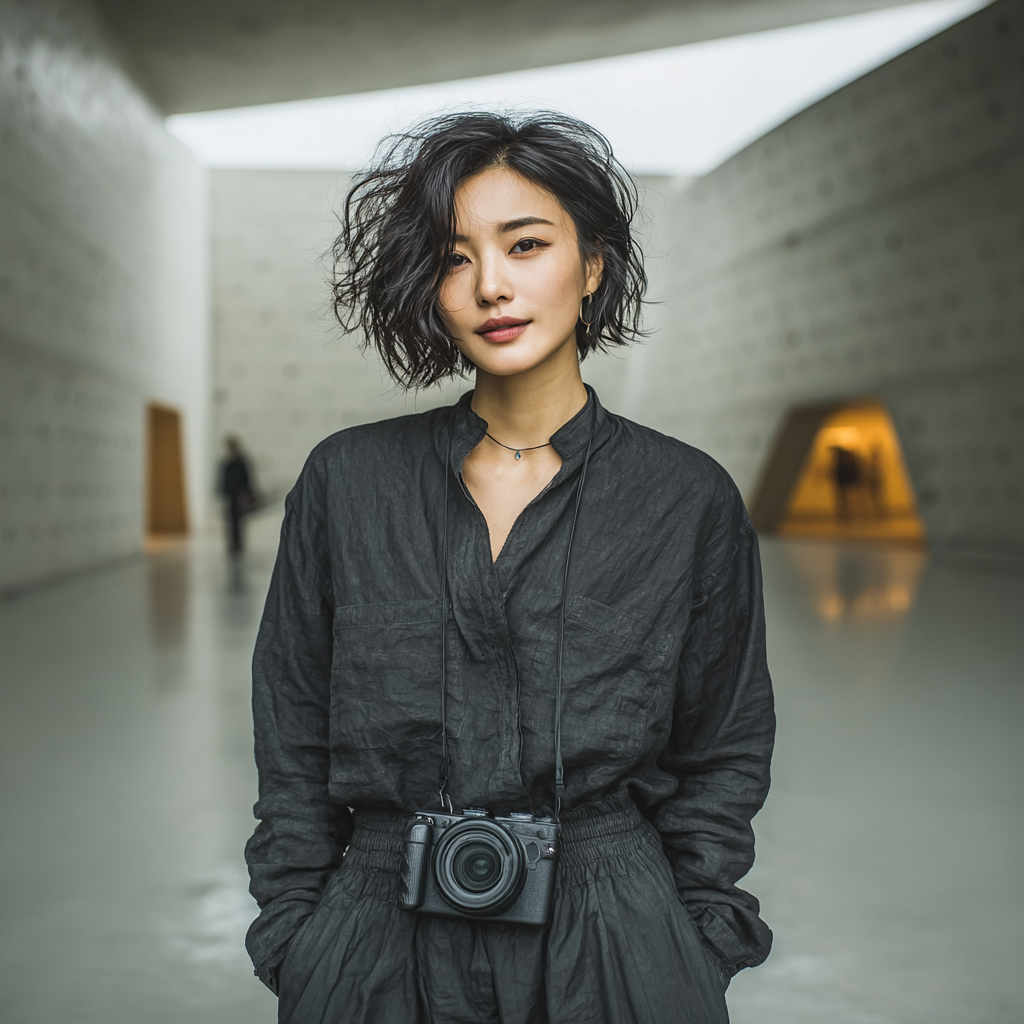
By Yuki Tanaka
Architectural photographer based in Tokyo. Yuki captures the dialogue between ancient structures and modern design across Asia and Europe. Her work has been featured in Monocle, Dezeen, and Wallpaper. She sees buildings as frozen stories waiting to be told.