
The Sakura Photographer's Handbook: Where to Stand in Tokyo and Kyoto for the Perfect Shot
A photographer's field guide to cherry blossom season in Japan: exact locations, lighting conditions, specific addresses, prices, and the hard-won technical knowledge from twelve years of shooting sakura in Tokyo and Kyoto.
On this page
Tokyo and Kyoto during cherry blossom season are not the same place. One is a city that happens to have trees. The other is a forest that happens to have temples. I have photographed both for twelve years, published in Monocle and Dezeen, and I still misjudge the light at least once every season. The truth is, sakura photography is not about having the best camera. It is about knowing where to stand, when to arrive, and what to ignore. Here is everything I have learned, assembled after years of arriving too late, setting up in the wrong spot, and watching a storm strip an entire grove in forty-eight hours.
My name is Yuki Tanaka. I am a photographer based in Tokyo. My work has appeared in Monocle, Dezeen, and Wallpaper. I have photographed cherry blossom season in Japan for twelve years, and I still check the forecast daily.
Reading the Forecast (and Why It Will Still Surprise You)
The Japan Meteorological Corporation releases forecasts starting in January, updating every two weeks. In 2026, Tokyo's first bloom landed around March 20 and full bloom around March 27. Kyoto ran four to five days behind, with full bloom around March 31. Treat those numbers as weather, not scripture. The pattern holds: Tokyo blooms first, Kyoto follows. This is not a suggestion. It is a fact that ruins itineraries every single year.
The gap means you cannot see both cities at peak in one trip unless you time it perfectly and move fast. Most people fail. Choose one city at full bloom, or accept that the other will be early or late.
Rain is the variable that no forecast controls. A storm during full bloom can strip trees in forty-eight hours. Check the ten-day forecast daily and adjust your plans accordingly. The best photographers I know treat sakura season like a military operation with flexible retreat options.
What beginners miss: the trees are beautiful at every stage. The buds are pink and tight. Early bloom has scattered flowers against bare branches. Falling petals create snowstorms — the Japanese call this sakura fubuki, cherry blossom blizzard. Even the green leaves that follow have their own palette. Full bloom lasts three to four days. You are planning an expensive trip around a four-day window. The anxiety is real. Build buffer days. Bring a book. Trust the process.
Tokyo: Where the Light Works (and Where It Betrays You)
Shinjuku Gyoen National Garden
Address: 11 Naitomachi, Shinjuku City, Tokyo 160-0014 Admission: ¥500 adults; ¥250 for seniors (65+) and high school students; free for junior high and under. The gate machines take Suica, PASMO, and cash. Hours during sakura season (March 24–April 24): 9:00–18:00, last entry 17:30. Open every day during cherry blossom season — no Monday closures. Getting there: 5-minute walk from Shinjuku-Gyoemmae Station (Tokyo Metro Marunouchi Line), 10-minute walk from Shinjuku Station Southeast Exit, or 5-minute walk from Sendagaya Station (JR Sobu Line). Advance reservations: On peak weekends and holidays — late March and the first weekend of April — timed entry tickets are sold online (official site and Asoview) for 10:00–16:00 slots. They sell out fast; book the moment slots open. Weekday mornings you can still walk up.
Shinjuku Gyoen has three distinct garden styles spread across 58.3 hectares. The Japanese garden photographs best in morning light, before 9am, when the sun clears the eastern buildings and the pond is still. The English landscape garden works at golden hour, when light filters through the Somei-Yoshino canopy and turns the lawns amber. The French formal garden is frankly not worth your memory card unless you are shooting a wedding and the couple insists.
The garden contains over 1,100 cherry trees across more than 65 varieties, including early-blooming Kanzakura (which can start in February) and late-blooming Yaezakura that persist through late April. This staggered blooming extends the usable season — when a warm March has stripped the Somei-Yoshino elsewhere, Gyoen still has flowers.
Best spot: The bridge over the Japanese garden pond, facing northwest. You get the reflection of the weeping cherry in still water, with the NTT Docomo Tower visible but not dominant in the background. This only works on windless mornings. Arrive at 8:30am if you want the first hour without crowds. The ticket queues start at 8:45am.
Hidden gem: Raku-tei Tea House inside the Japanese Garden. For about ¥800 you receive a bowl of whisked matcha and a wagashi shaped like a cherry blossom petal. Sit on the tatami, look out at the spring gardens, and listen to the bamboo water pipe. It is the single best place to wait for the light to shift.
Gear note: Tripods are prohibited throughout the park. Bring a monopod or practice your hand-holding technique. I shoot at 1/125 minimum to avoid motion blur on moving branches. VR/IS helps, but nothing beats a fast shutter when the wind picks up.
Chidorigafuchi Moat
Address: Chiyoda, Chiyoda City, Tokyo 102-0084 (Kudanshita area, along the Imperial Palace moat) Admission: Free to walk the promenade; rowboat rental ¥800 for 30 minutes or ¥1,600 per hour per boat Boat hours during sakura season: roughly 9:00–19:30, extended during the Chiyoda Cherry Blossom Festival (late March–early April) Getting there: 2-minute walk from Kudanshita Station (Hanzomon/Tozai Lines, Toei Shinjuku Line), or 10 minutes from Ichigaya Station.
Chidorigafuchi is the moat on the northwestern edge of the Imperial Palace, where roughly 260 Somei-Yoshino lean over the water from both banks. This is the best reflection photography in Tokyo — blossoms, stone walls, and water in a single frame. During the Chiyoda Sakura Festival the trees are illuminated until 22:00, and drifting under the lit canopy in a rowboat is the most romantic image the city offers.
Best spot: The water. Rent a rowboat from the Chidorigafuchi pier near Kudanshita and shoot from boat level, which stacks blossom, stone wall, and skyline into compression you cannot get from the bank. Tripods on the promenade are discouraged during the festival; the boat solves that problem.
Practical note: Boat queues during full bloom run 30–60 minutes on weekends. Arrive at the 9:00 opening or go on a weekday evening for the lights without the wait. No reservations; cash and IC cards accepted.
Ueno Park
Address: Uenokoen, Taito City, Tokyo 110-0007 Admission: Free Hours: Open 24 hours (park grounds); museums and zoo have separate hours Getting there: JR Yamanote Line to Ueno Station, Park Exit.
Ueno Park has over one thousand cherry trees. This sounds impressive until you see the crowds. By 10am on a weekend, you cannot move without stepping on someone's picnic blanket. By 2pm, the ground is a field of blue tarps and empty beer cans. The hanami parties here are legendary and, for a photographer, mostly useless.
When to go: Weekday mornings, 6am to 8am, before the park officially opens. The gates are unlocked. The hanami crowd arrives after 10am. The light at 6:30am in March is flat and even — perfect for blossom detail shots without harsh shadows.
Best spot: The path between the Tokyo National Museum and Ueno Zoo, looking east toward the five-story pagoda. The Somei-Yoshino branches frame the pagoda. This works in overcast light, which is fortunate, because March mornings in Tokyo are often gray.
What to skip: The main promenade near Ueno Station. You will get a better photograph of someone's selfie stick than of any blossom. Also skip the food stalls near Shinobazu Pond during peak season — the smoke and crowds make photography impossible and the prices are insulting.
Meguro River
Address: Nakameguro, Meguro City, Tokyo 153-0061 (best section between Ikejiri-Ohashi and Meguro Station) Admission: Free Hours: Best viewed 17:30–21:00 during the illumination period (full bloom week) Getting there: Tokyu Toyoko Line or Tokyo Metro Hibiya Line to Nakameguro Station.
The Meguro River walk runs for four kilometers, with around 800 Somei-Yoshino planted along the banks from the 1990s onward. The trees are still young enough that their branches do not yet meet overhead. Give them another decade.
Best time: Blue hour, the thirty minutes after sunset, when the sky is deep blue and the paper lanterns along the river are lit. The Nakameguro Sakura Festival runs through full bloom week, which means food stalls and crowds. The lanterns stay up until 9pm.
Best spot: The bridge at Nakameguro Station, facing southwest. You get the river narrowing into the distance, both banks lined with pale pink, and the warm light from the cafes reflecting on the water. This requires a tripod. Police sometimes enforce the no-tripod rule on narrow bridges. Be ready to move quickly if asked.
Practical note: The restaurants along the canal require reservations during sakura season. If you want to eat with a view, book two weeks ahead. For a quieter option, grab a sakura mochi from a convenience store and eat it on a bench along the section north of the station, where the festival tents thin out.
Kyoto: Where the Trees Outnumber the People (Barely)
Maruyama Park
Address: Maruyama-cho, Higashiyama Ward, Kyoto 605-0071 Admission: Free Hours: Open 24 hours. Night illumination during cherry blossom season: 18:00–22:00 (sometimes extended to 23:00 on weekends). Getting there: 10-minute walk from Keihan Gion-Shijo Station; 14-minute walk from Hankyu Kawaramachi Station; or city bus 100/206 from Kyoto Station to Gion, then a 10-minute walk — though during sakura the buses run full by mid-morning, so the Keihan train is the reliable choice.
Maruyama Park is Kyoto's oldest hanami spot, laid out in 1886. The centerpiece is a single giant shidarezakura — a weeping cherry supported by wooden struts, because the branches are too heavy to hold their own weight. The current tree is a second generation planted in 1949 after the 200-year original was lost. It is illuminated at night during full bloom week, creating the most photographed scene in Kyoto.
Best time: The park never closes. Arrive at 6am for morning light without crowds. Return at 7pm for the illumination, which runs until 10pm during full bloom.
Best spot for the illuminated tree: Stand at the eastern edge of the clearing, low to the ground, shooting upward to catch the light filtering through the cascading branches. The white lanterns in the background blow out to pure white, which is fine. You are photographing the tree, not the lanterns.
Street food note: The park stalls sell takoyaki and matcha soft-serve during the festival. The quality is mediocre but the atmosphere is undeniable. For a real meal, walk ten minutes into Gion, where a small udon shop serves a menu handwritten in Japanese and a broth that has been simmering for decades.
The Philosopher's Path
Address: Tetsugaku-no-Michi, Sakyo Ward, Kyoto 606-8426 (runs from Ginkaku-ji to Nanzen-ji) Admission: Free Hours: Always open Getting there: City bus 5/17/32/100/203/204 to Ginkaku-ji-michi, or Keihan to Jingu-Marutamachi and walk 10 minutes; during sakura, buses on this corridor crawl — go early.
Tetsugaku-no-Michi runs for two kilometers along a canal from Ginkaku-ji (the Silver Pavilion) to Nanzen-ji, named for Nishida Kitaro, the philosopher who walked this route daily to Kyoto University in the early twentieth century. The Somei-Yoshino here number around four hundred and bloom late for Kyoto — often three or four days after other spots have peaked, which makes the path the photographer's hedge against an early bloom.
Best time: Overcast mornings, 7am to 9am. The path faces northeast. Direct morning light creates harsh contrast. Diffused light lets you expose for the blossoms without blowing out the sky.
Best spot: The section between Honen-in Temple and Anraku-ji Temple. The canal curves here. If you position yourself on the south bank, facing north, you get a composition that leads the eye around the bend. This requires patience. The path is narrow. You will wait for gaps in foot traffic. Bring coffee.
Practical note: The path is not continuous. It crosses roads four times. The crossing at Shirakawa Street is the most crowded; the crossing at Kitashirakawa is quieter. Look for the small cafes and artisan shops along the route — one of them, near the Eikan-do Temple turnoff, serves sakura mochi made by a family that has been doing it for three generations.
Kiyomizu-dera and the Higashiyama Slopes
Address: 294 Kiyomizu 1-chome, Higashiyama-ku, Kyoto 605-0862 Admission: ¥400 adults; the spring night illumination period requires its own ¥400 evening ticket Hours: 6:00–18:00; during the spring illumination (late March–early April, exact dates confirmed annually) the grounds stay open to 21:00 Getting there: City bus 100 or 206 from Kyoto Station to Gojozaka, then a 10-minute uphill walk; or Keihan Line to Kiyomizu-Gojo and walk 20 minutes up Sannenzaka. During sakura the buses run full by 10am — the Keihan route is the photographers' choice.
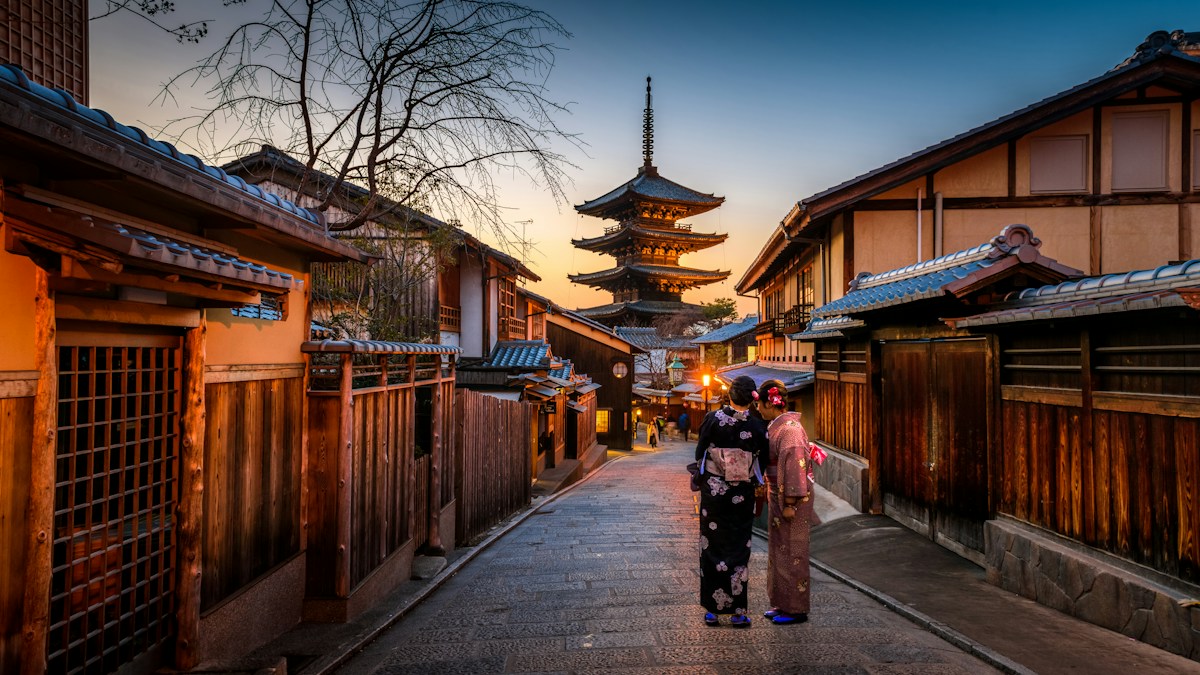
Kiyomizu-dera has around 1,500 cherry trees, and its famous wooden stage — thirteen meters above the hillside — is itself a shooting platform. From the stage you look down through a canopy of blossoms to the three-story Koyasu Pagoda, and on clear days the modern city skyline beyond. The approach streets, Sannenzaka and Ninenzaka, are lined with preserved machiya townhouses and bloom-heavy branches; photograph them before 8am, when the souvenir shutters are down and the light rakes across the stone steps.
Best spot: The pagoda's three-quarter view from the stage's southern end at the 6:00 opening, before tour groups arrive from 9:30. Return after dark: the illuminated stage with blossoms in the foreground is the iconic Kyoto night image.
Arashiyama and the Sagano Romantic Train
Address: Arashiyama, Ukyo Ward, Kyoto 616-0007; the Sagano Romantic Train runs from Saga-Arashiyama Station to Kameoka Station Admission: Arashiyama free; Sagano Romantic Train ¥880 adults / ¥440 children, one way (Car 5, the open-air "Rich" car, costs the same) Train hours: March–December only (closed January–February), usually closed Wednesdays except peak season. Departures roughly hourly, 9:00–16:00. The 25-minute ride is not covered by any rail pass, and reserved tickets are now sold primarily online — station window sales are limited or gone, so book ahead during sakura. Getting to Arashiyama: JR Sagano Line from Kyoto Station to Saga-Arashiyama Station, 15 minutes, ¥240 — faster and more reliable than any bus during blossom season.
Arashiyama is the western district of Kyoto, across the Katsura River. The Sagano Romantic Train follows the Hozugawa River gorge for seven kilometers. Standard cars have opening windows; Car 5 has none at all — you photograph through open air, wind in your hair, pollen on your lens.
Best direction: Take the train from Kameoka to Saga-Arashiyama. The gorge is on the left side of the train going this direction, so sit on the left; window seats A or D. The 10:02 departure from Kameoka puts you in the gorge at 10:30am, when the sun has cleared the eastern ridge but has not yet created harsh overhead shadows. Many photographers ride out to Kameoka on the JR line and take the scenic train back.
Photography note: The train moves. Shoot at 1/500 or faster. The open windows mean wind — hold your lens hood. I lost a lens hood to the Hozugawa River in 2019. I watched it spiral down into the rapids and had to finish the season with a lens that flared in every backlit shot. Do not be me.
Arashiyama on foot: Walk the bamboo grove early, before 8am, for empty paths. The Togetsukyo Bridge offers the iconic view of the Katsura River with sakura on the slopes behind. For a quieter angle, walk south along the riverbank past the tourist boats until you reach the old stone funaya (boathouses). The reflection shots here are better than the bridge, and you will share the spot with maybe three other photographers instead of three hundred.
What to Skip
Shinjuku Gyoen during midday on a weekend. The advance reservation system helps, but the crowds are still suffocating. If you must visit on a Saturday, arrive at 8:30am and leave by 11am. The garden is large enough that you can find quiet corners, but the famous spots become unusable.
Ueno Park after 10am. The blue tarps, beer cans, and karaoke machines make this a party, not a photography location. The morning window is sacred. After that, surrender it to the hanami crowd.
The main Meguro River promenade during the Nakameguro Sakura Festival. The food stalls are fun, but the crowds are dangerous on the narrow bridges. The best section is north of Nakameguro Station, where the festival tents thin out.
Any "sakura forecast tour" that promises secret spots. There are no secret spots in Tokyo and Kyoto during cherry blossom season. Only early spots. The tour buses arrive at 9am. You need to be there at 6am.
Buying a nationwide JR Pass for a Tokyo–Kyoto sakura trip. The 7-day pass costs ¥50,000; the round trip runs roughly ¥28,000–29,500. The math fails. See Practical Logistics.
Restaurants along the Philosopher's Path with English menus and picture boards. These are for tourists who have not learned that the best soba in Kyoto is served in a building with no sign, where the owner greets you with suspicion until you order correctly.
Technical Notes for Sakura Photography
Exposure
Cherry blossoms are pale pink or white. Camera meters read them as brighter than they are and underexpose. Add +0.7 to +1.0 exposure compensation. Check your histogram. The right edge should not touch the wall. If it does, you have blown highlights and no detail in the petals.
Focus
Autofocus hunts on moving branches. Switch to single-point AF, select a branch that is not moving, focus, then recompose. Or use manual focus with focus peaking if your camera supports it. In wind, pre-focus on a static element — a stone lantern, a bridge railing — and wait for blossoms to drift into the plane.
Depth of Field
For the classic "blossom tunnel" effect, shoot at f/2.8 or wider. The background becomes soft color. For shots that include architecture, stop down to f/8 so the pagoda or temple details remain sharp. I typically bracket: one wide open for atmosphere, one stopped down for detail.
White Balance
Daylight white balance (around 5200K) renders blossoms slightly warm, which looks correct to the eye. Auto white balance often cools them to pink-white, which looks clinical. Shoot RAW and adjust in post, or set daylight WB in camera. The Japanese spring light has a quality that Western camera algorithms do not understand.
Practical Logistics
Accommodation: Book six months in advance for sakura season. I mean this literally. By October, the good hotels in Gion are gone. In Tokyo, Shinjuku and Shibuya fill first. Consider quieter neighborhoods like Yoyogi-Uehara or Kagurazaka — still on convenient lines, but less tourist traffic. A hotel near your dawn location matters more than a hotel near the station: the single best investment of the whole trip is being able to walk to Maruyama Park or Shinjuku Gyoen before 7am.
Getting between the cities: Be honest about the JR Pass. The nationwide 7-day Ordinary pass costs ¥50,000 — rising to ¥53,000 on October 1, 2026 — and a Tokyo–Kyoto round trip costs roughly ¥28,000–29,500 depending on the train. The pass only pays off with three or more long-distance journeys. For a two-city sakura trip, skip it. Buy discounted, ticketless Shinkansen fares on the Smart EX app (JR Central's official app, accepts foreign cards, shows English seat maps), or pay at the machines. Nozomi is fastest at about 2 hours 15 minutes; Hikari takes roughly twenty minutes more. Without a pass there is little fare difference — take whichever fits your schedule. Reserve a window seat on the right side going west; on clear days Mount Fuji appears for about ten minutes near Shizuoka.
Getting around Kyoto: The old bus-only day pass is dead. A single city-bus ride costs a flat ¥230 (IC cards accepted), and the Subway & Bus 1-Day Pass at ¥1,100 pays off only at five rides or more. During sakura, buses on routes 100 and 206 run full and skip stops by mid-morning. Walk Higashiyama — Kiyomizu to Gion is twenty minutes on foot — take the Tozai subway to Higashiyama Station, or ride the Keihan Line to Gion-Shijo. To Arashiyama, the JR Sagano Line (15 minutes, ¥240) beats every bus.
What to bring: Layers. March mornings are cold; afternoons warm up. Rain gear. A plastic bag to sit on if you are doing hanami properly. Portable battery — the cold drains phone batteries fast. Hand warmers are not excessive before 8am.
Etiquette: Do not touch or shake branches to make petals fall. Do not climb trees. Do not set up a tripod where it blocks a path — the no-tripod rule in Shinjuku Gyoen is enforced by guards who have seen every excuse. Do not give them a new one. On the Chidorigafuchi boats, the staff will tell you when to return; drifting under the blossoms, please, not into them.
The Weight of a Short Season
Cherry blossoms bloom for roughly ten days; full bloom lasts three or four. The falling petals last longer and are just as beautiful — sakura fubuki, the blossom blizzard. Some years the best photograph of the season is not a full-bloom frame at all.
The best image I ever made during sakura season was on a rainy morning at the Philosopher's Path, when the light was flat and gray and the only other person was an old man walking his dog. The dog stopped to sniff a fallen petal. The man waited. I pressed the shutter. That image has nothing to do with technical perfection. It has everything to do with being there, in the quiet, when the world is not watching.
Do not chase the perfect full bloom shot to the exclusion of everything else. The photograph that matters is the one you take, not the one you planned.
Yuki Tanaka is a photographer based in Tokyo. Her work has appeared in Monocle, Dezeen, and Wallpaper. She has photographed cherry blossom season in Japan for twelve years and still checks the forecast daily.
Quick Reference
Forecast (2026 actuals):
- Tokyo: first bloom ~March 20, full bloom ~March 27
- Kyoto: first bloom ~March 25, full bloom ~March 31
Entry Fees:
- Shinjuku Gyoen: ¥500 (¥250 reduced)
- Chidorigafuchi: free; boats ¥800/30 min, ¥1,600/hour
- Ueno Park: free
- Meguro River: free
- Maruyama Park: free
- Philosopher's Path: free
- Kiyomizu-dera: ¥400 (separate ¥400 evening ticket during illumination)
- Sagano Romantic Train: ¥880 one way
Best Light:
- Morning: 6am to 9am, overcast preferred
- Golden hour: last hour before sunset
- Blue hour: 30 minutes after sunset
Transport:
- Tokyo–Kyoto: Nozomi ~2h15m; Smart EX app for discounted reserved seats; no JR Pass needed for a two-city trip
- Kyoto Station to Gion: Keihan Line to Gion-Shijo, or bus 100/206 early (¥230)
- Tozai subway to Higashiyama Station for the temple trail
- Tokyo Station to Shinjuku Gyoen: Marunouchi Line to Shinjuku-Gyoemmae
Prohibited:
- Tripods in Shinjuku Gyoen
- Tripods on narrow bridges (sometimes enforced)
- Touching or shaking branches
Required:
- Patience
- Flexible plans
- Backup batteries
- A six-month accommodation booking window
About Yuki Tanaka
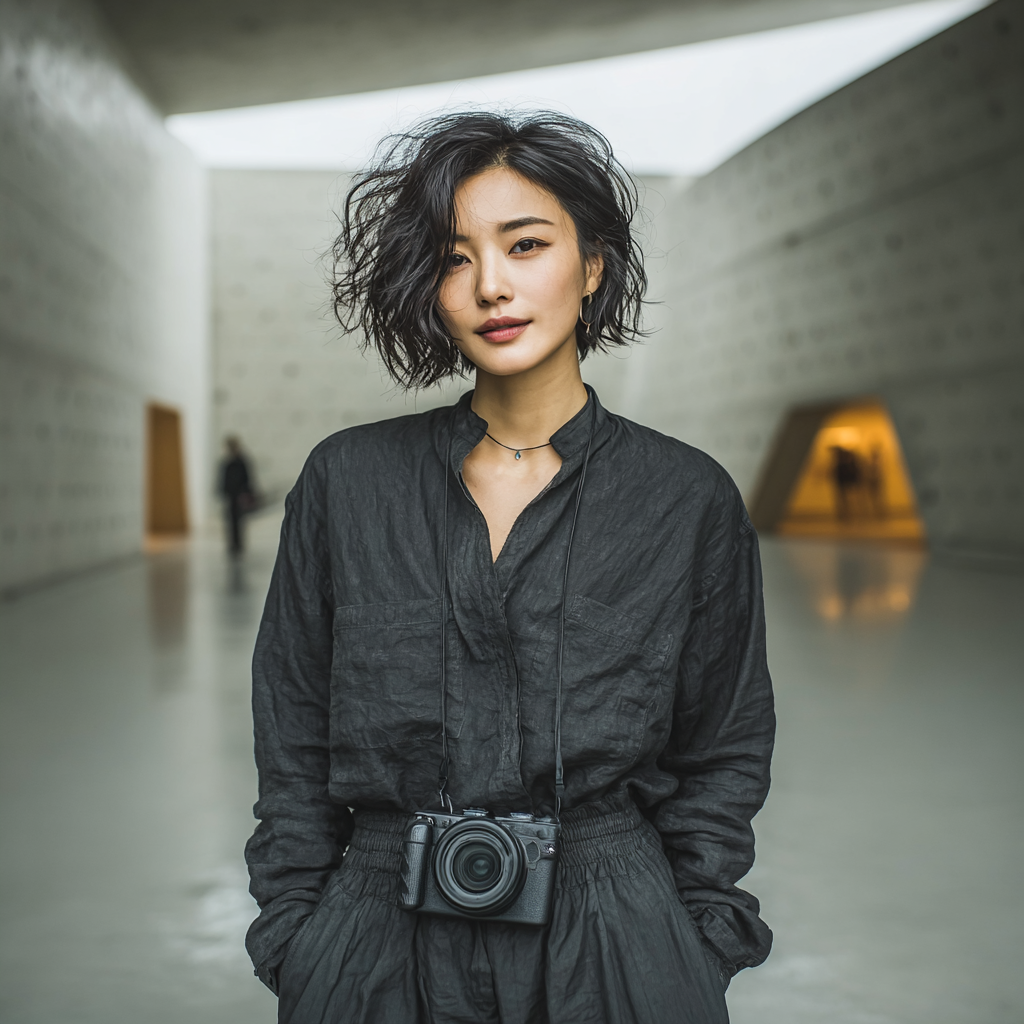
Architectural photographer based in Tokyo. Yuki captures the dialogue between ancient structures and modern design across Asia and Europe. Her work has been featured in Monocle, Dezeen, and Wallpaper. She sees buildings as frozen stories waiting to be told.
More by Yuki Tanaka