
Hakone: The Great Checkpoint — Sulfur, Switchbacks, and 400 Years of Travelers on the Old Tōkaidō
The Odakyu Line from Shinjuku takes 85 minutes to reach Hakone-Yumoto, and somewhere around the second tunnel the flat density of Tokyo gives way to cedar slopes and a river running brown after rain. I have ridden this line in every season, and I still cannot tell you exactly where the city ends. It simply lets go.
Hakone does not look like a fortress. But from 1619 until 1869, this was the most feared border crossing in Japan — a barrier on the Tōkaidō, the great highway between Kyoto and Edo, built precisely here because the mountains squeeze every road into a single valley. The shogun's men searched travelers for smuggled guns. They searched, even more carefully, for women. I will come back to that.
Today Hakone wears a gentler costume: hot-spring villages, open-air sculpture, pirate ships on a caldera lake, and a hotel that once hosted Einstein. But the old machine is still visible if you know where to look, and the volcano underneath everything is very much awake. That is the story worth telling. The loop — mountain railway, cable car, ropeway, ship, bus — is just the delivery mechanism.
The Barrier That Guarded a Capital
In 1603, Tokugawa Ieyasu won the war and built himself a new capital at Edo, the city we now call Tokyo. The problem was control. He needed the great families of the west — the daimyo — to keep spending money on the road to his capital rather than on armies, and he needed to know exactly who and what moved along it. So he planted checkpoints, called sekisho, at the choke points. More than fifty existed. None mattered more than Hakone.
The geography does the explaining. Between the Pacific coast and the high plateau of the Kantō plain, the road has to cross the outer rim of the Hakone volcano, and for a few kilometers there is exactly one way through. In 1619 the shogunate walled it. The Hakone Checkpoint stood on this pinch point for 250 years, and its rules were ruthless in one specific direction: weapons could not enter Edo, and women could not leave it. The logic was hostage-taking dressed as border policy. The daimyo kept their families in Edo as a pledge of loyalty, and the sekisho was the lock on the door. Female travelers leaving the city needed paperwork. Lots of it.
All of this ended in 1869, two years after the shogunate fell, when the new Meiji government abolished the checkpoints overnight. The buildings rotted, burned, and were buried by landslides. Then, in a feat of historical stubbornness that Japan does better than anywhere, the town spent three years excavating the foundations and rebuilt the checkpoint from scratch using Edo-period carpentry methods. The reconstruction opened in 2007, and it is unnervingly good: the great gate, the officers' quarters, the soldiers' barracks, the prison cell, and the lookout tower, all arranged as they were, down to the posts where heads were once displayed as a warning. The adjacent Hakone Sekisho Shiryokan holds the finds — travel permits, weapons, scales, and documents that let you read the checkpoint's bureaucracy like a diary.
Hakone Checkpoint (Hakone Sekisho), 1 Hakone, Hakone-machi. Open daily 9:00–17:00 (to 16:30 December–February), last entry 30 minutes before close. Admission ¥500 adults, ¥250 children; ¥400/¥150 with the Hakone Freepass. Free for elementary and junior-high students on weekends and holidays. Two minutes on foot from the Hakonesekisho-ato bus stop; bus line H from Hakone-Yumoto takes about 40 minutes and is covered by the Freepass. Budget 45–60 minutes.
Do not leave the area without walking the old road. Between Moto-Hakone and Hakone-machi runs a surviving avenue of cedar trees planted in the early 1600s by order of the shogunate to shade the highway — about 500 meters of them, trunks more than 30 meters high. Stand still and the road feels like a corridor between centuries. Then keep going west. Beyond the cedar avenue the old Tōkaidō climbs the pass on stretches of original stone paving, and after roughly thirty minutes of walking you come to a thatched teahouse that has no right to still exist.
Amazake-chaya has served the same drink from roughly the same spot since the Edo period — the current building and the family running it trace back generations, and the recipe for their amazake, a warm, naturally sweet, low-alcohol rice brew, has not changed. You sit on the floor around an open irori hearth while mochi pounded that morning grills over coals. A bowl of amazake costs a few hundred yen. Open 7:00–17:30, no closing days, entry free. This is the single best-value experience in Hakone and almost nobody queues for it, because almost nobody walks here.
The full old-road walk from Moto-Hakone to Hatajuku over the pass takes 75 to 100 minutes with the teahouse stop. Buses on line K from Hakone-Yumoto serve both ends — Hatajuku (about 15 minutes, ¥380) and the chaya (about 25 minutes, ¥680) — and the Freepass covers them, so you can walk one direction and ride back. A tiny free museum beside the chaya reconstructs life along the highway. Skip the stretch between Hatajuku and Hakone-Yumoto on foot; it follows the modern road with traffic and no sidewalk, and Hiroshige did not paint that part for a reason.
The Loop: Engineering as Entertainment
Hakone is not a town. It is a circuit — roughly 40 kilometers of mountain railway, funicular, ropeway, sightseeing ship, and bus that the Japanese call the Hakone Round Course. Understanding this changes everything about how you plan. The loop is the destination.
The pieces, in order from Hakone-Yumoto: the Hakone Tozan Railway climbs from 96 meters to 541 meters at Gora in about 40 minutes, using three switchbacks — the train runs into a dead end, reverses direction on zigzag track, and climbs again. The line opened in 1919 and was built for scenery, not speed; in late June and July the banks explode with hydrangeas and the railway runs special "Ajisai" services. At Gora, the Tozan Cable Car (a funicular with stepped floors) takes ten minutes to Sounzan. The Hakone Ropeway then carries you in eight-person gondolas from Sounzan across the volcanic zone to Togendai on Lake Ashi, with a mandatory transfer at Owakudani.
The ropeway is priced flat whether you ride one section or all: ¥2,000 one-way, ¥3,000 round trip for adults (children ¥700/¥1,000), covered by the Freepass. Hours are roughly 9:00–17:00 (last departure around 16:15 in December and January). Sections close for maintenance — the Owakudani–Togendai segment was shut January 31–February 20, 2026 — and the whole line suspends in high winds or volcanic gas conditions, with substitute buses running. Check the Hakone Navi site the morning you go. If Mount Fuji is your target, sit on the left going up from Sounzan in the morning; the cone appears northwest, and in clear winter air it looks close enough to touch.
The Hakone Freepass is the key that makes the loop affordable. As of 2026, a two-day pass from Shinjuku costs ¥7,100 for adults and ¥1,600 for children; the three-day version is ¥7,500. A cheaper Hakone-area-only version (starting from Odawara or Hakone-Yumoto) runs ¥6,000 for two days and ¥6,400 for three. The pass covers the loop's trains, cable car, ropeway, Hakone Sightseeing Boats, and Tozan buses, plus discounts at most museums and attractions. It does not cover the Romancecar limited express — that requires a separate reserved-seat surcharge of about ¥1,200 each way. Plain express trains on the Odakyu Line reach Hakone-Yumoto in nearly the same time for zero extra yen; the Romancecar is comfort, not speed. Buy the Freepass at Odakyu's Shinjuku counters or from ticket machines before boarding.
Which direction around the loop? Most guidebooks say clockwise, which means everyone forms the same queues at Owakudani by mid-morning. Run it counter-clockwise — bus or boat to Lake Ashi first, ropeway up late morning — and you meet the crowds walking the other way. Choose based on your tolerance for queueing, but know that the counter-clockwise gamble has a cost: Owakudani's Fuji views are a morning game.
Owakudani: The Valley That Cooks Its Own Eggs
Three thousand years ago, the Hakone volcano blew its top sideways, the crater wall collapsed, and rain filled the depression. That water became Lake Ashi. The hole in the middle of it all is still exhaling.
Owakudani — the Great Boiling Valley — is an active volcanic hydrothermal field, and it is the reason the eggs are black. Steam vents carve yellow sulfur streaks through gray rock. The smell hits you at the ropeway station and stops registering within minutes. Entry to the valley area is free; what you pay for is the transport up and the gimmick, and the gimmick is magnificent. Kuro-tamago — black eggs — are boiled on-site in pools of naturally scalding sulfuric water, and the mineral crust turns the shells matte black. They are sold in bags of five for ¥500 from the shops beside the station. The legend says each egg adds seven years to your life, which means eating the whole bag is an act of either optimism or greed. They taste like hard-boiled eggs. That is the point. You are eating geology.
There is a small Geo Museum in the Kurotamago-kan building: the information area is free, and the Geo Hall with its volcano models costs ¥100. The nature research trail that used to let visitors wander freely among the vents now runs as a controlled, guided route with advance booking when volcanic and weather conditions allow. Conditions matter. Japan's volcanic alert scale runs from Level 1 (normal) to Level 5 (evacuation); at Level 1 everything is open, at Level 2 the trail and sometimes the ropeway close. The last serious episode was 2015, when heightened activity shut the entire zone for months. If you have asthma, heart trouble, or are pregnant, the official advice is to skip the vent area — the sulfurous gas is real. Healthy visitors should simply stay on marked paths and not linger in dead-air corners on windless days.
Parking exists at the summit lot (around ¥530) if you arrive by car or substitute bus, and a free foot bath sits at Sounzan station when you ride back down. On clear autumn and winter mornings, the Fuji view from the valley rim is one of the best in the country — better than the lake, better than the ropeway cabin, because the sulfur steam rises around you like the mountain is still making up its mind.
The Lake, the Shrine, and the Museum Window
Lake Ashi sits in the volcano's caldera at 725 meters, cold and deep and improbably scenic. The sightseeing ships that cross it are styled as baroque pirate galleons — a 1960s design decision that should not work and absolutely does. The upper decks are open air. The crossings run 25 to 40 minutes between Togendai on the northern shore, Hakone-machi, and Moto-Hakone on the south.
Fares as of 2026: ¥1,700 one-way for adults (¥850 children), ¥3,000 round trip; a fancier "special cabin" costs ¥800 extra one-way. The Freepass covers standard-class boarding on the Hakone Sightseeing Boats (the galleons); the parallel Izuhakone boats are not covered. Take any crossing toward Moto-Hakone on a clear day and you get the money shot from the water: Mount Fuji over the lake's shoulder, the red gate of Hakone Shrine at the shoreline.
That gate is the most photographed object in Hakone, and it earns the attention. Hakone Shrine was founded in 757 — seven and a half centuries before the checkpoint — by the monk Mangan Shōnin, and its sanctuaries sit up a stone staircase through old-growth cedar above the lake. The famous water torii, formally the Heiwa-no-Torii, stands at the shoreline a ten-minute walk from the Moto-Hakone pier: a red gate planted in the lake itself, so at high water it appears to float. The shrine office keeps hours of roughly 8:15–17:00, but the gate and stairway are accessible at any hour, and the photographers who arrive at 7:00 AM have it to themselves. By ten the tour buses have claimed it.
The water gate is also the view from the best museum nobody plans for. The Narukawa Art Museum (570 Moto-Hakone, one minute from the port) opened in 1988 around a private collection of roughly 4,000 nihonga — modern Japanese painting in mineral pigment and gold leaf — and its second-floor observation lounge is a long glass wall that frames Lake Ashi, the torii, and Fuji in a single composition. On a clear winter day it is the finest curated view in the region, and the attached café sells a locally brewed Ao Fuji beer for about ¥800. Admission ¥1,500 adults (¥1,300 with the Freepass), students ¥1,000, children ¥500. Open every day 9:00–17:00. A combined ticket with the Hakone Checkpoint costs ¥1,600 — buy it at either window.
The Hotel That Kept the Guests: Fujiya and the Architecture of Welcome
If the checkpoint is Hakone's oldest story of control, the Fujiya Hotel is its oldest story of welcome, and the two make a fine pair.
In 1878, four decades after Japan forced itself open to foreign trade, a Yokohama industrialist named Sennosuke Yamaguchi bought a five-hundred-year-old inn in the village of Miyanoshita and decided to build Japan's first true resort hotel for foreign guests. The story goes that Yukichi Fukuzawa — the educator whose portrait now graces the ¥10,000 note — encouraged the venture. The first grand building burned in the Miyanoshita fire of 1883; the main building you see today rose in 1891 in a style best described as the Japanese interpretation of a Western resort, all timber verandas and gabled roofs. Wings followed in 1906, 1936 (the Hanagoten, or Flower Palace, whose forty rooms have wooden floors that creak underfoot), and 1960. Several are Registered Tangible Cultural Properties.
The guest book reads like a 20th-century history exam set to music. Archduke Franz Ferdinand slept here in 1893, nineteen years before Sarajevo. Albert Einstein in 1922. Charlie Chaplin and Helen Keller in their turn. Chiang Kai-shek in 1927. Prince Albert of Britain, the future George VI. Emperor Shōwa himself. John Lennon, twice, reportedly because he liked the silence. At the start of the Pacific War the hotel became an evacuation center for foreign diplomats — one reason, locals say, that Hakone was never bombed — and afterward it served as a U.S. Army rest-and-recuperation facility until 1954. The hotel also quietly acquired the neighboring Kikka-so, an 1895 imperial villa, now its most exclusive accommodation.
The Fujiya closed in 2018 for a ground-up renovation and reopened on its own 142nd birthday, July 15, 2020 — so any source still claiming it is mid-restoration is four years stale. Today Miyanoshita onsen water pipes into every room through plumbing old enough to have character. You do not need to be a guest: the gardens, the lobby with its coffered ceiling and mosaic floors, and the Orchid Lounge are open to visitors taking afternoon tea or a coffee (figure ¥1,200 for coffee with the view). It is a seven-minute walk from Miyanoshita Station on the Tozan Line. Do not confuse it with the Yumoto Fujiya Hotel down by the station, which is a fine modern hotel with a borrowed name.
The Fujiya is the flagship of a broader onsen culture that is the real reason Japanese travelers come at all. The water changes by village: Hakone-Yumoto's springs are simple alkaline; Gora's run sodium-calcium chloride; Miyanoshita's own spring feeds the Fujiya. Day-use bathing at a public facility runs ¥1,500 to ¥3,000. Two standouts near Hakone-Yumoto: Tenzan Tohji-kyo, a warren of outdoor pools in the valley above the station (¥1,300 with your own towels, rental extra), and Hakone Yuryo, which runs a free three-minute shuttle from the station, charges from ¥1,700 for its public bath on weekdays, allows tattoos, and rents 19 private open-air rooms from ¥10,400 for two hours — the move for couples, families, or the tattooed who would otherwise be turned away at most baths. An overnight ryokan stay with two kaiseki meals starts around ¥25,000 per person. Do it once. The futon laid out while you eat, the pre-dawn soak in water that never cooled — that is the architecture of Japanese hospitality no chain has replicated.
Museums in the Mountains
Hakone's museums are better than a resort town's have any right to be, and two of them are destination-grade.
The Hakone Open-Air Museum (Chōkoku-no-Mori) opened in 1969 as Japan's first outdoor sculpture museum: 120 works spread across 70,000 square meters of hillside, Henry Moores and Giacomettis baking in mountain light, with a Picasso Pavilion holding 319 ceramic and bronze pieces assembled in the years when Picasso was prolific and (relatively) affordable. The collection's secret weapon is the footbath at the heart of the grounds — free with admission, fed by natural spring water, positioned so you soak your feet while staring at a monumental bronze. This is normal in Hakone. Admission ¥2,000 adults (¥1,900 with Freepass). Hours 9:00–17:00, last entry 16:30, open every day of the year. Two minutes on foot from Chōkoku-no-Mori station on the Tozan Line.
The Pola Museum of Art, up in Sengokuhara, opened in 2002 in a building by architect Norihiko Dan that buries seventy percent of itself in the hillside — the lobby is a single glass wall facing raw forest, and walking from the parking structure into it feels like descending into a vault through trees. The collection leans Impressionist with a strong run of Japanese ceramics and glass. Admission ¥2,200 (¥2,000 with the Freepass), hours 9:00–17:00 with last entry 16:30; it closes for a few days at a time for display changes, so check the calendar. Reach it by S or T bus from Gora or Hakone-Yumoto, or on the Freepass-covered routes from Togendai.
The Craft That Learned to Travel
Back on the old road at Hatajuku, where the Tōkaidō crests the pass, a craft was born from the same traffic that built the checkpoint. Travelers on the Edo highway wanted souvenirs that were light, beautiful, and local, and the woodworkers of the village answered with yosegi-zaiku — marquetry assembled from dozens of native woods, fitted together without nails, each piece dyed only with the wood's natural color or traditional pigments, then shaved into geometric patterns a fraction of a millimeter thick. From this came boxes, trays, and the himitsu-bako, the "secret box" that opens only after a specific sequence of slides.
The Hakone Yosegi-zaiku Densho Kaikan in Hatajuku is the craft's living museum and best workshop-shop: demonstrations on the hour, the full taxonomy of pattern on display, and small boxes from about ¥3,000. Serious pieces — a ten-step secret box in kin-himotoshi pattern — run far more and are worth every yen. The workshop sits on the bus K route between Hakone-Yumoto and Moto-Hakone, which makes it an easy add-on to the old-road walk. Buy here rather than at the Yumoto souvenir streets; the same box is cheaper at the source, and the money stays in the village that invented it.
What to Skip
The Gotemba Premium Outlets. Yes, you can reach them by bus. They are a shopping mall with a nice parking-lot view of Fuji. Unless discounted sportswear is your cultural heritage, the detour costs you half a day and returns nothing the loop cannot beat.
The Hatajuku–Hakone-Yumoto walk. The old road's final stretch to the gateway town follows the modern highway: no sidewalk, steady traffic, no shade worth the name. Hiroshige painted the mountain pass, not the traffic. Take the bus for this leg and spend the saved hour at the checkpoint museum.
Chasing Fuji on a summer afternoon. The mountain is properly visible on only a minority of days — winter mornings are the bet, and the live webcams maintained around the lake will tell you the truth before you commit. Haze and cloud hide the cone for whole weeks in July and August. If Fuji is the goal of your trip, come in December or January and stay two nights to double your odds. And do not pay the ¥800 pirate-ship special-cabin upgrade expecting a better view; the upper deck is free and better.
Rushing the loop in one direction without a stop. The Round Course can technically be completed in six hours. That is the mistake most day-trippers make — they collect the ropeway, the eggs, the ship, and the shrine like stamps, and they learn nothing. Hakone rewards the overnight. Two days lets you walk the old road, soak properly, and let the weather come to you.
Practical Notes
Get the Freepass (two-day from Shinjuku ¥7,100; three-day ¥7,500; children ¥1,600) at Odakyu's Shinjuku counter before boarding; it covers the loop transport and shaves admission at nearly every museum above. Skip the Romancecar surcharge (¥1,200 each way) unless comfort is the point — regular expresses run the same distance in near-identical time. The Tozan Railway, cable car, and ropeway pause for maintenance on select weekdays, mostly January and February; check Hakone Navi the night before, and have a bus-based plan B if the ropeway suspends for wind or gas.
Start the loop by 8:00 AM at Hakone-Yumoto to stay ahead of the tour-bus wave. The checkpoint opens at 9:00; if you walk counter-clockwise, time your arrival for opening and you will share the gate with a dozen people, not two hundred. Carry some cash — the amazake chaya, the egg vendors, and small craft shops in Hatajuku remain cash-leaning. Coin lockers at Hakone-Yumoto station take suitcases, and most ryokan will forward your luggage to the next night's stop for a fee, so do not haul bags around the loop.
Last Odakyu trains from Hakone-Yumoto toward Shinjuku run until around 9:00 PM. Miss them and the fallback is a taxi to Odawara (about ¥3,000) and the Shinkansen, which runs late. Mountain weather changes by the hour at 725 meters; bring a layer even in August.
On my last visit I stopped at the chaya on the pass at dusk, when the day-trippers were gone. The woman at the hearth refilled my amazake without my asking and said, as if it were obvious, that the road remembers everyone who walks it. That is the trade this place has been making for four centuries — the checkpoint inspected you, the volcano tested you, and the chaya fed you anyway. Hakone has always been a border. The good news is that now everyone gets through.
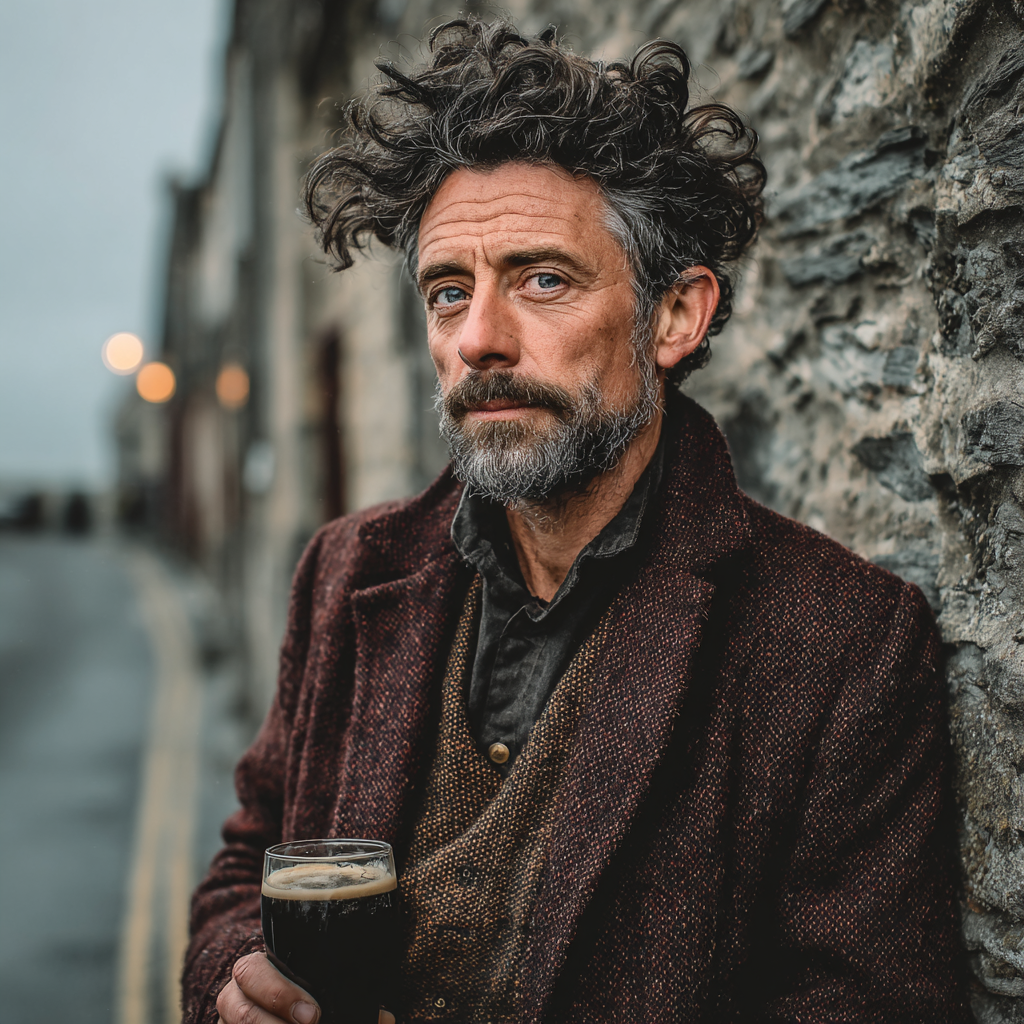
Finn O'Sullivan is RoamGuru's resident storyteller and folklorist. A Dubliner by birth and a listener by trade, he has spent twenty years collecting the small histories that survive in teahouses, market stalls, and train stations — the stories guidebooks miss. He writes about culture, memory, and the people who keep both alive.
By Finn O'Sullivan
Irish storyteller and folklorist. Finn hunts for the narratives that do not make guidebooks—the pub legends, the family feuds, the neighborhood heroes. He believes every street corner has a story if you know who to ask.