
Verona After Dark: Where Roman Stones Warm and Opera Spills from Open Windows
By Elena Vasquez
I first came to Verona on a Tuesday in late October, when the opera season had ended and the city felt like it was exhaling. The Arena di Verona's limestone corridors were empty except for a custodian sweeping dust into the afternoon light. I sat on the upper tier for twenty minutes, listening to a woman practice scales in an apartment somewhere near Piazza Bra. The sound carried perfectly — no microphone, no orchestra, just a voice testing itself against two thousand years of stone acoustics. That was when I understood: Verona is not a museum. It is a living theater, and the performance never really stops.
Most visitors treat Verona as a day trip from Venice or Milan — a quick loop through Juliet's balcony, a photo of the Arena, a gelato, and back to the train station. This is a mistake. The city deserves two full days minimum, preferably three, and it rewards the traveler who stays past sunset when the tour buses leave and the locals reclaim their piazzas. Verona sits in a bend of the Adige River, 100 kilometers west of Venice, and its historic center is compact enough to cross in twenty minutes — though you should take longer. Narrow streets open into squares without warning. Roman ruins appear between Renaissance palazzi. The river creates natural boundaries that make the city intuitive to navigate once you understand its logic: everything radiates from the Roman forum at Piazza delle Erbe.
The Roman Bones: Walking on Two Thousand Years
The Arena di Verona dominates Piazza Bra like a stone crown pushed up through the earth. Built in the first century AD, it is the third-largest Roman amphitheater still standing, and it held 30,000 spectators for gladiatorial combat at its peak. Today it holds 15,000 for opera performances during the summer festival, which runs from June through September. The acoustics are not merely good — they are supernatural. In the 1913 premiere of Aida here, conductor Arturo Toscanini refused amplification and proved that a full orchestra and chorus could fill the space without assistance. They still do.
For daytime visits, the Arena is open daily with hours varying by season — typically 8:30 AM to 7:30 PM Tuesday through Sunday, with Monday hours shortened to 1:30 PM to 7:30 PM. Admission is €10 for adults, free for children under seven. The Verona Card covers entry. Climb to the upper levels for views over terracotta rooftops, but do not rush the stone corridors. Run your hand along the pink-tinged limestone. This is the same stone that Roman masons cut, that medieval builders reused, that Napoleon's troops marched across.
The summer opera festival requires advance planning. Tickets go on sale in January, and popular dates sell out within weeks. Prices range from €25 for unnumbered stone steps — bring a cushion, the stone is unforgiving — to €200 and above for numbered chairs in the central stalls. Performances begin at 9:15 PM in July, 9:00 PM in August, timed to catch the last light fading behind the amphitheater walls. Even if opera is not your usual entertainment, the experience of hearing Carmen or Aida under stars, surrounded by Roman arches, is one of the great sensory events in Europe. Dress codes are relaxed, though locals tend toward smart-casual. The stone steps get cold even in summer — bring a jacket and that cushion.
Across the river in the Veronetta district, the Roman Theatre offers a quieter, more contemplative experience. Built in the late first century BC during the reign of Augustus, it was buried under later construction and only fully excavated in the nineteenth century by Andrea Monga, a wealthy Veronese physician who bought the land and funded the dig himself. The stone seating rises in a semicircle above the stage, and the view from the upper tiers encompasses the Adige River and Ponte Pietra, the oldest bridge in the city.
The Archaeological Museum, built into the former Monastery of San Gerolamo above the theater, houses Roman mosaics, Etruscan bronzes, and inscribed tombstones found on site. The highlight is the terrace: stand there at golden hour and you understand why the Romans chose this hillside. The museum and theater share an entrance at Rigaste Redentore 2, and a combined ticket costs €4.50 for adults, €3 for students aged 14–30, and €1 for children 8–13. Hours are Tuesday through Sunday, 10:00 AM to 6:00 PM, with last entry at 5:30 PM. Closed Mondays, December 25, and January 1.
Verona's Roman street plan is still readable to the patient eye. The Porta Borsari, a gate with two arched passages, marks the southern entrance to the decumanus maximus — the main east-west street. Walk north and you reach the Porta Leoni, more ruined but showing the same pattern. Between these gates ran the cardo and decumanus, the perpendicular main streets that defined Roman urban planning. You can still walk these routes today, though the shops along them now sell leather gloves and Amarone wine rather than garum and pottery.
Medieval Power and the Scaliger Shadow
The della Scala family ruled Verona through the fourteenth century, and their presence is everywhere — in the crenellated towers, the fortified bridges, the tombs that rise like small Gothic temples in the churchyard of Santa Maria Antica. They were not gentle rulers. Cangrande I della Scala, the most powerful of the dynasty, expanded Verona's territory across much of the Veneto, patronized Dante Alighieri (who dedicated a canto of the Paradiso to him), and built the Castelvecchio fortress that still dominates the river bend.
Castelvecchio is the anchor of any serious visit. The name means "old castle," and it was built by Cangrande II between 1354 and 1356 as both military stronghold and aristocratic residence — a combination that tells you everything about how the Scaligers saw themselves. The red-brick structure has seven towers and crenellated walls that seem to grow directly from the riverbank. Inside, the Museo di Castelvecchio displays medieval and Renaissance art, but the building itself is the primary exhibit. Carlo Scarpa's 1950s renovation is considered a masterpiece of museum design — he used concrete, steel, and glass to frame ancient artworks without competing with them, creating dialogues between periods rather than hierarchies.
The museum's address is Corso Castelvecchio 2. It is open Tuesday through Sunday, 10:00 AM to 6:00 PM, with last entry at 5:15 PM. Closed Mondays, December 25, and January 1. Admission is €6 for adults, €4.50 for groups of 15 or more and visitors over 60, and €1 for children 8–13. Free for children under 8, disabled visitors and companions, and Verona Card holders. The fortified bridge across the river, the Ponte Scaligero, was destroyed by retreating German troops in 1945 and rebuilt using original materials recovered from the water — a reconstruction so faithful that you cannot tell where the medieval stonework ends and the twentieth century begins.
The Scaliger Tombs, in the small churchyard of Santa Maria Antica near Piazza dei Signori, are the dynasty's most theatrical legacy. These freestanding Gothic monuments, with their pointed canopies and sculpted figures, were built to house the family's remains above ground — an assertion of permanence that borders on arrogance. The tomb of Cangrande I is the largest, crowned by an equestrian statue that was originally gilded. The tombs are outdoors and freely accessible, best visited in early morning when the stone catches the first light.
Piazza delle Erbe occupies the site of the Roman forum, and it remains the city's commercial heart. A market has operated here continuously for two thousand years — herbs and spices in Roman times, produce and textiles in the medieval period, souvenirs and fresh vegetables today. The daily market runs Monday through Saturday from approximately 7:00 AM to 7:00 PM, with a smaller Sunday morning version. The fountain at the center features a Roman statue of the Madonna Verona, assembled from fragments found on site. The surrounding buildings wear medieval frescoes like faded wallpaper: the Casa dei Giudici, the Mazzanti Houses, the Palazzo del Comune with its crenellated tower.
The Torre dei Lamberti rises 84 meters at the square's edge — the tallest structure in the old city. Built in 1172 and raised in the fifteenth century, it has two bells with specific functions: the Marangona marked working hours and fire alarms, while the Rengo called councils to arms. You can climb 368 steps or take a glass elevator that ascends through the tower's core. The elevator costs €1 extra on top of the €6 admission (€4.50 reduced). Hours are Monday through Friday, 10:00 AM to 6:00 PM, and Saturday through Sunday, 11:00 AM to 7:00 PM, with last entry 45 minutes before closing. The view extends to the Lessini mountains on clear days, and on summer evenings the terrace opens for special events.
Adjacent to Piazza delle Erbe, Piazza dei Signori is connected by the Arco della Costa — an archway with a whale rib hanging from it. The legend claims the rib will fall on the first just person to walk beneath it; Dante supposedly passed safely. The square is surrounded by civic buildings that still function as municipal offices: the Palazzo del Comune, the Palazzo dei Tribunali with its Renaissance loggia, and the Palazzo della Ragione with its distinctive roof terrace. These are working government buildings, not museums, and there is something satisfying about seeing medieval council chambers still in use.
Juliet, Romeo, and the Weight of Literary Tourism
Juliet's House is unavoidable, and I will not tell you to skip it entirely — that would be dishonest. But I will tell you what it actually is: a thirteenth-century palace that belonged to the Cappello family (not the Capulets, though the names are similar enough to fuel the myth). The balcony was added in the twentieth century to satisfy tourist expectations. Shakespeare never visited Verona, and there is no evidence that a Romeo and Juliet story played out here.
The courtyard is covered in graffiti — visitors leave notes on the walls, a tradition that has persisted despite frequent cleaning. The bronze statue of Juliet has a polished right breast; rubbing it is supposed to bring luck in love. The house itself contains period furniture and a small museum. Whether you find this charming or depressing depends on your tolerance for commercialized romance. The adjacent gift shop sells everything from heart-shaped pasta to "Romeo and Juliet" wine. Admission is €6 for adults.
More interesting, and far less visited, is Romeo's House — a medieval tower nearby at Via Arche Scaligere 4. It is privately owned, closed to visitors, and there is no balcony, no statue, no ticket booth. You can see it from the street, and in its refusal to perform for tourists, it feels more authentic than its famous counterpart. The contrast between the two buildings says something about how we consume history: we prefer the version that has been packaged for us.
The Churches: From Romanesque Solidity to Gothic Light
Verona's churches span architectural styles from Romanesque to Baroque, and they reward the visitor who moves slowly through them. The four major churches — San Zeno Maggiore, Sant'Anastasia, the Duomo complex, and San Fermo Maggiore — offer a cumulative ticket for €8, purchasable at any of the four. This is good value if you plan to visit more than one.
Sant'Anastasia, the Dominican church begun in 1290, has a brick facade that gives no hint of the interior. Step inside and the nave opens before you, supported by twelve pillars of red Verona marble. The ceiling is a wooden structure painted to resemble coffering. The Cappella Pellegrini contains an altarpiece by Pisanello, and the Cappella Giusti has frescoes by Altichiero da Zevio. The Cappella di San Giorgetto off the left transept contains tombs of della Scala family members. Hours vary by season: March through October, Monday through Friday 9:30 AM to 6:30 PM, Saturday 9:30 AM to 6:00 PM, Sunday and religious holidays 1:00 PM to 6:00 PM. November through February, hours are reduced — check current times at chieseverona.it.
San Zeno Maggiore sits outside the city center, near Porta San Zeno, and it is worth the walk. The basilica is one of the finest Romanesque churches in Italy, built between 1120 and 1138 on the site of earlier churches dating to the fourth century. The facade is divided into three sections with a rose window above the portal. The bronze doors, cast in the eleventh and twelfth centuries, contain 48 panels depicting biblical scenes with a rough, energetic quality that feels almost modern. Inside, the nave has a painted wooden ceiling and a crypt containing the relics of Saint Zeno, Verona's patron saint. The adjacent cloister has arcades on all four sides and columns with carved capitals that reward close inspection. Hours mirror Sant'Anastasia's schedule.
The Duomo di Verona, the cathedral, is less architecturally coherent — the facade is Romanesque, the interior was reworked in Gothic and Renaissance styles. The Cappella Niccolini contains an altarpiece by Titian, and the choir has carved wooden stalls from the sixteenth century. The baptistery to the left of the main entrance is a separate octagonal building with an immersion font. The cathedral complex is open Monday through Friday 11:00 AM to 5:30 PM, Saturday 11:00 AM to 3:30 PM, Sunday and religious holidays 1:30 PM to 5:30 PM from March through October. Reduced hours in winter.
What to Eat: The Heavy Soul of Veronese Cooking
Veronese cuisine does not apologize for itself. It is meat-heavy, wine-drenched, and designed for cold winters. The city sits at the intersection of three wine regions — Valpolicella to the west, Soave to the east, Bardolino on Lake Garda — and the local cooking assumes that wine is not an accompaniment but an ingredient.
Pastissada de caval is horse meat stewed with wine and spices, a traditional dish that predates the papal ban on horse meat consumption that never applied to the Veneto. It is served in autumn and winter, deeply flavored, almost gamey. Risotto all'Amarone uses the local red wine made from dried grapes, giving the rice a deep purple color and intense, almost port-like flavor. Bollito con pearà is boiled meat with a bread and bone marrow sauce — winter food, heavy and warming, best eaten when the streets are cold.
For a proper sit-down meal, Trattoria al Pompiere at Vicolo Regina d'Ungheria 5 is the benchmark. Founded by a firefighter in the early twentieth century, it occupies a narrow street opposite Juliet's House. The interior is wood-paneled walls, vintage photographs, tables set close together with checkered tablecloths. The menu draws from Venetian classics with an emphasis on meats and pastas, but the real draw is the selection of salumi and cheeses — over 100 cheeses from across Italy, displayed on a counter near the entrance. The risotto all'Amarone here is definitive: the rice maintains its bite, the wine reduction is intense without being sweet, and the portion is generous. The guancia di manzo all'Amarone — beef cheek braised in the same wine — is equally good, falling apart at the touch of a fork. Expect to pay €40–60 per person with wine. Open Monday through Saturday, lunch 12:30 PM to 2:00 PM, dinner 7:30 PM to 10:30 PM. Closed Sunday. Reservations essential, especially during Vinitaly in April.
Osteria al Duca at Via Arche Scaligere 2 is older and more casual, operating since the nineteenth century in a building near the Scaliger Tombs. The menu is small — around ten starters and ten mains — and changes with the seasons. Bigoli con ragù d'asino (thick spaghetti with donkey meat sauce) is a house specialty, robust and earthy. The wine list focuses on Veneto producers, with good Amarone and Soave selections. Figure €30 for two courses, wine extra. The portions are not large, so order a starter and a main. After dinner, walk along the Adige River — the osteria is minutes from the water.
For lunch, Pasticceria Barini at Via Stella 14 makes excellent sandwiches and pizza al taglio. It is not a destination but a practical stop between churches. Gelato is serious business in Verona. Gelateria Savoia has operated since 1939 at Via Roma 1, near Piazza Bra. La Romana at Piazza Santo Spirito 9 makes gelato in small batches with seasonal ingredients — the fior di latte and nocciola are reliably excellent, and they fill the cone bottom with melted chocolate on request.
The wine culture is inseparable from the food. Amarone della Valpolicella is the most famous local wine, made from partially dried Corvina, Rondinella, and Molinara grapes that concentrate sugars and flavors over three to four months of drying on bamboo racks. A good bottle in a restaurant costs €40–80 depending on vintage. Recioto della Valpolicella is the sweet version, traditionally drunk with dessert or as a meditation wine. Soave, the dry white from the hills east of Verona, pairs better with fish from Lake Garda than with the city's meat-heavy cuisine. If you want to understand these wines properly, take the bus to Sant'Ambrogio di Valpolicella (30 minutes from Porta Nuova) and visit a cantina. Many offer tastings for €15–25, often with salumi and cheese.
What to Skip
The Juliet's House gift shop. The balcony itself is worth a look — the architecture is genuinely medieval, even if the Shakespeare connection is fabricated — but the adjacent commercial operation sells the worst kind of tourist merchandise at inflated prices. Buy your pasta and wine elsewhere.
The so-called "Juliet's Tomb" at the Capuchin monastery of San Francesco al Corso. This is where the 1936 film Romeo and Juliet was shot, and the site has leaned into the association with a theatrical tomb installation that feels more Disney than Dante. The monastery itself is peaceful, but the tomb attraction is skippable unless you are a completist.
Restaurant touts in Piazza Bra. The restaurants ringing the Arena's main square are overpriced and underwhelming, trading on location rather than quality. The gelato shops here are particularly bad — fluorescent colors, artificial flavors, prices 30% above the city average. Walk five minutes in any direction for better options.
The hop-on, hop-off bus tour. Verona's historic center is small enough to walk entirely, and the bus routes miss the narrow streets where the best discoveries happen. The only time you need transport is to reach San Zeno Maggiore or the Porta Nuova train station.
Practicalities
Verona's airport, Valerio Catullo (VRN), is 10 kilometers southwest of the city center. The Aerobus runs every 20 minutes and takes 15 minutes to reach Porta Nuova train station. Tickets cost €6, purchasable on board or at the airport. A taxi costs approximately €25–30.
The train station, Porta Nuova, is a 15-minute walk from the Arena. Trains connect Verona to Venice (1.5 hours), Milan (1 hour on Frecciarossa, 1.5 hours on regional), and Bologna (50 minutes). Book fast trains in advance for better prices — regional trains are cheaper but slower.
The historic center is largely closed to traffic. Parking is available outside the city walls; the Piazza Bra lot is closest to the Arena at €2 per hour. Hotels inside the walls are more expensive but put you within walking distance of everything. The Hotel Gabbia d'Oro (Corso Sant'Anastasia 4) and the Due Torri (Piazza Sant'Anastasia 4) are the luxury options, both housed in historic palazzos. More affordable choices cluster near Porta Nuova or across the river in Veronetta, where you get better value and a more local atmosphere.
The Verona Card costs €20 for 24 hours or €25 for 48 hours and covers entry to most major monuments including the Arena, Castelvecchio, the Roman Theatre, the churches, and Torre dei Lamberti. It includes unlimited bus rides. Buy it at tourist offices, participating sites, or online. Do the math before purchasing: if you visit the Arena (€10), Castelvecchio (€6), one church (€4), and Torre dei Lamberti (€6), the card pays for itself. The 48-hour version is worth it only if you are planning intensive sightseeing.
Summer opera performances require advance booking. Tickets go on sale in January at arena.it and through TicketOne. Popular dates — opening night, weekends, Aida performances — sell out within days. If you cannot get opera tickets, the Arena offers guided tours in English several times daily during the festival season, though these fill up too.
Verona works as a day trip from Venice or Milan, but deserves two days minimum. The surrounding countryside — Lake Garda (30 minutes by bus), the Valpolicella vineyards (45 minutes), the Lessini mountains — rewards longer stays. The city itself has enough layers, enough corners to discover, that rushing through misses the point. This is a place that rewards slow movement, repeated walks down the same streets, attention to architectural details and changing light.
The Roman stones are still warm in the evening. The opera singers practice scales in nearby apartments. Someone is always writing a letter to Juliet. And if you stay long enough, if you let the city unfold at its own pace, you might find yourself writing something too — if only a note in your journal, trying to capture a place that refuses to be fully captured.
Elena Vasquez writes about the intersection of culture, history, and food. She believes the best travel writing happens when you stop trying to see everything and start trying to understand one thing deeply. She is usually found in church side chapels, market back corners, or restaurants where the menu is written only in the local language.
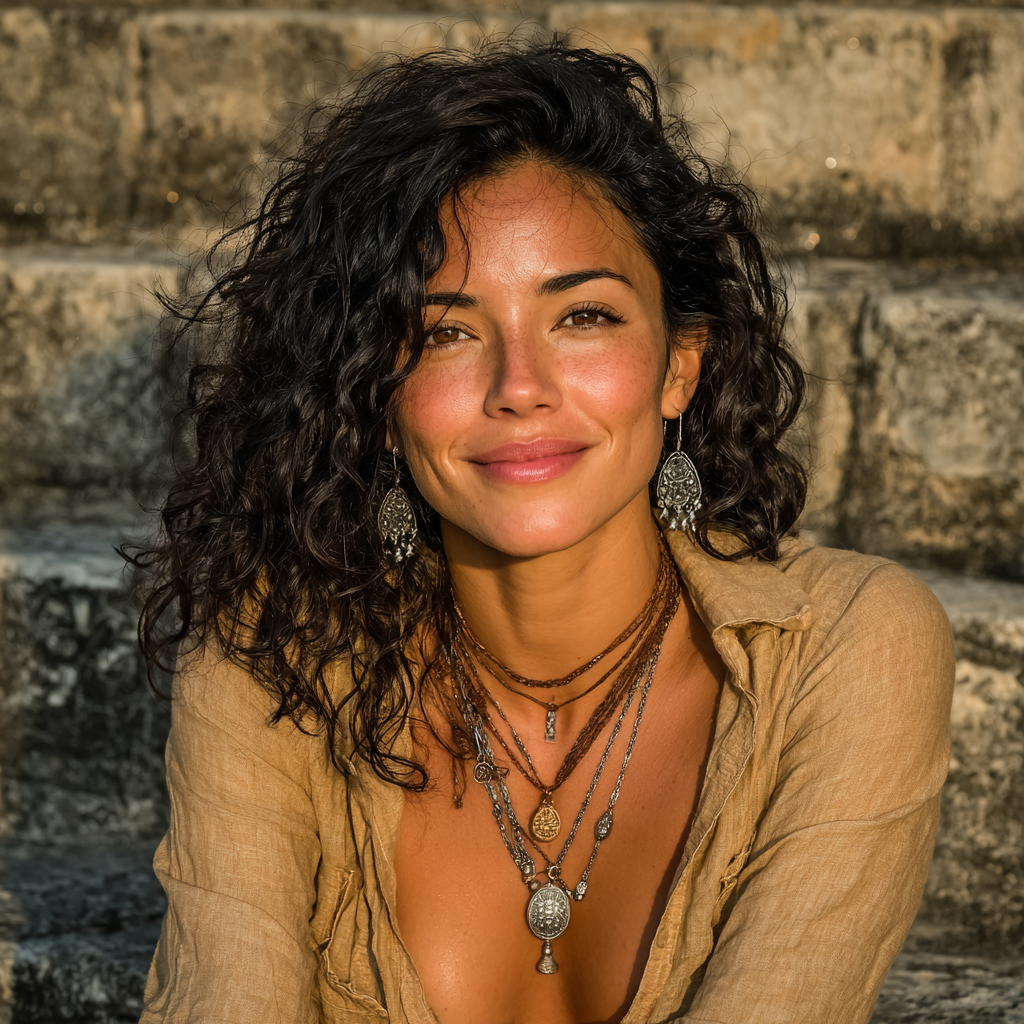
By Elena Vasquez
Cultural anthropologist and culinary storyteller. Elena spent a decade documenting traditional cooking methods across Latin America and the Mediterranean. She holds a PhD in Ethnography from Barcelona University and believes the best way to understand a place is through its kitchens and ancient streets.