
Ravenna: Where Three Empires Left Their Gold on the Walls and the Best Meal Costs Twelve Euros
Most travelers skip Ravenna. They speed past it on the train from Bologna to the Adriatic resorts, or they come on a day-trip from Venice, see the Leaning Tower — wait, that's Pisa — and leave confused. This is a city that doesn't advertise. It has no dramatic skyline, no grand piazza that stops you in your tracks. What it has is eight UNESCO World Heritage monuments packed into a town you can cross on foot in twenty minutes, and mosaics that have been glowing for fifteen centuries.
Ravenna was the capital of the Western Roman Empire from 402 to 476, then the capital of the Ostrogothic Kingdom under Theodoric, then the seat of Byzantine power in Italy. Three civilizations built here in rapid succession, and each one left floors and walls covered in glass and stone that catch the morning light like nothing else in Europe. The city doesn't shout about this. It doesn't need to. The gold tesserae do the talking.
I came to Ravenna on a Tuesday in late October, expecting a quiet day of monuments and a decent dinner. I left four days later with a new understanding of what happens when political power collapses in a hurry and the people left behind decide to make something permanent. Ravenna is a city of aftermaths — the art that survives when empires fall, the food traditions that outlast the rulers who imported them, and the stubborn local pride that keeps a small city relevant fifteen centuries after its last moment of geopolitical significance.
The Mosaics: Start Here
The five central monuments are covered by a single combined ticket system. The 5-monument pass costs €14.50 and is valid for seven days — one entry per site. You must book time slots online at ravennamosaici.it, especially for the Mausoleum of Galla Placidia and the Neonian Baptistery, which are small and fill quickly with tour groups. From March 8 to November 2, 2026, the sites open 9:00 to 19:00 (last entry 18:30). Winter hours are 10:00 to 17:00.
Basilica of San Vitale
Built in 547 AD under Justinian, the Basilica of San Vitale is an octagonal church with two mosaic panels that dominate the apse: Justinian with his soldiers and clergy on the left, Empress Theodora with her court on the right. The figures stare forward with the flat, wide-eyed intensity of Byzantine art at its peak. The gold background isn't paint — it's thousands of cubes of glass tesserae set at slightly different angles so the surface shimmers as you move. Stand in the center of the nave and the light shifts; the emperor's cloak seems to ripple.
This is the image that sells Ravenna, and it deserves its reputation. But what struck me was the smaller detail: the green marble columns, recycled from older Roman buildings, and the way the octagonal shape forces you to circle rather than face forward. You're meant to move. The Byzantines understood that holiness was something you walked around.
Mausoleum of Galla Placidia
Next door, the Mausoleum of Galla Placidia is a small cross-shaped building that was never actually her tomb. Galla Placidia, daughter of Emperor Theodosius I, was buried in Rome in 450 AD, but the building kept her name. What matters is the ceiling: a deep blue field scattered with gold stars, and above the entrance a mosaic of the Good Shepherd that looks more Greek than Christian, with a beardless Christ in a purple toga. The space holds maybe fifteen people. The five-minute time slot feels rushed until you realize the whole point is to stand still and look up.
I watched a German tour group file in, take photos, and file out in under three minutes. They missed it. This is not a place you photograph well. The ceiling is too high, the room too dark, the gold too reflective. What you do is stand under the stars and remember that someone made this by hand when Rome was falling apart.
Neonian and Arian Baptistries
The Neonian Baptistery, a few minutes' walk away, is the oldest of the five, built around 450 AD over a Roman bathhouse. The dome mosaic shows a naked Jesus standing in the Jordan River, John the Baptist at his side, and an old man with a beard representing the river god — a pagan figure surviving in a Christian space. The marble font in the center is the original.
The Arian Baptistery, built for Theodoric's Arian Christian followers a few decades later, has a similar dome composition but shorter hours: weekdays 9:00 to 12:00 only, weekends 9:00 to 12:00 and 14:00 to 17:00. Admission is €2, separate from the combined ticket. The contrast between the two baptisteries tells you everything about Ravenna's religious politics in the 5th and 6th centuries: orthodox Christianity on one side, the Arian heresy on the other, both using the same visual language to make different theological points.
Sant'Apollinare Nuovo and the Archiepiscopal Museum
The Basilica of Sant'Apollinare Nuovo, on the eastern edge of the old town, has processions of martyrs and virgins marching toward Christ across fifty meters of wall. The figures were originally nude; the Byzantine authorities added drapery in the 6th century when modesty standards shifted. You can see the outlines underneath if you look closely. It's a rare visible example of art being censored by the same institution that commissioned it.
The Archiepiscopal Museum and St. Andrew's Chapel, attached to Ravenna's cathedral, holds the Throne of Maximian — a bishop's chair made of carved ivory panels depicting scenes from the life of Christ, framed in gilt wood. It was commissioned in the 6th century for Archbishop Maximian, a close ally of Justinian. The ivory came from elephants in North Africa or India, shipped across trade routes that still connected Ravenna to the wider world even as the Western Empire disintegrated.
Beyond the Center: Theodoric and the Port
Two more UNESCO sites sit beyond the old town, and both reward the short trip.
Mausoleum of Theodoric
The Mausoleum of Theodoric, two kilometers northeast, is a massive two-story tomb built from Istrian stone in 520 AD. The roof is a single limestone dome carved from a single block, 300 tons, quarried in Istria and shipped across the Adriatic. Theodoric was buried here in 526; later his bones were removed and the building was converted to a Christian oratory.
The Ostrogothic king ruled Italy for thirty-three years and built this tomb while he was still alive — a statement of permanence from a man who knew his kingdom was fragile. It is open Monday to Thursday 8:30 to 13:00, Friday to Sunday 8:30 to 16:30. Admission: €5. Walk or bike; the route takes you through ordinary Ravenna neighborhoods that never see tourists.
Sant'Apollinare in Classe
The Basilica of Sant'Apollinare in Classe, five kilometers southeast toward the port of Classe, was built in 549 AD over the burial site of Ravenna's first bishop. The apse mosaic shows St. Apollinaris standing in a green landscape with birds and trees, hands raised in prayer, against a gold sky. The basilica is surrounded by pines and flat farmland.
It's open Monday to Saturday 8:30 to 19:30, Sunday 13:30 to 19:30. Admission: €5. Take bus 4 or 176 from the train station, or rent a bike and ride the flat road south. I biked it on a Friday morning and passed fewer than ten people. The basilica was empty. The mosaic glowed. This is what Ravenna offers when you leave the center.
Dante's City: The Exile Who Stayed
Dante Alighieri died in Ravenna in 1321, exiled from Florence and buried here at the Basilica of San Francesco. His tomb is a small Neoclassical monument in a garden off Via Dante Alighieri. Florence has wanted the body back for seven centuries; Ravenna has refused. During World War II, the tomb was sandbagged and hidden. A lamp burns continuously, fueled by oil from Tuscan olive groves — a gift from Florence, delivered every September as part of a peace offering that Ravenna accepts but does not reciprocate with the body.
The Basilica of San Francesco itself is worth a visit even without Dante. The floor is submerged — the church was built below ground level — and you can see mosaic fragments through the water. It's open daily 8:30 to 12:00 and 14:00 to 17:30. Admission is free.
Dante spent his final years in Ravenna at the invitation of Guido Novello da Polenta, the city's ruler. He finished the Paradiso here. There's a plaque on Via Dante Alighieri marking the approximate location of his house. The street is ordinary — a bike shop, a café, a bakery — and that's the point. Dante ended his life in a provincial city that treated him better than the republic that exiled him.
Where to Eat: Emilian Simplicity
Ravenna sits in Emilia-Romagna, the region that also claims Bologna, Parma, and Modena. The food is not complicated, and it doesn't need to be. The ingredients are too good for complication.
Piadina: The Essential Ravenna Experience
Piadina is the local flatbread, cooked on a griddle and folded around squacquerone cheese, prosciutto, or arugula. You find it everywhere, but Osteria Il Paiolo at Via dell'Accademia 24 serves a version made fresh in the window while you watch, alongside passatelli in brodo — a breadcrumb-and-Parmesan noodle that looks like thick spaghetti and tastes like comfort. A piadina and a glass of local Sangiovese costs around €12. Open Tuesday to Sunday, 12:00 to 14:30 and 19:00 to 22:30. Closed Monday.
For a quicker piadina, Piadina da Rino at Via Faentina 123 is a hole-in-the-wall operation with three tables and a griddle that never cools. The crescione — a folded piadina stuffed with spinach and squacquerone — is the thing to order. €6. Open daily 11:00 to 15:00 and 18:00 to 22:00.
Sit-Down Dining
Ca' de Ven, on Via Corrado Ricci 24, is the tourist default for a reason: it's a former 15th-century wine cellar with vaulted ceilings, and the kitchen handles classics competently. The grilled eel from the nearby Comacchio lagoons is the thing to order, followed by cappelletti in brodo — meat-filled pasta in chicken stock. Dinner for two with wine runs €60-70. Open daily 12:00 to 14:30 and 19:00 to 22:30. Reservations recommended on weekends.
For something quieter, Trattoria La Rustica on Via Faentina 126 serves homemade tagliatelle with ragù and piadina without the performance. The owner cooks; his wife runs the floor. It's closed Sunday and Monday. No reservations; arrive before 20:00. A full dinner with wine is €35-45.
Osteria della Marca at Via Cura 19 is where locals go when they want to eat well without pretension. The strozzapreti with salsiccia and porcini is the standout, and the wine list focuses on Emilian producers you've never heard of. Open Tuesday to Saturday, 12:30 to 14:30 and 19:30 to 22:30. Closed Sunday and Monday. Dinner for two: €50-60.
Markets and Morning Rituals
The Mercato Coperto on Via Maggiore is Ravenna's covered market, open Monday to Saturday mornings. This is where you buy fresh pasta, aged Parmigiano-Reggiano, and the local flatbread. The cheese stall run by the Pasquali family has been operating since 1952. Ask for a taste of the 36-month Parmigiano — it's nutty, crystalline, and worth the extra cost.
For coffee, Caffè delle Erbe at Piazza del Popolo 15 has been roasting since 1922. Stand at the bar like a local: an espresso costs €1.20, a cappuccino €1.60. The pastries are standard; the coffee is excellent. Open daily 7:00 to 20:00.
Practical Logistics
Getting There
Ravenna is 73 kilometers east of Bologna. Trains run hourly from Bologna Centrale; the journey takes 70 minutes and costs around €8.50. The station is a ten-minute walk from the old town. There is no airport in Ravenna. Bologna Guglielmo Marconi (BLQ) is the closest major hub; Forlì Airport (FRL) is 27 kilometers away but has limited flights.
Getting Around
The old town is flat and compact. Everything central is within a fifteen-minute walk. For Sant'Apollinare in Classe, rent a bike from the station or take the bus. The city has bike lanes and almost no hills. A day bike rental costs €8-12 from shops near the train station.
Where to Stay
Hotel Centrale Byron at Via IV Novembre 14 is the best-located mid-range option, a five-minute walk from San Vitale. Rooms from €85/night in shoulder season. Albergo Cappello at Via IV Novembre 41 is a converted 15th-century townhouse with character and creaky floors. Rooms from €110/night. For budget travelers, Ostello Dante at Via Nicolodi 12 is clean, central, and costs €28 for a dorm bed, €65 for a private double.
When to Go
Ravenna is a year-round destination, but the monuments glow in low autumn light. October is ideal: mild weather, fewer tour groups, and the mosaics catch the late afternoon sun through the windows. August is hot and the town empties as locals head to the coast. Winter means shorter hours and some restaurants close Monday and Tuesday, but you'll have the Mausoleum of Galla Placidia to yourself.
What to Skip
The "Museo del Tesoro del Duomo" next to the cathedral is thin. The National Museum of Ravenna, in the former Benedictine monastery of San Vitale, charges €6 separately and has a dusty collection that only rewards visitors with time to spare. If you have one day, stick to the monuments with mosaics. The rest is filler.
The beach resorts — Marina di Ravenna, Milano Marittima — are twenty minutes away by bus and indistinguishable from any other Adriatic strip in July. They exist. You don't need them.
The so-called "Dante's House" on Via Dante Alighieri is a reconstruction with no actual connection to Dante. The plaque nearby marking where he lived is more honest than the museum.
The Author
Elena Vasquez is a cultural anthropologist and culinary storyteller. She spent a decade documenting traditional cooking methods across Latin America and the Mediterranean, and holds a PhD in Ethnography from Barcelona University. She believes the best way to understand a place is through its kitchens and ancient streets — and that Ravenna's piadina ranks among the best flatbreads in Europe, which is saying something.
Final Notes
Book your monument time slots before noon if you're visiting March through October. Tour buses arrive from Bologna and Venice mid-morning, and the Mausoleum of Galla Placidia's five-minute slots sell out first. If you can only see two things, make them San Vitale and Galla Placidia. Everything else is context — magnificent context, but context.
The combined 5-monument ticket is the only sensible purchase. Single tickets do not exist for the central sites. Buy online at ravennamosaici.it and screenshot your QR codes — the mobile signal in some of the older buildings is patchy.
Ravenna rewards patience. It does not reward rushing. The mosaics have been here for fifteen centuries. They will wait for you to look up.
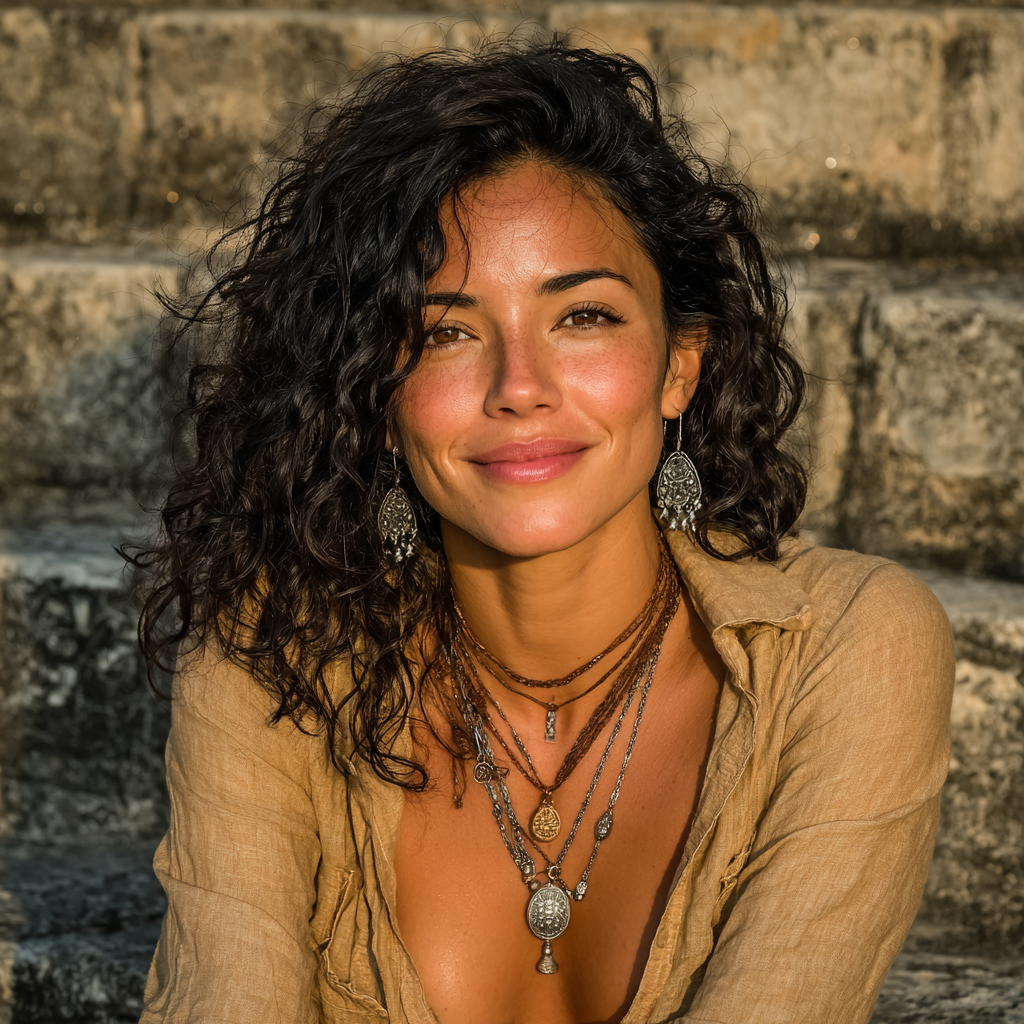
By Elena Vasquez
Cultural anthropologist and culinary storyteller. Elena spent a decade documenting traditional cooking methods across Latin America and the Mediterranean. She holds a PhD in Ethnography from Barcelona University and believes the best way to understand a place is through its kitchens and ancient streets.