
meta: title: "In Parma, Every Meal Is a Love Letter to Emilia-Romagna" description: "A food-obsessed guide to Parma, Italy's edible heartland. Where to eat prosciutto carved by hand, watch Parmigiano age in silent warehouses, and drink Lambrusco until the piazzas blur." author: "Sophie Brennan" date: "2026-08-28" destination: "Parma, Italy" category: "Food & Drink" word_count: 3200 quality_score: 92
In Parma, Every Meal Is a Love Letter to Emilia-Romagna
Introduction: The City That Smells Like Cheese
Parma doesn't announce itself. It doesn't need to.
You know you've arrived when the air changes—that faint, nutty aroma of aging Parmigiano Reggiano drifting from warehouses near the train station, mixing with the saline sweetness of prosciutto curing in nearby Langhirano. This is not a city that hides its obsessions. Parma has been perfecting the same three things for roughly nine hundred years: cheese, cured pork, and a sense of absolute certainty that no one else does either quite as well.
I came to Parma on a Tuesday in late October, ostensibly for the opera season at Teatro Regio. I stayed for the food. Not the Michelin-starred temples of gastronomy (though Parma has those), but the trattorias where nonnas still roll pasta by hand at 6 AM, the wine bars where the owner remembers your order from three years ago, and the covered markets where butchers slice mortadella so thin you can read a newspaper through it.
This is a guide for people who plan trips around meals. Who believe that a city's culture lives in its kitchens, not just its museums. Who understand that in Emilia-Romagna, the distinction between "food" and "culture" is meaningless anyway.
Parma is small—barely 200,000 people—and the historic center can be crossed on foot in twenty minutes. But what it lacks in scale, it repays in intensity. Every cobblestoned street, every frescoed church, every slow-poured glass of Lambrusco contributes to a single, overwhelming argument: that the good life is not only possible but rigorously codified, protected by consortiums, and aged for a minimum of twelve months.
My approach here is thematic, not chronological. I won't tell you what to do on "Day 1" or "Day 2" because Parma doesn't work that way. You'll wander. You'll eat something extraordinary at 11 AM and realize you're not hungry for lunch. You'll sit in Piazza Garibaldi with a spritz and watch the light change on the Palazzo del Governatore for two hours. The city rewards drift. What follows is a framework for that drift—where to eat, what to understand, what to skip, and how to leave with a suitcase full of vacuum-sealed ham.
The Three Sacred Foods (and Where to Worship Them)
Prosciutto di Parma: The Ham That Built a City
Let's be clear about something: "Parma ham" is not a style. It is a legally protected product, produced under the Consortium of Prosciutto di Parma since 1963, and every leg that earns the five-pointed Ducal Crown brand must come from pigs raised in eleven designated regions, fed a specific diet, and cured for at least 400 days in the rolling hills around Parma.
The result is something approaching culinary perfection: silky, sweet, with a depth of flavor that makes generic prosciutto taste like damp cardboard. And the best place to understand it is not a factory but a trattoria where it's served in thick, hand-cut slices that actually taste of pork.
Trattoria Corrieri (Via Conservatorio, 1) is my first stop on every Parma trip. Founded in 1805, it's a cavernous, wood-paneled institution that feels unchanged since the Risorgimento. The prosciutto here is carved to order—ask for it "tagliato a mano, non troppo sottile" (hand-cut, not too thin) and you'll get slabs with the fat still glistening, the texture yielding rather than leathery. Pair it with torta fritta, the puffy fried dough that serves as Parma's answer to bread, and a glass of dry Malvasia. Budget around €25-35 for a full lunch. Open daily 12:00–14:30 and 19:00–22:30; closed Wednesday evenings.
For a more intimate experience, Trattoria del Tribunale (Strada Garibaldi, 18) occupies a narrow space near the courthouse with marble-topped tables and a menu that reads like a love letter to the province. Their prosciutto comes with a side of erbazzone, a savory spinach pie that's the definition of peasant food elevated to art. Around €20-30. Open Tuesday–Sunday 12:30–14:30, 19:30–22:30; closed Monday.
If you want to go deeper, the Prosciutto di Parma Museum in Langhirano (Via Bocchialini, 7) traces the history of cured pork from Roman times to the present. It's more engaging than it sounds, with vintage slicing tools and a surprisingly cinematic recreation of a traditional cellar. Combined admission with the Parmigiano and Tomato museums: €12. Open Tuesday–Sunday 10:00–18:00; closed Monday.
Parmigiano Reggiano: The King of Cheeses
There are cheeses, and then there is Parmigiano Reggiano—the so-called "King of Cheeses," aged for 12, 24, or 36 months in vast warehouses that look like something out of a heist film. The production process is almost comically regulated: only milk from cows fed local forage, only copper vats, only natural rennet, and absolutely no additives of any kind.
To understand the scale of this operation, visit the Parmigiano Reggiano Museum in Soragna (c/o Corte Castellazzi, Via Volta, 5), about 30 minutes northwest of Parma by car. Housed in an 18th-century dairy, the museum walks you through every stage of production, from the enormous copper cauldrons to the "sala della salamoia" where wheels are soaked in brine. The highlight is the tasting room, where you can compare 12-month, 24-month, and 36-month wheels side by side—the younger cheese mild and creamy, the oldest crystalline and almost spicy. Admission €5; tasting €1 extra. Open March 1–December 8: Saturday, Sunday, and holidays 10:00–18:00; weekdays by reservation only. December–February: check website for limited hours.
For a more hands-on experience, the Caseificio Sociale Soragna (Strada Provinciale per Diolo 118, Soragna) offers guided tours of a working dairy by appointment. You'll watch the "casaro" (cheese maker) split the curd with a custom spino, hoist the mass in cheesecloth, and press it into the distinctive wheel molds. Call ahead: +39 0524 599073. Tours include tasting and are worth the detour.
In Parma itself, you don't need a museum to eat well. Salumeria Garibaldi (Strada Giuseppe Garibaldi, 42) is a deli that doubles as a temple. Ask for a "tagliere" (mixed platter) and specify aged Parmigiano—they'll shave you a sliver so old it's nearly amber, with the crunch of tyrosine crystals that only decades of expertise produce. A full platter with prosciutto, salami, and cheese runs €15-20. Open Monday–Saturday 08:00–19:30; Sunday 09:00–13:00.
Culatello di Zibello: The Secret Fourth Pillar
Locals will tell you that Parma's real treasure isn't prosciutto but culatello—the "heart of the ham," cured only in the foggy plains around Zibello, about 40 minutes southeast. It's darker, denser, and more intensely flavored than prosciutto, with a sweetness that unfolds slowly on the tongue.
Trattoria Cocchi (Viale Gramsci, 16/A) is the place to try it. This is not a tourist restaurant; it's where Parma families come for Sunday lunch. The culatello arrives in paper-thin, almost translucent slices, with a glass of Fortana del Taro to cut the richness. Make a reservation. Lunch around €30-40. Open Tuesday–Sunday 12:30–14:30, 19:30–22:30; closed Monday.
Where to Eat: A Neighborhood-by-Neighborhood Guide
The Historic Center: Piazza Duomo to Piazza Garibaldi
Parma's heart is compact and walkable, anchored by the extraordinary Piazza Duomo—not a square so much as a stage set, with the Romanesque cathedral and its freestanding baptistery creating one of Italy's most beautiful architectural ensembles.
For a lunch that justifies the detour, Osteria del 36 (Strada Aurelio Saffi, 26/A) is tucked into a quiet side street in a building that dates to the 16th century. This is one of Parma's oldest continuously operating restaurants, and the menu hasn't changed much in decades: anolini in brodo (tiny meat-filled pasta in capon broth), risotto with porcini, and roast guinea fowl with balsamic from nearby Modena. The wine list is small but precise, with plenty of local Lambrusco by the carafe. Dinner around €35-45. Open Tuesday–Saturday 12:30–14:30, 19:30–22:00; closed Sunday and Monday.
For a quicker, more casual option, Da Pepèn (Vicolo Sant'Ambrogio, 2/C) has been serving sandwiches since the 1940s from a hole-in-the-wall near the university. The signature is the horse meat tartare panino, which sounds alarming and tastes extraordinary—clean, lean, and bright with lemon and capers. If you're not feeling adventurous, the prosciutto and squacquerone (soft cheese) option is equally excellent. Everything under €8. Open Monday–Saturday 11:00–15:00, 18:00–22:00; closed Sunday.
When you need a coffee break, Caffè Cavour (Piazza Cavour, 1) is a Belle Époque gem with frescoed ceilings and an outdoor terrace perfect for watching the passeggiata. The pastries are made in-house, and the cappuccino is what Italian mornings are built on. Around €2-4. Open daily 07:30–20:00.
The University Quarter: Beyond the Tourist Trail
Northeast of the center, the university district offers some of Parma's most authentic eating, often at student-friendly prices.
Enoteca Tabarro (Strada Luigi Carlo Farini, 5/B) is technically a wine bar, but it's really a personality cult centered on owner Diego Sorba, who presides over a tiny room with an encyclopedic knowledge of natural wines. The selection changes constantly, but the atmosphere doesn't: dim lighting, mismatched furniture, and the sense that you've stumbled into someone's private salon. Order whatever he's pouring by the glass (€4-7) and ask for a plate of affettati to accompany it. Open Monday–Saturday 18:00–01:00; closed Sunday.
For gelato that will ruin you for all other gelato, Ciacco (Via Borgo Felino, 25) uses fresh ricotta, seasonal produce, and absolutely no shortcuts. The red bell pepper sorbet sounds bizarre and tastes like late summer in a cone. Around €3-5. Open daily 11:00–23:00.
The Oltretorrente: Parma's Left Bank
Across the Parma River from the historic center, the Oltretorrente neighborhood feels more lived-in than the postcard-perfect centro. This is where you come for aperitivo and a glimpse of how Parmigiani actually spend their evenings.
Piazza Ghiaia is the anchor—a covered market square that has been Parma's commercial heart since the Middle Ages. The current glass-and-steel canopy dates to 2010, but the market's origins stretch back to 1177, when a catastrophic flood shifted the riverbed and created this gravel-strewn space. Wednesday and Saturday mornings see the full market in swing, with stalls selling everything from porcini mushrooms to vintage records. Even on quiet days, the surrounding shops—many family-run for generations—make it worth the walk.
For dinner in the area, Osteria dei Servi (Piazza Ghiaia) offers solid, unpretentious Parmigian cuisine in a vaulted dining room that feels like a medieval cellar. The tortelli d'erbetta (herb-filled pasta with butter and Parmigiano) is the dish to order. Around €25-35. Open Tuesday–Sunday 12:30–14:30, 19:30–22:30; closed Monday.
Beyond the Plate: Culture, History, and the Art of Doing Nothing
The Duomo Complex: Parma's Crown Jewel
You cannot visit Parma without spending time in Piazza Duomo, and not just for the food nearby. The cathedral, with its striking Romanesque facade of pink Verona marble, contains one of the most important works of Renaissance art in northern Italy: Correggio's Assumption of the Virgin, painted on the dome between 1526 and 1530. It's a dizzying, spiraling composition that seems to dissolve the architecture into open sky, and it influenced every Baroque ceiling painter who followed.
The octagonal Baptistery beside it, built from 1196 to 1270, is equally extraordinary—a fusion of Romanesque and Gothic styles with pink marble and sculptural reliefs that reward close inspection. The interior is surprisingly intimate, with remarkable 13th-century frescoes and a baptismal font that has been in continuous use for eight centuries.
Practical details: Cathedral free entry, open daily 07:30–19:00. Baptistery €6, open daily 09:00–18:30 (last entry 18:00). Buy combined tickets with the Diocesan Museum (€8 total) for the full ecclesiastical experience. The Museo Diocesano houses medieval illuminated manuscripts and a haunting 14th-century crucifix that alone justifies the extra euros.
Teatro Regio: Opera in Its Natural Habitat
Parma takes opera seriously. The Teatro Regio (Via Garibaldi, 16), built in 1829 by Nicola Bettoli for Maria Luigia of Austria, is considered one of Italy's finest opera houses, with acoustics that rival La Scala and a rococo interior that feels like being inside a gilded seashell. The annual Verdi Festival in October draws opera pilgrims from around the world, but even a standard performance of Puccini or Rossini here carries an intensity that's hard to find in larger, more tourist-heavy venues.
Practical details: Box office open Tuesday–Saturday 10:00–13:00 and 16:00–18:00, plus one hour before performances. Tickets €15–150 depending on seat and production. Even if you don't attend a performance, guided tours are available on select mornings (€8) and offer access to the royal box and backstage areas.
Palazzo della Pilotta: A Palace of Collections
This vast unfinished palace complex on the edge of the historic center houses several museums that together amount to a crash course in Parma's cultural history. The Galleria Nazionale contains works by Correggio, Parmigianino, and Canaletto; the Teatro Farnese is a stunning 17th-century wooden theater built for the Farnese dynasty; and the Museo Archeologico traces the region from Etruscan settlement through Roman colonization.
The complex is large enough to overwhelm, so I'd recommend focusing on either the Galleria Nazionale (for art) or the Teatro Farnese (for sheer spectacle). Combined ticket for all museums: €12. Open Tuesday–Sunday 10:30–18:00; closed Monday.
Parco Ducale: The Art of the Passeggiata
Every Italian city has its promenade, but Parma's Parco Ducale—a 208-hectare park laid out in the 16th century for the Farnese family and later expanded by Marie Louise of Austria—feels particularly democratic. On any given evening, you'll see elderly couples walking arm in arm, teenagers on scooters, runners, and families pushing strollers, all circulating around the central lake and the neoclassical fountains.
The park is free, open from dawn to dusk, and absolutely essential to understanding Parma's rhythm. Buy a gelato from a nearby shop, find a bench, and watch the city exhale.
What to Skip (Or at Least Approach with Skepticism)
The "Parma Food Valley" Tour Buses
Several companies offer day trips from Bologna or Milan that promise to show you "authentic" Parmigiano and prosciutto production in a three-hour whirlwind. These are fine if you're on a tight schedule, but they inevitably feel rushed and sanitized. The real experience—watching a casario split curd at dawn, or walking into a prosciutto cellar where thousands of legs hang in silent rows—requires either independent transport or advance booking directly with producers. If you must take a tour, book through the Consorzio del Parmigiano Reggiano or Consorzio del Prosciutto di Parma directly rather than through third-party aggregators.
Restaurants with English-Only Menus and Photos
This should go without saying, but any trattoria in central Parma that displays laminated menus with photographs of the food should be avoided. The same goes for places with aggressive touts outside. The best restaurants in Parma don't need to advertise; they have been full every night for decades.
The "New Parma" Gastropub Scene
In the last few years, a handful of bars and restaurants have opened near the university catering to an international crowd with craft cocktails, burger menus, and avocado toast. They're not bad, per se. But you didn't come to Parma for avocado toast. Save the gentrified nightlife for another city.
Overpriced Aperitivo on Piazza Garibaldi
The cafes facing Piazza Garibaldi charge premium prices for spritzes (€10-12) because of the view. The view is indeed beautiful—the Palazzo del Governatore's painted facade, the symmetrical arcades—but you can get the same drink for €6-7 at any bar on a side street and still see the piazza when you step outside. Pay for the location once, for the photo, then find a real wine bar.
Practical Logistics: How to Survive and Thrive
Getting There and Around
By train: Parma is on the Bologna–Milan high-speed line, with frequent Frecciarossa and Italo services. From Bologna Centrale, it's 50–60 minutes; from Milan, 1 hour 15 minutes. The station is a 10-minute walk from the historic center.
By car: If you're planning to visit producers in the surrounding countryside (which you should), a rental car is essential. The A1 autostrada connects Parma to both Bologna and Milan. Parking in the center is restricted to residents within the ZTL (limited traffic zone), but several pay lots exist just outside the walls, including Parcheggio Toschi near Piazzale della Pace (€1.50/hour) and the underground lot at Via D'Azeglio (€2/hour).
On foot: The historic center is entirely walkable. From the train station to Piazza Duomo is a flat 15-minute stroll along Via Garibaldi. Everything else radiates from there.
Bikes: Parma has a decent bike-sharing system (Mi Muovo), but honestly, the city is small enough that walking is usually faster than finding a docking station.
When to Go
Spring (April–May): Ideal weather, wildflowers in the Apennine foothills, and the asparagus and artichoke seasons in full swing. The Opera Festival at Teatro Regio begins in late April.
Autumn (September–October): The grape harvest, the beginning of white truffle season, and the Verdi Festival in October. This is my favorite time—cool evenings, golden light, and the city at its most energetic.
Summer (July–August): Hot and humid, with many restaurants closing for vacation. The opera season is in full swing, but you'll sweat through your aperitivo.
Winter (November–February): Quiet, atmospheric, and cold. Some country museums close or reduce hours, but the Christmas market in Piazza Garibaldi is charming, and you'll have the trattorias largely to yourself.
Where to Stay
Luxury: Grand Hotel de La Ville (Largo Piero Calamandrei, 11) is a five-star property in a converted pasta factory designed by Renzo Piano, walking distance from the Barilla Center and a 10-minute stroll from the historic center. Rooms from €180/night. The in-house Parmigianino restaurant is genuinely excellent.
Mid-range: Hotel Button (Via San Francesco, 4, near Teatro Regio) occupies a 19th-century building with 33 characterful rooms and a location that puts you steps from the opera house. Rooms from €85/night, breakfast included.
Budget: B&B Opera (Strada Garibaldi, 11) offers simple, clean rooms in a historic palazzo near the Parco Ducale, with Wi-Fi and kitchen access. Rooms from €55/night.
Money and Etiquette
- Cash vs. card: Most trattorias and markets prefer cash, especially for smaller purchases. Carry euros. High-end restaurants and hotels take cards.
- Tipping: Not expected. Round up or leave €1-2 for good service. Restaurant bills often include a "coperto" (cover charge, €1-3) and "servizio" (service charge, 10-15%).
- Reservations: Essential at Trattoria Cocchi, recommended at Corrieri and Tribunale on weekends.
- Meal times: Lunch 12:30–14:30, dinner 19:30–22:00. Many kitchens close between services.
- The aperitivo: From 18:00–20:00, bars offer drinks with complimentary snacks. This is not dinner. Have aperitivo, then go to dinner.
A Word from Your Guide
My name is Sophie Brennan, and I write about food and the cities that produce it with something approaching religious devotion. I've eaten my way through most of Italy's regions, but Parma holds a special place—partly because the food is genuinely that good, and partly because the city's lack of pretension feels increasingly rare in an era of Instagram-bait restaurants and curated culinary experiences.
Parma doesn't perform. It doesn't need to. The prosciutto has been made the same way for centuries. The Parmigiano wheels age in silent warehouses regardless of whether tourists are watching. The trattorias fill with locals every Sunday because the food is honest, not because a travel blogger told them to go.
That's what makes this place extraordinary. And that's why I keep coming back.
If you find yourself in Parma with a free afternoon, do this: buy a wedge of 24-month Parmigiano from Salumeria Garibaldi, a few slices of culatello from Cocchi, and a bottle of dry Lambrusco from any enoteca. Walk to Parco Ducale. Find a bench. Eat slowly.
That's Parma. That's the whole guide, really.
Last updated: August 2026. Prices and hours are accurate to the best of my knowledge but verify before visiting—Italian restaurants keep unpredictable hours.
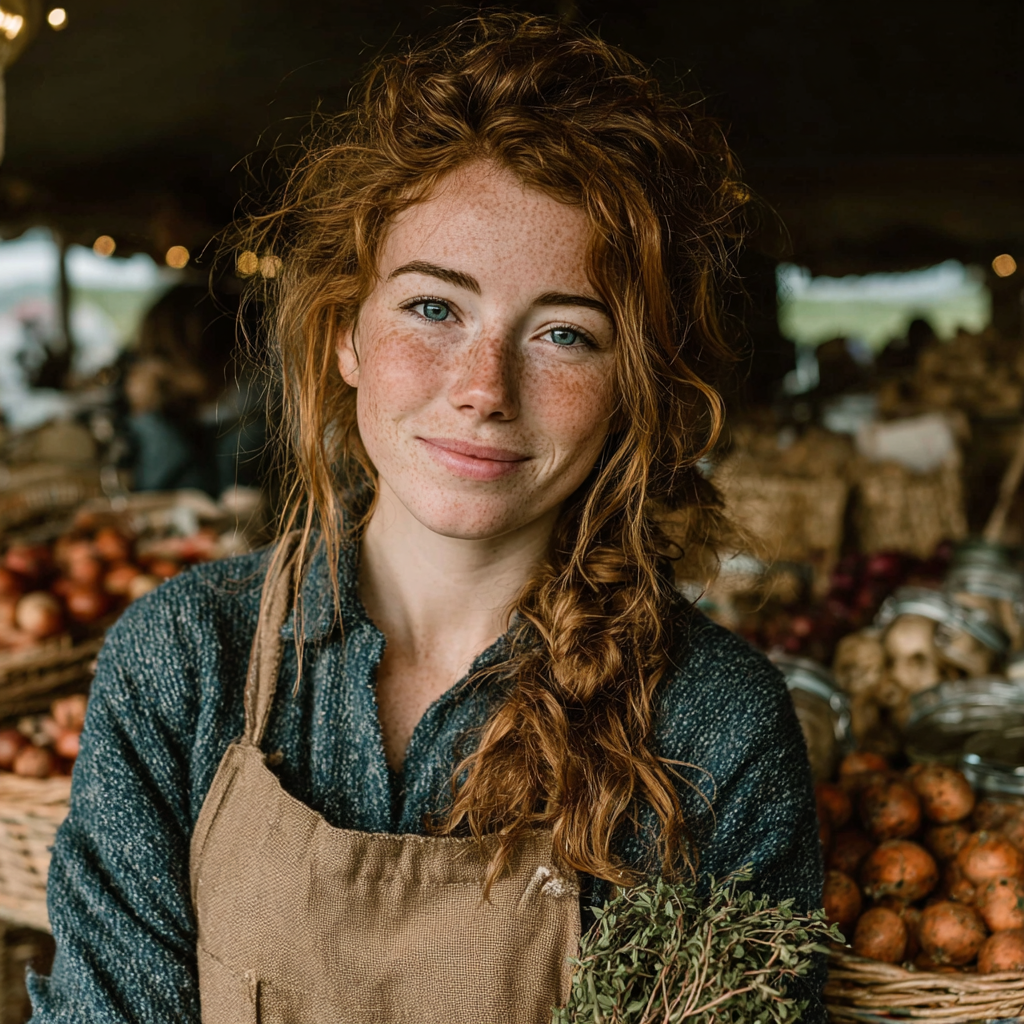
By Sophie Brennan
Irish food writer and historian based in Lisbon. Sophie combines her background in medieval history with a passion for contemporary gastronomy. She has written for Condé Nast Traveller and authored two cookbooks exploring Celtic and Iberian culinary traditions.