
Padua Travel Guide: Giotto's Blue, Galileo's Lectern, and the Architecture of 800 Unbroken Years
A visual guide to the city that taught Western art to breathe, the world's first botanical garden, and a living museum where students on bicycles still weave past medieval towers - photographed through the eyes of someone who sees spaces before she sees landmarks
I came to Padua for Giotto's blue.
Not the blue you see in postcards - the blue that made medieval worshippers fall to their knees. The ultramarine that cost more than gold, ground from lapis lazuli shipped across continents, painted onto wet plaster by a man who decided that holy figures should occupy real space, not float against flat gold like Byzantine icons.
That blue is still here. So is the wooden lectern where Galileo taught for eighteen years. So is the world's first botanical garden, designed in 1545 as a perfect circle symbolizing the world surrounded by water. And so is a city that functions as a living museum - not because it preserves the past behind glass, but because the past never stopped being useful.
Padua sits thirty minutes by train from Venice, and the difference between the two cities is the difference between a stage set and a workshop. Venice performs. Padua builds. Students on bicycles still weave past medieval towers. Professors still argue in cafes where Italian unification was plotted. The market squares where Renaissance merchants traded still bustle every morning beneath the same astronomical clock.
This guide is written for travelers who look up. Who notice how light falls through a cloister arcade. Who understand that a city's character lives in its proportions, not just its monuments. I have photographed architecture across Europe and Asia, and Padua remains one of the most visually coherent cities I have encountered - every era speaks to every other era, and nothing feels accidental.
Whether you have one day or a week, move slowly. Padua rewards the patient eye.
Scrovegni Chapel: Where Painting Learned to Breathe
The Cappella degli Scrovegni is not merely one of the most important artworks in Western civilization. It is the moment Western art stopped being decoration and became experience.
Giotto di Bondone painted these frescoes between 1303 and 1305, solving problems that had confounded artists for centuries: how to make a flat wall feel like real space, how to make painted faces register human emotion rather than religious symbol, how to tell a story across multiple scenes while maintaining visual unity.
His answer was architectural. Giotto painted frames, arches, and simulated stonework that organize the narrative into readable units. He placed figures on solid ground, not floating against gold. He gave them weight, volume, and - most radically - psychology. In The Lamentation, Mary cradles Christ's body with grief that looks genuinely human. In The Kiss of Judas, the betrayer's face is shadowed with conflict.
The chapel was commissioned by Enrico Scrovegni, a wealthy Paduan banker whose father had been condemned to hell in Dante's Inferno for usury. The chapel was an act of atonement - and perhaps competitive display. Scrovegni built it on the site of a Roman arena and hired the most innovative painter in Italy to fill it with color that would outshine anything in Venice or Florence.
Visiting Information
Scrovegni Chapel (Cappella degli Scrovegni) Piazza Eremitani, 8, 35121 Padova PD Tickets: €15 full price + €1 presale fee; €6 reduced (ages 6-17); €11 reduced (groups 10+, over 65 EU, students) Hours: Daily 9:00 AM - 7:00 PM (last entry 6:45 PM). Evening visits some dates. Visits: Strictly timed, every 15 minutes. Reservations mandatory. Same-day reservations not possible. Phone: +39 049 2010020 (Mon-Fri 9-19, Sat 9-18) Website: cappelladegliscrovegni.it
Critical: Book weeks in advance for peak season. Your ticket includes the adjacent Eremitani Civic Museums (archaeological collections and medieval art). Groups must arrive 45 minutes before their slot. Those booked for 9:00 AM can collect tickets from 8:30 AM.
The Visual Experience
You enter through a climate-controlled antechamber that stabilizes temperature and humidity - the frescoes are fragile, and the 15-minute visit limit is strictly enforced. Fifteen minutes is enough to absorb the narrative arc but inevitably leaves you wanting more. This is by design: the chapel was built for contemplation, not tourism.
Do not rush the Last Judgment on the entrance wall. Enrico Scrovegni himself appears, kneeling and presenting a model of the chapel to the Virgin - a rare portrait of a patron inside his own commission, simultaneously pious and self-promoting. The narrative scenes reward architectural attention: notice how Giotto uses simulated porticoes and buildings to create depth, how figures turn and interact with each other in believable space, and how the lapis lazuli background shifts from deep cobalt near the ceiling to lighter tones at eye level - a subtle trick that makes the walls feel taller than they are.
Photography note: No cameras or phones inside. The only way to "capture" this space is to look carefully and remember. Stand in the center of the chapel and let your eyes travel the narrative cycle from the top (Creation and the Life of the Virgin) downward to the Passion scenes at eye level. Giotto designed this vertical reading order - the higher you look, the more divine the subject matter. The lower your gaze falls, the more human the drama becomes.
The Urbs Picta Card
The Urbs Picta Card (€28 for 48 hours, €35 for 72 hours) includes the Scrovegni Chapel plus seven other UNESCO-listed sites: Palazzo della Ragione, the Baptistery, the Basilica of Saint Anthony, Oratory of San Giorgio, Oratory of San Michele, Chapel of the Carrarese Palace, and the Church of SS. Filippo and Giacomo. Public transport is included. For visitors planning multiple sites, this represents excellent value - and more importantly, it connects you to the full visual network of Padua's painted heritage.
Basilica of Saint Anthony: A Byzantine-Gothic Conversation in Stone
Locals call it simply "Il Santo" - The Saint. The Basilica of Saint Anthony is not merely a church; it is an architectural argument that took nearly a century to resolve (1232-1310), combining Byzantine domes, Romanesque arches, and Gothic spires into a visual conversation that somehow holds together.
The church houses the tomb of Saint Anthony of Padua (1195-1231), the Portuguese-born Franciscan friar whose reputation for finding lost objects and delivering powerful sermons has drawn pilgrims for nearly eight centuries. But from an architectural perspective, the building's power lies in its structural ambition - eight domes create a silhouette visible across the city, and the interior spaces shift from intimate chapel to soaring nave in ways that anticipate Renaissance spatial thinking.
Visiting Information
Basilica of Saint Anthony (Basilica di Sant'Antonio) Piazza del Santo, 11, 35123 Padova PD Entry: Free (donations appreciated) Hours: Daily 6:20 AM - 7:00 PM (until 7:45 PM Sundays and holidays) Website: santantonio.org
Dress code: Strictly enforced - shoulders and knees must be covered. Large bags must be checked at the entrance.
What to See
The Tomb of Saint Anthony in the Cappella del Tesoro draws a constant stream of pilgrims. The marble sarcophagus, adorned with reliefs of miracles attributed to the saint, has been touched smooth by centuries of reverent hands. The emotional intensity of this space - part sacred site, part tactile monument - is unlike anything in more touristed Italian churches.
But the real architectural treasure is the Cappella del Santo, where Renaissance master Donatello created nine bronze reliefs between 1444 and 1449 depicting scenes from Saint Anthony's life. These works revolutionized bronze casting. Donatello used varying relief depths to create atmospheric perspective - figures in the background are carved almost flat, while foreground figures project dramatically. Stand at an angle to the panels and watch how the changing light reveals different details. This is sculpture designed for natural illumination, not museum spotlights.
The Cloisters offer the most photographable moments: arcades frame views of the domes, and the small museum of votive offerings left by grateful pilgrims reads like an archive of human need across centuries - wax limbs, handwritten notes, photographs of the missing.
The Relics: The basilica preserves the saint's tongue, jawbone, and vocal cords in a reliquary. Whether or not you share the Catholic faith, the display is a powerful reminder of how physical objects become vessels for collective memory.
Prato della Valle: Europe's Most Unusual Public Room
Prato della Valle is not a square in any conventional sense. It is an 88,620-square-meter oval garden - the largest in Italy - surrounded by a canal and lined with 78 statues of illustrious Paduans. No paving stones. No monuments at the center. Just grass, water, trees, and stone figures watching over the space like a silent parliament.
The form dates to the late 18th century, when the area - previously a marshy field used for fairs and markets - was transformed into its current neoclassical design. The elliptical island (called Isola Memmia) is planted with plane trees and lawns, while the encircling canal is crossed by four bridges. The 78 statues represent university professors, artists, scientists, and politicians from Padua's long history.
Look for Elena Lucrezia Cornaro Piscopia - the first woman to receive a doctoral degree (1678) - and Pietro d'Abano, the medieval physician and philosopher who was burned at the stake for heresy and whose statue here stands as a quiet act of restitution.
Visiting Information
Prato della Valle GPS: 45.3986° N, 11.8762° E Entry: Free Hours: Open 24/7 Saturday Market: 8:00 AM - 7:00 PM
The Visual Experience
This is Padua's living room, and it behaves like one. On sunny days, students sprawl on the grass with textbooks, elderly couples stroll the perimeter, and children feed ducks in the canal. The Saturday market transforms the space into a bustling bazaar selling antiques, fresh produce, clothing, and household goods.
For photographers: early morning delivers mist rising from the canal and long shadows from the statues. Late afternoon bathes the western-facing figures in golden light. Sunset is the best time - the low sun illuminates the stone and creates reflections in the water that double the visual field.
Architectural note: The square's elliptical geometry is mathematically precise. Stand at one of the bridges crossing the canal and look toward the center - the symmetry is calming in a way that formal Italian piazzas rarely are. This space was designed for contemplation and social life simultaneously, a combination that feels almost Japanese in its refusal to choose between order and informality.
University of Padua: The Architecture of Knowledge
Founded in 1222, the University of Padua is one of Europe's oldest universities, and its architecture reflects a radical idea: that students should control their own education. Unlike Bologna, where professors held power, Padua was organized by students who hired and fired their teachers. This democratic structure attracted intellectuals seeking freedom - Copernicus, Galileo Galilei (1592-1610), William Harvey (who discovered blood circulation), and Elena Lucrezia Cornaro Piscopia (the first woman to earn a PhD).
Palazzo del Bo and the Anatomical Theater
Palazzo del Bo Via VIII Febbraio, 2, 35122 Padova PD Tickets: €16.50 full price; €14.50 reduced (65+, teachers); €12.50 youth (13-25) Hours: Mon-Fri guided tours at 10:30 AM (Italian), 11:30 AM (English), 12:30 PM (Italian), 3:30 PM (Italian), 4:30 PM (English). Sat-Sun audio tours 10:00 AM - 6:00 PM. Booking: +39 049 827 3939 or unipd.it
The name "Bo" comes from the Hospitium Bovis, a 15th-century inn with an ox-head sign that originally occupied the site. Today the palace houses the university rectorate and several historic rooms that reveal how knowledge was physically organized in the pre-modern era.
The Anatomical Theater (Teatro Anatomico), built in 1594, is the world's oldest surviving permanent anatomical theater. Designed by Hieronymus Fabricius ab Aquapendente, this six-tiered wooden amphitheater seats 300 students in steeply raked rows around a central dissection table. The space is both scholarly and macabre - candles once illuminated cadavers while the smell of formaldehyde rose through the central opening. The oak wood has darkened over four centuries, and the acoustics are startling: a whisper from the center carries to the top tier.
Galileo's Lectern: The wooden lectern Galileo used for lectures on geometry, mechanics, and astronomy is preserved in the Aula Magna (Great Hall). It is an unremarkable piece of furniture until you consider what was spoken from it - the ideas that would eventually place him under house arrest by the Inquisition. The lectern stands near the hall's center, positioned so Galileo could see every student. The room's proportions - high ceilings, long sightlines - were designed for visibility, not comfort.
The Sala dei Giganti (Hall of the Giants) in nearby Palazzo Liviano features frescoes depicting Greek mythology, painted by Giotto's followers in the 14th century. The building itself, designed by Giò Ponti in 1937, is a fascinating modernist intervention in the medieval fabric - rational, stripped of ornament, respectful of its context without imitating it.
Orto Botanico: The World's First Garden as Architecture
In 1545, the University of Padua created the world's first academic botanical garden - not as a pleasant park but as a scientific instrument. The Orto Botanico earned UNESCO World Heritage status in 1997 as "the origin of all botanical gardens in the world," and its original circular layout - symbolizing the world surrounded by water - has remained essentially unchanged for nearly 480 years.
The design was revolutionary. A perfect circle enclosed by a wall, divided into quadrants by paths, with a central fountain. Every element had meaning: the circle represented cosmic order, the water ring symbolized the ocean, the quadrants corresponded to geographic regions. This was not landscaping. It was a three-dimensional map of human knowledge.
Visiting Information
Orto Botanico di Padova Via Orto Botanico, 15, 35123 Padova PD Tickets: €10 full price; €8 reduced (65+, teachers); €6 youth (13-25); €25 family (2 adults + up to 3 children) Hours:
- April-September: 10:00 AM - 7:00 PM (last entry 6:15 PM)
- October: 10:00 AM - 6:00 PM (last entry 5:15 PM)
- November-December: 10:00 AM - 5:00 PM (last entry 4:15 PM)
- January-March: check website for seasonal hours Free audioguide: Available via QR code (Italian, English, German) Website: ortobotanico1545.it
Integrated tickets: The "Padua City of Science" ticket (€25) includes the Botanical Garden, Palazzo del Bo, and the Museum of Nature and Humankind - excellent value for science-minded visitors.
What to See
The Old Garden (Giardino Antico) preserves the original 16th-century circular layout with its wall of climbing plants. The Goethe Palm (Chamaerops humilis), planted in 1585, was mentioned by Goethe during his Italian journey and still thrives. Standing beside it, you are touching the same organism a young Goethe described in his travel journals.
The Biodiversity Garden (Giardino della Biodiversità), opened in 2014, is a stunning modern greenhouse complex designed by architect Giancarlo Dal Mas. Its five climate-controlled biomes house over 1,300 plant species. The architecture here is as compelling as the botany - glass, steel, and water create spaces that feel both scientific and sacred.
The Botanical Museum contains historic herbaria, scientific instruments, and the original 16th-century wooden cabinets used to store medicinal plants. The smell of dried herbs and aged wood is unchanged since the garden's founding.
Walking the Historic Center: A Self-Guided Route Through Space and Time
Padua's historic center is compact and best explored on foot. This route connects major squares and hidden corners in 2-3 hours, but I recommend splitting it across two days to allow for lingering.
Piazza dei Signori and the Clock Tower
Piazza dei Signori served as Padua's political heart during Venetian rule. The square is dominated by the Torre dell'Orologio - a 15th-century astronomical clock that still marks the hours. The adjacent Palazzo del Capitanio was the residence of the Venetian governor, and the spatial relationship between tower, palace, and open square is a masterclass in civic design: power announced itself through height and proximity.
The café terraces here offer prime people-watching. This is where Paduans gather for their evening passeggiata, and the atmosphere is particularly lively on weekends. Order a spritz and watch how the square fills and empties according to rhythms that have not changed in centuries.
Palazzo della Ragione: The Ship's Hull in the Sky
Palazzo della Ragione Piazza delle Erbe, 35100 Padova PD Entry: €8 full price, €6 reduced (+ €1 booking fee); included in Urbs Picta Card Hours: Tue-Sun 9:00 AM - 7:00 PM; closed Mondays (except holidays), 25-26 December, 1 January
Known as "Il Salone" (The Big Hall), this medieval palace connects Piazza delle Erbe and Piazza della Frutta. The upper floor contains a single vast hall - one of Europe's largest medieval rooms - covered by an ingenious wooden roof shaped like an inverted ship's hull. The span is 81.5 meters long and 27 meters wide, unsupported by internal columns. The builders achieved this by treating the roof as a vessel turned upside down, using shipbuilding techniques rather than conventional carpentry.
The walls carry 15th-century frescoes of astrological subjects - a giant zodiac painted across the hall's surfaces, reflecting the medieval belief that celestial forces governed earthly affairs. The ground floor arcades house Sotto Salone, the oldest covered market in Europe, where stalls selling cheese, salami, fresh pasta, and household goods have operated continuously for centuries. This is not a tourist market. Locals buy their groceries here.
Do not miss: The Vituperio stone - a small platform where insolvent debtors were once obliged to beat their own buttocks three times while undressed, in public humiliation. The practice is the origin of the Italian expression "rimanere in canottiera" (to be left in one's underwear, i.e., ruined). The stone sits quietly in a corner, easy to overlook, but it is one of the most human objects in the entire building.
Piazza del Duomo and the Baptistery
GPS: 45.4065° N, 11.8723° E Baptistery entry: Included in Urbs Picta Card; or €6 standalone Hours: Daily 10:00 AM - 6:00 PM (closed Mondays)
The Duomo itself is an 18th-century rebuilding - severe, rational, unloved by most visitors. Skip the interior unless you have a specific interest. The real treasure is the adjacent Baptistery, which contains a fresco cycle by Giusto de' Menabuoi (1375-1376) depicting biblical scenes with colors that have remained remarkably vivid. The dome features a magnificent Paradise with Christ enthroned among angels - a cosmic vision painted in deep blues and golds that rivals the Scrovegni Chapel in ambition if not in innovation.
Caffè Pedrocchi: The Doorless Café
Caffè Pedrocchi Via VIII Febbraio, 15, 35122 Padova PD Hours: Daily 8:00 AM - 12:00 AM (until 1:00 AM Fri-Sat)
No guide to Padua is complete without mentioning Caffè Pedrocchi, the "doorless café" designed by architect Giuseppe Jappelli and opened in 1831. It remained open day and night until 1916 - no doors, no locks, a space that belonged to the city rather than to its owners. The building is an extraordinary neoclassical composition in white stone, with the smaller Pedrocchino annex (1836) in neo-Gothic style reserved for pastry making.
The interior rooms are themed by color - the White Room, the Red Room, the Green Room - each with distinct architectural character. This was where students plotted revolutions, where Stendhal wrote, where the city's intellectual life gathered. Today it functions as a café and cultural venue. The coffee is decent; the space is incomparable. Sit in the White Room and imagine the conversations that have occupied these chairs.
Prices: Espresso at the bar €1.50; seated service €3-5. Pastries €2-4. Aperitivo with snacks €8-12.
Where to Eat: Padua's Culinary Traditions
Padua's cuisine reflects its position between the Veneto plains and the Adriatic - rustic, direct, unfussy. The city is surrounded by agricultural land, and its markets (Piazza delle Erbe and Piazza della Frutta) have supplied fresh produce to local kitchens for centuries. What you eat here is what Paduans eat, not what tour buses deliver.
Osteria L'Anfora
Osteria L'Anfora Via dei Soncin, 13, 35122 Padova PD Hours: Mon-Sat 12:00 PM - 3:00 PM, 7:00 PM - 11:00 PM. Closed Sunday. Phone: +39 049 656629 Price range: €25-35 per person (wine included)
This is the osteria that locals protect like a secret. No website, no reservations after 8:00 PM, handwritten menu in Italian only. The bigoli in salsa (thick whole-wheat pasta with anchovy and onion sauce, €10) is the benchmark against which I judge all other versions. The baccalà alla vicentina (salt cod stewed in milk and onions, €14) arrives in a copper pan that has been seasoned by decades of use. The wine list is strictly Veneto - try a glass of Raboso or Tai Rosso from nearby vineyards.
Trattoria al Prato
Trattoria al Prato Via Cesarotti, 11, 35123 Padova PD Hours: Tue-Sun 12:00 PM - 2:30 PM, 7:00 PM - 10:30 PM. Closed Monday. Phone: +39 049 8760233 Price range: €30-45 per person
Located near Prato della Valle, this family-run trattoria has been serving Paduan classics since 1955. The risotto con le rane (frog risotto, €16) is a local tradition that surprises first-time visitors - the frogs come from the rice paddies between Padua and Venice, and the dish tastes of herbs and marshland. The sopressa veneta (a coarse-grained salami, €8 as antipasto) is house-cured. Save room for the torta sabbiosa (a crumbly almond cake, €5), which has been made to the same recipe for three generations.
Osteria Dal Capo
Osteria Dal Capo Via dei Soncin, 10, 35122 Padova PD Hours: Mon-Sat 12:00 PM - 3:00 PM, 7:00 PM - 11:00 PM. Closed Sunday. Phone: +39 049 650336 Price range: €20-30 per person
A smaller, rougher cousin to L'Anfora, Dal Capo occupies a narrow room where wooden tables are packed close and the owner works the floor with the authority of a conductor. The sarde in saor (sweet-and-sour sardines, €9) is available only on Fridays - the tradition of eating fish on Friday persists here. The polenta e osei (polenta with small birds, €15) is a historic dish now made with quail or chicken, since hunting wild songbirds is prohibited.
Aperitivo Culture
Padua's aperitivo hour (6:00 PM - 9:00 PM) is as essential to understanding the city as its architecture. The spritz (Aperol or Select, €3-4 at the bar) is the default drink, served with a small plate of cicchetti - bite-sized snacks of baccalà mantecato (whipped salt cod), arancini, or marinated vegetables.
Recommended spots:
- Caffè Pedrocchi (see above) - historic, expensive, incomparable atmosphere
- Caffè Diem - Piazza dei Signori, 16. Younger crowd, €5 spritz with generous snack buffet.
- Bar Nazionale - Via San Francesco, 60. Old-school, unchanged since the 1960s, €3.50 spritz.
The Jewish Ghetto: Hidden Layers
Padua's Jewish community, one of Italy's oldest, was confined to a ghetto from 1603 until Napoleon's emancipation of 1797. The Quartiere dell'Antico Ghetto Ebraico remains a distinctive neighborhood of narrow streets and hidden squares.
Jewish Museum of Padua
Museo della Padova Ebraica Via delle Piazze, 26, 35139 Padova PD Tickets: €10 single site; €12 two sites; €15 three sites (including cemetery) Hours: Monday and Thursday 10:00 AM - 5:00 PM; Sunday 10:00 AM - 6:00 PM. Last entry 45 minutes before closing. Guided tours: Sunday at fixed times; €3 supplement Closed: Saturdays and Jewish holidays Website: museopadovaebraica.com
The museum occupies a historic synagogue building and documents 800 years of Jewish life in Padua. The Italian Synagogue features a beautifully preserved interior with carved wooden benches and an ornate Ark. The modest exterior - typical of Italian synagogues, which were prohibited from external religious symbols - gives no hint of the elegant space within.
The Ancient Jewish Cemetery (Cimitero Ebraico di Via Wiel) contains tombstones dating to the 16th century. Guided tours run Sundays at 10:00 AM (April-September) or 11:00 AM (October-March), or by appointment.
What to See in the Ghetto
Walk the narrow Via San Martino e Solferino to find the Pescherie - the old fish market building, now a covered passage. The Casa del Mercante at Via dell'Arco, 4 preserves a 15th-century merchants' house with a characteristic wooden balcony. The entire quarter feels compressed, layered, secretive - a physical reminder of how confined spaces can generate intense cultural production.
What to Skip in Padua
The Duomo interior. The 18th-century rebuilding stripped the cathedral of whatever medieval character it once possessed. The exterior is worth a glance, but the interior is barren compared to the Baptistery next door. Spend your time on the Giusto de' Menabuoi frescoes there instead.
Day trips to Venice as a rushed checklist item. Padua is not a "base" for Venice. If you want Venice, stay there. Padua deserves full attention.
The "kiss the saint's tomb" queue during Sunday mass. The Basilica is free and open to all, but the atmosphere during services is devotional, not touristic. Avoid 10:00 AM - 12:00 PM on Sundays unless you are participating in worship.
Generic restaurants on Via Roma near the station. This strip caters to travelers rushing between train and hotel. Walk ten minutes into the historic center and find an osteria with handwritten menus in Italian only.
The Oratory of San Giorgio if you are already chapel-fatigued. It is a beautiful 14th-century space, but after the Scrovegni Chapel and the Baptistery, your visual appetite may be saturated. Save it for a second visit.
Trying to see everything in one day. Padua is compact but dense. The Scrovegni Chapel alone deserves an hour of mental preparation and aftermath. Rushing through creates a checklist experience that misses the point.
Practical Information
Getting There:
- By train: Padua is on the Venice-Milan line. From Venice Santa Lucia: 25-40 minutes, €4.50-15 depending on train type. From Verona Porta Nuova: 40-50 minutes, €6-18. From Milan Centrale: 2-2.5 hours, €25-45. The station (Padova) is a 15-minute walk or 5-minute tram ride from the historic center.
- By car: Padua is at the intersection of the A4 (Turin-Trieste) and A13 (Bologna-Padua) motorways. The historic center is a Limited Traffic Zone (ZTL) - do not enter without authorization. Park at Parcheggio Buongiorno (Piazzale Boschetti) or Parcheggio Pietà and walk.
- By plane: Venice Marco Polo (VCE) is 40 km east. Bus service (€10, 50 minutes) or taxi (€70-90). Treviso Airport (TSF) is 60 km away, served by budget airlines.
Getting Around: Padua's historic center is compact and pedestrian-friendly. Most major attractions are within a 15-minute walk. Bus/Tram: €1.50 (75 minutes), €5.00 day pass. Tickets from tabacchi or machines at stops. Bike rental: Padua has bike-sharing (GoodBike, €1/hour) and rental shops; cycling is the preferred student transport.
Tourist Cards:
- Urbs Picta Card (€28/48 hours, €35/72 hours): Includes Scrovegni Chapel, Palazzo della Ragione, Baptistery, Eremitani Museums, Oratory of San Giorgio, Oratory of San Michele, Basilica of Saint Anthony, Chapel of the Carrarese Palace, Church of SS. Filippo and Giacomo, plus public transport.
- Padova Card (€30/15 days): Covers multiple museums; €1 reservation fee applies for Scrovegni Chapel entry.
- Padua City of Science Ticket (€25): Botanical Garden, Palazzo del Bo, Museum of Nature and Humankind. Valid 6 months.
Best Times to Visit:
- Spring (April-May): Pleasant weather, blooming gardens, moderate crowds. The Orto Botanico is at its peak.
- Autumn (September-October): Harvest season, golden afternoon light, comfortable temperatures. Ideal for photography.
- Summer (June-August): Hot and humid (28-33°C), but quieter due to university holidays. Some restaurants close in August. Morning visits to outdoor sites recommended.
- Winter (November-March): Cool (3-10°C), occasionally foggy, minimal crowds. December brings Christmas markets. January-February are ideal for photographers seeking unobstructed views. The Scrovegni Chapel is easier to book.
Where to Stay:
- Near the train station: Practical, with frequent tram connections. Hotels are cheaper but less atmospheric. Good for short stays.
- Historic center: Immersive, walking distance to all attractions. Limited vehicle access (ZTL zone). Book early in peak season. Expect €80-150/night for mid-range.
- Near Prato della Valle: Quieter, with green space, still within easy walking distance. Popular with longer-stay visitors.
Day Trips: Vicenza (15-20 min by train, €4-8) for Palladio's architecture. Verona (40-50 min, €6-15) for the Arena and medieval center. Colli Euganei (bus/car, 30 min) for thermal spas and Petrarch's village, Arquà Petrarca. Venice (25-40 min) - but only if you have time to do it properly, not as a rushed add-on.
Etiquette: English is widely spoken at tourist sites. Dress modestly for churches. Greet shopkeepers with "Buongiorno." Espresso at the bar costs €1-1.50; table service can double or triple the price. Tipping is not obligatory but rounding up is appreciated. In osterias, do not ask for a menu in English - use Google Translate or point. The effort is appreciated.
Accessibility: Most historic buildings have limited accessibility. The Scrovegni Chapel and Botanical Garden have improved access. Palazzo della Ragione has a dedicated accessible entrance from the Town Hall courtyard on Via 8 Febbraio. Contact individual sites in advance for specific needs.
About the Author
Yuki Tanaka is an architectural photographer based in Tokyo whose work has been featured in Monocle, Dezeen, and Wallpaper. She has spent fifteen years photographing the dialogue between ancient structures and modern design across Asia and Europe, and she believes that buildings are frozen stories waiting to be told. Padua is one of her favorite cities in Italy - not for a single masterpiece, but for the conversation between masterpieces that has continued uninterrupted for eight centuries.
"I came to Padua for Giotto's blue. I stayed for the way every street leads to another century."
Word count: ~4,400 words Last updated: September 2026 Prices and hours verified against official sources. Always confirm before visiting - Italian cultural sites update schedules frequently.
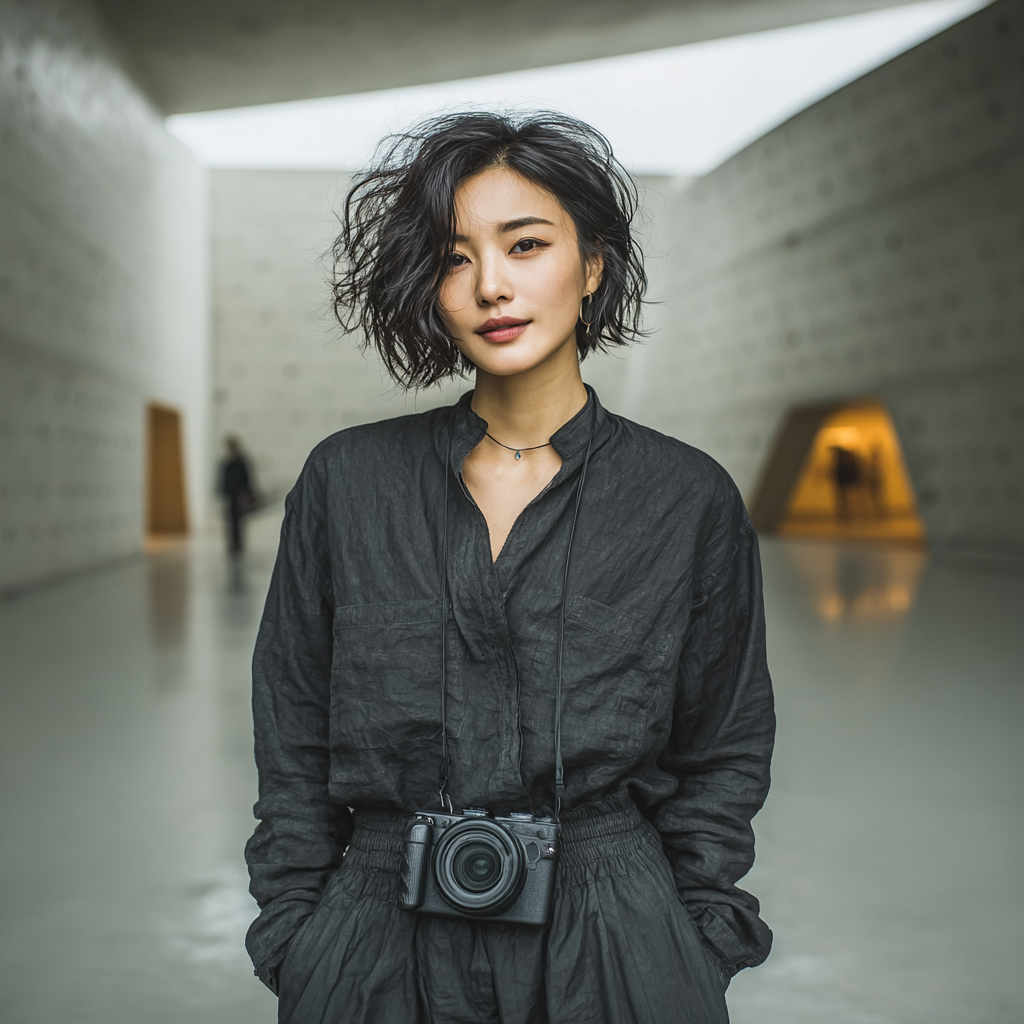
By Yuki Tanaka
Architectural photographer based in Tokyo. Yuki captures the dialogue between ancient structures and modern design across Asia and Europe. Her work has been featured in Monocle, Dezeen, and Wallpaper. She sees buildings as frozen stories waiting to be told.