
Bologna: The City That Built Its Own Weather — A Food Writer's Guide to Porticoes, Towers, and Ragù That Refuses to Compromise
Bologna does not care about your Instagram. The city is a fortress of medieval towers and porticoed streets that have sheltered students, merchants, and radicals for nine centuries. While tourists rush to Florence and Venice, Bologna has been perfecting ragù, building the oldest university in the Western world, and developing a political consciousness that shaped modern Italy. I have eaten my way through this city seven times, and I am still discovering rooms I missed — a hidden anatomical theater, a library floor made of glass, a pasta shop where the woman behind the counter remembers my order from three years ago.
This is a working city. The porticoes — 62 kilometers of covered arcades, now UNESCO-protected — were built not for beauty but for function: to shelter students walking to lectures, to expand building space beyond street frontage, to create dry passage during the Po Valley rains. They remain what they always were: infrastructure. Walk them in December rain and you will understand why Bologna feels different from every other Italian city. The weather cannot touch you here.
The University: Where the Modern World Was Planned
The University of Bologna was founded in 1088. This is not marketing hype — the date is documented. For centuries, students hired and fired professors. The Archiginnasio, the university's original seat, still stands on Piazza Galvani 1. Its anatomical theater, built in 1637 by Antonio Levanti, is carved entirely from spruce wood and has the acoustic properties of a violin. Medical students watched dissections from tiered seats while a corpse lay on the central marble slab. A canopy bearing the inscription "Here the operating hand becomes the creating hand" still hangs above.
The walls are lined with the coats of arms of student nations — Bologna's medieval foreign students organized themselves by geography: the German nation, the Hungarian nation, the Polish nation. This was international education before passports existed. You can visit the theater with an audio guide for €3.50; guided tours run Monday through Saturday in English at 10:20, 14:20, and 16:00 (Italian tours at 11:30 and 15:30). The library, which you cannot enter as a tourist, operates Monday to Friday 9:00 to 18:30 and Saturday 9:00 to 13:30. Ring the bell and wait, or call +39 051 2196616.
The silence inside the theater is complete. I stood there for twenty minutes once, listening to a French guide whisper to her group in the corner. The sound did not travel. It died against the wood, just as the screams of dissected criminals once did — public dissections were performed without anesthesia, and the theater's acoustics were designed so the lecturer's voice would carry, not the patient's.
The Towers: Vertical Power
Bologna once had over 180 defensive towers. Two remain prominent: Asinelli and Garisenda. The Asinelli stands 97 meters tall, built between 1109 and 1119 by a family of textile merchants. The Garisenda leans four degrees — more than Pisa's tower — and was shortened in the 14th century when it began to sink.
You can climb the Asinelli for €5 (reduced €3 for children 4–11, over 65, students, and Cultura Card holders). The 498 wooden steps are steeper than they look. Winter hours (until January 8) are 10:00 to 17:15; January 9 through March 2 and November 6 through December 31, 10:00 to 16:30; March 3 through March 31 and October 2 through November 5, 10:00 to 18:00; April 1 through October 1, 10:00 to 19:00; and June 1 through October 1 on Thursday through Sunday, 10:00 to 20:15. Booking is mandatory at least 24 hours in advance through the Bologna Welcome website; entrance is at Piazza di Porta Ravegnana. Late arrivals are not admitted to the next slot, and no refunds are issued — this is Bologna, not Disneyland.
The view from the top reveals Bologna's plan: the red terracotta roofs, the straight line of Via dell'Indipendenza cutting north to south, the Apennines forming a wall to the south. Dante referenced the Garisenda's lean in the Inferno. The towers were status symbols, yes, but also fortresses. Families lived in them during the medieval faction wars that defined Bologna before papal rule imposed order in the 16th century.
Food as Resistance
Bologna invented mortadella, tagliatelle al ragù, and tortellini in brodo. The city's cuisine developed from the medieval spice trade and the agricultural wealth of the Po Valley. But there is politics here too.
Tamburini, on Via Caprarie 13 in the Quadrilatero, has sold cured meats and fresh pasta since 1932. The mortadella is sliced to order, warm from the machine, each round the diameter of a dinner plate. The tortellini are still hand-folded by women who work in the back room where you cannot see them. This is not a museum. It is a working shop where locals buy their Sunday lunch.
Osteria dell'Orsa, at Via Mentana 1/f near Piazza Verdi, opened in 1975 as a student cooperative. The menu has not changed significantly in fifty years: gramigna with sausage, crescentine with lardo, wine in ceramic jugs at €4 per liter. It remains cheap because the collective ownership model persists. They do not take reservations. Show up at 12:30 or 19:30 and wait. The communal tables mean you will sit next to someone you do not know, which is the point. Open daily 12:30 to 23:00.
Tagliatelle al ragù is never called "spaghetti bolognese" here. The Bolognese Academy of Cuisine, founded in 1974, codified the official recipe: pancetta, beef, pork, tomato passata, white wine, milk. Tagliatelle must be 8 millimeters wide when cooked. Restaurants serving ragù with spaghetti are viewed with open contempt. I once saw a waiter at Trattoria Anna Maria (Via delle Belle Arti 17, open Tuesday through Saturday for lunch and dinner, closed Sunday and Monday) refuse a request for spaghetti with ragù by simply shaking his head and walking away. No explanation. The customer knew what he had done.
Mercato di Mezzo, at Via Clavature 12, opened in its current form in 2014 but occupies a market site active since the Middle Ages. It sits in the heart of the Quadrilatero, the medieval trading district where the street names still describe the goods sold: Via Drapperie (drapers), Via Orefici (goldsmiths), Via Clavature (keys). The market is open daily from 10:00 to midnight; vendors vary by hour. You will find mortadella sliced to order, aged balsamic vinegar from Modena, piadina flatbreads grilled while you wait, and spritz at communal tables after 18:00 when the aperitivo crowd arrives. Students drink here because it is cheaper than the bars on Via Zamboni.
Piazza Maggiore and the Politics of Space
The main square was paved in the 15th century, creating Europe's second-largest medieval square after Venice's Piazza San Marco. The Basilica of San Petronio dominates the east side — construction began in 1390 and stopped in 1663 when the papacy blocked further work, refusing to allow a church larger than St. Peter's in Rome. The facade remains half marble, half bare brick, and this incompleteness is more beautiful than any finished facade I have seen.
The basilica is open daily from 8:30 to 13:30 and 15:00 to 18:30. Entry to the main church is free. The paid tour to the Bolognini Chapel (the Magi), the Chapel of Saint Sebastian, and the Chapel of Saint Vincent Ferrer costs €5 (reduced €3 for ages 11–18, over 65, and groups with guides; school groups €2; free for under 10, disabled visitors, and religious persons). Individual chapels and the Presbytery cost €3 each and require reservation by email at least one week in advance. The panoramic terrace, once a hidden gem, has been permanently closed after restoration work. For Mass schedules, contact the sacristy at +39 051 231415.
Inside, the longest indoor meridian line in the world runs across the floor. Gian Domenico Cassini designed it in 1655 to observe the sun's movement and confirm the Gregorian calendar. The line is 66.8 meters long. At solar noon, a spot of light enters through a hole in the ceiling and hits the line. Cassini used this to calculate the Earth's axial tilt. Stand on it at noon in June and you will feel the geometry of the solar system beneath your feet.
Opposite the basilica, the Neptune Fountain, sculpted by Giambologna between 1563 and 1566, is the most famous symbol of Bologna after the towers. The trident inspired the Maserati logo. The bronze figure is four meters tall and was considered scandalously nude when unveiled. Giambologna's solution was to position a dolphin strategically — a compromise that satisfied the church and disappointed no one else.
The square has hosted political rallies for centuries. In 1944, partisans gathered here after Bologna was liberated from German occupation. In 1977, student protests against the university's conservative administration turned violent. The marble pavement still bears the marks. This is not a museum square. It is a stage.
The Porticoes: Walking Architecture
The porticoes are Bologna's defining feature. The oldest, on Via Zamboni near the university, date to the 11th century. The widest, on Via Saragozza leading to the Sanctuary of San Luca, were built in the 18th century to shelter pilgrims climbing to the hilltop church.
Walking under the porticoes is the only way to understand Bologna. The sidewalk becomes a continuous covered street. The arches create rhythm. The light changes — bright at the openings, shadowed between columns. The ground floors are occupied by cafes, bookshops, repair shops, bars. The upper floors hold apartments where students have lived for centuries. I once stayed in one of these apartments on Via del Pratello, paying €60 per night for a room where the ceiling was four meters high and the windows opened onto a portico that had been there since before the United States existed.
The portico of the Archiginnasio is decorated with memorial plaques to professors and students. Some died in duels. Others were executed for political crimes. The university's history includes periods when teaching Aristotle was forbidden, when medical dissections required church supervision, and when student guilds functioned as autonomous legal jurisdictions. Bologna was a city-state before it was part of Italy, and it has never fully accepted that it is not one still.
Salaborsa Library, on Piazza Nettuno, is free to enter and worth your time for its glass floor alone — beneath your feet are the remains of Roman Bologna, excavated and visible through transparent panels. The library itself is a working public library, open Monday through Friday with hours varying by section. I spent an afternoon there reading a novel I could not buy at home, sitting above 2,000-year-old foundations.
San Luca and the Pilgrimage Route
The Sanctuary of San Luca sits on the Guardia Hill, 300 meters above the city. A covered portico — 3.8 kilometers long with 666 arches — connects the church to the city walls. The number is intentional: the arches represent the sins that pilgrims leave behind as they climb.
The church houses a Byzantine icon of the Virgin Mary, allegedly painted by Saint Luke. The icon was brought to Bologna in the 12th century and has been carried down the portico to the cathedral in an annual procession since 1433. The tradition continues every Ascension Sunday.
You can walk the portico from Meloncello arch near the city center. The climb takes about an hour. The reward is the view: Bologna's red roofs, the plain stretching east toward Ravenna, the Apennines forming a wall to the south. The church itself is baroque, rebuilt in the 18th century after the original structure proved too small for pilgrimage crowds. There is a bus back down if your legs fail you — line 20 from the sanctuary to Porta Saragozza, €1.50.
The Jewish Ghetto and Hidden Histories
Bologna's Jewish ghetto occupied the area near Piazza Santo Stefano from 1556 to 1569, when the papal government expelled the Jewish population. The gates were demolished, but the street pattern remains — narrow, winding, enclosed.
The Jewish Museum of Bologna (Museo Ebraico), at Via Valdonica 1/5, documents this history in a 16th-century palazzo. The collection includes Torah scrolls, marriage contracts, and records of the 1569 expulsion order. Two rooms are dedicated to Jewish history in Bologna and Emilia-Romagna from medieval to contemporary times. The museum is open Wednesday and Thursday 10:00 to 18:00, Friday 10:00 to 16:00, Saturday closed, Sunday 10:00 to 18:00. Admission to the permanent exhibition is €5. Contact: +39 051 2911280, [email protected].
Bologna's university accepted Jewish students when most European universities excluded them. The first woman to earn a university degree, Elena Lucrezia Cornaro Piscopia, received her doctorate in philosophy from the University of Padua in 1678, but she studied in Bologna first. The university's willingness to educate those excluded elsewhere is part of its founding DNA — students chose their professors, and if enough students wanted to learn from someone, that person taught.
Santo Stefano, the complex of seven churches near the former ghetto, predates the medieval period. The oldest church, Santo Stefano Rotondo, was built over a Roman temple in the 5th century. The courtyard contains a replica of the Holy Sepulchre in Jerusalem. Pilgrims unable to travel to the Holy Land came here instead. The complex is free to enter and open daily from 9:30 to 12:30 and 15:30 to 18:00, though hours vary by season.
What to Skip
FICO Eataly World. This massive food theme park on the outskirts of Bologna is where tour buses go. It is clean, organized, and completely soulless. You will pay €35 for a plate of tagliatelle al ragù that costs €12 in any trattoria in the center. Skip it and walk the Quadrilatero instead.
The "spaghetti bolognese" at tourist restaurants near Piazza Maggiore. If a menu has a photo of spaghetti with orange sauce and the words "Bolognese" in quotation marks, leave. This is not local food. It is a trap for people who do not know better.
Juliet's House. Wait — that is Verona. But the principle applies: Bologna has no equivalent fake-romantic tourist attraction, which is exactly why you should not invent one. Do not go looking for a "hidden gem" that a blogger promised you. Bologna's hidden gems are the porticoes themselves, the quiet side streets, the bars where students argue about Hegel at midnight.
August. The city empties as residents flee to the coast. Many restaurants close. The university quarter becomes a ghost town. If you must visit in summer, come in late June or September.
The Garisenda Tower climb. You cannot climb it. It leans too much and is closed to the public. Anyone selling you a ticket to climb the Garisenda is running a scam. Only the Asinelli is open.
Practical Logistics
Getting There: Bologna Centrale is a major rail hub. High-speed trains reach Florence in 35 minutes, Milan in 65 minutes, Rome in 2 hours. The airport (BLQ) is 6 kilometers from the center; the Marconi Express shuttle connects to the train station in 7 minutes for €11 (round trip €20). A taxi costs approximately €25.
Getting Around: The historic center is walkable. The porticoes make walking comfortable in rain or sun. Buses cover the outer neighborhoods but are rarely necessary for visitors. A single bus ticket costs €1.50 and is valid for 75 minutes. Buy at tabacchi shops or ticket machines.
When to Visit: Spring (April–May) and autumn (September–October) offer mild weather. August empties the city. Winter brings fog from the Po Valley and occasional snow, but the Christmas markets in Piazza Maggiore and the covered porticoes make it surprisingly pleasant.
Prices: University neighborhood restaurants charge €8–12 for pasta. Museums range from free to €8. The Asinelli tower costs €5. Aperitivo — drink plus buffet — runs €8–12. A liter of house wine at Osteria dell'Orsa is €4. A coffee at the bar costs €1.20; at a table, €2.50.
Staying: The university area (Via Zamboni) has budget options and late-night noise. The area near Piazza Maggiore is quieter but pricier. The portico neighborhoods south of the center offer residential calm. I recommend avoiding the immediate train station area at night — it is safe but charmless.
Safety: Bologna is among Italy's safest cities. The usual rules apply: watch your bag in crowded markets, do not leave phones on outdoor tables. The university quarter is active until 2:00 AM and feels safer than most European city centers at that hour.
About the Author
Elena Vasquez writes about the places where food and history collide. She grew up in a household where dinner was a three-hour negotiation and every recipe came with a story about who taught it to whom. She has eaten tagliatelle al ragù in Bologna at least eighty-seven times and will defend the 8-millimeter width rule with the intensity of a religious convert. She believes that the best way to understand a city is to eat what its grandmothers cooked, walk where its students walked, and listen to what its taxi drivers complain about.
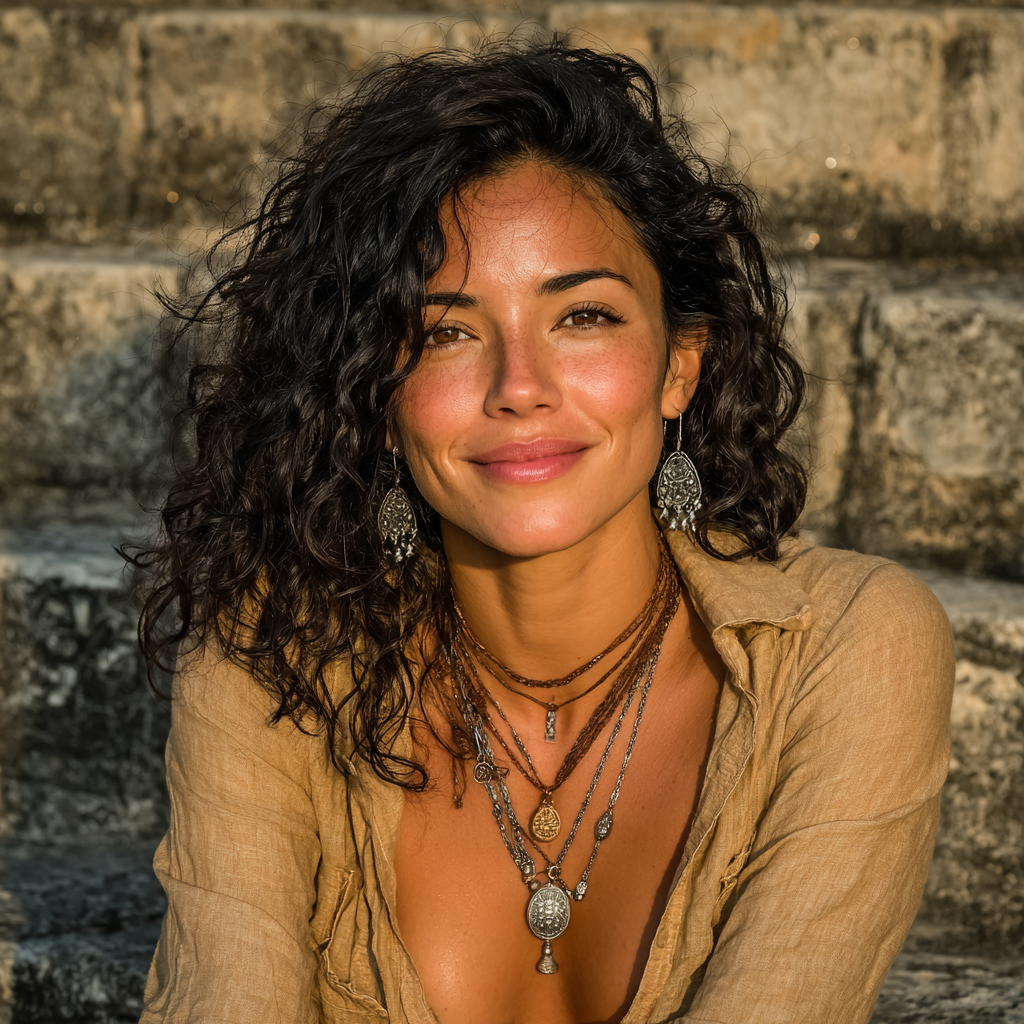
By Elena Vasquez
Cultural anthropologist and culinary storyteller. Elena spent a decade documenting traditional cooking methods across Latin America and the Mediterranean. She holds a PhD in Ethnography from Barcelona University and believes the best way to understand a place is through its kitchens and ancient streets.