
Florence & Tuscany in Spring: When the Chianti Hills Turn Green, the Uffizi Empties at Dawn, and Every Trattoria Has Asparagus on the Menu
By Elena Vasquez. I've been coming to Tuscany every spring for sixteen years—first as a broke art student sleeping in hostels near Santa Maria Novella, now as someone who plans her entire year around the week when the poppies bloom. I still get lost in the Oltrarno. I still cry at the Uffizi. And I still believe that the best Brunello is the one you drink in a vineyard at 4 PM with your shoes off.
Why Spring Changes Everything
Tuscany in spring is not Tuscany in summer. The difference isn't just temperature—though yes, the 40°C August afternoons that turn Piazza della Signoria into a frying pan are mercifully months away. The difference is that in spring, Tuscany still belongs to Tuscans.
The Chianti hills are electric green, not the exhausted gold-brown of late July. Wildflowers—poppies, broom, purple viper's bugloss—carpet the roadsides between Florence and Siena. The vineyards are budding, not harvested. And in Florence, the city breathes. You can get into the Uffizi without booking a month ahead. You can find a table at Trattoria Mario without queuing at 11:45 AM. You can walk across Ponte Vecchio at sunset and actually see the stones, not just a wall of selfie sticks.
Spring here means asparagi on every menu, artichokes the size of grapefruits, and strawberries from Terranuova Bracciolini that taste like sunlight. It means morning fog in the Val d'Orcia so thick you can't see the cypress trees until you're practically touching them. It means the Palio preparations are starting in Siena—horses aren't running yet, but the contrade are already rehearsing, flags flying, drums echoing through medieval streets at dusk.
I've timed this guide for late March through May. Come earlier and you'll hit Easter crowds and unpredictable weather. Come later and you'll miss the wildflowers. Come in late April or early May and you'll get Tuscany at its most generous.
The Renaissance Heart: Florence's Art Without the Day-by-Day Script
Here's what I tell everyone: Florence rewards obsession, not efficiency. The original guide had you racing from the Duomo to the Uffizi to the Accademia in three days like you're ticking boxes on a scavenger hunt. Don't do that. Florence is small. You can walk from one end of the historic center to the other in twenty minutes. The joy is in returning—to the same piazza at different hours, to the same café until they remember your order.
The Duomo Complex demands a whole morning, not because it's large but because it's layered. Start with the Baptistery at 8:15 AM when the doors open—Ghiberti's Gates of Paradise are actually replicas now, but the originals in the Opera del Duomo Museum next door are worth the combined €30 Brunelleschi Pass. The museum also holds Michelangelo's haunting Pietà, carved for his own tomb and abandoned when he found a flaw in the marble. You can see where he attacked it in frustration—the Christ figure's left leg is visibly thinner where he started to hack it away.
Climb Brunelleschi's dome if your knees allow it—463 steps, narrow passages, and at the top you're walking between the inner and outer shells of the largest masonry dome ever built. The Vasari frescoes of the Last Judgment circle around you. I've done this climb twelve times and I still get vertigo. Book at operaduomo.firenze.it at least two weeks ahead for spring; same-day tickets barely exist anymore.
Giotto's Campanile (414 steps, €30 combined) is the alternative if the dome is sold out—slightly easier climb, better views of the dome itself, and you get close enough to examine the marble panels that Giotto designed before he died.
The Uffizi Gallery is where I go to grieve and to celebrate. Botticelli's Birth of Venus and Primavera are in Rooms 10-14, and here's the thing: they're smaller than you expect and more alive. The Primavera contains over 500 identified plant species, all botanically accurate, all blooming in an impossible season that exists only in paint. I once spent an hour with a botanist friend identifying them. It ruined the painting for neither of us.
Book the 8:15 AM slot at uffizi.it. The €20 entry plus €4 booking fee is non-negotiable, but arriving at opening means you'll have Botticelli almost alone for fifteen minutes. By 10 AM the tour groups arrive and the rooms become a scrum. Allow three hours minimum. The café terrace (€6 for a coffee, but you're paying for the view) looks over the Palazzo Vecchio's tower and the Tuscan hills beyond.
Michelangelo's David at the Accademia is the only finished panel painting he ever did—the Doni Tondo, round and strange and violent in its color. But everyone comes for the marble, and rightly so. The David stands 5.17 meters tall in a purpose-built tribune, and the first thing that strikes you is his hands—they're disproportionately large, deliberately so, because Michelangelo designed him to be seen from below on the facade of the Duomo. He was never meant to be indoors. He was never meant to be at eye level. That tension between intention and reality is part of what makes him extraordinary.
Book at galleriaaccademiafirenze.it—€16 plus €4 fee, and the first slot (8:15 AM) is essential. The gallery is small; you need 90 minutes, no more.
Piazza della Signoria is free and always open. The copy of David in front of Palazzo Vecchio is where the original stood from 1504 to 1873. The Loggia dei Lanzi holds originals—Cellini's Perseus holding Medusa's head, Giambologna's Rape of the Sabines frozen in spiraling marble. I come here at night when the tourists have gone and the statues are lit from below. Perseus looks like he's about to step off his pedestal.
Palazzo Vecchio itself (€16.50, tower included, open until 7 PM) contains the Salone dei Cinquecento, where Leonardo and Michelangelo were once commissioned to paint opposing walls. Neither finished. The room still vibrates with that ghost competition.
Ponte Vecchio is beautiful at 6 AM and unbearable at noon. The gold shops are mostly tourist traps now—overpriced, repetitive, staffed by people who'd rather be anywhere else. But the bridge itself, rebuilt in 1345 after a flood and the only one spared by the retreating Germans in 1944 because Hitler supposedly found it too beautiful to destroy, still matters. Cross it early. Cross it late. Don't buy gold here unless you enjoy losing money.
The Views That Matter: Where to Stand and When
Piazzale Michelangelo is the postcard view, and yes, it's worth it. But go at sunrise, not sunset. Sunset is a carnival of buses, tour groups, and street vendors. Sunrise—6:30 AM in April, 5:45 AM in May—is almost empty. The Duomo rises from the mist. The Arno turns pink. You can hear birds in the Boboli Gardens below. Bring a coffee from the bar at the top (€2.50, undrinkable but hot) and a jacket—it can be 8°C at dawn even when the afternoon hits 22°C.
San Miniato al Monte, five minutes higher on foot, is better. The 11th-century Romanesque basilica is one of the purest buildings in Italy—striped marble facade, geometric precision, no baroque excess. The interior is dark and smells of incense and old stone. The view from the steps is the same as Piazzale Michelangelo but without the crowd. I've watched Easter sunrise mass here, the Gregorian chant echoing off the ancient walls, the city below still asleep.
Fiesole, 8 km northeast of Florence on Bus 7 (€1.50, 20 minutes), is where Florentines go to cool down. At 300 meters above the city, it's consistently 3-4 degrees cooler. The Roman theater (€12, open 9 AM-7 PM) hosts summer concerts but in spring it's silent, the stone seats warm in the afternoon sun. The archaeological museum holds Etruscan bronzes from 500 BC. The cathedral on Piazza Mino is 11th-century, plain and powerful. Eat at Ristorante La Reggia degli Etruschi (Piazza Mino 10, +39 055 593 85, €35-50) for the terrace view over Florence, but know you're paying for the panorama, not the kitchen.
The Bardini Garden is the alternative to Boboli that most tourists miss. Enter from Via dei Bardi and climb through wisteria tunnels to the belvedere. The view includes the full curve of the Arno, Santa Croce's facade, and the hills beyond. In late April the azaleas explode—thousands of them, pinks and reds and whites cascading down the slope. Entry is €10, or €22 combined with Boboli and Pitti Palace.
The Chianti Roads: Wine, Oil, and the Art of Doing Nothing
The Chianti Classico region—the triangle between Florence, Siena, and Greve in Chianti—is less than an hour from Florence by car, but it operates on a different clock. Here, the afternoon riposo is still observed. Shops close from 1 PM to 4 PM. Wineries take appointments, not walk-ins. The roads are narrow, winding, and spectacular.
You need a car. Public buses to Greve exist (SITA, €6-8) but they're infrequent and won't get you to the vineyards. Rent from Florence (€40-60/day) but be warned: the ZTL (Limited Traffic Zone) covers most of the historic center. Automatic cameras will photograph your plate and fine you €100+. Pick up your rental from the airport or the Villa Costanza tram terminus outside the ZTL.
Greve in Chianti is the unofficial capital, centered on a triangular piazza lined with porticoes. Macelleria Falorni (Piazza Giacomo Matteotti 71, +39 055 853 029, open 9 AM-7:30 PM) has been here since 1729. Taste the finocchiona—fennel salami made from heritage Cinta Senese pigs—and the pecorino aged in walnut leaves. The owners are the eighth generation. They'll tell you about the 1966 flood that reached the second floor if you ask.
Le Cantine di Greve (Piazza Giacomo Matteotti 8/9, +39 055 853 297, 11 AM-7 PM, tastings €15-25) lets you try wines from multiple local producers without driving between estates. Start with a Chianti Classico (minimum 80% Sangiovese, black rooster seal on the neck), move to a Riserva (24 months minimum aging), and finish with a Super Tuscan—wines like Sassicaia and Tignanello that broke DOC rules in the 1970s by blending Cabernet Sauvignon and Merlot with Sangiovese.
Radda in Chianti, 30 minutes south, is smaller and more medieval. Walk the ancient walls. The views over the vineyards are uninterrupted. Castello di Volpaia (Via della Volpaia 11, +39 0577 738 066, by appointment, €20-35) is a working winery in a restored medieval hamlet. Everything is organic. The olive oil is as good as the wine—grassy, peppery, nothing like the bland supermarket stuff.
Castellina in Chianti has the Via delle Volte—underground tunnels that once connected noble palaces, now a strange, cool walkway beneath the town. Rocca delle Macìe (Via di Fizzano 16, +39 0577 732 236, 10 AM-6 PM, €15-25) is family-owned, unpretentious, and produces an excellent Chianti Classico at prices that won't make you wince.
For lunch, Osteria del Mulino in Greve (Via dei Fossi 12, +39 055 853 819, 12:30-2:30 PM and 7:30-9:30 PM, closed Wednesday, €30-45) occupies a converted mill. The pici al ragù—thick, hand-rolled pasta with slow-cooked meat sauce—is what pasta dreams about. Pici is a Chianti specialty; it's rolled by hand, not extruded, and has a rough texture that grips sauce like nothing else.
Drive the SR222, the Chiantigiana road, between Greve and Siena. It's 50 km of curves, views, and terror if you're not used to Italian driving. Locals will tailgate you. Pull over and let them pass. Stop at every viewpoint. In May, the roadsides are red with poppies.
The Hill Towns: Siena, San Gimignano, and the One Nobody Visits
Siena is not a day trip. I mean, it can be—bus from Florence SMN in 75 minutes (SITA, €8.40), train in 90 minutes (€9.50)—but Siena deserves an overnight. The city changes after 6 PM when the tour buses leave. The contrade flags stay up. The restaurants fill with locals. The Palio rehearsals—drums, flag-throwing, medieval processions—happen in the evenings through spring.
The Piazza del Campo is the greatest medieval square in Europe. It's shaped like a shell, sloping gently to the Palazzo Pubblico, and twice a year (July 2 and August 16) it becomes a dirt racetrack for the Palio. The rest of the year it's a living room—children play football, students drink wine, old men argue politics. Climb the Torre del Mangia (€12, 400 steps) for the view, but also visit the Civic Museum (included in the €15 Palazzo ticket) for Ambrogio Lorenzetti's Allegory of Good and Bad Government—a 14th-century political cartoon that covers an entire wall, showing the effects of just and unjust rule on a city and its countryside.
The Duomo is black-and-white striped marble, gothic and severe. The floor mosaics—56 panels depicting biblical and allegorical scenes—are uncovered for only a few months each year, typically including late spring. Check operaduomo.siena.it for exact dates. The Piccolomini Library, off the left nave, contains Pinturicchio's frescoes of Pope Pius II's life—vivid, narrative, almost comic-book in their clarity. The colors haven't faded in 500 years.
Eat at Osteria Le Logge (Via del Porrione 33, +39 0577 480 13, €40-60, closed Sunday evening) in a 15th-century palazzo. The wild boar pici and the Chianti Classico by the glass are the reasons I keep coming back. For something cheaper, Pizzicagnoli Dei Rossi (Via Banchi di Sopra 44, €8-15) makes panini with porchetta and pecorino that you can eat on the Campo steps.
San Gimignano is the "Manhattan of Tuscany"—14 medieval towers still standing from an original 72. It's beautiful and it's a tourist circus. Arrive before 9 AM or after 5 PM. The Torre Grossa (€6, 54 meters) offers panoramic views. The Collegiata (€4) has Ghirlandaio frescoes of the Life of St. Fina, the town's patron saint, who was cured of paralysis by a vision and then promptly died, as saints do.
The real reason to come is Gelateria Dondoli (Piazza della Cisterna 4, €3-5). Sergio Dondoli is a world champion gelato maker. The saffron cream flavor, made with local crocus, tastes like Tuscany distilled. The Vernaccia wine sorbet is sharp and clean. This is not tourist gelato—this is the real craft.
Volterra is the alternative nobody talks about. Thirty kilometers from San Gimignano, dramatically perched on a rocky plateau, it was an Etruscan city before Rome existed. The Etruscan Museum (Via Don Minzoni 15, €10, 9 AM-7 PM) holds the Ombra della Sera—a bronze figurine so elongated and strange it looks modern. Alabaster workshops line Via dei Sarti; watch artisans carve objects from stone quarried locally for 2,500 years. Volterra is quieter, more authentic, and infinitely preferable to San Gimignano's crowds. The trade-off is fewer restaurants and no tower views.
The Food: Markets, Trattorias, and Spring on a Plate
Tuscan food is not subtle. It's bread without salt (a tradition dating to a medieval salt tax), olive oil that bites back, beans cooked until creamy, and meat—bistecca alla fiorentina, wild boar, rabbit. In spring, the markets burst with green: asparagus, artichokes, fava beans, tender greens. Every trattoria has a menu di primavera that changes weekly.
Mercato di Sant'Ambrogio (Piazza Lorenzo Ghiberti, Monday-Saturday 7 AM-2 PM) is where I shop when I'm staying in an apartment. It's smaller than Mercato Centrale, more local, cheaper. The cheese vendor on the northeast corner sells pecorino aged in caves near Pienza. The fishmonger has baccalà—salt cod—soaked and ready. The flower vendors sell bunches of wildflowers for €3. Caffè Sant'Ambrogio (Piazza Sant'Ambrogio 7r, +39 055 247 7277, 7 AM-11 PM, €5-10) is the neighborhood living room, full of students and professors from the nearby university.
Mercato Centrale (Via dell'Ariento, upstairs 9 AM-2 PM and 5 PM-10 PM) is touristy but useful. Da Nerbone makes lampredotto—cow's fourth stomach, boiled, chopped, served on a roll with green sauce. It's a Florentine institution. It's also €5 and will either convert you to offal or confirm your worst fears. Try it. The worst outcome is a story.
For sit-down meals, my rotation is:
Trattoria Mario (Via Rosina 2r, +39 055 218 550, 12 PM-3:30 PM only, closed Sunday, €20-30, cash only). Communal tables. No reservations. Arrive at 11:45 AM and queue. The ribollita—bread and cabbage soup, thick as porridge—is the best in Florence. The boiled beef with green sauce is dinner and breakfast the next day. The owners are the grandsons of the founder. They yell. It's affectionate.
Trattoria 4 Leoni (Via del Vellutini 1r, +39 055 218 562, €40-60, reservations essential). Oltrarno, 15th-century tower house. The pear ravioli with pecorino and asparagus is why spring exists. In autumn they swap asparagus for mushrooms. Both are correct.
Buca Mario (Piazza degli Ottaviani 16r, +39 055 214 179, €50-70, closed Sunday, reservations essential). 16th-century wine cellar. The bistecca alla fiorentina—T-bone steak from Chianina cattle, grilled rare over charcoal, priced by weight (€55/kg, minimum 1kg)—is the test of any Tuscan restaurant. It should be charred outside, bloody inside, seasoned only with salt and olive oil. If they ask how you want it cooked, leave. The correct answer is rare. There is no other answer.
All'Antico Vinaio (Via dei Neri 74r, +39 055 238 2113, 10 AM-8 PM, €5-10). The queue is eternal. The schiacciata—Florentine flatbread, crispy, olive-oil-slick—is worth it. The "Favolosa" with cream cheese, porchetta, and artichoke cream is the one that made them famous. Eat it leaning against a wall in Piazza della Signoria.
Il Santo Bevitore (Via di Santo Spirito 64/66r, +39 055 211 264, €45-65, closed Sunday). Creative Tuscan, refined but not stuffy. The tasting menu in spring might include raw fava beans with pecorino, nettle risotto, and lamb with artichoke. The wine list is serious.
Il Vegetariano (Via delle Ruote 30r, +39 055 475 030, €15-25, closed Sunday evening). Pay-by-weight vegetarian buffet. Not traditional Tuscan, but honest food and full of locals who've had enough meat for one week.
What to Skip (And What to Do Instead)
Skip the Duomo cathedral interior. The facade is free and extraordinary. The interior is underwhelming—bare, 16th-century rebuilt, none of the expected richness. Spend your time and money on the Baptistery, the dome climb, and the Opera del Duomo Museum instead.
Skip Ponte Vecchio at midday. It's a bottleneck of tourists, selfie sticks, and overpriced gold shops. Cross it at 7 AM or 10 PM. The gold hasn't changed; the experience has.
Skip the big bus tours to Chianti. You know the ones—€120, 40 people on a coach, one winery visit with the cheapest wine they can pour, a stop at a "traditional" farm that exists only for tourists. Rent a car. Or hire a driver for the day (€250-350) who'll take you to actual working wineries where actual Tuscans work.
Skip dining near the Duomo after 7 PM. The restaurants on Via dei Calzaiuoli and around Piazza del Duomo are uniformly mediocre—high prices, low effort, frozen ingredients. Walk ten minutes in any direction. The food improves. The prices drop. The Tuscans appear.
Skip Pisa as a day trip. The tower is a 15-minute photo and a 3-hour train roundtrip. If you must see it, combine it with Lucca—a walled city you can bike around, with better food and none of Pisa's aggressive street vendors.
Skip the "Tuscan cooking class" in your hotel. If you want to cook, book La Cucina di Giuditta (Via di Mezzo 21/23r, +39 055 234 0676, €80-120, 3-4 hours). It's run by actual Florentines in an actual kitchen. You'll make pasta by hand and eat what you cook with wine that doesn't come from a box.
Skip buying leather at San Lorenzo market street stalls. The jackets look good until it rains and they dissolve. For real quality, Scuola del Cuoio (Piazza Santa Croce 16, 9:30 AM-6 PM) is the leather school attached to Santa Croce. You can watch artisans work and buy pieces that will last decades. Prices start at €80 for small goods, €300+ for jackets.
Practical Logistics: The Boring Stuff That Saves Your Trip
Getting There: Florence Airport (FLR) is 4 km from center. The Volainbus (€6, 20 minutes, every 30 minutes) gets you to Santa Maria Novella station. Taxis have a fixed fare: €25 daytime, €27 nights/holidays. Pisa Airport (PSA), 80 km west, has more international flights. The PisaMover train + connection to Florence takes an hour and costs €7.50 total.
Getting Around: Walk. Florence's historic center is compact. Everything is within 20 minutes on foot. Buses (ATAF, €1.50 for 90 minutes, €5 for 24 hours) are only necessary for Piazzale Michelangelo, Fiesole, or the outer neighborhoods. Taxis are white with "Comune di Firenze" on the side. Call +39 055 4242 or +39 055 4390—hailing on the street rarely works. The ZTL covers the entire center; if you're driving, know the boundaries or face €100+ fines.
Money: Cash is still king in trattorias and markets. Cards work in museums and most restaurants, but carry €100-200 in cash daily. Tipping: service is included. Round up for good service. €1-2 per bag at hotels.
When to Book: Uffizi and Accademia: 2-4 weeks ahead in spring. Duomo dome: 2-3 weeks. Trattoria Mario: arrive at 11:45 AM, no reservations. Buca Mario and 4 Leoni: 2-3 days ahead. Wine tastings: 1 week.
Spring Weather: March averages 15°C high, 5°C low. April is 18°C/8°C with wildflowers. May hits 23°C/12°C and can feel like summer. Rain is brief but real—pack a light waterproof jacket. Mornings can be foggy and cool even when afternoons are warm. Layer.
What to Pack: Comfortable shoes with grip—cobblestones are ankle-breakers in the rain. Shoulders and knees must be covered for churches (enforced at the Duomo). A scarf serves double duty for warmth and modesty. A reusable water bottle—Florence has public fountains with drinkable water, including one at the base of the Duomo.
Emergency: 112 for general emergency, 113 for police, 118 for medical. Tap water is safe. Pharmacies display green crosses and rotate 24-hour service—check the posted schedule on any pharmacy door for the nearest open location.
The One Thing I Always Do: On my last morning, I buy a coffee at Caffè Sant'Ambrogio and walk to Piazza Santa Croce. I sit on the steps and watch the city wake up. The church facade glows in the morning light. The leather school workers arrive with their tool bags. The students from the university hurry past with books and espresso. And I know I'll be back next spring, when the hills are green again and the asparagus is on every menu.
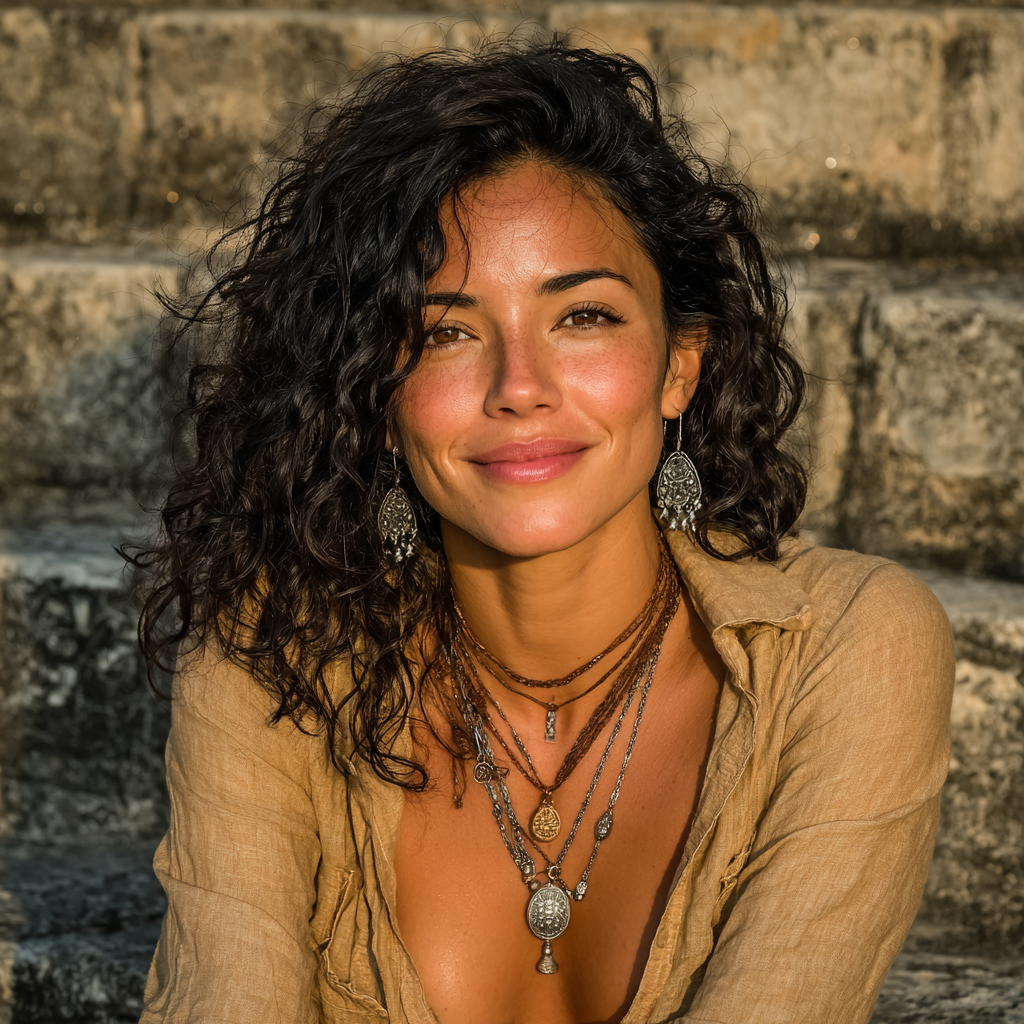
By Elena Vasquez
Cultural anthropologist and culinary storyteller. Elena spent a decade documenting traditional cooking methods across Latin America and the Mediterranean. She holds a PhD in Ethnography from Barcelona University and believes the best way to understand a place is through its kitchens and ancient streets.