
Kilkenny, Ireland: Butler Castles, Smithwick's Ale, and the Pub a Witch Built
Most visitors to Ireland race from Dublin to the Ring of Kerry or the Cliffs of Moher, treating the southeast as flyover country. They pass within an hour of Kilkenny and never notice. This is their loss, and your opportunity.
Kilkenny is not a village with a castle tacked on for tourists. It was the medieval capital of Ireland, the seat of the Butler dynasty for six centuries, and the place where Bishop Richard Ledrede tried a woman for witchcraft in 1324 and accidentally created the country's oldest continually operating pub. The city has 27,000 people, a full mile of intact medieval streetscape, and a seriousness about its own history that borders on stubbornness. Walk down Parliament Street on a Tuesday morning and you will see locals greeting each other by name outside butcher shops that have been in the same families for generations. This is a city that knows itself.
The Castle That Refused to Fall
The story starts with the Normans. Richard de Clare, known as Strongbow, built the first timber castle here in the 1170s after his invasion of Ireland. The stone replacement went up in the thirteenth century, and in 1391 the Butler family — Anglo-Irish aristocrats who would become the Earls and later Marquesses of Ormonde — bought the lease. They held the castle until 1967, when the sixth Marquess of Ormonde sold it and its fifty-acre estate to the Irish state for the nominal sum of £50. The Butlers were not giving up easily; the sale took years of negotiation and the family retained significant art and furnishings that had to be separately purchased or returned.
The interiors are predominantly Victorian — the Butlers remodeled aggressively in the 1800s under architects who favored heavy drapery, family portraits, and the confident excess of empire. The Long Gallery still carries their faces: generations of Butlers staring down at visitors with the particular expression of people who expected to be looked at. The Picture Gallery has a hammer-beam roof worth craning your neck for, a technical marvel of medieval carpentry that the Victorians preserved rather than replaced. The basement shows the original medieval foundations behind glass, including the four round towers that once stood at the corners and the deep well that supplied the garrison during sieges.
Kilkenny Castle, The Parade, Kilkenny, Ireland. Open daily 9:30 AM–5:30 PM. Full castle tour: €8. The Butler Gallery, housed in the old servants' quarters, shows contemporary Irish art and is included in the castle ticket. The gardens are free to enter and open the same hours, with the rose garden at its peak in June and the formal parterre gardens providing structure year-round. Locals use the park for morning walks; arrive before 9:00 AM to see the mist rising off the River Nore with the castle silhouetted against it.
The Medieval Mile: Eight Centuries in Twelve Minutes
From the castle, walk the Medieval Mile north toward St. Canice's Cathedral. The Mile is not a marketing invention. It is a continuous stretch of medieval and early modern streetscape that runs from the castle gates to the cathedral close, passing buildings that have been in continuous use since the 1500s. The street pattern still follows the medieval layout: High Street, Parliament Street, and St. Kieran's Street forming the spine, with narrow lanes — the Butterslip, Butter Slip Lane, Abbey Street — cutting between them like they have for five hundred years.
The Medieval Mile Museum, 2 St. Mary's Lane, Kilkenny, opened in 2017 in the thirteenth-century St. Mary's Church. The museum uses the building itself as an exhibit — the tombs are still in the floor, and the audio guide lets you stand on a grave slab while a voice explains who is underneath. Entry is €7, open 10:00 AM–6:00 PM in summer, shorter hours in winter. The displays on the 1641 Confederate Assembly are genuinely informative; Kilkenny functioned as the capital of Catholic Ireland for six years during the Confederate Wars, and the city has never quite forgotten the prominence. The museum also houses the Liber Primus Kilkenniensis, the oldest complete book of council minutes in Ireland, recording city business from 1231.
Rothe House, 16 Parliament Street, sits two blocks north. It is a Tudor merchant's compound from 1594 — three houses, three courtyards, and a reconstructed garden that grows the herbs and plants the Rothes would have used. John Rothe was a wealthy wool merchant and mayor of Kilkenny who built this complex as both family home and business headquarters. His house is the only surviving example in Ireland of a Tudor merchant's residential complex, and the fact that it survived Cromwell's occupation is something of a miracle. Entry is €7.50 and includes access to the genealogical center, which is useful if you are one of the thousands of people with Kilkenny ancestry. The building also hosts the Kilkenny Archaeological Society's library, with manuscripts dating to the 1600s.
The Butterslip, connecting High Street to St. Kieran's Street, was the medieval butter market. The name is literal: this is where dairy farmers carried their butter to sell, the narrow covered lane keeping the product shaded and cool. The lane is still there, still narrow, still cobbled, and still slippery after rain. Walk through it slowly. The buildings on either side lean inward, and the stone is worn smooth by centuries of foot traffic.
St. Canice's and the Round Tower
St. Canice's Cathedral, Coach Road, marks the northern end of the Mile. This is Ireland's second-largest medieval cathedral, construction starting in 1251 on the site of a sixth-century monastery founded by St. Canice himself — the same Canice who gives Kilkenny its name (Cill Chainnigh, meaning Canice's Church). The interior is plain by Gothic standards — Cromwell's troops stabled their horses here in 1650, and the subsequent restoration was deliberately restrained rather than ornate.
The real reason to visit is the round tower. At 100 feet, it is one of only two in Ireland that visitors can still climb. The 167 steps are steep, the handrail is a rope, and the gap at the top is narrow enough that larger visitors struggle. Children under twelve are not permitted. The view covers every roof in Kilkenny and the sheep fields to the south, and on clear days you can see the Blackstairs Mountains on the Carlow border. The cathedral opens at 9:00 AM and closes at 5:00 PM. Admission is roughly €5, though the exact figure changes with the exchange rate. If the tower is closed due to wind or rain, the staff will tell you directly and without apology — they have been making this decision for centuries and do not need visitor input.
The cathedral close contains several medieval houses that were once the residences of clergy and minor nobility. The bishop's palace, now a private residence, sits at the eastern edge. The library holds a collection of early printed books including a 1550 edition of the Book of Common Prayer.
The Pub That Outlasted the Witch Trial
The story that defines Kilkenny, though, is not a castle or a cathedral. It is a pub. Kyteler's Inn, 27 St. Kieran's Street, has occupied the same stone building since 1324, when Dame Alice Kyteler used it as her townhouse. Alice was a wealthy widow who had outlived four husbands — a fact that seemed suspicious to her stepchildren when the fifth began to sicken. They accused her of poisoning him and of heresy, sorcery, and witchcraft. Bishop Richard Ledrede of Ossory prosecuted the case personally, issuing the first witchcraft indictment in Ireland. Alice escaped to England before she could be burned. Her maid, Petronilla de Meath, was less fortunate: she was flogged and burned in Alice's place on Kilkenny's Common, becoming the first person executed for witchcraft in Ireland.
The building became an inn within decades, then a pub, and it still pours pints today. The stone walls and low ceilings are largely original. The food is standard Irish pub fare — order the chowder and the brown bread, avoid the burgers. The Smithwick's is properly kept. Whether Alice actually poisoned anyone remains disputed; historians note that fourteenth-century medicine was primitive enough that four dead husbands might indicate bad luck rather than malice. That her pub survived six centuries of church, state, and brewery consolidation is not disputed at all. Sit at the bar on a slow afternoon and the bartender will tell you which corner was Alice's favorite.
Smithwick's and the Monks Who Started It
Kilkenny's other lasting institution is Smithwick's ale. The brewery was founded in 1710 by John Smithwick on the site of a Franciscan abbey that had been brewing since the 1300s. The monks had established brewing as both economic activity and hospitality — travelers expected ale, and monasteries were the primary producers before commercial breweries took over.
The Smithwick's Experience, 44 Parliament Street, is an interactive tour through the company's history, from medieval monks to Heineken-era consolidation. The tour lasts about an hour and ends with a guided tasting of the core range. It is not a working brewery — production moved to Dublin in 2013 — but the exhibits are honest about this, and the history of monastic brewing in Ireland is genuinely interesting. Admission varies by season, roughly €15–18; check current rates before booking. The building itself is worth seeing, a nineteenth-century brewery structure with iron columns and vaulted brick cellars that once held thousands of barrels.
For a working brewery experience, seek out ** Sullivan's Brewing Company**, operating from a smaller facility on James's Street. They revived the Sullivan's brand, a historic Kilkenny brewery that closed in the early twentieth century, and produce craft ales and stouts in traditional styles. Their taproom opens Thursday through Sunday afternoons.
Where to Eat: Kilkenny Punches Above Its Weight
Campagne, 5 The Arches, Gas House Lane, has held a Michelin star for French-influenced cooking built on Irish produce. Chef Garrett Byrne sources from local farms and fishermen, and the menu changes with what is available. The set lunch (€45 for three courses, Tuesday–Friday) is the best value, but you still need to book weeks ahead. The dining room is quiet, the service is precise without being stiff, and the cheese selection includes local Kilkenny varieties that never leave the county.
Petronella, 5 Butter Slip Lane, does modern Irish cooking in a building that predates most American cities. The name references Alice Kyteler's unfortunate maid, but the food is anything but medieval: roasted lamb with wild garlic, Atlantic halibut with dillisk seaweed, and a bread pudding that justifies the calories. Mains run €22–32. Open Wednesday–Sunday, dinner only.
Paris Texas, 2 John Street, is a gastropub with American smokehouse leanings that locals actually frequent rather than avoid. The pulled pork and brisket are smoked in-house, and the craft beer list includes Sullivan's alongside American imports. A full meal with drinks runs €30–40.
For casual lunches, Café La Coco on Rose Inn Street does excellent soups and sandwiches with outdoor seating that catches the afternoon sun. Zuni, 26 Patrick Street, is the city's best-value fine dining, with a €35 early-bird menu that would cost double in Dublin.
Hurling: Religion by Another Name
The city's other obsession is hurling. Kilkenny is the most successful county in the history of the sport, with thirty-six All-Ireland senior championships. The rivalry with Tipperary defines the sport in this part of Ireland, and matches between the two counties draw capacity crowds at Nowlan Park, O'Loughlin Road.
If you are in town during the championship season — matches run from May through August — and Kilkenny is playing a home game, go. Tickets start at €25 for league games and climb to €40–60 for championship matches. The crowd is fanatical, the speed of play is difficult to explain to anyone who has not seen it — the sliotar (ball) travels faster than a hockey puck and the hurleys (sticks) move in arcs that seem to defy physics — and the atmosphere is worth the admission even if you understand none of the rules. Arrive early, wear black and amber if you want to blend in, and do not under any circumstances admit to supporting Tipperary.
For a quieter introduction to the sport, the Kilkenny Hurling Experience at Langton's Hotel offers coaching sessions where you can try holding a hurley and striking a ball. It is harder than it looks, and your first bruise is a badge of honor.
Beyond the City Walls
Fifteen kilometers south of the city, Jerpoint Abbey, Thomastown, is a Cistercian ruin from 1180 that most visitors skip. This is a mistake. The stone carvings on the fifteenth-century cloister arches include a bishop with his cat, a man being eaten by a lion, and a knight with his legs crossed in the pose of a crusader who died in the Holy Land. The tower was added after the abbey abandoned strict Cistercian austerity for a more comfortable existence — a common trajectory for monastic houses that found themselves wealthy enough to want more than prayer and manual labor. The site opens at 9:00 AM and closes at 5:00 PM in summer, 4:00 PM in winter. Admission is €5.
Dunmore Cave, 11 kilometers north on the Castlecomer Road, is a limestone cave with Viking-era artifacts and a chamber called the Market Cross that is large enough to fit a cathedral bell. The cave was the site of a Viking massacre in 928 AD, when the Dublin Norse slaughtered a thousand people taking shelter inside. Archaeologists found the remains in the nineteenth century. The cave opens at 9:30 AM and closes at 5:00 PM. Admission is €5.
Woodstock Gardens and Arboretum, 20 kilometers southeast at Inistioge, is a restored Victorian estate with formal gardens, a walled garden, and walking trails along the River Nore. The arboretum contains rare trees from China and the Himalayas planted by the Tighe family in the 1800s. Open March–October, €8.
What to Skip
The "ghost tours" that depart from the Tourist Office on Rose Inn Street are theatrical exercises, not history. If you want the Alice Kyteler story, read the account in the Medieval Mile Museum or sit in Kyteler's Inn and ask the bartender. They know more than any actor in a sheet.
The Cat Laughs comedy festival in early June brings crowds and hotel price spikes that a city of 27,000 cannot absorb gracefully. If you are not coming specifically for the festival, avoid the first two weeks of June. Hotel rates double and restaurant reservations become impossible.
The modern shopping center on the north bank of the River Nore could be in any Irish town. Stay south of the river, where the medieval grid still determines the street plan and the building heights. The north bank is where Kilkenny becomes interchangeable with every other Irish city.
The "medieval banquet" experiences at some hotels are costume dinners with scripted entertainment aimed at bus tour groups. The food is mediocre and the history is costume-shop. Spend the money on dinner at Campagne or Petronella instead.
Practicalities
Kilkenny is compact. You can walk from the castle to the cathedral in twelve minutes, from Kyteler's Inn to the train station in eight. The medieval core is entirely pedestrian-friendly, though the cobblestones can be uneven after rain.
There is no airport; the nearest is Dublin, 120 kilometers north. Trains from Dublin Heuston Station take ninety minutes and run every two hours; book in advance on Irish Rail for better fares. Buses from Dublin City Centre take two hours and cost roughly half the train fare. A car is useful only if you are visiting Jerpoint Abbey, Dunmore Cave, or continuing south to Waterford. Parking in Kilkenny's center is limited and expensive; use the Park & Ride at Kilkenny Ring Road if you must drive.
The best time to visit is April through June or September through October. July and August bring day-trippers from Dublin who cluster around the castle and clog the Medieval Mile. January and February are quiet but cold, and several restaurants close for the season. Rain is possible in any month. Bring waterproof shoes and a tolerance for damp stone.
Where to stay: Langton House Hotel, 69 John Street, is the grand dame of Kilkenny hotels, a family-run operation with a hurling-themed bar and genuinely good food. Lyrath Estate, 1.5 kilometers south of the city, is a five-star resort in a Georgian house with a spa and golf course if you want luxury outside the medieval center. Kilkenny River Court Hotel, The Bridge, has the best location, right on the River Nore with castle views from upper floors. Zuni Townhouse, 26 Patrick Street, offers boutique rooms above the restaurant for a more intimate stay.
Kilkenny does not sell itself as a hidden gem. It does not need to. The city has been here for eight centuries, it knows what it is, and it is not changing for tourists. Start at the castle, end at Kyteler's Inn, and do not rush the walk between them. The stones have stories, but only if you move slowly enough to hear them.
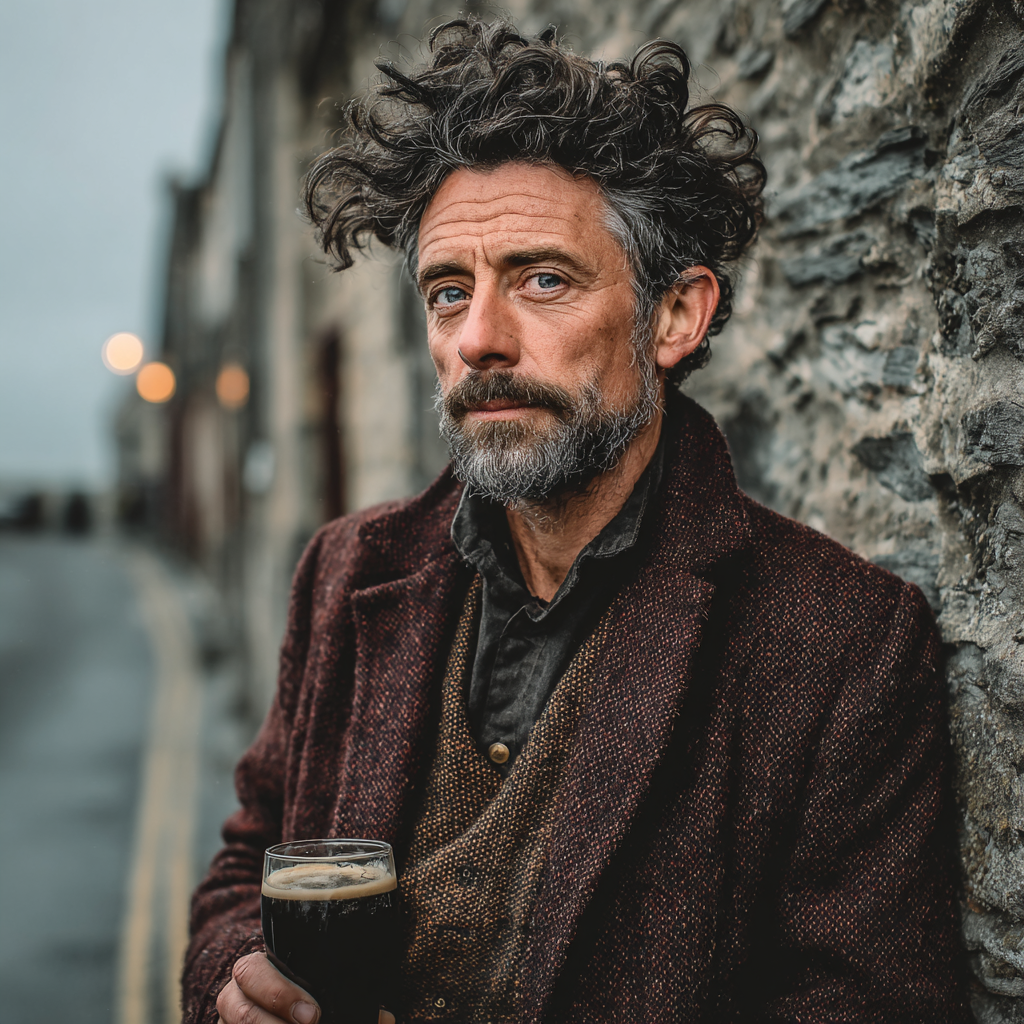
By Finn O'Sullivan
Irish storyteller and folklorist. Finn hunts for the narratives that do not make guidebooks—the pub legends, the family feuds, the neighborhood heroes. He believes every street corner has a story if you know who to ask.