
Guyana is the only English-speaking country in South America, and it is also the only one where 80 percent of the land remains forested. The Guianas sit on the northeastern shoulder of the continent, isolated from the Amazon basin by the Orinoco River to the north and the Amazon itself to the south. This isolation has preserved ecosystems that elsewhere have been flattened by logging, mining, or agriculture. In Guyana, the forests are not a backdrop. They are the reason you come.
The country operates on a model it calls "low-carbon development." In 2009, Guyana signed an agreement with Norway to keep its forests standing in exchange for payments based on carbon credits. The money funds sustainable development projects, renewable energy, and indigenous land titling. The model is not perfect. Corruption and mismanagement have drawn criticism. But the forest is still standing, and that is more than most countries can claim. For travelers, this means that a trip to Guyana is not a beach holiday with a green sticker. It is a direct engagement with one of the last intact tropical wildernesses on Earth.
Kaieteur Falls is the headline. At 226 meters, it is the world's largest single-drop waterfall by volume. The Potaro River pours over a sandstone cliff into a gorge that has no bottom visible from the rim. The mist rises 60 meters and feeds a microclimate of orchids and bromeliads. The falls are inside Kaieteur National Park, a 62,680-hectare protected area. The standard approach is a small-plane charter from Ogle Airport in Georgetown, 50 minutes each way. The flight itself is part of the experience. You pass over the Essequibo River, the third-largest in South America, and watch the forest canopy unbroken to the horizon. At the falls, there is no rail, no gift shop, no crowd. The viewpoint is a rocky ledge 15 meters from the drop. There are usually fewer than 30 visitors at any time. The best light is early morning. Cockroach, a small airstrip near the falls, also has basic lodging for overnight stays. The cost for a day trip is roughly $250–$350 USD, including the flight, park entry (GYD 4,000, about $19), and a guide.
But Kaieteur is the gateway, not the destination. The real country lies south, in the Rupununi.
The Rupununi is a savannah region of 8,000 square kilometers, edged by the Kanuku Mountains to the east and the Pakaraima range to the west. It is cattle-ranching country, but the ranches are small, and the wildlife is not fenced out. The Rupununi is one of the few places on Earth where you can see jaguars in the wild with reasonable regularity. A night drive along the Shell Beach road or a dawn boat trip on the Rupununi River offers sightings of giant otters, black caimans, capybaras, and over 800 bird species. The harpy eagle, the world's most powerful bird of prey, nests here.
The base for Rupununi exploration is Lethem, a frontier town on the Brazilian border. The main access is a 90-minute flight from Georgetown or, during the dry season (September–March), a 15-hour drive on the Linden–Lethem road, which is unpaved and requires a 4x4. The road is an adventure in itself. You cross the Essequibo at Kurupukari by pontoon ferry, and the forest closes in on both sides. During the rainy season, the road is impassable.
Accommodation in the Rupununi is mostly community-based or ranch-based. Caiman House, in the village of Yupukari, is a research station and guesthouse focused on black caiman conservation. Guests can join night surveys on the Rupununi River, spotting caimans by eye-shine and helping to measure and tag them. The work is real. The data goes to the University of Guyana and international herpetological journals. A three-night stay, including meals and activities, costs around $400–$500 USD. The rooms are basic: screened, solar-powered, with shared bathrooms. The food is local cassava, fresh-caught fish, and whatever the garden is producing.
Iwokrama is the heart of the forest. The Iwokrama International Centre for Rain Forest Conservation and Development manages a million hectares of protected forest in the geographic center of Guyana. It is one of the largest privately protected areas in the world, though it is government-owned and internationally funded. The center operates a research station at the Iwokrama River Lodge, on the Essequibo River, accessible by a one-hour flight from Georgetown or a 10-hour drive. The lodge has eight rooms, a canopy walkway 30 meters above the forest floor, and guided trails that range from two hours to three days. The forest here is primary tropical rainforest. Tree species number over 1,200, and the canopy is 40–50 meters high. Mammals include jaguar, puma, giant anteater, tapir, and eight species of monkey. The best time for wildlife viewing is the dry season, when animals concentrate around rivers and waterholes. A three-night package at the lodge, with guided walks and river trips, costs $600–$800 USD.
The North Rupununi also offers community tourism. The Makushi and Wapishana communities own titled lands and operate their own tourism enterprises. Surama Eco-Lodge, run by the Makushi community, is a cluster of benab huts, thatched in traditional style, with raised beds and mosquito nets. The community is 270 people. The lodge employs 20 of them directly. Guests take guided forest walks, learn to make cassava bread, and climb Surama Mountain for sunrise views over the savannah. A three-night stay costs around $300 USD. The lodge is not a simulation of traditional life. It is a real community deciding how to engage with the outside world on its own terms.
The Shell Beach coast, on the Atlantic Ocean, is a protected area where four species of sea turtle nest between March and August. The most endangered is the leatherback, which can weigh 500 kilograms. The turtles come ashore at night to lay eggs. Community rangers from the villages of Almond Beach and Warapoka patrol the beaches, tag the turtles, and collect eggs for protected hatcheries. Visitors can join the patrols, which start at 10 PM and continue until dawn. The beach is also a nesting site for scarlet ibis, and the mangrove creeks behind it are full of crab-eating raccoons and capuchin monkeys. Access is by boat from Georgetown, a four-hour trip, or by small plane. There is no road. Accommodation is in basic beach cabanas. A three-night turtle-watching package costs $400–$600 USD.
The practical reality of Guyana is that it is not easy. The infrastructure is minimal. The roads are rough. The weather is extreme: 30°C and 90 percent humidity year-round, with two rainy seasons that turn the country into mud. Malaria is present in the interior, though prophylaxis is effective. Yellow fever vaccination is required. Georgetown, the capital, has a reputation for crime that is not entirely undeserved. The Stabroek Market area and the seawall after dark are not safe for obvious tourists. But Georgetown is also the point of entry, and it has a few solid hotels. The Cara Lodge on Quamina Street is a restored colonial house with a garden and a reliable restaurant. The El Dorado Inn on Trinity Street is cheaper and functional. Both are in the quieter Woodbrook neighborhood, not the chaotic center.
For the interior, the logistics are everything. Flights with TransGuyana Airways and Air Services Limited operate from Ogle Airport, not Cheddi Jagan International. Book in advance. The small planes fill up, and weather cancellations are common. The dry season, September to March, is the best window. The rainy season is cheaper and less crowded, but some lodges close and the roads become impassable. Pack light. The weight limit on charter flights is usually 15 kilograms. Long sleeves, long pants, and a good head net are essential for the insects. The sandflies are worse than the mosquitoes.
What to skip? Skip the packaged "eco-tours" that do not name the community or the conservation partner they work with. Skip the Georgetown day trips that treat the interior as a theme park. Skip the assumption that because Guyana is poor, it is cheap. Conservation tourism costs money. The communities charge what they need to sustain their land and their work. That is the point.
Guyana is not for everyone. The heat, the insects, the rough travel, and the lack of conventional luxury will deter many. But for travelers who want to see a forest that still functions, who want to meet communities that own their land and manage it, and who want to understand what low-carbon development actually looks like on the ground, Guyana is one of the last places where this is possible. The forest is still standing. For now.
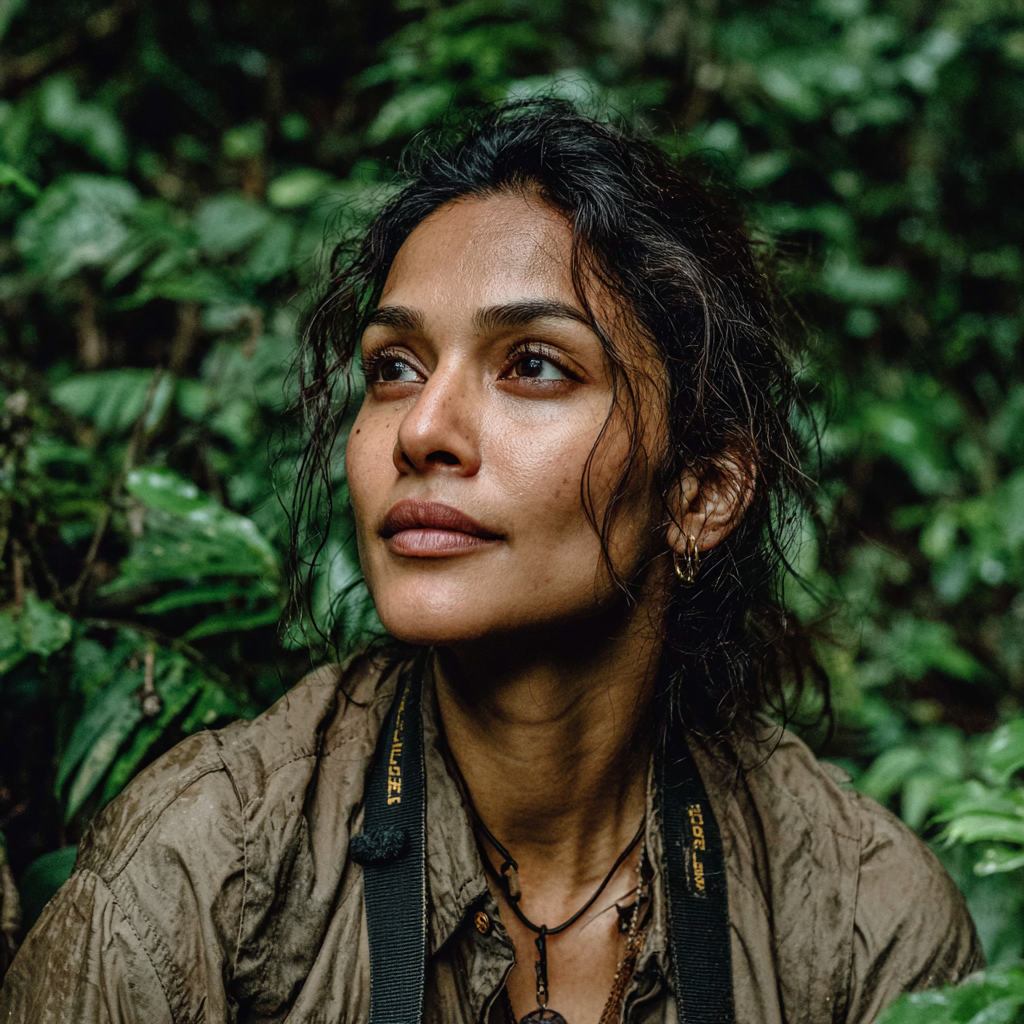
By Priya Sharma
Conservation biologist and sustainable tourism advocate. Priya works with eco-lodges and wildlife sanctuaries to promote ethical travel practices. She holds an MSc in Biodiversity Conservation and has spent years tracking endangered species across the Indian subcontinent.