
The howler monkeys start at 4:30 in the morning. If you are staying inside the park, their guttural roar rolls through the canopy like a warning siren. It is not a gentle wake-up call. It is a territorial broadcast that has been running for two thousand years, long before the first tourists arrived. By 5:00 AM, the spider monkeys are crashing through the branches overhead, and the coatis have already raided any unsecured food at the campground. Tikal is not a museum. It is a functioning ecosystem that happens to contain one of the most important archaeological sites in the Americas. That distinction matters, because the way you visit determines whether you are helping preserve it or accelerating its decline.
The ruins cover 16 square kilometers of dense tropical forest in the Peten Basin, deep in northern Guatemala. Tikal was a Maya superpower from around 300 BC to 900 AD, with a population that peaked at an estimated 100,000. What makes the site extraordinary is not just the scale of the stone temples, but the fact that the jungle was never fully cleared. The city and the forest grew back together. Temple I, the 47-meter pyramid that dominates the Grand Plaza, was completely buried in vegetation when archaeologists reached it in the late 19th century. Today, you can still climb Temple II for a view across the canopy, and the top of Temple IV, the tallest structure at 70 meters, puts you above the tree line with nothing but green in every direction. Bring binoculars. The wildlife does not wait for you to look up.
The species list is impressive for a site this heavily visited. Spider monkeys and black howler monkeys are guaranteed sightings if you spend more than a few hours in the park. Keel-billed toucans and ocellated turkeys are common along the main trails. If you are lucky, you will spot a jaguarundi slinking through the undergrowth near the less-traveled Mundo Perdido complex. Over 300 bird species have been recorded here, including the ornate hawk-eagle and the endangered orange-breasted falcon. The park is also home to jaguars, though you will almost certainly not see one. That is a good thing. It means they still have enough undisturbed forest to avoid humans. The Maya Biosphere Reserve, of which Tikal is a part, covers 2.1 million hectares and is one of the largest protected tropical forests in Central America. It is also under constant pressure from illegal logging, cattle ranching, and drug trafficking corridors that cut through the forest to the north. Your entrance fee helps fund the rangers who patrol it.
The standard park entry is 150 Guatemalan quetzals, roughly $20 USD. Children under 12 enter free. The park opens at 6:00 AM and closes at 5:00 PM. If you want to enter for sunrise or stay past sunset, the fee jumps to 250 quetzals. The extra 100 quetzals goes directly to park administration, not to the central government. That is the fee you should pay. Sunrise at Tikal is worth it not because of the Instagram photo, but because the temperature is bearable and the howler monkeys are at peak volume. The mist rises off the canopy, and the temples emerge from the darkness in stages. It is the only time of day when the Grand Plaza is genuinely quiet. By 9:00 AM, the tour buses from Belize and Cancun arrive, and the silence breaks.
If you are serious about the wildlife, hire a licensed guide. The licensed guides at the entrance are not cheap, running about 400 to 600 quetzals for a half-day private tour, but they know where the ocellated turkeys nest and which trees the toucans favor at different times of day. A group tour splits the cost and runs closer to 50 to 80 quetzals per person. Do not hire the unlicensed touts who linger near the parking lot. They are not trained in either archaeology or ecology, and they have a habit of feeding the coatis to guarantee sightings. That behavior habituates wildlife to human contact and spreads disease. It is the single most destructive practice a tourist can encourage at Tikal, and it happens every day.
Transport from Flores, the nearest town, is straightforward. The shuttle buses run every morning from the island and cost about 60 to 70 quetzals round trip. The journey takes 90 minutes on paved roads. A private transfer costs 400 to 600 quetzals one way and is only worth it if you are traveling in a group of four or more. There are no ATMs inside the park and no card payments anywhere. Bring cash. The bank office in Tikal sells tickets, but it closes before sunset and does not open until after sunrise. If you are doing the dawn tour, buy your ticket in Flores the day before. The Banrural office on Flores island opens at 9:00 AM and closes at 4:00 PM on weekdays. There is no reliable online purchase system as of 2026.
Accommodation divides into two categories: inside the park and on Flores island. The Jungle Lodge and Tikal Inn are the two main options inside the park boundaries. They are expensive, running $120 to $200 USD per night, and the rooms are basic. The advantage is that you are already inside the gate when the howler monkeys start up, and you avoid the morning rush. The disadvantage is that there is no restaurant variety, no alternative if the power cuts out, and you are effectively captive to the hotel. For most travelers, staying in Flores makes more sense. The island town has a range of hostels, guesthouses, and small hotels from $15 to $90 USD per night. Hotel Isla de Flores on Avenida La Reforma is a reliable mid-range option with air conditioning, which you will need. The Peten is hotter and more humid than the rest of Guatemala. Daytime temperatures routinely hit 35 degrees Celsius, and the humidity stays above 80 percent year-round. October to May is the dry season and the most comfortable window. June to September brings rain, mud, and mosquitoes that carry dengue. The park is still open, but the trails are slick and the visibility is poor.
There is no food or water sold inside the park. The restaurants near the entrance are overpriced and mediocre. The sustainable choice is to pack your own lunch, carry at least three liters of water per person, and take all trash out with you. The park has limited waste management infrastructure, and plastic bottles left in the bins often end up in the forest. If you are staying multiple days, consider the Uaxactun add-on, which costs an extra 50 quetzals. Uaxactun is a smaller, older Maya site 23 kilometers north of Tikal, deep inside the reserve. It sees a fraction of the visitors and has some of the most intact early Classic period architecture in the Maya world. The road is rough, so you need a private driver or a tour that includes it. It is worth the effort if you want to see what Tikal felt like before the tourism industry arrived.
What to skip is as important as what to see. Skip the sunset tours that gather on Temple II. The crowds are dense, the behavior is poor, and the view is not significantly better than what you get from the ground at the Grand Plaza. Skip the souvenir vendors inside the park who sell carved wooden masks and replica pottery. The wood comes from unsustainable sources, and the replicas are mass-produced in Guatemala City, not locally. Skip the horseback tours that some operators offer near the park boundary. The horses are not well cared for, and the trails they use cut through sensitive forest areas outside the park's management plan. Skip the idea that one day is enough. Tikal is large, hot, and layered. If you are doing it right, you are walking six to eight kilometers on uneven stone in tropical humidity. One day gets you the postcards. Two days gets you the place.
If you are traveling from Guatemala City, the flight to Flores takes 50 minutes and costs $80 to $150 USD each way depending on the season. TAG Airlines and Avianca both run multiple daily flights. The overland bus is cheaper at 150 to 200 quetzals, but it takes nine to ten hours on winding roads through the highlands and lowlands. The bus leaves from Zone 1 in Guatemala City at 5:00 AM and 9:00 PM. It is not comfortable, but it is reliable. From Flores, the airport is a 10-minute taxi ride from the island. Taxis do not use meters. Negotiate 30 to 40 quetzals before you get in.
The final thing to know about Tikal is that it is not a finished story. Archaeologists using LIDAR have identified thousands of previously unknown structures buried under the forest, and the mapping is still ongoing. The city was far larger than anyone realized. Every year, the forest reclaims a little more of what the archaeologists cleared. The ceiba trees push through the limestone foundations. The strangler figs wrap the stelae in their roots. The howler monkeys do not care about the Classic Maya collapse. They are not a backdrop for your photographs. They are the current residents, and they were there first. Treat the place with the respect you would give a living neighborhood, not a theme park. That is the only way it survives.
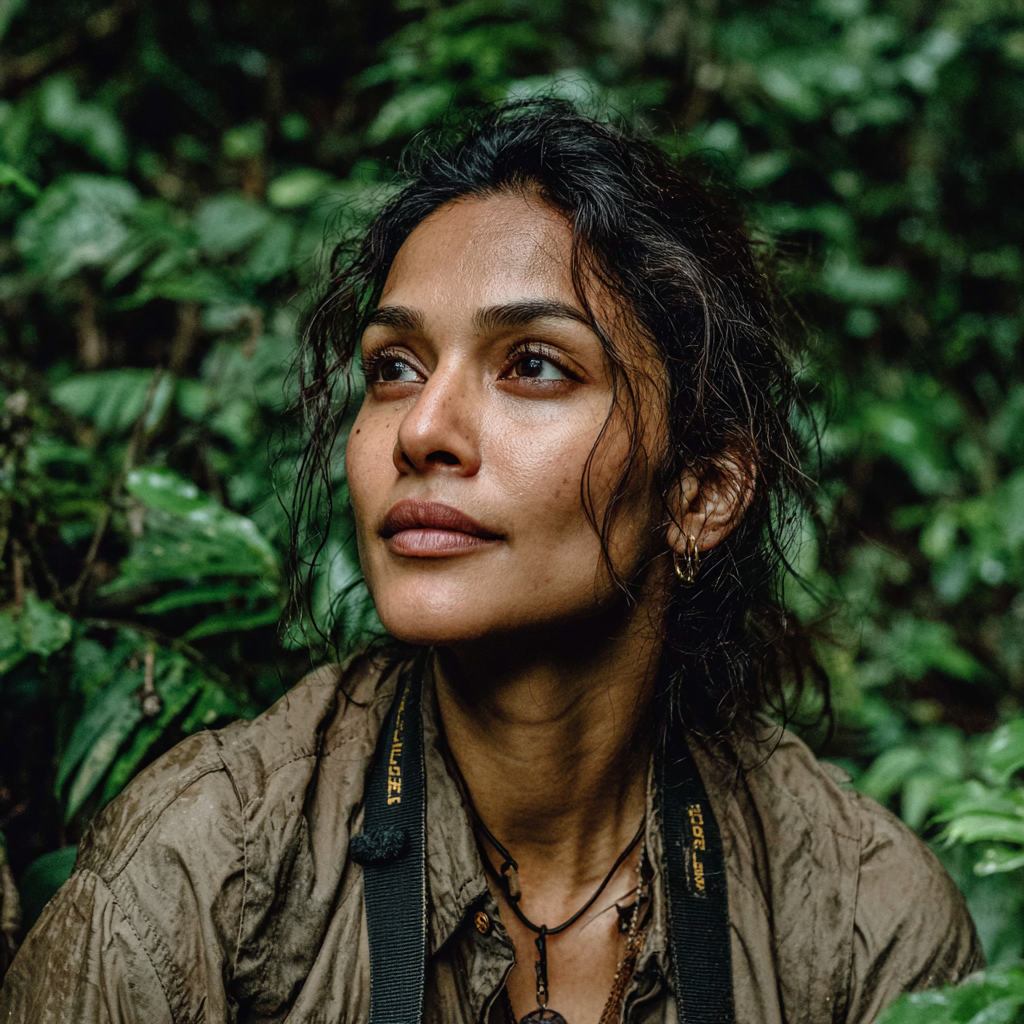
By Priya Sharma
Conservation biologist and sustainable tourism advocate. Priya works with eco-lodges and wildlife sanctuaries to promote ethical travel practices. She holds an MSc in Biodiversity Conservation and has spent years tracking endangered species across the Indian subcontinent.